Slapsticon

Slapsticon

The programme has been announced for Slapsticon, the annual festival of silent and early sound film comedy, to be held at Arlington, Virginia, July 19-22.

Comedians featured include Laurel and Hardy (Way Out West), Harry Langdon (Luck of the Foolish), Harold Lloyd (A Jazzed Honeymoon), Larry Semon (Spuds), Mabel Normand (Hello Mabel), Leon Errol, Ford Sterling, Fatty Arbuckle, Billy Bevan, Monty Banks, Max Davidson, Charley Chase, Lupino Lane, Ben Turpin, Wallace Beery, and many more (Poodles Hanneford, anyone?). Pick of the bunch, on title alone, must be Mr and Mrs Sidney Drew in A Case of Eugenics (1915)… Britain’s own Pimple and Will Hay (Oh Mr Porter) also put in an appearance.

There’s travel, accommodation and registration information on the site.
First news from Pordenone

Pordenone poster 2007

The first details of this year’s Giornate del Cinema Muto (the Pordenone Silent Film Festival) have just been published.

The festival is taking place at Pordenone itself (after several years at the nearby town of Sacile), 6-13 October. Festival features announced (provisionally) so far are:

  • The other Weimar
  • Le silence est d’or: René Clair
  • The Bible Lands in 1897 – the earliest films shot in the the Middle East just found and restored by Lobster Films, Paris
  • The Griffith Project 11 (1921-1924)
  • Ladislas Starevich
  • The Corrick Collection (1901-1914) (this is a collection of early films from the National Film and Sound Archive in Australia, including the recently-identified 1904 Charles Urban film Living London, reported on in an earlier post)
  • Treasures III – American films exploring social issues presented by the National Film Preservation Foundation
  • Sponsored Films – a programme curated by Rick Prelinger
  • Out of FrameI mille (Alberto Degli Abbati, 1912) – a beautifully restored print presented by the Cineteca Italiana to celebrate the bicentenary of Giuseppe Garibaldi’s birth
    Twist Oliver (Márton Garas, 1919)
    A halál után [After Death] (Alfred Deesy, 1920)
    These and other treasures from the Magyar Nemzeti Filmarchívum
    – La Cinémathèque de Toulose présente…
  • Special Presentations:
    Orphans of the Storm (D.W. Griffith, 1921) [6.10.2007]
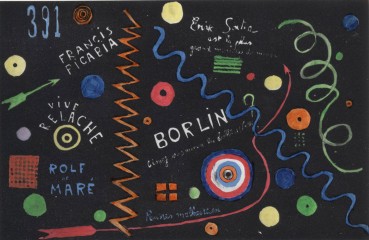
    Entr’acte (René Clair, 1924) (this year’s festival poster is taken from a design for the stage production Relache which incorporated Clair’s film)
    Paris qui dort (René Clair, 1923-1925) [8.10.2007]
    Chicago (Frank Urson, 1927)
    Dr Plonk (Rolf de Heer, 2006)
    Die Büchse der Pandora (Georg Wilhelm Pabst, 1929) [13.10.2007]

Registration details are available on the festival site. Those who have attended before will be receiving a registration form at the end of June. Those who have not been before can fill in an online registration request form.

See you there.

Time Out

The Northeast Historic Film Summer Symposium will be held in Maine on 20-21 July, under the title Time Out: Images of Play and Leisure. The symposium will focus on moving images that offer a new historical, cultural, and critical understanding of play and leisure, focusing on images of play and leisure made by amateurs and for noncommercial purposes. The programme of events includes several subjects relevant to silent cinema and pre-cinema. Peter Morelli’s talk “A Night at the Moving Pictures – Before Cinema” looks at pre-cinema entertainments such as the magic lantern and the diorama; Martin Johnson looks at home movies of the 1920s-40s and the intriguing subject of people who turn their faces away from the camera; Ishumael Zinyengere looks at the work of Burton Holmes, pioneer producer of travelogues (he coined the term); Mark Neumann looks at early films of the Grand Canyon. An excellent programme which demonstrates the value of looking at amateur film from the silent film era quite as much as the commercial. More details from the festival web page.

Passio at Tribeca

Paolo Cherchi Usai’s modern silent film Passio, comprising found footage put to a score by Arvo Pärt, continues to make a considerable impact with the few screenings that it has had so far. It has now received its American premiere at the the Cathedral Church of St. John the Divine in Manhattan, as part of the Tribeca Film Festival. This is the blurb from the festival programme:

Arvo Pärt’s 1982 “Passio,” based on the Passion in St. John’s Gospel, has been called one of the last masterpieces of 20th-century Music. Now it has inspired a silent film by Paolo Cherchi Usai. Together, they comprise a profoundly moving, unforgettable “oratorio for moving image and sound,” and a dramatic, often unsettling meditation on the very act of seeing.

The poet Rika Lesser once wrote to Pärt, “Yours is the only music I’ve ever wanted to live inside. Sometimes I wish that the music would stop, congeal, erect a lasting structure around me, one that would silently vibrate and, resonating, enclose me.” We are honored to be presenting this extraordinary work in two of our own city’s most magnificent “lasting structures,” the Cathedral Church of St. John the Divine (Friday, April 27 and Saturday, April 28) and Trinity Church, Wall Street (Sunday, April 29). This will be only the second time—the first was in Adelaide, Australia in February of this year—the work has been presented accompanied by live music.

Paolo Cherchi Usai is one of the world’s most respected film historians and scholars. With Passio, he has drawn on his immense knowledge of world cinema to create a stunning and revelatory film of surprising emotional and narrative power, one that explores the impending crisis of visual culture and its reflection in politics and society. Its disturbing images, drawn from a century of filmmaking, are woven into a tapestry of mysterious beauty and violence. This not a pleasing or easy film to watch. It is an impossible film to forget.


    “In the 1970’s, an engraved disc was sent out on one of the Voyager missions which left the solar system, and is headed for deep space since then. The disc contains our human existence in shorthand: a man and a woman saluting the aliens out there, a schematic depiction of our solar system, and Beethoven’s “Ode to Joy.” After having seen Cherchi Usai’s Passio, I think the experiment must now be repeated. If a similar mission is planned for the future, I propose that NASA launches this masterpiece into outer space.”

    Werner Herzog

Cherchi Usai does not want the film to be distributed conventionally in cinemas, nor to have a DVD release. He has also destroyed the negative. Just seven prints exist, for screening with live orchestra and chorus. Catch it when you can. Maybe in outer space.

Pordenone Collegium

logo-gcm.jpg

An invitation has been published for students to attend the Collegium at this year’s silent film festival at Pordenone, Italy, which takes place 6-13 October. There are twelve spaces available, an applicants should notmally be aged under 30 and pursuing education in cinema in one form or other. The aim of the Collegium is the engage the students in a programme of activity that takes full advantage of the expertise of archivists, musicians and film historians on hand at the world’s premiere silent film festival . Those attending are given free hotel accommodation and breakfast during the week, but are responsible for their own travel arrangements, meals, and all other expenses.

There are further details on the festival website. The deadline for applications is 27 May. Papers from previous Collegiums (Collegia?) can be found on the Film Intelligence site (talking of which, it’s high time that site got updated).

Chapliniana

Chapliniana

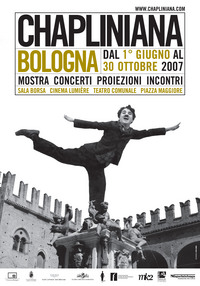
The Cineteca di Bologna in Italy is hosting Chapliniana between 1 June and 30 October 2007. This major celebration of Chaplin’s life and work will comprise an exhibition, Chaplin e l’Immagine (Chaplin in Pictures), at the Sala Borsa, Bologna; live orchestral screenings of The Chaplin Revue, City Lights, The Kid, Modern Times, The Gold Rush, The Circus and A Woman of Paris to be performed in Piazza Maggiore and the Teatro Communale during the summer evenings; and the majority of Chaplin’s films will be screened during this period, particularly during the Cinema Ritrovato film festival June 30-7 July 2007. The Cineteca is also working on the Chaplin Archive Database, which is logging the cataloguing, digitisation and preservation of the huge Charlie Chaplin paper archive.

There’s a Chapliniana site registered but nothing is on it as yet. 2007 is the thirtieth anniversary of Chaplin’s death, and a major revival of interest in his work and socio-cultural significance seems to be underway.

Update: The Chapliniana site is now active, and full of details, all of it in Italian.

Brand upon the Brain

Brand upon the Brain

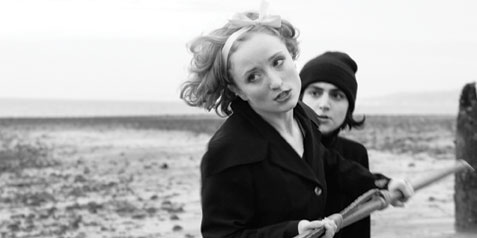
The silent film continues as a valid art form, particularly in the hands of the Canadian Guy Maddin, who has made silent film his natural mode of expression. His latest film is Brand upon the Brain, which is playing (with live music ensemble) at the San Francisco International Film Festival on May 7. The festival site describes it:

The semiautobiographical Brand upon the Brain! mines the rich territories of director Guy Maddin’s youth and spins them into a delirious fantasy of familial discontent. At the edge of the sea stands a lighthouse, once the location of an orphanage. There, some years ago, lived Guy and Sis, a brother and sister under the constant observation of their mother yet entirely ignored by their father, an ingenious inventor. When Wendy Hale, amateur harpist and half of twin detective team the Lightbulb Kids, arrives to investigate a mysterious regenerative nectar harvested from the orphans, things grow ever more complicated. A love triangle becomes a quadrangle when Wendy masquerades as her brother Chance and goes in search of clues. A fever dream of Freudian impulses and horror show theatrics, Maddin devours 100 years of film history whole and, like the ersatz Guy’s painting of the lighthouse, covers the screen with a 12-chapter outpouring of his various obsessions.

There’s a trailer for the film on the festival site which gives a good flavour of Maddin’s distinctive style and take on cinema history.