Award for Kevin Brownlow

The San Francisco International Film Festival is to present Kevin Brownlow with the Mel Novikoff Award. The award, named after the pioneering San Francisco film exhibitor (1922–1987), is bestowed annually on an individual or institution whose work has enhanced the filmgoing public’s knowledge and appreciation of world cinema. The award will be presented to Brownlow on Saturday 28 April at the Castro Theatre, together with a screening of his restoration of The Man in the Iron Mask (1929 d. Allan Dwan), starring Douglas Fairbanks.

The festival website has a fine tribute to Brownlow, ‘The Silent Spokesman’, giving an overview of his achievements in the promotion of the art of silent film, written by Dennis Doros of Milestone Films.

San Francisco Silent Film Festival

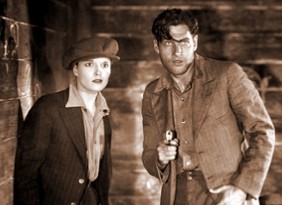
Beggars of Life

Advance notice has been published of some of the key films to be shown at the San Francisco Silent Film Festival. Here’s the press release:

SAN FRANCISCO, April 9 /PRNewswire/ — The art of silent film will be restored to its original brilliance when The 12th Annual San Francisco Silent Film Festival brings a classic love story, a dramatic portrayal of hobo life, a British suspense-thriller and other great silent films back to the big screen, all with live musical accompaniment, on July 13-15.

The majestic Castro Theatre in San Francisco will once again be the site for a weekend-long celebration of silent film, so we can continue to raise awareness of the need to protect, preserve and restore these movies,” said Artistic Director Stephen Salmons.

“The movies that Hollywood produces today owe their inspiration and their soul to the pioneering geniuses of the silent era, many of whom we will salute at this year’s festival,” Salmons said.

Among the special programs that will highlight the 2007 festival is an Opening Night Presentation of Ernst Lubitsch’s THE STUDENT PRINCE IN OLD HEIDELBERG (1927), starring Norma Shearer and Ramon Novarro. “This is one of the all-time great love stories, full of wit, zest and heart,” Salmons said. The festival also will screen William A. Wellman’s BEGGARS OF LIFE (1928), a gritty, unsentimental portrait of hobo life starring Richard Arlen, Louise Brooks and Wallace Beery.

“BEGGARS OF LIFE is a film we have hoped to show for years,” Salmons said. “It depicts homelessness in the pre-crash 1920s – something rarely seen in mainstream cinema. Thanks to George Eastman House, the sole surviving 16mm print has now been returned to 35mm, so we can finally show the film again in its original format.” Live musical accompaniment will be provided by The Mont Alto Motion Picture Orchestra, a chamber ensemble that performs period- authentic photoplay music.

The festival will highlight the work of an early master of British cinema “- and no, it isn’t Alfred Hitchcock,” Salmons said, “even though the film we are showing is a real nail-biter, every bit as suspenseful and surprising as anything Hitchcock dreamt up.” A COTTAGE ON DARTMOOR (1929), directed by Anthony Asquith, is a psychological thriller which relates the story of a love triangle between a barber’s assistant, a manicurist, and one of their clients. The musical accompaniment also will be “the work of a British master,” Salmons noted. “We are importing pianist Stephen Horne from London to perform his acclaimed solo score for this film.”

The festival’s tribute to Turner Classic Movies will feature a rare screening of the infamous 1921 version of CAMILLE, starring Rudolph Valentino and Alla Nazimova.

“It holds a unique position in film history as one of the most flamboyant art films ever to come out of a Hollywood studio”, Salmons said. “The costumes, the sets, and above all the extraordinary stylized acting of Nazimova, a notorious figure of the silent era, make it a once-in-a-lifetime experience. It will absolutely light up the big screen.”

The 12th Annual San Francisco Silent Film Festival opens on Friday, July 13 and runs through Sunday, July 15, at the Castro Theatre, 429 Castro Street in San Francisco. Complete program details and information on how to purchase tickets will be announced in May at http://www.silentfilm.org. The San Francisco Silent Film Festival is a nonprofit organization dedicated to promoting silent film as an art form and as a cultural and record.
Il Cinema Ritrovato

Il Cinema Ritrovato is held every June/July at the Cinemateca Bologna, Italy, and is one of the world’s major festivals of film restoration. It always has a major silent film component. Details of this year’s festival, which takes place Saturday 30 June-Saturday 7 July, have just been published. Those to be featured include Charlie Chaplin (subject of a major Bologna retrospective and exhibition); Asta Nielsen; films from 1907; the American silents and early sound films of Michael Curtiz; and some major silent restorations from Lubitsch (Als Ich Tot War, 1916), Von Stroheim (Austria’s restoration of Blind Husbands, 1919), De Mille (Dynamite, 1929), Stiller (Madame de Thèbes, 1915); and from Germany, Schatten der Weltstadt (Willi Wolff, 1925); a Polish find, A Strong Man (Henryk Szaro, 1929); and what the festival is calling its most amazing discovery of all, a Swedish film called The Spring of Life (Paul Garbagni, 1912), with Sjöström, Stiller, and af Klercker as actors. From Italy they will have L’Odissea (Bertolini-Padovan, 1911), Maciste imperatore (Guido Brignone, 1924), and the beginning of the Ghione Project.

The festival will also cover CinemaScope, melodrama of the 1940s/50s, Raffaello Matarazzo, and Sacha Guitry. More details from the Ritrovato site.

Broncho Billy Silent Film Festival

essanay.jpg

The 10th annual Broncho Billy Silent Film Festival is taking place at the Niles Essanay Silent Film Museum, Fremont, California, June 29-July 1. This year the festival celebrates 100 years of the Essanay Film Manufacturing Company. The web page for the festival still has information on the 2006 festival, but if you go to their Saturday Night Film Schedule a full list of titles and dates is given. See not only Broncho Billy Anderson, the early cinema’s favourite cowboy, but also Ben Turpin, Max Linder, Beverley Bayne, Francis X. Bushman, Rod LaRoque and Wallace Berry. There’s an evening of Broncho Billy films included, and among the musicians is the incomparable Phil Carli.

Festival in Amsterdam

Here’s some blurb on the upcoming biennial film festival in Amsterdam next month:

“From 11 until 15 April, the Filmmuseum in Amsterdam will be holding its third Filmmuseum Biennial. During this biennial film festival, the Filmmuseum will be showing silent films together with live performances of new soundtracks. Special finds from the historical film collection will also be presented. Visitors will be able to enjoy gems from film history in some forty screenings, many complete with musical accompaniment by, for example, classical ensembles, contemporary composers and DJs.

Restorers have been working behind the scenes of the Filmmuseum to safeguard films from the early period of cinema (1895-1928) and restore them to their former glory. The museum has gained international recognition with its much-discussed restorations and presentations of silent films from its collection (Beyond the Rocks, Menschen am Sonntag), complete with new soundtracks which are often performed live.

EVENING SCREENINGS ACCOMPANIED BY LIVE MUSIC
A set of five highlights resulting from the restoration efforts of both the Filmmuseum and the festival’s guest, the Österreichisches Filmmuseum, can be seen during the Filmmuseum Biennial. Under the slogan, a ‘feast for the eye and ear’, musicians and composers were invited to compose new scores. Singer, musician and composer Fay Lovsky will perform her own ‘soundscape’ during the showing of the opening film The Floor Below (C.G. Badger, 1918), a unique find from the Filmmuseum’s collection. In a performance in the Paradiso venue, a DJ will translate the energy of Dziga Vertov’s images in The Eleventh Year (Odinnadtsatii, 1928) in compelling electronic beats, bleeps en riddims. Composer and musician Corrie van Binsbergen gives Jacques Feyder’s L’Atlantide (1921) a new dimension with a mix of jazz, ‘grooves’ and ethnic music. Moreover, the Filmmuseum invited Rainer Hensel, the composer who used to create the soundtracks for Theo van Gogh’s films, to make a new score for Such Men are Dangerous (Kenneth Hawks 1930) and the Biennial curator Martin de Ruiter has written a new score for the Austrian classic, Der Mandarin (Fritz Freisler 1918), which will be performed by film and theatre orchestra Max Tak.”

Further information on the silent films and their musical accompaniment is here.

British Silent Cinema programme

The British Silent Cinema Festival programme has now been published. Among the new features are the Inaugural Rachael Low Lecture (named after the leading historian of British cinema) given by Professor Sir Christopher Frayling; a special presentation by Charlie Chaplin authority Frank Scheide, ‘Chaplin, Costers and London Street Life’; and Andrew Higson on ‘Crime and Deviancy in the Picture House’. The festival runs Thursday-Sunday 26-29 April.

British Silent Cinema Festival

The British Silent Cinema Festival hasn’t published its full programme as yet, but there is a guide to screenings and presentations which gives a good overview. The theme of the festival is Underworld: Crime and Deviancy in the British Silent Film, and it is being held at the Broadway, Nottingham, 26-29 April. The festival, co-organised by the Broadway and the BFI, is in its tenth year (time has flown…), and as usual it will feature a mixture of screenings, papers and special presentations in the informal manner which the festival has established so successfully for itself. Anyway, here’s the blurb:

Underworld: crime and deviancy in the British Silent Film

26 – 29 April 2007

Where did the crime film originate? Joseph von Sternberg’s silent masterpiece Underworld (1927) [illustrated] is often cited as the first gangster film and the prototype for the genre, spawning the crime thrillers of the 30s, film noir of the 40s and the more recent mob films like The Godfather and Goodfellas. But what came before that landmark film? This year’s British silent film festival examines the antecedents of the crime film; unearthing rare glimpses of master criminals and serial killers, legendary detectives and international terrorists. Looking at adaptations from some of the best-known crime writers, Conan Doyle, Sax Rohmer, Edgar Wallace, we uncover crimes of passion, politically motivated crime, and crimes concealing Society’s dark secrets. Drawing on the extensive collections of the BFI National Archive, we will also look at both true crime, featuring Nottingham-born villain Charlie Peace and John Lee ‘the Man They Couldn’t Hang’ and crimes of the imagination, from the first ever crime film to Hitchcock’s Ripperesque tale of the London fog, The Lodger.

Screenings and presentations:

  • True Crime on Film: a history of real-life crime films from the earliest days including Mitchell and Kenyon’s The Arrest of Goudie and The Life story of Charles Peace.
  • Crime in silent fiction film: a history of crime stories including the recently discovered first ever crime film Arrest of a Pickpocket (1895) to Hitchcock’s classic The Lodger (1926).
  • Special live cinema event in the atmospheric surroundings of the medieval St Peter’s Church – Hitchcock’s serial killer mystery, The Lodger.
  • British star, Clive Brook in Joseph Von Sternberg’s rarely screened masterpiece Underworld (1927).
  • The First Born (1928) actor/director Miles Mander stars in this society shocker with co-star Madeleine Carroll (39 Steps).
  • Edgar Wallace’s tale of international terrorism The Four Just Men (George Ridgewell, 1921) with introduction by Wallace expert Jeremy Jago.
  • Classic crime series The Mystery of Dr Fu Manchu and The Adventures of Sherlock Holmes and Fred Paul’s macabre Grand Guignol stories.
  • Rarely screened fragments of Britain’s only surviving silent serial, Ultus: The Man from the Dead.
  • Secrets and lies in Victorian England cause criminal deeds in a 1920 adaptation of Charles Dickens’ Bleak House.
  • Bulldog Drummond’s Third Round (1925) directed by Sidney Morgan and starring Jack Buchanan in the title role.
  • Ellie Norwood, one of the great interpreters of our most famous detective Sherlock Holmes on film and a screening of Holmes feature The Sign of Four (1923).
  • Early films of the Salvation Army to mark William Booth’s origins in Nottingham and his connection to Broadway.
  • The International Women Pioneer Film Makers’ Project – presentations and discussion around this international research programme.

Excellent stuff. One film in particular to pick out is Miles Mander’s The First Born (1928), a genuine undiscovered classic, mature in theme and sophisticated in style, which hasn’t had the public profile is deserves largely because the surviving print is marginally incomplete. That, and the fact that it doesn’t turn up in any of the film histories. Shame on them, and well done to the festival’s organisers for having unearthed it.

Booking information from the festival website.

Brownlow and the Kelly Gang

There’s a fine article by Kevin Brownlow in today’s edition of The Times, on silent films. It’s called ‘Silents Please‘ and it’s a distillation of Brownlow’s thoughts and feelings about the pre-eminent entertainment medium that is silent film. It focuses more on the technical innovations than the stars, and it is a great piece for waving in front of sceptics to show they why silent films matter. It should certainly make a convert or two.

The piece has been written to coincide with the Silent Film and Live Music series running at the Barbican in London, which today is screening the surviving footage (some 20 minutes) of the world’s first fiction feature film, The Story of the Kelly Gang (1906), made in Australia, with live piano accompaniment by John Sweeney. Also showing is The Life of John Lee: The Man They Could Not Hang (Australia 1921).

Silent film music

Among the joys of experiencing live silent film shows is the music accompaniment. A handful of pianists have established worldwide reputations for their skill in playing (frequently improvised) to the silents, among them Donald Sosin, whose elegant and informative website is at http://silent-film-music.com. As demonstration of something of the working life of a silent film pianist, here’s a list of shows where he can be seen and heard this year:

  • Mar 18 2pm FIG LEAVES (Howard Hawks) at Museum of Moving Image (part of a fashion series)
  • Apr 14 12pm PETER PAN (Herbert Brenon) at Tarrytown Music Hall
    (2nd silent series there)
  • Apr 15 12pm SPEEDY (Harold Lloyd) at Tarrytown Music Hall
  • Apr 19 7:30pm SON OF THE SHEIK (with Valentino) at Tarrytown Music Hall
  • Apr 27-28 residency at University of Wisconsin Stevens Point
  • Workshop with music students, public performance of shorts and THE KID BROTHER (Harold Lloyd)
  • Jun 2 Ithaca Festival films made in Ithaca
  • Jun 3 SUCH IS LIFE and KREUTZER SONATA National Gallery, Wash DC
  • Jun 10 11am STEAMBOAT BILL JR at Coolidge Corner (MA) Theater
  • Jun 12 TBA Brooklyn Academy of Music
  • Jun 30-Jul 7 Cinema Ritrovato, Bologna (performed there since 1999)
  • Jul 14/15 San Francisco Silent Film Festival (films TBA)
  • Sep 14/16 Port Townsend (WA) Film Festival
  • Oct 6-13 Le Giornate del Cinema Muto, Pordenone Italy (since 1993)
  • Oct 17-22 Brooklyn Academy of Music Pordenone at BAM series

More and updated information on his site.

Australia’s Silent Film Festival

It’s all film festivals at the moment. Australia’s Silent Film Festival has its inaugural programme in Sydney over three days, March 30 to April 1. Screenings at the Hayden Orpheum Picture Palace at Cremorne will include Cyrano de Bergerac, Sunrise, Charlie Chaplin, Buster Keaton and Laurel and Hardy. On 1 April, at the New South Wales Art Gallery, there will be a restored print of the 1927 Australian silent classic, The Kid Stakes.

Rather pleasingly, the festival has as its nominated charity the Deaf Society of New South Wales.