Slapstick 2008

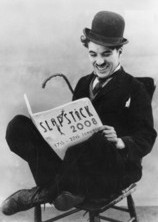
Chaplin and Linder

Charlie Chaplin and Max Linder, from http://www.slapstick.org.uk

Full details of the Slapstick 2008 silent film festival have been published, at last. The festival is taking place in Bristol, 17-20 January, and screenings take place at the Watershed, Arnolfini, Colston Hall and St George’s Bristol. Here’s the full line-up:

Thursday 17 January

Funny Ladies I: The Extra Girl (USA 1923)
14.00 at Watershed

“The plucky Mabel Normand stars as Sue, a small town girl who wants to be a star. She wins a contract with a big studio when a picture of a very pretty girl is sent to a studio instead of hers. When she arrives in Hollywood, the mistake is discovered.”

Pencil and Plasticine
18.00 at Watershed

“Animation legends Richard Williams and Peter Lord explore their mutual passion for pre-talkie animation with extracts including early Disney, Willis O’Brien and the unforgettable Jerry the Troublesome Tyke!”

Serge Bromberg presents: Retour de Flamme
20.20 at Watershed

“Since 1985, Paris-based Lobster Films have been champions of restoring archive and silent films. We are delighted to welcome Serge Bromberg, co-founder of Lobster, to Slapstick 2008 to present the first UK version of this extraordinary Retour de Flammeshow; a unique chance to experience the films he discovered and restored with his very own live piano accompaniment.”

Friday 18 January

Keystone Chaplin
9.00 at Watershed

David Robinson presents: A Film Johnnie,The Star Boarder and Kid Auto Races.

Funny Ladies II: Funny Ladies of the Silent Screen
11.00 at Watershed

Byrony Dixon and David Wyatt present a selection of silent comediennes.

Neil Innes presents: Monsieur Hulot’s Holiday (France 1953)
14.00 at Watershed

Composer-performer Neil Innes, best known for his work with Monty Python and the Bonzo Dog Doo-Dah Band, introduces Jacques Tati’s classic comedy.

Funny Ladies III: It (USA 1927)
16.00 at Arnolfini

“Clara Bow’s sizzling personality is irresistible in the role that did most to establish her as an icon.”

Special Gala Event: Paul Merton’s Silent Comedy Classics

The Gold Rush (1925)
7.30pm at Colston Hall

“Paul Merton hosts this special Slapstick Gala, featuring the world première of Timothy Brock’s reworking of Chaplin’s score for his greatest silent comedy The Gold Rush performed by the 15 piece Emerald Ensemble. With additional comedy shorts, including Laurel and Hardy classic Leave ’em Laughing and special guests Paul McGann and Christopher Chaplin.”

Saturday 19 January

Chaplin: A Fresh Look – Panel Discussion
9.00 at Watershed

“With programmes such as Kevin Brownlow’s Unknown Chaplin and Paul Merton’s Silent Clowns, TV has introduced Chaplin to a new public and re-affirmed his place in world cinema and the history of comedy. This panel discussion looks at Chaplin’s place in today’s cinema and includes newly discovered home movie footage of Chaplin. Chaired by official Chaplin biographer David Robinson with guests including: Paul Merton, Serge Bromberg and Bryony Dixon.”

Laurel and Hardy Tales with Jean Darling
11.00 at Watershed
Jean Darling, who worked with Laurel and Hardy and starred in Hal Roach’s legendary Our Gang, is interviewed by David Wyatt.

Audience with Nicholas Parsons
14.00 at Watershed

Nicholas discusses his long career in radio and TV and his passion for Keaton and Chaplin, The Arthur Haynes show and Benny Hill. Hosted by Paul Merton.

Funny Ladies IV: Exit Smiling (USA 1926)
16.00 at Arnolfini

“Beatrice Lillie plays Violet, steering a path through a trail of accidents with dotty elegance and the same dogged faith that keeps the character blind to the real feelings of Jack Pickford, the troubled bank clerk her heart is set on.” Live musical accompaniment by Neil Brand, Gunter Buchwald and Frank Bockius.

Buster Keaton: His Classic Comedy Shorts
with Tim Brooke-Taylor and Graeme Garden
20.00 at St George’s Bristol

“Former ‘Goodies’ and current I’m Sorry I Haven’t A Clue panellists Tim Brooke-Taylor and Graeme Garden choose their favourite Keaton short films, revealing the works that have influenced their lives.” With live musical accompaniment from Neil Brand (piano) and Gunter Buchwald (percussion and violin).

Sunday 20 January

Silent Comedy and The Great War
with Paul McGann and Matthew Sweet
11.00 at Watershed

Paul McGann and Matthew Sweet look at extracts from films focusing on the First World War to examine the role of silent comedy in boosting morale. The programme includes extracts from The Better Ole (1926) and a complete screening of Chaplin’s Shoulder Arms (1918).

Paul Merton’s French Silent Clowns
14.00 at Watershed

Festival host Paul Merton explores the work of great French silent comedy pioneers including Léonce Perret and ‘Father of Silent Comedy’ Max Linder.

Phill and Neil’s Slapstick Heaven
16.00 at Watershed

“Phill Jupitus and Neil Innes take us on a journey from silent comedy and beyond, discussing their influences and passions, looking along the way at extracts from The Rutles, Monty Python and the irrepressible Spike Milligan.”

Speedy (USA 1928)
Introduced by Paul Merton
20.30 at Watershed

Harold Lloyd’s last silent film, “a superb valedictory to the silent era”.

That’s a mightily impressive line-up of presenters, and they’ve managed to squeeze in a few good films too. Pleased to see Paul Merton turning his attentions to Léonce Perret and Max Linder. Perhaps he can be persuaded to resurrect Cretinetti, Bébé, Bout-de-Zan, Onésime and a few more of the ‘lost’ European slapstick stars one day…

Further details from the Slapstick site, which is a little confusing to navigate, but you’ll find the full programme under Events (sub-divided by day).

Women and Silent Britain

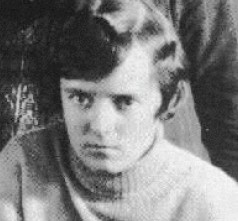
Alma Reville

Alma Reville

The 11th British Silent Cinema Festival, Rats, Ruffians and Radicals: The Globalisation of Crime and the Silent British Film (3-6 April 2008), is hosting a special panel session on Women and Silent British Cinema.

This panel will be separate from the main festival theme and will introduce and report on the activities of two projects: the international Women Film Pioneers project and the recently- formed Women’s Film History UK. The panel will also present research being undertaken on women and silent Britain and the organisers are currently seeking proposals for twenty-minute papers on any aspect of women working within the British film industry during the silent era.

Topics can range from studies of individuals to practical research- related issues, and they would particularly welcome presentations that offer some reflection on the issues, questions and problems of researching women’s film history.

Those interested should email a 200-300 word outline proposal to Clare Watson and Nathalie Morris (University of East Anglia) at womenandsilentbritain@hotmail.com, no later than 31 January 2008.

The Bioscope Festival of Lost Films

Bioscope Festival of Lost Films

The days are grey, the weather foul, and we need something to lift our spirits. So how about The Bioscope’s very own film festival? We always try to point you to the various silent film festivals around the world, but for its own film festival The Bioscope wants to do something a little different.

So we’re going to have the world’s first festival of lost films. The Bioscope Festival of Lost Films will take place over five days, 14-18 January 2008. It will present five lost silent feature films, each accompanied by a short, with supporting materials, side events, and maybe a celebrity interview or two. So, just like any other festival, except of course that there will be no films to show you. Because all of the films featured will be lost films, not known to exist in any archive anywhere. So a collective act of imagination will be required, as well as a collective sigh at what has been so thoughtlessly cast aside.

What films will be showing? We cannot yet tell you. Just as some festivals have to leave it until the last moment because they cannot be sure of securing the films that they want to show, so The Bioscope Festival of Lost Films will need to be cautious in case the films it hopes to programme turn out to exist somewhere. It seems the story about F.W. Murnau’s The 4 Devils having been found is only an ingenious prank, but there could be some truth to the rumours about King Vidor’s Bardelys the Magnificent having been found. Only at the last minute will it be possible to confirm the final selection. Rest assured that only the best titles will get selected for your delectation.

Therefore, please note down 14-18 January in your diaries, and look out for further announcements about the festival as the time gets nearer.

Postscript (January 2008)

The films featured in the festival were:

Day 1: A Study in Scarlet (1914) and The Great European War (1914)
Day 2: Ein Sommernachtstraum (1925) and Hamlet (1907)
Day 3: Human Wreckage (1923) and Dorian Gray (1913)
Day 4: The Mountain Eagle (1926) and Number 13 (1922)
Day 5: Drakula halála (1921) and Life Without Soul (1915)

StummFilmMusikTage

Yogoto No Nume

Yogoto No Nume (1933), from http://www.stummfilmmusiktage.de

StummFilmMusikTage, the German silent film festival which makes a special feature of the musical accompaniments, takes place in the Markgrafentheater, Erlangen, 24-27 January 2008. The festival site is in German and English, but the latter does not have the programme details as yet. So here are the details of the films being shown:

Thursday 24 January

Yogoto No Yume (Every Night Dreams) (Japan 1933, d. Mikio Naruse)
Music and performance: Yogo Pausch

Friday 25 January

Potomok Chingis Khana (Storm over Asia) (USSR 1925, d. Vsevolod Pudovkin)
Music: Bernd Schultheis, performed by the Ensemble Kontraste, conductor Frank Strobel

Nani ga kanojo o sô saseta ka (What Made Her Do It?) (Japan 1930, d. Shigeyoshi Suzuki)
Music: Günter Buchwald, performed by the Erlanger Musikinstitut

Saturday 26 January

Kongen af Pelikanien (Pat and Patachon in Pelikanien) (Denmark 1928, d. Lau Lauritzen)
Music and performance: Yogo Pausch

Tabu (USA 1925, d. F.W. Murnau)
Music: Violeta Dinescu, performed by the Ensemble Kontraste, conductor Frank Strobel

Chang (USA 1927, d. Merian C. Cooper)
Music and performance: Günter Buchwald & Ensemble

Sunday 27 January

The Light of Asia (India/Germany 1925, d. Franz Osten)
Music and performance: Om Prakash Pandey (Tabla), Henning Kirmse (Sitar)

The Cameraman (USA 1925, d. Buster Keaton)
Music and performance: Karsten Gnettner, Helmut Nieberle, Bob Rückert

Piccadilly (GB 1928, d. E.A. Dupont)
Music: Frieder Egri, Roman Rothen, performed by Frieder Egri & Ensemble

A strong line-up indeed, and there are introductory presentations to several of the screenings as well. The Markgrafentheater is an attraction in itself, Germany’s oldest Baroque theatre still in use. It was built in 1719, and provides a stunning setting for the annual silent film festival. Advance booking starts on 15 December (details on both English and German versions of the site).

Update: A revised programme has now been published (January 2008). See this updated post for details.

Pordenone On Screen

This evening BBC World Service radio is broadcasting an item on the Pordenone music masterclasses as part of its On Screen film programme. Every year at the Giornate del Cinema Muto there are masterclasses held on the art of accompanying silent films, in which aspiring silent film musicians work all week with the established musicians who accompany the films during the festival, with audience. It has become one of the most popular features of the festival.

The World Service programme was recorded during the festival, and features Pordenone regulars Donald Sosin, John Sweeney, Gabriel Thibaudeau and Neil Brand. The programme is being broadcast today, Wednesday 14 November at (GMT) 09.30, 19.30 and 23.30 and tomorrow at 02.30. It will then remain available online for a week. The item is 20mins into the 27mins programme.

It’s an encouraging item about the general rise in the popularity of silent cinema of late, and its affirmative tone is in marked contrast to the snide attitude revealed by that recent Today broadcast. I particularly like John Sweeney contrasting silent cinema with sound, arguing that the latter offers no sense of surprise, but the latter’s liveness is like going to the theatre – “if you weren’t there, you missed it”.

The Gold Rush

Slapstick 2008

http://www.slapstick.org.uk

We’re still awaiting full programming details for the Slapstick festival in Bristol, though we do at least have the dates – 17-20 January 2008. But meanwhile, tickets have just gone on sale for the festival’s gala event, a screening of Chaplin’s The Gold Rush, hosted by the ubiquitous Paul Merton, and the world premiere of Timothy Brock’s rescoring of Chaplin’s own score, played by the Emerald Ensemble. The evening also features a programme of comedy shorts, including Laurel and Hardy’s Leave ’em Laughing, with musical accompaniment from the no less ubiquitous Neil Brand “and international friends”, plus special guest Paul McGann. All this at Colston Hall, Bristol, on Friday 18 January, tickets £15, £12 conc., £5 for the under-twelves.

The Smoking Cabinet

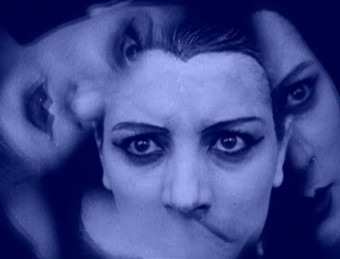
Ballet mécanique

Ballet mécanique, from http://www.thesmokingcabinet.com

I have received a press release from an entertainment entitled The Smoking Cabinet, which is probably best left to explain itself:

The Smoking Cabinet presents:

A Festival of Early Cabaret and Burlesque Cinema 1895-1933
7th – 9th December 2007, Curzon Soho

The Smoking Cabinet presents an exotic array of films that epitomise the flair, eroticism and joie de vire of burlesque, fin de siècle follies, the machine age and modernist cabaret.

Come and celebrate various forms of decadent entertainment from the belle époque to the end of the Weimar Republic, the cinematic history of the subversive! We’ll take a peak into the seductive, sultry and downright bizarre with a series of rarely screened shorts, a well loved classic cabaret feature, and inspiring talks. Revel in the delectable secrets of cabaret inspired early cinema and prepare yourself for the work of Fernard Léger, Man Ray, Percy Smith, Adrian Brunel and Georges Méliès as well as music hall stars, circus performers, early erotic and performing animals.

Screenings:
Friday 7th December: Moody’s Club Follies and Opening Night Soirée, 8.20pm
Bar and performances from 7pm featuring Future Cinema and Bourgeois and Maurice plus interview with writer / broadcaster and author of The Cabaret, Lisa Appignanesi

Saturday 8th December: Electric Women and Additional Oddities, 6pm
Cinematic wonders abound in this series of magic tricks, acrobatics, performing animals and early erotica. Featuring Fred Evans, Adrian Brunel and Georges Méliès; come and join us for a sing a long to Yes We Have No – ! (1923),guffaw at the topsy-turvy world of Vice Versa (1910) and the spine tingling beauty of Electric Women (1927).

– followed by discussion: Burlesque and Cabaret on Film: Screening the Fantastical with Vanessa Toulmin (Mitchell and Kenyon, Admission all Classes) and special guests.

Sunday 9th December: The Blue Angel (1930) Josef Von Sternberg, 12pm
The definitive study of Weimar decay and decadence – Marlene Dietrich stars as the seedy stage starlet who corrupts and then devours an uptight teacher in one of cinema and Europe’s most poignant periods.

– followed by discussion: Women in Burlesque and Cabaret: Empowerment vs Titillation with Amy Lame (Duckie) and special guests.

Sunday 9th December: Tilly Losch in Her Dance of the Hands and Other Rarities, and Closing Night Party, 6pm
Join us for our last shorts programme with live music, cakes and dancing as we wind down with cine dance classic Annabelle’s Butterfly Dance (1895-1897), So This is Paris! (1926) and Tilly Losch in Her Dance of the Hands (1930-1933), and some rampant Dadaism in Ballet mécanique (1923-24).

Booking:
Call Curzon Cinemas on 0871 7033 988 or visit www.curzoncinemas.com

Well, I’m not entirely sure what’s going on here – the link between Percy Smith’s stop-motion films of plant growth and modernist cabaret seems a bit on the tenuous side – but no one can deny that there are great efforts these days to present silent material (and often unfamiliar silent material) in a new and creative ways.

Those seeking further elucidation can visit www.thesmokingcabinet.com, which offers further attractions and, oddly, a cheap deal on Simon Popple and Joe Kember’s book Early Cinema: From Factory Gate to Dream Factory. Or visit the project’s MySpace page, and see clips from Man Ray, Méliès and Josephine Baker dancing.

The Smoking Cabinet, which seems to derive from the ‘smoking concerts’ of the Edwardian era, where some of the fruitier films of the era were shown to men-only audiences, is, they tell us, “four female burlesque/cabaret/cinema fans who enjoy a challenge”.

Shasta 2nd annual silent film festival

The Son of the Sheik

Rudolph Valentino and Vilma Banky in The Son of the Sheik, from http://www.shastaartscouncil.org

The Shasta Arts Council 2nd Annual Silent Film Festival at Redding, California, takes place 26-27 October. The films showing are The Son of the Sheik (1926), The Mark of Zorro (1920), The Circus (1928) and Stella Dallas (1925), with acompanying shorts, all with musical accompaniment from Frederick Hodges, plus The Cabinet of Doctor Caligari (1919), with live string quartet with music composed by Timothy Brock. More details, as ever, from the festival website.

Don’t forget Telluride

I was sent the text below about the silents shown at the recent Telluride Film Festival:

Two wonderful silent programs were featured this year at the Telluride Film Festival. The annual “Pordenne Presents” show was the gorgeous restoration from the George Eastman House of King Vidor’s THE BIG PARADE with a wonderful score played by Gabriel Thibaudeau. This powerful war epic is often taken for granted as a classic but rarely actually screens today. It confirms its reputation as a masterpiece and proves to have a contemporary resonance.

Creating equal buzz was PEOPLE ON SUNDAY the early collaboration of Robert Siodmak and Edgar G. Ulmer from a script by Billy Wilder, Kurt and Robert Siodmak. Stunning cinematography by Eugen Schufftan and Fred Zinneman contribute to making this unique non-traditional narrative worth seeking out if the print from the Netherlands Film Museum makes its way to your area. Sadly, you probably won’t have a chance to experience the 6 person Mont Alto Orchestra’s lively score.

Leoanrd Maltin presented a two-hour collection of restored Vitaphone shorts with informative and humorous introductions. Legendary composer Michel Legrand and French director/film buff Bertrand Tavernier were among the audience members who couldn’t get enough.

In the Festival’s newest venue, The Backlot, dedicated to movies about movies, the new documentary THE DAWN OF SOUND was featured as was the found segment of THE STORY OF THE KELLY GANG (1906) with discussion about the restoration process from Paolo Cherchi Usai.

The lobby of The Backlot and the Brigadoon hospitality tent featured the extensive display “A Life Discovered: Unseen Material from the von Stroheim Collection” courtesy of the Academy of Motion Picture Arts and Sciences.

For the complete program, go to www.TellurideFilmFestival.org.

==============

Those living in Northern California are in for a treat on October 26 & 27 when the 2nd Annual Silent Film Festival in Redding will be produced by David Shepard with live music by Frederick Hodges.

More info at: http://www.shastaartscouncil.org/silent.html

London thrills me

Blackmail

Blackmail (1929), from http://www.bfi.org.uk/whatson/lff

OK, back to normality, and a few short news items on silent matters which have built up over the past few days. To start with, under the title ‘London Thrills Me’, the London Film Festival is hosting two silent film screenings this week in Trafalgar Square. On 18 October you can see the silent version of Alfred Hitchcock’s classic Blackmail (1929), accompanied by Ivor Montagu’s delightful comic short, Blue Bottles (1928), starring Elsa Lanchester. Neil Brand provides the live piano score. The following day John Sweeney is the pianist in Trafalgar Square for Capital Tales, a selection of 100 years of London on film. The silents being screened are London Street Scenes – Trafalgar Square (1910), Blackfriars Bridge (1896), Petticoat Lane (1903), Old London Street Scenes (1903), Trafalgar Square Riot: Pathé’s Animated Gazette (1913), Hoxton… Saturday, July 3rd, Britannia Theatre (1920) – extract, The Fugitive Futurist: A Q-riosity by “Q” (1924), Cosmopolitan London (1924) – extract, and Piccadilly (1929) – extract. Both screenings begin at 18.30.