Keaton and the war

BusterWWI

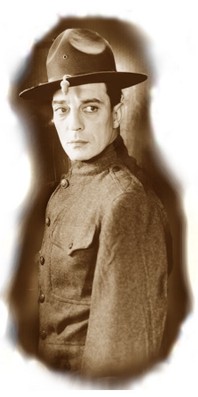
The 17th Annual Buster Keaton Celebration takes place 25-26 September, at Iola, Kansas. Each festival takes an aspect of Keaton’s life or career and explores its contexts, through talks, screenings and special presentations. This year the theme is the First World War, and this is the programme:

Buster Keaton and Company

WWI, Dark Comedy, and Film
The 17th Annual Buster Keaton Celebration

Sept 25-26, 2009, Iola, KS

All activities are held at the Bowlus Fine Arts Center in Iola, Kansas. Free. (donations are very much appreciated– especially this year)

Program subject to change.

Friday, Sept 25, 2009

9:30 am Registration

9:50 am Welcome and Remarks by Susan Raines, Executive Director, Bowlus Fine Arts Center

Emcee Frank Scheide, Prof of Communication, University of Arkansas, Fayetteville

10:00 am — The National WWI Museum, a video segment from the series Sunflower Journeys, produced by KTWU Ch 11, Topeka

10:10 am — Dave Murray
World War I: Causes and Effects

11:00 am — Break

11:10 am — Doran Cart, Curator WWI Museum, Kansas City, MO
Lights, Camera, and Real Action: The U.S. Army Signal Corps Motion Picture and Still Photographers’ Work, 1917-1919

12:00 am — Lunch Break

1:30 pm — John Tibbetts, Ph.D., Professor of Film, University of Kansas
The Worm’s Eye View: A Presentation Concerning the 1919 Film, Yankee Doodle in Berlin

2:20 pm — Lisa K. Stein, Ph.D., Ohio University-Zanesville
Tommy’s New Tune: Warner Brothers’ The Better ‘Ole (1926) and Redefining American Patriotism

3:10 pm — Break

3:25 pm — Screening of The Moving Picture Boys in the Great War (1975), produced by David Shepard
War Story (2001)
Introduced by David Shepard

5:30 pm — Dinner Break

7:30 pm — Evening program
It Happened to You
Shoulder Arms (1918) starring Charlie Chaplin
The Bond (1918) starring Charlie Chaplin
All Night Long (1924) starring Harry Langdon
The Bellboy (1918) starring Fatty Arbuckle and Buster Keaton
Back Stage (1919) starring Fatty Arbuckle and Buster Keaton
with live musical accompaniment by Marvin Faulwell

Saturday, Sept 26, 2009

8:30 am — Registration

9:00 am — Welcome and Remarks by Susan Raines, Executive director, Bowlus Fine Arts Center

Emcee Bill Shaffer, KTWU Ch 11, Topeka

9:20 am — Jim Barkley, Educational Coordinator, WW I Museum, Kansas City, MO
Educational Opportunities at the National WWI Museum

9:40 am — Screening of My Career at the Rear, a documentary by Matha Jett on Buster Keaton’s WWI career

10:00 am — David Macleod, Keaton historian and founder of Blinking Buzzards Society (UK)
Buster and War

10:50 am — Break

11:00 am — Robert Arkus, Film Historian and Archivist
The Liberty Loan Drive, Newsreels and Slapstick
Comics Go to War: Screening of seldom seen footage
plus rare Keaton on video

12:00 — Lunch Break

1:00 pm — Welcome and Introductions

1:10 pm — Leslie Midkiff Debauche, Ph,D., University of Wisconsin — Stevens Point
Buster Keaton Fights the Great War

2:00 pm — Frank Scheide, Ph.D., University of Arkansas, Fayetteville
Charles and Penny Chilton’s Oh What a Lovely War

2:50 pm — Break

3:00 pm — Screening of Yankee Doodle in Berlin (1919), Mack Sennett, with live musical accompaniment by Marvin Faulwell
Introduced by David Shepard

4:00 pm — Break

4:10 pm — Screening of Doughboys (1933) — Buster Keaton Sound Feature

5:35 pm — Dinner Break

7:30 pm — An Evening of Screenings
General Nuisance (1941), Buster Keaton Columbia sound short.
plus short clips and tributes.
Special Presentation, The Last American Surviving WWI Veteran, a 2008 interview with Mr. Frank Buckles by Martha Jett, Documentary Filmmaker and Keaton Biographer.
The Better ‘Ole (1926), starring Syd Chaplin, with live musical accompaniment by Marvin Fauwell

And for those who want to learn more about what Keaton called ‘My Career in the Rear’, Martha R. Jett has written about his personal war experience in ‘Buster Keaton in World War I‘ for http://www.worldwar1.com.

Cento annia fa / One hundred years ago

centoannifa

As regulars to the annual Cinema Ritrovato film festival in Bologna will know, a standard feature of each festival (since 2003) has become the surveys of the films of 100 years ago, curated by Mariann Lewinsky. This year, you will not be startled to learn, the series reached 1909, and this year it was complemented by the release of a DVD of 1909 films from nine archives around Europe.

The DVD, Cento annia fa: Il cinema europeo del 1909, contains twenty-two films, and comes with a bi-lingual (Italian and English) booklet. It’s Region 2, PAL, and in total runs for two hours and twenty minutes. The films are accompanied by piano music by André Desponds, and included are a number of coloured films – and one film with sound. This is the line-up of titles, which are curated in four sections:

  • The Past is a Foreign Country: The World of 1909
  • KOBENHAVN I SNE (Copenhagn in Winter) (Denmark 1909 p.c. Nordisk)
  • UN VOYAGE A TOUTE VAPEUR (A Trip on an Ocean Steamer) (France 1909 p.c. Eclair)
  • CULTURE ET INDUSTRIE DU TABAC EN MALAISIA (Tobacco Cultivation and Industry in Malaysia) (France 1909 p.c. Pathé)
  • NORTH SEA FISHERIES AND RESCUE (GB 1909 p.c. Rosie Film Company)
  • L’INDUSTRIA DELLA CARTA A ISOLA DEL LIRI (The Paper Industry at Isola del Liri) (Italy 1909 p.c. Cines)
  • MARIAGE EN AUVERGNE (Wedding in the Auvergne) (France 1909 p.c. Pathé)
  • Newsreel 1909: Aviation! Futurism! Ballet Russes!
  • DANSE DU FLAMBEAU (Fire Dance) (France 1909 p.c. Les Films du Lion)
  • BLÉRIOT TRAVERSE LA MANCHE EN 31 MINUTES (Blériot Crosses the Channel in 31 Minutes) (France 1909 p.c. Pathé)
  • IL PRIMO GIRO D’ITALIA (The First Giro d’Italia) (Italy 1909 p.c. SAFFI-Comerio)
  • ANIMATED COTTON (GB 1909 p.c. Charles Urban Trading Company)
  • Debut of the Movie Star – Comedian and Diva
  • CRETINETTI PAGA I DEBITI (How Foolshead Pays his Debts) (Italy 1909 p.c. Itala)
  • AMOREUX DE LA FEMME A BARBE (In Love with the Bearded Woman) (France 1909 p.c. Pathé)
  • LA FEMME DOIT SUIVRE SON MARI (The Woman Should Follow her Husband) (France 1909 p.c. Gaumont)
  • LA FABLE DE PSYCHÉ (The Fable of Psyche) (France 1909 p.c. Pathé) [this has now been identified as LE MARIAGE D’AMOUR (Pathé 1913)
  • Coming Attraction: Feature Length
  • LE ROMAN D’UNE BOTTINE ET D’UN ESCARPIN (Romance of a Boot and a Dancing Slipper) (France 1909 p.c. Pathé)
  • IULIUS CAESAR (Italy 1909 p.c. Itala)
  • LE MOULIN MAUDIT (The Mill) (France 1909 p.c. Pathé)
  • LE CHIEN JALOUX (The Jealous Dog) (France 1909 p.c. Gaumont)
  • Farewell, Early Cinema
  • TWO NAUGHTY BOYS (GB 1909 p.c. Clarendon Film Company)
  • LES TRIBULATIONS D’UN CHARCUTIER (A Butcher’s Tribulation) (France 1909 p.c. Lux)
  • DER GRAF VON LUXEMBURG: MÄDEL KLEIN MÄDEL FEIN (The Count of Luxembourg: Duet Juliette-Brissard) (Germany 1909) [sound-on-disc]
  • VOYAGE SUR JUPITER / UNE EXCURSION SUR JUPITER (A Trip to Jupiter) (France 1909 p.c. Pathé)

millmaudit

Le Moulin Maudit

This is an excellent primer on early cinema, quite apart from serving as a record of where cinema had got to by 1909 – and indeed as a moving picture portrait of the world in 1909. There are a number of classic titles which should be sought out by anyone with an interest in early film – André Deed as the irrepressible Cretinetti in Cretinetti paga di debiti, with its impresive use of special effects (including stop-motion photography used on humans); Alfred Machin’s deliriously doom-laden melodrama set among the Dutch windmills – as the DVD booklet temptingly puts it, “a story of greed, adultery, madness, murder and suicide, and a sinister windmill” – Le Moulin Maudit; Joseph Rosenthal’s proto-Drifters documentary North Sea Fisheries; probably unique film of the Ballet Russes, featuring Tamara Karsavina; and a welcome addition to the few Segundo de Chomón films available on DVD, Voyage sur Jupiter. A fabulous selection, warmly recommended to all.

Comedy! Melodrama! Schmaltz!

opotiki

http://www.silentfilmfest.org.nz

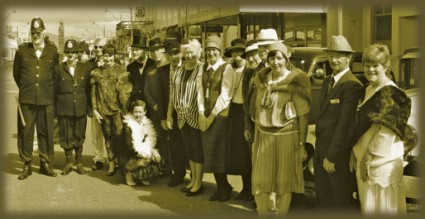
Another day, another festival. This time we’re in New Zealand, for the homely delights of the Opotiki Silent Film Festival. Organised by the Opotiki Community Arts Council, and held in Opotiki’s art deco De Luxe Theatre, the festival is noteworthy for encouraging its audiences to dress up in period costume, something that you can’t quite imagine happening in Pordenone (more’s the pity).

This year’s festival takes place 4-5 September. Financial constraints have led them to bill this year’s offering as a Mini Silent Festival, but it’s a fine programme for all that (all with live piano accompaniment):

1. COMEDY CLASSIC The Three Ages ~ Buster Keaton
4pm Friday 4th ~ 1923 ~ 63mins

In his first independently produced feature film Buster tells of love and romance through the Stone Age, the Roman Age, and the Modern Age.

2. MELODRAMA ~ The Show-Off
5.30pm Friday 4th ~ 1926 ~ 82mins

A show-off clerk posing as a railroad executive catches a young bride and then drives her family’s finances to the brink of ruin.

3. CHAPLIN COLLECTION
7.30pm Friday 4th ~ 4 films ~ 95 mins

* Kid Auto Races in Venice 1914 – The very first time we see Chaplin as ‘the Tramp’, hogging the camera at a real event.
* The Vagabond 1916 – An impoverished violinist falls for a beautiful gypsy girl. His love appears to be thwarted but he wins out in the end.
* The Fireman 1916 – Charlie is a fireman who always does everything wrong. Group slapstick at its very best.
* One A.M. 1916 – After a night on the town, Charlie comes home drunk and unable to find his key… A raucous one-man show.

4. ROMANTIC COMEDY ~ Steamboat Bill Jr. ~ Buster Keaton
2pm Saturday 5th ~ 1928 ~ 71mins

Willie is the effete son of riverboat captain ‘Steamboat Bill’, visiting his dad after years away. Bill tries to turn his son into a man without apparent success. Bill has a dispute with a powerful banker while Willie falls for Kitty, the banker’s daughter. When a hurricane hits, Willie leaps to the rescue and saves the day.

5. SCHMALTZ! ~ The Plastic Age ~ Clara Bow
3.30pm Saturday 5th ~ 1925 ~ 73mins

Featuring our favourite Clara Bow. A promising student is diverted by the ‘flaming youth in rebellion’ of the twenties who danced to wild jazz and had petting parties!

6. SHORTS SELECTION ~ A Symphony of Shorts
5pm Saturday 5th ~ 73mins

An amazing selection of European and US shorts providing a fascinating insight into life before the Talkies.

* Those Awful Hats
* For Her Mother’s Day
* Folies-Bergère Fireman (features nudity!)
* Monkey Chase ~ Titanic
* The Mystery of the Leaping Fish

7. SWASHBUCKLER ~ The Thief of Bagdad ~ Douglas Fairbanks
7.30pm Saturday 5th ~ 1924 ~ 155mins

A thief (Douglas Fairbanks Snr) falls in love with the Caliph of Bagdad’s daughter who will give her hand to the suitor who brings back the rarest treasure. The thief embarks on a magical journey, fraught with danger…

I like those helpful headings. A bit at a loss as to what Monkey Chase ~ Titanic might be, but all in all a great line-up. Further information, including booking form, and a delightful selection of photos from past festivals, showing how much the audiences gets into the swing of things, can be found on the festival site. The site also promises that “the foyer will be decorated in style, and tea with Lamingtons or shortbread will be available at the Nibblenook”. Perfect.

Jornada Brasileira de Cinema Silencioso

jornada

http://www.cinemateca.gov.br/jornada

Having told you a short while ago about Brazilian silent film journals available online, now it’s time to let you know (courtesy of the Pordenone film festival site) of the Cinemateca Brasileira’s third annual festival of silent film, Jornada Brasileira de Cinema Silencioso. The festival runs 7-16 August 2009, at the Cinemateca in São Paulo, and through the modern miracle that is Google Translate, I can tell you something about it.

The main strand of the festival is dedicated to French silent cinema, and features films from Les Archive du Film CNC, the Cinémathèque Française and (familiar to regular Bioscopists) the Musée Albert-Kahn. The programme includes shorts by the Lumière brothers, documentaries on Corsica, Tunisia and Abyssinia, and assorted feature films from the 1920s, including Marcel L’Herbier’s L’homme du large (1920), Pierre Marodon’s Salammbô (1925), Alfred Machin’s Le manoir de la peur (1927), Berthe Dagmar and Jean Durand’s L’île d’amour (1928) and Jean Grémillon’s Maldone (1928). André Sauvage’s Études sur Paris (1928) will be shown with orchestral score by Brazilian composer José Antônio de Almeida Prado. There will be a selection of early shorts directed by Alice Guy, and a special presentation by Isabelle Marinone on the relationship between anarchism and cinema in France, including films made by French film collective Cinéma du Peuple: La Commune (Armand Guerra, 1914), Les misères de l’aiguille (Raphael Clamour, 1914) and fragments from Le Vieux dock (Armand Guerra, 1914).

Silent films set in Brazil are also featured. There will be documentaries on Amazonian travel and ethnography by Luiz Thomaz Reis and Silvino Santos, including The River of Doubt (1928?) on a 1914 expedition headed by Theodore Roosevelt. There is more Latin American cinema with Chile’s El Husar de la muerte (Pedro Sienna, 1925), and a touch of modern fantasy with the Wisconsin Bioscope’s A expedição brasileira de 1916 (2006).

The festival has a section dedicated to notable titles previously featured at the Giornate del Cinema Muto in Pordenone. This year it is showing Marion Davies in The Patsy (King Vidor, 1928), Beatrice Lillie in Exit Smiling (Sam Taylor, 1926), Nell Shipman in Back to God’s country (David Hartford, 1919), and Li Lili in that great Bioscope favourite, Tianming/Daybreak (Sun Yu, 1933), plus Alfred Machin’s anti-war Maudite soit la guerre! (1914). And there’s a special programme devoted to the trick and fantasy films of Segundo de Chomón.

In short, it’s a fabulous-looking programme. Full details of the films can be found on the site, divided up by day and theme, along with contact details and other festival information, all in Portuguese.

Strade del cinema 2009

chaplin_strade

http://www.stradedelcinema.it

Apologies for being a little in the day with news of Strade del Cinema, Italy’s less-heralded international festival of silent cinema and music. The festival takes place in Aosta (near Turin), at the Aosta Roman Theatre, and this year runs 6-13 August. The festival is organized by the Strade del Cinema Cultural Association and the City of Aosta, in collaboration with the Turin National Museum of Cinema/Fondazione Maria Adriana Prolo and the support of the UNESCO Italian National Commission. This year’s festival is dedicated to Charlie Chaplin, and is free to all. Its distinctive feature is the emphasis on music by young musicians, participants in the festival’s Young European Musicians Contest.

Here’s the festival programme:

AUGUST 6
ROMAN THEATRE – 21h30
Opening Event in collaboration with AOSTACLASSICA
Tribute to Stanley Kubrick through Gyorgy Ligeti’s music
Orchestra Laboratorio SFOM diected by Mauro Gino

AUGUST 7
ROMAN THEATRE – 21h30
YOUNG EUROPEAN MUSICIANS CONTEST

Retrospective Charlie Chaplin 2

The Fireman, music by Chirichiello e i casi a parte
producer: Charles Chaplin for Lone Star Mutual; director: Charles Chaplin; photography: Frank D. Williams and Roland Totheroh; with: Charles Chaplin, Edna Purviance, Eric Campbell, Lloyd Bacon, Albert Austin; release date: 12 June 1916.

The Vagabond, music by Yati Durant Ensemble
producer: Charles Chaplin for Lone Star Mutual; director: Charles Chaplin; photography: Frank D. Williams; photography assistant: Roland Totheroh; with: Charles Chaplin, Edna Purviance, Eric Campbell, Lloyd Bacon, Albert Austin; release date: 10 July 1916.

AUGUST 8
ROMAN THEATRE – 21h30
YOUNG EUROPEAN MUSICIANS CONTEST

Retrospective Charlie Chaplin 2

The Adventurer, music by Parallelo Dramma
producer: Charles Chaplin for Lone Star Mutual; director: Charles Chaplin; photography: Roland Totheroh; with: Charles Chaplin, Henri Bergman, Edna Purviance, Martha Golden, Eric Campbell; release date: 22 October 1917

The Floorwalker, music by Simone Maggio
producer: Charles Chaplin for Lone Star Mutual; director: Charles Chaplin; photography: Frank D. Williams; photography assistant: Roland Totheroh; with: Charles Chaplin, Eric Campbell, Edna Purviance, Lloyd Bacon, Albert Austin; release date: 15 May 1916

AUGUST 9
ROMAN THEATRE – 19h00
YOUNG EUROPEAN MUSICIANS CONTEST

Retrospective Charlie Chaplin 2

The Tramp, music by Lili Refrain
producer: Jess Robbins for The Essanay Films; director: Charles Chaplin; photography: Henri Ensign; with: Charles Chaplin, Edna Purviance, Fred Goodwins, Lloyd Bacon; release date: 11 April 1915

Shangaied, music by Magus
producer: Jess Robbins for The Essanay Films; director: Charles Chaplin; photography: Henri Ensign; with: Charles Chaplin, Edna Purviance, Wesley Ruggles, Lawrence A. Bowes; release date: 21 June 1915

AUGUST 10
ROMAN THEATRE – 21h30
YOUNG EUROPEAN MUSICIANS CONTEST

Retrospective Charlie Chaplin 2

Easy Street, music by Illya Amar
producer: Charles Chaplin for Lone Star Mutual; director: Charles Chaplin; photography: Roland Totheroh; with: Charles Chaplin, Henri Bergman, Edna Purviance, Albert Austin; release date: 5 February 1917

Work, music by Elia Casu/Antonio Pinna Duo
producer: Jess Robbins for The Essanay Films; director: Charles Chaplin; photography: Henri Ensign; with: Charles Chaplin, Billy Armstrong, Edna Purviance; release date: 21 June 1915

AUGUST 11
ROMAN THEATRE – 21h30
YOUNG EUROPEAN MUSICIANS CONTEST

Retrospective Charlie Chaplin 2

The Pawnshop, music by PanGea Orchestra
producer: Charles Chaplin for Lone Star Mutual; director: Charles Chaplin; photography: Roland Totheroh; with: Charles Chaplin, Henri Bergman, Edna Purviance, John Rand; release date: 2 October 1916

The Rink, music by Federico Missio Movie Kit
producer: Charles Chaplin pour Lone Star Mutual; director: Charles Chaplin; photography: Roland Totheroh; with: Charles Chaplin, Edna Purviance, Eric Campbell, Lloyd Bacon, Albert Austin; release date: 2 October 1916

AUGUST 12
ROMAN THEATRE – 21h30 – EVENTS
IN COLLABORATION WITH THE TURIN NATIONAL MUSEUM OF CINEMA
Events: Tigre Reale (Italy, 1916)

Music by Paolo Angeli, Gavino Murgia and Antonello Salis

Tigre Reale (ITALY, 1916)
director: Giovanni Pastrone; writer : Giovanni Vergada (1873); photography: Giovanni Tomatis, Segundo de Chomón; producer: Itala Film, Turin; original length: 1742 m; copy length: 1600 m ; titles: italian; censor certificate: 11662 du 20/6/1916; release date in Rome: 9/11/1916; preview: Turin, “Salone Ghersi”, July 1916; Rome, 9 november 1916 With: Pina Menichelli (Countess Natka), Alberto Nipoti (Giorgio la Ferita), Febo Mari (Dolsi), Valentina Frascaroli (Erminia), Gabriel Moreau (Count De Rancy), Ernesto Vaser, Enrico Gemelli;
restored copy: 35mm bn col, 1592 mt., 69′ a 20 ft/s

AUGUST 13
ROMAN THEATRE – 21h30 – EVENTS
Events: Safety Last (USA, 1923)

Music by Neil Brand

Safety Last (USA, 1923)
production: Hal Roach pour Hal Roach Studios; director: Fred Newmeyer and Sam Taylor; writers: Hal Roach, Sam Taylor, Tim Whelan; photography: Walter Lundin; artistic direction: Fred Guiol; with: Harold Lloyd, Mildred Davis, Bill Strother, Noah Young, Westcott B. Clarke; release date : 1 April 1923.

More information on the festival website (which seems to tell you a lot about the music but not much about how to get there, where to stay, and so forth).

Pordenone countdown

Les-Petits-Pifferari

Les Petits Pifferari (1909), part of the Corrick Collection, to be screened at Le Giornate del Cinema Muto

Time has slipped by, as time inevitably will, and those for whom the world of silent film tends to revolve around a small town in north-eastern Italy will be thinking that it’s about time they looked up what’s on offer at this year’s Giornate del Cinema Muto a.k.a. the Pordenone Silent Film Festival.

For those not in the know, Le Giornate del Cinema Muto is the world’s premiere silent film festival, hosted by La Cineteca del Friuli, and visited every year by hundreds of film buffs, historians, academics and archivists, who are treated to eight days of silent films of astonishingly diverse content and style, from countries all around the world, artfully presented in assorted themes, and accompanied by the leading names in silent film music. It takes place in Pordenone, an unassuming town an hour’s train ride from Venice, with main screenings held in the commodious Verdi theatre. It is never less than a marvellous way to spend the time, whether you are one of those who sit through every title (notebook in hand) from 9.00am to past midnight, or one of those who frequent the pavement cafes, convincing your neighbour of the importance of your next project or conspiratorially discussing archive politics.

This year’s festival takes place 3-10 October, and a large part of the programme has been advertised already, of which this is the summary:

Special Events
The Merry Widow (Erich von Stroheim, US 1925)

Sherlock and Beyond
The Amazing Partnership; Bobby the Boy Scout or the Boy Detective; Inscrutable Drew, Investigator: The Moon Diamond; Lord John’s Journal: A Bargain with Chance; The Peril of the Fleet; The Sign of Four

Albatros
A presentation curated by the Cinémathèque française, who are in process of restoring their large holding of Albatros Films
Carmen (Jacques Feyder, 1926), Ce cochon de Morin (Victor Tourjansky, 1924), Le chant de l’amour triomphant (Victor Tourjansky, 1923), Le chasseur de chez Maxim’s (Nikolai Rimsky, 1927), La dame masquée (Victor Tourjansky, 1924), L’heureuse mort (Serge Nadejdine, 1924), Justice d’abord (Jacob Protazanov, 1921), La nuit du 11 septembre (Bernard Deschamps, 1919), Le quinzième prélude de Chopin (Victor Tourjansky, 1922); Shorts: Harmonies de Paris (Lucie Derain, 1928), Nocturne (Marcel Silver, 1926)

The Canon Revisited
Dom na Trubnoy; Du skal aere din hustru; Der Golem; Gunnar Hedes saga; J’accuse; Rotaie; The Ten Commandments

The Screen Decades Project
Broncho Billy’s Christmas Dinner; The Dream of a Rarebit Fiend; The Perils of Pauline: The Aerial Wire; The Sinking of the Lusitania; The “Teddy” Bears

The Corrick Collection, 3
And a Little Child Shall Lead Them; A Baby’s Shoe; La Belle au bois dormant; Comedy Cartoons; The Day-Postle Match; Les Débuts d’un chauffeur; Down on the Farm; Her First Cake; How Jones Lost His Roll; J’ai perdu mon lorgnon; La Métallurgie au Creusot; Niagara in Winter 1909; Les Petits pifferari; La Poule aux oeufs d’or; Reception on, and Inspection of, H.M.S. “Dreadnought”; The Short Sighted Cyclist; Le Tour du monde d’un policier; Who Stole Casey’s Wood?

Divas
– Francesca Bertini (Mariute)
– Asta Nielsen (Asta Nielsen Mannequin; Die Geliebte Roswolskys; Steuermann Holk)

British Silents
Battling Bruisers: Some Boxing Buffoonery

Rediscoveries and Restorations
– Bois d’Arcy 40 – Le bonheur conjugal (Robert Saidreau, FR 1920), Graziella (Marcel Vandal, FR 1925), L’île enchantée (Henri Roussell, FR 1926), La vie merveilleuse de Bernadette (Georges Pallu, FR 1929), Études sur Paris (André Sauvage, FR 1928)
– Giuseppe Pacchioni
Die Gezeichneten (Carl Theodor Dreyer, DE 1922)
Kurotegumi Sukeroku (Shochiku Shimokamo Studio, JP 1929)
The Letter from Hollywood (US, c. 1926. Compilation film including the only known footage from the 1925 D.W. Griffith feature That Royle Girl, starring Carol Dempster and W.C. Fields)
Monkey’s Moon (Kenneth Macpherson, US 1929)
On Strike (Bud Fisher Films Corporation, US 1920)
The Three Kings/Ein Mädel und 3 Clowns (Hans Steinhoff, GB/DE 1928)
Haghefilm/Selznick School Fellowship 2009:
Kodachrome Two-Color Test Shots No. III (Eastman Kodak Company, US 1922)

Portraits
Helsinki, ikuisesti (Peter von Bagh, FI 2008)
Heppy’s Daughter (Film Friends Productions, GB 2009)

serenading

Donald Sosin, Joanna Seaton and Jean Darling performing 2008’s Serenading the Silents

If you’ve been to Pordenone before, you’ll be doing your best to go again. If you’ve not been before, here’s the drill. The registration fee is 30 euros – thereafter, every screening is free, except for the opening and closing gala events. You should fill out the registration request form (available on the site) in the first place. If you attended the festival last year, or have recently contacted them by email, then they will have you on the mailing list, and this year’s registration details should have been sent to you by now.

Pordenone has several hotels of the plain but entirely suitable type, and the festival site provides a list of links and a map. The two airports that best serve Pordenone are Venice Marco Polo and Treviso (it’s a long journey from the third airport, Trieste, though having done it once I can recommend the dazzling views over the Adriatic from the coach that takes you from airport to Trieste train station). There is a regular bus service from Marco Polo to Pordenone, the Marco Polo Shuttle, or else catch the bus from the airport to Mestre train station and then it’s direct to Pordenone. An airport bus takes you from Treviso airport to Treviso station, on the same railway line to Pordenone.

Films are shown from 9.00am to midnight or so, with breaks around 13.00-14.30 and 18.30-20.30. All are presented by live music (chiefly piano, but with some specialist presentations, plus orchestral accompaniment for the gala screenings). The films – which are chiefly on 35mm – come from archives all around the world, and computer-generated subtitle translations are now replacing the traditional translation through headphones. There is also a Film Fair (books, posters, stills, DVDs etc), the Collegium for film studies students, masterclasses, and assorted special events, presentations and notable guests. And then there are the publications, the catalogue that’s a scholar’s treasure trove, and so many leaflets advertising events, publications and projects around the world that you’ll need a spare suitcase to carry them all.

All the relevant information can be found on the festival site. Pordenone can sometimes seem a little too much directed towards the specialised end of silent films, with completist retrospectives of people or studios you might struggle to find in the reference books, but there is no better place for discovering the depth and breadth of the genre. And the food’s great.

3rd International Silent Film Festival

3rdinternational

http://www.goethe.de/ins/ph/map/en4721033v.htm

Next week sees the start of the Philippines’ 3rd International Silent Film Festival, the festival of classic silent films from around the world accompanied by Philippine music. The festival runs 30 July to 27 August, with screenings every Thursday at the Shang Cineplex Cinema 1, Shangri-la Plaza, Mandaluyong City. The festival is organised by the Goethe-Institut, Instituto Cervantes, Japan Foundation and the embassies of France and Italy in partnership with the Shangri-la Plaza.

Here is this year’s screening schedule:

July 30
JAPAN: JIROKICHI THE RAT (Oatsurae Jirokichi Koshi)
directed by Daisuke Ito, 1931
Music by Kalayo

The story was adapted by Ito from a novel written by Furukawa Eiji based on the life of Nezumi Kozo (The Rat), a notorious burglar active during the early 1800’s (the end of the Edo Period). Nezumi Kozo won great fame for his daring adventures stealing from the homes of wealthy people late at night. Eventually he was captured and executed in 1835.

The film follows Jirokichi as he leaves Edo for Osaka to get away from the police. Along the way he meets Osen, a young woman forced into prostitution by her older brother. Although Osen falls for Jirokichi, his heart goes out to Okino, a poor girl from a fallen samurai family. Jirokichi learns that it was he himself who brought about the collapse of Okino’s family when he robbed a rich feudal lord back in Edo. Nikichi, Osen’s older brother, has got his own plans for Okino.

August 6
ITALY: THE MECHANICAL MAN (L’uomo meccanico)
directed by Andre Deed, 1921
Music by Caliph8 with Kalila Agilos, Malek Lopez, Pasta Groove and Tad Ermitaño

A city is gripped in terror as a colossal robot runs rampant in an unstoppable crime spree. The police are powerless in the face of the frightening carnage and destruction, but the remotely controlled menace may soon meet its match – a second mechanical man is sent to confront it in a horrific showdown at the local opera house.

This ultra-rare, nearly forgotten silent horror epic from the dawn of Italian cinema was long considered lost. Some reels of the Portuguese release version were discovered in Brazil. The discovered film amounted to 740 meters which is believed to be approximately 40% of the complete film. Though missing much of its original footage, this historic work is still a striking and powerful piece of early fantasy film-making featuring one of the few directorial efforts by André Deed, a protégé of Georges Melies, the godfather of cinema magic.

August 13
GERMANY: PEOPLE ON SUNDAY (Menschen am Sonntag)
directed by Robert Siodmak, 1929/30
Music by Nyko Maca + Playground

A summer day in Berlin, 1929: With unpretentious humor this astonishing first film by artists who were soon to become Berlin exiles deals with how the working class spends its precious leisure time. Berlin is as empty as a ghost town, everyone flees to the countryside, the train stations are packed. Erwin, a taxi driver, meets up with a young traveling salesman and his female companions, who are on their way to a nearby lake for a day of swimming, snoozing, and flirting, leaving the cabbie’s wife to sleep away her Sunday.

Billed as a ‘film without actors’, each of the on-screen participants effectively played themselves and returned to their day jobs once production had concluded. The film is the early collaboration of five young Berlin-based filmmakers – Robert and Curt Siodmak, Billy Wilder, Edgar G Ulmer, Eugen Schuefftan and Fred Zinneman – who would all go on to great international success. Produced with little financial assistance, it made film history as the avant garde precursor of poetic realism.

August 20
SPAIN: THE CURSED VILLAGE (La aldea maldita)
directed by Florián Rey, 1930
Music by Johnny Alegre AFFINITY

A story about poverty, honor and forgiveness in a small Castilian village, during a time when women had no rights at all to live their own life without the protection of men. It depicts a dramatic experience of the capabilities of the human mind in a time that the concept of honour was completely determined by the grade of submission of your wife.

Juan Castilla lives with his wife Acacia and their child, and with the boy’s blind grandfather, Martin. Juan got imprisoned for quarrelling with the local political tyrant and usurer, Lucas, during a crisis. Magdalena, the neighbour, convinces Acacia to leave the impoverished town that seemed to have a curse on it. Three years later, Juan finds his wife working in a pub. He obliged her to return home and to serve the family until the death of the sick grandfather Martin.

August 27
FRANCE: FANTOMAS: UNDER THE SHADOW OF THE GUILLOTINE (Fantomas: A l’ombre de la guillotine)
directed by Louis Feuillade, 1913
Music by Corporate Lo-fi

Feuillade presents to us the character of Fantomas through a series of dramatic episodes: the robbery of the Royal palace Hotel, the successive transformations of Fantomas, and the substitution of the actor Valgrand. The masked hero is presented as a cruel being. We discover the mistress, Lady Beltham, accomplice and victim of Fantomas, then the obsessive inspector Juve introduced as her best enemy.

Bonner Sommerkino 2009

sommerkino

Evening screening at the Arkadenhof, Bonn University, from http://www.film-ist-kultur.de

Germany’s silent film festival Bonner Sommerkino returns to Bonn 13-23 August. The programme seems to get more eye-catching each year, and this time around highlights include the recently discovered oldest surviving Korean feature film, Cheongchun’s Sipjaro (Crossroads of Youth) (1934), Victor Sjöström’s Klostret i Sendomir (1919), a rare Mexican silent, El Puño de hierro (1927), everyone’s festival favourite Bardelys the Magnificent (1926), and Louise Brooks in William Wellman’s Beggars of Life (1928). The starry line-up of musicians includes Neil Brand, Stephen Horne, Günter Buchwald, Joachim Bärenz, Aljoscha and Sabrina Zimmermann.

Details of the festival are on the website, in German, which includes the programme. Here’s what’s on show – German titles in capitals, original language title (where relevant) in brackets:

Arkadenhof der Universität Bonn

Thursday, 13 August 2009
21.00 LIEBE ZU FUSS (Amor Pedestre)
Italy 1914, Marcel Fabre, 6 Min.
DER SPRUNG INS GLÜCK (Totte et sa chance)
France/Germany 1927, Augusto Genina, 97 Min.

Friday, 14 August 2009
21.00 DAS KLOSTER VON SENDOMIR (Klostret i Sendomir)
Sweden 1919, Victor Sjöström, 76 Min.
22.30 DIE EISERNE FAUST (El Puño de hierro)
Mexico 1927, Gabriel García Moreno, 77 Min.

Saturday, 15 August 2009
21.00 DIE BEIDEN SCHÜCHTERNEN (Les deux timides)
France 1928, René Clair, 62 Min.
22.30 DER HERR FILMVORFÜHRER (His Nibs)
USA 1921, Gregory La Cava, 56 Min.

Sunday, 16 August 2009
21.00 DIE HERUMTREIBER (The Vagabond)
USA 1914, Charles Chaplin, 15 Min.
BETTLER DES LEBENS (Beggars of Life)
USA 1928, William A. Wellman, 100 Min.

Monday, 17 August 2009
21.00 DAS WEIB DES PHARAO
Germany 1922, Ernst Lubitsch, 103 Min.
TUTANKHAMEN
Austria 1923, Raymond Dandy, 27 Min.

Tuesday, 18 August 2009
21.00 DER AUTONARR (Get Out and Get Under)
USA 1920, Hal Roach, 25 Min.
AUSGEFLIPPT (Running Wild)
USA 1927, Gregory La Cava, 80 Min.

Wednesday, 19 August 2009
21.00 DAS GESCHWÜR (Kobutori)
Japan 1929, Yasuji Murata, 10 Min.
THEATERFIMMEL (Stage Struck)
USA 1925, Allan Dwan, 78 Min.

Thursday, 20 August 2009
21.00 NOCTURNO
Croatia 1935, Oktavijan Miletic, 11 Min.
DER MORDFALL WARE (The Ware Case)
UK 1928, Manning Haynes, 90 Min.

Friday, 21 August 2009
21.00 WASSER HAT BALKEN (Steamboat Bill, Jr.)
USA 1928, Charles Reisner, Buster Keaton, 71 Min.
22.30 NACH UNSERER TRENNUNG (Kimi to wakarete)
Japan 1933, Mikio Naruse, 72 Min.

Saturday, 22 August 2009
21.00 JUGEND AM SCHEIDEWEG (Cheongchun’s Sipjaro)
Korea 1934, Ahn Jong-hwa, 74 Min.
22.30 DER FAULPELZ (Lazybones)
USA 1925, Frank Borzage, 78 Min.

Sunday, 23 August 2009
21.00 TRAILER: DIE ABENTEUER EINES ZEHNMARKSCHEINS
Germany 1926, Berthold Viertel, 2 Min.
DER LEBENDE LEICHNAM (Zhivoy trup)
Germany/USSR 1929, Fedor Ozep, 120 Min.

LVR-LandesMuseum Bonn

Sunday, 16 August 2009
15.00 ALBERT EINSTEINS RELATIVITÄTSTHEORIE UND DAS KINO
Vortrag mit Film von Milena Wazeck
17.00 WUNDER DER SCHÖPFUNG
Germany 1925, Hanns Walter Kornblum, 92 Min.

Sunday, 23 August 2009
15.00 DER ITALIENISCHE FUTURISMUS UND DAS KINO
Vortrag mit Filmbeispielen von Donatella Chiancone-Schneider
17.00 GALGENHOCHZEIT (Bardelys the Magnificent)
USA 1926, King Vidor, 90 Min.

Cinecon 45

cinecon

Photographs from last year’s Cinecon 44

Cinecon, the classic film festival, takes place 3-7 September over Labor Day weekend, at Grauman’s Egyptian Theater, Hollywood Blvd. Cinecon describes itself as is a five day celebration of the movies, with screenings of nearly thirty rare silent and early sound feature films and as many short subjects from leading film archives and Hollywood studio vaults. It is dedicated to showcasing unusual films that are rarely given public screenings, mostly on 35mm, with live piano accompaniment for silents. There are celebrity guests and opportunities to buy movie memorabilia in six dealers’ rooms. Titles to be screened won’t be announced until a month before the event, but these are the film screening hours:

Thursday Sep. 3 7 pm – midnight
Friday Sep. 4 9 am – midnight
Saturday Sep. 5 9 am – midnight
Sunday Sep. 6 9 am – 6:30 pm
Monday Sep. 7 9 am – 6:00 pm

To attend the Cinecon Classic Film Festival you need to become a Cinecon member. Membership is included when you buy a full festival pass or a single day pass. No admissions to individual films are sold. Passes also include free entrance to the memorabilia dealers’ rooms but for those who only want to shop they offer a separate dealers-room-only admission. Background information and registration details are available on the Cinecon site.

Broncho Billy rides again

niles

http://www.nilesfilmmuseum.org/festival2009.htm

This year Broncho Billy Silent Film Festival takes place 26-28 June, as usual organised by the Niles Essanay Silent Film Museum at the Niles Edison Theater, Niles, Fremont CA. The theme of this year’s festival is ‘Independent Film Companies on the Rise’, and this is the schedule:

Friday Evening, June 26 – FROM LASKY TO PARAMOUNT

8:00 PM Main Program
The Enemy Sex – Betty Compson, Percy Marmont, Sheldon Lewis (1924)
A Trip Through the Paramount Studio – short: (1927)
When Clubs Were Trumps – Betty Compson, Neal Burns (1916)
The Butcher Boy – Roscoe “Fatty” Arbuckle, Buster Keaton (1917)
Phil Carli at the piano

Saturday Early Afternoon, June 26 – SHORT COMEDIES INTRODUCED BY DIANA SERRA CARY (Baby Peggy)

12:30 PM Comedy Program
Baby Peggy Birthday Newsreel – (2009, Niles-Essanay) Diana Cary and Fans
Cousins of Sherlocko – (1912)
Good Night, Nurse – Neal Burns, Billie Rhodes (1916)
The Kid Reporter – Baby Peggy (1923)
The Ghosts of Hollywood – William MacInnes Narrates (1931)
Drink Hearty – Snub Pollard, Marie Mosquini (1920)
Don’t Weaken – Ford Sterling, Charlie Murray (1920)
Judy Rosenberg at the piano

Saturday Late Afternoon, June 27 – THE AMERICAN FILM COMPANY, FROM CHICAGO TO SANTA BARBARA

3:30 PM Program
Faith – Mary Miles Minter, Margaret Shelby (1916)
Photoplay Magazine Screen Supplement – A behind-the-scenes look (1918)
The Capture of Rattlesnake Ike – J. Warren Kerrigan, Pauline Bush, Louise Lester (1911)
Calamity Anne, Guardian – J. Warren Kerrigan, Marshall Neilan, Louise Lester (1912)
Jon Mirsalis at the piano

Saturday Evening, June 27 – THOMAS H. INCE DOUBLE FEATURE

7:30 PM Program
The Crab – Frank Keenan, Thelma Salter (1917)
One a Minute – Douglas MacLean, Victor Potel. (1921)
With short:
A Tour of the Thomas Ince Studio – A behind-the-scenes look (1924)
Jon Mirsalis at the piano

Sunday Afternoon, June 28 – THANHOUSER 100th ANNIVERSARY, Introduced by Ned Thanhouser

12:30 PM Program
The Woman in White – Florence La Badie, Richard R. Neill (1917)
With shorts:
The Evidence of the Film – William Garwood, Marie Eline, Florence La Badie (1913)
Just a Shabby Doll – Mignon Anderson, Harry Benham, Helen Badgley (1913)
Phil Carli at the piano

Sunday Late Afternoon, June 28 – MADE IN THE BAY AREA SILENTS

3:30 PM Program
The Call of the Klondike – Gaston Glass, Dorothy Dwan (1926)
With shorts:
A Trip Down Market Street – Days before the earthquake and fire (1906)
Dream Picture – Lance, Mabel and Jimmy Nicholson, Albert Anderson. (1925)
Pop Tuttle, Deteckative – Dan Mason (1922)
Judy Rosenberg at the piano

Sunday Evening, June 28 – FROM IMP TO UNIVERSAL

7:30 PM Program
Foolish Wives – Erich von Stroheim, Mae Busch (1922)
With shorts:
Behind the Screen – Al Christie directs a film at Universal (1915)
Behind the Times – Ethel Grandin (1911)
Lizzie’s Dizzy Career – Eddie Lyons, Victoria Forde, Lee Moran (1915)
Bruce Loeb at the piano

The festival warns that there is very limited seating and purchasing tickets in advance is strongly recommended. Tickets can be purchased locally, online (using PayPal), or by US mail. Futher details, including directions and accomodation details, are on the festival web page.