Eight days and evenings of cinephilic joy

feu_mathias_pascal

Feu Mathias Pascal

The programme for this year’s Il Cinema Ritrovato has been announced. The festival takes place 27 June-4 July in Bologna, Italy, and is dedicated to restored films, silent and sound. Bologna always puts on a marvellously rich mix of astutely programmed themes, and this year looks like no exception. If it wasn’t quite so hot in Italy at that time of year I’d be there every year – though people keep telling me how good the air conditioning is. Well, one day, maybe… Anyway, here are the words of festival director Peter von Bagh to tell me what I’ll be missing:

Il Cinema Ritrovato, the festival sponsored by the Mostra Internazionale del Cinema Libero and the Cineteca del Comune di Bologna, invites film lovers from around the world to Bologna from Saturday June 27th through Saturday July 4th, 2009. Eight days and evenings of cinephilic joy to be experienced in various locations: the twin screens of the Cineteca’s Lumière cinemas, one dedicated just to silent cinema, the other to sound; the Bologna Opera House and the Arlecchino Cinema (where we can experience the miracle of big screen projection as films were meant to be seen, but almost never are these days).

Let’s get started with some of this year’s titles. We pay homage to certain films simply because they have a special place in film lovers’ memory: Michael Powell’s and Emeric Pressburger’s The Red Shoes in its splendid new Technicolor restoration by UCLA Film & Television Archive with The Film Foundation; a brand new restoration of Sergio Leone’s The Good, the Bad and the Ugly (for the closing night); Make Way for Tomorrow (Leo McCarey, 1937), the predecessor of Ozu’s Tokyo Monogatari and its equal as a deeply emotional experience.

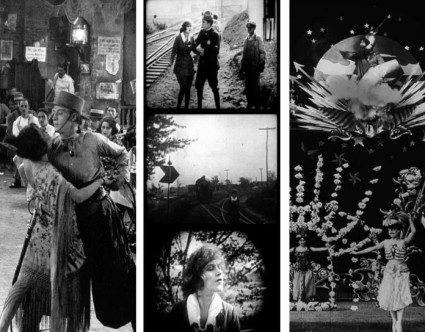
As always, evening screenings with a live orchestra promise to be some of the most exciting events: Timothy Brock, with a new score for the print restored by Cinémathèque française of Marcel L’Herbier’s Feu Mathias Pascal, the greatest Pirandello film; and Otto Donner, the grand maestro of Scandinavian jazz, with King Vidor’s The Crowd. Of course, there are also films that will be shown because they have been forgotten for too long such as Village of Sin by Ol’ga Preobraženskaja (1927), a rural melodrama and a key film from a particularly rich period of Soviet silent cinema.

The director of the year is the great Italian-American Frank Capra: his entire silent output, of which amazingly little is known today. We will be enchanted by works from the already fully-formed comic mastermind during Capra’s silent period, with their incisive view of social life and without the ready-made formulas of his later years. We will also dive into the dynamic, original and little-known beginning of his first 8 sound films, culminating in decisive masterpieces like Platinum Blonde and The Bitter Tea of General Yen. The program was created in full partnership with Sony-Columbia and with the participation of scholar and screenwriter Joseph McBride.

Vittorio Cottafavi is comparable to Sirk or Fassbinder or Leone in his capacity to treat any marginal genre with respect, literary sophistication, visual flair (with beautiful ideas about space, irony and rhythm) and a deeply nuanced popular sensibility which he lavished upon everything he touched, especially historical subjects and the peplum, which in his hands became a noble genre. The series of 12 films is curated by Adriano Aprà and Giulio Bursi.

The pleasure dome of the Arlecchino Cinema will offer two special sections: CinemaScope, widening horizons for the sixth year in a row, and color, the beginning of something that will bless our programs for some years to come. Our CinemaScope selection offers treasures like The Track of the Cat (William Wellman’s strange western with an even stranger color concept) and three famous epic movies by Vittorio Cottafavi. The first session dedicated to color is an introduction to the most notable uses of color during the first 50 years of cinema history, including the oldest hand-painted films, like masterpieces from Méliès and de Chomón, the first full color systems (Gaumont Chronochrome, Kinemacolor), tinted films, early Technicolor (in films like Scherzinger’s Redskin) and of course the miracle of the full three-strip Technicolor, both through restorations using contemporary film stock and in examples of original prints that have survived from its glory days. In other words, unforgettable viewing: Drums along the Mohawk (Ford), Pandora and the Flying Dutchman (Lewin), and of course The Red Shoes.

One Hundred Years Ago, a time travel journey that began 6 years ago, will again showcase the most exciting documentaries and fiction films about the life and imagination of people who lived exactly one century ago, with two special features: an homage to the miracle of Méliès and a reconstruction of the very first film festival in history, which took place, of course, in 1909. Mariann Lewinsky is this section’s curator.

Among the silent highlights we’ll present two small-scale portraits of notable personalities. First up is director Eleuterio Rodolfi (1876-1933), who started as an actor and later became a director of a number of films, including the celebrated 1917 version of Hamlet. And Anita Berber (1899-1928), who was a legendary, androgynous figure of Weimar Berlin: an actress, nude dancer, writer, celebrated in a portrait painted by Otto Dix, and equally impressive in the surviving examples of her appearances on screen.

Chaplin’s influence was unlimited and can be seen in the high quality of his assistants’ work. After Monta Bell last year, we present an equally creative mind, Harry d’Abbadie d’Arrast, with his two most remarkable films, A Gentleman of Paris (1927) and Laughter (1930).

Mornings too will have a special start: a full pack of Maciste, thanks to the restorations of seven films in collaboration with Museo Nazionale del Cinema di Torino. The Italian superman was a personification of the mythical hero adventuring in the past or right in the middle of modern times – the first and arguably the greatest of all the strong men of film history. The films, celebrated by Fellini and others, are totally fascinating as such, and moreover present a kind of synthesis of the film history of their day, combining – as Vittorio Martinelli put it – elements of Méliès and Lang, Gustave Doré and Flash Gordon…

Sponsored by the Cinémathèque de Toulouse and Gosfilmofond, curated by Valérie Pozner and Natacha Laurent, Kinojudaica is a series on Russian and Soviet films featuring Jewish actors, directors and themes, presenting little-known films from masters and equally fascinating films from filmmakers doomed to remain in total obscurity because of circumstances or because the films were forbidden for what seemed an eternity. Kinojudaica presents a rich flowering of Jewish films made in Russia and the Soviet Union: four silent programs and three little known sound films like Frontier by Michail Dubson (1935), The Return of Nathan Becker by Boris Špis and Rašel Mil’man (1931) and Nepokoronnye (The Taras Family) by Marc Donskoï (1945), with its terrifying re-creation of Babi Yar on screen.

Then there are films that offer a cross-section of life, with 10-15 people from all walks of society who encounter each other in situations without any clear-cut protagonist. For unknown reasons, British cinema made this a subgenre all its own, with films like Rome Express (Walter Forde, 1932), Friday the Thirteenth (Victor Saville, 1933), The Passing of the Third Floor Back (Berthold Viertel, 1935), culminating with Carol Reed’s finest 1930s film, Bank Holiday (1938).

Richard Leacock will be our guest this year. The cameraman of Flaherty’s film, Louisiana Story, and as such a bridge between the greatest tradition and the new heights of “direct cinema”, Leacock will present his own masterpiece, A Portrait of Stravinsky.

The cinema of Vichy gives us a glimpse into that enigmatic, paradoxical period of French film, with the reconstruction of an entire program from April 17, 1942, feature films, short propaganda films from 1940-44, official Vichy and other collaborationist materials, and resistance films. This program was curated by Eric Le Roy with Les Archives Françaises du Film.

Last year’s von Sternberg series was such an astounding success that we can’t imagine it being over: so this year we are offering the master’s most sublime film of his later years (The Shanghai Gesture, the perfect Dietrich film without Dietrich) as well as a selection of fabulous footage from I Claudius, a film that was never finished and that still haunts the world’s cinephiles. And we will see Von Sternberg at work once again in an interview by Eric de Kuyper for Belgian TV.

The underlying theme of this all is again cinephilia, the absolute love of cinema. Several programs will be dedicated to this theme: films on notable personalities (Bernard Chardère, Henri Langlois’s television interviews), the unsurpassed Cinéastes de notre temps programs by André S. Labarthe.

The festival also sponsors the Film Publishing Fair (Books, DVDs, Antiquarian and Vintage Materials) and Il Cinema Ritrovato DVD Award (6th edition). We would like to remind you that Il Cinema Ritrovato will host two seminars: the continuation of the Film Restoration Summer School / FIAF Summer School 2009, organized by the Cineteca di Bologna, and a workshop for European cinema exhibitors organized by Europa Cinemas and Progetto Schermi e Lavagne. Enrollment in each seminar requires separate registration, available on this website.

On a sadder note, funding for our festival has been cut drastically, so we unfortunately have had to rethink the hospitality we can offer to our very dear public. The rates agreed on with various hotels in the city are still very advantageous, and we hope that the films we are showing this year will convince you to be with us once again this year.

You are most cordially welcomed to the most memorable eight days of 2009.

Artistic Director of Il Cinema Ritrovato
Peter von Bagh

The full programme is on the festival site (in English and Italian), from which these are the silent films and silent film-related events on offer (in Italian, but you’ll cope):

Martedì 30 giugno
THE CROWD (La folla) Stati Uniti, 1928 Regia: King Vidor
Accompagnamento dal vivo del gruppo Jazz di Otto Donner

Giovedì 2 luglio
Progetto Chaplin
A DAY’S PLEASURE (Una giornata di vacanza) Stati Uniti, 1919 Regia: Charles Chaplin
SUNNYSIDE (Charlot in campagna) Stati Uniti, 1919 Regia: Charles Chaplin
ONE WEEK (Una settimana) Stati Uniti, 1921 Regia: Buster Keaton
Accompagnamento dal vivo diretto da Timothy Brock

Domenica 28 giugno
FEU MATHIAS PASCAL (Il fu Mattia Pascal) Francia, 1926 Regia: Marcel L’Herbier
Accompagnamento dal vivo dell’Orchestra del Teatro Comunale diretta da Timothy Brock

Cento anni fa: i film del 1909 – programmi a cura di Mariann Lewinsky

Omaggio a Eleuterio Rodolfi, Anita Berber e Georges Méliès

Frank Capra: il nome sopra il titolo
VISITA INCROCIATORE ITALIANO A SAN FRANCISCO Stati Uniti, 1921 Regia: Frank Capra
FULTA FISHER’S BOARDING HOUSE Stati Uniti, 1922 Regia: Frank Capra
THE STRONG MAN (La grande sparata) Stati Uniti, 1926 Regia: Frank Capra
LONG PANTS (Le sue ultime mutandine) Stati Uniti, 1927 Regia: Frank Capra
THAT CERTAIN THING (Quella certa cosa) Stati Uniti, 1928 Regia: Frank Capra
SO THIS IS LOVE? (Dunque è questo l’amore?) Stati Uniti, 1928 Regia: Frank Capra
THE MATINEE IDOL (Il teatro di Minnie) Stati Uniti, 1928 Regia: Frank Capra.
THE WAY OF THE STRONG (La maniera del forte) Stati Uniti,1928 Regia: Frank Capra
SUBMARINE (Femmine del mare) Stati Uniti,1928 Regia: Frank Capra
THE YOUNGER GENERATION (La nuova generazione) Stati Uniti, 1929 Regia: Frank Capra
THE DONOVAN AFFAIR (L’affare Donovan) Stati Uniti, 1929 Regia: Frank Capra

Kinojudaica, l’immagine degli ebrei nel cinema russo e sovietico
OÙ EST LA VÉRITÉ? (Vu iz emes?) URSS, 1913 Regia: Semion Mintus
LE MALHEUR DE SARAH (Gorrié Sarry) URSS, 1915 Regia: Alexandre Arkatov
LÉON DREY URSS, 1915 Regia: Evgueni Bauer
VÉRA TCHЕBЕRIAK URSS, 1917 Regia: Nikolaï Brechko-Brechklovski
CONTRE LA VOLONTÉ DES PÈRES (Protiv voli otsov) URSS, 1926-27 Regia: Evgueni Ivanov-Barkov
LES CINQ FIANCÉES (Piat nevest) URSS, 1929-30 Regia: Alexandre Soloviev
RETENEZ LEURS VISAGES (Zapomnite ikh litsa) URSS, 1929-30 Regia: Ivan Mutanov

Tutto Maciste
MACISTE (IL TERRORE DEI BANDITI) Italia, 1915 Regia: Luigi Romano Borgnetto,V. Denizot
MACISTE ALPINO Italia, 1916 Regia: Luigi Romano Borgnetto
MACISTE INNAMORATO Italia, 1919 Regia: Luigi Romano Borgnetto
MACISTE IN VACANZA Italia, 1920 Regia: Luigi Romano Borgnetto
MACISTE ALL’INFERNO Italia, 1925 Regia: Guido Brignone
MACISTE NELLA GABBIA DEI LEONI Italia, 1926 Regia: Guido Brignone
MACISTE CONTRO LO SCEICCO Italia, 1926 Regia: Mario Camerini

Jean Epstein, il mare come definizione del cinema
FINIS TERRAE Francia, 1929 Regia: Jean Epstein
MOR VRAN Francia, 1931 Regia: Jean Epstein

Dossier Chaplin e Napoleone

Omaggio a Harry d’Abbadie Arrast

Dossier Metropolis

Dossier Blasetti

La crisi economica ai tempi del muto

Rome Express, Friday the Thirteenth, Rodolfi’s Hamlet, Kinemacolor (Bologna has possibily the world’s largest collection of Kinemacolor films) and chronochrome, the films of 1909… Such gems, such treasures. I must be mad.
Here comes the San Francisco Silent Film Festival

WildRose

The programme for the 14th Annual San Francisco Silent Film Festival has been announced. The festival runs 10-12 July 2009 at its traditional home at the Castro Theatre in San Francisco.

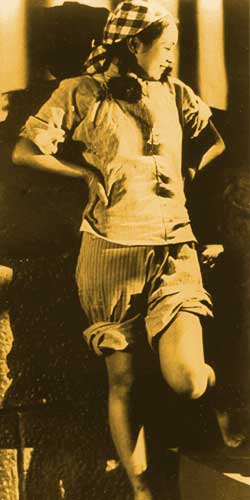
Among the festival highlights are Douglas Fairbanks and Lupe Velez in The Gaucho, Lillian Gish in Victor Sjöström’s sublime The Wind, John Gilbert in the joyously redisicovered Bardelys the Magnificent, W.C. Fields in So’s Your Old Man, gthe 1932 Chinese silent Wild Rose (illustrated) with Jin Yan, plus programmes devoted to Mary Pickford (the centenary of whose screen debut is marked this year) and Walt Disney’s Oswald the Lucky Rabbit.

There are classic films from the USA, USSR, Czechoslovakia and China; and a starry line-up of the world’s leading silent film musicians. And perhaps to top it all, Dennis James accompanies Aelita, Queen of Mars on the Theremin.

This is the line-up:

FRIDAY, JULY 10
The Gaucho 7PM

SATURDAY, JULY 11
Amazing Tales from the Archives 10AM
Bardelys the Magnificent 12 noon
Wild Rose 2:30PM
Underworld 5PM
The Wind 7:30PM
Aelita, Queen of Mars 9:45PM

SUNDAY, JULY 12
Oswald the Lucky Rabbit 10:30AM
Erotikon 1:30PM
So’s Your Old Man 4PM
The Fall of the House of Usher 6:15PM
Lady of the Pavements 8:15PM

Well, that’s a corking programme to be sure, further details of which are available on the festival site, along with the usual booking details, venue information, hotels etc. Or there’s the full press release to tell you more, as follows:

Tickets are on sale now for the foremost celebration of silent cinema in the Americas -The 14th Annual San Francisco Silent Film Festival, scheduled for July 10-12 at the Castro Theatre in San Francisco.

In the space of a mere three days audiences will have the chance to experience the breathtaking vitality and depth of the silent era with 12 programs of classic films and rediscoveries-complete with live musical accompaniment in a grand movie palace setting!

Douglas Fairbanks, John Gilbert, Lillian Gish – superstars of the silent era, all – are just a few of the legendary talents returning to the big screen, and we’re thrilled to welcome back some of the finest musicians to match music to image – including Mont Alto Motion Picture Orchestra, Philip Carli, Stephen Horne, Dennis James, and Donald Sosin.

Mont Alto will premiere its brand new original score, written expressly for the Silent Film Festival, to accompany our Opening Night presentation of THE GAUCHO (1927), starring Douglas Fairbanks and the revelation of the festival – Lupe Velez. Fairbanks, a huge star at the time, wrote this glorious adventure and generously shares the spotlight with the dazzling newcomer in her first starring role. Mont Alto will also accompany the West Coast Premiere of the restored legendary “lost” King Vidor film starring John Gillbert, BARDELYS THE MAGNIFICENT (1927), as well as playing for the Czech scorcher, EROTIKON (1929).

Pianist Stephen Horne of the National Film Theatre in London will return to accompany Jean Epstein’s surrealist masterpiece – THE FALL OF THE HOUSE OF USHER (1928). Luis Buñuel, fresh from his collaboration with Salvador Dali on Un Chien Andalou, assisted Epstein on this French take on USHER. Horne will also play for Josef von Sternberg’s proto-noir UNDERWORLD (1927), which will be introduced by the Noir City’s Eddie Muller; and AMAZING TALES FROM THE ARCHIVES, the fourth edition of our free-admission spotlight on film preservation. This special program will include the World Premiere of SCREEN SNAPSHOTS – 7TH SERIES, a rare short subject preserved by last year’s recipient of our Silent Film Festival Preservation Fellowship, Anne Smatla. We will
announce this year’s Fellowship recipient at this program.

Philip Carli of George Eastman House, returns to the baby grand to accompany our Director’s Pick program. Director Terry Zwigoff (Crumb, Ghost World, Bad Santa) has selected the rarely-screened comic gem SO’S YOUR OLD MAN, featuring the hilarious comedian W.C. Fields – a star well known for his work in talking pictures who proves to be a master of the silent screen as well!

The gloriously rousing Chinese film WILD ROSE (1932) starring Jin Yan, the Valentino of China will be accompanied by master pianist Donald Sosin, and the 2009 Silent Film Festival Award will be presented at this program to the Chinese Film Archive. Yan’s widow Qin Yi, herself a celebrated entertainer in China, will introduce the program. Sosin will also accompany our family-friendly matinee program, featuring the wonderful Disney character OSWALD THE LUCKY RABBIT (1927-1928). Leonard Maltin and animator Ub Iwerks’ granddaughter Leslie Iwerks will guide us through this enchanted animated program.

Our Closing Night film will be D.W. Griffith’s last silent film – LADY OF THE PAVEMENTS (1929), starring the beautiful Lupe Velez – who opens the festival as well! With its splendid cinematic flourishes, LADY marks the master’s return to the cinematic firmament after years in the critical wilderness. The film was completed as a silent, then partially re-shot to qualify as a part-talkie including two musical numbers – Griffith’s innovative experimentation with “sound modulation.” Our presentation will include piano accompaniment by Donald Sosin, and vocal recreation of the musical numbers by Joanna Seaton!

The master of the Mighty Wurlitzer, Dennis James, will premiere his original score – commissioned by the Silent Film Festival – at our Centerpiece Presentation of Victor Sjöström’s brilliant THE WIND (1928), starring Lillian Gish in her finest role. Along with Griffith and Murnau, Swedish director Sjöström was one of the giants of the silent era who convinced critics that the motion picture was not a bastard child of the stage, but a vital art form in its own right. Our presentation will include a special wind effect (the kind used in silent movie scores in the 1920s)! The Centerpiece Presentation will be introduced by Leonard Maltin. James will also accompany the delirious Soviet futurist drama AELITA, QUEEN OF MARS (1924) on the Mighty Wurllitzer and the Theremin, backed up by Mark Goldstein on the Buchla Lightning!

This year we celebrate Biograph Studios, director D.W. Griffith, and the company’s most famous star Mary Pickford. This year marks the 100th anniversary of Pickford’s screen debut and to celebrate the centenary of her career on the silver screen, we will present several shorts featuring America’s Sweetheart, as well as recent preserved and restored Biograph titles from the Library of Congress and George Eastman House.

McRoskey Mattress Company will once again be the festival’s lead sponsor. As part of their sponsorship they have generously donated a Salem Day Bed (a $2,700 value) which will go to the lucky winner of our Grand Prize Raffle!

For complete program information and to buy tickets, please visit www.silentfilm.org

Programme for British Silent Film Festival

manxman2

Anny Ondra in The Manxman, from 1000 Frames of Hitchcock

The programme for this year’s British Silent Film Festival has been published. This year’s festival takes as its theme the use of sound and music in British silent cinema and celebrates the art of the silent film musician, past and present. It is taking place 4-6 June at the Barbican in London, and is being run alongisde the Sounds of Early Cinema in Britain conference, which takes place at the same venue 7-9 June.

Here are the programme details:

Thurs June 4
9.00 Registration / Barbican / Screen 1 Foyer
10.30 -11.00 Break
11.00 The Runaway Princess (1929) 79 mins
Music by John Sweeney
12.30 – 14.00 Lunch
14.00 Knowing the Score: case studies in musical accompaniment. Presented by Neil Brand, Philip Carli, Stephen Horne & John Sweeney
15.30 – 16.00 Break
16.00 The Battle of the Ancre and the Advance of the Tanks
Toby Haggith from the Imperial War Museum on different approaches to reconstructing the original score for this film with Laura Rossi and Stephen Horne
17.30 – 18.00 Break
18.00 Shooting Stars (1928) 81 mins
Music by Phil Carli
19.30 Dinner
21.00 The Dodge Brothers
Go West with White Oak (1921) 71mins
Programme 90 mins

Fri June 5
9.00 Sound Film Before 1930
Presented by Tony Fletcher with John Sweeney
10.30 -11.00 Break
11.00 The Wheels of Chance (1922) 71 mins
Music by Philip Carli
12.30 – 14.00 Lunch
14.00 Under the Greenwood Tree (1929) 87mins (Sound)
15.30 – 16.00 Break
16.00 W.K.L. Dickson in London
Paul Spehr on this pioneering film maker. Includes screenings of Biograph films
17.30 – 18.00 Break
18.00 The Third Annual Rachael Low Lecture Given by David Robinson
19.30 Dinner
20.30 Palais de Danse (1928) 95mins
With the Barbican Palais Orchestra

Sat June 6
9.00 The Vortex (1927) 73 mins
Intro by Jo Botting
Music by Stephen Horne
10.30 – 11.00 Break
11.00 Family Film Club – A Canine Concoction: First Film Dogs 90 mins
Music by Neil Brand
12.30 – 14.00 Lunch
14.00 The Manxman (1929) 90mins
Music by John Sweeney
15.30 – 16.00 Break
16.00 The Lost Musicians: the art of the cinema musician. With Neil Brand & colleagues
Music in Cinemas: a case study by Gerry Turvey
The Last Adventures of Sherlock Holmes; The Mazarin Stone (1923) 23mins
Music by Neil Brand
18.30 Break
20.30 BFI Southbank
The Ukulele Orchestra of Great Britain in ‘Ukulelescope’ (tickets required ) (also earlier performance at BFI Southbank at 16.15)

Sun June 7

11.00 SOCIAL EVENT
Silent Cinema Walk led by Ian Christie/org by Kelly Robinson
12.30 – 14.00 Lunch

15.00 Way Down East (1920)
Intro by David Mayer – score arranged and performed by Gillian Anderson
(separate tickets required)
Sounds of Early Cinema in Britain conference

Well, a fine selection of screenings and presentations (though I may have to have words with the organisers about that use of First Film Dogs…). Two of my very favourite silents are being screened, Anthony Asquith’s Shooting Stars and Alfred Hitchcock’s The Manxman, and Paul Spehr’s illustrated talk on W.K-L. Dickson’s Biograph films from the late 1890s comes strongly recommended.

Timetable and other details are available from the British Silent Film Festival site, and there are booking details on the Barbican site, including festival passes.

Tuff stuff

Smile by Christos Tsirbas, first place award winner at the 2008 Toronto Urban Film Festival

TUFF is the Toronto Urban Film Festival (TUFF), which has the admirable mission to show silent films to the commuters of Toronto. The festival, which takes place 11-20 September 2009, comprises an urban-themed programme of new one-minute silent films, which run repeatedly on the ONESTOP digital network of over 270 platform screens on fifty subway platforms of the Toronto Transit Commission (TTC) for seven days. The top three films of the festival are chosen by a Guest Judge; this year writer/director/actor Don McKellar. The program for the final Saturday of the festival is determined by audience votes as is the winner of the TUFF Choice Award.

TUFF is open to local, national and international submissions by video artists, filmmakers – trained and untrained – animators and urbanites with cameras or video capable mobile devices. Filmmakers are asked to submit one-minute silent videos addressing one of seven themes: Urban Encounters; Urban Diversity; Urban Journeys; Urban Imaginary; Urban Natural; Urban Secrets; and Urban Ideas. Deadline for submissions is 15 July 2009. It is free to submit; filmmakers retain their rights, and have a chance to win prizes, including a trip for two to Punta Cana, Dominican Republic courtesy of BelAir Travel. Films must be 60 seconds (exactly); 720 x 480, square pixels if possible; 30 fps, deinterlaced if possible; no audio. And you don’t have come from Toronto to take part.

For more information, visit the TUFF Website at www.torontourbanfilmfestival.com and follow TUFF activities through its social media pages: Facebook, Twitter and YouTube.

Bienvenue au Festival d’Anères

festivaldaneres

http://festival.aneres.free.fr

The Festival d’Anères, the festival of silent film held annually in Anères, Hautes-Pyrénées in southwestern France, takes place 27-31 May. There is an enticing programme on offer, as follows (excluding some music concerts):

27 May

La Femme en gris (A Woman in Grey)
de James Vincent
with Arline Pretty, Henry G. Sell, Fred C. Jones
1920 / Etats-Unis / vidéo / vostf
Copie: Lobster Films
Episodes 1, 2, 3

La Charrette fantôme (Körkarlen)
de Victor Sjöström
avec Victor Sjöström, Hilda Borgström, Tore Svennberg, Astrid Holm
1921 / Suède / 1h48 / 35mm / vostf
Copie : Svenska Filminstitutet (Suède)

28 May

La Femme en gris (A Woman in Grey)
de James Vincent
avec Arline Pretty, Henry G. Sell, Fred C. Jones
1920 / Etats-Unis / vidéo / vostf
Copie: Lobster Films
Episodes 4, 5, 6

Hommage à Charley Bowers:

  • Non tu exagères! (Now You Tell One)
    de et avec Charley Bowers
    1926 / Etats-Unis / 22 min. / vidéo / vf
  • Un drôle de locataire (A Wild Roomer)
    de et avec Charley Bowers
    1926 / Etats-Unis / 24 min. / vidéo / vf
  • Le Roi du Charleston (Fatal Footsteps)
    de et avec Charley Bowers
    1926 / Etats-Unis / 22 min. / vidéo / vf

Chœur de Tokyo (Tokyo no kôrasu)
de Yazujiro Ozu
avec Tokihito Okada, Emiko Yagumo, Hideo Sugawara, Hidako Takamine
1931 / Japon / 1h30 / 35mm / vostf
Copie: Carlotta Films

Les Temps modernes (Modern Times)
de Charlie Chaplin
avec Charlie Chaplin, Paulette Goddard
1936 / Etats-Unis / 1h29 / 35mm / vostf
Copie: MK2

29 May

La Femme en gris (A Woman in Grey)
de James Vincent
avec Arline Pretty, Henry G. Sell, Fred C. Jones
1920 / Etats-Unis / vidéo / vostf
Copie: Lobster Films
Episodes 7, 8, 9

Hommage à Segundo de Chomón:

  • Le Sorcier arabe 1906 / France / 2’52 / vidéo / vf
  • Le Voyage sur Jupiter 1909 / France / 5’51 / vidéo / vf
  • Kiriki, acrobates japonais 1907 / France / 2’37 / vidéo / vf
  • Le Voleur invisible 1909 / France / 4’37 / vidéo / vf
  • Métamorphoses 1912 / France / 5’22 / vidéo / vf
  • L’Épée du spirite 1910 / France / 5’22 / vidéo / vf
  • Les Roses magiques 1906 / France / 2’59 / vidéo / vf
  • Le Rêve des marmitons 1908 / France / 6’54 / vidéo / vf
  • Le Spectre rouge 1907 / France / 8’30 / vidéo / vf
  • Le Scarabée d’or 1907 / France / 1’39 / vidéo / vf
  • Pickpock ne craint pas les entraves 1909 / France / 8’32 / vidéo / vf
  • Copies: Lobster Films

Prapancha Pash (A Throw of Dice)
de Franz Osten
avec Seeta Devi, Himansu Rai, Charu Roy
1929 / Inde / 1h14 / vidéo / vo trad. sim.
Copie: British Film Institute / Eye 4 films (Angleterre)

Le Journal d’une fille perdue (Diary of a Lost Girl)
de Georg Wilhelm Pabst
avec Louise Brooks, Joseph Rovensky, Fritz Rasp
1929 / Allemagne / 1h45 / vidéo / vo trad. sim.
Copie: Carlotta Films (avec l’autorisation de Tamasa Distribution)

30 May

La Femme en gris (A Woman in Grey)
de James Vincent
avec Arline Pretty, Henry G. Sell, Fred C. Jones
1920 / Etats-Unis / vidéo / vostf
Copie: Lobster Films
Episodes 10, 11, 12

Variétés (Variety)
de Ewald André Dupont
avec Emil Jannings, Lya De Putti, Warwick Ward
1925 / Allemagne / 1h29 / 35mm / vostf
Copie: Murnau Stiftung / Transit Films (Allemagne)

Charlot chef de rayon (The Floorwalker)
de Charlie Chaplin
avec Charlie Chaplin, Edna Purviance, Eric Campbell
1916 / Etats-Unis / 24 min. / vidéo / vostf

Ménilmontant
de Dimitri Kirsanoff
avec Nadia Sibirskaïa, Yolande Beaulieu, Guy Belmont
1926 / France / 37 min. / vidéo / vf

Les Quatre cavaliers de l’apocalypse (The Four Horsemen of the Apocalypse)
de Rex Ingram
avec Rudolph Valentino, Alice Terry, Wallace Beery
1921 / Etats-Unis / 2h13 / 35mm / vostf
Copie: Photoplay Productions Ltd (Angleterre)

31 May

La Femme en Gris (A Woman in Grey)
de James Vincent
avec Arline Pretty, Henry G. Sell, Fred C. Jones
1920 / Etats-Unis / vidéo / vostf
Copie : Lobster Films
Episodes 13, 14, 15

L’Argent
de Marcel L’Herbier
avec Pierre Alcover, Brigitte Helm, Marie Glory
1928 / France / 2h44 / vidéo / vf
Copie: Carlotta Films (avec l’autorisation de Marie-Ange L’Herbier)

La Vendeuse de cigarettes du Mosselprom (Papirosnitsa ot Mosselproma)
de Iouri Jeliaboujski
avec Ioulia Solntseva, Igor Ilinski, Anna Smokhovskaia
1924 / Russie / 1h42 / vidéo / vostf
Copie: Cinémathèque de Toulouse

Charlot machiniste (Behind the Screen)
de Charlie Chaplin
1916 / Etats-Unis / 24 min. / vidéo / vostf

Crainquebille
de Jacques Feyder
avec Maurice de Féraudy, Jean Forest, Félix Oudart
1922 / France / 1h16 / vidéo / vf
Copie: Lobster Films

A fine programme indeed, albeit heavy on the vidéo. There are full details on the festival site, though wholly in French, please note.

Killruddery tales, and a touch of Dante

Kevin Brownlow at Killruddery Silent Film Festival 2009

Two interviews from the recent Killruddery Silent Film Festival, made by Irish company DOCUMENTAVi, have appeared online. The first is with Kevin Brownlow, an engaging twenty-minute film in which Kevin ranges widely over a lifetime promoting the silent film. He discusses discovering silent film while at school, the first films he collected, befriending silent directors (Al Parker in particular) and the task he took on of interviewing those who made the silent film. He covers film festivals, the Thames Silents series, Ireland and silent film, the power of silents experienced live as opposed to online or on TV, and the importance of live, ‘authentic’ (he is amusingly scathing of the taste for modern rock groups to dabble with silents). It’s a delightful encounter.

Stephen Horne at Killruddery Silent Film Festival 2009

Then, looking somewhat bleary-eyed, as anyone might who had just accompanied three silents in a row at the festival, pianist Stephen Horne talks about how he got into providing music for silent films, how this combines with the work he does accompanying dance, and his recent experiences performing the ‘original’ score for The Battle of the Somme. It’s an eloquent, informative seven-minute piece.

Talking of the estimable Mr Horne, he can be heard this Sunday at the Barbican in London, accompanying Guiseppe di Liguoro’s L’Inferno (1911), together with percussionist Martin Pyne and a smattering of electronic samples amid the piano accompaniment. Stephen assures me that it will be nothing like Tangerine Dream (whose DVD score for the film has pained many – doubtless Kevin Brownlow among them), so there’s every reason to go along and catch the Dante-inspired film which caused such a sensation in its time (chiefly on account of copious nudity among the damned). Fragments from a second 1911 L’Inferno, directed by Giuseppe Berardi, will also be shown, apparently for the first time in the UK.

linferno

L’Inferno, from http://www.barbican.org.uk

Collegium 2009

pordenone_front

Pordenone 2008

Application are being invited for the Collegium at this year’s Pordenone Silent Film Festival (aka Le Giornate del Cinema Muto), which takes place 3-10 October 2009. There are twelve places available for students aged under thirty and engaged in some form in the study of cinema. The idea is to involve them in a programme of activity over the week that takes full advantage of the expertise of archivists, musicians and film historians on hand at the world’s premiere silent film festival. Those attending are given free hotel accommodation and breakfast during the week, but are responsible for their own travel arrangements, meals, and all other expenses. Here is the call from the Giornate’s website:

The Collegium – whose sessions will be open to all guests of the festival and the general public – is an unconventional experiment in the technique of study. It is designed to utilise the unique conditions of the Giornate – a very concentrated one-week event; the possibility to see an extensive collection of rare archival films; the presence in one place and at one time of many (perhaps most) of the world’s best qualified experts in film history – scholars, historians, archivists, collectors, critics, academics and just plain enthusiasts.

The aim of the Collegium is to excite a new generation in the idea of cinema history and heritage, and to infiltrate these newcomers into the very special community that has evolved around the Giornate during its twenty-seven years. We want the participants in the Collegium to feel themselves members of that community, not to be awed and intimidated by the age, experience, authority or scholarship of the people they meet in Pordenone.

From past years’ experience we recognise that we derive the maximum advantage from the special conditions of this short week of concentrated activity by returning to a fundamental, classical concept of study, in which the impetus is the students’ curiosity and inquiry rather than the imposition of a formal teaching programme. Hence instead of formal lectures and panels, the daily sessions of the Collegium take the form of a series of “Dialogues”, in the Platonic sense, in which the collegians sit down with groups of experts in different aspects of the Giornate programme or in various fields of the study and techniques of film history and conservation.The object of these Dialogues is not only to elicit information and instruction, but to establish personal, social connection between collegians and Pordenone habitues, so that the former will have no inhibitions about approaching the latter, in the course of the week, for supplementary discussion. Naturally collegians are required to see as much of the festival programme as possible.

To focus their inquiry, the members of the Collegium are each required to write, retrospectively, a paper or essay on some theme emerging from or inspired by the experiences of the Giornate. This may be done in collaboration with one of the “mentors” – veterans of the previous year’s Collegium who return to support and assist the newcomers. The principal sources of information for the publication are likely to be interrogation of the appropriate experts present at the Giornate or study of particular aspects of the programme. THE OVERALL CRITERION FOR PAPERS IS THAT THEY COULD ONLY HAVE BEEN WRITTEN AS A RESULT OF THE GIORNATE EXPERIENCE. There are no limits – beyond readable literacy – on the style and form of the essays. The aim is that these papers will not just be a student exercise, but will provide generally useful reading even for the experts from whose experience and advice they derive, who may discover insights which may not have struck them before.

The papers will normally be published in an annual collection. For practical reasons there have been delays in producing the 2006 and 2007 Collegium Papers, but it is planned to publish a cumulative edition for 2006-2008 in time for the 2009 edition of the Giornate del Cinema Muto.

The FriulAdria-Collegium Prize
From 2008, the Collegium Papers are eligible for the annual Premio Banca Popolare FriulAdria. The prize, of 500.00 euros, will go to the paper adjudged the best of its year, and is awarded by the Banca Popolare FriulAdria. This historical partner of the Giornate del Cinema Muto, the Banca Popolare Friuladria has a long-standing engagement with the training and development of young cinema talents, alike in the field of criticism, screen-writing and film-making. With this new prize it recognises the aim of the Collegium to stimulate the interest of new generations in the history and heritage of silent cinema, and to involve them in the distinctive scientific community which has developed in Pordenone in the past 27 years thanks to the work of the Giornate del Cinema Muto.

Applications
The novel form of the Collegium means that we do not look for formal academic or age qualifications in collegians. The qualities we look for in the twelve young people invited each year are enthusiasm, energy and above all curiosity.

Prospective applicants should in the first instance simply write a letter explaining (1) who they are, (2) what is their special interest in film history, (3) what is their experience of silent films and (4) why they feel they are suited to be members of the Collegium, which involves integrating socially with the other collegians and mentors, and making positive contacts with the Pordenone population of film history experts.

Collegians and mentors are given free hotel accommodation and breakfast during the week. They are responsible for their own travel arrangements, meals, and all other expenses.

Letters of application should be e-mailed to the Collegium secretary, Riccardo Costantini, at collegium.gcm@cinetecadelfriuli.org.

The enthusiastic, the energetic and the curious have until 31 May 2009 to submit applications. Copies of papers from 2005 and 2006 can be found on the Film Intelligence site.

Electric Silents

thering

The Ring

A programme has now been published for the festival of silent films at the Electric Palace, Harwich, UK, 7-10 May – and the festival has a name, Electric Silents. Here are the programme details:

A Festival of Silent Cinema

Thursday 7th May – Sunday 10th May 2009
A four day programme of silent films aiming to show exactly what these first films looked like and what the audience were seeing between 1896 and the late 1920s.

7 May Thursday at 7.30pm
THE RING (1927)
Duration 85 mins
Directed by Alfred Hitchcock
U certificate
Live musical accompaniment by Terry Ladlow
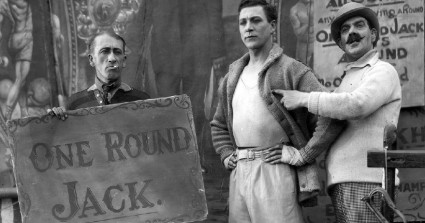
‘One round’ Jack Sander (Carl Brisson) works in a carnival boxing ring and easily defeats his opponents. He is confident both in his ability to win and in the love of his girl (Lillian Hart-Davies). He befriends Bob Corby (Ian Hunter) a champion boxer who encourages him to take up boxing professionally. Friendship turns to rivalry over the girl and Jack finds himself fighting for everything he holds dear.

Hitchcock directs from his own script to produce a film rich in experimentation and visual innovation. Particularly impressive are the montage sequences that appear throughout the film which show Hitchcock’s growing confidence as a director.

8 May Friday at 4.00pm
MYSTERY AND MELODRAMA
A DVD screening of three rarely seen titles showing the early fascination of cinema with action, mystery and melodrama.

The Master Mystery: Chapter One (1920)
40 mins
Directed by Burton King
U certificate
Harry Houdini is a government agent on the trail of a secret society. The film features the silver screen first robot.

The Dying Swan (1913)
50 mins B&W
Directed by Evgenii Bauer
U certificate
A Russian melodrama of the relationship between a dancer and an artist.

Fantomas: Chapter One (1913)
55 mins B&W
Directed by Louis Feuillade 1913 U certificate
Can anyone capture arch criminal and master of disguise Fantomas?

8 May Friday at 7.30pm
COTTAGE ON DARTMOOR (1929)
100 mins B&W
Directed by Anthony Asquith
U certificate
Live musical accompaniment by Stephen Horne who will introduce the screening and answer questions on his experience of composing for silent film.

A convict (Uno Henning) escapes from Dartmoor prison and flees across the moors. Inside a nearby cottage, Sally (Nora Baring), is putting her child to bed. She goes downstairs and is confronted by the convict who has broken into the cottage. Through flashback we learn they knew each other before he was imprisoned and a story of spurned love and jealousy unfolds.

Asquith creates a simple but beautifully realised tale of sexual jealousy, that easily counters the view that British cinema of the time was theatrical and lacking emotion.

9 May Saturday at 2.30pm
STEAMBOAT BILL JNR (1928)
90 mins B&W
Directed by Charles Reisner
U certificate
Live musical accompaniment by Stephen Horne

Tough steamboat captain Bill Canfield (Ernest Torrence) is facing competition in the town of River Junction. The return of his son (Buster Keaton) fills him with hope, but first impressions of the beret-wearing, ukulele-playing dandy his son has become are not good. Can Buster measure up to the expectation of his father?

A great comedy which combines romance, stunts and slapstick. The famous climax during the cyclone that pits Keaton against the elements.

Plus: Buster Keaton in The Electric House (1922)
16 min B&W U certificate

9 May Saturday at 7.30pm
PICCADILLY (1929)
108 Mins B&W
Directed by E.A. Dupont
PG certificate
Live musical accompaniment by Stephen Horne. Introduced by Bryony Dixon, BFI Curator of Silent Film

Shosho (Anna May Wong) works as a maid in a sophisticated London nightclub. The owner of the nightclub Valentine Wilmot (Jameson Thomas) spots her star potential as a dancer and makes her the toast of the town. Complications arise due to his own obsessions and the jealousy of his former star dancer Mabel (Gilda Grey).

One of the true greats of British silent films, Piccadilly still oozes sophistication and captures something of its jazz-age setting. It also features an early appearance by Charles Laughton.

10 May Sunday at 2.30pm
THE ADVENTURES OF PRINCE ACHMED (1926)
90 mins B&W
Directed by Lotte Reiniger
PG certificate
Live musical accompaniment by Stephen Horne

An evil sorcerer tricks Prince Achmed into riding a magical flying horse. Carried far from home he falls in love with a beautiful Princess. Helped by Aladdin and a witch he must defeat an army of demons to win her heart. Based on stories from “The Arabian Nights”.
Lotte Reiniger was a pioneer of animated film, developing a beautiful delicate and elegant silhouette technique. This was the first feature-length animated film.

Plus Ko-Ko the Clown in Ko-ko Gets Egg-cited (1926) and Ko-ko the Convict (1926)

10 May Sunday at 7.30pm
SUNRISE (1927)
95 mins B&W
Directed by F. W. Murnau
U certificate
Introduced by Kevin Brownlow

Life in a quiet village is hard for a farmer (George O’Brien) and his neglected wife (Janet Gaynor). Unknown to her, his head has been turned by the attentions of a woman from the City and they are plotting to drown her.

From this simple starting point Murnau creates a film rich in poetry and a sense of fable. One where town and country life is contrasted and the audience is immersed in the fate of these simple characters. Sunrise is the swansong of the silent era and was awarded three Oscars. One for Janet Gaynor for ‘Best Actress’, one to Charles Rosher and Karl Struss for ‘Best Cinematography’ and one for its status as a ‘Unique and Artistic Picture’. This is the only time such an award has been given.

As well as the above programme, the festival will feature presentations and commentary contributions by film archivists and film historians:

Friday 8 May – Presentation session 1
11.00 Magic lanterns before film – Richard Rigby
12.00 Cecil Hepworth’s early films – Tony Fletcher
13.00 The films of Mitchell and Kenyon – Martin Humphries
14.00 The films of Arthur Melbourne Cooper – Tjitte de Vries

Saturday 9 May – Presentation session 2
17.00 ‘Pictures and Variety’: magazine shorts of the 1920s, with live variety acts featuring Julien Vincent and members of the Dovercourt Theatre Group
18.00 ‘Opening Night’: selections from the BFI National Archive – Bryony Dixon, Curator of Silent Film, BFI

Sunday 10 May – Presentation session 3
16.45 History of the Electric Palace – Chris Strachan, Chairman, Electric Palace Trust
17.30 ‘Surprising Silents’: Keynote presentation by special festival guest Kevin Brownlow

Live musical accompaniment by Stephen Horne and Terry Hadlow

Films will be shown on the Electric Palace’s Kalee 35mm projectors and, in the case of some very early films, on a specially installed Gaumont Chrono projector. All films will be projected onto the cinema’s original hand-painted screen. In addition, there will be an exhibition of early cinema technology as well as a display of pre-cinema media.

TICKETS WILL BE AVAILABLE FROM FRIDAY 10TH APRIL

All tickets £5.50 per screening/presentation session (no concessions)
Day Pass £14.00 (to all films and presentations on one day)

Electric Palace Membership pa available from Box Office, by e-mail, or by writing. £4 adults, £2 seniors & concessions, £1 children under 15; one day membership £1.

Normal Box Office hours: Fridays 7.00 pm to 7.45 pm, Saturdays and Sundays 2.00 pm to 2.45 pm and 7.00 pm to 7.45 pm. Box office open additionally from 30mins before each screening /presentation.

Only day tickets bookable in advance: by personal application or post payable to Electric Palace (Harwich) Limited, Kings Quay Street, Harwich CO12 3ER enclosing SAE & cheque (must include £1 booking charge). E-mail reservations (boxoffice@electricpalace.com) must be promptly paid for. No phone bookings but e-mail reservations may be made for the 7.30 p.m. shows on the day but tickets must be paid for and collected 30 minutes before otherwise the tickets may be sold.

The last trains to London 21.54 hours (21.53 Sunday)

All in all an excellent introduction to silent film for the lucky denizens of Harwich, and hopefully those from a bit further afield. The Electric Palace itself is one of the oldest cinemas in Britain stilloperating as a cinema, having opened in 1911. It still has its silent screen, original projection room and ornamental footage intact. You can read about the history of the cinema here.

All details, as usual, from the festival site.

The British Silent Film Festival returns

ukulele

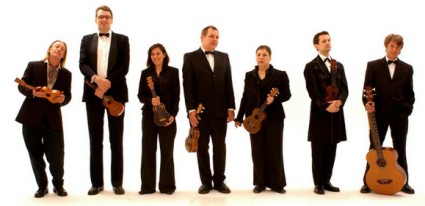
The Ukulele Orchestra of Great Britain

After a prolonged period in the shadows, while dark and pressing operational matters were sorted out, the British Silent Film Festival is back. No longer based in Nottingham, the festival this year moves to the Barbican Cinema, London. It is taking place 4-6 June, and the theme is ‘Music and the British Silent Film’. It will therefore run harmoniously alongside the Sounds of Early Cinema in Britain conference, which is taking place at the Barbican from 7-9 June.

A blog has been set up as a temporary online home for the festival. It says:

Our theme this year is Music and the British Silent Film which will encompass all aspects of music and sound relating to silent film. The theme will encompass experimental sound systems before 1930, contemporary music and silent film and the visual depiction of sound in film. We have less time for papers this year but if you have specific suggestions for a presentation please email us at director@britishsilentfilm.org.uk.

The Sounds of Early Cinema in Britain conference which runs alongside the British Silent Film Festival is one output of the Sounds of Early Cinema in Britain project, funded by the Arts & Humanities Research Council and based at Royal Holloway, University of London, which is examining “sound’s and music’s roles as practised in the exhibition of early and ‘silent’ cinema in Britain”.

dodgebros

The Dodge Brothers

There’s no programme for the festival as yet (clearly, since suggestions for presentations are still invited), but “a very exciting public event” on 4 June is promised, featuring the Dodge Brothers, who include one Mark Kermode – film critic, double bassist, TV personality and defiant haircut; and the universally worshipped Ukulele Orchestra of Great Britain.

More information on the festival as and when we receive it, but at least you can now fill that gap in your diaries.

Update: The full programme has now been published.

Killruddery, down Wicklow way

killruddery_house

Killruddery House

I’ve only just learned about the Killruddery Silent Film Festival, which is an event that has been building up over the past couple of years and is now a fully-fledged silent film festival, with an excellent programme. Killruddery (which I think goes straight to the top of the league of great names for silent film events) is in Co. Wicklow, Ireland, and the festival is organised by Killruddery Arts. The screenings take place 13-15 March at Killruddery House, Bray – a short journey south of Dublin, and a lovely place to be (as indeed I was a couple of years ago for the Bray Jazz Festival to see trumpeter Dave Douglas play his Fatty Arbuckle-inspired music). Keep up the good work, chaps, and I’ll be there next year.

Here’s the programme:

Friday 13 March

Down Wicklow Way
6.15pm
Programme of silent films made in and around Wicklow in the 1920s, 30s and 40s, presented by Sunniva O’Flynn of the Irish Film Archive. Live piano accompaniment by Joss Johnston.

Opening event – The Cat and the Canary (USA 1927 d. Paul Leni)
8.00pm 72mins
A fine parody of Gothic horror from Universal, set in an old stately home not unlike Killruddery House. Live piano accompaniment by Stephen Horne.

Saturday 14 March

The Adventures of Prince Achmed (Germany 1926 d. Lotte Reiniger)
11.00am 60mins
Shadow animation used to tell a captivating story of kind ogres, magical flying horses and wicked magicians.

Visages d’Enfants (France 1925 d. Jacques Feyder)
1.00pm 109mins
This enormously moving film features some extraordinary performances and has been compared to Truffaut’s 400 Blows.

Grass (USA 1925 d. Merian C. Cooper, Ernest B. Schoedsack)
3.00 pm 77mins
Magnificent early documentary tracing the incredible journey of a 50,000 member nomadic Persian tribe. Live piano accompaniment by Stephen Horne.

A Modern Musketeer (USA 1917 d. Allan Dwan)
4.00 pm 60mins
Hilarious swashbuckling adventure featuring Douglas Fairbanks.

Flesh and the Devil (USA 1926 d. Clarence Brown)
5.30pm 112mins
Passionate romance between Greta Garbo and John Gilbert. Live piano accompaniment by Stephen Horne.

Sunrise (USA 1927 d. F.W. Murnau)
8.15pm 96mins
Not only one of the masterpieces of the silent period but one of the most remarkable films ever produced.

Sunday 15 March

The Unknown (USA 1927 d. Tod Browning)
12.15pm 75mins
A macabre treat with Lon Chaney’s armless knife-thrower and his beautiful assistant, played by a young Joan Crawford.

The Unholy Three (USA 1925 d. Tod Browning)
2.20pm 72mins
Three escaped sideshow performers launch a spectacular crime wave, with Lon Chaney. Live piano accompaniment by Joss Johnston.

The Adventures of Prince Achmed (Germany 1926 d. Lotte Reiniger)
3.00pm 60mins
Repeat screening.

Talk – An introduction to the silent era
4.00pm
An illustrated talk by silent film historian Kevin Brownlow.

The Student Prince (USA 1927 d. Ernst Lubitsch)
6.00pm 103mins
Ramon Novarro, Norma Shearer and the famous ‘Lubitsch touch’.

Closing film – Redskin (USA 1929 d. Victor Schertzinger)
8.15pm 85mins
A westerns which courageously depicts corruption and racial prejudice. Live accompaniment by Justin Carroll (piano) and Kim Porcelli (cello).

Well, that’s an excellent introduction to silent film for anyone looking to discover the medium for the first time, or wanting to catch up on some of the cast-iron classics. One detects the influence of Kevin Brownlow in putting together the programme. The titles are a mixture of 16mm and digital video, it seems. There’s more information on the festival site, and if you could publish your programme as copyable text, chaps, and not an image, it would be so much quicker to reproduce…