A creative Christmas

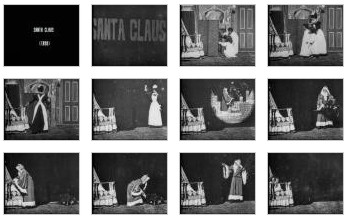
Santa Claus

Santa Claus (1898), from http://creative.bfi.org.uk

The Creative Archive Licence Group is a number of organisations (BFI, BBC, Channel 4, Open University, Community Channel, Teachers’ TV, Museums Libraries and Archives Council, ITN Source) dedicated to making video clips available online for free downloading in the UK under a Creative Licence scheme, which essentially means that you can download, keep and re-use the material so long as you do so under the terms of the licence, which means not selling the material, and if you re-publish it (within the UK) to say where it came from and make your creation available under the same licence terms.

All of which sounds impressive, though the amount of material released is very small, with the major partner, the BBC, having withdrawn from the scheme for the time being. But the British Film Institute has a Creative Archive site with a modest selection of mostly silent films there for anyone in the UK to download for free. And, in the spirit of the season, the selection includes three Christmassy titles: G.A. Smith’s Santa Claus (1898), with its innovative superimposition and double-exposure effects (as well as maybe the world’s first opening title); Robert Paul’s Scrooge (1901), condensing Dickens’ classic tale into a taut three minutes; and James Williamson’s heart-rending take on Hans Christian Andersen, The Little Match Seller (1902).

Download and be merry.

The silent pianist speaks again

Neil Brand

Neil Brand

Neil Brand is taking his show The Silent Pianist Speaks – first shown at the Edinburgh Festival – to London. He is appearing for two nights at the Pleasance Theatre, Islington, 22-23 December. What better way to welcome in Christmas. Here’s the press release:

“ASSISTED BY THE TRILLING WIT AND POLISH OF BRAND’S LIGHTNING-FINGERED ACCOMPANIMENT, THE SHEER FINESSE OF EACH SUCCESSIVE SLAPSTICK SELECTION WORKS ITS MAGIC ON THE AUDIENCE AND THE LAUGHTER FLOWS MORE AND MORE FREELY” Telegraph 2007

Fresh from co-starring with Paul Merton in the UK tour of Paul Merton’s Silent Clowns, Neil Brand, one of the world’s foremost silent movie accompanists is proud to present his own critically acclaimed show at The Pleasance Theatre, London for two nights only. The Silent Pianist Speaks is one of most unique and memorable shows you will see. It left both audiences and critics at this year’s Edinburgh Festival Fringe in far from silent awe of the great filmmakers of the Silent Era and the magic of the accompanists who breathed life and sound into their work.

Neil uses clips from some of the greatest moments in silent cinema to illustrate his 25 year career and the special place of music with silent film.

“A RICHLY DIVERTING HOUR OF ENTERTAINMENT – BRAND SHOULD BREAK HIS SILENCE MORE OFTEN” Metro 2007

From the earliest, earthiest comedies and thrillers, through a silent cine-verité classic shot by a young Billy Wilder, which the audience gets to score, to the glories of Hollywood glamour and the sublime Laurel and Hardy, Neil provides improv accompaniment and laconic commentary on everything from deep focus to his own live cinema disasters.

The show culminates in a performance of a film he hasn’t seen, talking through the scoring process as he plays and struggles to make some sense of the film.

“BRAND’S IMPROVISED PIANO PLAYING ELEVATES SILENT MOVIES FROM CRUDE SLAPSTICK TO SUBTLE BALLET” Guardian 2007

Having trained originally as an actor, Neil has been accompanying silent films for over 25 years performing regularly at the NFT on London’s south bank and film festivals and special events throughout the UK and the world. He is considered one of the finest exponents of improvised silent film accompaniment in the world.

He has written the title music and scores for many TV documentaries including Paul Merton’s Silent Clowns, Silent Britain and Great Britons and scores for over 50 Radio 4 dramas including War and Peace, The Box of Delights, several of the BBC audio Shakespeare Collection plays and Sony award winner A Town Like Alice. Neil is also highly regarded as a writer of radio plays including the Sony-nominated Stan, which he adapted last year to great acclaim for BBC4 TV.

He has appeared with Paul Merton across the UK in Paul’s show, Paul Merton’s Silent Clowns and also across the UK and US with his first show, Where Does the Music Come From? This year he has appeared at Finland’s ‘Midnight Sun’ Festival, Padua Opera House and Kilkenny Comedy Festival.

More details and online booking from the Pleasance website.

Truus Van Aalten

Truus Van Aalten

Truus Van Aalten, from http://truusvanaalten.com

Truus Van Aalten was an obscure Dutch actress who appeared in a number of German silent and early sound films after winning a competition in 1926, the prize being a small part in an Ufa film. I have to confess that I had never heard of Truus Van Alten, but one Roger Mitchell has constructed a richly-illustrated website dedicated to her career. She acted for directors such as Max Mack, Joe May, George Jacoby and Robert Weine, usually way down the cast list; she sported a Colleen Moore-style bob; and she was the subject of a lot of postcards. And now she is the subject of http://truusvanaalten.com. She seems to have been the epitome of the minor performer, but everyone deserves to have their own website – and now she has hers.

Retour de flamme

This short piece on the remarkable Lobster Films of Paris is doing the rounds. Here it is (taken from www.france24.com):

Frenchman Serge Bromberg, saviour of more than 100,000 reels of old films, this week marked the 15th anniversary of a world-touring show with a difference – where he accompanies rescued silent movies on the piano.

A twice yearly Paris event, Retour de Flamme (Return of the Flame) has played New York’s MoMA and travels to India next February before going to Italy and the US for shows in San Francisco and New York.

“I like to say I ‘restore’ the spectator,” he said in an interview. “I bring old movies up-to-date with a presentation and a specially-written musical score, to bring the films alive.

Bromberg’s company Lobster Films, set up two decades ago with fellow film addict Eric Lange, has saved from destruction movies dating as far back as 1895, including film’s first movie with sound – Charlie Chaplin’s first 1914 movie “Twenty Minutes of Love” – and the first movies shot in Palestine (1897) as well as the only Marx Brothers shot in colour.

In the first 50 years of cinema, films were recorded on nitrate stocks, which is inflammable and decays. As no-one had thought at the time of preserving film, much of movie history was lost.

“I pick up films all year, with 99 percent unviewable but there’s always one which is extraordinary and which I want to share,” said the 46-year-old film buff.

On DVD now is 1912 footage of the Titanic before it went down, and a 1931 burlesque titled Stolen Jools, featuring Laurel and Hardy, Buster Keaton, Joan Crawford, Gary Cooper and Douglas Fairbanks Jr.

“Fifty percent of the films shot before World War II have been lost,” he added.

Among recently saved treasures are 15 hours of rushes from a 1964 drama featuring the late Romy Schneider and directed by Henri-George Clouzot. The film was never completed and the rushes had been kept at home by Clouzot’s widow Ines.

Another of his 2007 finds is “Bardelys the magnificent” (1926) by King Vidor, starring John Gilbert.

So it’s true, Bardelys the Magnificent has been found, and of course it would be Lobster who found it. All power to them, and three cheers to all film archivists able to accompany their restorations of silent films on the piano. It ought to be a compulsory part of the job.

Pop and propaganda

Another day, another silent adopted by a modern pop group. This time it’s the Pet Shop Boys, who will be playing their score to Battleship Potemkin at the Barbican in London on 11 January 2008. The duo will be joined by the BBC Concert Orchestra, conducted by the suite’s arranger, Jonathan Stockhammer. In the breathless words of the Daily Telegraph, the ‘suite’ is “an immaculate match for this extraordinary, groundbreaking piece of Bolshevik propaganda”. Hmm. The Barbican site has three short sound clips (QuickTime files), so you can be the judges.

Metropolis II

metropolis.jpg

Metropolis (1927)

Variety has just reported a planned remake of Metropolis. Producer Thomas Schühly, who gave a grateful world the Oliver Stone epic Alexander (as well as The Adventures of Baron Munchausen and The Name of the Rose), with production partner Mario Kassar has acquired the remake rights from the Vienna-based publishing group Sessler Verlag. There’s not much further information to go on – they’re still looking for a director is about all we know – but the chances are that like the original it’ll be German-based, as Schühly is located there. Whether it’s wanted or not is another question. What are they seeking to remake – the story, the iconography, the reputation, the robot Maria? How do you remake a vision of the future? Metropolis, like much great science-fiction, was a satire of the present. Surely a remake could only be an exercise in some strange form of nostalgia?

From 1896 to 1926 – part 9

Edward Turner

Edward G. Turner, from http://www.victorian-cinema.net

This is the ninth and final part of the reminiscences of Edward G. Turner, pioneer British film distributor with the firm of Walturdaw. The series of articles was originally published in the Kinematograph Weekly, 17 June, 24 June, 1 July and 15 July 1926, under the title ‘From 1896 to 1926: Recollections of Thirty Years of Kinematography’. Other film veterans supplied pieces to the journal at this time – Will Day, Jack Smith, James Williamson, Frank Mottershaw, E.T. Heron, Will Onda, Monte (Monty) Williams – which makes June/July 1926 in the Kinematograph Weekly an area well worth investigating by film historians. Here Turner recalls business during the First World War, through to the 1920s and the demise of the Walturdaw film renting business.

Then the fatal year of 1914 arrived. In February of this year, Walker came to me and said, “Turner, our ten years with the Walturdaw Company expire in Auust, and I have the opportunity of taking over all of the products of the Famous Players organisation; putting them on the English market on a renting basis, part cash and sharing.

“Will you join me when our time expires, or, if not, will you get my release from the Company, as this is too great an opportunity to let pass?”

As he still had six months to serve, I promised to do my best, and at a board meeting held a fortnight later, I secured his release, and the Walturdaw Company gave him a farwell dinner at the Monico on March 17, and so our eighteen years of partnership closed. J.D. Walker founded the Famous Players organisation in this country.

A Good Team

My old friend and I had shared hardships and success together; we had had many ups and downs and many pleasures. We had seen the kinema Industry grow from nothing to an important Industry. We were well matched for a business partnership: he had imagination, inspiration, and his head was always full of schemes; in fact, he was nearly a genius in this respect, but like all people of this type, he had not the patience or the determination to carry out his schemes; in other words, to come down to the hum-drum process of bringing his imagination to concrete facts.

I am not brilliant in imagination, neither am I a genius, but I have the faculty of dogged determination and perseverance, and the knack of geting down to things and working them out to their logical conclusions. This is very essential to bring brilliant schemes to a practical end.

I believe we both made a mistake in parting: we had got to know each other so well, he to scheme and I to carry out, that we were both somewhat lost when we parted, and I believe that had we not done so, his name to-day would be a household word, as it was in the years of which I am speaking, and both our fortunes would have been on a higher plane.

The War

In August, 1914, the Great War started. We had many thousands of pounds worth of German film just issued, or about to be issued. In two months its value was the price of scrap for melting down to make dope for our aeroplanes. This was a first big knock.

The following three years were ones of anxiety in every respect for everybody, but we all did our best to keep the flag flying. We had 95 per cent. of our our staff in the Army – all volunteers, and we had to keep the business going to provide a place for them when they came back, if they ever did. Out of our entire male staff there were only two other man and myself left, we either being over age of permanently turned down as physically unfit.

The year 1918 found me in communication with J.D. Williams, who just then had founded the First National Pictures in America, with English rights in view, and I secured these for my company in face of great opposition.

Daddy Long Legs

Daddy Long Legs (1919)

The F.N. Contract

Mr. Williams had gathered under his banner practically all the great artistes of America, including Mary Pickford, and I secured three of her productions: “Heart o’ the Hills,” “The Ragamuffin,” and “Daddy Long Legs.” For these I paid a record figure, but all the world knows what a huge success “Daddy Long Legs” was, and then we began to get films quicker than we could put them out, which is nearly as bad as not getting enough, because they could not be worked out to their capacity.

In the year 1920, a great slump took place in the English poound in America. We were having weekly consignments over, and as we were paying dollars against the depreciated pound, our losses in this respect amounted to over £30,000. Then the company with whom we had fixed up our programme for 1923 and 1924 began to fail in delivering to time, and eventually stopped altogether. This was the third great block, becuase it left us with a big organisation and nothing to put out to the exhibitors, and finally, the Walturdaw Company had to close down, going into voluntary liquidation.

But the Walturdaw Cinema Supply Company, of which to-day I am a director, sprang up from its ashes like the Phoenix of old, and we are carrying on the traditions of the old company – carrying all its personnel, and I am sure the good will of the thousands of old clients.

Such is the review which has passed before my mind during the time I have been jotting down this article and it practically gives the life story of the kinema trade.

Turner’s optimism was not ill-founded. The Walturdaw Cinema Supply Company continued as a successful provider of cinema equipment for decades. Turner himself became a senior figure within the film industry. He became chairman of the Kinematograph Renter’s Society and the Kinematograph Manufacturer’s Association, and president of the Cinema Veterans Society. He died in 1962.
The previous parts of Turner’s memoir are available here:

Part 1: The first film shows
Part 2: Popular film titles of the 1890s
Part 3: Pitching the product to the working classes, and developing film renting
Part 4: Exhibition in the 1890s and the effect of the Bazar de la charité fire
Part 5: The London County Council’s fire regulations and the cinematograph business
Part 6: The hiring business and establishing the Walturdaw name
Part 7: Developing fireproof equipment
Part 8: Flicker Alley and the rise of the exclusive film.

A Charlie Chaplin Christmas

Charlie Chaplin Christmas

http://www.myspace.com/silenttheatre

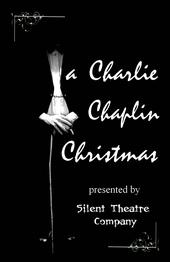
Talking of lost films, as we have been, today sees the opening in Chicago of A Charlie Chaplin Christmas, a play based around an imaginary lost Chaplin film, A Tramp’s Christmas. The play is a production of Chicago’s Silent Theatre Company, which has the brave and notable mission of creating stage productions inspired by silent movies. Its previous production was Lulu, based on G.W. Pabst’s Pandora’s Box.

A Charlie Chaplin Christmas tells of a production company in the silent era desperate to find production funding. It tells potential backers that is has Chaplin signed up to take part in the film, and then have to make good its promise with a convincing lookalike. One of the inspirations behind the production is the old story that Charlie Chaplin himself once entered a Chaplin lookalike content, and came third. As with Lulu, the Silent Theatre Company performs in monochrome. Sets, costumes and make-up all are in black-and-white (or black or white).

The production is running at the Studio Theater in the Chicago Cultural Center, and runs until January 6. More information, visit the Silent Theatre Company’s MySpace page.

Albert Kahn in print

Albert Kahn book

http://www.amazon.co.uk

Fans of the BBC series The Wonderful World of Albert Kahn will be delighted to learn that the BBC is publishing a book featuring the glorious Autochrome colour photographs from the series. The Wonderful World of Albert Kahn: Colour Photographs from a Lost Age will be published on 3 April 2008.

Other books on Autochromes already available are John Wood, The Art of the Autochrome and Victor Gray’s The Colours of Another Age: The Rothschild Autochromes, 1908-1912, subject of the recent National Media Museum exhibition.

For background information on Autochromes and the Albert Kahn collection, see the Searching for Albert Kahn post.

Update (January 2008): Intriguingly, the cover of the book as publicised on Amazon has now changed. Here’s the new look:

Wonderful World of Albert Kahn

The Bioscope Festival of Lost Films

Bioscope Festival of Lost Films

The days are grey, the weather foul, and we need something to lift our spirits. So how about The Bioscope’s very own film festival? We always try to point you to the various silent film festivals around the world, but for its own film festival The Bioscope wants to do something a little different.

So we’re going to have the world’s first festival of lost films. The Bioscope Festival of Lost Films will take place over five days, 14-18 January 2008. It will present five lost silent feature films, each accompanied by a short, with supporting materials, side events, and maybe a celebrity interview or two. So, just like any other festival, except of course that there will be no films to show you. Because all of the films featured will be lost films, not known to exist in any archive anywhere. So a collective act of imagination will be required, as well as a collective sigh at what has been so thoughtlessly cast aside.

What films will be showing? We cannot yet tell you. Just as some festivals have to leave it until the last moment because they cannot be sure of securing the films that they want to show, so The Bioscope Festival of Lost Films will need to be cautious in case the films it hopes to programme turn out to exist somewhere. It seems the story about F.W. Murnau’s The 4 Devils having been found is only an ingenious prank, but there could be some truth to the rumours about King Vidor’s Bardelys the Magnificent having been found. Only at the last minute will it be possible to confirm the final selection. Rest assured that only the best titles will get selected for your delectation.

Therefore, please note down 14-18 January in your diaries, and look out for further announcements about the festival as the time gets nearer.

Postscript (January 2008)

The films featured in the festival were:

Day 1: A Study in Scarlet (1914) and The Great European War (1914)
Day 2: Ein Sommernachtstraum (1925) and Hamlet (1907)
Day 3: Human Wreckage (1923) and Dorian Gray (1913)
Day 4: The Mountain Eagle (1926) and Number 13 (1922)
Day 5: Drakula halála (1921) and Life Without Soul (1915)