Welcome to Newsfilm Online

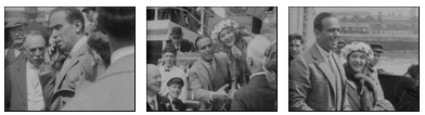
Southampton: Arrival of Mary Pickford & Douglas Fairbanks, Gaumont Graphic, 21 June 1920, from http://www.nfo.ac.uk

Quietly launched this week (with an official launch due in October) is Newsfilm Online. This is 3,000 hours of UK cinema newsreel and television news content, dating 1910s-2000s, all of it taken from the collection of ITN Source. ITN is the UK’s largest commercial footage library, (if you don’t count the BBC as such), and doesn’t just own ITN news programmes, such as News at Ten and Channel 4 News, but most of the UK’s newsreel archives (Pathe, Paramount, Gaumont, Universal). The 3,000 hours (about 2% of the ITN news collection) have been digitised and made available for free downloading and re-use, so long as you are a member of a subscribing UK institution of higher or further education. Sadly that’s going to leave out a lot of you, but the project was funded by the Joint Information Systems Committee, which exists to support UK HE/FE (as we call it in the trade), and the conditions under which the newsfilms were digitised stipulated that they would be available to HE/FE users only.

But despair not, because although you may not be able to see the films, the catalogue records are searchable and browsable by all. And for the silent era, there are 1,241 news stories from the 1910s and 5,091 from the 1920s, making this a marvellously rich resource for historical study, even without the films themselves – not least because you get thumbnail images, like those of Doug and Mary illustrated above. It’s supposed to be every example of the Gaumont Graphic newsreel held by ITN, and shopws how alert the newsreels were to the stories, concerns, fads and personalities of their era. The thumbnails alone excitingly bring the 1910s and 20s back to vivid, varied life.

Remarkably, the publication of Newsfilm Online means that the majority of British newsreels (I’d guess between 80-85%), 1910-1979, are now digitised, encoded and available on the Web in one form or another, albeit with restricted access in some cases (the Paramount and Universal newsreels are the big gaps). That’s a sensational thing to be able to report, achieved in little over five years by a mixture of public money (around £3.5M, at a rough guess, though the £2M that Newsfilm Online cost was for TV news as well as its Gaumont newsreels) and private (no idea how much). The four main sources (with the silent newsreels that they include) are:

  • British Pathe – including Pathe Gazette, Eve’s Film Review, freely available (low resolution)
  • British Movietone News – Movietone itself was a sound newsreel, but the site include a rag-bag collection of silent actualities, freely available (low and middling resolution)
  • Newsfilm Online – includes Gaumont Graphic, movies available to subscribing UK educational institutions only
  • Screenonline – the BFI online ‘encyclopedia’ has many examples of the Topical Budget newsreel, movies available to UK schools, colleges and libraries only

What a fantastic achievement. Having played a small part in making NfO (as we call it in the trade) happen, I’m just a little bit chuffed to see it published at last. For a record of most British newsreel stories in one place, I warmly recommend the British Universities Newsreel Database (still has some gaps to fill for silent newsreels), which also lists other digitised newsreel collections around the world (Australia, France, Germany, Italy, Sweden – America, alas, lags seriously behind).

Let’s have every newsreel around the world available online – it can be done; it would delight and benefit so many if it could be done.

Forssa festival

http://www.forssasilentmovie.com

Rejoicing in the challenging (to the non-Nordic tongue) but magnificent name Mykkäelokuvafestivaalit, but having the more manageable alternative title of Forssa International Film Festival, this Finnish festival of silent films returns to Forssa 29-30 August. Now in its ninth year, the festival brings together an international programme of classics and rarities, usually with an element of local film as well.

There’s no background information on the site in English (as yet), but here’s the programme:

29 August
17:00 Nuori Luotsi
19:30 Speedy
22:00 The Lost World

30 August
12:00 The Kid Brother
14:30 Chaplin programme: The Floorwalker, The Cure, The Adventurer
17:00 Tarzan of the Apes
19:00 Girl Shy
22:00 Faust

The site includes a page on Harold Lloyd and, usefully, details of programmes from previous years.

The Factory of Gestures

http://www.factoryofgestures.com

I learned of this intriguing project courtesy of a recent post by David Bordwell. The Factory of Gestures is an audio-visual research project, led by Oksana Bulgakowa, investigating body language in film – particularly as evidenced in silent Russian and Soviet fiction film. The DVD that has come out of the project describes it thus:

The Factory of Gestures investigates the metamorphoses of the body language in Russian and Soviet society through the 20th century as evidenced by documentary and fiction films, private and professional photography, visual arts and theatre.

The thesis is that the disruption of social and cultural practices caused by advent of the new technologies of photography, film and the mass distribution of images was particularly acute in Russia. Those media now provide striking evidence of a ‘radical change in the gestural code’ in the transference to Soviet society. Bulgakowa argues:

The abolition of gestural restraints was interpreted as the liberation of natural man: bad manners were re-evaluated as socially acceptable behavior, some body techniques that had been contained within the private space – like washing or calisthenics – were now accepted in the public sphere, and some gestures from the public sphere were transplanted to very private settings.

That sounds like an intriguing reversal of the ‘civilizing process’ famously identified by sociologist Norbert Elias. One will need to see the DVD in full to understand the argument, but there are two engrossing extracts provided on the project website, one on eating, the other on walking. Whatever the thesis, this sort of lateral approach to film, looking at the evidence it can provide of social forms beyond the original intentions of the filmmakers, is always welcome. As films age and their stories retreat in the ways they may entertain or convince, so the historians take over and such works are seen either for their position in the story of the medium or as providing unwitting evidence of the practices of the past.

The films quoted on the DVD date from 1908 to 1994. The silent films cited are not all Russian/Soviet and include Silent Witnesses (1914), The 1002nd Ruse (1915), Stella Maris (1918), Das Cabinet des Doctor Caligari (1919), The Extraordinary Adventures of Mr West in the Land of the Bolsheviks (1924), Strike (1925), Battleship Potemkin (1925), Aelita (1925), Chess Fever (1925), It (1927), Mother (1927), The Kiss of Mary Pickford (1927) and Die Büchse der Pandora (1929). The DVD commentary is in English and Russian, it’s 160mins long and is all-regions. It can be ordered from the website and is priced 24,95 €. The project website itself has more information, summing up the project’s ambitions thus:

Film proposed utopian, sometimes contradictory models of the new body behavior that should be imitated in reality. A new society striving to free itself from old rituals was developing a new design of clothing and living spaces, new standards of perception, and a new body language for a new anthropological type: homo soveticus, a specific version of a man of modernity.

A new anthropological type? Can film reveal so much? Such claims may beg as many questions as they hope to answer, but it is good that someone is looking, challenging the medium all the time to reveal more.

Bioscope Newsreel no. 5

Merton on the road again
Following its hugely successful tour of the UK in 2008, Paul Merton’s Silent Clowns show, with accompanist Neil Brand, will be hitting the road again in Spring 2009. Merton and Brand will be giving eight shows at the Edinburgh fringe festival 8-16 August. Read more.

Silents in Shasta County
The Shasta County Arts Council of Redding, California, is holding its annual silent film festival, 24-25 October. Highlights include Metropolis, Blackmail and Peter Pan with actors reading out the intertitles to make the show more child-friendly. Read more.

A course in slapstick
The Museum of Modern Art, New York, is holding a course over five Wednesday, November-December on slapstick, entitled ‘Cruel and Unusual Comedy: Social Commentary in the American Slapstick Film’. The instructors are Ron Magliozzi, Steve Massa and Ben Model, who also provides the music. Read more.

Singing the silents
Published in paperback this month is Ken Wlaschin’s The Silent Cinema in Song, 1896-1929: An Illustrated History and Catalog of Songs Inspired by the Movies and Stars, with a List of Recordings. It is the history of the response of popular song to the silent cinema, with information on availability of recordings. Read more.

‘Til next time!

Watching silents online

Harry Langdon, Mabel Normand, Roscoe Arbuckle and Max Linder, from http://slapstick-comedy.com

The recent post on the British Film Institute’s YouTube page made me think it would be useful to provide a round-up of the major online sources where you can legitimately and freely view and sometimes download silent films. It’s important to note that most mainstream silents are not going to be found online (except illicitly) but only on DVD (if at all). Online sources are most likely to have very early and non-fiction films, either because there are no rights issues or, conversely, because it is to someone’s advantage to advertise such content for footage sales (notably the newsreel libraries).

If you follow the Online Videos link in the Categories section on the right-hand column you’ll find all the posts in the past which have discussed such sources, in one form or another, but here’s that handy overview:


American Memory
The Library of Congress’ American Memory digitised materials site remains a world beater. There are several sections on the site which include silent films, such as Edison titles, early animation, variety films and films of New York – see the Bioscope’s guide to the site for more information.

australianscreen
First-rate Australian educational resource, with 100 years of Australian feature films, documentaries, television programmes, newsreels, short films, animations, and home-movies, including much silent material. The guide written here will help locate things.

Black Film Center/Archive
A selection of downloadable early films (QuickTime) showing African-Americans, including Edison’s The Pickanninies (1894) and A Morning Bath (1896). Produced by Indiana University’s Department of Afro-American Studies.

British Film Institute
The BFI has several outlets for online video. Its Screenonline resource is an encyclopedia of British film and television, with extensive silent film materials (with strong emphasis on non-fiction) but licensing issues means that the video content itself is only accessible to schools, colleges and libraries in the UK. Free to all is its YouTube channel, which has a fascinating mix of oddities, including many silents. Its Creative Archive site makes a small number of mostly silent videos available for free download and re-use, under licence.

British Movietone News
Unlike British Pathe (see below), this freely-available British newsreel collection (covering 1929-1979) is little-known outside the commercial footage sector. However, it also contains a fascinating and varied collection of pre-1929 material, much of it the Henderson Collection of early film subjects. The post on this collection supplies a guide to some of the gems to be found there. It’s all freely-available, but prior registration is required.

British Pathe
This British newsreel collection covers the period 1896-1970, though the pre-WWI material is a peculiar mishmash of news and some fiction material, a guide to which is available here, with a guide to the silent newsreel collection itself available here. The films can all be downloaded for free, in somewhat frustratingly low resolution form, for which prior registration is required.

DG
QuickTime extracts from the films of D.W. Griffith – Biograph shorts as well as the feature films – part of the range of interconnected silent film sites maintained by David B. Pearson.

The Early Cinema
A selection of Quick Time movie clips of films made by Biograph and Edison from the 1897-1905 period, which derive from the Library of Congress Paper Print Collection.

Europa Film Treasures
Rich pot pourri of mostly silent films from archives around Europe, bringing together dramas, comedies, tricks films, travel, animation, propaganda and pornography. The Bioscope report on the resource is here. The site owners, Lobster Films, promise an improved service (some have had problems with download times) soon.

Gallaudet University Video Library
Uncovering something of the history of deaf people and silent cinema has been one of the real pleasures since starting the Bioscope; this site includes several films for the deaf made during the silent period. The Bioscope post on the collection explains the history and how to find the relevant titles.

Gaumont Pathé Archives
Database of the French Gaumont, Pathé and Éclair newsreels, from 1896, searchable by keyword and date. It has large number of streamed video copies of the newsreels, for which log-in access is required.

Internet Archive
The Internet Archive’s Movies section offers a huge number of freely available and downloadable movies, which we must assume are all in the public domain (under US law). The silents can mostly be traced through the keywords option under Feature Films, and range from early Chaplin to 1930s Chinese dramas. Key titles available include 20,000 Leagues under the Sea, Man with a Movie Camera, Battleship Potemkin, Nosferatu, Sherlock Jr, The Cabinet of Dr Caligari and The Hunchback of Notre Dame.

Open Video Project
An international repository of digitised video content designed for the research community, which includes nearly 200 early Edison titles, most of which won’t be found on the American Memory site (see above). More information on the contents is in the Bioscope posting on the collection.

Realmilitaryflix
650 freely-available films covering conflicts from the First World War to Afghanistan today. See this report on some of the remarkable First World War documentary and actuality content available on the site.

Scottish Screen Archive
Over sixty films from the silent era are available among the 1,000 or so films included on this exceptional resource from the Scottish Screen Archive, Scotland’s national film collection.

Slapstick
A range of silent comedy clips from David B. Pearson in MPEG4 format: Chaplin, Keaton, Lloyd, Normand, Langdon, Arbuckle, Linder, Semon, Pollard, Lane…

Videos with Bibi
YouTube is awash with silent material, much of it lifted from DVDs. It’s immoral if not criminal for the most part, but it also makes so much available that most would never otherwise see, and some of what’s available is legitimately there (how is the average punter to judge?). This site provides a guide to vintage film content on YouTube, and has a silents section.

WildFilmHistory
Clips from 100 years of filming wildlife, with thirteen (so far) precious titles from the silent era, from filmmakers such as Percy Smith, Oliver Pike and Cherry Kearton. More information here.


There are many other sites with a small number of clips, and some which are only available to university users (e.g. Film and Sound Online, which has many First World War titles from the Imperial War Museum). There are a number of download sites offering public domain (US) titles, but most of these films turn up on the Internet Archive in any case. Undoubtedly others that should be listed above that I’ve forgotten or never knew about in the first place. Do let me know of other such sites and I’ll add them to this post to make it a standard reference guide.

BFI on YouTube

The Bioscope has reported on the BFI’s You Tube channel before now, but this just to alert you to the fact that they have been adding many more videos to the site, a good number of them silent. There are currently 177 videos, and there isn’t time or space enough to point out all of the gems that lie therein. So I’m just going to point you to three, and then urge you to go explore for yourselves.

To start with, here’s an odd little newsreel story from 1921 which I first showed at the National Film Theatre in 1992 (ah, memories):

The peculiar event on show is the Eton Wall Game, filmed by the Topical Budget newsreel. This sport, which only the British public school system could have produced, involves the schoolboys piling up into a scrum and trying to push a ball along the wall. If they get it to the end of a wall it’s a goal, but in the traditional St Andrew’s Day game there hasn’t been a goal scored since 1909. What is of interest here is that one of the boys taking part was Eric Blair – yes, the future George Orwell is somewhere in the pile of boys, and despite many people having stared very closely at the film over the past sixteen years, no one has spotted him as yet. So now it’s your turn.

This next gem is called Old London Street Scenes. That’s what we call a supplied title in the trade. It wasn’t called that originally, someone gave it the quaint title later:

This is a piece of footage which has been shown countless times on television because of its spectacular closing shots of London traffic. It demonstrates how a fixed camera single shot of ordinary human life can nevertheless astonish. Look out in particular for the epoch-making moment when a motor car appears among the horse-drawn carriages. It dates from 1903 (we know this because of some of the London shows seen advertised on posters on the passing vehicles). The likely production company is Walturdaw.

Finally, some more sport:

This is part of the extraordinary Mitchell & Kenyon collection of Edwardian era films. Having presumably sold all of the DVDs that they are probably likely to sell of this collection, the BFI has put up quite a selection on the YouTube site. This cricket film has been given the supplied title Arthur Mold Bowling to A.N. Hornby, and was made in 1901. As the DVD commentary (courtesy of Adrian Chiles) explains, there had been a huge controversy at the time when Lancashire’s Arthur Mold was accused of having a dodgy bowling action; that is, throwing (apologies for American readers who may not appreciate how profoundly shocking this to any cricket follower). So he appeared before the cameras demonstrating his bowling style, so that viewers could judge for themselves how legitimate he was. Compared to, say Muttiah Mulitharan, you may wonder what the fuss was about (a bit sideways on, maybe, but hardly chucking). Or, for poetry lovers among you, note simply that the batsman in the nets with Mold is A.N. Hornby, subject of a famous set of lines by Francis Thompson (the poem is called ‘At Lord’s’), recalling the cricket of his youth (when, of course, the game was always better):

For the field is full of shades as I near a shadowy coast,
And a ghostly batsman plays to the bowling of a ghost,
And I look through my tears on a soundless-clapping host
As the run stealers flicker to and fro,
To and fro:
O my Hornby and my Barlow long ago!

On which wistful note, let me just recommend once again the BFI’s YouTube site (not all silents, not all non-fiction, by the way), and look out for further posts on the stories behind one or two of the videos to be found there, in due course.

The best of British

Since 1998, the British Silent Film Festival has been flying the flag for the British silent film. The Festival was established by a group of enthusiasts determined determined to overturn the traditional prejudices that had been all to evident two years before in Kevin Brownlow’s television series Cinema Europe: The Other Hollywood, which had been scathing of British silents. For Brownlow, the mean and badly-made British films of the silent era were not just of negligible aesthetic interest, but the idea of them had helped establish the sort of general prejudice against silent films which he had dedicated his career towards fighting.

The Festival (which located itself in Nottingham after a first year at Leicester) wanted not just to screen the best and most interesting of British silent films, but to encourage research, publication, and innovative presentation. Academic papers were welcome, but they had always to be accompanied by film clips, for which the resources of the BFI National Archive were effectively at their disposal. A speciality was made of musical accompaniment, with such regulars as Neil Brand, Phil Carli, John Sweeney and Stephen Horne. The Festival also welcomed non-fiction film quite as much as fiction.

From humble beginnings, this ever-inventive combination of festival and academic conference has built up an international reputation, and has undoubtedly done much to encourage the revival of interest in British silent film, which has found welcome outlet in DVD releases, festival screenings and television programmes. Throughout the festival has been organised and programmed by Bryony Dixon and Laraine Porter, always on a shoestring, and frequently on half a shoestring. Political events, the outcome of which is still uncertain, have cast a cloud over the future of the Festival – I’ll report more on this once the dust has settled – but meanwhile in September the BFI Southbank (the National Film Theatre as was) is putting on a season of highlights from the Festival’s past.

Creatively entitled The Best of the British Silent Film Festival, this is the programme:

26 September 18.20
The Olympic Games on Film 1900-1924
Luke McKernan present a programme of archive film on the early Olympic Games, from chronophotographs of American athletes at the Paris Games of 1924, to Harold Abrahams and Eric Liddell of Chariots of Fire fame at the Paris Games of 1924. The programme has a special focus on the London Games of 1908.

26 September 20.40
The Ware Case (1928)
Dynamic and surprisingly cinematic adaptation of a famous stage courtroom drama. Directed by Manning Haynes, with Stewart Rome, Betty Carter, Ian Fleming. Adapted by Lydia Hayward, one of many female screenwriters now beginning to be rediscovered as a result of the Festival’s interest in women film-makers.

27 September 16.00
When All Films Were Short
Lucky-dip programme of short films – quirky, funny, macabre, sensational, persuasive – of the kind that the Festival has made a special point of championing.

27 September 18.45
The Battle of the Somme (1916)
Special preview screening of the Imperial War Museum’s new restoration of the outstanding feature-length ‘documentary’ of the First World War, filmed by Geoffrey Malins and J.B. MacDowell and edited by Charles Urban. The music will be played by Stephen Horne and Martin Pyne, recreating the original musical suggestions from the film’s 1916 screening.

27 September 20.40
The Lure of Crooning Water (1920)
The quintessential British pastoral film, and example of the sort of rediscovery which as helped demonstrate that there was a strengthening tradition of filmic storytelling in the silent period concerned with the British landscape. Directed by Arthur Rooke, with Guy Newall and Ivy Duke.

28 September 16.00
True Crime on Film
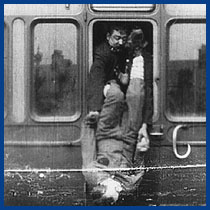
An illustrated history of true crime in film, featuring execution films, terrorists and assassins, murderers and embezzlers, with a particular focus on the stories of Charles Peace (William Haggar’s 1905 The Life of Charles Peace is illustrated above) and Thomas Goudie. Presented by Michael Eaton, Vanessa Toulmin and Bryony Dixon.

28 September 18.20
The Triumph of the Rat (1927)
Ivor Novello, most popular British star of the 1920s, in the second of the hugely popular Rat trilogy, directed by Graham Cutts.

28 September 20.40
The First Born (1928)
Miles Mander’s fluid, cinematic masterpiece (illustrated at top of post), on the double-standards of the English upper classes, has emerged from obscurity to enjoy increasing acclaim as one of the finest of British silents. Starring Mander and Madeleine Carroll.

Members’ priority postal booking opens 4 August; members’ priority online and phone booking opens 11 August; public booking opens 15 August. Hope to see some of you there.

On not finding London After Midnight

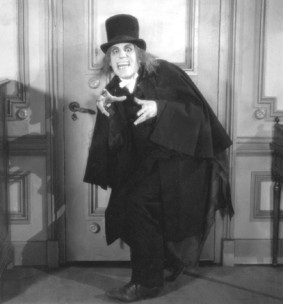
Lon Chaney in London After Midnight

When the news first starting buzzing across the wires that lost scenes from Metropolis has been discovered, many old hands in the film world suspected a hoax. There have been so many such bogus announcements, perpetrated by the naive, the over-optimistic, and – increasingly – the fraudulent. It is so easy to create a narrative, a plausible history bolstered up with links, pictures and air of expert knowledge, and then to have such rumours speed around the world, finding out the credulous.

The amazing thing about Metropolis, and the discovery last year of Bardelys the Magnificent, is that the rumours were true – the lost films had indeed been found. But the lost silent film that is most subject to fantasies of discovery, and which indeed probably comes at the top of many silent film buffs’ wish list of films that they would love to see discover, is London After Midnight. And today the rumours have gone flying around following a rambling but insistent account on a horror film forum that the 1927 Lon Chaney horror film had been found (the argument is that MGM had been hiding it under its alternative release title, The Hypnotist). Of course it hadn’t, as should be obvious to anyone with grain of sense who reads it – it’s riddled with naiveties and fantasies.

The last known print of London After Midnight is believed to have been destroyed in a vault fire at MGM in 1967. Ever since then the rumours have circulated that a print had survived somehow: that a 16mm copy was in secret circulation, that one or other of the renowned collectors was sitting on a print (not daring to announce its existence for fear of losing it to rights-holders MGM), that MGM itself was sitting on material that for assorted mysterious reasons it had chosen to suppress. Or, in the case of this most recent claim, that MGM was somehow unaware of what was lying on its own shelves.

This basic history you can get from Michael Gebert’s London After Midnight Myths pages (though beware that the first few pages do their best to tease the unsuspecting with ‘evidence’ that might indicate the film does exist). It is true that you can find London After Midnight on the TCM schedules every now and then, and on DVD accompanying Chaney’s The Unknown, but this is a 45-minute compilation by Rick Schmidlin of extant stills, recreating therefore what the film looked like. Until a print turns up one day to expose all the so-called experts to ridicule – who knows, as Metropolis has shown, it might be in South America – the Schmidlin recreation is the nearest to this most celebrated of all lost silent films that we have.

For more on lost films, see Moving Image Collections’ Lost Films list, the Deutsche Kinematek’s Lost Films wiki and Silent Era’s Presumed Lost section. And continue to dream.

Bioscope on Bioscope

http://www.madhusudhanan.com

The Bioscope is naturally delighted to record the release of Delhi-based K.M. Madhusudhanan‘s feature film Bioscope. The film’s subject is silent film in India. Set in Kerala, it tells of Diwakaran, who in the early years of the twentieth century encounters the Bioscope (a film projector), being operated by a Frenchman. He purchases the machines and tours local villages with his films, but he is beset by problems: practical, social and familial, as modernity clashes with tradition. Madhusudhanan says that his hero is based on a real figure, Varunni Joseph, who ran a Bioscope shows in Kerala in 1907.

Bioscope received its world premiere last week. It is produced by the National Film Development Corporation Ltd., India, it’s 94mins long, and in Malayalam and Tamil, with English subtitles. The film’s website has interesting background information on early film in India and assorted production stills. This article from ExpressIndia.com describes the film and its intentions:

Reel Beginnings

A filmmaker goes in search of the first flicker of cinema in Kerala

Anushree Majumdar

Flickering on a white sheet stretched across the wall, the image of a train entering the platform emitted a collective gasp. In 1906, the unsuspecting villagers at Thrissur Pooram in Kerala, who’d bought a ticket to the bioscope show, couldn’t believe what they were seeing. Surely this was the work of the devil. Instead, it was the work of man — the advent of cinema in India. This fascination with cinema and images is what Delhi-based filmmaker K.M. Madhusudhanan has lyrically portrayed in his first feature film, suitably titled Bioscope.

The film saw its worldwide premiere at the Osian’s Cine Fan Festival of Asian and Arab Cinema last week and has been awarded the NETPAC Jury Award for “crystallising a turning point in a country’s colonial past with meditative images and a strong metaphor evocative of cinema’s magical powers”.

As an artist, photographer and filmmaker, it was only natural that Madhusudhanan strung together a historical narrative with images that would embody the wonder that is the cinematic experience. “I wanted to show the curiosity of the human gaze through the film. The appearance of the bioscope in Kerala was something that drew me even closer to the subject,” says Madhusudhanan, who spent his formative years in Kerala before moving to Vadodara to study printmaking.

Set in the first decade of the 20th century in Kerala, Bioscope traces the life of Diwakaran, whose life is completely altered after his first brush with the bioscope and moving images. He buys the device from a Frenchman who ran bioscope shows and decides to take the instrument and its wondrous images to nearby villages. But suspicion, superstition and the lack of family support make it difficult for Diwakaran to fulfil his purpose. “I started to work on a project about silent films and early cinema. My research brought me to that time in history when Kerala had its first bioscope show and I found my story emerge from there,” says Madhusudhanan who is also painting an entire series on silent films as well. The entire series consists of 35 paintings in which film reels contain hazy images, and cameras share space with the artist’s imagination.

Funded by the NFDC, the film will soon head to various international festivals and by December, the sequel to the film will go on floor. “Bioscope is the first part of a trilogy. The second part is titled Kannadi Kottaka (Mirror Cinema Hall) and is set in contemporary Kerala. It is about a movie house and three people who are connected to it,” says Madhusudhanan.

It’s getting hard to keep up with the mini-rush of Indian films and books which are taking silent cinema as a theme and the bioscope (the sometime Indian name for a cinema) as redolent term. Probably calls for a round-up post on the subject some time soon.