Cinefest 2009

Cinefest, the annual collectors’ film festival held in Syracuse, NY, takes place 19-22 March 2009. The films on show are combination of silents and early talkies, with these being the silent choices (subject to any last minute changes):

On 16mm

LESS THAN THE DUST (1916) with Mary Pickford, David Powell
LOVE NEVER DIES (1921) Dir. King Vidor, with Lloyd Hughes, Madge Bellamy, Lillian Leighton
THEY SHALL PAY (1921) with Lottie Pickford, Allan Forrest, Paul Weigel
WHITE GOLD (1927) with Jetta Goudal, Kenneth Thomson, George Bancroft, George Nichols, Clyde Cook
WOMAN (1918) Dir. Maurice Tourneur with Warren Cook, Florence Billings

On 35mm

EVERYBODY’S SWEETHEART (1920) with Olive Thomas, William Collier Jr.
TWENTY DOLLARS A WEEK (1924) with George Arliss, Ronald Colman
A MILLION BID (1927) with Dolores Costello, Warner Oland, William Demarest
BEGGAR ON HORSEBACK (1925) with Edward Everett Horton, Betty Compson, Esther Ralston
THE SHOPWORN ANGEL (1928) with Gary Cooper, Nancy Caroll, Roscoe Karns, Paul Lukas
BACK PAY (1922) Dir: Frank Borzage, with Seena Owen, Matt Moore

Musical accompaniment comes from a star-studded line-up of Philip Carli, Makia Matsumura, Donald Sosin, and Ben Model, and there are other goodies on offer (aside from the sound features), include rare shorts, Joan Crawford’s home movies, and the auction hosted by Leonard Matlin.

Full details, including registration and accommodation, from the festival website.

The amazing Mr Jeffs

jeffs

http://www.flatpackfestival.org

Coming up soon is Flatpack Festival, an inventive film extravaganza organised by 7 Inch Cinema, taking place in Birmingham (UK) 11-16 March. Most of the festival is devoted to present day cinema, but it’s worth out taking note of because its dedicatee is Waller Jeffs (1861-1941). His is a name that you won’t find in many film histories, because he was a showman rather than a producer, but he was one of the major figures bringing films to British audiences (alongside a whole panoply of variety acts that he also handled) in the era before cinemas arrived, particularly in the Midlands region. As the festival blog puts it:

Between 1901 and 1912 Mr Jeffs introduced hundreds of thousands of Brummies to the delights of cinema through his annual seasons at the Curzon Hall, Suffolk Street, with light opera, military bands, live sound effects and intriguing novelty acts like ‘Unthan the Armless Wonder’ presented alongside the films. Towards the end of this period the first proper cinemas started to arrive in the city – including the Electric – and Jeffs’ audience rapidly disappeared. He ended up in slightly less elevated circumstances, managing the Picturehouse in Stratford-on-Avon.

There’s a little-known history of British film, John H. Bird’s Cinema Parade, which is centred upon Waller Jeffs, showing us the development of film in Britain from the showman’s point of view, and with a salutory change of emphasis from the usual London bias.

As well as naming Jeffs its ‘patron saint’, on March 11th the festival is putting on Curzonora, an evening of early film in the spirit of Waller Jeff’s programmes, with “fifteen-piece ‘musical whirlwind’ The Destroyers” who will be “exploring the full spectrum of 1900s filmmaking ingenuity from actualities and travelogue to sci-fi and melodrama”. And on March 12th it is hosting ‘The Amazing Mr Jeffs: Birmingham’s premier film exhibitor‘, an illustrated talk by the practically ubiquitous Professor Vanessa Toulmin,covering Jeff’s working relationship the famed producers Mitchell and Kenyon.

More information, as ever, on the festival website.

Cheating on the silents

thecheat

Fannie Ward in The Cheat (1915)

While browsing for novelties on silent cinema subjects, like one does, I came across CheatHouse.com, one of those sites which serve up ready-made essays for hapless students challenged by deadlines and an absence of brain power (“Discover the CheatHouse secret: when you cite, it isn’t cheating”). And there was the opening of a ready-to-go essay on early cinema. It only gives you the first 120 words, hoping that you’ll pay up for the rest. The model essay is classified under Film & TV Studies, University, Bachelor’s, and suggests a grade of A-. From the evidence of those first 120 words, I’d say more likely an F-…

Early cinema is otherwise known as the “cinema of attractions”. The term was shaped around many of the great world fairs and exhibitions of the time, when filmmakers started to stray from the traditional way of filmmaking (Nichols, p. 37). The common tradition was the scientific use of images to show people the “real world”, and with the help of new technology and “tricks”, filmmakers started to focus more on the “attraction” part of film. It is a “cinema that displays its visibility” creating a fictional environment for the viewer. It brought to the viewer something new and exciting, something exotic and bizarre. This “cinema of attractions” caught on with many filmmakers, becoming much more common …

Sellars and Yeatman could hardly have done better. I love the assertion that early cinema is otherwise known as the cinema of attractions. How true that has become. CheatHouse.com, and other sites like it, are heavily dependent on essays being submitted by students themselves, who gain greater access to the site the more essays they have accepted, making the whole process becomes a self-fulfilling disaster. There are some sites where hard-up academics contribute essays for a few cents, but most of these sites are sustained by the students’ work themselves. All offer a sample paragraph or summary; all charge either through subscription or pay-as-you go.

So what other cheats are out there for the gullible and the desperate? CheatHouse itself offers essays on The Birth of a Nation, Der Golem, Chaplin, early Japanese film, German expressionism, and much more, all of it woeful. Freeessays123.com offers you ‘Motion pictures and communication’ (“The motion picture, first screened in the late nineteenth century, was a new form of expression which would undergo several improvements to captivate more and more audiences. The effect of this medium, changed as it trekked through many stages of development” – just the sort of waffle that used to sustain me in my student days, alas). Directessays.com gives us these words of wisdom on the career of Lillian Gish:

The history of the great talent Lillian Gish is immeasurable. She has acted in more productions per decade then anyone else in this century. She has been in one hundred and five films alone, that’s not counting all the on stage productions she has performed in. The amazing talents of this once beautiful young actress can be seen in any of her early silent films too. Way Down East and Orphans of the Storm are two of her earlier films that portray her exquisite skills. Yet none of this would be know if it wasn’t for a mastermind of directing, D.W. Griffith. Gish would have lived a long unrecognized life of theatre and missed out on the most important part of her career, the silent film.

And so on and so on. You could try Doing My Homework, eCheat (“It’s not cheating, it’s collaborating”), Write My Essay, Termpapers-on-file.com, and so on. Not all are rubbish. BookRags.com, a general educational resource site with literature guides, study packs, reference sources and other materials, offers you what looks to be a perfectly serviceable essay on Cecil B. DeMille’s The Cheat (such irony):

Cecil B. DeMille is both celebrated and derided for his overall depiction of the “new woman,” a development resulting from the rise of consumer culture in the late nineteenth century. In this increasingly commodity-driven society, women increasingly moved into the public sphere in search of freedom and discovery at the risk of their own reputations and their families’ social position. This is notably brought out in DeMille’s most famous film “The Cheat,” in which the female protagonist disrupts the established order and inverts the traditional notion of womanhood. DeMille uses the notion of the “new woman” in “The Cheat” to critique society during that time.

The essays on more respectable sites such as BookRags are promoted as reference guides, of course, not as encouragements to plagiarism, and naturally they can be used as such. What I find interesting is the muddle and cliché in most of the model essays, which reflect what a peculiar world early film must present to the average student of the twenty-first century. How to make sense of this mad, mute, monochrome world, and to find in it relevance to the films and concerns of today? It’s a wonder that any can.

Monstrosities

peppersghost

http://www.monstrous-media.com

Monstrous Media/Spectral Subjects is the enticing title of the Ninth Biennial Conference of the International Gothic Association. The conference takes place 21-24 July 2009 at Lancaster University, and it touches pre-cinema and early cinema themes, with much else besides, as the conference description explains:

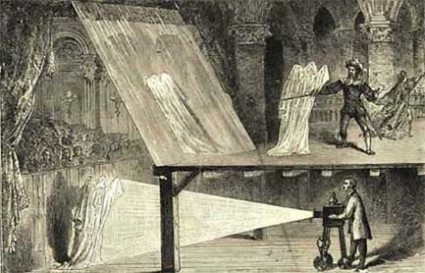
Gothic forms and figures have long been bound up with different media, from the machinery of Walpole’s modern romance to Robertson’s phantasmagorical shows in the eighteenth century; from uncanny automata to ghostly photographs and monstrous kinetograms in the nineteenth; from cinematic shocks to digital disembodiments in the twentieth. More than merely exploiting new technical developments in cultural production and consumption, the Gothic mode, in adopting and adapting new media, engages with excitements and anxieties attendant on social and technological change.

Examining conjunctions of literary, visual, spatial and digital texts in relation to spectral and visceral effects and affects, the conference aims to stimulate discussions of the relationship between the Gothic novel and other cultural forms, media and technologies. Doubling the monstrous with the spectral, it sets out to explore the cultural production and consumption of monsters and ghosts from the eighteenth century to the present.

Topics expected to feature in the conference include:

  • Early visual technologies (phantasmagoria/ magic lantern shows/spirit photography)
  • Gothic embodiments (staging, smoke and mirrors, automata and mechanical curiosities)
  • Gothic on screen
  • Digital Gothic (web, video games, hypertext)
  • Visualising Gothic narrative (graphic novels, comics and illustration)
  • Monstrosities (subjects, texts, bodies, forms)
  • Media monsters
  • Spectralities (subjects, spaces, environments, images)
  • Transgeneric crossings (cyborgs, science, fictions)

The call for papers has passed, and they report an overwhelming response which is making the selection of papers take longer than expected, so no programme as yet. However, the plenary speakers will be Elisabeth Bronfen, Tanya Krzywinska, Marina Warner and Christoph Grunenberg.

More information now, and later, from the conference website.

Pordenone and the rest

merrywidow

http://www.cinetecadelfriuli.org/gcm

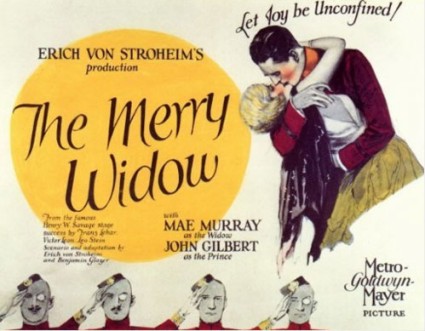
Well, it’s a little way off as yet, but the first outlines of the Giornate del Cinema Muto aka Pordenone silent film festival have been publicised. The festival will run 3-10 October 2009, and the opening film/musical event will be Erich von Stroheim’s The Merry Widow (US, 1925), with score by Maud Nelissen performed by the Orchestra Sinfonica del Friuli Venezia Giulia.

Also promised is a strand on Sherlock Holmes “and beyond”, curated by Jay Weissberg; a retropsective of Films Albatros from the Cinémathèque française; part three of the Corrick Collection of early films found in Australia; an intriguing-sounding Screen Decades; and the traditional Rediscoveries and Restorations.

We’ll add more as we learn more, of course, but do also keep an eye on the Festivals section of this site for other silent film festivals occuring this year. So far we have dates for the Kansas Silent Film Festival (27-28 February), Cinefest in Syracuse NY (19-22 March), an unnamed festival of silent cinema at the Electric Palace, Harwich, Essex (7-10 May), the Festival d’Anères in France (27-31 May), Bologna’s Il Cinema Ritrovato (27 June-4 July), the San Francisco Silent Film Festival (10-12 July), central New York’s Capitolfest (7-9 August), Germany’s Bonner Sommerkino (13-23 August), and Ohio’s Cinesation (24-27 September).

And finally, look out very soon for news (at last) of the British silent cinema festival, lately of Nottingham and now destined for a new home.

The Gold Bug

Here at the Bioscope we like to commend all efforts to keep the art of silent filmmaking alive today, and now we learn of The Gold Bug, an 87-minute version of the Edgar Allen Poe short story about a man who becomes obsessed with finding gold after being bitten by a “gold bug”. It’s a home-made effort by former students Spike Carpenter and Andy Tornow, produced at a cost of some $10,000. The film had its premiere last month at the Grand Opera House, Oshkosh, Wisconsin.

These are extracts from an interview with Carpenter in the Oshkosh West Index, which say much about the filmmakers’ enthusiasm and dedication:

Lack of high-quality sound equipment was one major factor in the decision to make The Gold Bug silent, but Carpenter and Tornow also hold a deep respect for the unique art of silent film.

“I just fell in love when I saw my first Charlie Chaplin film; I love the world that it places you in. The way he moved across the screen effortlessly is what I tried to capture in our film,” said Carpenter. “To me, film is most importantly a visual art.”

“It was too difficult to work with a moving camera, so we kept it simple and focused more on the composition of the frame, or the artistic balance of the shot. At one point we put the audience in a cage; because Brand feels trapped in the cottage. We filmed bars with light coming in to represent that feeling.”

In order to successfully see their creativity become a reality in the filming process, the young filmmakers constantly had to work around obstacles using their own innovations.

“The pirate treasure was just one of many cinematic tricks that we used to make this picture. We built a false bottom to the treasure chest to make it look like the entire thing was loaded, when, in reality, we only had to fill a fourth of it,” said Carpenter. “From the beginning, I wanted authentic, time-period coins, so I ordered those online. When I realized that I was still way short in terms of filling the false bottom, I purchased “filler” treasure. In making an independent film, you have to learn to cut corners whenever possible.”

To get the unique nebulous look present in the entirety of The Gold Bug, such as the sepia tone and slow shutter film setting, there was much technical film work to pursue. The crew used a program called Sony Vegas Pro for the editing, which allowed them to maximize the extent of their imaginations.

“[The program] took a while to learn; we finished late October and then were up until actually the morning of the showing to get everything finalized,” said Carpenter. “The effect of the words mysteriously appearing on the parchment is a simple double-exposure. This technique is an old one. It’s very difficult to get this shot just right. You have to stay completely still as someone else makes the necessary changes for the next shot. That is why, if you watch closely, you see that Legrand’s thumb moves a little in the dissolve.”

“Casting actors was terribly difficult, especially since this was my first film and I had zero credibility. Making a film is grueling work, and it takes up your life if you’re serious about it. We went through several different people in the three years it took to make this film. When it came to this summer we had different actors and we had to do all the pirate stuff over again.”

“When we’re old and gray we can look back at ourselves climbing cliffs and riding horses,” said Carpenter. “It’s an amazing reward to see my imagination finally come out in film. It is the toughest and most important project we’ve ever done in our lives. I learned a lot about filmmaking; it takes months and months of hard work.”

Carpenter’s father provided the music score, and copies on DVD are available from his mother – unfortunately, no contact details provided, perhaps on the assumption that the only interest will be local, but the YouTube clip looks quite stylish. The Bioscope suspects that it would merit further exposure elsewhere.

Words on the screen

benhur1925

First the classics, now the Eng Lit department – UK universities are discovering silent films and examining them in welcome new ways. The Film and Literature Programme, Department of English and Related Literature at the University of York is organising a one-day symposium on silent cinema and literature on Friday 1 May, led by the university’s Judith Buchanan, whose forthcoming book on silent Shakespeare films will receive close attention here once it has forthcome.

Here’s the blurb on the symposium:

Silent Cinema and Literature

One-day Symposium

Friday 1 May 2009

University of York, 9.30am-6.30pm

  • Lawrence Rainey: ‘Modern melodrama: Chickie (1925)’
  • Erica Sheen: ‘Imperishable bodies: Graham Greene’s A Little Place Off the Edgeware Road
  • Judith Buchanan: ‘The biblical, the literary and the olfactory: synaesthetics in MGM’s 1925 Ben Hur
  • Lawrence Napper: on British cinema of the 1920s (title tbc)
  • Jon Burrows: ‘“A Vague Chinese Quarter Elsewhere”: The Cinematic Mapping of Thomas Burke’s Limehouse, 1919-1936’
  • Andrew Higson: ‘Becoming Michael Curtiz: “European” cinema, literary connections, and the challenge of Hollywood in the 1920s’

The day will end with a roundtable discussion of issues of shared interest followed by a drinks reception. To register, please email Emily Blewitt: seb518 [at] york.ac.uk.

Full registration (including refreshments and lunch): £25
Student registration (including refreshments and lunch): £10
University of York Department of English students: free registration

(Early registration is advised since places are limited.)

Let’s have more of this – medical departments looking at the work of Jean Comandon and other such pioneers, history departments considering the significance of early newsreels, art classes looking at 1920s set designs, geography students considering pioneering travelogues for their topographical content, medievalists looking at how their age is depicted in one-reelers, sport studies assessing the correct running speeds for silent films of … runners. Just so long as they tell us something new and jolt us out of our complacency.

Whatsoever a man soweth

joy

The lastest archival DVD release from the perpetually inventive folk at the British Film Institute is The Joy of Sex Education. A compilation of British sex education films from 1917 to 1973, it has attracted a fair bit of media attention, not too surprisingly. You can read about the sound film attractions of the release on MovieMail, but this post is just to record the presence of three silent films on the disc, with music accompaniment by Dave Formula (formerly of Magazine). Of these, the most notable title is the earliest – Whatsoever a Man Soweth (1917)

Sex education films, or public hygiene films, first appeared during the First World War, when military authorities became concerned by the spread of venereal disease among soldiers, which was rendering them unfit for duty. Whatsover a Man Soweth, 38mins long, is a British production made by Joseph Best, who had been a newsreel editor and who would go on to direct some intriguing African-themed films in later years (including the Paul Robeson title My Song Goes Forth, 1937). Whatsoever was sponsored by the British War Office for use with for the Canadian Army (there was a close connection between British and Canadian official filmmaking, largely owing to the Canadian Max Aitken, later Lord Beaverbrook, heading the War Office Cinematograph Committee), though the film seems to have been exhibited widely among Allied troops in general.

whatsoever

The film sets out not so much to instruct as to scare. Its story concerns Dick, a Canadian soldier on leave in London. He encounters a prostitute outside the National Gallery, but is warned away from her by a passing officer. Dick is then taken to a hospital to see victims of venereal disease, the film taking some delight in showing us rotting limbs. Pages from a Final Report of the Commission on Venereal Diseases explain the nature of hereditary syphilis to the audience, and we get to see the spirochetes in a syphilitic sore under a microscope. But the fun does not stop there. Dick visits a schoolfor the blind, learning that half of the children there became blind through hereditary VD. After the war, Dick’s brother Tom visits prostitutes in London. On his return to Canada, his wife becomes infected with syphilis. Tom undergoes a cure, but his wife gives birth to a baby who is born blind.

Kevin Brownlow writes about the film in Behind the Mask of Innocence, and cites examples of some of the striking intertitles, both coy and direct:

“Do nothing of which you could be ashamed to tell you sister or your mother”.

“Daddy took a chance”.

“There is no such thing as a safe prostitute. They are practically all diseased”.

“Every child has a right to be born clean into this world, and than man is to be pitied whose own flesh and blood looks him in the face to say, ‘Curse you, Dad, I was dirty born and you are the reason why!'”

Brownlow writes about other such films made during the war, such as the American Fit to Win (1917), The Scarlet Trail (1918), Open Your Eyes (1919) and End of the Road (1919). The best-known title of the period to tackle the theme was Damaged Goods, originally a 1902 play by Eugene Brieux and filmed with some boldness in America in 1915 and with great coyness in Britain in 1919 (this survives, but perhaps as it is a drama rather than a sex education film as such it is not included in the BFI set). There was a colour film on venereal disease whose exhibition was organised by Charles Urban for exhibition to troops in London and France in 1917-18. Information on this lost film is scarce, but it sems to have been a Kinemacolor Company of America production from 1913, originally shown at American recruiting stations, which Urban re-exhibited using a refinement of Kinemacolor called Kinekrom. In a 1982 letter from one-time Kinemacolor employee William Crespinel to Kevin Brownlow he recalls “that horrid, yet important medical film on the various stage of syphilis”.

The other silents on the disc are characteristically timid Any Evening After Work (1930, 27 mins) and How To Tell (1931, 21 mins).

The Joy of Sex Education comes with an illustrated booklet which has introductory essays by Tim Boon (Science Museum, London), Hera Cook (Lecturer in the History of Sexuality, University of Birmingham) and Katy McGahan (Non-Fiction Curator, BFI National Archive) who curated the films first as a BFI Southbank show and now as a DVD.

Update: There is a video clip from Whatsoever a Man Soweth (with its decidedly less-than-period soundtrack) on the BBC News site, as part of an article on the history of the sex education film.

Vamps and Vixens

vamps

http://www.birds-eye-view.co.uk

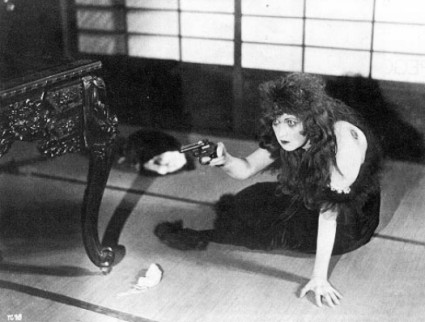
The Bird’s Eye View festival, celebrating women filmmakers and performers, returns to the BFI Southbank and the ICA in London 5-13 March. As with last year, there is a silent film strand, which comes as part of an archive retrospective given the title Screen Seductresses: Vamps, Vixens & Femmes Fatales. The are six silents featured, under Vamps, and I can do no better than give the festival’s own hyper-enthusiastic words about the delights on offer:

Sexy, iconic and controversial: classic cinema, contemporary live music and gorgeous, godless women, in partnership with BFI Southbank.

From Eve to Cleopatra, Salome to Sharon Stone, women have always been able to win men over with their sexual powers. Obviously this is naughty, and a thinly disguised evil plot to render quivering (and probably kill) all otherwise fine upstanding gentlemen.

But BEV is feeling a little rebellious this year. We’re celebrating transgressive women in film, strong and complex seductresses, with razor-sharp wit and unrestrained sexuality. Some say it’s all a product of post-war male anxiety about the changing roles of women, but let’s not forget the crucial role women played in producing and writing these films. And, of course, the stunning talent a host of actresses brought to cinema – so radical for their time and still startlingly good.

We begin with THE VAMP, a fabulous and alluring figure of silent cinema. Louise Brooks, Theda Bara, Greta Garbo and Alla Nazimova shine like the stars they are in six stunning and rarely-screened films, with specially commissioned live music from cutting edge female artists including Bishi, Natalie Clein and The Broken Hearts.

And then to a month-long season of FEMMES FATALES – the (anti-) heroine of Hollywood’s film noir from the 1940s to the present day, including Billy Wilder’s Double Indemnity, Kim Novak in Hitchcock’s Vertigo, and Chinatown from Roman Polanksi, with Faye Dunaway. This is the largest ever collection of this kind screened at the BFI Southbank – so enjoy devouring its delights!

Salome with music from Bishi

7 March 2009

Marvel at mesmeric lesbian Hollywood icon Alla Nazimova, whilst listening to the vamped up sound of award-winning singer, multi-instrumentalist and DJ: Bishi.

A Fool There Was + The Vampire with Broken Hearts DJs and Jane Gardner

9 March 2009

Theda Bara and Alice Hollister fight over the title of cinema’s first sex symbol in this double-bill of bewitching vampires. With new music from Broken Hearts DJs and pianist Jane Gardner.

The Temptress with music from Natalie Clein

10 March 2009

Greta Garbo stars as a melancholy vamp in an emotional rollercoaster with live musical accompaniment from Classical Brit Award Winning cellist Natalie Clein.

Pandora’s Box with music from The Monroe Transfer

11 March 2009

Iconic and capricious Louise Brooks leads this silent classic, accompanied for the first time by 7 piece band The Monroe Transfer.

Alraune with music from Alison Blunt, with Hanna Marshal and Javier Carmon

12 March 2009

Star of Metropolis Bridgitte Helm stars as a lab-manufactured wonder seeking revenge against her creator. With original music from improvisation-based violinist and vocalist, Alison Blunt.

More details from the festival website.

Making of America

moa_cornell

The recent piece on ‘The Kinetoscope of Time‘ alerted me to Making of America, an online library of digitised primary sources on America social history “from the antebellum period through reconstruction”. This project, managed jointly by Cornell University Library and the University of Michigan, with funding from the Andrew W. Mellon Foundation, began in 1995. The current digital libraries are available on two websites, and they contain a number of documents on pre-cinema and early motion pictures.

The Cornell University Library site is based upon 109 monographs (267 volumes) and 22 journals (955 volumes) dating primarily between 1840-1900. The twenty-two journals used include The Atlantic Monthly, Harper’s New Monthly Magazine, The North American Review and Scribner’s Magazine. There are also numerous digitsed books. With the 1900 cut-off date, we are looking at the earliest years of motion pictures, along with the so-called pre-cinema era, and profitable keywords to employ include Kinetoscope, Cinematograph, and Magic Lantern. Here are some of the stand-out texts available:

The University of Michigan’s site boasts an amazing 10,000 books and 50,000 journal articles from 19th century imprints. The subject browsing option appears to contain no keywords for motion pictures or their precursors, and I have found nothing of any consequence in our field – others may be able to say otherwise.