Beginnings

Carl Louis Gregory

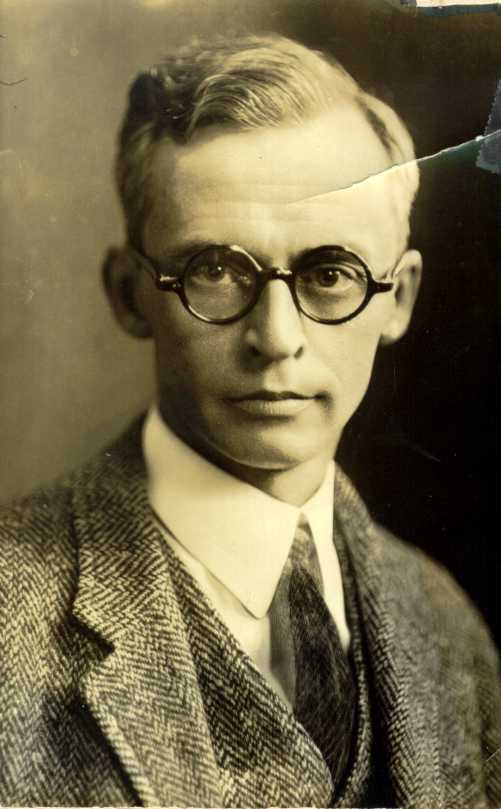
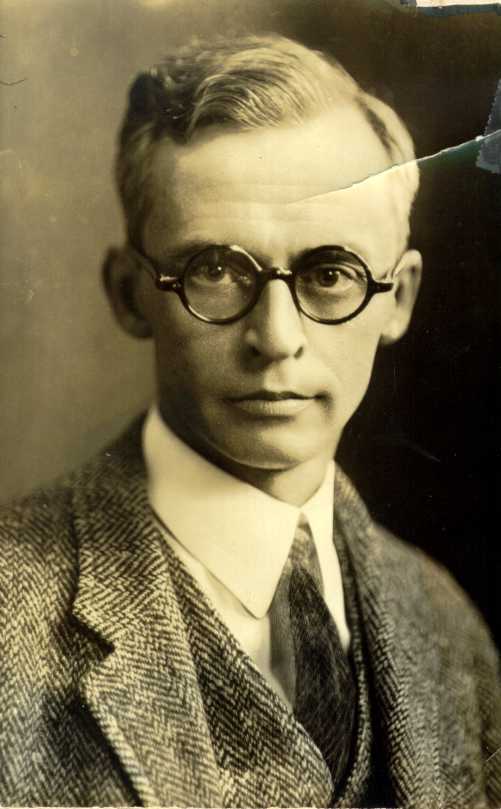
The History of Film Archives is as interesting as the contents of each individual repository. The Library of Congress Motion Picture Division was driven by a fortuitous series of events which led to its development. By locating material originally meant to be copyright deposit records, the Library found itself in the possession of a good segment of film history from 1894-1912. Copyright clerk Howard Walls who is credited with this discovery of what has become known at the Library’s “Paper Print Collection” was put in touch with pioneering cinematographer Carl Louis Gregory (illustrated) in 1943, who had actually produced some of the paper prints he was asked to copy back to celluloid. At the time Gregory was motion picture engineer for the U.S. National Archives. Gregory had developed an optical printer for shrunken and damaged and he modified it in order to reprint this delicate material.

The National Archives Motion Picture Division began in the mid-1930s and was the first U.S. Government institution to have as part of its mandate, “the Preservation of Motion Picture Film”. Members of the Society of Motion Picture Engineers Preservation Committee met several times in order to assist the National Archives in developing standards for the handling and care of motion picture film. As a matter of fact, three of the pioneering members of the Archives Motion Picture Division (John G. Bradley, Herford T. Cowling and Carl Louis Gregory) were all members of this S.M.P.E Preservation Committee.

It helps remind us that many events have conspired for and against preservation of these historic images. The foresight of many pioneers have allowed us the opportunity to revisit our film heritage.

Silent film blogs

What silent film blogs are there out there? I’ve not been able to find many specifically devoted to the subject. Here they are:

Cartoons on Films (http://cartoonsonfilm.blogspot.com) (mostly silent animation)

Ferdinand von Galizien (http://ferdinandvongalitzien.blogspot.com) (silent film reviews, warmly recommended)

Louise Brooks (http://louisebrooks.livejournal.com) (anything and everything on the 1920s screen icon)

The Silent Majority (http://silentmajority.tribe.net) (directory of discussion lists)

And one for screen entertainments of an earlier age:

The Magic Lantern Show (http://magiclanternshows.blogspot.com)

Surely there must be more. Any suggestions?

New section added

The Bioscope is one month old today, and I have now added a new section, Lists. This will contain filmographies and similar listings on early and silent cinema subjects. The first filmography put up is on the silent films of Alfred Hitchcock. Any ideas or contributions for this section will be very welcome.

Chaplin, celebrity and modernism

There a programme in the Sunday Feature slot on BBC Radio 3 tonight (21.30 GMT), called Chaplin, Celebrity and Modernism. Thirty years after Chaplin’s death, Mark Kermode investigates the great comedian’s celebrity role and influence on world culture from the modernists and Dadaists to the Russian avant-garde and imitators in Bombay. The 45-minute programme makes use of privileged access to Chaplin’s private archive to reveal remarkable letters from Truman Capote, Winston Churchill and James Agee. As usual with BBC radio programmes, it can be listened to worldwide online, and will remain available for a week thereafter through the Listen Again service.

Cinematicity update

The programme for the ‘Cinematicity’ 1895: Before and After conference is now available. The British Comparative Literature Association and the Centre for Film Studies, University of Essex are organising a conference on 24-25 March 2007. The themes of the conference are the history of pre- and early film, the previsions of cinema as both technology and cultural form, and early cinema’s influence on twentieth-century art, literature and culture. The conference is to be held at the University of Essex, Colchester, and the keynote speakers are Ian Christie, Tom Gunning and Marina Warner.

Among the interesting-looking papers on offer are:

  • Joss Marsh (Indiana): “Dickensian ‘Dissolving Views’: The Magic Lantern, Visual Story Telling, and the Victorian Technological Imagination”
  • Kristian Moen (East Anglia): “‘Never Has One Seen Reality Enveloped in Such a Phantasmagoria’: Watching Spectacular Transformations, 1849-1889”
  • Miriam Hess (Princeton): “Modern Painting and Emergent Cinema: Binaries and Seams”
  • Nico Baumbach (Duke): “Nature Caught in the Act: Beyond Baby’s Meal”
  • Paul St. George (London Metropolitan): “Chronophotography and Contemporary Cultural Practice”
  • Deac Rossell (Goldsmith’s): “Pure Invention? Thomas Alva Edison and the Kinetoscope”
  • Joe Kember (Exeter): “Institutionalised Risk and Early Film”
  • Ian W. Macdonald (Leeds): “Style and the Silent Screenwriter: The Rediscovered Scripts of Eliot Stannard”
  • Andrew Shail (Oxford): “H.G. Wells, ‘Cinematicity’ and the First Sight of the Cinematograph”
  • Keith Williams (Dundee): “‘Cinematicity’ and Optical Speculation in Early H.G. Wells”

Update: There’s a report on the conference by Paul Elliott in the June 2007 edition of the Scope online journal of film studies.

Microscopes

microscope.jpg

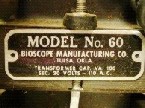
Bioscope is a brand name for microscopes produced by the Bioscope Manufacturing Company of Tulsa, Oklahoma. The firm in particular produced microscopes for use in the home, either as individual items (the popular Model “20” and Model “60” makes) or as part of children’s science sets. The firm is no longer in operation. The term ‘bioscope’ is used for other current microscope makes, such as the BioScope ATF (Atomic Force Microscope) for nano-bio research, and the Bioscope CD-ROM software simulation of a microscope.

British Pathe – part one

British Movietone (see 26 February post) is one British newsreel now available in its entirety online, but the most important British newsreel collection – and one which goes back to the silent era – to be found on the web is British Pathe. Pathé newsreels ran in Britain from 1910 to 1970, while the company also produced cinemagazines like Eve’s Film Review and Pathé Pictorial, as well documentaries and other shorts. 3,500 hours of this collection was made available online in free low resolution download form four years ago, thanks to funding from the Lottery-based New Opportunities Fund.

The British Pathe site is therefore a superb resource for discovering silent non-fiction film, and in future posts I’ll be providing a guide to some of the treasures to be found. However, I’m going to start with the unexpected – fiction films. Pathé somehow picked up assorted pre-First World War films, some though not all made by its French parent company, and these got digitised alongside the newsreels and are available on the site. There is no index to these fiction films, so below is a list of some of the ones that I have been able to find, with descriptions and some attempts at identifying them, as few are given correct titles or dates:

(the first title given is that on the British Pathe database – enter this in the search box to find the film)

THE FATAL SNEEZE = comedy in which a man suffers from an increasingly violent sneeze. This is That Fatal Sneeze (GB Hepworth 1907).

THE RUNAWAY HORSE = comedy in which a runaway horse causes chaos. This is a famous comedy of its time, Le Cheval Emballé (FR Pathé 1907).

FLYPAPER COMEDY = This is a French comedy with Max Linder, in which Max has flypaper sticking to him which he then finds sticks to everything else.

THE FANTASTIC DIVER = early trick film in which a man dives into a river fully clothed then returns by reverse action in a swimsuit.

THE RUNAWAY GLOBE = Italian? comedy in which a giant globe intended for a restaurant runs away down a street and is chased by a group of people before being sucked up by the sun, only to be spat out again.

THE MAGIC SAC [sic] = French trick film in which an old man hits people with a sack and makes them disappear.

MYSTERIOUS WRESTLERS = French trick film where two wrestlers pull one another to bits. This is a brilliant George Méliès trick film, Nouvelle Luttes Extravagantes (FR Star-Film 1900).

ATTEMPTED NOBBLING OF THE DERBY FAVOURITE = section from a British racing drama, made by Cricks and Sharp in 1905.

THE POCKET BOXERS = trick film in which two men place two miniature boxers on a table and watch them fight.

ESCAPED PRISONER RETURNS HOME = guards wait while prisoner bids a tearful farewell to his sick wife. This must be a James Williamson film, perhaps The Deserter (GB 1904).

LETTER TO HER PARENTS = extract from a drama at which elderly parents are upset at a message they receive.

ASKING FATHER FOR DAUGHTER’S HAND = scenes from a film where a fiancée has to prove himself to the father.

HAVING FUN WITH POLICEMEN = British comedy in which two legs stick out of a hole in an ice-covered pond, placed there by boys to trick a policeman.

POINT DUTY = a policeman is run over by a car and put back together again. This is How to Stop a Motor Car (GB Hepworth 1902).

THE MOTOR SKATER = comedy where man buys a pair of motorised skates and causes chaos.

RUNAWAY CYCLIST = comedy where man buys a bicycle and causes chaos (as can be seen, this was a common theme for comedies of the period).

FIRE = mixture of actuality film of a fire brigade and a dramatised fire rescue. This is Fire! (GB Williamson 1901).

HAMLET = scene with Hamlet and his father’s ghost, using trick photography, from Sir Johnston Forbes-Robertson’s production of Hamlet, a feature-length film (GB Hepworth 1913).

THE DECOY LETTER = early, rudimentary Western, where a soldier lures away an innkeeper with a decoy letter and attempts to assault his wife.

THE VILLAGE FIRE = comedy fire brigade film. This is The Village Fire Brigade (GB Williamson 1907).

THE RUNAWAY CAR = French comedy in which three men try to ride a bicycle and then a car.

RESCUED BY ROVER = a dog finds a kidnapped baby. This is of course the famous Rescued by Rover (GB Hepworth 1905).

Anyone who recognises the descriptions where the film has not been identified, or has the time to take a look at the films and identify them, or finds other fiction films on the site, do let me know.
Kino podcasts

And there’s more. You can see preview clips of the Kino DVD set Reel Baseball as part of their podcast delivery, at http://www.kino.com/podcast/kino_ipodcast.xml. Other silent clips or trailers available this was include The Night Before Christmas (1905), A Christmas Carol (1910), The Saga of Gösta Berling (with Greta Garbo), and Fritz Lang’s Metropolis. You can find them also on via iTunes at
http://phobos.apple.com/WebObjects/MZStore.woa/wa/viewPodcast?id=108586794.

Some of them are quite shocking

bioscope.jpg

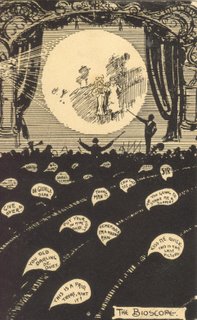
Back to the history of the word Bioscope. This postcard dates from 1904. It portrays a bioscope show, with lecturer, orchestra, and speech bubble comments from the audience. The comments include: “Remember I’m a married man,” “Kiss me quick, this is the last picture,” and “Can they see us?” On the back of the postcard, there is the handwritten comment, “This one is rather amusing I think. Don’t you? They are quite the latest style here. Some of them are quite shocking.” The postcard was sent from Dover. Interestingly, the image on the screen is a circular one, indicating that the artist was confused by the difference between motion pictures (which were square) and magic lantern slides (which did sometimes feature circular images).

Silent podcasts

The Bioscope is as dedicated to new technology as it is to old, and is always interested to see what is being done with the silent film form today. So, having brought you information on the Rudolph Valentino podcast site a while back, how about the truly silent podcast? 1st Silent Podcast is just that – a series of podcasts of silence. Visitors, or subscribers to the feed, can sample the sound of one hand clapping, silence recorded in Palau (Micronesia), Shanghai, Denmark, and Las Vegas, silence in a Tuscan vineyard, a memorial rendition of John Cage’s celebrated silent piece 4′ 33”, download silent ring tones, and, yes, of course, experience the world’s first silent video podcast. Presumably because this bills itself as 1st Silent Podcast, there are imitators out there, but I’ll trust to the original.