filmarchives online

filmarchives online is a new, European-funded project to provide integrated access to moving image collections. The project is in its early stages, but the site is already offering records for 4,000 films (predominantly non-fiction) from five partner archives: the Deutsche Filminstitut – DIF e.V., the British Film Institute (BFI), La Cineteca di Bologna, the DEFA-Foundation and Národní Filmový Archiv Prague (NFA). Eleven more archives are expected to participate in 2007, with a target of 20,000 records online by the end of 2007. The site and database are available in four languages (English, French, German, Czech).

The search function is still in development, but you can search on silent films alone. Many are Topical Budget newsreel items and Mitchell and Kenyon actualities from the BFI. The emphasis is on technical records as opposed to filmographic data, though some records have credits and descriptions. This is quite a departure, as film archives traditionally have been cautious about revealing information on the film elements that they hold. As a potential union catalogue for European film collections this is clearly a project to keep an eye on.

First news from Pordenone

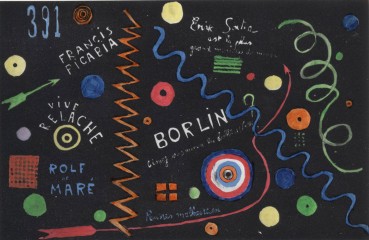
Pordenone poster 2007

The first details of this year’s Giornate del Cinema Muto (the Pordenone Silent Film Festival) have just been published.

The festival is taking place at Pordenone itself (after several years at the nearby town of Sacile), 6-13 October. Festival features announced (provisionally) so far are:

  • The other Weimar
  • Le silence est d’or: René Clair
  • The Bible Lands in 1897 – the earliest films shot in the the Middle East just found and restored by Lobster Films, Paris
  • The Griffith Project 11 (1921-1924)
  • Ladislas Starevich
  • The Corrick Collection (1901-1914) (this is a collection of early films from the National Film and Sound Archive in Australia, including the recently-identified 1904 Charles Urban film Living London, reported on in an earlier post)
  • Treasures III – American films exploring social issues presented by the National Film Preservation Foundation
  • Sponsored Films – a programme curated by Rick Prelinger
  • Out of FrameI mille (Alberto Degli Abbati, 1912) – a beautifully restored print presented by the Cineteca Italiana to celebrate the bicentenary of Giuseppe Garibaldi’s birth
    Twist Oliver (Márton Garas, 1919)
    A halál után [After Death] (Alfred Deesy, 1920)
    These and other treasures from the Magyar Nemzeti Filmarchívum
    – La Cinémathèque de Toulose présente…
  • Special Presentations:
    Orphans of the Storm (D.W. Griffith, 1921) [6.10.2007]
    Entr’acte (René Clair, 1924) (this year’s festival poster is taken from a design for the stage production Relache which incorporated Clair’s film)
    Paris qui dort (René Clair, 1923-1925) [8.10.2007]
    Chicago (Frank Urson, 1927)
    Dr Plonk (Rolf de Heer, 2006)
    Die Büchse der Pandora (Georg Wilhelm Pabst, 1929) [13.10.2007]

Registration details are available on the festival site. Those who have attended before will be receiving a registration form at the end of June. Those who have not been before can fill in an online registration request form.

See you there.

Land and Kinemacolor

Edwin Land c/o Wikipedia

As reported earlier, I’ve been reading Simon Ing’s The Eye: A Natural History, which is not only an exceptional, highly-readable account of the mysteries and mechanics of eyesight, but incidentally has information of use to us in the study of early film. I’ve already covered his demolition of the persistence of vision fallacy. A later chapter covers how we see colour.

Silent cinema was filled with colour. From the earliest years selected films were hand-painted, a process that was then mechanised by a system of stencils (and massed ranks of women operatives) by the Pathé and Gaumont companies. Later films were subtly tinted and toned throughout, with colours used to denote emotions as well as settings. Restorations of sophisticated colour effects in silent films are the pride and joy of film archives. There is an excellent essay by Tom Gunning, ‘Colorful Metaphors: The Attraction of Color in Early Silent Cinema’ which places early, artificial colour within the broader context of colour reproduction across other media.

However, there was also ‘natural’ colour in the silent era. The 1920s saw systems such as Prizmacolor and two-colour Technicolor in use for a handful of films, but the first of them, and the colour system with the most romantic history, was Kinemacolor. You can read all about the history of Kinemacolor, which was invented in 1906 and first exhibited in 1908, on my Charles Urban website, Urban being the entrepreneur behind Kinemacolor.

The relevance of Ings’ book here is his account of the work of Edwin H. Land. Land was an American scientist and inventor, best known for having given us the Polaroid camera. In 1959, Land devised an experiment which challenged previous theories of colour vision. This is how Ings describes the initial discovery:

On evening, at the end of a long series of experiments with three projectors [they were experimenting with red, green and blue light], Land and his assistants shut off their blue projector and took the green filter out of the green projector. Then, one of Land’s assistants, Meroe Morse, called their attention to the screen. The red projector was still running, projecting the red record on the screen in red light, and the unfiltered green projector was projecting the green record with white light. That combination of red and white lights should, in Morse’s mind, produce something pinkish. But there was the original image, its every colour still identifiable. How could red and white lights throw blues and greens on the screen?

Answer – because in colour vision, context is everything. The eye perceives colours in relation to other colours, and even though Land and his team ‘removed’ colour filters in assorted combinations, they could still generate a full colour, projected image. The eye filled in the gaps.

This property of vision, however, had been discovered and exploited fifty years earlier by Charles Urban and G.A. Smith, the inventor of Kinemacolor. Kinemacolor (patented 1906) used rotating red and green filters on both camera and projector, with panchromatic black-and-white film being used at double the conventional speed (i.e. around 32 frames per second). The result, despite some colour fringing inevitable given the separation of the red and green records, produced a record that was remarkably close to full colour. Red and green in combination covered a fair bit of the spectrum, and the eye did its best to fill in the rest. Hence eye-witnesses reported seeing blues which, according to pure Newtonian colour theory, could not be there. Ironically, Kinemacolor eventually failed as business after a 1913 court case in which its patent was ruled invalid because it claimed to show all the natural colours, but could not reproduce blue.

Today, few Kinemacolor films survive, and we can in any case only judge (or be fooled by) the colour effect if a true Kinemacolor film is projected using correct equipment. However, it is possible to approximate the effect photo-chemically or electronically, as in these frames from the surviving fragment of the famous Delhi Durbar film of 1912 (‘red’ record, ‘green’ record and composite effect):

The Delhi Durbar

Land knew nothing of Kinemacolor, and Ings makes no mention of it, which is a shame, because its history has much to tell us about perception, the socio-psychological construction of colour, and the wider understanding of the phenomenon of moving pictures.

If you are interested in knowing more about the history of Kinemacolor, why not download the chapter from my thesis on Urban which covers Kinemacolor, available from my personal website.

Find out more about Land’s experiments from Chris Taylor’s site, which plays with generating colour images using just red and white.

If you are heavily into optics and want to know more about Land’s work, see Gerald Huth’s Rethinking the Vision Process blog.

And, if you are in a UK university, college, school or public library, you can see sample Kinemacolor films from the BFI’s Screenonline site, together with other examples of Charles Urban’s remarkable film career.
How to Run a Picture Theatre – part 7

Back to our on-going series on how to set up your own cinema, taken from the publication How to Run a Picture Theatre (c.1912). Having got the building and equipment all prepared, the staff recruited, it is time to select the films we are going to show and to decide how we are to present them:

The Programme. In the selection of the program, the tastes of the locality in which the show is situated is the governing factor. Films that will please the audience of a theatre located in a neighbourhood made up of the labouring classes will not gain favour in a house situated in a high grade residential district, but it is surprising how well the films that please in the exclusive neighbourhood are received by the lower classes. I refer to high class subjects, such as classic romantic dramas, travel subjects etc. Theatre owners will do well to cultivate the taste of their audiences by gradually increasing the number of high class film subjects, thus cutting down the demand for some of the rubbish sold as comics …

Proper film selection is really a system of insurance. It is the best policy of protection against competition and loss …

The shame or embarrassment that many cinema owners had for their lower class audiences is noticeable throughout the literature of this period. There was an insistent drive towards higher-class presentation, in venue as well as in the films. This was partly a strategy to attract a more genteel clientele which would pay more for tickets, of course, but also just a general wish for ‘class’. Nevertheless, it is odd to see the dismissal of ‘rubbish’ comics which were the bread-and-butter entertainment for so many cinemas.

Sunday Selections. … the films shown on that day should differ from the general run on week days. They should be of a more sacred and educational character …

Much of the odium attaching to the opening of the kinematograph theatre has been due to the lack of judgment shown in the selection of the Sunday programs …

The question of Sunday shows was hugely controversial at the time. The audience was naturally interested in finding cheap entertainment available on what was generally its one free day of the week, while others were shocked at the idea of entertainment – and particulaly such vulgar entertainment – on a Sunday. Many cinemas put on special Sunday shows of a more ‘suitable’ character to overcome such censure, and to protect their licence. It was common for these to give the profits from Sunday shows to charity.

First Runs and Repetitions. “First runs” faddism was born of a desire to compel the other fellow to follow suit. The “first-run” fiend figured that if he could get the newest picture first he would kill it for future use in his town, and that those who came next would just be “imitators” …

There is a mistaken idea among picture theatre managers that if a picture has been once run in a town, it is useless to show it again.

Keeping Track of Films. The card system should be adopted for keeping track of films, both coming releases and films that have been had from the renter …

When you get your KINEMATOGRAPH WEEKLY go carefully through it from first page to last and make a careful lists of all the films that have not been previously released …

The Kinematograph and Lantern Weekly was one of the main British film trade papers (its big rival was The Bioscope, of course), and the publisher of How to Run a Picture Theatre.

How to Make Feature Films Money Earners. Feature films may be divided into two classes, firstly those running well into 3,000 feet or over, such as Vitagraph’s “Tale of Two Cities”, or “Vanity Fair”, Nordisk’s “In the Hands of Impostors”, Selig’s “Christopher Columbus”, Jury’s “Lady of the Camelias”, E.S. Williams’ “Carmen”, or Clarendon’s “Saved by Fire”, and secondly those of 1,000 feet, such as Selig’s animal pictures, B. and C.’s “Lieut. Daring” and Clarendon’s “Lieut. Rose”, or Vitagraph’s Life Portrayals.

A fascinating selection of what were considered strong sellers in 1912. American productions predominate, but there is still some merit seen in the output of British producers British and Colonial (B. & C.) and Clarendon. In the Hands of Impostors was a sensational ‘white slave’ melodrama from Denmark. The 3,000-foot film (50 minutes or over) indicates that the feature film is on its way; that is, a main attraction of an hour or more in length, around which the rest of the programme has to fit.

There is no doubt that the three reel subject has come to stay and as a money earner, provided care be taken in its selection and it is properly handled, there is nothing to equal it …

… These three reel subjects are in great measure handled on the exclusive system by renting houses and are in many cases let out on the principle of one hall, one town …

Program Number Indicators. Nearly every kinematograph theatre that is worth speaking of now has programs printed describing the pictures, and it is therefore most desirable to install some form of number indicator so that each forthcoming item is made known to the audience.

Finally, it is worth remembering that the early cinema was full of song. There were films which were synchronised to gramophone disks (such as Hepworth’s Vivaphone) and live singing, often to lantern slides. Interestingly, this was more popular in the provinces than in London, and a necessity in Australia.

The Singing Picture and Singing to Pictures. In all up-to-date picture theatres it is now the custom to provide one or more singing pictures, or one or two vocalists to sing to the pictures, and this even where a fairly large orchestra is employed. This may not be so general in London, but in the provincial towns this variety in the program is much appreciated, whilst in Australia and the Colonies it is a necessity for success.

We will end our series with the eighth part, on obtaining a cinematograph licence.

Visiting the Volta

Volta then and now

I’m back from few days in Dublin, and naturally I paid a visit to 45 Mary Street. Why so? Because it was here in December 1909 that Dublin’s, indeed Ireland’s, first cinema was situated, manager one James Joyce. The author of Ulysses‘s contribution to literature is rather more considerable than his contribution to cinema history, but it is nevertheless a diverting tale.

Joyce was living in Trieste, Italy, and ever on the look-out for money-making schemes, when he fell in with a group of businessmen who ran a group of cinemas in Trieste and Bucharest, and teasingly told them that he knew of a city of half a million inhabitants without a single cinema. This was Dublin, of course, which had had plenty of film exhibitions before 1909, but no dedicated venue for film up to that date. A contract was signed between them in October 1909, and Joyce was sent over to Dublin to prepare things. He found a suitable venue at 45 Mary Street, off Sackville Street, and spent the next two months preparing what was named the Volta Cinematograph. He hired the staff, oversaw the fitting out of the venue, and heavily promoted the coming attraction with sandwich board men, press notices and the like.

The Volta opened on 20 December 1909, with this programme (correct original language titles and credits in brackets):

  • The Bewitched Castle (possibly Le Chateau Hanté, Pathé 1909)
  • The First Paris Orphanage (possibly La Première Pierre d’un Asile pour Orphelins, Pathé 1908)
  • Beatrice Cenci (probably Beatrice Cenci, Cines 1909)
  • Devilled Crab (possibly Cretinetti ha ingoiato un gambero, Itala 1909)
  • La Pouponnière (Une Pouponnière à Paris, Éclair 1909)

The Volta seated about 600-700 (200 kitchen chairs were at the front for those paying the top prices). It was a simple shop conversion i.e. no racking, and only the plainest of comforts. Doors opened at 5.00 pm and there were continuous 35 to 40-minute programmes every hour up to 10.00 pm. One extraordinary feature was that the titles of the films were all in Italian – Joyce received the films direct from the Trieste source rather than through English film exchanges, and so handbills were given out with English translations. Music was supplied by a small string orchestra, led by Reginald Morgan. Tickets were 2d, 4d and 6d, children half price.

Joyce did not stick around for long, leaving the cinema in the hands of one Francesco Novak, while he went back to Trieste on 2 January 1910. So his involvement in the actual running, and programming, of the cinema was minimal, though he did remain in touch with the business for a few months as it staggered along, hampered by poor presentation, competing attractions, and undoubtedly a paucity of American films. The business was sold at a loss to the British company Pronvincial Cinema Theatres in June 1910, and continued as a cinema (known for a while as the Lyceum, before it became the Volta once more) until 1948.

There has been quite a bit of interest among some academics in Joyce’s association with the Volta, as reported in an earlier post. This centres on the degree to which Joyce’s “choice” of films might be reflected in his writings (unlikely – he had little to do with the selection of films, which were simply the titles generally available at the time) and how much the idea of cinema itself can be found in his art (a stronger line of enquiry – he was always an enthusiastic filmgoer). As you will see from the photographs, the Volta has not fared as well as some of Dublin buildings associated with Joyce. The site is now part of Penney’s department store, and is not recognisable as having once been a cinema with a unique literary association.

There is a new book, An A to Zed of All Old Dublin Cinemas, collated and self-published by George Kearns and Patrick Maguire. It is mostly a collection of contemporay clippings and photographs, and has useful information on the Volta, including two photographs that I’ve not seen before, both from the 1940s, as is the left-hand image above. Sadly, no photograph of the Volta from the time when Joyce was there is known to survive.

But why not go along for yourself this June? Bloomsday (16th June, the day on which Ulysses is set) is always celebrated with a range of events, and this year these include a tour of Dublin cinema sites, including the Volta, led by Marc Zimmerman, author of another (forthcoming) book on Dublin cinemas. Here the blurb from the James Joyce Centre site:

JOYCE’S VOLTA CINEMA & BEYOND – A GUIDED WALKING TOUR

Start: James Joyce Centre, 35 North Great George’s Street
Duration: ca. 90 minutes
Finish: Irish Film Institute/Cinema, 6 Eustace Street

Tour: This tour visits James Joyce’s Volta cinema (opened 1909 as Ireland’s very first dedicated picture house) as well as a further 15 historic cinemas in Dublin’s city centre ranging from early conversions of Georgian buildings to lavish Art Deco venues, giving a detailed account of their cultural history, architecture and significance. The tour will be illustrated with numerous historic and interior photographs.

Guide: Marc Zimmermann is a building conservation engineer and the author of The History of Dublin Cinemas (book out in May and avail. during the tour). He founded the Cinema Heritage Group in 2006 and issues a free e-newsletter, The Cinematograph [subscribe from: NOSPAMheritage_events@yahoo.com]

Date: 14th June 2007 & 17th June 2007
Time: 7.00pm (14/6) & 2.00pm (17/6)
Venue: James Joyce Centre, 35 North Great George’s Street
Tickets: €10 / €8conc.
Advanced booking advised

There are other Joycean film-related events taking place.

Keystone revisited

Keystone live

The Bioscope has been taking a short break while I’ve been holidaying in Ireland, but one of the reasons for going was to see Dave Douglas and his Keystone sextet play at the Bray Jazz festival. As reported in an earlier post, jazz musician and composer Dave Douglas was inspired by the films of Fatty Arbuckle to release a CD (with accompanying DVD) in 2005 entitled Keystone, which is perhaps rather more his response to the happy anarchy of Arbuckle’s films and his sad fate rather than music to accompany the films. As it is, the concert – which was utterly superb, exuberant modern jazz of the highest order – didn’t feature Arbuckle’s films at all, as had been trailed, so whether it all works in a live setting I cannot say (the DVD that goes with the CD suggests not). Some of the set was inspired by Arbuckle and Keaton’s The Rough House (1917), though the bit with just trumpet and turntables intercutting between an Iraqi woman singing and George Bush uttering the word ‘terrorist’ suggests that Douglas takes his interpretation of Arbuckle’s work quite broadly.

Anyway, the set will eventually be recorded for a follow-up Keystone CD, but in the meanwhile there’s a live CD now available of his previous Keystone set, recorded in Sweden in 2005. Here’s the blurb from the CD site:

In a brilliant stroke of tour routing, this gig at the Umea Jazz Festival in northern Sweden was immediately preceded by the San Francisco jazz festival in California and followed by one in Cormons, Italy. Nonetheless everyone came ready to play. The Keystone sound really came together here: sloppy and wild, but also focused, lyrical, delicate, and at times simply bizarre. Also, like the films it was written to, it was a lot of fun. The concert began with a showing of Fatty and Mabel Adrift, Roscoe Arbuckle’s 1915 three-reeler, probably the first (and finest?) surreal comico-psychological thriller drama. Next, we played the three main themes from my score for Mabel and Fatty’s Wash Day (in which the perennial slapstick potential of the laundry line is used to address some semi-serious marital issues) without accompanying the film. Finally, as an encore, we played Luke the Dog, written to the heroic canine suspense vehicle, Fatty’s Plucky Pup. Though we edited the chit chat and whatnot, this is the way the gig was played.

The man certainly knows and loves his Arbuckle. See you back in Blighty very soon.

Muy Blog

Eadweard Muybridge

It is a disappointment that there is no single good source on the web for Eadweard Muybridge, the founding father of the moving image. There are interesting sites offering animations of his photographic sequences, but nothing comprehensive or in-depth about the man.

This looks likely to change with some of the work being put up in test fashion by Stephen Herbert. The Bioscope has already reported on the Muybridge Chronology that he has created. He has now followed this with a proto-blog of discoveries in Muybridge research, Muy Blog. It’s just a basic web page at the moment, though with gorgeous illustrations, but will undoubtedly develop further. He has also published a Muybridge Timeline, which puts the man’s achievements alongside technological and photographic events of the day, as well as world events. Finally, there’s a page of Muybridge Links. It’s all work-in-progress, but important work, and more is promised.

William Haggar – Fairground Film-maker

William Haggar

http://www.amazon.co.uk

Tomorrow sees the publication of William Haggar: Fairground Film-maker (Accent Press), by Peter Yorke. Yorke is the great-grandson of William Haggar, fairground entertainment and pioneer of Welsh cinema, whose energetic dramas such as A Desperate Poaching Affray (1903) and The Life of Charles Peace (1905) were hugely popular in their time and are treasured by early film historians now. Yorke’s biography draws on oral reminiscences, unpublished family memoirs and contemporary press reports to tell the rags-to-riches story of a travelling theatrical who became one of Britain’s select band of pioneer film-makers. The Bioscope understands that the mispelling of Haggar’s name on the book cover being publicised on Amazon has been corrected since…

Time Out

The Northeast Historic Film Summer Symposium will be held in Maine on 20-21 July, under the title Time Out: Images of Play and Leisure. The symposium will focus on moving images that offer a new historical, cultural, and critical understanding of play and leisure, focusing on images of play and leisure made by amateurs and for noncommercial purposes. The programme of events includes several subjects relevant to silent cinema and pre-cinema. Peter Morelli’s talk “A Night at the Moving Pictures – Before Cinema” looks at pre-cinema entertainments such as the magic lantern and the diorama; Martin Johnson looks at home movies of the 1920s-40s and the intriguing subject of people who turn their faces away from the camera; Ishumael Zinyengere looks at the work of Burton Holmes, pioneer producer of travelogues (he coined the term); Mark Neumann looks at early films of the Grand Canyon. An excellent programme which demonstrates the value of looking at amateur film from the silent film era quite as much as the commercial. More details from the festival web page.

The Projection Box Essay Awards

Early film and pre-cinema publishers The Projection Box have announced a new award for essays on projected and moving images to 1915. The aims of this award are to encourage new research and new thinking into any historical, artistic or technical aspect of projected and moving images up to 1915; and to promote engaging, accessible, and imaginative work. The first prize of £250 is for an essay of between 5,000 and 8,000 words (including notes).

The deadline for entries is 18 January 2008. The winning essay will also be published in an issue of Early Popular Visual Culture (Routledge). At the discretion of the judges, two runners-up will each receive books and CD-Roms of their choice (published by The Projection Box), to the value of £100.

The award is open to all. Although the judges welcome international submissions, all essays must be in English. Each applicant may submit up to two essays. Work must be the author’s own, and must not have been previously published. There is no time limit on when the work was originally written. Co-authored essays can be accepted. Authors are encouraged to provide appropriate accompanying illustrations, as the winning essay will be published in Early Popular Visual Culture, an illustrated journal. Permissions will need to be sought by the author before publication of the winning entry. Notes and references must be included. Read the guidelines for the required method for referencing your text.

For further information, visit www.pbawards.co.uk.