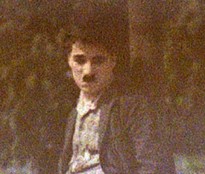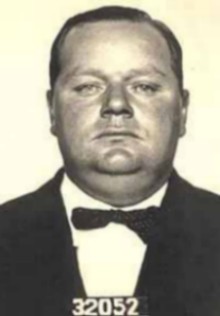
Fatty Arbuckle and Virginia Rappe

virginiarappe1.jpgarbuckle-roscoe-fatty_11.jpg

There’s a fascinating report on the Alternative Film Guide blog on the Fatty Arbuckle manslaughter case.

Film researcher Joan Myers has been re-investigating the notorious case of 1921, when the hugely popular film comedian Roscoe ‘Fatty’ Arbuckle was accused first of the rape and then of the manslaughter of minor actress and model Virginia Rappe, after an archetypal Hollywood ‘wild party’. Arbuckle was eventually acquitted, after a lurid trial, but his reputation was left in ruins, and his career as a star comedian was over. The case has been pored over for decades, and one might think that little remains to be discovered, but Joan Myers has found much new material, simply by looking more at the Virginia Rappe side of the story. She is still researching and writing, so the interview with her doesn’t give too much away, but there’s more than enough there to realise that we have not heard the last of Arbuckle trial.

Il Cinema Ritrovato

Il Cinema Ritrovato is held every June/July at the Cinemateca Bologna, Italy, and is one of the world’s major festivals of film restoration. It always has a major silent film component. Details of this year’s festival, which takes place Saturday 30 June-Saturday 7 July, have just been published. Those to be featured include Charlie Chaplin (subject of a major Bologna retrospective and exhibition); Asta Nielsen; films from 1907; the American silents and early sound films of Michael Curtiz; and some major silent restorations from Lubitsch (Als Ich Tot War, 1916), Von Stroheim (Austria’s restoration of Blind Husbands, 1919), De Mille (Dynamite, 1929), Stiller (Madame de Thèbes, 1915); and from Germany, Schatten der Weltstadt (Willi Wolff, 1925); a Polish find, A Strong Man (Henryk Szaro, 1929); and what the festival is calling its most amazing discovery of all, a Swedish film called The Spring of Life (Paul Garbagni, 1912), with Sjöström, Stiller, and af Klercker as actors. From Italy they will have L’Odissea (Bertolini-Padovan, 1911), Maciste imperatore (Guido Brignone, 1924), and the beginning of the Ghione Project.

The festival will also cover CinemaScope, melodrama of the 1940s/50s, Raffaello Matarazzo, and Sacha Guitry. More details from the Ritrovato site.

Broncho Billy Silent Film Festival

essanay.jpg

The 10th annual Broncho Billy Silent Film Festival is taking place at the Niles Essanay Silent Film Museum, Fremont, California, June 29-July 1. This year the festival celebrates 100 years of the Essanay Film Manufacturing Company. The web page for the festival still has information on the 2006 festival, but if you go to their Saturday Night Film Schedule a full list of titles and dates is given. See not only Broncho Billy Anderson, the early cinema’s favourite cowboy, but also Ben Turpin, Max Linder, Beverley Bayne, Francis X. Bushman, Rod LaRoque and Wallace Berry. There’s an evening of Broncho Billy films included, and among the musicians is the incomparable Phil Carli.

Paul Merton’s Silent Clowns

paulmerton3.jpg

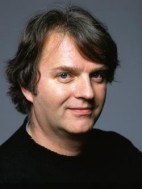
Television comedian and silent cinema champion Paul Merton will be hosting a special programme of silent film comedians, including Chaplin, Keaton, Fatty Arbuckle and Charley Chase, with music by Neil Brand, at Plymouth Pavilions on 27 November 2007 – some time off, but tickets are on sale now. Merton has written a book, Silent Comedy, which will be published in October 2007. Look out for plenty of publicity and events around that time.

Update: See later post, Paul Merton on tour, for a list of his November-December tour dates, with links to the theatres.

Silent MySpace

A surprising number of silent film figures have pages on MySpace. Here’s some of them, though mostly of interest for the phenomenon rather than the reliable information that they might provide:

And probably many more.

More silent film blogs

An update on some of the silent film blogs out there. Not a great many.

Cartoons on Films (http://cartoonsonfilm.blogspot.com) (mostly silent animation)

The Crowd Roars (http://silentfilmlegend.blogspot.com/) (“from the earliest silents to the dawn of television”)

Edna’s Place (http://ednapurviance.blogspot.com/) (Edna Purviance, Chaplin and other subjects)

Every Little Breeze (http://everybreeze.blogspot.com/index.html) (Louise Brooks et al)

Ferdinand von Galizien (http://ferdinandvongalitzien.blogspot.com) (silent film reviews, warmly recommended)

Louise Brooks (http://louisebrooks.livejournal.com) (anything and everything on the 1920s screen icon)

Silent Films Fans’ Journal (http://community.livejournal.com/silent_films) (what it says on the film can)

And one for screen entertainments of an earlier age:

The Magic Lantern Show (http://magiclanternshows.blogspot.com)

Chaplin in Kyoto

2007 sees the thirtieth anniversary of Charlie Chaplin’s death, and there are a number of events, publications and resources planned throughout the year. One such event is the 2nd Kyoto Chaplin Conference, held by the Chaplin Society of Japan. The Society’s site is rather confusingly advertising the conference as being in March 2006, but as the end date for the Call for Papers was 15 February 2007, presumably this is an error. The theme of the conference is Chaplin and War. The Kyoto Silent Film Festival takes place 24 March-1 April 2007 and includes a restored version of Shoulder Arms accompanied by the Kyoto Symphony Orchestra, along with films about war by other artists, including King Vidor’s The Big Parade (restored version) and Japanese war documentaries. The programme will include a newly discovered fragment of film of the young Chaplin’s comic inspiration, the Spanish clown Marceline. The principal retrospectives are dedicated to D.W. Griffith, Sessue Hayakawa, and Japanese silent film comedians.

Other Chaplin events lined up around the world include a photographic exhibition, Chaplin in Pictures, which is touring Europe; and the completion by the Cineteca Bologna of its digitisation of the Charlie Chaplin Archive, which will go online in Summer 2007.

More information on Chaplin events can be found at www.charliechaplin.com.

Ford Sterling biography

Ford Sterling

http://www.amazon.co.uk

Ford Sterling is one of the forgotten comedians of the silent era, known if at all as the Keystone comedian whose brief star was eclipsed by the arrival of Charlie Chaplin. A new biography by Wendy Warwick White (presumably the first devoted to Sterling) ought to do much to overturn assumptions and revive his reputation. Blurbs for the books indicate that he left behind a comfortable, middle-class childhood to journey via circus, vaudeville, burlesque, Shakespeare and Broadway to achieving fame as a silent film comedian. His film career was not ended by Chaplin’s rise, instead he became a successful character player and made a successful transition to sound. He was a cartoonist, photographer, and became a millionaire. But this once famous figure has been left aside by history. Sterling’s films are probably only ever going to be of interest to the specialist now, but this sounds like a personal history well worth recovering. Ford Sterling: The Life and Films is published by McFarland.

Colleen Moore

There’s an attractive and interesting new site on the American film actress of the 1920s, Colleen Moore, which has just started up. www.colleenmoore.org has been created by Jeff Codori, and it’s an interesting mixture of fan site and research project, with the author aiming to produce a biography, to help in the process of which he is publishing his findings on the site and calling on readers to supply information (especially local history research). It all has a work-in-progress feel and it’s interesting to see the ideas in development and where they might go. There’s fascinating stuff there already, particularly on her family history, and some beautiful images.  Bits of the site are still under construction, and a filmography would be welcome. Take a look.

Chaplin – listen again

chaplin.jpg

Charlie Chaplin

The Mark Kermode Radio 3 programme Chaplin, Celebrity and Modernism was excellent. It pursued the thesis of Chaplin as subversive everyman, beloved by not just by cinema audiences, but by modernists, Dadaists, surrealists, politicians, writers and fellow filmmakers. Kermode admitted that, in common with many modern critics, he had dismissed Chaplin as a sentimentalist, inferior as a film artist to Buster Keaton. Instead, he discovered Chaplin’s essential role as a figure (there was much emphasis on his body) of modernism. You got a real sense of a need to rediscover Chaplin as one of the key figures of the twentieth-century, given all that he meant to society and the worldwide broadcasting of images and ideas. That said, Chaplin is an everyman figure no more, despite his image being used in advertising around the world. So our everymen change, and that is part of his significance too.

Contributions from David Robinson, Mike Hammond, Tom Gunning, David Thomson, Michael Chaplin, Geraldine Chaplin and comedian Mark Steel. It will remain available online for the next week through the Listen Again service. Don’t miss it.