Murnau, Borzage and Fox

murnau_borzage

dvdtimes.co.uk

Published on 9 December is the latest in the lavish boxed sets of silents which are raising the bar for DVD releases in our field. 20th Century Fox Home Video is releasing (in the USA) a 12-disc set of films directed by F.W. Murnau and Frank Borzage for the Fox Film Corporation in the 1920s and 1930s, Murnau, Borzage and Fox (1925-1932). The collection comprises:

Murnau silents:

Sunrise (1927) (Movietone score version and European silent version)
The City Girl (1930)

Borzage silents:

Lazybones (1925)
Seventh Heaven (1928)
Street Angel (1928)
Lucky Star (1929)

Borzage talkies:

They Had to see Paris (1929)
Liliom (1930)
Song O’ My Heart (1930) (full sound version and music/effects version)
Bad Girl (1931)
After Tomorrow (1932)
Young America (1932)

You also get a new documentary on Murnau and Borzage by John Cork, and two books of photographs on the films. What’s missing is Borrzage’s recently rediscovered (though incomplete) The River (1929), which is instead released on DVD by Edition Filmmuseum. There is, however a The River reconstruction featurette and stills gallery. For Murnau’s lost film, The 4 Devils, there is Janet Bergstrom’s film Murnau’s 4 Devils: Traces of a Lost Film, plus screenplay, treatment and stills gallery.

More information from the Fox Studio Classics site.

A modern musketeer

modernmusketeer

Released next month is the latest mouth-watering, connoisseur-pleasing release from Flicker Alley, Douglas Fairbanks: A Modern Musketeer. This is a five-DVD set covering Fairbanks’ career 1916-1921, as he worked his way through the genres and ever-increasing stardom, before the series of great costume dramas that marked the peak of his fame in the 1920s. It’s officially released on 2 December, with a discount offer for advance orders.

The eleven titles featured on the set are:

  • His Picture in the Papers (1916)
  • The Mystery of the Leaping Fish (1916)
  • Flirting With Fate (1916)
  • The Matrimaniac (1916)
  • Wild and Woolly (1917)
  • Reaching for the Moon (1917)
  • A Modern Musketeer (1918)
  • When the Clouds Roll By (1919)
  • The Mollycoddle (1920)
  • The Mark of Zorro (1920)
  • The Nut (1921)

vance_fairbanks

It’s a sensational package, not just for the instrinc value of the films, but for the portrait it provides of the ‘all-American’ character leaping out of a pre-war world into post-war opportunity. The release of the set is complemented by the publication of Jeffrey Vance’s new biography, Douglas Fairbanks. This, we are told, is

the first critical analysis of Fairbanks’s body of work in over twenty-five years as well as the first full scale biography in over a half century. This extensively researched, engagingly written and sumptuously designed book goes behind Fairbanks’s public persona to thoroughly explore his art and far-reaching influence. Utilizing access to Fairbanks’s personal and professional papers, Douglas Fairbanks is a superb portrait of a true pioneer, critically important to the creation of cinema as the defining art form of the 20th-century.

The DVD set takes its apposite name from the title of the recently rediscovered 1917 A Modern Musketeer, which the curmudgeonly Bioscope didn’t much care for when it was shown this year at Pordenone. For a more generous view, within an illuminating critique of the Fairbanks persona, read David Bordwell’s latest post.

With our troops on the Yser

yser

With Our Troops on the Yser, from http://www.ledoux.be/dvd

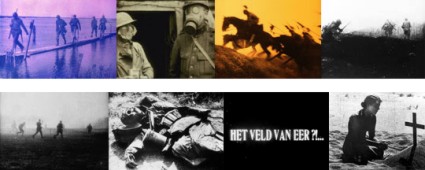
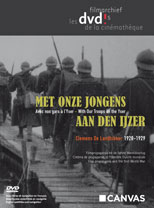
In this month, the ninetieth anniversary of the ending of the First World War, there have been many commeorative events, programmes and publication. The Bioscope has already reported on the Imperial War Museum’s DVD release of The Battle of the Somme. Now comes news of another important film, one originally released ten years after the war, issued on DVD for the first time. The film is With Our Troops on the Yser, a record of the war from the Belgian point of view, though a record of a quite particular kind. Here’s the blurb promoting it:

After four years of horror, the First World War ended on 11 November 1918. Ten years later, a Belgian veteran named Clemens De Landtsheer made With Our Troops on the Yser, a film on the ‘Great War’. The film is neither a triumphant retrospective nor an objective documentary, but a bitter protest in which the hardships of ‘our boys’, the simple soldiers at the front, are central.

As secretary of the ‘Yser Pilgrimage Committee’ De Landtsheer was part of a movement with a political agenda: to promote Flemish nationalism by emphasizing the purportedly disproportionate suffering and abuses endured by Flemish soldiers during the war. To this end, his film combines authentic archival footage from the war with staged images from existing fiction films, as well as a tendentious voice-over commentary. The result is both a unique cinematic experiment and a fascinating historical document, as Daniël Biltereyst (Ghent University) and Roel Vande Winkel (Ghent University – University of Antwerp) explain in the extras on the DVD.

With Our Troops on the Yser was screened more than 400 times in the interwar period. Its success inspired De Landtsheer to found the company Flandria Film. The fascinating story behind De Landtsheer’s film career is also illustrated in the extra documentary on this DVD, accompanied by several Flandria Film productions.

With Our Troops on the Yser was originally released in 1928, but was subsequently revised and augmented several times. The version on this DVD is the definitive colour version of 1933, restored by Noël Desmet (Belgian Royal Film Archive). The soundtrack is based on the original musical recordings used by De Landtsheer to accompany the images. The film can also be viewed with a scholarly audio commentary (in English, French or Dutch) co-written by Leen Engelen (Media & Design Academy), Roel Vande Winkel and Bruno Mestdagh (Royal Film Archive).

yser_dvd

The film runs for 83mins, and comes with Dutch intertitles and English or French subtitles. Bonus features are three other Flandria Films productions by Clemens De Landtsheer: 10th Yser Pilgrimage (1929, 12 mins), Winter Has Come – Ice Festivities at Temse (1933-1934, 5 mins), Jules Van Hevel Tribute (1935, 9 mins); and a 25mins documentary Clemens De Landtsheer, by Daniël Biltereyst, Roel Vande Winkel and Erik Martens. Clearly this a pamphleteering film demanding contextualisation, particularly knowledge of Belgian nationalism, and the understanding of the experience of the war from the Flemish point of view. The commentary is provided by some of the leading lights in film and history today. Well done to all concerned for bringing out this title on DVD and widening our understanding of how film of the war was used and understood, not just during the conflict but in its aftermath. The DVD is Region 0, and is available from the Cinémathèque Royal de Belgique.

The dead

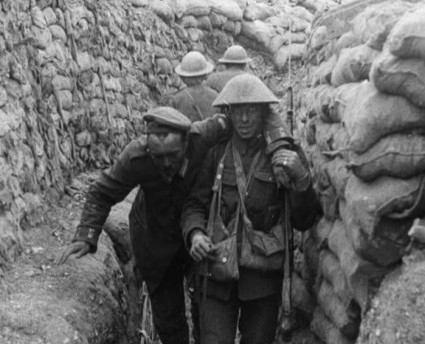
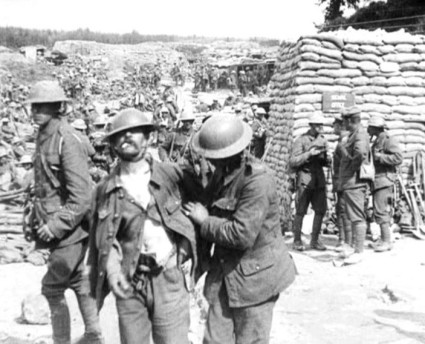
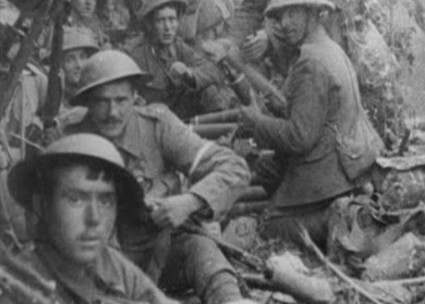
All images in this post are frame grabs from the DVD of The Battle of the Somme (1916)

Is it right to let us see men dying? Yes. Is it a sacrilege? No. If our spirit be purged of curiosity and purified with awe the sight is hallowed. There is no sacrilege if we are fit for the seeing … I say it is regenerative and resurrective for us to see war stripped bare. Heaven knows that we need the supreme katharsis, the ultimate cleansing. We grow indifferent too quickly … These are dreadful sights but their dreadfulness is as wholesome as Tolstoy’s ‘War and Peace’. It shakes the kaleidoscope of war into human reality … I say that these pictures are good for us.

Those words were written by James Douglas in The Star (25 September 1916, p. 2). He was reacting to a screening of the film The Battle of the Somme, a film whose impact upon audiences was unprecedented and – it could be argued – has never been repeated. Douglas, like many commentators, was trying to rationalise what he saw, to express the meaning and to find justification for a film whose stark images of the war that was still raging shocked audiences into a realisation of sacrifice and death. It was the images of death in the film that so disturbed many. If soldiers were not shown being killed (and some apparently were), then every face that stared at the camera was likewise facing death. The audience had been made witness to this, complicit in the soldiers’ fate.

While some called for the film not to be shown, for most it was justified, to the point of becoming almost a moral obligation. Through watching The Battle of the Somme, they gained a sense of the enormity of what troops in their name were undergoing, what the sacrifice (the optimum word) was that army and nation were making. Douglas’ evocation of religious feeling put the film in terms that many would understand. It is not a pure reaction to the film itself – that is not possible. Instead he saw the film through his own thoughts on the meaning of war. Any image, any film, is identified by us through expectations and understandings that are informed by time, place and culture. The Battle of the Somme in 1916 was a different film to The Battle of the Somme in 2008.

This we can now judge through the release of the film for the first time on DVD, produced by the Imperial War Museum, whose archive preserves the film. Alert to the complexities of authenticity, the IWM presents the film in a form that encourages us to question how we see what we see. Firstly, the film (for which no original negative survives) has undergone a digital restoration which has brought out details which were hitherto obscured. Even for those familiar with the film (and all of us must be familiar with it to some extent, given the widespread use of sequences from the film in television documentaries etc.), it is like seeing the film anew. But the major coup is the music. We are given two music tracks. One is a modern score by Laura Rossi, a symphonic work for full orchestra. The other is a recreation by Stephen Horne of a likely original score, taken from a contemporary cue sheet which suggested the sort of musical passages musicians might want to adopt in accompanying the film in 1916.

The latter will amaze many. Jaunty marches and popular airs accompany scenes of troops marching to the killing fields of the Somme, the scenes of battle and their aftermath. What were they thinking of in 1916? It is a complicated question to answer. Partly the musicians of the time were responding to what might have seemed just another war actuality film, which required patriotic accompaniment. But also the audience of the time saw heroism and uplift where we, after almost a century of awful contemplation of the futility of that war, bolstered by poems, novels and films, see something profoundly pitiable. It is with consciousness of such modern expectations, but equally with a sense of being true to the film’s original vision, that Rossi supplies a rich, subtle and binding score that connects 2008 to 1916. Which of these two very different scores will you prefer to listen to, and why? Or might your preferred option be to witness the film in silence?

The digital restoration, which allows us to see so much, is perhaps most striking when it comes to the famous ‘over the top’ sequence. This is the part of the film that will be most familiar. It is shown on television (at least in the UK) every time a shot is needed to evoke the First World War. Troops clamber over the top of a slope, then march slowly over barbed wire away from the camera, a couple of men falling down as they do so, shot dead.

Oh God, they’re dead!

a woman is reported to have exclaimed in a cinema showing the film, and it was this sequence that aroused the greatest comment at the time, the greatest need to explain the film’s significance. But they were not dead. As is now known, the sequence is a fake, set up in a trench mortar battery school some time afterwards, simply because the actual scenes taken of troops going over the top were deemed disappointing. At the time, no one knew of this subterfuge, and as far as reception is concerned, it did not matter. People believed they were witnessing death on screen; and producers and exhibitors felt this to be an acceptable thing to show. Which you may think is extraordinary.

What seldom gets shown on television is the shot that immediately follows the ‘over the top’ sequence in the film. This shows genuine footage of troops going over the top. But we see them only in the far distance. The cameramen (there were just two, J.B. McDowell and Geoffrey Malins, who shot both ‘over the top’ sequences) were greatly restricted in what they could shoot. Their hand-cranked cameras had single 50mm lenses with poor depth of field, they had no telephoto lenses, the orthochromatic film stock was slow, making filming action in the distance or in poor light difficult. But there was also military control and official censorship, each preventing them from filming anything other than officially-sanctioned images. And there was the danger. The most obvious indication of the ‘fake’ nature of the first sequence is that the cameraman would have been in absolute peril of his life had it been genuine. But for the above shot, Malins is a long way off, and far in the distance we can just pick out tiny figures on the horizon – British troops, coming over the top and marching into no-man’s land. Looking closer into the middle ground, the digital restoration now reveals to us a sight not previously detected in the film: a number of troops proceeding leftwards, one or two of whom fall down. Oh God, they’re dead.

Do we want to look that closely? Can they really seem dead when viewed at such a distance? Is the death we seek not in the falling bodies, or even in the corpses seen later in the film, but rather in the eyes of the still living, whose fate awaits them, and who are all dead now of course. That was a line the film historian Denis Gifford would sometimes come out with when we were in the basement theatre at the British Film Institute, watching some collection of British silent shorts. The figures would parade to and fro, some of whom he knew, having interviewed them in the 1960s, but then that sad moment of realisation:

They’re all dead now, of course.

This is a poignancy that seems particularly linked to the non-fiction film. Dramatic films, of whatever age, are attempting to entertain. Either they do or they don’t. But the film of actuality trades on the depiction of life, and then the distance created by time. This was recognised even in 1916. Sir Henry Newbolt wrote a poem inspired by the experience of watching the film, entitled ‘The War Films’, but made memorable by its opening line:

O living pictures of the dead,
O songs without a sound,
O fellowship whose phantom tread
Hallows a phantom ground —
How in a gleam have these revealed
The faith we had not found.

The Battle of the Somme captures the point of loss, the ghosts on the screen, the living pictures of the dead. Of course it is a deeply partial record. It shows no real fighting beyond shellfire, no serious injuries, no pain, little hatred (look for the shove that one British soldier gives to a captured German who stumbles past him). And of course it shows only the Allied point of view (the Germans would respond with their own film, Bei unseren Helden an der Somme, in 1917). But we recognise it for what it is able to show, not for what it leaves out. It is a profoundly memorably expression of the hopes and fears of its age.

The Battle of the Somme was filmed by Malins and McDowell, two experienced newsreel cameramen, who knew well how to capture plain packages of actuality. McDowell was the senior of the two, who ran his own film company (British & Colonial). Malins had been filming on the war front for longer, and is the better known, not least for his somewhat vainglorious memoir, How I Filmed the War (available from The Internet Archive). Malins co-edited the film with Charles Urban, to whom credit should be given for seeing that the footage Malins and McDowell has shot would work best at feature length, rather than as a series of ten-minute shorts which had been the practice up til then. His vision gave the film the presence it needed to capture the audience that it found. The producer was William Jury, and the film was made for the British Topical Committee for War Films, a trade body working under War Office sanction, which would be replaced by the War Office Cinematograph Committee once the film started to enjoy huge success. It has been estimated that it was seen by 20,000,000 people in the UK in six weeks – almost half the population.

The DVD comes with the alternative music scores, commentaries, interviews with archivists and musicians, and five ‘missing’ scenes and fragments. We do not know what the original The Battle of the Somme was like exactly; the version that survives was re-edited, and the footage used in multiple other films, during and after the war. Rather than insert these extra scenes where it is not quite certain they should go, the IWM has chosen to present these (without music) separately. There is a booklet as well, with information on the film’s production, reception, restoration and particularly its music. A website, www.iwm.org.uk/somme-film, will provide viewing notes, additional information, suggestions for further reading and teaching resources. It is a magnificent achievement, one whose influence on research, teaching and the appreciation of First World War history is likely to be considerable. The only possible disappointment is the menu, which simply divides the film into its five parts, where a more detailed use of chapters could have helpfully guided researchers to particular points of action, regiments, location etc.

More will follow. The booklet notes the publication next year of Alastair H. Fraser, Andrew Robertshaw, and Steve Roberts’ Ghosts on the Somme, a book which analyses the film in great detail, overturning some of the traditional understanding of who filmed what, which regiments are shown, and which locations are featured, while confirming that the vast majority of the film is genuine actuality. There is still more to be discovered about The Battle of the Somme. It is a film we will have to return to, again and again.

The DVD is available from the Imperial War Museum Shop (Region 0, PAL, duration 74 mins with 58 mins extras).

A CD of Laura Rossi’s score is available from Virtuosa Records.

On the weekend of 15/16 November 2008 there will be two screenings of the film at the IWM in London, the ‘original’ score on Saturday, the Rossi score (not played live) on the Sunday. Both screenings are free, and start at 14.00.

The Battle of the Somme has been recognised by UNESCO by being accepted for inscription on its Memory of the World register.

The passion of Joan of Arc

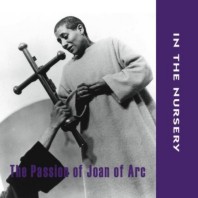
In the Nursery is a Sheffield-based group which has made a speciality of soundtracks to silent films, including The Cabinet of Caligari, Asphalt, Man with a Movie Camera, Hindle Wakes, A Page of Madness and the Mitchell & Kenyon compilation Electric Edwardians. Its latest production is Carl Th. Dreyer’s The Passion of Joan of Arc, which they have been touring since April. A CD of the soundtrack has just been released, which, we are ressued, “reflects the film’s dramatic highs and lows – from the emotional close-up photography of the trial through to the fevered final scenes surrounding Joan’s death”. More information on the In the Nursery site, which has ample information on recordings and shows, with an MP3 download section.

Bioscope Newsreel no. 6

Silents at the LFF
The London Film Festival takes place 15-30 October, and a number of silents are included in the ‘Treasures from the Archives’ strand: Fedor Ozep’s The Living Corpse (1928-29), Douglas Fairbanks in A Modern Musketeer (1917) paired with Max Davidson in the immortal Pass the Gravy (1928), and William Desmond Taylor’s The Soul of Youth (1920). Read more.

London Loves
Part of the London Film Festival is London Loves, a repeat of last year’s hugely successful open-air screenings of silents and archive films in Trafalgar Square. On 23 October Maurice Elvey’s High Treason (1929), paired with Gaston Quiribet’s The Fugitive Futurist (1925), each provide a science fiction vision of London, with live piano accompaniment by Neil Brand. On 24 October, London Loves… is a collection of silent and sound archive films on London, from travelogues to home movies. Read more.

New DVDs from Kino
Kino International has announced two major forthcoming silent DVDs. A ‘restored deluxe edition’ of The Last Laugh is released on 30 September; and a two-disc deluxe release, The General: The Ulimate Edition, in a high-definition video transfer, with a choice of three music scores. It’s released on 11 November 2008. Read more.

Big Bang at the ICA
On 28 September the Institute of Contemporary Arts in London is holding a one-day interactive music workshop and performance with silent films, organised by Big Bang Lab (an initiative formed by composer Sergio López Figueroa). Budding silent musicians are invited to bring along their acoustic instruments (or voices) to a workshop putting music to two contemporary silent works, followed by a programme of silents including Un Chien Andalou. Read more (PDF file).

‘Til next time!

J’Accuse

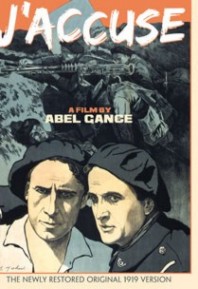
Hot on the heels of Flicker Alley’s release Abel Gance’s La Roue earlier this year comes another Gance masterpiece, J’Accuse. Described by Flicker Alley (erroneously, I feel) as “the first major pacifist film” (what price Civilization, War Brides, or the Danish films Lay Down Your Arms and Pax Aeterna?), Gance’s World War I film is released as a 2-DVD set on 16 September. The DVD presents the 1919 original version (a re-edited and shortened release was produced in 1922), 166mins in length, restored by Lobster Films, working with the Netherlands Filmmuseum, using materials from Lobster, the Filmmuseum, the Czech film archive, and the Cinematheque Francaise. The film comes with a symphonic score composed and conducted by Robert Israel. The extras include Paris Pendant La Guerre (Paris During the War), a 1915 comic view of life in Paris in wartime; Donald Thompson’s war reportage from the Battle of Verdun, Fighting the War (1916); and a booklet that includes an extensive essay by Abel Gance’s most dedicated champion, Kevin Brownlow.

This is the Turner Classic Movies description of the film and its restoration:

France’s pioneering filmmaker Abel Gance said that his definitive anti-war work J’Accuse (1919) “was intended to show that if war did not serve some purpose, then it was a terrible waste. If it had to be waged, then a man’s death must achieve something.” After seeing the film, a Czech journalist declared that if it could have been seen around the world in 1913 the First World War might not have happened.

J’Accuse was the only “peace film” to be made in Europe during World War I. Gance, who had served briefly in that conflict, returned to active service in 1918 to film harrowing battle scenes of soldiers actually under fire. Parts of the film were shot during the battle of St. Mihiel, one of the most significant of the war. Also, for the famous “March of the Dead” sequence at film’s end, Gance used real soldiers home on leave from the front – most of whom were killed within the following weeks. Some titles are taken from real letters written by soldiers to their families.

Gance had secured enthusiastic support from the wartime French government, which saw the project as a call to patriotism. When it finally occurred to a government official to question the title and ask exactly who or what was being accused, Gance replied: “The war and its stupidity.”

The film stars Maryse Dauvray as Edith, a young Frenchwoman who is in love with a poet (Romuald Joubé) but is forced by her father (Maxime Desjardins) into a marriage with a much older man (Séverin-Mars). Edith is captured by the Germans and endures multiple rapes that result in her becoming pregnant. Edith’s husband initially thinks that the poet is the father of her child, and the story ends in tragedy with both men seeing action in the trenches.

Historian Kevin Brownlow, who dedicated his book The Parade’s Gone By to Gance, described J’Accuse as “a miracle film.” It introduced techniques developed by Gance including rapid-cut editing and expressionistic camerawork and lighting. The film, a huge success in Europe, originally ran 14 reels (three hours) but was truncated to ten reels for its American release, damaging its continuity and preventing it from becoming a success in the U.S. The re-editing blunted the anti-war slant and gave it a happier ending.

The reconstruction, a Flicker Alley Digital Edition from the Lobster Film Collection, began when Gance’s friend and heir Nelly Kaplan provided a 35mm master print of a restoration by the Cinematheque Francaise, taken from a shortened reissue in 1922. Incomplete original prints were sourced from the Lobster Collection and the Czech archive in Prague. Happily, an almost complete copy of the original edit (although in poor condition) was found in the Netherlands Filmmuseum. All these elements were transferred to high-definition video and conflated by the Netherlands Filmmuseum to make the best and most complete edition possible.

The Factory of Gestures

http://www.factoryofgestures.com

I learned of this intriguing project courtesy of a recent post by David Bordwell. The Factory of Gestures is an audio-visual research project, led by Oksana Bulgakowa, investigating body language in film – particularly as evidenced in silent Russian and Soviet fiction film. The DVD that has come out of the project describes it thus:

The Factory of Gestures investigates the metamorphoses of the body language in Russian and Soviet society through the 20th century as evidenced by documentary and fiction films, private and professional photography, visual arts and theatre.

The thesis is that the disruption of social and cultural practices caused by advent of the new technologies of photography, film and the mass distribution of images was particularly acute in Russia. Those media now provide striking evidence of a ‘radical change in the gestural code’ in the transference to Soviet society. Bulgakowa argues:

The abolition of gestural restraints was interpreted as the liberation of natural man: bad manners were re-evaluated as socially acceptable behavior, some body techniques that had been contained within the private space – like washing or calisthenics – were now accepted in the public sphere, and some gestures from the public sphere were transplanted to very private settings.

That sounds like an intriguing reversal of the ‘civilizing process’ famously identified by sociologist Norbert Elias. One will need to see the DVD in full to understand the argument, but there are two engrossing extracts provided on the project website, one on eating, the other on walking. Whatever the thesis, this sort of lateral approach to film, looking at the evidence it can provide of social forms beyond the original intentions of the filmmakers, is always welcome. As films age and their stories retreat in the ways they may entertain or convince, so the historians take over and such works are seen either for their position in the story of the medium or as providing unwitting evidence of the practices of the past.

The films quoted on the DVD date from 1908 to 1994. The silent films cited are not all Russian/Soviet and include Silent Witnesses (1914), The 1002nd Ruse (1915), Stella Maris (1918), Das Cabinet des Doctor Caligari (1919), The Extraordinary Adventures of Mr West in the Land of the Bolsheviks (1924), Strike (1925), Battleship Potemkin (1925), Aelita (1925), Chess Fever (1925), It (1927), Mother (1927), The Kiss of Mary Pickford (1927) and Die Büchse der Pandora (1929). The DVD commentary is in English and Russian, it’s 160mins long and is all-regions. It can be ordered from the website and is priced 24,95 €. The project website itself has more information, summing up the project’s ambitions thus:

Film proposed utopian, sometimes contradictory models of the new body behavior that should be imitated in reality. A new society striving to free itself from old rituals was developing a new design of clothing and living spaces, new standards of perception, and a new body language for a new anthropological type: homo soveticus, a specific version of a man of modernity.

A new anthropological type? Can film reveal so much? Such claims may beg as many questions as they hope to answer, but it is good that someone is looking, challenging the medium all the time to reveal more.

Emile Cohl encore

http://www.amazon.fr

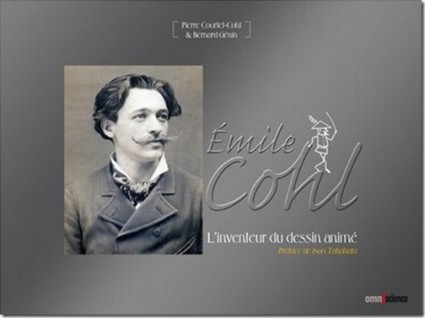
A new book on the master French animator, Emile Cohl, is due to be published in France on 20 August. The publication of Emile Cohl: L’inventeur du dessin animé, written by Pierre-Courtet Cohl (the filmmaker’s grandson) and Bernard Génin, coincides with the centenary of Cohl’s best-known film, Fantasmagorie, generally held to be the first fully animated film. The book is both a biography and a comprehensive study of his films, but what is most exciting is that it will come with a two-disc DVD, produced by Gaumont-Pathé Archives, which is said to include almost all of his surviving films (around thirty-seven are thought to survive).

One cannot judge as yet whether the book will surpass the exceptional 1990 biography by Donald Crafton, which for the multi-lingually-challenged such as myself holds the inestimable advantage of being in English, but the DVDs will bring a great number of Cohl’s films out of the archives and into the public consciousness for the first time in nigh on a century (as an earlier post notes, very few Cohl films are currently publicly available). The book also has 600 illustrations, which should be more than an attraction in itself.

Book and DVDs are to be published by Omniscience, which has information on book, author and subject on its site (in French), but not on the DVD’s precise contents.

Update: See comments for more DVD information.