Screen heritage survey

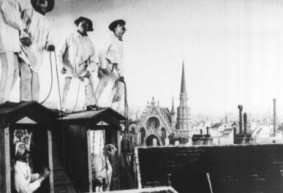
Magic lantern slide from National Media Museum

Magic lantern slide from the National Media Museum, http://www.nationalmediamuseum.org.uk

A online survey was launched today, to uncover collections in the UK with moving image and screen-related artefacts. It is organised by a body called the Screen Heritage Network (of which the organisation I work for, the British Universities Film & Video Council, is a member). The survey is open to any UK collection with artefacts relating to the moving image and screen-related media which may be accessible to the public or researchers. There are ten categories of artefact being sought:

1. Film production equipment
2. Television and video equipment
3. Animation and special effects
4. Sound
5. Sets and costumes
6. Cinema and projection
7. Magic lanterns, slide projectors and viewers
8. Toys and games
9. Installations
10. Documentation

The information gathered will be used to create the first-ever online database of moving image and screen-related objects in UK collections.

Behind this activity lies a definition of ‘screen heritage’ which goes beyond moving picture to encompass the machinery that produces and exhibits them, the culture that supports them, and a notion of ‘screen’ that extends beyond cinema and television back to magic lanterns and forward to video games, consoles and the handheld technologies of today.

So the survey, in looking at artefacts, is concentrating on just a part of this vision of what ‘screen heritage’ comprises. It’s all most appropriate to the study of silent cinema, and where silent cinema fits in within the broader scheme of things. Do take a look at the project site, and if you know of a museum or other heritage organisation within the UK that ought to be taking part, and which we may have missed, let us know.

Journal of Film Preservation

Journal of Film Preservation

Journal of Film Preservation, from http://www.fiafnet.org

FIAF, the International Federation of Film Archives, “brings together institutions dedicated to rescuing films both as cultural heritage and as historical documents”. You can find details of the 120 or so institutions from sixty-five countries which belong to FIAF on its multilingual site, as well as standards documentation, news, projects and information on FIAF’s various specialised commissions.

The site also has details of FIAF publications, which include its Journal of Film Preservation. The journal covers theoretical and technical aspects of moving image archival activities, with plenty of information on silent film, which has always been a favoured area of the national film archives. It’s a very good publication, which is not much known about outside the film archiving profession. The journal is published twice a year, and one year after publication is made freely available on the FIAF site.

So there are currently twenty issues of the journal, from 1995 onwards, which can be downloaded from the site in PDF format. Here’s a guide to some of the articles worth looking out for:

  • No. 52 (Apr 1996) – Brian Taves on the work on undersea cinematography pioneer James Ernest Williamson, who made Twenty Thousand Leagues Under the Sea in 1916
  • No. 53 (Nov 1996) – Luke McKernan (yours truly) on programming a season of Victorian cinema (i.e. film to 1901) at the National Film Theatre
  • No. 54 (Apr 1997) – Richard Brown on the copyright records for early British films found in the then Public Record Office (now The National Archives)
  • No. 60/61 (Jul 2000) – Alfonso del Amo on the history of celluloid
  • No. 62 (Apr 2001) – Brian Taves on Michael (Jules) Verne, who both wrote novels in his famous father’s name, and then proceeded to film them
  • No. 64 (Apr 2002) – Sarah Ziebell Mann on the creation of the Treasures from the Film Archives database of early silent short fiction films around the world
  • No. 65 (Dec 2002) – Yoshiro Irie on the question of film speeds of Japanese silent films
  • No. 69 (May 2005) – Thomas C. Christensen on efforts to recover and restore the films of Asta Nielsen
  • No. 70 (Nov 2005) – Tiago Baptista on restoring the early surgical films of Eugène-Louis Doyen
  • No. 72 (Nov 2006) – Steven Higgins on avant garde cinema of the 1920s and 1930s

And much, much more. A fair bit of it is rather more technical than the general reader requires, but most articles combine the practical with the historical in engrossing fashion, and the illustrations are excellent (and rare). The Bioscope will be following up some of the themes above in future posts.

Lost and Found no. 2 – Dawson City

Number two in our occasional series of heartening tales about early film collections that have been found against the odds. Lost films have been uncovered in many peculiar places, but none so odd as in a Canadian swimming pool, close to the Arctic Circle.

The now famous Dawson City collection was uncovered in 1978 when a new recreation centre was being built. A bulldozer was working its way through a parking lot when a horde of film cans was dug up. The films had been stored in a disused swimming pool, which had been paved over. The films dated largely from before the First World War, when Dawson City was still a gold rush town, and the final distribution centre for films sent out to the cinemas attended by the ten of thousands of prospectors in the area. Film historian Sam Kula tells us that touring showmen first brought film to Dawson in 1898, while the former Orpheum Theatre re-opeened as the town’s first cinema in 1910, while films could also be seen at the Arctic Brotherhood Hall. Films took a long time to get to Dawson (the newsreels were always hopelessly out of date), but got there they did – but, it seems, they tended not to make the journey back.

Films therefore built up in Dawson, and were eventually stored in the basement of the local library. In 1929, the decision was made dispose of the inflammable nitrate films, which no one wanted to see any longer. It is easier said than done to get rid of nitrate film, and eventually it was decided to place them safely underground. Hence the burial in the swimming pool, where the permafrost ensured their survival in what were, in principal, ideal archival conditions (basically the thing to do with nitrate films is to keep them very cold) until their rediscovery fifty years later.

There were over 500 films in the collection. While none was a most masterpiece as such, they formed a marvellous selection of common cinema fare of the period – titles from studios such as Essanay, Rex, Thanhouser and Selig; obscure titles starring Harold Lloyd, Douglas Fairbanks and Lon Chaney; and many newsreels (including rare Canadian examples). The collection is particularly storng on serials with women heroines: Pearl White in Pearl of the Army (1916-17), Helen Holmes in Hazards of Helen (1915), Marie Walcamp in The Red Ace (1917-18), and Grace Cunard in Lucille Love (1914), The Girl of Mystery (1914) and The Purple Mask (1917), which she also directed.

The Dawson City films have been preserved by Library and Archives Canada and the Library of Congress.

There’s an entertaining essay on their discovery and preservation by Sam Kula, ‘Up from the Permafrost: The Dawson City Collection’, in the excellent book This Film is Dangerous: A Celebration of Nitrate Film (2002), edited by Roger Smither.

Screen Heritage

Screen Heritage is becoming a key phrase in the discussion about the preservation, dissemination and understanding of moving image history, particularly in the UK. The British Film Institute has announced a Strategy for UK Screen Heritage, with a strategy document published and an invitation for comments (deadline 7 September). This is focussed on the future maintenance and growth of public sector moving image archives. Secondly, a group of museums and archives, headed by the National Media Museum, has formed a Screen Heritage Network, with funding from the Museums Libraries and Archives Council, and an understanding of ‘screen heritage’ which extends beyond moving images to artefacts, documents etc. And MeCCSA (the Media, Cultural Studies and Communications Association) has announced a seminar on screen heritage, taking place on 22 September 2007 at Roehampton University, which aims to bring a focus to the many discussions on-going about the long-term future of the UK’s moving image and screen heritage. There’s a lot going on, and Bioscope readers may be interested to participate or to follow the arguments.

Focus on Film

Focus on Film

The Learning Curve is a free online teaching and learning resource provided by the UK’s National Archives (formerly, and far better known as, the Public Record Office). It brings together a range of archive materials around key historical themes, and this includes film. Its Onfilm resource has recently been revamped and renamed Focus on Film.

This now comes with 150 film clips, all of them downloadable and re-usable, and the site now has its own online editing tools, in The Editor’s Room. The National Archives does not hold film itself (selected British government films are preserved by the BFI National Archive on its behalf), so it uses film from Screen Archive South East, the BFI, the Imperial War Museum, British Pathe and the BBC.

Focus on Film

There are several silent film clips available. There is an absolutely delightful film of Folkestone in 1904, with people just being themselves, parading up and down the streets, having fun at the beach, fooling before the camera, dressed on their Sunday best. It’s long been one of my desert island films (it has no known producer or title, and goes by the supplied title of Edwardian Folkestone), and I strongly recommend it (how drearily the teaching notes on the site describe it: “The roller coaster ride reminds us of the primary aim of early film-makers, profit via entertainment”). Scarcely less delightful nor more absorbing in its social detail is a 1920 tour through the streets of Canterbury, taken from the back of a moving vehicle.

There are newsreel films of the suffragettes, including the infamous film of the 1913 Epsom Derby in which Emily Davison runs on to the race-course and is killed. There are several film clips for the First World War, including key sequences from the great documentary testament The Battle of the Somme (1916). Somewhat peculiarly, there are also clips of a modern actor telling us about the experience of the Somme, which together with clips elsewhere of actors giving us vox pops on life in the Tudor and Stuart periods may end up confusing a few schoolchildren. There’s also footage from Ireland in 1916 (The Easter Rising) and 1920s.

The quality of the downloads is good (QuickTime Pro is needed if you are going to retain a copy), and the suggested activities (for PC or interactive whiteboard) and editing facilities are fascinating. Note that the site states: Teachers and students are granted a limited, non-exclusive licence to use the film clips for non-commercial educational use only and may not re-publish materials without permission of the copyright holder.

Well worth a look.

Lost and Found no. 1 – Joseph Joye

I wrote a couple of days ago on the Michell and Kenyon film collection of Edwardian actualities, and asked whether such an extraordinary film collection would ever turn up again. Well, not yet, but despite time marching on and nitrate film inevitably decaying, remarkable early film collections do still turn up. While we’re waiting, I’m going to start up a mini-series on previous amazing collections, which should make us hopeful of future such discoveries. To start with, the heartening story of the Abbé Joye…

Joseph Joye

Joseph Joye (1852-1919) was a Swiss Jesuit priest who decided, around 1902-03, to start educating the children in his charge with motion pictures. Like quite a number of clerics around the world, he made the leap from showing scenes on the magic lantern to capturing his young audience’s attention with films. What made Joye different was the scale of his endeavour. He built up a collection of many hundreds of films over the period 1905-1914, purchasing prints on the second-hand market in the German-speaking quarter of Switzerland. It is said that in some cases he smuggled prints across the German-Swiss border by hiding the cans under the folds of his cassock. All were shown to his child and adult audiences, and then retained at his Basle school.

Joye was omnivorous in his tastes, collecting comedies, melodramas, classical adaptations, travelogues, actualities, trick films, histories, science films, fairy tales, industrials, coloured films: the whole rich panoply of early cinema production. His collection remained at the school, until it was discovered by a British filmmaker, David Mingay, in 1975. It was taken in by the National Film Archive in London, which had the best facilities for tackling such a huge collection of nitrate film, in 1976. The collection of 1,200 prints (all with German titles) was eventually restored and extensively catalogued in its entirety, a task completed in the mid-1990s. It was also lovingly researched by Swiss academic Roland Cosandey, who published the book Welcome Home, Joye! Film un 1910 in 1993 (if you find a copy, I took all the frame stills).

Ah! Da fleigt ein Aeroplan

(Ah!… Da fleight ein Aeroplan, a 1910 Gaumont comedy about people’s amazement at seeing aeroplanes, from the Joye collection)

It is one of the richest collections of early films in the world, renowned among the early film studies community but little known outside it. The collection is full of unique gems. Among the star titles are Victor Sjöström’s Havsgamar (Sea Vultures) (1915) and Ranch Life in the Great South-West (1910), which features the first screen appearance of Tom Mix. There is the awe-inspiring S.S. Olympic (1910), a Kineto film about the making of the sister ship to the Titanic (much used in TV documentaries) and L’Inquisition, a surprisingly graphic Pathé film on the Spanish Inquisition, which makes you wonder what was going on in Joye’s mind when he purchased it. There are ravishingly beautiful stencil colour films, and many travel films from around the world providing rare glimpses of peoples probably never filmed before. It is thematically rich in so many ways. And no DVD has ever been published, no catalogue (all of the shotlists can be found on the BFI’s database, though no search will find you all of the Joye titles in one go), no BBC4 television series…

If the BFI is looking for another ‘lost’ film collection to promote to the world, it has one sitting on its shelves.

More from Mitchell and Kenyon

IrelandSports

Clearly there are people out there who cannot get enough of Sagar Mitchell and James Kenyon. Firstly there was the discovery of the lost haul of their actuality films of life in northern Edwardian Britain, an astonishing collection of 800 films in pristine condition, which were restored by the British Film Institute, with research undertaken by the National Fairground Archive. Then there came the 2005 BBC series The Lost World of Mitchell and Kenyon, which opened people’s eyes to past lives in a way probably never achieved before by a television programme. That was followed by the DVD of the series, then an accompanying book, then a second DVD Electric Edwardians, and then another book of the same title. And there have been public screenings, and countless newspaper articles.

And now there are two more DVDs, and both look amazing. Mitchell and Kenyon in Ireland, narrated by Fiona Shaw, includes twenty-six films taken by Mitchell and Kenyon 1901-1902, and covers Dublin, Wexford, Cork and Belfast. There’s an eighteen-page booklet, and a score by Neil Brand and Günter Buchwald. The second DVD, Mitchell and Kenyon Sports, is the one for me. Narrated by Adrian Chiles (clever choice), this has scenes of football, rugby, athletics, swimming and cricket. There’s film of Liverpool, Everton, Blackburn and Hull Kingston Rovers. A particular highlight is film of Lancashire bowler Arthur Mold demonstrating his action to prove that he didn’t, as was alleged, throw the ball. The camera never lies… Stephen Horne and Martin Pyne provide the musical accompaniment.

How will these sell, and what else lies in the vaults ready for release? It’s still extraordinary the excitement that has been generated by this collection of films. The ‘local topical’ film of the 1900s, in which Mitchell and Kenyon specialised, has long been well-known to film archivists. They are films with particular charm because of their artless style and the way in which the people in the films address the camera. They have always been seen as having largely regional appeal, the sort of films that few would ever see or appreciate. Then along came 800 in one go, negatives, with an underlying history connecting them with town hall showmen and fairground operators who commissioned the films and exhibited them across the country. And one musn’t forget the drive of Vanessa Toulmin, of the National Fairground Archive, in pulling all of this activity together.

Mitchell and Kenyon weren’t the only producers of local topicals at this period, but they were the most important. It has be stressed that we knew nothing of these films before they were discovered. My reaction, when I first saw a list of the films when I was working at the National Film and Television Archive, was disbelief – such a number of previously unknown films simply couldn’t exist. M&K were know for a handful of ‘fake’ newsreels of the Boer War, but none of the actualities films turned up in filmographies – they are completely absent from Denis Gifford’s British Film Catalogue, while Rachael Low’s The History of the British Film barely mentions the company. We know better now.

Will there ever be such a film discovery again?

Iamhist conference report

Amsterdam

Iamhist (International Association for Media and History) is an organisation of filmmakers, broadcasters, archivists and scholars dedicated to historical inquiry into film, radio, television, and related media. It publishes the widely-respected Historical Journal of Film, Radio and Television, and organises biennial conferences. This year’s was held in Amsterdam 18-21 July, on the theme Media and Imperialism: Press, Photography, Film, Radio and Television in the Era of Modern Imperialism. There were several papers given on silent film subjects, and the Bioscope was there with pen and notebook.

A number of the best papers were given on media outside Iamhist’s usual frame of reference. Pascal Lefèvre spoke lucidly and informatively on Imperialist images in French and Belgian children’s broadsheets of the late nineteenth/early twentieth centuries, finding arguably positive or some downright critical images that differed from the usual Western view of African peoples at this time. Andrew Francis was equally entertaining and observant in talking about the use of pro-Empire imagery in New Zealand newspaper advertising during the First World War.

On silent films themselves, James Burns spoke on the distribution (or lack of distribution) of the films of the Jack Johnson-Jim Jeffries boxing match in 1910 and D.W. Griffith’s Birth of a Nation in 1914 to black audiences in Africa and the Caribbean. The Johnson-Jeffries film (the black Johnson defeated ‘white hope’ Jeffries for the world heavyweight title) is well-known for how its images of a black victory alarmed many in America, though Burns pointed out that films of Johnson’s earlier victories over white opponents had not aroused anything like the same rabid reaction. He also pointed out that Birth of a Nation was not exhibited in Africa (until 1931), yet no evidence has yet been found to show why it was withheld. Burns’ has done excellent work on film and black African audiences (see his Flickering Shadows: Cinema and Identity in Colonial Zimbabwe), and his new research promises much, even if evidence of black audience reactions (outside the USA) remain elusive.

Simon Popple spoke on films of the Anglo-Boer War, focussing on the dramatised scenes of the conflict produced by the Mitchell and Kenyon company. M&K are now renowed for their actuality films of life in Northern England in the Edwardian era, after the successful BBC series The Lost World of Mitchell and Kenyon, but they also made dramas, recreating melodramatic scenes from the South African war to feed a public appetite for moving picture scenes of the war which had been disappointed by undramatic newsfilms of the conflict. These crudely histrionic dramas, with titles such as Shelling the Red Cross, A Sneaky Boer, and Hands Off the Flag, raise a laugh now, but presumably had them cheering in the aisles in 1900.

With the unavoidable but unfortunate practice of parallel sessions so that as many speakers as possible can be crammed in, no one could attend everything, and I missed some relevant papers, including Teresa Castro on ‘Imperialism and Early Cinema’s Mapping Impulse’ and Yvonne Zimmermann on ‘Swiss Corporate films 1910-1960’. Too few witnessed Guido Convents‘ excellent presentation on the huge production of Belgian colonial films, from the early years of the century onwards, all designed to remind the world and audiences at home that Belgian had a presence in Africa and an Imperial role to play. He also showed a heartbreaking film of the difficulties faced by the Congo film archive, which put into perspective some of the institutional troubles faced by the world’s larger film archives, described by Ray Edmondson in a plenary session. Edmondson nevertheless made an eloquent case for the ways in which some film archives have come under threat through insensitive political fashions and institutional follies. Archives seem hampered by being archives: politicians do not grasp what it is that they are about in the same way that they do with museums, a far more generously funded sector with a considerably greater public profile.

And there was more. Martin Loiperdinger showed magic lantern slides of British Empire subjects from the nineteenth century and considered their impact upon audiences. Kay Gladstone of the Imperial War Museum showed a two-hour selection of films from its amazing archive for the two world wars (and more), including a live action political ‘cartoon’ from the Anglo-Boer War, and images of Colonial troops in the First World War, though what left the audience stunned was silent, colour home movie footage of India at the time of partition in 1947, showing scenes of the misery caused that the newsreels of the time scrupulously avoided. And there was plenty on post-silent subjects, and me thrilling a small audience with a disquisition on databases and the misuse of thesauri and keywording in describing Imperial and Colonial themes. You should have been there…

These conferences are curious affairs. They are an excellent meeting place and a good way to catch up on the latest ideas, but you do also sit through some truly grim presentations – mumbled monotones, heads bowed down reading from indigestible text, oblivious to the needs of an audience. How some people can still continue to draw salaries as lecturers beats me – you do pity their poor students. And then there are the natural entertainers, who know their audience as well as their subject, and can speak wisely and clearly, in whatever time allotted. It was a well-organised event, the sun shone, the pavement cafés were inviting, and the coffee was fine. I’ll be following up some of the themes (especially silent cinema in Africa) in future posts.

Treasures III

Treasures III

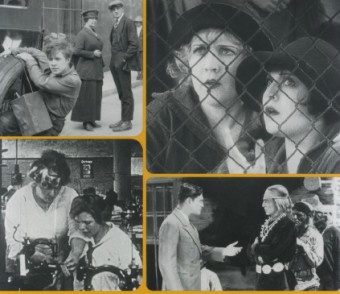
The National Film Preservation Fund has announced the third in its Treasures series of rare silent and early sound films from American archives. The four-DVD set will be published in October by Image Entertainment. For number three in this stunning series, the theme is social issues. Here’s the press release:

Cecil B. De Mille’s sensational reformatory exposé, The Godless Girl; Redskin in two-color Technicolor; Lois Weber’s anti-abortion drama Where Are My Children?; The Soul of Youth by William Desmond Taylor; and dozens of rare newsreels, cartoons, serials, documentaries, and charitable appeals are showcased in the National Film Preservation Foundation upcoming four-DVD box set, Treasures III: Social Issues in American Film, 1900-1934. Slated for release by Image Entertainment on October 16, Treasures III (retail price $89.99) introduces to DVD 48 films from the decades when virtually no issue was too controversial to bring to the screen.

“In film’s first decades, activists from every political stripe used movies to advance their agenda,” said Martin Scorsese, who serves on the NFPF Board of Directors. “These films are an important and fascinating glimpse of history. They changed America and still inspire today.”

Prohibition, birth control, unions, TB, atheism, the vote for women, worker safety, organized crime, loan sharking, race relations, juvenile justice, homelessness, police corruption, immigration—these issues and more are brought to life in the new 12-1/4 hour set. In addition to the four features, the line up includes the first Mafia movie, a 1913 traffic safety film, management’s version of the Triangle Shirtwaist fire, temperance and suffragette spoofs, A Call for Help from Sing Sing!, an action-packed Hazards of Helen episode, a patriotic “striptease” cartoon for war bonds, the earliest surviving union film, and a medley of prohibition newsreels kicked off by Capital Stirred by Biggest Hooch Raid.

The motion pictures are drawn from the preservation work of the nation’s foremost early film archives: George Eastman House, the Library of Congress, the Museum of Modern Art, the National Archives, and the UCLA Film & Television Archive. None of the works has been available before in high-quality video.

Treasures III is playable worldwide and has many special features for DVD audiences:

  • Newly recorded music contributed by more than 65 musicians and composers
  • Audio commentary by 20 experts
  • 200-page illustrated book with essays about the films and music
  • More than 600 interactive screens
  • 4 postcards from the films

The third in the award-winning Treasures series, the new set reunites the curatorial and technical team from the NFPF’s earlier DVD anthologies. The project is made possible through the generous support of the National Endowment for the Humanities and the National Film Preservation Board of the Library of Congress. Net proceeds will support further film preservation. A four-page brochure with the full contents list can be downloaded from the NFPF Web site: www.filmpreservation.org/T3_brochure.pdf.

Program 1: The City Reformed

The Black Hand (1906, 11 min.)
Earliest surviving Mafia film.
How They Rob Men in Chicago (1900, 25 sec.)
Police corruption Chicago-style.
The Voice of the Violin (1909, 16 min.)
A terrorist plot is foiled by the power of music.
The Usurer’s Grip (1912, 15 min.)
Melodrama arguing for consumer credit co-operatives.
From the Submerged (1912, 11 min.)
Drama about homelessness and “slumming parties”
Hope—A Red Cross Seal Story (1912, 14 min.)
A small town mobilizes to fight TB
The Cost of Carelessness (1913, 13 min.)
Traffic safety film for Brooklyn school children.
Lights and Shadows in a City of a Million (1920, 7 min.)
Charitable plea for the Detroit Community Fund.
6,000,000 American Children…Are Not in School (1922, 2 min.)
Newsreel story inspired by census data.
The Soul of Youth (1920, 80 min.), with excerpts from Saved by the Juvenile Court (1913, 4 min.)
William Desmond Taylor’s feature about an orphan reclaimed through the juvenile court of Judge Ben Lindsey with excerpts from the political campaign film Saved by the Juvenile Court (1913. 4 min.)
A Call for Help from Sing Sing! (1934, 3 min.)
Warden Lawes speaks out for wayward teens.

Program 2: New Women

The Kansas Saloon Smashers (1901, 1 min.)
Carrie Nation swings her axe.
Why Mr. Nation Wants a Divorce (1901, 2 min.)
Role-reversal temperance spoof.
Trial Marriages (1907, 12 min.)
Male fantasy inspired by a feminist’s proposal.
Manhattan Trade School for Girls (1911, 16 min.)
Profile of the celebrated progressive school for impoverished girls.
The Strong Arm Squad of the Future (ca. 1912, 1 min.)
Anti-suffragette cartoon.
A Lively Affair (ca. 1912, 7 min.)
Comedy with poker-playing women and child-rearing men.
A Suffragette in Spite of Himself (1912, 8 min.)
Boys’ prank results in an unwitting crusader.
On to Washington (1913, 80 sec.)
News coverage of the historic suffragette march.
Hazards of Helen: Episode 13 (1915, 13 min.)
Helen thwarts robbers and overcomes workplace discrimination.
Where Are My Children? (1916, 65 min.)
Provocative anti-abortion drama by Lois Weber.
The Courage of the Commonplace (1913, 13 min.)
A young farm woman dreams of a better life.
Poor Mrs. Jones! (1926, 46 min.)
Why wives should stay on the farm.
Offers Herself as Bride for $10,000 (1931, 2 min.)
Novel approach to surviving the Depression.

Program 3: Toil and Tyranny

Uncle Sam and the Bolsheviki-I.W.W. Rat (ca. 1919, 40 sec.)
Anti-union cartoon from the Ford Motor Company.
The Crime of Carelessness (1912, 14 min.)
Management’s version of the Triangle Factory fire.
Who Pays?, Episode 12 (1915, 35 min.)
A lumberyard strike brings deadly consequences.
Surviving reel from Labor’s Reward (1925, 13 min.)
The American Federation of Labor’s argument for “buying union.”
Listen to Some Words of Wisdom (1930, 2 min.)
Why personal thrift feeds the Depression.
The Godless Girl (1928, 128 min.)
Cecil B. DeMille’s sensational exposé of juvenile reformatories.

Program 4: Americans in the Making

Emigrants Landing at Ellis Island (1903, 2 min.)
Actuality footage from July 9, 1903.
An American in the Making (1913, 15 min)
U.S. Steel film promoting immigration and industrial safety.
Ramona: A Story of the White Man’s Injustice to the Indian (1910, 16 min.)
Helen Hunt Jackson’s classic about racial conflict in early California, retold by D.W. Griffith and starring Mary Pickford.
Redskin (1929, 82 min.)
Racial tolerance epic, shot in 2-color Technicolor at Acoma Pueblo and Canyon de Chelly.
The United Snakes of America (ca. 1917, 80 sec.)
World War I cartoon assailing homefront dissenters.
Uncle Sam Donates for Liberty Bonds (1918, 75 sec.)
Patriotic “striptease” cartoon.
100% American (1918, 14 min.)
Mary Pickford buys war bonds and supports the troops.
Bud’s Recruit (1918, 26 min.)
Brothers learn to serve their country in King Vidor’s earliest surviving film.
The Reawakening (1919, 10 min.)
Documentary about helping disabled veterans to build new lives.
Eight Prohibition Newsreels (1923-33, 13 min.)
From Capital Stirred by Biggest Hooch Raid to Repeal Brings Wet Flood!

The National Film Preservation Foundation, the nonprofit organization created by the U.S. Congress to help save America’s film heritage, is the charitable affiliate of the National Film Preservation Board of the Library of Congress. Since starting operations in 1997, the NFPF has helped save more than 1,100 films at archives, libraries and museums across 41 states, Puerto Rico, and the District of Columbia.

The NFPF website has details of Treasures volumes I and II, with some video clips, and a Treasures IV on the avant garde 1945-1985 will be available next year.

Mander and Mitchenson

The world famous collection of theatre memorabilia gathered together by Raymond Mander and Joe Mitchenson has now published an online catalogue. The collection comprises over two thousand archive boxes containing playbills, posters, programmes, engravings, cuttings and production photographs of London and British regional theatres. There are files on every actor and actress of note in the British theatre, and sections on circus, dance, opera, music-hall, variety, dramatists, singers and composers, together with many engravings and pictures.

Inevitably, there is much that relates to the cinema, especially the early years of cinema. There are few documents themselves available online, but judicious use of the catalogue fields yields gems. There is a Search Everything option, and individuals fields for Names, Titles, Subjects, Dates and Keywords. Each search result provides a Brief Details and a Full Description. This is where the useful stuff lies – some thorough catalogue descriptions, such as this for the Palace Theatre in London’s Cambridge Circus, an important venue for Biograph films in the late 1890s/early 1900s, and host to occasional film shows thereafter:

Palace Theatre (Cambridge Circus, London) Collection

Resource code: GB2649-MM-TL-PLC
Title: Palace Theatre (Cambridge Circus, London) Collection
Format: Set plans and designs; Documents (production); Ephemera eg. daybills and flyers; Programmes; Drawings; Prints; Photographs (production); Photographs (venue); Photographs (miscellaneous); Negatives; Postcards; Music scores; Song sheets; Libretti; Autographs; Ephemera eg. tickets; Published material; Scrapbooks; Periodicals; Press cuttings; Correspondence; Manuscripts; Ephemera; Photocopies

Description: The Palace Theatre opened on 31 January 1891 as the Royal English Opera House under Richard D’Oyly Carte. It changed its name to the Palace Theatre of Varieties in 1892, and specialised in music hall/variety productions, hosting the Royal Command Variety Performance in 1912. From c1914 it began staging revues, as well as the occasional cinema shows in the 1920s and 1930s. In recent decades it has produced a large number of musicals.

Description: The papers include depictions of the exterior of the theatre as it was, 1896-c1989, and of the interior, c1903-1912, articles, press cuttings, notes, etc. relating to its history, 1891-20th century, theatre tickets, 1954-1968, a list of productions from 1891 to 1985, an information pack on the completion of exterior refurbishments, 1989, the Summer 1997 edition of Picture House, containing an article, Pictures at the Palace, by Graeme Cruickshank, a booklet, The Royal English Opera House and The Palace Theatre – 100 Glorious Years, An Illustrated Chronology, by George Cruickshank, 1991, programmes relating to charity and Sunday events, 1900-1994, and papers relating to the Royal Command performance of 1 July 1912.

Description: The majority of the material relates to performances and is arranged in chronological order from 1891 to 1999, although a number of items are copies or later reprints of original documents; the earliest original document is dated 1891. It includes a pen and ink sketch of Esther Palliser and David Bispham in La Basoche, 1891, a souvenir booklet issued by the theatre entitled The War by Biograph, 1900, set plans, etc. for The Gay Divorce, 1932, correspondence, set plans, wardrobe lists, technical specifications, etc. relating to a proposed performance of Carissima in South Africa, 1952, and an introductory booklet to the Théâtre Nationale Populaire, 1956. Coverage is particularly good for the following productions: Ivanhoe (1891), The Passing Show (1914-1915), Bric-à-Brac (1915), Vanity Fair (1916-1917), No No Nanette (1925), Heads Up! (1930), Dinner at Eight (1933), Streamline (1934), On Your Toes (1937) including a large number of stage plans, Under Your Hat (1938), Song of Norway (1946), Carissima (1948), King’s Rhapsody (1949), The Love Match (1953), Glorious Days (1953-1954), the Shakespeare Memorial Company’s touring production of King Lear (1955) including typed transcripts of revues, The Sound of Music (1961), Cabaret (1968), Mr. Mrs. (1968), Jesus Christ Superstar (1972) and Les Miserables (c1985-1999).

Language: eng
Conditions of access: By appointment
Acquisitions policy: Possible future additions
Owner: The Raymond Mander and Joe Mitchenson Theatre Collection
Copyright status: Contact Administrator for permissions
Collection located: Jerwood Library of the Performing Arts
Trinity College of Music
King Charles Court
Old Royal Naval College
Greenwich
London SE10 9JF
Keyword: Variety
Keyword: Revue
Keyword: Stage setting and scenery
Keyword: Technical information
Associated name: Palace Theatre, Cambridge Circus, London
Associated name: Royal English Opera House, Cambridge Circus, London
Associated name: Palace Theatre of Varieties, Cambridge Circus, London
Associated name: Théâtre Nationale Populaire
Geographic coverage: London
Collection time span: 1891-1999
Accumulated: 1938 –
Principal collector: Raymond Mander and Joe Mitchenson
Parent Collection: The Raymond Mander and Joe Mitchenson Theatre Collection

The collection itself is located at Trinity College of Music, Greenwich – contact details from the website.