Silents at the Phoenix

Picturedrome

The Picturedrome, East Finchley, from http://www.phoenixcinema.co.uk

The Phoenix in East Finchley is believed to be Britain’s oldest continuously running cinema. It was founded in 1910 as the Picturedrome and has operated as a cinema ever since. It has been independently owned for most of that time, and after being known as the Coliseum and then the Rex it became the Phoenix in 1975. It now run by a non-profit-making trust and is a Grade II listed building.

This independent cinema proudly keeps up a tradition of showing independent films, and is now looking back to its roots by showing a season of silents, Into Great Silents – The Best in Silent Cinema. So do go along if you can to support them – on Sunday 9 March they are showing Alfred Hitchcock’s The Lodger, accompanied by Ivor Montagu’s Bluebottles, with piano accompaniment by Stephen Horne and an introductory talk by film historian Gerry Turvey. Later screenings will be Sunrise (8 June), Pandora’s Box (21 September) and Battleship Potemkin (28 November).

Seconds out

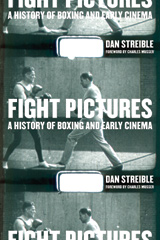
Fight Pictures

http://www.ucpress.edu

The mere mechanical construction of a film projector has been overestimated … it was boxing that created cinema.

So someone once wrote (actually it was me), and even if the statement was done for effect, there’s some truth to it. Cinema was created for a purpose, which was to make money by amusing an audience, and many of the first viewers of motion pictures wanted to see boxing. The Edison peepshow Kinetoscope (first exhibited commercially in 1894) recorded several bouts, albeit specially staged for the camera; the first projected film to be shown commercially was the Lathams‘ Young Griffo v Battling Charles Barnett (first exhibited in New York on 20 May 1895); and films first extended for over an hour when Enoch Rector‘s Veriscope Company filmed the world heavyweight championship of 1897 between Jim Corbett and Bob Fitzsimmons with three camera in parallel, the 63mm film stock being specially designed to frame the full view of the boxing ring – boxing in a very real sense creating cinema.

The history of boxing and early cinema is now to be given its first thorough history with the publication of Dan Streible’s long awaited Fight Pictures: A History of Boxing and Early Cinema. Published by the University of California Press next month, the book covers the rich period where the new medium of cinema collided, or colluded, with the ignoble art, as the the former built up its mass appeal and the latter sought to drag itself out of a state of illegality into legimatised entertainment. It’s a story of technical innovation, exploitation, criminality, fakery, brutality, star power, racial tension, and the rise of mass appeal sport and the media in the early twentieth century.

This history has been researched by Streible for many years now, and it seemed for too long that the book would never come out. It ought to be a crossover seller, appealing both to the early film studies community and the sports history afficionados, to go by his previous writings on the subject.

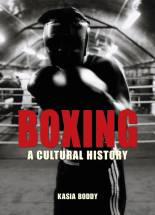
Boxing

But that’s not all. Because in May the enterprising Reaktion Books publishes Kasia Boddy’s Boxing: A Cultural History. I know nothing of the provenance of this work, but it sounds tempting enough from the blurb:

Throughout this history, potters, sculptors, painters, poets, novelists, cartoonists, song-writers, photographers and film-makers have been there to record and make sense of it all. In her encyclopaedic investigation of the shifting social, political and cultural resonances of this most visceral of sports, Kasia Boddy throws new light on an elemental struggle for dominance whose weapons are nothing more than fists. From Daniel Mendoza to Mike Tyson, boxers have embodied and enacted our anxieties about race, ethnicity, gender and sexuality. Looking afresh at everything from neo-classical sculpture to hip-hop lyrics, Boddy explores the way in which the history of boxing has intersected with the history of mass media, and sheds new light on the work of such diverse figures as Henry Fielding and Spike Lee, Charlie Chaplin and Philip Roth, James Joyce and Mae West, Bertolt Brecht and Charles Dickens. This all-encompassing study tells us just how and why boxing has mattered so much to so many.

It probably isn’t going to go into the practical details of how many arc lights the American Mutoscope and Biograph Company employed to photograph indoor fights in 1900, but it does sound like it will give us an eclectic and entertaining cultural history, outlining boxing’s special resonance and appeal, and placing film’s role within that history.

I’ve never been to a boxing match. I can’t watch televised bouts of today. But the history, the characters, the themes of boxing in the past are just so compelling, and – to be honest – the distancing effect of seeing brutal fights only in black-and-white and silently helps sanitise the subject.

To finsh off, here’s an example of how YouTube can serve as an archive bringing life to films you might never expect to see again. Dan Streible himself brought this to the attention of a film archiving list I subscribe to: the Selig Polyscope Company’s 1900 film McGovern-Gans Fight Pictures. It features the lightweights Terry McGovern and Joe Gans, the first native-born black American to win a world title (in 1900). This bout wasn’t for the world title, and it became controversial (and still is, judging from the comments accompanying the film) for Gans reportedly admitting to taking a dive. See what you think.

The film comes from a 1930s or 40s short produced by Forrest Brown, no longer existing in its original 1900 form, so far as is known. Amazing to be able to see such things still, and there’s many more such early fight pictures on YouTube, generally taken from sports shorts made decades later – see, for example, Joe Gans v Kid Herman in 1907 – though many more are lifted from programmes by ESPN, which has the world’s largest collection of archive boxing films, mostly gathered by Jim Jacobs and Bill Cayton of Big Fights Inc., who when they weren’t amassing an amazing collection of fight films were managing the young Mike Tyson. Tyson has probably seen more archive films of boxing matches than anyone. He’s going to love Streible’s book, I’m sure.

Oldest Korean film screened once more

Cheongchun’s Sipjaro

Cheongchun’s Sipjaro (1934), from http://www.koreatimes.co.kr

Silent films continued well into the 1930s in many Asian countries, notably China and Japan, which is why the recently-discovered oldest surviving Korean dramatic film dates from 1934, yet is a silent.

Cheongchun’s Sipjaro (Turning-point of the Youngsters or Crossroads of Youth), directed by An Jong-hwa, was given its first screening in eight decades by the Korean Film Archive, after having been given to the archive by a donor who wishes to remain anonymous. The Archive has a helpful website (in English) with a fine database of Korean films, which supplies this synopsis for the film:

It breaks Yeong-bok’s heart to leave his old mother and younger sister home to leave his hometown. He married into Bong-seon’s family and worked for seven years but when Joo Myeong-goo snatches Bong-seon away, he decides to leave town. Blaming his cursed fate for everything, he gets a job as a luggage carrier in Seoul. That is when he meets Yeong-hee who works in the vicinity. Yeong-ok also leaves home to come up to Seoul after their mother passes away but she cannot find her brother. Instead, she meets Gae-cheol, an old friend from her hometown and also a good friend of Joo Myeong-goo. Yeong-ok loses her virginity to Gae-cheol and when Yeong-bok finds out about this, he gives Gae-cheol and Myeong-goo a good beating and starts working harder for a better tomorrow.

A report in The Korean Times provides some snippets of information about early Korean film, though it’s a little misleading in places.

It tell us that the the oldest (dramatic) Korean film was Uilijeogguto (Fight for Justice), first screened on 27 October 1919, while the first feature-length drama was Weolha-ui Mangseo (The Vow Made below the Moon), directed by Yun Baek-nam and shown in 1923. Neither survives.

The Korean Film Archive says that seven native films were produced between 1910 and 1920, and sixty-one films from 1920 to 1930, of which they hold no examples at all, while between 1930 and 1940, there were seventy-three films produced, but only five are held by the Archive. It finishes off the sorry tale by telling us that around 5,500 films (presumably dramatic films) have been produced in Korea, and some 40 percent are lost.

Cheongchun’s Sipjaro beats by two years the previously oldest surviving film, Mimong (Sweet Dream) (1936), which was itself only discovered in 2005. Let’s hope for more.

Update: There’s a nice piece on the film’s restoration and the work of the Korean Film Archive in this piece from JoongAng Daily.

Women and British silent cinema

Woman and Silent British Cinema

Women and Silent British Cinema

Congratulations and welcome to the latest silent cinema blog on the block, WSBC – Women and British Silent Cinema. Not so much a blog, though, more a focal point for the growing research interest in women and silent cinema generally. It has information on conferences past and future, and links to external resources, including a promised WSBC Wiki site. Of most interest probably is the long list of British women involved in film in various ways from the silent era (just a handful so far with biographies attached), which covers relatively well known (in this narrow field) figures as Betty Balfour, Hilda Doolittle (H.D.), Elsa Lanchester, Caroline Lejeune, Blanche McIntosh, Joan Morgan, Alma Reville, Marie Stopes and Virginia Woolf, while also providing many names of which few as yet know anything. I look forward to finding out in due course just who were Mrs K. Beck, Elise Codd, Nellie Tom Gallon, Jean de Kirharski, Edith Nepean and Jane Tarlo.

Some you will have already met through the pages of the Bioscope: Jessica Borthwick, Gladys, Marchioness of Townshend, Jakidawdra Melford. More, I can promise, will follow.

Joan in Sheffield

Passion of Joan of Arc

The Passion of Joan of Arc, from http://www.sensoria.org.uk

In the Nursery, the esteemed music duo (twins Klive and Nigel Humberstone) who have produced several scores of silent films, will be premiering their latest score, for Carl Dreyer’s The Passion of Joan of Arc (1928) at the Sensoria festival in Sheffield on 16 April. This is a new festival of film and music, running 12-18 April 2008, though a full programme has not been publishd is yet, so I don’t know if there will be further silent film/music combinations. The venue for The Passion of Joan of Arc will be Sheffield cathedral, and the box office is now open.

The Passion of Joan of Arc is of course one of the landmark films of silent era, indeed of cinema history as a whole. It is one of those superhuman works where you cannot imagine that the mundanities of filmmaking – camera set-ups, lighting, pauses, retakes, breaks for meals – ever took place. Using extensive use of probing, intense close-ups (no make-up was used), the film is like the history of a soul, quite unlike any other movie (what a vulgar term that is) that you will have come across. Information on the film is extensive, but check out Carl Dreyer’s illuminating thoughts on the production process, with its emphasis on staying true to the documents of the period, on the Criterion site. Dreyer, so it is said, wanted the film to be seen in silence.

In the Nursery’s website has information on their previous silent film scores. These have included Electric Edwardians (the Mitchell and Kenyon DVD collection of early actualities), Hindle Wakes, A Page of Madness, Man with a Movie Camera, Asphalt and The Cabinet of Dr Caligari. Sound extracts are available as mp3 files. The Passion of Joan of Arc will subsequently screen at Wave Gotik Treffen in Liepzig somewhere between 9-12 May, and at the Barbican in London on 1 June.

Struggling to keep up with the BFI

Lights and Shades on the Bostock Circus Farm

The British Film Institute employs so many different outlets for its films these days that it’s difficult to keep up. What with the Mediatheque, Creative Archive, Screenonline, European Film Treasures, filmarchives online, its vast website and MySpace page, alongside the traditional outlets of DVD, book publishing and cinema exhibition, it’s becoming hard to escape their mission to inspire us all. Yet it’s still possible to overlook some of their activities, such is their number, as I’d done until now with their YouTube channel.

The BFI has contributed to several other YouTube sites, wittingly (e.g. 10 Downing Street and The Royal Channel) or unwittingly (take your pick), but for a few months now it has also had its own channel. And what gems are there.

There are sixty-four titles at present, and all are films which the BFI owns or for which there is no rights claimant, and so there’s an emphasis on silent shorts. Several of these are available from other BFI outlets, and all are featured in the Mediatheque, so the site serves as a taster, and no harm with that. So, for example, there are numerous clips from The Open Road, Claude Friese-Greene’s two-colour travelogue of 1924/25, which has already seen the recent light of day as a television programme and two DVD releases.

So let’s recommend a few old favourites. None more favoured to my mind than Lights and Shades on the Bostock Circus Farm, featured above, an astonishing 1911 production from the Warwick Trading Company (the print comes from a German source, hence the German titles, but it’s nevertheless a British production). I shan’t spoil the surprise – just to let you now that what looks like a conventional interest film about a touring circus and its animals suddenly turns to heart-rending drama…

Oyster Fishing at Whitstable, England

Or here’s another old favourite, Oyster Fishing in Whitstable, England – apparently an American production from 1921, though actually it’s a repackaging of a pre-First World War British film. An old favourite firstly because I was brought up in the fair town of Whitstable (and it hasn’t changed much), secondly because it’s a harmoniously accomplished example of early non-fiction ‘interest’ film, and thirdly because the subject of much of my research work, Charles Urban, the film’s producer, can be seen towards the end as one of a crowd on the beach sampling oysters (he’s the one crouching down on the right, wearing a hat).

The films all come with knowledgeable background descriptions from one or other of the BFI curators (a marked difference to many YouTube offerings). There are newsreels, magazine films, travels films, phantom rides, actualities, a recreation of Kinemacolor (more on that at another time) and much more. There are also several sound films of course (check out Geoffrey Jones’ glorious Snow, a brilliantly edited 1963 piece from the esteemed British Transport Films)). Fascinatingly, the most popular title so far is An Otter Study, with its underwater photography (the titles comes from the 1920s, but the original film was made by Urban’s Kineto company in 1912). Others are bound to feature in later posts. Go explore.

Colour and the moving image

Kinemacolor banner

In this our year of colour, here’s a call for papers on a pertinent conference, which comes out of an ongoing three-year research project at the University of Bristol which is examining the histories of Kinemacolor and Technicolor in Britain.

Colour and the Moving Image: History, Theory, Aesthetics, Archive

Conference: 10th July – 12th July 2009, Bristol, UK

Keynote speakers: Tom Gunning (University of Chicago), Laura Mulvey (Birkbeck)

‘An inquiry into colour can take you just about anywhere’ (David Batchelor, Chromophobia, 2000)

Call for Papers: This conference addresses questions emerging through a renewed interest in colour film and as an interdisciplinary subject. The event is part of an AHRC-funded project on colour film, led by Professor Sarah Street. While colour is a fundamental element of film forms, technologies and aesthetics it is rarely singled-out for analysis. The aim of the conference is to extend previous work on colour and to consider its form and functions from a range of perspectives within four major strands: histories and technologies; film theory; philosophies and aesthetics of colour; the ethics, practices and theories surrounding the deterioration and conservation of colour film. In addition to formal conference papers, the event will include screenings of prints from the BFI National Film Archive. We invite proposals which address broad issues raised by colour and the moving image. The conference will provide a forum for discussion which is informed by, and directly addresses, the interrelations of the theory, history and aesthetics of colour film and of moving image technologies in their broadest sense. Proposals which focus on questions of colour in one or more of the following areas are particularly welcome:

– star systems
– reception theory
– pre-filmic, pro-filmic and onscreen spaces
– fantasy, spectacle, realism and/ or ‘natural’ colour
– colour theory
– synaesthesia: theories and practices of the interrelations of colour, sound, music as sensation
– chromophilia/chromophobia
– distanciation and avant garde film
– colour and genre
– film histories and new technologies: video, DVD, small screen technologies as new viewing spaces
– Colour systems including Kinemacolor, Dufaycolor, Chemicolor, Agfacolor, Technicolor, Eastmancolor

We invite abstracts of c.200 words for individual papers or pre-constituted panels consisting of 3 papers to be submitted by 1st September 2008. Please send abstracts to dram-colourconference@bristol.ac.uk. If you prefer to submit your abstract by post, the address is as follows: Colour and the Moving Image Conference, c/o Dr Liz Watkins, Department of Drama: Theatre, Film, Television, Cantocks Close, Woodland Road, University of Bristol, Bristol, BS8 1UP, UK.

Colour and the Moving Image: History, Theory, Aesthetics, Archive is hosted by the Department of Drama: Theatre, Film, Television, University of Bristol, UK with support from the Arts and Humanities Research Council. Screenings in co-operation with the BFI National Film Archive, UK and supported by Screen as one of its 50th Anniversary regional events.

Presenting Keaton and Rogers

Buster Keaton

Here’s news of a novel competition from the Annual Buster Keaton Celebration:

The 16th Annual Buster Keaton Celebration, to be held September 26th & 27th, 2008 in Iola, Kansas, would like to announce its first annual Student Presentation Competition. The winner will receive a spot on the schedule of respected film and cultural authorities who are asked to
take part in the celebration each year and will receive a travel grant of $500 to facilitate his/her attendance. The student presenter will be expected to present a 30- to 40-minute presentation to the Celebration audience in PowerPoint format (with images either still or moving) and so
must be able to attend the conference as scheduled.

Eligibility: Full-time matriculated Undergraduate and Masters students at any point in their academic career, not affiliated with any employee or volunteer of the Buster Keaton Celebration, the Kansas Humanities Council or the Bowlus Fine Arts Center.

Required:
1. Applicants must complete an application to Frank Scheide or by sending a letter to Susan Raines, Bowlus Fine Arts Center, 205 East Madison, Iola, KS 66749-0705). Proof of current matriculation will be required as part of this application.

2. Applicants must submit their complete 30- to 40- minute presentation script for committee review, along with the above application, by the due date of May 1, 2008 along with images to be used in the final PowerPoint document. The applicant must also present evidence that images he or she wishes to use are available and in the applicant’s possession. Scripts must be typed and double-spaced (they may be in essay format, marked with indications as to what images will be utilized where in the presentation). Please do not submit the final PowerPoint demonstration.

To learn more about this year’s topic, please read the essay “Buster Keaton and Will Rogers: American Comic Heroes”, which can be found by visiting the Buster Keaton Celebration web site at http://iolakeatoncelebration.org. Committee members will be looking for original approaches to this topic and are especially interested in papers linking the two performers in some manner.

The Celebration Student Presenter committee will choose one winner and one runner-up, who will serve as an alternate. An announcement of the winner will be made by June 1st. The winner will have until June 30th to accept or decline the award. He or she will then have until July 31st to make his/her travel arrangements (assistance with this task will be provided by a committee volunteer). The winner will receive a spot on the schedule and a stipend of $200 and travel expenses up to $300 (airfare or mileage) to facilitate his/her attendance. Lodging and a daily food allowance will be provided by the Buster Keaton Celebration from Thursday evening, September 25th, through breakfast on Sunday, September 28th.

The chosen Student Presenter will be assigned a Celebration volunteer to assist with any and all parts of the actual presentation process, during the two days of the festival, in order to make the experience a successful and rewarding one for the studentand for the Celebration attendees!

Now how about a festival of PowerPoint one day? It’s the magic lantern de nos jours.

Where the wild things are

Percy Smith

Percy Smith (left), from F.A. Talbot’s Moving Pictures: How They are Made and Worked (1912)

It’s been a long time in coming, but it’s been well worth the wait. Today saw the launch of WildFilmHistory, a site dedicated to recognising 100 years (so they say) of wildlife filmmaking. Produced by the Wildscreen Trust and supported by Lottery funding, this is a multimedia guide to one hundred years of natural history filmmaking, from the pioneering days when stop-motion films of flowers opening wowed them in the music halls to the age of Attenborough and beyond.

The site is biographical in focus, and at its centre are ninety-one (so far) mini-biographies of wildlife filmmakers, twenty-nine of them with accompanying oral history recordings, which very usefully come with PDF transcripts. So you get interviews with the likes of David Attenborough, Hans and Lotte Haas, Desmond Morris, Tony Soper and the late Gerald Thompson, but also the academic Derek Bousé, whose excellent history Wildlife Films investigates our period – more of which below. There’s also a very useful timeline.

But of greatest value for our purposes are the film clips of early wildlife films. There are thirteen of them (many from the British Film Institute collection):

  • Das Boxende Känguruh (1895) – Max Skladanowsky’s film of a boxing kangaroo and its trainer Mr Delaware.
  • Rough Sea at Dover (1895) – Something of a surprise choice, Birt Acres’ self-explanatory film which they argue is “considered by some to be the first natural history orientated film”.
  • Pelicans at the Zoo (1898) – Pelicans at Regent’s Park Zoo, made by the British Mutoscope and Biograph Company, a breathtakingly beautiful film if seen on 35mm (it was originally shot on 70mm), a little more prosiac in Flash.
  • Spiders on a Web (1900) – A new one on me. This was apparently made by G.A. Smith and features two spiders in close-up, viewed through a circular mask (but no web to be seen). Clearly an extract from a longer film.
  • St. Kilda, Its People and Birds (1908) – Made by Oliver Pike, this shows both human and animal life on St kilda, off Scotland, at a time when it was still inhabited by people.
  • The Birth of a Flower (1910) – Exquisite stop-motion photography of flowers opening, complete with stencil colouring, made by the great Percy Smith for Charles Urban.
  • The History of a Butterfly – A Romance of Insect Life (1910) – A fully-fledged natural history film, made by James Williamson, with a fair bit of nitrate damage to remind us of the precious state in which some of these films survive.
  • The Strength and Agility of Insects (1911) – Eye-popping pyrotechnics performed by flies, who juggle corks, twirl matchsticks etc. This is actually a re-issue of an earlier film, The Balancing Bluebottle (1908), filmed by our hero of the era, Percy Smith, for Charles Urban once again. No animals was injured during the making of this film (honest).
  • Secrets of Nature: The Sparrow-Hawk (1922) – One of the famous British Instructional Films series of educational films from the 1920s/30s, this was made by Captain C.W. R. Knight (the site’s synopsis mistakenly says in one place that Percy Smith made the film, though he was associated with many Secrets of Nature productions) (Captain Knight turns up twenty years later as the eagle-tamer in Powell and Pressburger’s I Know Where I’m Going, trivia fans).
  • Secrets of Nature: The Cuckoo’s Secret (1922) – Another title from The Secrets of Nature, this time filmed by Oliver Pike and produced by ornithologist Edgar Chance
  • With Cherry Kearton in the Jungle (1926) – Cherry Kearton was the most celebrated naturalist of the era, and with his brother Richard more or less pioneered the art of wildlife photography and then cinematography. This is a ‘greatest hits’ compilation of some of his African natural history films.
  • Simba (1928) – An African travelogue (extracts only) made by the enterprising American couple Martin and Osa Johnson, blending actuality with staged scenes, and alarmingly also blending shooting with both camera and gun.
  • Dassan: An Adventure in Search of Laughter Featuring Nature’s Greatest Little Comedians (1930) – Cherry Kearton anticipates The March of the Penguins by several decades.

And so it continues up to the present day, with many marvellous clips which both amaze and cause a sigh of happy nostalgia (Zoo Quest, Jacques Cousteau). A little oddly, the site includes pages for films that they haven’t tracked down yet – these include Oliver Pike’s In Birdland (1907), which they argue was the first true wildlife film (hence the centenary), but unfortunately no copy is known to exist.

This is a very well produced site, on which a huge amount of effort has been expended on clearing and producing the clips, esearching the history, and presenting the interviews. The early film clips are wonderful to see, even if I miss one or two titles that I think should have been there (e.g. Herbert Ponting’s fine penguin footage from his films of Captain Scott’s Antarctic expedition). The site opens up the history of wildlife film, demonstrating an interconnected heritage, championing excellence, and encouraging us all to find out more.

Wildlife Films

So, if you are interested in finding out more, where should you go? Well, as mentioned, I strongly recomennd Derek Bousé’s Wildlife Films (2000). This is a first-rate history of wildlife filmmaking and television production, good not only on the plain history but on the mysteries of the genre, which ever since its earliest days has had to adopt assorted entertainment strategies, particularly storytelling, to make its work palatable to a mass public. It is thoughtful and informative. Also recommended is the similarly thought-provoking Animals in Film (2002) by Jonathan Burt. There’s also the recent BBC publication, Michael Bright’s 100 Years of Wildlife (2007), which is aimed at the popular end of the market, but does at least name check people such as Kearton, Smith and Urban.

WildFilmHistory is a wonderful resource, which promises to grow and welcomes any information on new material that they might use. In the spirit of the great filmmakers it champions, go explore.

Colourful stories no. 7 – Reviving Kinemacolor

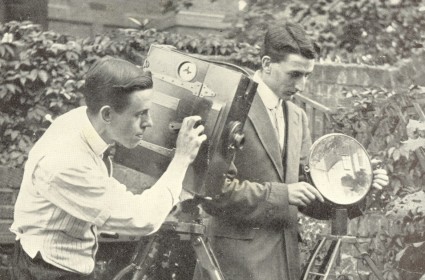
David Cleveland

David Cleveland operating a Kinemacolor projector

We continue with our series on the history of early colour cinematography, but take a diversion out of the past to the present day – Monday February 25th, to be precise – for the very best of reasons. Because today, at the British Film Institute’s J. Paul Getty Conservation Centre in Berkhamsted, Hertfordshire, we witnessed a rare recreation of ‘true’ Kinemacolor.

The screening was organised by film archivists David Cleveland and Brian Pritchard, who decided to mark the centenary of Kinemacolor by exhibiting the world’s first natural colour motion picture system in its correct form, using an original Kinemacolor projector. Kinemacolor films have been shown in composite colour or computer synthesized forms, or so customised that they will run at normal speed on a normal projector, but not since 1995 at the Museum of the Moving Image has anyone attempted to show Kinemacolor as it was originally done – black-and-white film run through a projector fitted with a red and green rotating filter, at double speed (thirty or more frames per second). It is rarer still to employ an original projector (the MOMI show used a customised 1920s Ernemann projector).
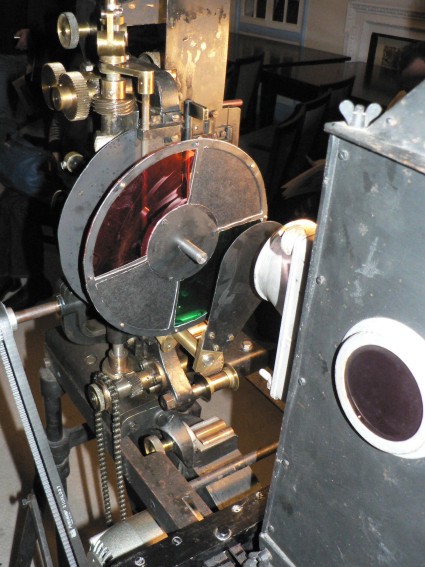
Kinemacolor projector

Kinemacolor projector no. 19 (rear view showing colour filter)

The projector was generously loaned by Wirral Museum, which also allowed the archivists to replace missing parts and to make the machine operable, so long as it would be returned to its original museum state once they had finished with it. It is Kinemacolor projector no. 19, with original colour filter. Cleveland and Pritchard aimed to be as authentic as possible, with two limitations – they could not show nitrate films, fairly obviously, and for similar health and safety reasons they could not use an arc light (they used a filament blub instead).

We gathered in a small room, with chandelier adding an appropriate touch of class to the proceedings (less so the windows necessarily blacked out with black bags and tape). The small audience comprised archivists from the BFI National Archive, a smattering of academics, and as guests of honour, Kinemacolor’s producer Charles Urban’s step-grandson Bruce Mousell and his two daughters.

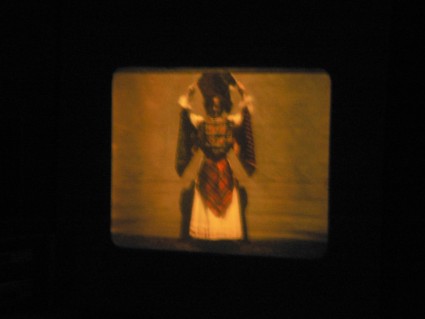
David introduced the event and the projector, then we were shown three of the sample Kinemacolor films held in the BFI National Film Archive. Tragically few Kinemacolor films survive today, and all that the UK’s national archive holds are some test films which were never shown publicly. These were retained by the system’s inventor G.A. Smith, who passed them on to Brighton collector Graham Head, whose collection in turn went to the Cinema Museum in London. Two of the prints we saw were therefore struck from original negatives, with a third taken from a dupe neg. This film was shown first, Cat Studies (c.1908), a short single shot of a cat (a black-and-white cat at that), which served to help make adjustments to the filter, since we started off with the wooden board with a hole through which the cat looked appearing green, because the rotating filter had been aligned incorrectly.
Woman Draped in Patterned Handkerchiefs

Projection of Kinemacolor test film Woman Draped in Patterned Handkerchiefs

There then followed Woman Draped in Patterened Handkerchiefs (c.1908), whose action is self-explanatory, a film clearly designed to demonstrate basic colour effects; and Pageant of New Romney, Hythe and Sandwich (1910), an actuality film rejected at the time for being too contrasty. In truth, the sample Kinemacolor films held by the BFI are poor examples of the colour system, showing little in the way of effective colour, and the latter film in particular demonstrating the hazards of fringing (the alternating red/green records meant that the film record could not always keep up with movement, resulting in red or green ‘fringes’).

But, after a pause for reloading and a talk from Brian Pritchard on the customising of the projector and Smith’s ingenious use of sensitizing chemicals (without which Kinemacolor would not have worked at all), we were shown a beautiful Kinemacolor film loaned by the Nederlands Filmmuseum. This was Lake Garda, Italy (1910), a travelogue of the Italian beauty spot, whose picture postcard images showed up the colour to exquisite effect. We saw panoramic views of the lake, buildings, boats with red and yellow sails, and a delightful sequence where three musicians in a small boat serenaded the camera. Being full of gentle motion, the muted, subtle colour was shown to its best effect, being particularly good at rendering white buildings and reflections in the water. Kinemacolor, using as it did red and green filters, could not logically depict blue, yet blue we saw in the sky and water. This is all down to our gullible brains, reconstituting what seems optically logical to us. The sky should be blue, so we see blue.

What was also interesting was the colossal noise. The motorised projector had to rattle through at a speed of thirty frames per second, and the racket drowned out all conversation. The image on the screen had to be kept quite small, to retain as much brightness as possible (Kinemacolor absorbs a great deal of light). We all wondered how on earth they coped projecting Kinemacolor in large theatres, where the throw would have been considerable. We also marvelled at the skill of the original projectionists, who had to cope not only with a double-speed projector, but changing colour effects owing to differences in filters used (the cameramen would change then accoding to the light conditions encountered) and all of the hazards of correct colour synchronisation.

Bruce Mousell

David Cleveland (right) with Charles Urban’s step-grandson Bruce Mousell and his daughters

The demonstration revealed many of the problems, but also several of the beauties of Kinemacolor, and made one wish for more such screenings to be organised. As David Cleveland explained in his notes to the show:

Several archives have a few examples of Kinemacolor films in their collections, and the usual process is to make a composite film copy of the red and green images onto one new Eastman Color inter-negative, and normal colour prints therefrom. Of course this takes on Eastman Color characteristics, and the colour is not the same as originally seen. Scanning is probably the answer, but here again it needs to be carefully done so that the colour is as near to the original filters as possible … and that the result is not a smooth ‘television’ type picture, but an image that resembles the projected picture of a century ago. Only this way can Kinemacolor be put into context with the development of colour films.

It is a great shame that, in its centenary year, Kinemacolor remains so elusive. Cleveland and Pritchard had the greatest difficulty getting films from other archives, and it is to be hoped that there may be greater co-operation over any future events. So few Kinemacolor films survive (maybe thirty or so, out of the hundreds originally produced), and more must be done to preserve them, to make them accessible in original as well as the more convenient composite form, and to uncover more – because there are undoubtedly ‘lost’ Kinemacolor films out there. Kinemacolor appears to be ordinary silent black-and-white film to the untrained eye. Only when you look closely do you see alterations in tonal emphasis from frame to frame. Many archives, I am sure, are sitting on Kinemacolor films and are not aware of the fact. 2008 would be a good year in which to start conducting a search to locate them.