Oswald the Lucky Rabbit

Oswald the Lucky Rabbit

Oswald the Lucky Rabbit

Walt Disney is in the process of releasing a series of Treasures DVDs presenting assorted gems from its past. The latest in the series features Oswald the Lucky Rabbit. Oswald has been rather left out of Disney mythology, largely because Disney lost hold of the rights. Oswald was Disney’s all-animation cartoon series, preceded by the live action and animation mix of Alice in Cartoonland, but itself preceding the Mouse. The animation is basic by the standards that Disney would introduce in the 1930s, but is graced with enough inventive touches and decent gags to please more than just the animation archaeologist.

Twenty-six Oswald titles were produced by Disney over 1927-1928, with animation by Ub Iwerks, Friz Freleng, Rudolf Ising and others. But Disney lost the rights to the character in a battle with his distributor, Winkler Productions, and producer Charles Mintz continued with the series out of the silent and into the sound era, with many of Disney’s animators abandoning him and joining Mintz. After further business shenanignas, the series continued as Walter Lantz productions, distributed by Universal, up to 1938.

Years passed, and we find ourselves in 2006. After years of trying, Disney recovered the rights to the original twenty-six, Disney-produced Oswalds, and began a process of tracking down the best possible materials from archives around the world. Thirteen of the series now appear on Walt Disney Treasures – The Adventures of Oswald the Lucky Rabbit, a two-DVD set released in America. The titles are:

Oh, Teacher (1927)
Great Guns (1927)
The Mechanical Cow (1927)
All Wet (1927)
Oh What a Knight (1928)
Sky Scrappers (1928)
Trolley Troubles (1927)
The Fox Chase (1928)
Bright Lights (1928)
Tall Timber (1928)
Rival Romeos (1928)
Ozzie of the Mounted (1928)
The Ocean Hop (1927)

Additional titles on the DVD are three Alice comedies (Alice Gets Stung, Alice In The Wooley West, Alice’s Balloon Race), the post-Oswald Disney classics Skeleton Dance (1928), Steamboat Willie (1929) and Plane Crazy (1928), and Leslie Iwerks’ (Ub’s granddaughter) 1999 documentary, The Hand Behind the Mouse: The Ub Iwerks Story. Robert Israel provides an organ music score, and there is audio commentary as well.

Find out more about Oswald from the Toonpedia site, and read the Disney side of events from a February 2006 press release. And get the Walter Lantz side of the history from the Walter Lantz Cartune Encyclopedia.

The Chaplin heritage

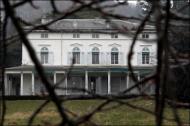
The future Chaplin Museum

The future Chaplin Museum, from http://afp.google.com

How long do you have to be deceased before you start generating a heritage? In Charlie Chaplin’s case, it would seem to be thirty years, pretty much to the day (he died Christmas day, 1977). Rumours of a Chaplin museum have been confirmed. The mansion at Corsier-sur-Vevey, Switzlerland, where Chaplin spent the last twenty-four years of his life, is to become a museum commemorating his life – or, to be precise, a Charlie Chaplin Heritage Site. A Charlie Chaplin Museum Foundation has sold the Manoir de Ban to some Luxembourg investors. The project is costed at 30 million dollars (21 million euros).

Remarkably, there is already a Chaplin Museum website. This coldly fascinating document promises a “unique, must-see cultural attraction for those seeking a profound experience of discernment and variety”, featuring the following:

  • a MANOR, beckoning visitors to enter the very private world of Chaplin the man (“Private Encounter”);
  • OUTBUILDINGS converted into exhibit halls dedicated to the humorous and moving works of the artist and filmmaker (“From Laughter to Tears”) and to the heyday of silent movies ( “The Spectacular Beauty of Silence”);
  • the MAGIC ZONE, a tribute to the earliest forms of cinematic expression (“The Magic Labyrinth”);
  • the Charlie Chaplin MOVIE THEATER highlighting repertory films and film offerings from the emerging generation;
  • an OUTDOOR STAGE under a marquee that provides the setting for an annual line-up of pantomime and cinematic activities and festivals;
  • a SHOPPING AREA where visitors can obtain exquisite souvenirs related to the artist and his adopted domicile;
  • TRAINING activities and gatherings targeting young people worldwide that will be organized with the same attention to perfection and human elements for which Chaplin was renowned, as well as his passion for pantomime, image and film;
  • its DINING AREAS and vantage points nestled among the luxuriant garden-park and pathways that offer unparalleled views of the Swiss landscape.

A news report states that “visitors to the museum will have access to the most intimate rooms occupied by the Chaplin family, including the first floor room where he died on Christmas Day 1977”, while “in the vast vaulted cellars the museum’s designers plan to install a “Hollywood street” complete with street lamps to recreate the atmosphere of the 1920s.”

Is it too cruel to suggest that ‘heritage’ is what phenomena attain when they have lost all real popular appeal or social meaning, and that as Chaplin’s films retreat to little more than a certain archaeological fascination, so a heritage site represents the ultimate embalming of his artistic reputation? Or, just as heritage masks history, is all this corporatising of the Chaplin legend (e.g. charliechaplin.com, discoverchaplin.com, simplychaplin.com, chaplinmuseum.com) only hiding the genius of films whose time must return one day, when we have need of their real insight once again?

The museum is expected to open at the end of 2009.

Slapstick 2008

Chaplin and Linder

Charlie Chaplin and Max Linder, from http://www.slapstick.org.uk

Full details of the Slapstick 2008 silent film festival have been published, at last. The festival is taking place in Bristol, 17-20 January, and screenings take place at the Watershed, Arnolfini, Colston Hall and St George’s Bristol. Here’s the full line-up:

Thursday 17 January

Funny Ladies I: The Extra Girl (USA 1923)
14.00 at Watershed

“The plucky Mabel Normand stars as Sue, a small town girl who wants to be a star. She wins a contract with a big studio when a picture of a very pretty girl is sent to a studio instead of hers. When she arrives in Hollywood, the mistake is discovered.”

Pencil and Plasticine
18.00 at Watershed

“Animation legends Richard Williams and Peter Lord explore their mutual passion for pre-talkie animation with extracts including early Disney, Willis O’Brien and the unforgettable Jerry the Troublesome Tyke!”

Serge Bromberg presents: Retour de Flamme
20.20 at Watershed

“Since 1985, Paris-based Lobster Films have been champions of restoring archive and silent films. We are delighted to welcome Serge Bromberg, co-founder of Lobster, to Slapstick 2008 to present the first UK version of this extraordinary Retour de Flammeshow; a unique chance to experience the films he discovered and restored with his very own live piano accompaniment.”

Friday 18 January

Keystone Chaplin
9.00 at Watershed

David Robinson presents: A Film Johnnie,The Star Boarder and Kid Auto Races.

Funny Ladies II: Funny Ladies of the Silent Screen
11.00 at Watershed

Byrony Dixon and David Wyatt present a selection of silent comediennes.

Neil Innes presents: Monsieur Hulot’s Holiday (France 1953)
14.00 at Watershed

Composer-performer Neil Innes, best known for his work with Monty Python and the Bonzo Dog Doo-Dah Band, introduces Jacques Tati’s classic comedy.

Funny Ladies III: It (USA 1927)
16.00 at Arnolfini

“Clara Bow’s sizzling personality is irresistible in the role that did most to establish her as an icon.”

Special Gala Event: Paul Merton’s Silent Comedy Classics

The Gold Rush (1925)
7.30pm at Colston Hall

“Paul Merton hosts this special Slapstick Gala, featuring the world première of Timothy Brock’s reworking of Chaplin’s score for his greatest silent comedy The Gold Rush performed by the 15 piece Emerald Ensemble. With additional comedy shorts, including Laurel and Hardy classic Leave ’em Laughing and special guests Paul McGann and Christopher Chaplin.”

Saturday 19 January

Chaplin: A Fresh Look – Panel Discussion
9.00 at Watershed

“With programmes such as Kevin Brownlow’s Unknown Chaplin and Paul Merton’s Silent Clowns, TV has introduced Chaplin to a new public and re-affirmed his place in world cinema and the history of comedy. This panel discussion looks at Chaplin’s place in today’s cinema and includes newly discovered home movie footage of Chaplin. Chaired by official Chaplin biographer David Robinson with guests including: Paul Merton, Serge Bromberg and Bryony Dixon.”

Laurel and Hardy Tales with Jean Darling
11.00 at Watershed
Jean Darling, who worked with Laurel and Hardy and starred in Hal Roach’s legendary Our Gang, is interviewed by David Wyatt.

Audience with Nicholas Parsons
14.00 at Watershed

Nicholas discusses his long career in radio and TV and his passion for Keaton and Chaplin, The Arthur Haynes show and Benny Hill. Hosted by Paul Merton.

Funny Ladies IV: Exit Smiling (USA 1926)
16.00 at Arnolfini

“Beatrice Lillie plays Violet, steering a path through a trail of accidents with dotty elegance and the same dogged faith that keeps the character blind to the real feelings of Jack Pickford, the troubled bank clerk her heart is set on.” Live musical accompaniment by Neil Brand, Gunter Buchwald and Frank Bockius.

Buster Keaton: His Classic Comedy Shorts
with Tim Brooke-Taylor and Graeme Garden
20.00 at St George’s Bristol

“Former ‘Goodies’ and current I’m Sorry I Haven’t A Clue panellists Tim Brooke-Taylor and Graeme Garden choose their favourite Keaton short films, revealing the works that have influenced their lives.” With live musical accompaniment from Neil Brand (piano) and Gunter Buchwald (percussion and violin).

Sunday 20 January

Silent Comedy and The Great War
with Paul McGann and Matthew Sweet
11.00 at Watershed

Paul McGann and Matthew Sweet look at extracts from films focusing on the First World War to examine the role of silent comedy in boosting morale. The programme includes extracts from The Better Ole (1926) and a complete screening of Chaplin’s Shoulder Arms (1918).

Paul Merton’s French Silent Clowns
14.00 at Watershed

Festival host Paul Merton explores the work of great French silent comedy pioneers including Léonce Perret and ‘Father of Silent Comedy’ Max Linder.

Phill and Neil’s Slapstick Heaven
16.00 at Watershed

“Phill Jupitus and Neil Innes take us on a journey from silent comedy and beyond, discussing their influences and passions, looking along the way at extracts from The Rutles, Monty Python and the irrepressible Spike Milligan.”

Speedy (USA 1928)
Introduced by Paul Merton
20.30 at Watershed

Harold Lloyd’s last silent film, “a superb valedictory to the silent era”.

That’s a mightily impressive line-up of presenters, and they’ve managed to squeeze in a few good films too. Pleased to see Paul Merton turning his attentions to Léonce Perret and Max Linder. Perhaps he can be persuaded to resurrect Cretinetti, Bébé, Bout-de-Zan, Onésime and a few more of the ‘lost’ European slapstick stars one day…

Further details from the Slapstick site, which is a little confusing to navigate, but you’ll find the full programme under Events (sub-divided by day).

Silent night…

D.W. Griffith in the snow

A merry Christmas to all you Bioscopists. I’m going to be away for the next few days with the nearest and dearest. Have a great holiday, and look out for lots of new ideas and features for the Bioscope in 2008.

Women and Silent Britain

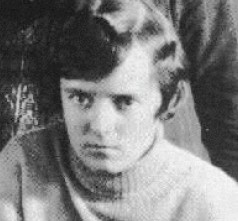
Alma Reville

Alma Reville

The 11th British Silent Cinema Festival, Rats, Ruffians and Radicals: The Globalisation of Crime and the Silent British Film (3-6 April 2008), is hosting a special panel session on Women and Silent British Cinema.

This panel will be separate from the main festival theme and will introduce and report on the activities of two projects: the international Women Film Pioneers project and the recently- formed Women’s Film History UK. The panel will also present research being undertaken on women and silent Britain and the organisers are currently seeking proposals for twenty-minute papers on any aspect of women working within the British film industry during the silent era.

Topics can range from studies of individuals to practical research- related issues, and they would particularly welcome presentations that offer some reflection on the issues, questions and problems of researching women’s film history.

Those interested should email a 200-300 word outline proposal to Clare Watson and Nathalie Morris (University of East Anglia) at womenandsilentbritain@hotmail.com, no later than 31 January 2008.

The Anima lodge

Too many topics and too little time. There are so many subjects I have tucked away for research at some time, but many of them I will never get round to tackling. So the best thing to do is to offer them up in their raw state here on The Bioscope, in the hope that they may interest someone else sufficiently to take up challenge.

A case in point is the Anima lodge. I’m unlikely ever to get to the Library and Museum of Freemasonry, and indeed I would hardly know where to start, freemasonry being an entirely closed book to me. But the intriguing story nevertheless is that there was a British freemasonry lodge for those in the film business, and it was established in 1912. I have, from I know not where, a list of the subscribing members of the Lodge 1912-1920, and a fascinating document it is too.

These were the founder members (links are to the Who’s Who of Victorian Cinema and London Project websites):

  • Edward Thomas Heron [publisher of the Kinematograph Weekly]
  • J. Brooke Wilkinson [secretary of the Kinematograph Manufacturers’ Association and later of the British Board of Film Censors]
  • Edwin Houghton Rockett [inventor and general jack-of-all-trades]
  • Frederick Arton [managing director]
  • Francis William Baker [managing director of Butcher’s Film Service]
  • Will Day [film equipment supplier and later film historian]
  • Matt Raymond [Lumière operator, exhibitor, and future master of the Anima lodge]
  • W. Firth [not known]
  • George Henry Smith [British representative for Vitagraph Company of America]
  • James Charles Squier [can’t remember, involved in production]
  • Charles Urban [producer, particularly of Kinemacolor]
  • A. Pearl Cross [executive]
  • John Frank Brockliss [film distributor]

That’s a notable list of a few of the major figures in the British film business at that time. More joined in subsequent years – I’ll identify them where I can:

  • 1913 – Edward Henry Montagu [executive]
  • 1913 – Alexander Liddle
  • 1913 – E.H. Bishop [managing director]
  • 1913 – Walter Northam [executive with Provincial Cinematograph Theatres]
  • 1914 – H.S. Chambers
  • 1915 – Harold John Fisher
  • 1915 – Paul Kimberley [executive]
  • 1915 – Albert Simmons
  • 1915 – George Henry Saffell
  • 1916 – Reginald Charles Bromhead [executive with Gaumont company]
  • 1916 – Sidney Thornton Smurthwaite
  • 1917 – Thomas Arthur Welsh [producer]
  • 1917 – John Pearson
  • 1918 – John Charles Ernest Mason [cameraman]
  • 1918 – Solomon Gabriel Newman
  • 1919 – Robert Chetham
  • 1920 – Alfred G. Challis
  • 1920 – Edward Maxwell Heron
  • 1920 – Samuel Woolf Smith
  • 1920 – Ernest Edgar Blake [executive]
  • 1920 – E.W. Fredman
  • 1920 – Victor Sheridan
  • 1920 – Frederick Holmes Cooper [cameraman]
  • 1920 – George William Pearson [director]
  • 1920 – Chas. J. Miller
  • 1920 – Ernest Peall [executive]
  • 1920 – Lionel Phillips [distributor]

Well, there’s a fascinating line-up of the famous (in their small world, in their day) and the unknown. Figures like Urban, Wilkinson, Welsh, Kimberley, Pearson, Raymond and Heron were leading figures in the early British film business; many of the others were minor figures then, and are undoubtedly obscure now. What did the Anima lodge do? What advantages might it have brought to those who joined? How did the grand and the less-than-grand figures rub together? What alternative history of British silent cinema might some ingenious researcher draw from this line-up? Sadly, I cannot even tell you when the Anima lodge closed – if it ever closed. Perhaps it lingers somewhere. Someone will know.

Anyone who can identify the roles of the names I haven’t been able to identify, please let me know.

Before the earthquake

A Trip Down Market Street

A Trip Down Market Street Before the Fire, from http://memory.loc.gov

A regular Bioscopist is Joe Thompson, who runs both the engagingly-named The Pneumatic Rolling-Sphere Carrier Delusion blog (“rambling observations on books, history, movies, transit, obsolete technology, baseball, and anything else that crosses my mind”) and the Cable Car website. Which is, unsurprisingly, dedicated to cable cars – particularly those in San Francisco.

He has just published a fascinating piece on A Trip Down Market Street Before the Fire, a 1905 film shot from a travelling cable car, showing San Francisco before it was struck by the catastrophic earthquake and fire of 1906. The film is available to see on the Library of Congress’ American Memory site, where it is accompanied by a meticulously detailed shotlist and historical notes.

The Cable Car site complements this with the discovery of an article on the exhibition of the film, after the fire, on 20 April 1907 in The San Francisco Call, this time courtesy of the Library of Congress’ Chronicling America newspaper digitisation site. As the article reports:

The picture was presented during the intermission in the middle of the performance, and was intended merely as a special feature in recognition of the anniversary of the fire. But while hearty cheers greeted the familiar scenes as they followed one after the other, the pathos of the ravages of the great fire touched many hearts and there were tears in the eyes of scores of onlookers.

Every well known building and corner shown in the moving picture won applause, but the Palace hotel, the Sutter street horsecar seen crossing the city’s main artery at the Sutter junction and the final view up Market street were greeted with outbursts of hand clapping which broke the Orpheum record for plaudits.

There are frame stills to back up the observations from the shotlist. The film itself (the producer is not known) is a fine example of a ‘phantom ride’, the common film genre of the period, where a camera was placed to the front or rear of a train, automobile, omnibus or cable car, to present a travelling shot of the passing scenery, urban or rural. Here’s a well-known picture of Billy Bitzer, later D.W. Griffith’s camerman, filming for the American Mutoscope and Biograph Company around 1900:

Billy Bitzer

The picture is likely to be a publicity gimmick, however, as camera operators were never so foolhardy as to travel on a cow-catcher like this – they placed themselves on trucks to the front or rear of trains, if they weren’t positioned in the cab or carriages themselves. But it looks good.

See the earlier post on Patrick Keiller’s City of the Future exhibition for more phantom rides, and an old post on researching patents which includes an illustration of Hale’s Tours, the invention which gave mid-1900s audiences a virtual reality thrill by placing them in a railway carriage mock-up which rocked from side to side and showed ‘phantom ride’ films projected at the front of the car.

The American Memory site has a whole section devoted to San Francisco before and after the 1906 earthquake, with twenty-six films dating 1897-1916.

Re-envisioning the child in Italian film

Re-envisioning the child in Italian film

http://www.sall.ex.ac.uk

Re-envisioning the Child in Italian Film: New Perspectives on Children and Childhoods from Early Cinema to the Present is a conference being held 14-15 July 2008 at the University of Exeter. Normally we don’t allow non-words like ‘re-envisioning’ here at The Bioscope, but this promises to be an interesting congruence of Italian studies, film studies and childhood studies. The conference blurb assures us that “whilst the recurrent presence of the filmic child has been acknowledged within traditional film historiography, its changing role and status has until recently suffered from a peculiar critical neglect.” They are asking for papers on the following:

* Representations of children in early cinema
* The child in historical drama/costume drama
* The role of the child in Italian film criticism
* Child actors
* The politicisation of children and childhoods
* Violence and the traumatised child
* Childhood and innocence
* The lost, endangered or missing child
* The resurfacing of lost childhoods/the ghosts of childhood
* The child and questions of gender and sexuality
* Childhood and genre
* Childhood under postmodernity and the ‘death of childhood’
* Re-reading the child in Neorealism
* The child in global cinema
* Childhood and immigration

The representation of children in early cinema is a subject that merits serious academic investigation, and though the concentration on Italian rather narrows the field, hopefully there will be someone to take on the theme. The Call for Papers closes 1 February 2008. Further details from The School of Arts, Lenguages and Literatures, University of Exeter.

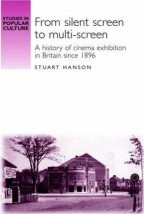
From silent screen to multi-screen

From Silent Screen to Multi-Screen

http://www.amazon.co.uk

There are still so few books out there on cinema exhibition that the appearance of any new title is a cause for celebration. So it is very pleasing to note the publication of Stuart Hanson’s From Silent Screen to Multi-screen: A History of Cinema Exhibition in Britain Since 1896, published by Manchester University Press in its ‘Studies in Popular Culture’ series.

The book is a survey of British film exhibition from the 1890s through to the present day, organised chronologically, with an emphasis on economic, legislative and sociological conditions. It is a huge subject, and Hanson has evidently read very widely and absorbed and explained a great diversity of material. It is a very useful text, aimed squarely at the academic market, and as said there are too few titles on cinema audience studies still (it is a growing subject) not to call this book a welcome addition to the field. There is really isn’t anything quite like it which covers the whole range of British film exhibition.

New Egyptian Hall

Film audience at the New Egyptian Hall, London, 1907-08

That said, there need to be a few words of caution regarding its chapters on the silent era. For the most part the author has relied on secondary sources, and provides a useful summary of material to be found in Rachael Low and in the recent studies by Nicholas Hiley and Jon Burrows. However, while he has been attentive to arguments, he has not always alert when it comes to facts. There are several errors over dates (the ‘first’ British cinema, the Daily Bioscope, opened in 1906, not 1904) and numbers (there certainly weren’t forty films on offer at the inaugural British Kinetoscope exhibition in October 1894). There is also an unfortunate tendency to peddle old myths. For instance, we get the hackneyed story about people running away from film of an approaching train at the first Lumière show, despite the known fact that the December 1895 show did not feature Arrivée d’un train, and audiences in general did not run away in panic at films of approaching trains. Hanson has apparently read Stephen Bottomore’s subtle historical investigation of the ‘panicking’ audience phenomenon, but quotes from it as though unquestioningly supporting the myth. There are several such selective readings. In general Hanson is less at home with the early cinema period than he is with later developments, and it is a shame that some of the factual slips were not picked up on before publication (referring to the unquestionably male film historian Deac Rossell as a woman is another).

So do read it, but read the first two chapters with caution, and if you can check out the original essays by Bottomore, Hiley and Burrows which Hanson generously cites and which contain so much valuable primary information and insight.

If you are interested in early cinema audience studies, these are some of the key books to look out for:

And the best single book, in my humblest opinion, covering the phenomenon of audiences in general and so placing early cinema audiences within wider contexts, is Richard Butsch’s The Making of American Audiences: From Stage to Television, 1750-1990 (2000). If you are looking for a place to start, start here. It is clear, inclusive and wise.

19th Century British Library Newspapers

Graphic

http://www.bl.uk

You will have to be a member of a UK university of college of further education, or else a visitor to the British Library (St Pancras or Colindale), but if you are one of those lucky souls you will be able to make use of 19th Century British Library Newspapers, the latest digitised newspaper resource. This is a collection of 2,000,000 pages from forty-eight newspapers and journals which ran during the period 1800-1900. For copyright and trademark reasons, the project (funded by the Joint Information Systems Committee, which has paid out millions for a number of mass digitisation projects designed to benefit UK HE/FE) had a cut off date of 1900.

Of the forty-eight titles that were selected (none could be titles still running today, such as The Times or Guardian), these cover the 1890s period when motion pictures first came on the scene:

Aberdeen Journal (Coverage: Jan 06, 1800 – Jun 30, 1900)
Baner Cymru (Coverage: Mar 04, 1857 – Dec 29, 1900)
Belfast News-Letter (Coverage: Jan 01, 1828 – Dec 31, 1900)
Birmingham Daily Post (Coverage: Dec 04, 1857 – Sep 29, 1900)
Bristol Mercury (Coverage: Jan 04, 1819 – Jun 25, 1900)
Daily News (Coverage: Jan 21, 1846 – Dec 31, 1900)
Derby Mercury (Coverage: Jan 02, 1800 – Dec 26, 1900)
Era (Coverage: Sep 30, 1838 – Dec 29, 1900)
Freeman’s Journal (Coverage: Jan 01, 1820 – Sep 29, 1900)
Genedl (Coverage: Feb 08, 1877 – Dec 25, 1900)
Glasgow Herald (Coverage: Feb 04, 1820 – Dec 31, 1900)
Goleuad (Coverage: Oct 30, 1869 – Dec 26, 1900)
Graphic (Coverage: Jan 01, 1870 – Dec 29, 1900)
Hampshire/Portsmouth Telegraph (Coverage: Jan 06, 1800 – Dec 29, 1900)
Illustrated Police News (Coverage: Jan 05, 1867 – Dec 29, 1900)
Ipswich Journal (Coverage: Jan 04, 1800 – Dec 29, 1900)
Jackson’s Oxford Journal (Coverage: Apr 03, 1762 – Dec 29, 1900)
Leeds Mercury (Coverage: Jan 03, 1807 – Dec 31, 1900)
Liverpool Mercury (Coverage: Jul 05, 1811 – Dec 31, 1900)
Lloyd’s Illustrated Newspaper (Coverage: Nov 27, 1842 – Dec 30, 1900)
North Wales Chronicle (Coverage: Oct 04, 1827 – Dec 29, 1900)
Northern Echo (Coverage: Jan 01, 1870 – Dec 31, 1900)
Pall Mall Gazette (Coverage: Feb 07, 1865 – Dec 31, 1900)
Preston Chronicle (Coverage: Jan 01, 1831 – Dec 02, 1894)
Reynolds’s Newspaper (Coverage: May 05, 1850 – Dec 30, 1900)
Trewman’s Exeter Flying Post (Coverage: Jan 02, 1800 – Dec 29, 1900)
Western Mail (Coverage: May 01, 1869 – Dec 31, 1900)

This is a sensational selection, which should certainly lead researchers beyond the obvious and familiar to some of the other major newspapers of the day (The Daily News, The Graphic) as well as neglected local newspapers. Digitisation is not just about making things easy, but about opening up new avenues of enquiry, enriching the learning experience. Particularly exciting for film researchers is the digitisation of The Era, the theatrical trade journal, which is a marvellous source of information on the early film business in Britain. Music halls and theatres were the usual exhibition outlets for the first films, and The Era is rich is advertisements, reviews, and articles on the new phenomenon.

I tested out the Bioscope’s favourite test keyword, Kinetoscope, and got 431 hits. As an example of the riches on offer, here’s a review of the very first film exhibition in Britain, the Kinetoscope show at 70 Oxford Street, London. A press showing was held on 17 October 1894, and this report appeared the day after in The Daily News:

THE KINETOSCOPE

This is the ugly name of a beautiful thing. It is a sort of improved zoetrope. Gazing through a peep-slot in a wooden case the spectator beholds a barber shop, wherein a customer seats himself, is lathered and duly shaved. It is a “living picture” of a new order. To take another example – a skirt-dancer is seen amid her floating drapery, and she bends her knees, travels on her toes, and indulges in a giddy spin. It is just as one sees her on the stage. Again, two pugnacious cocks try conclusions, and as the encounter waxes warm their feathers fly; other peep-slots reveal a blacksmith exercising the muscles of his brawny arm in the fashioning of a shoe; a female acrobat exhibiting some curious contortions; and a disreputable fight in the bar-room of a public-house. The question naturally arises, How is it all done? A general idea of the invention can be conveyed in a few words. Mr. Edison has contrived a camera that will take photographs at the rate of forty-three a second, thereby recording, at imperceptible intervals, the successive phases of movement. If these may be described as snap-shots they are the snap-shots of a photographic Maxim gun. The views are taken on an endless film, and set in such rapid motion that the pictures pass through the field of vision at the rate of two hundred and eighty a minute. Mr. F.Z. Maguire is Mr. Edison’s European representative, and he permitted a private view of the invention last night, at 70 Oxford-street, W., the specimen shown being those indicated above. Mr. Maguire did not say whether the mechanism is susceptible of being reversed. It is conceivable that people would be amused to see the accomplished act revoked, and the clean-shaven man become the man in need of a shave. Mr. Edison is seeking to combine the principles of the phonograph and kinetoscope, so that one may watch the gestures of the orator while listening to the words that have escaped his lips.

Quite a first review. F.Z. Maguire is Franck Zeveley Maguire, one half of Maguire and Baucus, the Edison agents whose British business went on to become the Warwick Trading Company. The Edison films shown include Blacksmith’s Shop, Cock Fight, The Bar Room and Barber Shop. The dancer could be Annabelle or Carmencita, while the contortionist is presumably Ena Bertoldi, although film of her is not usually mentioned among those featured at this first British film show.

So, a wonderful resource, and probably just a little bit annoying to anyone not in UK higher and further education or without easy access to the British Library. There are rumours however of Gale (the company behind the Times Digital Archive) eventually making the resource available to anyone, via subscription.