Poor people

Screening the Poor 1888-1914

Two posts are coming up on two important DVD releases from that excellent label Edition Filmmuseum. Post number one is on an innovative two-DVD set of magic lantern slides and early films, Screening the Poor 1888-1914.

Cinema was the ‘poor man’s theatre’ (to use a common phrase of the time); it also spoke to and documented the lives of the poor. In doing so it built on a tradition of social concern filtered through visual entertainment that had its roots in the magic lantern. In church halls, schools and missions throughout the late Victorian period, audiences were presented with sentimental but often heart-rending tales of the hardship suffered by those at the lowest rung on the ladder. The showmen, lecturers and propagandists who put on such lantern shows swiftly adopted the cinematograph as an additional weapon in their armoury, with early projectors often capable of presenting both film and slides. This multimedia nature of early ‘cinema’ shows is well-known, but is seldom reflected in modern-day exhibition of early film, still less in DVD releases. And that is what makes Screening the Poor so unusual – it brings together the lantern and the cinematograph on DVD in a conscious echo of the programmes of the late 1890s/early 1900s. The blurb for the DVD explains this further:

Around 1900, the issues of poverty and poor relief were the source of heated controversy. This DVD illustrates in seven chapters how examinations of the ‘Social Question’ were presented in magic lantern slide sets and early films. On the screens of auditoriums, Sunday schools, music-halls, cinemas and churches, visitors could witness orphans freezing to death in the snow, drunkards plunging their families into misery and helpless old people begging for a scrap of bread. Audiences experienced poignant moving pictures in performances with music, singing and recitations. The
photographic and film industries delivered glass slide sets and films in very large runs on a variety of themes relating to poverty.

This DVD recalls the forgotten art of projection and presents it anew on the modern electronic screen: drawing on original images and using authentic projection equipment, Ensemble illuminago shows enchanting Victorian slide shows and films in a live musical performance at the Munich Film Museum. Digital slideshows reconstruct the interaction between slide sets und text recitals, and early silent films are accompanied with music as they were a century ago: piano and violin underscore the moods that find visual expression in the films.

Nowadays it is rather unusual to find both films and slide sets presented on one DVD. Around 1900 it was common knowledge that the “moving pictures” in a film had evolved from photographic slide sets. Showmen, touring lecturers, music-hall entrepreneurs and cinema operators often used both projection media alternately in their live shows.

It is also unusual to compile DVDs thematically, according to social themes, rather than in a form that reflects pure film history (such as the output of a studio, director or actor). So this is a curated DVD, and the words below are from the DVD booklet, written by Martin Loiperdinger and Ludwig Vogl-Bienek. Whether an item is a film or a set of magic lantern slides is identified at the start of each description. Often the same subject from the same literary source (particularly the poems of George R. Sims, a once highly popular and influential documenter of the lives of London’s poor) cross from lantern to cinematograph. So, if you have tears, prepare to shed them now …

Comment les pauvres mangent à Paris

DVD 1
Slumming

Charitable organisations and dedicated journalists decried the misery of the slums in industrial cities. ‘Slumming’ was the term used to describe tourist outings or philanthropic day-trips to witness the poverty. Those who eschewed direct confrontation could visit magic lantern shows or the cinema: the photographic and film industries provided a constant supply of new material covering diverse issues of the ‘Social Question’.

  • Magic Lantern: The Magic Wand (GB 1889). Producer: York & Son, Text: George R. Sims. Reconstructed by Ludwig Vogl-Bienek, Speaker: Mervyn Heard. – During an excursion through the slums of London, an author hears the story of an 8-year-old girl who discovers a magical way to cope with her mother’s death.
  • Film: Comment les pauvres mangent à Paris / How the Poor Dine in Paris (FR 1910). Producer: Pathé. Score by Günter A. Buchwald (piano) – The first film reportage about the ‘clochards’ of Paris: it is difficult to distinguish the extras acting in the film from the real homeless people.
  • Film: Le Violoniste della carità / The Two Violonists (IT 1910). Producer: Cines. Score by Günter A. Buchwald (piano & violin) – Two elegant young ladies embark on a slumming adventure: they swap their clothes with two poor sisters and perform as street musicians in their place.
  • Film: La Tournée des Grands Ducs / Seeing the Real Thing (FR 1910). Producer: Pathé, Director: Yves Mirande, Cast: Armand Numès, Gaston Sylvestre, La Polaire. Score by Günter A. Buchwald (piano ) – This film parodies the slumming trips made by members of Paris high society. An acting troupe satisfies the demand for entertainment by playing ‘real Apaches’.

Children in Misery
The huge number of poor children was a central issue of the ‘Social Question’. They were not to blame for their wretched situation – and their need of help was obvious. Nonetheless, they were often suspected of being petty criminals. Slide shows and film screenings, however, usually presented impoverished children to their audiences as needy creatures deserving of help and affection.

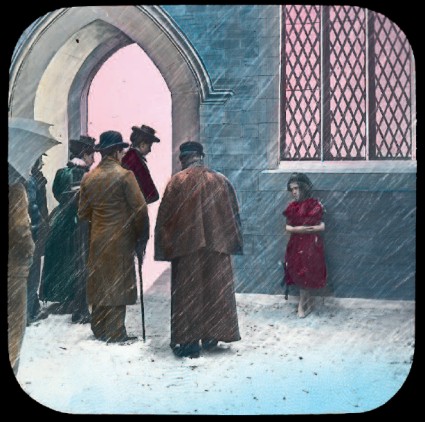
  • Magic Lantern: Ora pro nobis (GB 1897). Producer: Bamforth, Text: A. Horspool, Music by M. Piccolomini. Live Performance: illuminago – Karin Bienek, Ludwig Vogl-Bienek, Piano: Judith Herrmann – Ignored by passing churchgoers, an orphan girl freezes to death at her mother’s grave – an appeal to the Christian duty to provide help and alms to the poor.
  • Film: Le Bagne des gosses / Children’s Reformatory (FR 1907). Producer: Pathé. Score by Günter A. Buchwald (piano & violin) – An orphan boy flees from a correctional institution in which children aged between eight and twelve are mistreated in the manner of prisoners in a penal colony.
  • Film: Bébé veut imiter St. Martin / Baby Pantomimes St. Martin (FR 1910). Producer: Pathé, Director: Louis Feuillade, Cast: Clément Mary. Score by Günter A. Buchwald (piano) – Cinema’s very first child star gives a freezing girl half of his overcoat and learns that half a coat is of little help against the cold.
  • Magic Lantern: Billy’s Rose (GB 1888). Producer: York & Son, Text: George R. Sims. Reconstructed by Ludwig Vogl-Bienek, Speaker: Mervyn Heard – Death and salvation in the slums: a girl goes in search of a rose for her dying brother, but she freezes to death in the process and hands him the rose in heaven.

Child Labour
Impoverished children were made to work as street peddlers, shoe-shines, and messengers to help support their families. The labour unions, social reformers and charitable organisations were particularly critical of the perilous conditions faced by child labourers in factories.

  • Film: The Cry of the Children (US 1912). Producer: Thanhouser, Director: George O. Nichols, Cast: Marie Eline, Ethel Wright, James Cruze, Lila H. Chester, Text: Elizabeth Barrett Browning (1843). Score by Andrew Crow (Wurlitzer organ) – A moving appeal against child exploitation featuring highly realistic staged film footage. The story of a young girl’s death in a textile factory became a manifesto of the American reform movement against child labour.
  • Magic Lantern: The Little Match Girl (US 1905). Producer: McAllister, Text: Hans C. Andersen (1845), Images: Joseph Boggs Beale (1905). Reconstructed by Ludwig Vogl-Bienek, Speaker: Karin Bienek
  • Film: The Little Match Girl – Print title: Het Luciferverkoopstertje (GB 1914). Producer: Neptune Films, Director: Percy Nash. Score by Günter A. Buchwald (piano & violin) – The young street vendor in H.C. Andersen’s fairytale The Little Match Girl (1845) is one of the most famous and enduring icons of poverty. The story of her death and salvation has inspired countless book illustrations, magic lantern shows and film productions to the present day.

Rigadin a l’âme sensible

Charity and Social Care
Controversies concerning the justification, necessity and limits of aid surrounded the public discussion on the ‘Social Question’ from the beginning: able-bodied poor people of working age were generally suspected of being themselves to blame for their poverty due to negligence, idleness, or alcoholism, or even of deviously abusing
the benevolence shown to them. Slide sets and early films on the issue of poor relief addressed such prejudices – and also made fun of over-enthusiastic benefactors.

  • Film: Le Chemineau / Print title: De Zwerver (FR 1905). Producer: Pathé, Director: Albert Capellani, according to Victor Hugo, Les Misérables (1862). Score by Günter A. Buchwald (piano) – A tramp who has stolen the holy silverware is acquitted. The pastor places charity before the law and claims that he had given the tramp the plundered goods. The missing scene at the end of this film can be seen on a postcard in the ROM section of this DVD.
  • Film: Rigadin a l’âme sensible / Whiffles Has a Sensitive Soul (FR 1910). Producer: Pathé / S.C.A.G.L.,Director: Georges Monca, Cast: Charles Prince, Gabrielle Chalon, Andrée Marly. Score by Günter A. Buchwald (piano, viola & violin) – In this comedy, our sympathy is not directed at the poor, but rather at the aristocratic benefactor who cannot bear to see suffering: he hands out all of his money – and even gives away most of the clothes on his back.
  • Magic Lantern: In the Workhouse (GB 1890). Producer: Bamforth, Text: George R. Sims. Reconstructed by Ludwig Vogl-Bienek, Speaker: Mervyn Heard – During Christmas celebrations at the workhouse, an old man attacks the British poor relief system: his sick wife had died of starvation the previous Christmas because the care authorities had ruthlessly stuck by their regulations.
  • Film: Christmas Day in the Workhouse (GB 1914). Producer: G. B. Samuelson Productions, Director: George W. Pearson, Text: George R. Sims. Score by Günter A. Buchwald (piano) – In the film version of this ballad, the old man dies just as he finishes his lament.
  • Film: Ahlbeck. Der Kaiser bei den Berliner Arbeiterkindern in dem von ihm gestifteten Heim / Ahlbeck. Wilhelm II visits a Working-Class Children’s Home (DE 1914). Producer: Eiko-Woche. Score by Günter A. Buchwald (piano) – At the Baltic Sea spa town of Ahlbeck on the island of Usedom, Kaiser Wilhelm II becomes convinced that playing in the sand of the dunes is beneficial to the recuperation of children.

Enter not the Dram Shop

DVD2
Drink and Temperance Movement
Alcoholism was often blamed as the cause of poverty. However, many social reformers emphasised that it was instead a consequence of poverty. In their war against the ‘demon alcohol’, the Temperance Movement relied on the persuasive power of projected images. Tales of drunken fathers who drove their families to ruin were part of the standard repertoire in early cinema and magic lantern shows.

  • Film: Manchester Band of Hope Procession (GB 1901). Producer: Mitchell and Kenyon. Score by Günter A. Buchwald (piano) – The Temperance Movement held street parades to rally support for their cause among the local populace.
  • Magic Lantern: Enter not the Dramshop (GB 1890). Unknown Producer. Text & Live Performance: illuminago – Karin Bienek, Ludwig Vogl-Bienek. – The pub threshold marks the crossroads between well-being and downfall: victims of alcohol are presented for purposes of pedagogical instruction. Medical diagrams illustrate the devastating effects of alcoholism on the human body.
  • Film: Les Victimes de l’alcoolisme / Victims of Drink (FR 1902). Producer: Pathé, Director: Ferdinand Zecca. Score by Günter A. Buchwald (piano & violin) – Based on Émile Zola’s novel L’Assommoir, this film depicts the gradual decline of a labourer who starts out as a decent family man and ends up an inmate of a madhouse wracked by delirium tremens.
  • Film: Une Vie gaspillée (Print title) / A Life Wasted (DK 1910). Producer: Continental Films. Score by Günter A. Buchwald (piano & violin). Original title not known. – A drunkard’s daughter likewise falls victim to alcoholism and freezes to death because her parents refuse to take her in.
  • Magic Lantern: Buy Your Own Cherries! (GB 1905). Producer: Bamforth, Text: John W. Kirton. Reconstructed by Ludwig Vogl-Bienek, Speaker: Mervyn Heard – The landlady of a pub refuses a carpenter the cherries that are standing on the bar. He thus renounces alcohol, instead spending his money on his family, and starts his own business.
  • Film: Buy Your Own Cherries! (GB 1904). Producer: Robert W. Paul. Score by Günter A. Buchwald (piano, viola & violin) – The film version foreshortens the ending: instead of continuing to drink, the carpenter buys gifts for his wife and children.
  • Magic Lantern: Dustman‘s Darling (GB 1894). Producer: Bamforth, Text: Matthew B. Moorhouse. Reconstructed by Ludwig Vogl-Bienek, Speaker: Mervyn Heard – At the door of a tavern, a widowed dustman tells the story of how his little daughter inspired him to give up drinking.
  • Film: A Drunkard’s Reformation (US 1909). Producer: American Biograph (US 1909), Director: David W. Griffith, Cast: Arthur V. Johnson, Linda Arvidson, Adele DeGarde, Robert E. Harron, Florence Lawrence, Mack Sennett. Score by Günter A. Buchwald (piano) – While visiting the theatre with his young daughter, a drunkard is cured of his alcoholism. By cross-cutting between the Temperance Movement play on the stage and the reactions of the father and his daughter in the auditorium, D.W. Griffith makes visible the psychological process of an internal catharsis.
Don’t go down the mine, Dad

Perils of Wage Labour
Poor people who were able to work received no support. The working classes were forced to take on poorly-paid and dangerous jobs in order to survive. Mining accidents spread fear and terror among mining communities. Sensational special effects on the screen, such as firedamp explosions, helped reinforce demands by the labour unions and charitable organisations for safer working conditions and improved support for surviving dependants.

  • Magic Lantern: A Bunch of Primroses (GB 1889). Hersteller / Producer: York & Son, Text: George R. Sims. Reconstructed by Ludwig Vogl-Bienek, Speaker: Mervyn Heard – A bunch of primroses lies on the death bed of a young female worker and tells of how she blossomed in the country and met an early death doing factory work in an industrial city.
  • Film: Au Pays noir / Tragedy in a Coal Mine (FR 1905). Producer: Pathé, Director: Ferdinand Zecca. Score by Günter A. Buchwald (piano & viola) – Mining accidents used to be part of daily life for miners: Pathé, the leading film company of the time, condemned this scandalous situation by releasing this melodramatic social reportage which was shot partly on location at a mining site and partly on a recreated set in a film studio.
  • Film: Die Beerdigung der Opfer des Grubenunglücks auf der Zeche Radbod bei Hamm i. W., den 16. Nov. 1908 / Funeral of the Victims of the Radbod Mine Desaster near Hamm in Westfalia, Nov 16, 1908 (DE 1908). Producer: Welt-Kinematograph. Score by Günter A.Buchwald (piano) – The mourners pass by the camera, silently following the coffins of colleagues killed in the accident: they start to move – they are alive! They escaped with their lives once more …
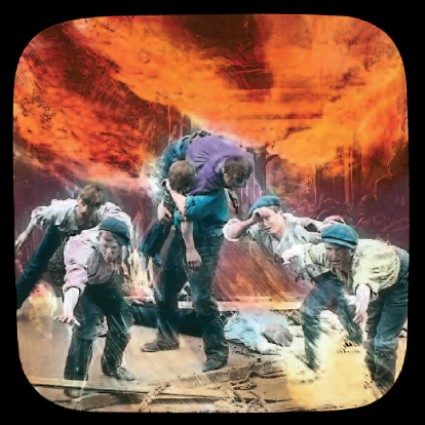
  • Magic Lantern: Don’t Go Down in the Mine, Dad (GB 1910). Producer: Bamforth, Text: Robert Donnelly, Score by Will Geddes. Live Performance: illuminago – Karin Bienek, Ludwig Vogl-Bienek, Score by Judith Herrmann (piano) – Dramatic slides illustrate a popular miners’ song: the sick son senses an impending accident and thus saves his father’s life.

Escape
Magic Lantern shows and early films about the ‘Social Question’ rarely tell of a successful escape from poverty, and the elimination of poverty is not an issue. The flood of emigrants was addressed by slide sets used by charitable organisations to prepare the migrants for an uncertain future. However, other means of escape from poverty were at hand: salvation in the afterlife or in the world of fantasy.

  • Film: The Two Roses (USA 1910). Print title: Les Deux roses, Producer: Thanhouser, Cast: Marie Eline, Frank Hall Crane, Anna Rosemond. Score by Günter A. Buchwald (piano) – Tony Prolo is a track worker, and his son is run over by a car driven by the company boss: the boy recovers and the worker’s family is given a nice new home as a gift.
  • Film: Deux petits Jésus / The Foundling (FR 1910). Producer: Pathé / S.C.A.G.L., Director: Georges Denola, Cast: Jeanne Delvair, Jeanne Grumbach, Georges Paulais. Score by Günter A. Buchwald (piano) – Abandoned by the father of her child, a young mother is confronted with ignorance when she goes begging: in desperation she seeks refuge in an abbey church, lays her baby in the nativity crib – and dies.
  • Magic Lantern: The Emigrant Ship (GB 1890). Unknown Producer. Live Performance: illuminago – Karin Bienek, Ludwig Vogl-Bienek, Score by Judith Herrmann (piano) – This magic lantern show about the departure and sinking of an emigrant ship was extremely popular due to its motion and dissolve special effects. It is accompanied with emigrant songs, slides of the blessings of the New World and a dazzling light show – the Chromatrope …
  • Film: Geheimnisvolle Streichholzdose / A Match Box Mystery (DE 1910). Deutsche Bioscop, Director: Guido Seeber. Score by Günter A. Buchwald (piano, viola & violin) – A man without legs sells matches: in a surprising animation, the matches group together to form a variety of forms, until ultimately a small windmill made of matches burns down.

This is an excellent compilation, which illuminates the visual media of the late 19th/early 20th centuries and illuminates what concerned society and how it chose to express that concern. Like the best of the magic lantern and cinematograph shows, it imparts a strong impression upon the mind, teaching us of the sorrows of an age not so far away. I hope the DVD finds its way to new audiences.
Out of the vaults

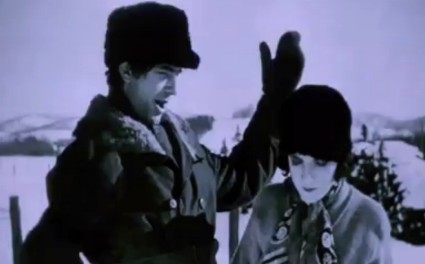
Bela Lugosi and Alma Rubens in The Rejected Woman (1924)

George Eastman House has announced an online cinematheque. As the American film archive puts it, “Since we cannot screen everything in our Dryden Theatre, we have mined our vaults for favorite hidden treasures to showcase online”. The initiative has started out with 59 films, most of them silent, with the promise of more films to come.

The initiative is highly welcome, though the presentation is a little disappointing. There is no simple listing of the titles available; instead the front page displays thumbnail images of the main titles (where these exist), with the user have to hold their mouse pointer over the image to discover the title and date. Clicking on any one image gives you the video itself, a short description, the year of release and basic technical details. There are no cast and productions credits (unless mentioned in the description), and no country of production given. The video player (Flash) works well enough, though image quality isn’t always too great at full screen. All of the films come with a rather prominent George Eastman House onscreen graphic in the bottom right-hand corner.

But enough of such cavils. It is a fascinating selection of oddities, rarities and some classics, of which these are some of the highlights the Bioscope has spotted from among the silents. Do note that all of the silent films are presented without musical accompaniment.

  • Colonel Heeza Liar on the the Jump (USA 1917)
    Animation by John Randoph Bray, one of a long-running series feature the adventurous, braggart Colonel.
  • Das Ornament des verliebten Herzens (Germany 1919)
    The first film made by German silhouette animator Lotte Reiniger, a delightful piece dance-like piece with two lovers whose title translates as “The Ornament of a Loving Heart”.
  • The Stolen Voice (USA 1915)
    Short feature film (44mins) with fascinating theatrical background details, directed by Frank H. Crane and produced by William Brady. It stars Robert Warwick as an opera singer who mysteriously loses his voice.
  • Beasts of the Jungle (USA 1913)
    Stagey drama set in India and Africa, with much use of wild animals (elephants, tigers, lions), directed by Alice Guy-Blaché from her American period, starring Vinnie Burns.
  • The Copperhead (USA 1920)
    Handsomely-presented feature film based on a Civil War-themed drama, with Lionel Barrymore repeating his great success in the 1918 stage version.
  • Huckleberry Finn (USA 1920)
    The only silent version of Mark Twain’s novel, directed by William Desmond Taylor and starring Lewis Sargent as Huck.
  • A Movie Trip through Film Land (USA 1921)
    Animation and live action film on the film production process, photographed by Joseph De Frenes, rich in facts and figures, absorbing in its display of the technical processes.
  • Thais (Italy 1917)
    Experimental work with bold visual invention by Futurist filmmaker Anton Giulio Bragaglia. As the GEH notes put it, the film displays “a sometimes dizzying and illusory world in which the characters (and the audience) may find it difficult to distinguish between fact and fiction”.
  • The Camera Cure (USA 1917)
    Keystone slapstick comedy directed by Herman C. Raymaker, starring Maude Wayne and Malcolm St. Clair.
  • Les Fromages Automobiles (France 1907)
    Also known as The Skipping Cheeses, this is an interesting example of how George Méliès lost his way in his later years as a filmmaker, as the cheeses in question are hardly visible and the human characters are too far away from the camera for the comedy to work.

Mae Murray in Kodachrome Test Shots (1922)

  • Danse Macabre (USA 1922)
    Intriguing combination of ballet, animation and ghostly superimpositions made by avant garde director Dudley Murphy, with the dancers Adolph Bolm and Ruth Page.
  • Homunculus (Germany 1916)
    Apparently a condensed, feature-length version of the original six-part series, hugely popular in Germany, directed by Otto Rippert, about a scientist who creates an artifical human being, starring Olaf Fønss as Homunculus.
  • Daughters who Pay (USA 1925)
    Feature film starring a pre-Dracula Bela Lugosi as Serge Oumansky, a Communist agent trying to organise terrorist actions against the United States government.
  • The Lost World (USA 1925)
    Cast-iron classic based on the Sir Arthur Conan Doyle novel, with pioneering animated dinosaurs created by Willis O’Brien.
  • The Flute of Krishna (USA 1926)
    Kodachrome colour film chreographed by Martha Graham and produced by Rouben Mamoulian. According to the GEH notes, “The Flute of Krishna is the only surviving record of Graham’s choreography, as dance notation had not been invented when the piece was created”.
  • The Rejected Woman (USA 1924)
    Another fascinating glimpse of the pre-vampiric Bela Lugosi, in an interesting melodrama filmed in Montreal and New York, also starring Alma Rubens and Conrad Nagel, and directed by Albert Parker.
  • The Confederate Ironclad (USA 1912)
    Kalem Civil War drama, Guy Coombs and Anna Q. Nilsson.
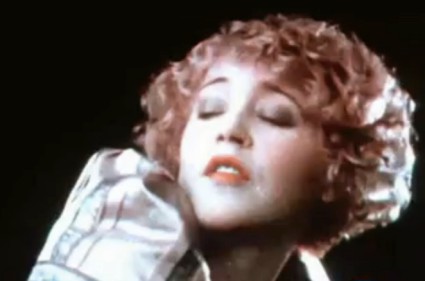
  • Kodachrome test shots (USA 1922)
    Two-colour Kodachrome film tests, featuring Hope Hampton, Mary Eaton and Mae Murray.
  • Out of the Fog (USA 1922)
    An odd comedy filmed by Harris Tuttle, one of the development team that produced 16mm film stock for Eastman. The film, which satirising the adventures of the team itself, is thought to be “the earliest surviving, formally produced 16mm motion picture”.
  • The Trail of the Lonesome Pine (USA 1916)
    Feature film version of the novel and hit play set in the Blue Ridge mountains of Virginia, directed by Cecil B. De Mille and starring Charlotte Walker and Thomas Meighan.
  • Gown of Destiny (USA 1917)
    Curious Triangle Film Corporation production about a French dress designer who creates a special gown that makes whoever wears so alluring that their husbands or suitors extend themselves in one way or another that ending up helping the French war effort.

There are more titles than this, including sound films of course (e.g the Technicolor 1937 feature Nothing Sacred and a delirious 1963 treat, Wayne D. Sourbeer’s How to Play Pinball). We’ll keep an eye out for more silent film treats. Anyway, some real treasures to explore, and many thanks to George Eastman House for having made them available to us all.

Bioscope Newsreel no. 24

Jean Dujardin and Uggy share the acting honours in The Artist

Things are still unsettled here at New Bioscope Towers, what with so much stuff still in boxes and electrical matters needing to be sorted out, but your scribe will for a while rest upon a handy packing case and record for you some of the news items from the world of silents this week (and the week before).

Best film dog
As many of you will know now, the modern day silent film The Artist did not win the Palm d’Or at Cannes, though it was a close run thing. Jean Dujardin did pick up the award for best actor, but probably a little closer to the Bioscope’s heart was the announcement of the Palm Dog – an unofficial award for the best performance by a dog in a film shown at Cannes – which went to Uggy, a Jack Russell member of the cast of The Artist. Uggy’s performance has been variously described as “stunning”, “stand out” and “the finest in the 11 year history of the Palm Dog”. Read more.

The world remembers part 1
UNESCO’s Memory of the World programme highlights important documentary heritage artefacts from around the world, and as we have reported before now, a few films have been included so far. Newly inscribed on the register is the important Desmet collection of films, company documents, posters and film stills from the 1910s, submitted by the EYE Film Institute in Amsterdam(formerly the Nederlands Filmmuseum). Also inscribed in 2011, by the Russian Federation, is Tolstoy’s Personal Library and Manuscripts, Photo and Film Collection. I wasn’t aware Tolstoy had a personal film collection – as we have noted before, he was no lover of the medium. We will have to find out more. Read more.

The world remembers part 2
But there are also national registers, and new to the UK Memory of the World register is the extraordinary Mitchell & Kenyon collection of some 800 films from the Edwardian era, mostly actualties depicting lives in English and Irish working towns. Congratulations to the BFI National Archive which cares for the collection and successfully argued for the collection’s inclusion on the UK register (along with the GPO Film Unit collection of the 1930s). Read more.

Tuff times ahead
Toronto’s annual festial of modern, one-minute long silent films is open for entries once more. Describing itself as ‘the world’s only true “underground” film festival’, films submitted and selected get to reach over 1.3 million daily commuters who ride the Toronto subway system. The event takes place 9-18 September 2011 and this year’s guest judge is Atom Egoyan. The deadline for submissions is 15 July. You can see past award winners on TUFF’s Vimeo site – and the standard is high. Read more.

The genius of Buster
A thoughtful and observant article by Jana Prikyl on Buster Keaton has been published in The New York Review of Books to coincide with the screening of twelve feature-length and twelve short films by Buster Keaton, at Film Forum, New York City, 23 May – 8 August 2011. The essay covers Kino’s recent DVD and Blu-Ray releases, the Brownlow/Gill documentary A Hard Act to Follow, Kevin W. Sweeney’s Buster Keaton: Interviews, and James L. Neibaur’s The Fall of Buster Keaton: His Films for M-G-M, Educational Pictures, and Columbia. Read more.

‘Til next time!

Performing new media

Charles Urban (centre) and camera operators Albuin Mariner (nearest left) and Joseph DeFrenes (nearest right) filming the Delhi Durbar in Kinemacolor in 1911, from http://www.charlesurban.com

Domitor, the international body dedicated to the scholarly study of early cinema, is to hold its next conference at Brighton, UK, 25-28 June 2012, arguably the the birthplace of cinema, given the great creative work undertaken there my cine-artists such as George Albert Smith and James Williamson in the late 1890s. The call for papers has just been issued:

Performing New Media, 1890-1915
Twelfth International DOMITOR Conference
Monday, 25 June to Thursday, 28 June, 2012 [Update: dates are now 18-22 June 2012]
University of Brighton, Brighton, UK

From the 1890s to the start of the First World War, a new media culture of projected images emerged. Showmen and women, entrepreneurs, educators, scientists and others employed magic lanterns and cinematographs in a variety of contexts that shaped and expressed the social, cultural and commercial significance of these new media. Given that these silent screen technologies almost always demanded accompaniment (words, music, sound effects) and that the combined use of lantern slides and short films implied varied and sometimes complex programmes, these events were effectively always performances. Projectionists, exhibitors, onstage talent, musical accompanists, backstage crews – all contributed to performances that could include live music, song, lectures, narration or sound effects in union with projected images. The growth of this new media also precipitated the rise of the new film industry and gave birth to the concept of ‘the cinema’. Around the world purpose-built cinemas opened in the 1900s, creating new and distinctive venues. However this screen practice was not yet ‘pure’ (i.e. film only) as these early venues were also active sites for the exhibition of films within multi-media performances. Exploring the nature and uses of these hybrid and multifaceted new media performances at this pivotal historical moment (‘the invention of cinema’) and analysing their social, cultural, economic and ideological meanings provides this conference with its subject and purpose. By engaging these concerns in Brighton three and a half decades after the famous 1978 FIAF conference, we wish to address and expand the historiography of early cinema in light of recent explorations of the intermedial and performative nature of contemporary new media.

We invite papers that explore such areas as:

  • old and new histories and theories of media / screen practice 1890-1915 – challenging the established historiography through the study of screen history / theory in the context of its ‘performance’
  • new media performance practices – origins and histories: the role of showmen and their creation of programmes; the combination of the lantern and the cinematograph within performance; the use of lecturers, narration, music, song and sound; the rise of the new media travelling show and the use of networks / circuits of venues; the history and dissemination of performance techniques
  • the role of gender, race and class in shaping these practices
  • the social, cultural, commercial and ideological natures of these programmes
  • performance and professionalization
  • the industrialisation of the lantern from the 1880s and its impact on performance (e.g. the rise of manufacturers devoted to lantern projectors and slides, the standardisation of slide formats, the production of catalogues and the introduction of distribution systems)
  • the particular relationship between the magic lantern and the cinematograph
  • the use of recorded sound as a performance component
  • new media performances in the context of both national and trans-national practices
  • educational, religious, or scientific new media performances
  • the ‘news’ on stage and on screen: employing the lantern and the cinematograph within performances that addressed such events as Queen Victoria’s Diamond Jubilee, the Spanish-American War and the Delhi Durbars
  • ‘textual variability’: from page to performance through new media presentations (e.g. Dickens or the New Testament)
  • the venues for this history and their new media programmes, cultures and audiences (this includes the first purpose-built cinemas); architecture and performance
  • new media programmes and the city 1890-1915: tourism, culture, entertainment and economic development (e.g. Brighton and late Victorian seaside resorts)
  • new media and its intermedial and intertextual relationships with other performance practices (e.g. the circus, the music hall / vaudeville, pantomime, theatre and the travelling show)
  • the relationship between performance theory and new media performance, 1890-1915
  • researching new media and its performance: the archival challenges and opportunities
  • the (sometimes historiographically and theoretically fraught) relationships among new media of the 19th, 20th and 21st centuries

Although we imagine the general time frame for the period covered by papers in the conference to be 1890 through 1915, we realise that cinema developed unevenly across the global stage. For that reason, papers treating cinema after 1915 in countries where early cinema practices postdate the proposed time frame will be given full consideration. Similarly, papers that examine the history and current status of early cinema’s place in the archive and museum—specifically related to the concept of “new media performance”—are also welcomed.

Proposal Submission Process: Those wishing to submit a proposal should do so no later than 31 October 2011 to: domitor2012@gmail.com

Proposals for pre-constituted panels of 3 or 4 participants will also be considered; such proposals should be submitted by the panel chair and consist of the collected individual paper proposals in addition to a brief rationale for the pre-constituted panel.

Proposals for individual papers should be no longer than 300 words and be written in either English or French. Only a paper written in one of those two languages can be presented at the conference. Papers prepared for conference delivery should stay within a word limit of 2500 words and be able to fit within a 20-minute presentation format (including any audiovisual material used to supplement the paper). We request that all papers be submitted by 30 April 2012 to allow for simultaneous translation.

While membership in DOMITOR is not required to submit a proposal, anyone presenting a paper at the conference must be a member. To become a member, please visit this site: http://www.domitor.org/en/About/member.html

It’s good to have the Domitor conference come to the UK at long last (its first conference was in Québec in 1990), and to a city so rich in cinema and performance history generally as Brighton. Hopefully the broad topic will encourage a wide variety of papers – and lots of new faces, please (as well as the much-loved old ones, of course).

For more information on Domitor, visit their bi-lingual (Franch-English) website (which I believe is about to undergo a major re-design quite soon).

No laughing matter

http://www.slapsticon.org

Sad news to relate, but the 2011 Slapsticon festival of rarely seen comedies from the silent and early sound eras has been cancelled. The organisers have provided this note of apologies and explanation:

It is with profound regret that we are announcing the cancellation of Slapsticon 2011 and Slapsticon’s severing of relations with the Artisphere, the new group that replaced the old Arlington County Cultural Affairs this year that had presented the Slapsticon at the Rosslyn Spectrum Theater since 2003.

Unfortunately, disagreements over last-minute contract negotiations forced no further option, and we apologize to all for this inconvenience. We assure you this decision was not made lightly or arbitrarily. Those who have sent in registrations will have their checks returned or payments refunded and if you have questions about registration refunds you can send an email to mgaffen [at] arlingtonva.us or call Maggie Gaffen at 703-228-1841.

We are currently examining other options and offers to move this event, and we’ll let you all know these plans when we’ve made decisions regarding this. We want to thank the fine folk at Arlington County Cultural Affairs for their support of Slapsticon over the last eight years. It is now time to move on.

Let’s hope pastures new are found soon.

Crumbling pile

Apologies for the silence from your silent film service, but we have been moving. Yes, though I say it with a heavy heart, the time came to depart Bioscope Towers for a sturdier, more commodious edifice. The crumbling pile that is the Towers has served us well, but well no longer. So we have piled all the reference works, papers and other paraphernalia of the Bioscope scriptorium into a pantechnicon and journeyed but a few yards across the road to … New Bioscope Towers. From whose imposing, ivy-clad walls we hope to have things up and running for you very soon.

Since Mother goes to the movie shows

Since Mother goes to the movie shows (Victor 1916), performed by the Peerless Quartet, from the Library of Congress’ National Jukebox

The National Jukebox has recently been unveiled by the Library of Congress. It is a collection of thousands of historical sound recordings that are being made available online to the public free of charge. The collection includes 10,000 78rpm disc sides issued by the Victor Talking Machine Company between 1900 and 1925, and many more titles are promised in the months ahead.

The National Jukebox comes with all sorts of background materials and links on historical sound recordings, playlists, and special features on artist and genres. The Bioscope took up the Library of Congress’ invotiation to users to create playlists, and has produced one on motion pictures. There are recordings about going to see films, songs written to promote films, songs from stage shows that exploited the popularity of films (such as Queen of the Movies and The Girl in the Film), and songs and tunes about film stars. Though the number available isn’t huge, it is nevertheless useful evidence of the popularity and pervasiveness of motion pictures. Popular song communicated popular understanding. Listen, for example, to the Peerless Quartet complaining in 1916 in ‘Since Mother Goes to the Movie Shows’ on how homelife has changed since Mother picked up the moviegoing habit, or see the lyrics to ‘McGinty at the Living Pictures’ from 1902 which tells us how excited some could be at what they saw on the screen [Note: See comments – this song refers to tableaux vivants, not motion pictures]:

Dan McGinty went into the opera show
With his old wife Mary Ann,
And he took a front seat, near the middle aisle.
Amongst the bald-headed clan;
But he wasn’t prepared for the sights he saw.
And he laughed with might and main
When the living pictures came to view.
Why he nearly went insane.

When he saw the Sleeping Beauty, why he got such a shock
You could hear his heart a-ticking like an eight-day clock.
Then he danced and he pranced, and says he, “I’ve been to France, But that’s the finest sight I ever saw”;
Then his eyes bulged out, he began for to shout;
The gallery boys they hollered, “Put that Zulu out”.
Then his wife grabbed his feet, pulled him under the seat.
So he couldn’t gaze upon the living pictures.

The Library of Congress supplies embed code to let you place the player for any individual track on your website, but unfortunately these don’t work with pernickety WordPress. So here are the recordings Bioscope has found, with recording details (title, duration, artist, label and number, take, and date) and link to the recording. Or just follow this link to the playlist on National Jukebox itself.

  • And he’d say Oo-la-la! Wee-wee (03:07)
    Pietro [i.e., Pietro Deiro], performing
    Victor 18625
    Matrix/Take: B-23415 / 2
    1919-10-16
    Note: Instrumental medley, including Take Your Girlie to the Movies
  • Ching-a-ling’s jazz bazaar (04:04)
    Joseph C. Smith’s Orchestra, performing
    Victor 35695
    Matrix/Take: C-23859 / 4
    1920-03-19
    Note: Medley includes At the Moving Picture Ball
  • Come out of the kitchen, Mary Ann (02:43)
    M. J. O’Connell, performing
    Victor 18221
    Matrix/Take: B-18789 / 6
    1917-01-02
  • Gems from Queen of the movies (04:11)
    Victor Light Opera Company, performing
    Victor 35365
    Matrix/Take: C-14410 / 2
    1914-02-04
    Note: Songs from the 1914 show Queen of the Movies: Girls run along; Forgive and forget; In the night (When the moon slyly winks); Who is to know?; Oh Cecilia; In the night
  • Gems from The girl on the film (03:41)
    Victor Light Opera Company, performing
    Victor 35363
    Matrix/Take: C-14271 / 3
    1914-01-06
    Note: Songs from the operetta The Girl on the Film: We’re all going to the mill; Won’t you come and waltz with me?; Oh, oh, oh; Steady Freddy; Do be quiet; Won’t you come and waltz with me?
  • The girl on the film (04:02)
    Victor Military Band, performing
    Victor 35361
    Matrix/Take: C-14253 / 1
    1913-12-30
    Note: Tunes from the operetta The Girl on the Film: Hesitation waltz; Won’t you come and waltz with me; Steady Freddy; Typewriting girls
  • Hollywood (02:52)
    Joe Raymond Orchestra, performing
    Joe Raymond, performing
    Victor 19211
    Matrix/Take: B-28986 / 4
    1923-11-27
  • In the night (when the moon slyly winks) (02:52)
    Lyric Quartet, performing
    Victor 17546
    Matrix/Take: B-14406 / 2
    1914-01-30
    Note: song from Queen of the Movies
  • McGinty at the living pictures (02:31)
    Edward M. Favor, performing
    Victor 740
    Matrix/Take: [Pre-matrix B-]740 / 1
    1902-04-09
  • Mickey (03:14)
    Joseph C. Smith’s Trio, performing
    Victor 18532
    Matrix/Take: B-22365 / 3
    1919-01-28
    Note: Song written to accompany the 1919 Mabel Normand picture Mickey
  • Oh! Cecilia (02:46)
    Lyric Quartet, performing
    Victor 17546
    Matrix/Take: B-14405 / 2
    1914-01-30
    Note: song from the 1914 show Queen of the Movies
  • Poor Pauline (02:28)
    Billy Murray, performing
    Victor 17655
    Matrix/Take: B-15140 / 6
    1914-10-20
    Note: Song about Pauline White
  • Queen of the movies (03:50)
    Victor Military Band, performing
    Victor 35366
    Matrix/Take: C-14298 / 1
    1914-01-09
    Note: Three tunes from the 1914 show Queen of the Movies: In the night (When the moon slyly winks); Oh Cecilia; Girls run along
  • Since Mother goes to the movie shows (03:15)
    Peerless Quartet, performing
    Victor 17959
    Matrix/Take: B-17022 / 1
    1916-01-18
  • Smilin’ through (02:15)
    Reinald Werrenrath, performing
    Victor 45166
    Matrix/Take: B-22688 / 3
    1919-04-15
    Note: Song written to accompany the 1920 Norma Talmadge film
  • Take your girlie to the movies (02:43)
    Billy Murray, performing
    Victor 18592
    Matrix/Take: B-23020 / 2
    1919-06-19
  • That’s a real moving picture from life (03:01)
    Billy Watkins, performing
    Victor 17586
    Matrix/Take: B-14635 / 2
    1914-03-26
  • Those Charlie Chaplin feet (04:01)
    Victor Military Band, performing
    Victor 35469
    Matrix/Take: C-16047 / 2
    1915-05-25
  • Zudora (03:15)
    Harry Macdonough, performing
    Victor 17734
    Matrix/Take: B-15650 / 2
    1915-02-02
    Note: “created for Thanhouser’s greatest photoplay”

If there are other on the National Jukebox that I’ve missed, please let me know. Many of these recordings can be found scattered in many places across the Web, but it is very handy to find them in the once place, and so usefully categorised.

The Bioscope also recommends IN Harmony: Sheet Music from Indiana, previously the Indiana University Sheet Music Collection, which has sheet music for several of the songs and tunes about motion pictures featured on the National Jukebox.

Lowell and Lawrence

http://www.cliohistory.org/thomas-lawrence

You may recall that last year I was involved with Neil Brand in a recreation of Lowell Thomas’ celebrated multimedia show, With Allenby in Palestine and Lawrence in Arabia, which in 1919-20 did so much to create the romantic idea of Lawrence of Arabia. On the Bioscope the research led to a detailed post on T.E. Lawrence and his life in film.

The show had one barebones presentation at the British Silent Film Festival before it was decided not to take the project any further. But there are those with other ideas, and one of them is Rick Moulton, an American documentary filmmaker with a particular interest in the work of Lowell Thomas and his media presentations. Moulton and Clio History have now produced a website, Lowell Thomas and Lawrence of Arabia: Making a Legend, Creating History.

It’s a handsomely produced site which tells the romantic tales both of T.E. Lawrence and of Lowell Thomas himself, the American journalist who went out to the Middle East in search of a heroic figure to sell the idea of the war to an American audience, and who succeeded in his quest beyond his wildest dreams. Billed as an exhibition, the site covers Thomas as journalist, T.E. Lawrence as a legend on the making, the attack on Akaba, Lawrence at the Paris Peace conference in 1919, the success of the 1919-20 show, Lawrence at the Cairo conference (where the Middle East was carved up and parceled out), the 1962 David Lean film, and the legacies of both Lawrence and Thomas. The site has just the one video clip and some audio, but it is rich in images and supporting documents, and each section of the site has several sub-pages – there is plenty to explore in what is a site created in the spirit of Lowell Thomas himself.

Lowell Thomas ready to film the pyramids from the air (a hand-coloured photograph from the time)

Lowell Thomas (1892-1981) was an American journalist who gained nationwide fame as a Movietone newsreel commentator, as co-founder of Cinerama, and as a radio and television broadcaster. He started out as a print journalist and adventurer, and it was a mixture of personal experience and drive that in 1917 got Thomas a commission to seek out material that would demonstrate to the American people why it was important to support the First World War. He found little of what he felt to be suitable material on the Western Front, so with British official support he went to the Middle East, where Jerusalem was expected to fall to British troops under General Edmund Allenby.

It was when he was in Jersualem (which fell to Allenby in December 1917) that Thomas came across the extraordinary figure of Colonel T.E. Lawrence, a British officer who was helping encourage an Arab revolt by all manner of unconventional means, including the wearing of Arab clothing. Thomas and his camera operator Harry Chase followed Lawrence for just a couple of days, taking both photographs and motion pictures. By this time, the purpose of Thomas’ expedition was really redundant, since there was no need to sell the idea of the war to American audiences any more, but once the war was over he organised his material into a form in which he could sell it as public entertainment.

Lowell Thomas (to the left of the screen) presenting With Allenby in Palestine and Lawrence in Arabia to a London audience

Thomas originally presented an amalgam of all his war material in New York in March 1919, where he found audiences responded most strongly to the Middle Eastern material. He moved to Britain with a show that was originally called With Allenby in Plaestine, including the Capture of Jerusalem and the Liberation of Holy Arabia. It was a truly multimedia show which Thomas billed as a ‘travelogue’ and presented himself (with Chase as projectionist). It combined live narration with music, lighting, lantern slides and film in a highly complex but slick presentation. Allenby was the great military hero, but it was the story of the incomparably romantic T.E. Lawrence, or Lawrence of Arabia as Thomas dubbed him, that captured the public imagination. Lawrence and Chase had spent little time with Lawrence himself, and had little substantial material to show (just a couple of film sequences taken by Chase showed Lawrence), but it was how Thomas told the tale that made the legend.

The show premiered at the Royal Opera House in August 1919. Retitled With Allenby in Palestine and Lawrence in Arabia, it became a huge hit, tapping into an audience thirst for heroism away from the carnage of the Western front. The Lawrence tale seemed like a clean triumph replete with the values of another, more romantic age. Another major factor in the show’s appeal was how Thomas and Chase brought together word, image and music in a highly polished style we would now probably call televisual. A million people saw it during its London run; four million around the world. It made Lawrence’s name, for good or ill, establishing a legend that he then tried to hide away from for the rest of his life. Thomas followed up the show with his 1924 book Lawrence of Arabia. He produced other travelogues based on further overseas adventures, and looked for other such modern-day heroes to match the success he had found with Lawrence (for example, the adventurer, aviator and polar filmmaker Hubert Wilkins) but never again did Thomas find so perfect a subject. The 1962 feature film Lawrence of Arabia (still in thrall to romance created by Thomas, by way of Lawence’s own self-dramatisation) includes the Lowell Thomas-like figure Jackson Bentley, played by Arthur Kennedy.

Promotional video for the Lowell Thomas and Lawrence of Arabia: Making a Legend, Creating History site

It was an interesting experience trying to recreate the Lawrence part of the show at the British Silent Film Festival last year. Admittedly we only had a narrator, and actor, a PowerPoint slide show and video clips, whereas Thomas’ original show played in an opera house and featured an orchestra and a prologue with oriental dancers writhing before a backdrop of the pyramids. I felt that, though the show worked reasonably well as an entertainment, the script belonged to another age and was historically misleading. Others, however, still hold to the dream of remaking the show in all of its multimedia glory, and Rick Moulton is one of them. The Lowell Thomas and Lawrence of Arabia: Making a Legend, Creating History exhibition site is but a stepping stone to a document on Thomas and Lawrence and hopefully one day that recreation of at least the Lawrence part of the show (Allenby’s star doesn’t shine quite so brightly these days). We have the films, we have the images, we have the script, the music shouldn’t be a problem. But recreating the special presence of Lowell Thomas and still more an audience war-weary yet anxious for unsullied heroes may be that much harder to achieve.

There is a detailed account of the reception of Lowell Thomas’ travelogue in London on T.E. Lawrence biographer Jeremy Wilson’s site.

Bioscope Newsreel no. 23

Trailer for The Artist

Well, these are busy times, aren’t they? Much interest has been aroused by the news of the colour version of A Trip to the Moon and the release online of Film Daily 1922-1929 (from which the Bioscope has learned that there is nothing quite like having the words ‘film’ and ‘daily’ in a blog post title for attracting spam). But what else has been happening in the silent film world?

Weinstein picks The Artist
There’s been a lot of interest suddenly in the modern-day silent film The Artist, directed by Michel Hazanavicius, which as we reported last week was a late entry into competition at Cannes. Clearly some think quite highly of this A Star is Born-like tale of one star on the rise and another on the wane at the time of the crossover from silent to sound films. Now we learn that the sharp-eyed Harvey Weinstein has bought the film and clearly sees an unusual hit in the making. It certainly looks quite something from the trailer and the stills. So will we be seeing a silent film in contention come Oscar time? Read more.

FOCAL restoration awards
Silent film restorations scored twice at this week’s FOCAL International Awards. The awards, which celebrate the best work in the commercial footage business (chiefly in the UK), include awards for archive restorations which have grown in prominence particularly since Martin Scorsese won last year for the restoration of The Red Shoes. This year’s award for best single title went to the BFI’s exceptional work on The Great White Silence (1924), documenting the Scott Antarctic expedition, which beat strong silent competition from the new version of Metropolis. The award for best restoration project went to Lobster Films’ revelatory The Chaplin Keystone Project (a four-disc DVD set), which the French firm undertook with the BFI and Cineteca di Bologna. Read more.

The Great White Silence hits the road
Recently garlanded with a FOCAL restoration award, as noted above, The Great White Silence is being released across the UK by the BFI from next Friday. Featuring a new score (which might possibly divide opinion) from new score by Simon Fisher Turner, the film of the British Antarctic Expedition (1910-1913), filmed by Herbert Ponting, will be on release up to mid-July, while DVD and Blu-Ray will be released in June. Following on from the success of the re-release of Metropolis, this seems evidence of growing public a public taste for silents, which we hope we hope will be encouraged further. Read more.

Ammunition smuggling on the Mexican border
There hasn’t been much of chance before now to draw your attention to Cine Silente Mexicano, a fine blog which happens to be in Spanish. But for its most recent post it has turned to English to tell the genuinely fascinating story of Ammunition Smuggling on the Mexican Border (1914), a three-reel docudrama (now lost, alas) which recreated a clash between Sherrif Buck (who played himself) and gun smuggling revolutionaries. The post was written by Scott Simmon, via the The 7th Orphan Film Symposium. Read more.

Chaplin’s car
Fancy driving away with a piece of film history? You’ve got until May 15th to put in a bid on eBay for Charlie Chaplin’s 1929 Pierce Arrow dual-cowl phaeton convertible, Model 143. The current bid is for $88,100.00, but the reserve has not been met yet. Now’s your chance. Read more.

‘Til next time!

Film Daily

Color advertising section from Film Daily 8 July 1923 for Fox Film Corporation productions for the 1923/24 season

Oh you lucky people.

You will recall that about a year ago film archivist and historian David pierce announced the Media History Digital Library, a bold and imaginative project to digitise an extensive number of American film trade journals and make them freely available via the Internet Archive. The initial release compirsed four years of Photoplay (1925-1930) and one volume each of Motion Picture Classic (1920) and Moving Picture World (April-June 1913), as reported by the Bioscope at the time.

Now a second release has been announced, covering The Film Daily 1922-1929. The press release (which I’ve paraphrased slightly) says it all, including plenty of links encouraging you to sample the collection.


Yet more American film history for the 1920s is now available online with the publication of 2,400 issues of The Film Daily, a leading motion picture trade magazine from the classic era of Hollywood. Published in New York, these issues of The Film Daily from 1922 to 1929 document one of the most prosperous periods of the Hollywood star system, culminating in the rapid changes brought on by the change to sound film production.

The Film Daily joins other magazines scanned by the Media History Digital Library, including seventy-two issues of Photoplay from 1925 to 1930, Motion Picture Classic (1920), and numerous issues of Moving Picture World (1913), Exhibitors Daily Review (1926 and 1928), and also from 1928, a small number of issues of Daily Screen World, Sound Waves and The Distributor, the MGM house publication from 1928. The Film Daily volumes and other magazines digitised by the Media History Digital Library can be searched, read online and downloaded through the Internet Archive at www.archive.org/details/mediahistory.

The 22,000 pages of this release from The Film Daily include numerous reviews of features and shorts, news reports from throughout the industry, occasional feature items, and hundreds of full-page advertisements. There are full-page ads for feature films and short subjects, color ads for special releases (such as the films of Marion Davies and Harold Lloyd), and special color sections announcing studios’ upcoming releases for the next year (including many films that were never produced). Published six days a week, The Film Daily did not always cover topics in depth, but it is an invaluable resource for following the day-to-day progress of the industry or films in production. Among the treasures from this period are special issues devoted to the 20th anniversary of Carl Laemmle in the film business (28 February 1926), the opening of the Roxy Theater in New York (13 March 1927), Sound Pictures (22 July 1928) and Fox Film Corp. and the opening of Movietone City (18 June 1929).

A highlight of the magazine is its strong emphasis on short subjects. While most of the other trade magazines treated shorts as space allowed, shorts received regular reviews in The Film Daily, including for many years, a quarterly review of short subject production and releases.

Highlights from the collection include:

Special short subject issues
17 February 192411 May 192414 September 192415 March 192521 June 192520 September 19256 December 192530 May 19265 December 192627 March 19275 June 19274 September 19274 December 19274 March 19283 June 192831 March 19291 September 1929

Directors annual supplement
11 June 192222 June 19245 June 1925

Newsreels
7 August 1927

Color advertising sections
Fox Film Corp. 1923/24 season (8 July 1923)
Selznick Distributing 1924/25 season (6 July 1924) – with drawings by illustrator Al Hirschfeld
Fox Film Corp. 1928/29 season (24 May 1928)
United Artists Talking Pictures (28 February 1929)
Fox Talking Features (18 June 1929)
Educational Pictures (20 June 1929)
Radio Pictures (15 July 1929)

This is the second release of material by the Media History Digital Library, an initiative led by David Pierce to digitise collections of classic media periodicals in the US public domain for full public access. The project is supported by owners of materials who have loaned original materials for scanning, and donors who have contribute funds to cover the cost of scanning. A brochure describing the project can be found at the Media History website www.mediahistoryproject.org.

The Film Daily has been scanned from volumes in the collection of Karl Thiede, funded by an anonymous donation in memory of Carolyn Hauer. Scanning has been coordinated by Eric Hoyt, a Ph.D. candidate in the Critical Studies Division of the University of Southern California’s School of Cinematic Arts. The Media History Digital Library thanks Rick Prelinger and Casey Riffel for their assistance with this group of materials. The initial release of materials was scanned from the collections of the Pacific Film Archive Library and Film Study Center.

Contact – David Pierce – prizma2 [at] gmail.com

Part of an advertisement for Paramount News, from the 7 August 1927 issue of The Film Daily

If I can add to that – all of the journals are word-searchable, and can be browsed, searched and analysed through the Internet Archive’s excellent Read Online display tool which enables easy flicking from page to page, or the display of every page in thumbnail view, and to have every occurence of a search term listed as a link taking you to where it occurs on the page.

All of the journals digitised by the Media History Digital Library are listed in the Bioscope Library’s listing of silent era film journals available online. I try to keep this comprehensive and up-to-date, so please do let me know of any new resources or omissions. Meanwhile, warm thanks to David Pierce for his great initative in organising the funding and then the digitisation of such a fabulously rich collection. Now it behoves all of us to go and prove the value of this work by downloading and using all that we can. Go explore.