How to Run a Picture Theatre – part 8

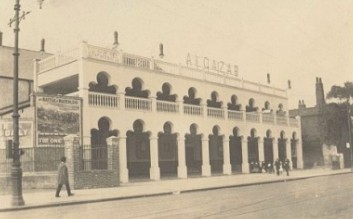
Alacazar, Edmonton

We come to the eighth and last instalment of the series of extracts taken from the c.1912 guide How to Run a Picture Theatre. We have covered selecting and fitting out the building, taking on staff, and putting together an effective programme. The last thing to consider is the licence.

In January 1910 the Cinematograph Act was introduced, the first piece of government legislation directed at the new film and cinema industry. Previously, cinema had had to be licensed under schemes designed for music or theatre performance, though the majority of them chose to avoid such bureaucratic necessities (there are even some examples of cinemas that put on purely silent shows, to avoid the demands for a music licence). The unregulated nature of the industry, and in particular the threat that such venues posed as a risk risk, led to the drafting of the Cinematograph Act. Despite its ‘compulsory’ nature, there were many cinemas which chose to ignore the new scheme and pay the fines, as Jon Burrows’ recent research into cinemas in London pre-1914 has shown. But the coming of the Cinematograph Act ultimately encouraged the huge boom in cinema construction that swiftly followed its publication. There were 4,000 cinemas in Britain and Ireland by the end of 1914.

Obtaining a License. The Cinematograph Act 1909. Under the Cinematograph Act, 1909, it is compulsory that every place to which the public is admitted, where exhibition in which inflammable films are used, shall be licensed …

It is not, however, necessary to obtain a license for premises used not more than six days in a year for a kinematograph exhibition provided that notice of such shows are given to the County Council or the Chief Police Officer, but these occasional exhibitions must confirm to the regulations …

The penalty for using an unlicensed building for an entertainment which comes within the meaning of the Cinematograph Act is a fine not exceeding £20, with a penalty of £5 per day as long as the offence continues, and power is given to the authority to revoke the license.

Music and Dancing License. Every kinematograph theatre in which music is employed – except such music be provided by automatic means – must possess a music and dancing licence.

In the case of premises situated in the Administrative County of London these are granted in November of each year …

All eight parts of How to Run a Picture Theatre can be accessed here.

(The photograph shows the Alcazar in Edmonton, one of the new breed of super-cinemas, which seated 2,000. It opened in 1913, and the poster outside advertises the British & Colonial epic The Battle of Waterloo, released in that year.)

Education, education, education

Some new additions to The Bioscope Library. A prominent theme in the silent era was the use of films in education. It was driven by a mixture of idealism and commerce, but mostly by the evident appeal that motion pictures had for children – a challenge to authorities in every sense. An enthusiastic period in the 1910s, when many advocated the motion picture as an essenial tool for educating the young was followed by a period of experiment and analysis in the 1920s, determining the pedagogic value and the pitfalls. Many specialist producers in educational film then sprang up, exploiting the new 16mm film format for non-theatrical exhibition, riding on the bandwagon of what was labelled Visual Education.

Ernest Dench’s Motion Picture Education (1917) is a rambling but enthusiastic guide, which considers the potential for film to teach history, arithmetic, natural history, domestic science, even handwriting. There is some grasp of the theoretical side, and warnings that film is no substitute for text. Dench reveals how the great passion for films among young audiences was taxing authorities, which sought to master a medium they did not fully understand. It’s available from the Internet Archive in DjVu (5.3MB), PDF (43MB) and TXT (351KB) formats.

Don Carlos Ellis and Laura Thornborough’s Motion Pictures in Education: A Practical Handbook for Users of Visual Aids (1923) is one of the standard guides of the period. It is designed as the essential handbook for the teacher needing to the how and why of using film in the classroom. In good common-sense fashion it covers the history of educational film, the objections raised against its use, the advantages of using the medium, the kinds of films available, the practicalities of exhibiting them, and examples of their successful use. It’s available from the Internet Archive in DjVu (7.2MB), PDF (34MB) and TXT (515KB) formats.

Also in an instructional vein are two further books added to the Library. The year before his book on education, Ernest Dench wrote Advertising by Motion Pictures (1916), a fascinating, if discursive guide to the potential of the motion picture for purposes of advertising. Dench covers the selling of railroads, food products, agricultural machinery, shoes, real estate, newspapers and dry goods through motion pictures. He covers different approaches for different kinds of audience (working classes, farmers), and different media, with particular attention given to the use of advertising slides. Some of it is aimless speculation, like the chapter on naming soda fountain concoctions after movies, but its enthusiasm is appealing and it paints a useful picture of they ways in which the cinema industry engaged with the American audience in the early years of cinema. It’s available from the Internet Archive in DjVu (5.2MB), PDF (23MB) and TXT (207KB) formats.

Lastly, there’s Hugh C. McClung, Camera Knowledge for The Photoplaywright (1920). This pamphlet offers a simple guide to the technology and practice of cinematograph for the would-be writer of screenplays. McClung was a cinematographer himself, with Gaston Méliès, Willian Fox, Triangle, Douglas Fairbanks and Famous Players-Lasky. The chief intent of the booklet is to make writers “think in pictures,” and in between the general pleas for appreciation of the hard work that went behind the making of pictures, there are some interesting anecdotes which bring to life the practicalities of the business. Available from the Internet Archive in DjVu (604KB), PDF (2.2MB) and TXT (37KB) formats.

A Girl Cinematographer at the Balkan War

Jessica Borthwick

Jessica Borthwick, from The Bioscope

Having promised more on early war films, in recognition of Stephen Bottomore’s recent work, and the posts on British women filmmakers and the collection of women’s writings on cinema, Red Velvet Seat, I’m going to combine these interests by writing something on Jessica Borthwick, cinematographer of the Balkan War of 1913. Red Velvet Seat, in its otherwise excellent author biographies, says of Borthwick “no information found”. Well, I think we can do a little better than that.

Jessica Borthwick was twenty-two years old when she set out to film and photograph the second Balkan War (essentially the Bulgarians were fighting the Turks, Serbians and Greeks) in 1913. She filmed there for a year, not on behalf of any film company, but purely for her own interest, with the aim of exhibiting films and photographs on a lecture tour around Britain on her return.

Good connections enabled her to take this unusual step. She was the daughter of General George Colville Borthwick (1840-1896), who had been commander-in-chief of the army in Eastern Roumelia (part of Bulgaria after 1885). His brother was Sir Algernon Borthwick (1830-1908), 1st Baron Glenesk, a prominent figure in Victorian society as owner of The Morning Post, a position that by 1913 was occupied by his widow, Alice. The Hon. Miss Borthwick therefore found many doors open to her, particularly in Bulgaria, but that does not explain the remarkable determination and enterprise shown in an interview she gave for The Bioscope, published as ‘A Girl Cinematographer at the Balkan War,’ 7 May 1914. Here’s an extract:

… I took out with me to the Balkans one small plate camera and one cinematograph camera, which was made for me by Mr. Arthur Newman, who taught me in three days how to use it. This cinematograph camera of Mr. Newman’s lasted me the whole twelve months, in spite of the fact that it underwent terribly hard usage and received no repairs whatever except for my amateurish effort to mend it with bits of wire …

The difficulties of taking cinematograph pictures on the battlefield, especially when you are alone and unaided by any assistant, are, as you can imagine, tremendous. The use of a tripod is a particular embarrassment. Things happen so quickly in time of war that, unless one can be ready with one’s camera at a few seconds’ notice, the episode one wishes to record will probably be over. During the Servian [sic] war in Macedonia, my tripod was smashed by a shell, and although the camera was intact, the film which I was taking at the time got hopelessly jumbled up and had to be cut away from the mechanism with which it had become entwined.

Another great difficulty was the want of a dark room. One day, while taking films in the Rhodope Mountains, I came to a strange village of wooden huts inhabited by a nomadic race called Vlaques. Something went wrong with my camera, and I tried to make the people understand that I wanted some place which would serve as a dark room. It was impossible to get them to grasp what I meant, however, until eventually I found a man making rugs out of sheep’s wool. After much persuasion, I induced him to cover me up with his rugs, and in this unusual and very stuffy ‘dark room’ I managed to open my camera in safety. Having no film box with me at the moment, I wrapped the negative up in pieces of paper and stowed it away in my pocket, carrying it thus for fifteen days until I returned to Sofia. Occupied with other matters, I forgot the film and handed my coat to a servant who, being of an inquisitive nature, unwrapped the negative, and finding it uninteresting, put it back in the pocket without the paper, afterwards hanging up the coat to air in the sun. Subsequently I developed the film – and found it one of the best I had.

The want of a technical dictionary, combined with the natives’ ignorance of photography, brought about several rather amusing situations. On one occasion, in Adrianople, I lost a screw from my tripod. There were shops of most other kinds, but no ironmongers, and at last, in despair, I tried to explain to an officer what I wanted in dumb show, not knowing the word for ‘screw.’ Having followed my actions for some moments with apparent intelligence, he suddenly hailed a cab and bundled me hastily in. We drove right across the city, until eventually we entered some massive gates and drew up – inside the prison! However, I turned the misconception to advantage by securing some excellent snapshots and having some very interesting talks with the prisoners. One convict – a German of considerable education – invited me to go and see him hanged the next morning. I saw two executions in that prison.

During the cholera rage in Adrianople, everything connected with that terrible disease was painted black. The carts in which the dead bodies were carried away were black, for example, as were the coffins in which cholera victims were buried. While the scourge was at its height, I went down into the gipsy quarter to take a film. The people in this part of the city had never seen a camera before, and when they saw me pointing my black box at various objects they thought I was operating some wonderful new instrument for combating the disease which was destroying them. Quickly surrounding me, they came and knelt upon the ground, kissing my feet and clothing, and begging with dreadful pathos that I should cure them. It was a task as sad as it was difficult to explain that their hopes were mistaken, and that I was impotent to help them …

What are my present and future plans? Well, in a few days time I hope to start a month’s engagement at the Polytechnic to lecture twice daily on the war … With regard to the future, I shall leave England in June next for the Arctic regions, where I want to start a colony for the cure of consumption and other diseases. This is the dream of my life. The great open spaces of the North are God’s sanatorium, and I believe that, when once their possibilities are known, their value will be recognised. I have been in the Arctic regions before. Yes, I shall take two or three cameras with me, induding Mr. Newman’s wonderful new hand cinematograph camera. When shall I return? That I cannot say. Perhaps at the end of a year – perhaps never.

Her lecture ambitions appear to have been thwarted. A court case followed in which she accused her projectionist of incompetence and having ruined her lecture engagements. Nor did she return to the Arctic. The First World War intervened, and she is next heard of as an ambulance worker on the Western Front, where she was wounded by shell and decorated by the Belgians.

Then what happened to her? She appears not to have married, but to have been a society figure, mentioned from time to time as having attended august gatherings of London society, into the 1940s. In 1946 she is recorded as having given a talk to the Sailors’ and Airmen’s Families Association, on the problems of life. She may be the same Jessica Borthwick who is occasionally referred to as a sculptress. We have no record of her death. Her films, alas, are not known to survive. Because they were never commercially released, there does not even seem to be a review of them, or any stills. Nor does it seem that her photographs exist. Perhaps this post will have brought together sufficient information for someone else to go in pursuit of her and discover more. It would be a worthwhile investigation.

By the way, the interview with her from The Bioscope is reproduced in full in Red Velvet Seat, while a lengthy abstract is given in Kevin Brownlow’s The War The West and the Wilderness.
Amnesia

Channel 4 has had another of its engrossing list programmes; this one was Fifty Films to See Before You Die. And, guess what, there wasn’t a silent film in it. In fact there were only six black-and-white films in it (A Night at the Opera, This Sporting Life, Touch of Evil, A Bout de Souffle, The Apartment and Manhattan). Our film critics, who selected this list, evidently see very little beyond their own lifetimes. And clearly many of them do not see silent films at all – probably literally so. Do we have separate film histories here? It’s been interesting to see in some recent film histories and reference books how themes in film history often seem to start in 1930, or are divided up into the silent and sound eras. Silent cinema has become a foreign country.

Crazy Cinématographe – Travelling Cinema in Europe

cinemasfora.jpg

An update on the Crazy Cinématographe project and the forthcoming conference, Travelling Cinema in Europe, taking place in Luxembourg, 6-8 September 2007. There is now a project/conference website, not all of which is active as yet, but there are these details of the programme:

International Conference

Travelling Cinema in Europe / Wanderkino in Europa

Luxembourg, 6 – 8 September 2007

Under the auspices of Luxembourg and Greater Region European Capital of Culture, 2007
Hosted by Cinémathèque de la Ville de Luxembourg and Trier University
Curated by Martin Loiperdinger in cooperation with KINtop

Programme of the Conference (as of 23 May 2007):

Thursday, 6 September 2007

13.00 Conference Opening
Panel 1: Travelling Cinema in Europe Before World War One
13.30 – 15.00 Vanessa Toulmin (Sheffield): “The World at Your Doorsteps”: Travelling Cinematograph Shows in the United Kingdom
Matthew Solomon (New York): Méliès and the Fairground
15.00 – 15.30 Coffee Break
15.30 – 17.00 Guido Convents (Brussels): International Travelling Cinemas in Belgium
Mustafa Ozen (Utrecht): Travelling Cinemas in Istanbul
17.30 – 18.00 Coffee Break
18.00 – 19.30 N. N.: Travelling Cinemas As Seen From the Fairground Context
Jeanpaul Goergen (Berlin) : Memories of Travelling Cinema Showmen
20.00 Dinner

Friday, 7 September 2007

Panel 1 continued
09.00 – 10.30 Joseph Garncarz (Siegen): Travelling Cinema – A European Institution
Daniel Fritsch (Berlin): The Austrian travelling showbusiness magazine Die Schwalbe
10.30-11.00 Coffee Break
Panel 2: Non-commercial Uses of Travelling Film and Picture Shows
11.00 – 13.30 Torsten Gärtner (Trier): Travelling Lantern Mission in the United Kingdom
Christian Kuchler (München): Catholic Mission through Travelling Film Shows in Bavaria
Yvonne Zimmermann (Zürich): Advertising Brands through Travelling Corporate Film Shows in Switzerland
13.30 – 15.00 Lunch Break
15.00 – 16.30 Urszula Biel (Gliwice): German and Polish Agitation through Travelling Cinemas in Upper Silesia
Thomas Tode (Hamburg): Agitprop through Travelling Cinemas on Rail in the Soviet Union
16.30 -17.00 Coffee Break
Panel 3: Travelling Cinema Today
17.00-19.00 Short Presentations of Current Activities (Cinéma Numérique in France, Movimiento – Short Films on the Road, Ciné Fleuve in the Greater Region, Crazy Cinématographe)
20.00 – Crazy Cinématographe, Schueberfouer, Luxembourg

Saturday, 8 September 2007

Panel 4: Travelling Cinema in the Greater Region
09.00 – 10.30 Uli Jung (Trier): Travelling Cinema in the Greater Region – an Overview
Paul Lesch (Luxemburg): Travelling Cinema in Luxemburg
10.30 – 11.00 Coffee Break
11.00 – 12.30 Gerhild Krebs (Saarbrücken): Hirth’s Travelling Cinema Palace in the Saar Region
Brigitte Braun (Trier): Travelling Stand-Alone Film Shows in the Greater Region
12.30 – 13.30 Lunch Break
13.30 – 15.00 Closing Discussion
15.00 End of Conference

Crazy Cinématographe itself is a travelling cinema show, featuring films from the first decade of the twentieth century which is touring Luxembourg through August and September, and then Trier (Germany), Saarbrücken (Germany), Thionville (France) and Liège (Belgium). It’s described thus:

A travelling cinema in a circus tent brings new life to a traditional fairground attraction. Pedlars, musicians and barkers will sweep visitors into the festivities of ‘Crazy Cinématographe’ for zany, outlandish cinematic experiences. It’s a dive into a phantasmagorical, burlesque world with outrageous freak shows, and when night falls, a discovery of erotic fantasies.

There are two associated DVD releases, and when I find more information that’s not in German, I’ll tell you about them.

Borderline

Borderline

http://www.bfi.org.uk

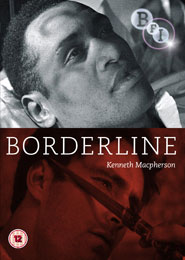
Those good people at the British Film Institute have just released a DVD of Borderline (1930). This little-known British avant garde silent (now’s there’s an unusual combination of words) was made by the POOL collective of intellectuals, including Kenneth Macpherson (the film’s director), Winifred Bryher, the poet H.D. (Hilda Doolittle), and Robert Herring, who were also behind the influential film journal Close-up. But what is most interesting to us now about Borderline is that it stars Paul Robeson, who had just moved to Britain and would later star in several British films in the 1930s. The story revolves around an inter-racial love triangle, made up Robeson’s wife Eslanda, Gavin Arthur and H.D., but it is experimental method attempting to denote states of mind which is so distinctive. As Michael Brooke says in Sight and Sound:

Much of the film is invested with an often inexplicable tension, with regular explosions into rapidly cut torrents of images that reach a frenzy during the more emotionally charged scenes. But it also has quiter, lyrical moments, mostly invoving Robeson, shot from below against Swiss skies and lit as though sculpted in bronze. Whether the film ultimately ‘works’ depends on one’s individual perception, but it’s certainly a unique historical oddity.

Which is sort of how I remember it from a viewing many years ago now. The BFI release has a score by Courtney Pine, background documentaries on Macpherson and co., and booklet.

Borderline also turns up on a four-disc Robeson set from Criterion, released in America. Paul Robeson: Portraits of the Artist features Oscar Micheaux’s Body and Soul (1924), Borderline (which uses the BFI print and Courtney Pine score), The Emperor Jones (1933), Sanders of the River (1935), Jericho (1937), my great favourite among his films The Proud Valley (1940), and Native Land (1942). There are also clips from Big Fella, King Solomon’s Mines and Song of Freedom.

The Dawn of Colour

Janet and Iris Laing c.1910

The National Media Museum’s exhibition The Dawn of Colour: Celebrating the Centenary of the Autochrome opened today. The exhibition is sponsored by N.M. Rothschild & Sons, Lionel de Rothschild (1882-1942) having been an enthusiastic Autochome photographer, 700 of whose Autochromes are held by the Rothschild Archive.

The web site is beautiful to look at, with numerous examples of Autochromes and some welcome biographies of the photographers. It is good too on the technical details, with some downloadable PDFs including a 1908 instruction booklet. And the exhibition book, on the Rothschild collection, promises to be a treasure. There’s also information on Auguste and Louis Lumière, inventors of the Autochrome process as well as the inventors of the Cinématographe.

OK, that’s enough posts on colour photography. Back to the cinema…

Sentiment and Sensation

boutdezan.jpg

The Museum of Modern Art in New York has an exhibition of posters for silent films, Sensation and Sentiment: Cinema Posters 1912–14. It runs May 23–August 27, 2007. The posters come from the renowned collection of Dutch film distributor Jean Desmet (1875–­1956), and advertise American, British, Danish, French, and Italian films dating from 1912 to 1914. The exhibition also has rare photographs documenting the earliest sites of film exhibition in the United States. The exhibition is accompanied by a related film series in July and August. The wonderful poster above for Bout-de-Zan et le crime au telephone (1914) is all that’s illustrated on the website, alas.

(Bout-de-Zan is the little boy in the picture. He was played by René Poyen (1908-1968), who portrayed the character, a child always distinctively dressed as an adult, in a string of short comedies made by Louis Feuillade for Gaumont)

Stephen Bottomore’s The Origins of the War Film

On Thursday 24th May, at 16.15, Stephen Bottomore defends his PhD dissertation Filming, Faking and Propaganda: The Origins of the War Film 1897-1902 at Utrecht University. The thesis deals with the challenges early filmmakers had to face when trying to represent military action at a time when warfare itself changed drastically: no more the heroic charges and clearly defined battlefields. And very soon, officials took measures to regulate and censor reporting. Stephen Bottomore discusses the Greco-Turkish War (1897), the battle of Omdurman (1898), the Spanish-American War (1898), the Philippine War (1899-1902), the Boer War (1899-1902) and the Boxer Uprising (1900). With regard to factual filmmaking, the thesis describes the ongoing professionalisation of war reporting, where one encounters adventurous amateurs, embedded journalists, freelance photographers and finally trained and experienced cameramen sent abroad by production companies. Another aspect of war-related imagery that is discussed extensively are “representations”, or fakes, ranging from rather blunt attempts to sell staged pictures as “the real thing” to emphatically stylized allegorical scenes. It is amazing to see how in such a short period new kinds of representational strategies, ways of filmmaking, and forms of exhibition emerged. Stephen Bottomore presents an extraordinary wealth of documents, this is most certainly the most thorough exploration of the subject to date.

On Friday 25th May, a workshop will be organised by the Onderzoeksinstituut voor Geschiedenis en Cultuur (OGC) and the Department of Media and Cultural Studies, Utrecht University: Controlling Early Cinema in Times of War, speakers being Stephen Bottomore (UU), Karel Dibbets (UvA), Nicholas Hiley (University of Kent, Canterbury) and Sabine Lenk (Filmmuseum Düsseldorf).

The regional dimension in early cinema

Domitor logo

The theme and dates for the 10th Domitor conference have been anounced. The Regional Dimension in Early Cinema will take place 17-21 June 2008 at Perpignan, France and Girona, Spain (they say Catalonia). The notice on the Domitor site reads like a draft, but what they are looking for is described thus:

Possible contributions could deal with production modes, studies concerning distribution and exploitation in a micro-historical context, as well as studies on the representation of regional aspects in film. However, the regional dimension should be the major theme, and not a mere pretext.

The official languages will be English, French and Catalan. There’s a rough outline of the conference, which will be in Girona for the first three days before hopping across the border to Perpignan for the rest, but no call for papers as yet.

Domitor is an international organisation dedicated to the study of early cinema, defined as cinema in all its aspects to 1915. ‘Domitor’ was the name suggested to the Lumière brothers by their father Antoine to give to their invention, before they decided that Cinématographe sounded a little classier. Hard to imagine that we all might have ended up going to see the movies at the local domitor…

Also, Domitor has a yearly graduate student writing award (see link to Word document at the bottom of their page), for any subject on cinema before 1915, with a prize of $500. Fascinatingly, you don’t have to be a member of Domitor to submit an essay, but you do need to be a member if you want to collect your prize. The deadline is 1 August 2007.