Before the Nickelodeon

Before the Nickelodeon

The latest addition to the Bioscope Library is evidence of a growing trend among academic publishers to make some of their books available electronically, both by subscription, and for some older titles, for free.

That’s what’s happened with University of California Press, which has made some 2,000 books available online via e-Scholarship Editions. Most of these are available only the university staff and students, but a handful have been made freely available for the public. Among them is one of the key early film studies texts, and is strongly recommended, not just for its own sake but for the very user-friendly way in which it has been made accessible.

Charles Musser’s Before the Nickelodeon: Edwin S. Porter and the Edison Manufacturing Company (1991) is a biography of Edwin S. Porter, but also very much more than a biography. He places the story of the Edison filmmaker, producer of The Great Train Robbery (1903) and Life of an American Fireman (1903), within the context of film production and exhibition at the end of nineteenth century and into the twentieth, and within broader socio-cultural contexts. The result is a rich, multilayered account of the birth of American film with Porter as the key with which to unlock the history. This modern classic has been hugely influential on modern early film studies. It is also handsomely illustrated and very readable. It is freely available as chapterised web pages, complete with illustrations, notes, appendices and hyperlinked index i.e. find the term, and the link takes you to that page in the ‘book’.

With thanks to David Pierce for pointing this out to me. I’m going to be on the look out for more.

Worldwide montage

vertov.jpg

Now here’s an extraordinary thing. Video artist Perry Bard is planning a remake of Dziga Vertov’s classic avant garde documentary Man with a Movie Camera, and is inviting the world to join in.

Her plan is to use the web to archive, sequence and deliver submissions for a remake of the 1929 film, which will then be exhibited on the Big Screen Manchester (a BBC initiative to bring big screen pictures to city squares) UK on 11 October 2007, with more public venues visited throughout the UK through 2008.

The project website, http://dziga.perrybard.net, has a scene index with every shot of Vertov’s film recorded in thumbnails and logged in seconds and number of frames. Would-be Vertov’s of today can upload their footage (or still images, or even text), which does not have to match the original shot but should come close to it in length – it’s the rhythmic patterning that counts. Presumably it’s meant to be one shot contributed per person.

Goodness what the results will be like (or how she will select what’s sent, or even how many different potential versions might emerge), but it’s an amazing idea, and certainly has something of the spirit of Vertov’s radical work about it. Here’s the artist’s explanation of how her work connects with that of Vertov:

Vertov’s 1929 film Man With A Movie Camera records the progression of one full day synthesizing footage shot in Moscow, Riga, and Kiev. The film begins with titles that declare it “an experiment in the cinematic communication of visible events without the aid of intertitles, without the aid of a scenario, without the aid of theater.” It is often described as an urban documentary yet the subject of the film is also the film itself – from the role of the cameraman to that of the editor to its projection in a theatre and the response of the audience. It is a film within a film made with a range of inventive effects – dissolves, split screen, slow motion, freeze frame – all of which are now embedded in digital editing software … When the work streams your contribution becomes part of a worldwide montage, in Vertov’s terms the “decoding of life as it is”.

The project site also has the the entire film to view (via Google Video). Uploading starts in August.

Whatever next?

Treasures III

Treasures III

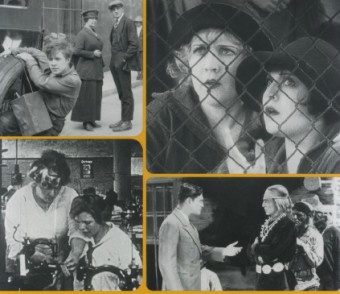
The National Film Preservation Fund has announced the third in its Treasures series of rare silent and early sound films from American archives. The four-DVD set will be published in October by Image Entertainment. For number three in this stunning series, the theme is social issues. Here’s the press release:

Cecil B. De Mille’s sensational reformatory exposé, The Godless Girl; Redskin in two-color Technicolor; Lois Weber’s anti-abortion drama Where Are My Children?; The Soul of Youth by William Desmond Taylor; and dozens of rare newsreels, cartoons, serials, documentaries, and charitable appeals are showcased in the National Film Preservation Foundation upcoming four-DVD box set, Treasures III: Social Issues in American Film, 1900-1934. Slated for release by Image Entertainment on October 16, Treasures III (retail price $89.99) introduces to DVD 48 films from the decades when virtually no issue was too controversial to bring to the screen.

“In film’s first decades, activists from every political stripe used movies to advance their agenda,” said Martin Scorsese, who serves on the NFPF Board of Directors. “These films are an important and fascinating glimpse of history. They changed America and still inspire today.”

Prohibition, birth control, unions, TB, atheism, the vote for women, worker safety, organized crime, loan sharking, race relations, juvenile justice, homelessness, police corruption, immigration—these issues and more are brought to life in the new 12-1/4 hour set. In addition to the four features, the line up includes the first Mafia movie, a 1913 traffic safety film, management’s version of the Triangle Shirtwaist fire, temperance and suffragette spoofs, A Call for Help from Sing Sing!, an action-packed Hazards of Helen episode, a patriotic “striptease” cartoon for war bonds, the earliest surviving union film, and a medley of prohibition newsreels kicked off by Capital Stirred by Biggest Hooch Raid.

The motion pictures are drawn from the preservation work of the nation’s foremost early film archives: George Eastman House, the Library of Congress, the Museum of Modern Art, the National Archives, and the UCLA Film & Television Archive. None of the works has been available before in high-quality video.

Treasures III is playable worldwide and has many special features for DVD audiences:

  • Newly recorded music contributed by more than 65 musicians and composers
  • Audio commentary by 20 experts
  • 200-page illustrated book with essays about the films and music
  • More than 600 interactive screens
  • 4 postcards from the films

The third in the award-winning Treasures series, the new set reunites the curatorial and technical team from the NFPF’s earlier DVD anthologies. The project is made possible through the generous support of the National Endowment for the Humanities and the National Film Preservation Board of the Library of Congress. Net proceeds will support further film preservation. A four-page brochure with the full contents list can be downloaded from the NFPF Web site: www.filmpreservation.org/T3_brochure.pdf.

Program 1: The City Reformed

The Black Hand (1906, 11 min.)
Earliest surviving Mafia film.
How They Rob Men in Chicago (1900, 25 sec.)
Police corruption Chicago-style.
The Voice of the Violin (1909, 16 min.)
A terrorist plot is foiled by the power of music.
The Usurer’s Grip (1912, 15 min.)
Melodrama arguing for consumer credit co-operatives.
From the Submerged (1912, 11 min.)
Drama about homelessness and “slumming parties”
Hope—A Red Cross Seal Story (1912, 14 min.)
A small town mobilizes to fight TB
The Cost of Carelessness (1913, 13 min.)
Traffic safety film for Brooklyn school children.
Lights and Shadows in a City of a Million (1920, 7 min.)
Charitable plea for the Detroit Community Fund.
6,000,000 American Children…Are Not in School (1922, 2 min.)
Newsreel story inspired by census data.
The Soul of Youth (1920, 80 min.), with excerpts from Saved by the Juvenile Court (1913, 4 min.)
William Desmond Taylor’s feature about an orphan reclaimed through the juvenile court of Judge Ben Lindsey with excerpts from the political campaign film Saved by the Juvenile Court (1913. 4 min.)
A Call for Help from Sing Sing! (1934, 3 min.)
Warden Lawes speaks out for wayward teens.

Program 2: New Women

The Kansas Saloon Smashers (1901, 1 min.)
Carrie Nation swings her axe.
Why Mr. Nation Wants a Divorce (1901, 2 min.)
Role-reversal temperance spoof.
Trial Marriages (1907, 12 min.)
Male fantasy inspired by a feminist’s proposal.
Manhattan Trade School for Girls (1911, 16 min.)
Profile of the celebrated progressive school for impoverished girls.
The Strong Arm Squad of the Future (ca. 1912, 1 min.)
Anti-suffragette cartoon.
A Lively Affair (ca. 1912, 7 min.)
Comedy with poker-playing women and child-rearing men.
A Suffragette in Spite of Himself (1912, 8 min.)
Boys’ prank results in an unwitting crusader.
On to Washington (1913, 80 sec.)
News coverage of the historic suffragette march.
Hazards of Helen: Episode 13 (1915, 13 min.)
Helen thwarts robbers and overcomes workplace discrimination.
Where Are My Children? (1916, 65 min.)
Provocative anti-abortion drama by Lois Weber.
The Courage of the Commonplace (1913, 13 min.)
A young farm woman dreams of a better life.
Poor Mrs. Jones! (1926, 46 min.)
Why wives should stay on the farm.
Offers Herself as Bride for $10,000 (1931, 2 min.)
Novel approach to surviving the Depression.

Program 3: Toil and Tyranny

Uncle Sam and the Bolsheviki-I.W.W. Rat (ca. 1919, 40 sec.)
Anti-union cartoon from the Ford Motor Company.
The Crime of Carelessness (1912, 14 min.)
Management’s version of the Triangle Factory fire.
Who Pays?, Episode 12 (1915, 35 min.)
A lumberyard strike brings deadly consequences.
Surviving reel from Labor’s Reward (1925, 13 min.)
The American Federation of Labor’s argument for “buying union.”
Listen to Some Words of Wisdom (1930, 2 min.)
Why personal thrift feeds the Depression.
The Godless Girl (1928, 128 min.)
Cecil B. DeMille’s sensational exposé of juvenile reformatories.

Program 4: Americans in the Making

Emigrants Landing at Ellis Island (1903, 2 min.)
Actuality footage from July 9, 1903.
An American in the Making (1913, 15 min)
U.S. Steel film promoting immigration and industrial safety.
Ramona: A Story of the White Man’s Injustice to the Indian (1910, 16 min.)
Helen Hunt Jackson’s classic about racial conflict in early California, retold by D.W. Griffith and starring Mary Pickford.
Redskin (1929, 82 min.)
Racial tolerance epic, shot in 2-color Technicolor at Acoma Pueblo and Canyon de Chelly.
The United Snakes of America (ca. 1917, 80 sec.)
World War I cartoon assailing homefront dissenters.
Uncle Sam Donates for Liberty Bonds (1918, 75 sec.)
Patriotic “striptease” cartoon.
100% American (1918, 14 min.)
Mary Pickford buys war bonds and supports the troops.
Bud’s Recruit (1918, 26 min.)
Brothers learn to serve their country in King Vidor’s earliest surviving film.
The Reawakening (1919, 10 min.)
Documentary about helping disabled veterans to build new lives.
Eight Prohibition Newsreels (1923-33, 13 min.)
From Capital Stirred by Biggest Hooch Raid to Repeal Brings Wet Flood!

The National Film Preservation Foundation, the nonprofit organization created by the U.S. Congress to help save America’s film heritage, is the charitable affiliate of the National Film Preservation Board of the Library of Congress. Since starting operations in 1997, the NFPF has helped save more than 1,100 films at archives, libraries and museums across 41 states, Puerto Rico, and the District of Columbia.

The NFPF website has details of Treasures volumes I and II, with some video clips, and a Treasures IV on the avant garde 1945-1985 will be available next year.

Cinema by Citizens

Calling all would-be silent filmmakers of today. The Toronto Urban Film Festival (TUFF) has announced a competition under the title ‘Cinema by Citizens: Celebrating the City‘. They are calling for filmmakers, video artists, animators, and ‘urbanites with cameras (or video cellphones)’ to produce silent, one-minute films or videos on one or other of these urban themes:

– My Town
– Urban Ennui
– 905 to the 416
– The Imaginary City
– Big Smoke, Big Dreams
– Forgotten Places, Uncommon Spaces

The festival takes place 8-18 September, and the deadline for submissions is 20 August. International submissions are invited. Winning films will be exhibited online.

The Silent Worker

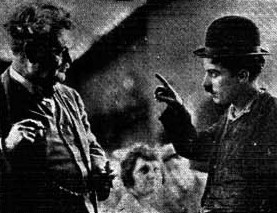
Granville Redmond and Charlies Chaplin

Granville Redmond and Charlie Chaplin

While preparing a post on the digitisation of newspaper collections (which you’ll receive some other time), I came across one journal of such particular interest that it had to have a post to itself.

The Silent Worker was a popular American journal for the deaf, published between 1888 and 1929. Most of the articles were written by hearing-impaired authors. The entire run of the journal has been digitised by Gallaudet University Library. If you go to the search options, and click on subjects, you will find 70 articles on ‘Movies and Deaf’.

I don’t know if there has been much in the way of studies made of the relationship between deafness and silent cinema, though the Chicago Institute for the Moving Image has a Festival for Cinema of the Deaf which has included silent films, and in 1891 the pre-cinema pioneer Georges Demenÿ famously used a proto-moving image camera to show someone mouthing the words ‘Je vous aime’ as a demonstration of how moving images might aid deaf mutes in learning to speak. And there are many anecdotes of deaf lip-readers discovering the fruity language spoken in films like What Price Glory? which had escaped the eye of the censors. And it has been argued that Lon Chaney’s particular acting gifts came in part through both his parents being deaf.

The Silent Worker reveals a rich world where deaf audiences, and deaf creative talents, engage with the silent picture. For example, an article entitled ‘Cinema and “Signs”‘ (October 1916) compares the art of pantomime with that of the silent screen, with particular reference to Billy Merson and Charlie Chaplin. Chaplin gets many mentions, and there is an engrossing piece, ‘Moving Pictures and the Deaf’ (June 1918) by Alice T. Terry (not the actress Alice Terry), who describes a visit to Hollywood and the Chaplin Studios, where she encounters Granville Redmond (illustrated above with Chaplin), a painter and deaf-mute, who acted in A Dog’s Life and The Kid. Chaplin is revealed to have been notably accommodating towards the deaf (has anyone written on this?). Her opinions are full of interest:

Unlike the spoken drama, the deaf can enjoy moving pictures as much as the hearing do. Some may say that the deaf lose, as they do not hear the music that acompanies the pictures. But I do not think we lose; there are various ways in which we are compensated but the hearing would hardly understand if we tried to explain. For myself I hate the noisy show, that is where some struggle or a battle is going on with its accompanying loud imitation battle din. To me the vibrations are a continuous, growling thunder – or worse than that – which sickens me soul and body. In fact most all musical vibrations irritate me. But by many of the deaf I know that the vibrations are enjoyed, especially by those with some remnant of hearing.

She also has trenchant opinions on D.W. Griffith, whose The Birth of a Nation “worked a great injury to the colored race”. Elsewhere, there are reports on the production of films for the deaf, including a Professor G.W. Jones who filmed speeches from Shakespeare.

One article, ‘Preserving a Famous Film’ sounds remarkably archival for April 1912, though its subject is actually the preservation on film of notable practitioners of sign language. The are also reports on Helen Keller, who starred as herself in a dramatised film of her life in 1919, entitled Deliverance (her teacher Annie Sullivan also appeared in the film).

That’s what I’ve gleaned through a quick inspection, and clearly there much more that could be unearthed. Here’s some last words, written by Alexander L. Pach, for the October 1919 issue:

We deaf people must thank the screen-art for the one biggest offset to our infirmity. Good pictures and by good pictures I mean the kind that educate and elevate, are the levers that lift us from the deadly dullness and monotony of total deafness, to the highest pinnacles of delight. They restore our hearing as nothing else does. We know every word that is spoken as well as the hearing do, for they are all projected on the screen. We only miss the music, and this is such a slight loss it doesn’t count … All the best plays of the spoken stage that have delighted millions of hearing people find their way to “Screenland”, and such big hits as “Common Clay”, “Daddy Long-legs”, “The Thirteenth Chair”, “Secret Service” etc. etc., are ours through this media. An evening at a good picture house now means one of those hits of the drama; a News-Weekly that has the whole world for its field … a more or less “funny” picture that makes us laugh whether we want to or not and then Burton Holmes shows us the people, the customs and the homes of some far away denizens of the other side of the earth. After an evening of delightful entertainment of this order one may go home utterly forgetful of the fact that an important sense is missing. He has come away refreshed. The tedium of the every day work of store, office of factory has been relieved in great measure, and we feel it’s a bully good little world after all …

There are such treasures to be found on the web. Let’s all keep on looking.

Behind the Motion-Picture Screen

cakesofice.jpg

The latest addition to The Bioscope Library is Austin C. Lescarboura’s Behind the Motion-Picture Screen, published by Scientific American in 1921. I know nothing about the author and I’d not even come across the book before. It’s a voluminous history and guide to the production of motion pictures. As the subtitle puts it, it covers ‘how the scenario writer, director, cameraman, scene painter and carpenter, laboratory man, art director, property man, electrician, projector operator and others contribute their share of work toward the realization of the wonderful photoplays of today; and how the motion picture is rapidly extending into many fields aside from that of entertainment’. With some rather fanciful chapter titles it cover the work of the director (‘The Artist Who Paints the Film Subjects’), producer (‘The Generals of Shadowland’), actors, cinematographers, screenplays, camera technology, special effects, newsfilming, scientific cinema, animation, colour, and and a prescient chapter on the coming of sound. There is a huge amount of interesting material in there.

But perhaps the real appeal lies in its illustrations. There are superb photographs of the production process, and though frustratingly the captions do not name the participants, the images are a rich source of information in themselves, and an indication of how useful these Internet Archive copies are as a source of pictures – as demonstrated by the picture above, which comes with the caption, ‘Scenario writers are notoriously cruel. Without a moment’s hesitation they call for a hero struggling with death among cakes of floating ice – and the actor must do it’. It’s available in DjVu (24MB), PDF (62MB), b/w PDF (39MB) and TXT (529KB) formats.

Links

All of the links on the right-hand side of this site now come with brief descriptions when you hover your mouse over the link. I hope this will help people explore further the world of early and silent film. I’m always interested to hear of good websites and online research resources, if you know of any.

Early Popular Visual Culture

Early Popular Visual Culture

A bit of a plug for a journal with which I am involved. There are few scholarly journals out there which concern themselves with early film, which makes Early Popular Visual Culture all the more precious.

It was originally published in 2001 as Living Pictures: The Journal of the Popular and Projected Image before 1914. It reinvented itself as EPVC in 2005, with Routledge as publishers. It is dedicated to publishing research on all forms of popular visual culture before 1930. It takes as its particular brief to

… examine the use and exploitation of popular cultural forms such as (but not limited to) cinema, photography, magic lanterns and music hall within the fields of entertainment, education, science, advertising and the domestic environment; and is primarily concerned with the evolving social, technological and economic contexts which such popular cultural products inhabited and defined.

… which is spreading things as broadly as you could wish. So it’s not just silent movies, but akin popular projected forms, and the world they inhabited, which is demonstrated in the range of essays in the most recent issue (vol. 5 issue 1, April 2007):

  • Joe Kember, ‘The Functions of Showmanship in Freak Show and Early Film’
  • Paul Myron Hillier, ‘Men and Horses in Motion: Thomas Eakins and Motion Photography
  • Gerry Turvey, ‘Ideological Contradictions: The Film Topicals of the British and Colonial Kinemaograph Company’
  • John Hewitt, ‘Designing the Poster in England, 1890-1914’
  • Eric Faden, ‘Movables, Movies, Mobility: Nineteenth-century Looking and Reading’
  • plus an archive feature, introduced by Vanessa Toulmin, ‘Magic Ephemera’ and book reviews.

All that, and it looks great. Get your local library to take our a subscription today!

Segundo de Chomón

I’ve just found about this rare screening of films by the Spanish director Segundo de Chomón, taking place at Tate Modern on Friday 6 July at 19.00pm. Segundo de Chomón is one of the masters of early fantasy film, overshadowed rather by Georges Méliès, but whose trick films are no less intoxicating or ingenious, filled as they are with sorcerers, mystics, devils and exotic dancers. The sixty-minute programme includes all these titles (several of which are coloured prints, heightening the exoticism of the scenes):

Poules aux Oeufs D’Or, 1905
Antre Infernal, 1905
Antre de la Sorcière, 1906
Spectre Rouge, 1907
Armures Mysterieux, 1907
Scarabée D’Or, 1907
Metempsycose, 1907
Excursion Incoherente, 1910
Legende du Fantôme, 1908

Stephen Horne is playing the piano, for what is an excellent programme of films little seen but once seen unlikely to be forgotten. Early cinema was a magical place. Further information from the Tate site. It’s part of the Dali & Film season, and Dali would have loved them.

Infax and Open Archive

Infax is the BBC’s own programme catalogue, and as many will know a public version of this has been made available on the web for a year or so now. A revamped version has just been published, with a touch more design and in a fetching shade of pink, and it’s more than worth noting here for the details it has of television and radio programmes on silent cinema.

Given that it has 900,000 records (maybe half of the entire BBC output, but it predominantly records programmes that survive in the BBC archives), it’s a bit disappointing to find just 63 listed under the category ‘silent films’, but what’s there is fascinating enough, especially the records of older programmes with interviewees no longer with us.

For example, there’s the 1969 Yesterday’s Witness programme interviewing the 93-year-old British film director George Pearson, who directed his first film in 1914.

Or Michael Bentine’s 1969-70 television series Golden Silents, from the days when you could get thirty-part series on the history of silent films.

Or diverting magazine entertainment, such as Bob Langley chating to silent film pianists Florence de Jong and Ena Baga (doyennes of the National Film Theatre) for Saturday Night at the Mill in 1979.

It’s also worth seaching under the names of individuals who may not have been indexed under ‘silent films’, e.g. Georges Melies being discussed in a Horizon programme on special effects in 1974.

It’s mostly recent programmes that are recorded, and then usually items in arts programmes. Of course, its just the catalogue and not the programmes themselves. Those remain in the vaults, though the BBC has ambitious plans for substantial amounts of archive content to be released online, what’s called its Open Archive project. Closed trials of this are underway, and version one of a full service (subject to Public Value tests) could come in Spring 2008.