From 1896 to 1926 – part 3

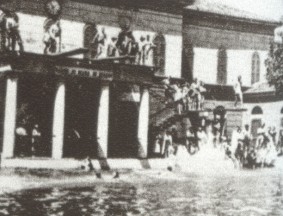
High Divers at Milan

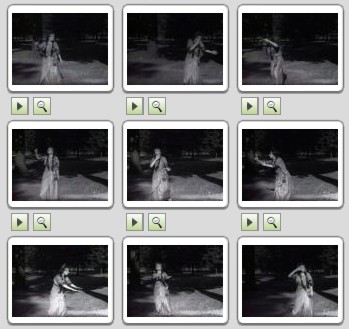
Les Bains de Diane à Milan (1896)

We return to Edward G. Turner’s 1926 reminiscences of the early days of the film business in Britain. We are still in the 1890s, and changes in the business are already necessary. Turner and colleagues discover that they have pitched their product too highly…

The Crash

We soon found out, however, that we were altogether too scientific in our entertainment. The average person could not promounce the word “kinematograph,” and, if they could, it conveyed nothing to them in the way of entertainment. They all thought it was something educational, and in those days, as to-day, the public would not pay to be educated when they wanted to be amused, and so, after three months’ touring, we returned to London sadder but wiser men, and in the process of gaining wisdom, we lost our entire capital.

On the last day of the old year 1896, three unhappy men met to discuss ways and means for carrying on or closing down – the three men being J.D. Walker, J. Mackie and E.G. Turner. Mackie was demonstrator or operator, Walker was lecturer, and myself manager and treasurer – the latter office being a mere sinecure, as there were no funds to treasure, and I had to draw upon private means to pay our way.

As the bells announced the birth of a New Year (1897), we closed the books of the North American Animated Picture Company [and] reorganised our finances by my agreeing to provide £100 (which I hoped to borrow and which I succeeded in doing). Walker agreed to take half-share, and pay for his share as and when the business permitted, and Mackie withdrew as it looked an almost hopeless proposition.

Playing to the Gallery

Our policy was now altered: instead of spending a large amount of money in circularising all the best people in the towns and villages, by means of very good stationery, excellent printing and sending and sealing our letters with a penny stamp so as to attract the attention of the recipient, we went for the working classes. The results of our fresh policy was that, when the performance began, we had two or three people only in the stalls, our chief patronage came from the cheaper seats. So we decided to stop playing to the stalls, and in future to play to the gallery. From this date we were known as Walker and Turner.

On January 1, 1897, we visited the Central Working Men’s Club and Institute in Clerkenwell Road – had an interview with the entertainment secretary, who gave us an engagement for the following Saturday night, provided we gave a show of one hour’s duration for the magnificent sum of 30s.

As we had to find two cylinders of gas, and get our apparatus to and from the hall, also take two men to do the job, one will understand that it was not a profitable transaction, but the secretary personally promised us that he would send round a letter to secretaries of all the clubs in London, invite them to be present, and if our show was all we claimed it to be, there were prospects of good bookings to be obtained.

The secretary carried out his promise, and on Saturday night, when we arrived to do our show, the hall was packed to suffocation. The pictures projected were most enthusiatically received, and after the show was over we had the satisfaction of booking up dates amounting to over £200.

As we executed these dates, which were all close, others rolled in upon us from all parts of the country, principally from working men’s clubs, and that was the first step towards success; in three months our business had grown to such an extent that we had two machines operating.

Turner now moves on to some of the strategies of exhibition in the 1890s, interestingly revealing that gaps in the programme and the common practice of running films backwards were employed to spin out meagre, expensive films. He then describes the innovation in film business practice that he was central in introducing – renting, or film distribution.

A Shilling a Foot

In those days we were paying 1s. per foot for our films, the average length being 500 feet. It will, therefore, be understood that the cost of running an hour’s programme was very expensive.

It is true that to eke out our meagre supply of films we used to take a minute or two between the change, and further, we had what was known as a reversing prism, and, after we had shown a film through, e.g., “The High Divers at Milan” (which was a very effective subject for the purpose), we would then rewind the film, put it through the machine backwards, and, by means of the prism, instead of the man diving into the water from the high diving boards, there would be a splash of water, out of which the man, feet foremost, would come and go back on to the diving board – in fact, the whole subject being reversed. This used to create not only great amusement but wonder as to how it was done, and used to help us very considerably in making our programme last out the necessary time. And if they applauded, well, on went the film a second time.

The Beginning of Renting

The price of films quickly dropped from 1s. to 8d. per foot, and then became standard at 6d. a foot; this allowed us to increase our store, but it soon became evident that to have to provide new films every time we took a repeat engagement was too expensive. So we conceived the idea, first of all, of an interchange of films with other exhibitors, who experienced the same difficulties in regard to new supplies. From this we eventually evolved the renting of films to other people, because we found that we had by far a larger stock than any of the other men. By buying films regularly we could use them ourselves and hire them to the other people, and so in such small beginning was evolved the great renting system as known to-day.

The First Woman Operator

At the end of 1897 we had three machines working. Walker operated one, myself the second, and the third was handled by Mrs. J.D. Walker, though a man went with her to fit up and do the donkey work. Mrs. Walker handled the mixed gas jet and operated, and she can claim without fear of contradiction to be the first woman operator in the world. She is still in business as managing director of the Empire cinema, Watford.

Was the redoubtable Mrs Walker the ‘first women operator in the world’? The evidence of the 1901 census, as reported in a recent post, shows that there were certainly other women operators around at the same time. More investigation is needed. ‘The High Divers of Milan’ is Les Bains de Diane à Milan (1896), Lumière catalogue no. 277, and is illustrated above. Reversing prisms, which were fitted onto the lens, were available from equipment suppliers at the time. They were used when film could not simply be reversed by cranking in the opposite direction i.e. the film had to be re-threaded in reverse, with the prism necessary to turn the image the correct way round. Is that a correct explanation, you experts out there?
Rats, ruffians and radicals

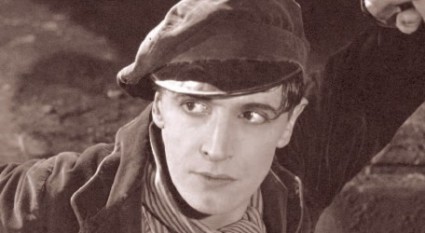
Ivor Novello

Ivor Novello in The Rat (1925), from http://www.britishsilentcinema.com

The 11th British Silent Cinema Festival will take place 3-6 April 2008 at the Broadway, Nottingham. The festival goes under the eye-catching title of Rats, Ruffians and Radicals: The globalisation of crime and the British silent film, and builds further on last year’s theme of crime by looking at international influences. A call for presentations has just been issued, and here it is:

In the second part of our examination of crime in the British silent film the 2008 British Silent Cinema Festival will branch out into the international arena of criminal influences. From the classic figure of the British detective, epitomised by Sherlock Holmes, to the prevalence of British actors as arch villains in US films, or the use of our cities as sites of criminal activity – British film and crime fiction have been widely exported, adapted and used by European and American cinemas. We will also be screening comparative crime films from the major film producing countries as context for British productions.

We particularly invite contributions on the classic, mythological and popular villains such as Sherlock Homes and Fu Manchu and the development of the detective as protagonist. Themes could include political crime, espionage, the White Slave Trade and drug trafficking, international anarchism and terrorist activity, crimes of passion, crimes of the street, domestic crime and criminal typologies. We will examine the film record for evidence of the import and export of crime through the migration of people from the late 19th Century onwards and the increasing globalisation of criminality.

Proposals are sought for 20-minute presentations on areas relevant to the main theme or any new research in the field of British silent film. All presentations should be illustrated and presenters are encouraged to contact Bryony Dixon at the BFI National Archive, to arrange viewing and selection of material at bryony.dixon [at] bfi.org.uk.

Deadline for submissions: January 31st 2008 to: laraine [at] broadway.org.uk

The British Silent Cinema Festival exists to promote the exhibition and study of British Cinema before 1930. It features screenings with live music, illustrated presentations, talks, debates, educational seminars and social events. Anyone is welcome to attend and to make a proposal for a contribution.

For more information or to be placed on our email or postal list please contact

Laraine Porter 00 44 (0) 115 952 6600, Broadway, 14-18 Broad St, Nottingham, UK, NG1 3AL,
laraine [at] broadway.org.uk.

The Festival is programmed and organised by Laraine Porter at Broadway, Nottingham and Bryony Dixon at the BFI National Archive.

Family history for film historians

The Kiss in the Tunnel

G.A. Smith (the filmmaker) and his wife Laura Bayley in A Kiss in the Tunnel (1899)

The huge growth in geneaology on the web in the past few years has also provided a wealth of resources for the film historian. This post is based on a talk I gave a couple of years ago at the British Silent Cinema festival, and provides a guide to the sorts of resources available (particularly but not exclusively British sources) and what the film historian may gain from them.

1901 census
There have been ten-yearly censuses in Britain since 1801, though until 1841 they did not record details of individuals. It was the launch of the 1901 census online in 2002 that helped generate the explosion of interest in family history, though the National Archives were not expecting the millions who tried to access the site on its publication, which led to its immediate crash and an awkward gap of several months before it was resilient enough to be published again.

The census is available at www.1901census.nationalarchives.gov.uk [update: the link is now www.1901censusonline.com]. The records will provide you with the name, age, place of birth, the county and parish where the census was taken, and the person’s occupation. Hence, type in ‘Cecil Hepworth’ and you will get two results:

Cecil Hepworth / 9 / Lancs Manchester / Chester / Macclesfield /
Cecil Hepworth / 27 / Lewisham / London / Streatham / Cinematographer

One is clearly a British film pioneer, the other a blameless child. You can then view the census record (image of the original form plus a transcription), which will give you all of those resident in Cecil Hepworth’s houshold on the day of the census. For this you need to pay, for which they have a credits system. 500 credits cost £5.00 and are valid for seven days. Viewing a single image takes up 75 credits.

If you are looking for an individual with an unusual name, locating them is easy. A more common name will require a bit more preparation – an idea of age, location etc. Typing in Alfred Hitchcock gets you 66 records (he’s the one aged 1, born in Leytonstone), while Charles Chaplin yields 151 records (he’s the one aged 12, living in Lambeth, occupation ‘Music Hall Artiste’). The full census record will tell you so much about who they lived with, their occupation, social status, and ultimately their ancestry.

Using the Advanced Search option is potentially very interesting, but also frustrating. It ought to be possible to search for everyone in 1901 who was working as a cinematographer, but to do so you have to enter at least two letters with wildcard (e.g. AB*) into the name field at the same time, so to trace everyone who might be a cinematographer in the 1901 census in theory would take 650 individual searches (in practice a lot of letter combinations could be rejected of course). Someone with the patience to do that is the film historian Stephen Bottomore, who conducted a search for profession beginning ‘cine*’, and found a remarkable list of names, most of whom are unknown to film history as yet. Here’s a selection (with transcription errors):

Name / Age / Where Born / Administrative County & Civil Parish / Occupation
Alvey, Harry / 19 / Notts Nottingham / Lancaster West Derby / Cinematograph Operater
Banford, George / 20 / London Hornsey / London Islington / Cinematic Image Maker
Barton, Benjamine / 40 / Warwick Birmingham / Birkenhead Birkenhead / Cinematographer Ethil
Bayliss, Thomas / 51 / Staffs Bradley / Leicestershire Measham / Cinematographic Artist
Brecksapp, Thomas / 27 / Brixton London / Sussex Hove / Cinematographer
Bromhead, Alfred / 24 / Hampshire Southsea / Surrey Kent / Penge London / Cinematograph Agent
Catlin, Edwin / 43 / London St Pancras / London Islington / Cinematograph Operator
Chadwick, Julia / 25 / Lanc Rochdale / Lancaster Rochdale / Cinematograph Operator
Clarke, Herbert / 27 / London St Pancras / London St Pancras / Cinematograph Proprietor
Cramer, Horace / 23 / Sussex Hastings / London Paddington / Cinematograph Operator
Croft, Emelina / 27 / Weybridge Surrey / Surrey Weybridge / Cinemelographer
Davey, Frederick / 20 / Surrey Croydon / Borough Of Oxford Cowley St John / Cinematsgraph Operator

Just the one well-known name there – Alfred Bromhead, who went on to run the Gaumont company in Britain. And astonishing to see two women cinematograph operators (which could be camera operators or projectionists or both). Stephen has kindly made his whole list available as a PDF. Do note that film people got described under a variety of terms – bioscope operator, photographer etc. – so Stephen’s list is just a start. The census gets released to the public one hundred years after it was made – 2011 is going to be quite a year for British film history research.

Update (January 2009): The 1911 census is now available online, published ahead of its centenary owing to an anomaly in the 1920 Census Act. Information on using it for film history research here.

Ancestry

http://www.ancestry.co.uk

Ancestry and FreeBMD

The 1901 census is a good place to start, but for a proper study of British, and international, records, you need FreeBMD and Ancestry. FreeBMD is one of those marvellous resources which the web has encouraged and pure human goodwill has sustained. It is a transcription of the Civil Registration index of births, marriages and deaths in the UK from 1837 to around 1900, and will eventually be complemented by free resources for census and parish register data. It’s all put together by volunteers, and though not quite finished yet it is an indispensible resource, which allows you to search across British births, marriages, deaths, or all three, assorted combinations of name, dates ranges, location etc. It won’t lead you to the documents themselves, and it helps to know a little about how civil registration data is organised to get the best out of it, but it is first-rate research tool.

And then there is Ancestry. Ancestry.co.uk and Ancestry.com are the big players in worldwide genealogy online. Here you will find births, marriages and deaths records for the UK 1837-c.1900, all UK census records 1841-1901 with digitised images of the census forms, local directories (including phone directories), US federal census data going back to 1820, some individual American states’ birth, marriage, divorce, death, military and census records, and much much more. Ancestry is continually adding new resources, and also links name searches to online family trees.

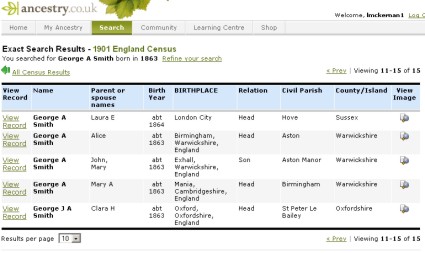
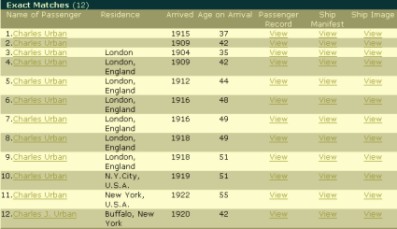
Most of this is not free. There is a variety of subscription options, on a pay-per-view basis, monthly, or annually, and either worldwide or restricted to your country. But for a few pounds a month (a monthly UK membership is £9.95) you can have access to every census record 1841-1901, and there are such marvellous things you can find. So, for example, I can trace Charles Urban – a particular interest of mine – aged 13, living in Cincinnati, in the 1880 US Federal census (freely available), through to the 1901 British census, where he is in London, aged 34, and described as ‘Manager Animated Pictures’. But beware! Ancestry’s transcriptions of census data are notoriously riddled with errors, and you have to be prepared to think laterally and to search under mispellings and the like. You won’t find Charles Urban in 1901 by searching on his name – it’s been mis-transcribed as Verban. As ever, it’s harder looking for common names. The frame grab from Ancestry above is the 1901 record for George Albert Smith, who I eventually found under George A. Smith, identifiable by his age, wife’s name (Laura) and location, Hove.

Other resources

Many people start out looking for family history information with the International Genealogical Index (IGI) or FamilySearch.org. This is the mind-boggling attempt by the Church of Jesus Christ of Latter-Day Saints (i.e. the Mormons) to create a register of all births, marriages and deaths, worldwide, as far as they possibly can, with the underlying intention of baptising anyone who might be their ancestors into their faith. The result is a directory of millions of names, taken from parish registers, census records, social sectority death records etc, plus information supplied by individual researchers. It is not primary source information, it is riddled with errors or dubious interpretations, and should only be used with caution, a pointer as to where to look next. For the film historian, it should not be the first point of call.

These are some other key genealogy resources not yet mentioned:

Genuki – a reference library of genealogical information for the UK and Ireland.

RootsWeb – a worldwide genealogical ‘community’ – a good place for posting questions about family names you may be researching.

Genes Reunited – family history based on the Friends Reunited principle, where the more people who join in and add data, the more comprehensive the resource.

ScotlandsPeople – the official source for Scottish genealogical information, including births/marriages/deaths, census records, parish registers and wills.

Findmypast.com – previously known as 1837online, this is a commercial site which as well census and civil registration records has migration and military records, and offers access to the index of birth, marriage and death records up to the 2002, including overseas records. This is less wonderful than it sounds, as they offer you page records, or groups of page records only, rather than individual name records, and searching for an individual takes ages, and becomes expensive.

General Register Office – from here you can order copies of birth, marriage and death certificates in the UK. There are national equivalents around the world, a growing number of which provide online ordering of certificates.

Ellis Island Records

http://www.ellisislandrecords.org

Passenger lists
And there’s more. Passenger list records are a key source for tracing film people sailing to different countries. Findmypast.com has co-operated with the National Archives to provide ancestorsonboard.com. This is a database of outward passenger lists for long-distance voyages leaving the British Isles from 1890 onwards. Eventually the resource will go up to 1960, and data up to the end of the 1930s has just been added. Name searching is free, but there is a charge for looking at the ships’ transcripts. As ever, it helps to be looking for a unusual name.

But the champion in this area is Ellis Island Records. This is a free resource free offering records of all those arriving at New York’s Ellis Island 1892-1924. This will give you the passenger details, where they came from and when they arrived in New York, plus the ship’s manifest (i.e. the full record of everyone travelling on that ship) as image or transcribed text. So you can not only get someone’s personal details, but who they were travelling with (family, friends, business associates), in what style (first class? steerage?), plus of course how often they travelled between Britain and America.

There is a whole lot more out there, and it can be a bit bewildering for the newcomer. As a guide through the maze of internet genealogy sources, the essential starting point is Cyndi’s List, which is the widely recognised leading sources of family history links, which is helpfully categorised by theme and country.

For reading, I recommend Peter Christian’s The Geneaologist’s Internet as a thorough and helpful guide through the thicket of online resources, what to expect from each one, their particular advantages and pitfalls.

There is a great deal that can be found in family history sources to benefit the film historian. Obviously if you are looking into the personal history of someone you are interested, these will be essential resources. But you can also learn about the social position of people in the film industry, their locality, mobility, business links, associates and self-image (Charles Urban calls himself ‘manager’ on some sources, on others he describes himself as ‘scientist’). Information from the records of one person will send you off researching other names that you hadn’t considered, and lateral use of the resources will open up new ways in which to examine film history. Who was Julia Chadwick, cinematograph operator from Rochdale, and Emelina Croft, cinematographer in Weybridge, Surrey? How did they get into the business? Who did they work with? What happened to them? The clues are there.

Early Asian cinema and the public sphere

There’s an article by Professor Wimal Dissanayake just published on the Transcurrents site which provides a thoughtful analysis of the position of early cinema in India, Japan and China. Entitled ‘Relationship Between Early Asian Cinema And The Public Sphere‘, it looks at how the early years of cinema in each country, though it inevitably came with Western influences, was strongly directed by local needs and sensibilities. It makes this interesting argument about the purpose of film history:

When we discuss the concept of Asian cinema, it is important to bear in mind its close relationship to the writing of film history. Film history is an open-ended enterprise that admits of pluralities of interpretation. In writing film histories, we produce the historical objects we seek to study. This has great implications for the exploration of the idea of Asian cinema. Today, when we write film histories of diverse Asian cinemas – Indian, Korean, Japanese, Sri Lankan etc – we need to simultaneously occupy different spaces created by the past and history, by transnationalization, by the ever changing shapes of cultural modernities. Writing film history is also a way of charting the course, the preferred trajectory for growth for the future. Hence, in our efforts to understand and map the meaning of the concept of Asian cinema, we need to pay particular attention to the complex ways in which film histories have been produced, and are been produced today.

Of course, historians will always seek good arguments to justify their preoccupation, but he makes sound arguments for the relationship early cinema in India, Japan and China held with the ‘public sphere’ i.e. how the medium naturally/inevitably engaged with the national milieu; film in those countries bore, and still bears, what Dissanayake calls “the imprint of local desire”. It’s well worth reading, even if you are not that familiar with the silent cinema of those countries.

The Open Road

The Open Road

http://filmstore.bfi.org.uk

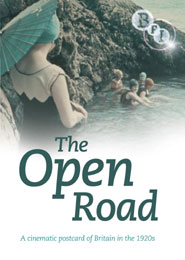
The BFI has just released its latest silent DVD, The Open Road. This is the colour footage of a road trip from Land’s End to John O’Groats filmed by Claude Friese-Greene 1924-25, which formed the basis of the 2006 BBC2 series, The Lost World of Friese-Greene, already released on DVD. The series was an attempt to emulate the success of The Lost World of Mitchell and Kenyon, with the same presenter, Dan Cruikshank, but without any of the social history or the great sense of revelation.

This BFI release presents the footage sans Cruikshank in what it calls a “special compilation of highlights”, which presumably means the extant footage from Friese-Greene’s footage minus the boring, repetitive bits, where he tests out the colour system and films rather too many rose bushes.

Claude Friese-Greene was the son of William Friese-Greene, the not-quite British film pioneer whose efforts to create motion pictures in the early 1890s were romantically but misleadingly portrayed in the film The Magic Box. Having failed to invent motion pictures, Friese-Greene tried to invent motion picture colour instead. It’s a convulted story that I’ll be telling you some other time, but essentially his experiments with a two-colour process (alternate frames stained red and green) were taken up by his son Claude, who improved the system signficantly and launched it as a 26-part travelogue in 1925. It made little impact at the time (the whole series was probably never released), and has been absent from practically all histories of colour cinematography. But restoration work by the BFI National Archive has demonstrated that, with a little bit of help from modern printing methods and digital technology, the results are really quite beautiful, and give a sweetly nostalgic view of Britain in the 1920s.

The 64mins DVD comes with a score by pianist Neil Brand and violinist Gunther Buchwald. It’s very interesting to see how the BFI is both getting documentaries made out of previously little-known archive film, and then following up with DVD releases of the original footage. It’s worked well with Mitchell and Kenyon, and I hope it works for them again.

Read here on the BFI’s site about The Open Road and the history of its restoration (which involved much re-editing of hat was originally very jumbled material.

Read this account of the Friese-Greene Colour process on the BBC History site.

Or read the shotlist of the pre-edited Friese-Greene footage (all 11,821 feet of it) in the BFI National Archive, diligently done by someone, somewhere, a long long time ago…

Lost films

The Deutsche Kinematek has initiated a ‘Lost Films’ project, the main expression of which so far is a Lost Films Wiki. As the site puts it:

We have set it up to bring together titles of films that are presumed to be lost. Furthermore we hope that archivists and film historians will add information about fragments and related documents. The idea is not to build up a comprehensive database but rather to focus on important movies, current restoration work etc. Besides the project we would like to work with this Wiki on a regular basis parallel to it and in the long run.

They invite researchers to look for films on the wiki, to add information if they have any, or to create a new record if the film is not recorded there. The emphasis is on German films, and many titles by Lubitsch, Murnau et al are listed. The site names participating archives in their project to “reconstruct and render visible the invisible legacy of German film”. All of which begs the question how people are supposed to know that is a film is lost for certain, and how many films might be added to the wiki in the belief that they are lost when they are not. Doubtless, in the way of wikis, all will sort itself out in the long run. At the moment there is little beyond a list of titles on the site. A Lost Films project web page is promised for summer 2008.

How curious is the cult of the lost film. Few other media can elicit the same amount of interest, nostalgia and speculation for those creations that are no more. Of course, one is always delighted when a ‘lost’ film re-emerges, even if the actuality frequently fails to match the anticipation, but some films actually seem better lost. Greed and The Magnificent Ambersons always have that extra allure through our sense of the footage that is no longer there. There is some other reality that lost films possess, a history that might have been, a virtual archive. Indeed, the Lost Films Wiki revealingly talks about creating “a collection of lost films”.

So, there are whole books about lost films out there: Harry Waldman’s Missing Reels: Lost Films of American and European Cinema; David Meeker and Allen Eyles’ Missing believed Lost: The Great British Film Search; Frank T. Thompson’s Lost Films: Important Movies that Disappeared (which is rather good on the background history to some elusive silents, liked Saved from the Titanic and A Daughter of the Gods).

And there are other websites dedicated to the theme – Moving Image Collections’ Lost Films list, which gives you updates on films that have been rediscovered, wholly or partially; and Silent Era’s Presumed Lost section, which naturally enough concentrates on silents, and likewise tries to keep things up-to-date by reporting on rediscoveries. Its long, long list of films previously noted as being missing and now locatd in archives across the world shows just how much good work is being done. Indeed, archivists have rather used the label of ‘lost’ to arouse interest in their work, and to encourage interest in key titles with the hope of footage turning up somewhere. Sometimes, in fact, they have been well aware that the so-called lost films are out there, and have used lost film ‘searches’ to tease them out of collectors’ hands. How hard it is too say with any finality that a film is truly lost.

Nevertheless, I’ve created a new category for Lost Films, and will regale you in due course with stories of some of the more fascinating examples, whose legend endures by simple virtue of their unavailability.

Gallaudet University Video Library

Minnehaha

Mary Williamson in The Death of Minnehaha (1913), from http://videolibrary.gallaudet.edu

A while ago I told you about the digitised series of the American journal for the deaf, The Silent Worker, which had such fascinating material on the relationship of the deaf community to silent cinema. The journal has been digitised by Gallaudet University, Washington, which specialises in education for deaf and hard-of-hearing students. The remarkable range of work it does includes a commitment to film, which leads us to the excellent Gallaudet University Video Library.

This is a model database with video streams in Windows Media and QuickTime, and first-rate associated metadata. And among the many titles available on the site are silent films, including – astonishingly – the first surviving film using American Sign Language, from 1910, and nine titles from 1913 made for the National Associaition of the Deaf. The films are known about by historians of deafness, but has anyone written about these from the film history angle?

Gallaudet provides this cataloguing data for the films:

The Lorna Doone Country of Devonshire England
(12 min., B & W, silent, signed 1910)
The earliest surviving film in sign language. Dr. Edward Miner Gallaudet, prominent educator of the deaf and founder of Gallaudet University, lectures on his visit to England. [The Video Library gives the date of 1913, but this seems to be an error]

Dom Pedro’s Visit to Gallaudet College
(6 min., B&W, silent signed: 1913)
E.A Fay relates the story of the Emperor of Brazil’s visit to Gallaudet and his American Travels, in 1876.

Memories of Old Hartford
(16 min., B & W, silent, signed: 1913)
Dr. John B. Hotchkiss talks of his youth in Hartford, Connecticut in the “good old days” of the mid-1800s.

An Address at the Tomb of Garfield
(6 min., B & W, silent, signed: 1913)
Willis Hubbard leads a delegation of deaf persons who have come to Washington for a memorial service at the tomb of the late President James A. Garfield. Hubbard summarizes Garfield’s life and achievements and speaks on Garfield’s deep interest in Gallaudet University (then called the Columbia Institution) and his role in defending the fledgling college against Congressional opponents and budget-cutters.

Discovery of Chloroform
(8 min. B&W, silent, signed: 1913)
Dr. George T. Dougherty, a leading chemist in the industrial world and leader among the deaf, lectures on the chloroform in one of the world’s first educational films.

The Death of Minnehaha
(16 min., B&W, silent, signed: 1913)
Mary Williamson relates Longfellow’s famous poem in costume and sign language. [Illustrated above]

A Lay Sermon
(16 min., B& W, silent, signed: 1913)
A sermon by the Rev. Robert McGregor about the universal brotherhood of man and the Fatherhood of God.

A Plea for a Statue of De l’Epee in America
(6 min., B&W, silent, signed: 1913)
An address read by Rev. McCarthy and interpreted in sign language by Dr. James H. Cloud. The Abbe de’l Epee was a French cleric who invented the French (and indirectly, the American) sign language in the late 1700’s.

The Preservation of Sign Language
(16 min., B & W, silent, signed: 1913)
An address by George William Veditz in which he deplores the debasing of the “pure” sign language and urges its preservation.

Yankee Doodle, The Irishman’s Flea, and the Lady and the Cake
(6 min., B&W, silent, signed: 1920)
Three humorous short tales in sign language.

The films are mostly lectures in sign language form, so comprehension is going to be a bit limited for those not conversant with ASL, but I recommend the performance by Mary Williamson of the death of Minnehaha from Longfellow’s Hiawatha and the lecture on chloroform. They are well produced (the titles are later additions) – the person behind most of them was George Veditz, president of the National Association of the Deaf, and there’s an account of their production on the PBS site. In part it seems they were made to help preserve the art of sign language by demonstrating the work of its finest practitioners (Veditz appears on one dedicated to just this theme).

To view the films, go to the Video Library site, click on the public access link at the bottom of the page, then from the menu on the left choose ‘Deaf History’ [Update: the web page has changed, so Deaf History now appears on the main menu straight away]. There are other films extant not included here, but there is more than enough to provide a fascinating window on this world, and to show us once again that the early cinema was such an exciting and creative time. More, much more, was going on that the history books have yet been able to tell us.

There’s a history of deaf people and cinema, John S. Schuchman’s Hollywood Speaks: Deafness and the Film Entertainment Industry. My copy’s on order.

From 1896 to 1926 – part 2

Lumière train (1897)

L’arrivée d’un train en gare de La Ciotat (1895)

Part two of our series taken from the series of articles written in 1926 by Edward G. Turner of the British film company Walturdaw, reminiscing on thirty years in the film trade, has him describe the sorts of films he showed in the 1890s. He recalls many individual titles, and interestingly the majority of them are from British producers.

The first films used were Edison Kinetoscope subjects, 40 ft. long. I can remember “The Cock Fight,” “Scene in a Bar Room,” “Tyring a Wheel,” “The Black Diamond Express,” and “The Comic Wrestlers.”

Then McGuire and Baucus, of Dashwood House, Bishopsgate street, provided us with a number of subjects, the saleswoman there being Miss Rosenthall, sister of J. Rosenthall, whom all old operators will remember. McGuire and Baucus were years after taken over by the Warwick Trading Co., when Chas. Urban presided over its fortunes.

Lumière were the best source of our supply, as he had sent out to various parts of the world a number of cameras. Of his subjects I remember: “The Dancers from the Moulin Rouge,” “A Market Scene in Paris,” “Diving from a Raft,” “A Pillow Fight,” “A Street Scene in Paris,” “The Gardener,” “Bad Boy and Hose Pipe,” “High Diving at Milan Baths,” “A Train Arriving at a Station,” “The Sleeping Coachman,” “Comic Boxing in Tubs,” “Dublin Fire Brigade,” “Heavy Load of Stone.”

R.W. Paul’s list included “The Miller and the Sweep,” “Whitewashing a Fence,” “David Devant Conjuring,” “Children at Tea,” “Bill Stickers,” and “A Sea Cave.”

Films were also supplied by Birt-Acre, of Barnet, the most famous of which were “Policeman, Solider and Cook,” “The Magic Sausage Machine,” and “A Man Going to Bed.”

G.A. Smith, of Brighton, produced “The Corsican Brothers,” in 75 ft., and a number of excellent subjects besides.

Williamson, of Brighton, produced a large number of small subjects, including his films of the Boxer Rising in China.

Later, came the old showman’s wonderful film “The Poachers,” of which I think Col. Bromhead will bear kindly remembrance; the Sheffield Photo Co.’s “Daylight Burglars”; and later, the faked films of the South African War, made by Mitchell and Kenyon.

The South African War provided many films, and the public wanted more.

What an impetus these films gave to the Trade!

What a remarkable memory he had. Historians of the period will note that his chronology may be a little awry, but he is almost completely spot on with which producer supplied which titles – some of which survive to this day, others now are lost with only evidence such as this to tell us of their one-time significance. “Miss Rosenthall” is Alice Rosenthal, sister of Anglo-Boer War cameraman Joseph Rosenthal, and later a film producer herself. Birt-Acre is Birt Acres, “McGuire and Baucus” were Franck Z. Maguire and Joseph Baucus. “Williamson” is James Williamson. Next up, financial crisis, and a crucial change of exhibition policy…

Limbering up for Pordenone

Films cans from the Bible Lands collection, from http://www.cinetecadelfriuli.org/gcm

As the time gets nearer to the Pordenone Silent Film Festival (let’s hope they get the hotel details soon to those of us planning to go…), some advance news items are being published. Firstly, there this report in Variety on a newly-found home movie of Charlie Chaplin taken by the future broadcaster Alastair Cooke:

Newly discovered footage of Charlie Chaplin at play, lensed by a young Alistair Cooke, makes its bigscreen debut when Italy’s 26th Pordenone Silent Film Festival kicks off, Oct. 6-13.

Cooke himself thought the 15 minutes he shot in 1933 on Chaplin’s yacht off Catalina Island were lost, but literary executor Colin Webb alerted Chaplin scholar David Robinson of the find, and Robinson, as artistic director of the festival, squeezed it into this year’s program. Cooke was 24 and a student at Yale when he pitched a series of star interviews to Blighty’s the Observer Sunday paper.

Sharing the spotlight at Pordenone this year is a series devoted to little-known Weimar titles as well as a tribute to Rene Clair.

And there’s the extraordinary story of the ninety-three cans of film (see above) apparently all taken in the Middle East in 1897, and being presented at the festival by the redoubtable Lobster Films, who seem always to have a knack of finding the extraordinary among early films. But ninety-three films from 1897 just boggles the mind – so many to have been taken, let alone so many to have survived. But who took them? No one is saying, so far.

Keeping things silent in 2008

AMS 2008 calendar

http://www.mont-alto.com

A new year is but three months away, and you’ll be needing your 2008 calendar. So why not see the coming year through with your favourite silent stars by purchasing the 2008 Silent Movies Calendar, put together by regulars on the alt.movies.silent discussion group. As the blurb on the Mont Alto Motion Picture Orchestra site says:

The alt.movies.silent calendar features silent film artwork and birthdays of silent-era film stars and personalities, as well as notable marriages, deaths, film openings, and other significant dates. The artwork ranges from promotional stills for major Hollywood releases to rare star mug shots and informal pictures of stars from Fatty Arbuckle to Bela Lugosi.

The cost is $15 for the first calendar, $12 for additional calendars, plus $4.60 postage (per order, regardless of the number of calendars). Net proceeds go to a film preservation fund. All the ordering information you need is on the Mont Alto site.