He Who Gets Slapped

He Who Gets Slapped

Lon Chaney in He Who Gets Slapped, from http://www.bbc.co.uk/news

The Victor Sjöström-Lon Chaney classic He Who Gets Slapped is due to get the modern-score-from-rock-musician-seeking-new-challenges treatment, as BBC News Online reports:

Goldfrapp star writes film score

Goldfrapp keyboardist Will Gregory is joining the BBC Concert Orchestra for the premiere of his new score to silent film classic He Who Gets Slapped.

Portishead’s Adrian Utley will also take part in the performances, in Bristol and London in December.

The 1924 film was the first to be made by MGM and stars Lon Chaney – who also appeared as The Phantom of the Opera – as a clown who gets 200 slaps a day.

Gregory said the film was an “overlooked masterpiece”.

‘Presence and charisma’

Chaney, who was one of the biggest film stars of the day, regarded his role in the film as his best.

“Whenever he is on screen he exudes such presence and charisma that it is easy to see why he was the most celebrated screen actor of his day,” Gregory added.

Chaney, who also starred as The Hunchback of Notre Dame, died in 1930, after making his only “talkie”, The Unholy Three. He was played by James Cagney in a 1957 biopic, Man of a Thousand Faces.

Jazz saxophonist Andy Sheppard and drummer Tony Orrell will also perform, while the BBC Concert Orchestra will be conducted by Charles Hazelwood at the shows, at Colston Hall in Bristol and London’s Queen Elizabeth Hall on 1 and 3 December.

There are further details on the Colston Hall and South Bank Centre sites. Silent films are the new rock’n’roll, you know.

London thrills me

Blackmail

Blackmail (1929), from http://www.bfi.org.uk/whatson/lff

OK, back to normality, and a few short news items on silent matters which have built up over the past few days. To start with, under the title ‘London Thrills Me’, the London Film Festival is hosting two silent film screenings this week in Trafalgar Square. On 18 October you can see the silent version of Alfred Hitchcock’s classic Blackmail (1929), accompanied by Ivor Montagu’s delightful comic short, Blue Bottles (1928), starring Elsa Lanchester. Neil Brand provides the live piano score. The following day John Sweeney is the pianist in Trafalgar Square for Capital Tales, a selection of 100 years of London on film. The silents being screened are London Street Scenes – Trafalgar Square (1910), Blackfriars Bridge (1896), Petticoat Lane (1903), Old London Street Scenes (1903), Trafalgar Square Riot: Pathé’s Animated Gazette (1913), Hoxton… Saturday, July 3rd, Britannia Theatre (1920) – extract, The Fugitive Futurist: A Q-riosity by “Q” (1924), Cosmopolitan London (1924) – extract, and Piccadilly (1929) – extract. Both screenings begin at 18.30.

Peter Pan and the fairy harp

null

Elizabeth-Jane Baldry, from http://www.stgeorgesbristol.co.uk

If you were puzzled by the mention in a recent post of the screening of Peter Pan (1924) as part of the Barbican Silent season being accompanied by the fairy harp, be puzzled no more. There is a short piece on the Music from the Movies site, which introduces up to Elizabeth-Jane Baldry, who plays the instrument:

The fascination with recreating music for silent film goes ever on; Carl Davis is perhaps the best known composer doing this in the UK today, while Michael Nyman has of course dabbled with projects like his re-scoring of Dziga Vertov’s Man With a Movie Camera. The Pet Shop Boys famously applied their musical stylings to Sergei Eisenstein’s legendary Battleship Potemkin a couple of years ago and, as we reported last week, John Scott has written new music for the 1922 film Robin Hood.

Peter Pan is another such character that was of course given ‘the silent treatment’ and the 1924 Hollywood film directed by Herbert Brenon is probably the first celluloid outing for the pesky Neverlander. While the film was given a new score by composer Philip Carli in 1999, the film will receive an interesting musical accompaniment in Bristol in November. Playing live to the film at the City’s delightful ‘St. George’s Bristol’ concert venue, ‘Fairy Harpist’ Elizabeth-Jane Baldry will improvise a score on the Harp. Baldry, whose performances have appeared in numerous stage and screen guises, is well known for her exploration of what has become known as ‘Victorian Fairy Harp Music’ and applies those enchanting refrains to Peter Pan, a fitting accompaniment indeed!

You can find out more about the Victorian fairy harp – indeed hear sound samples, from Baldry’s personal site, www.fairyharp.com. She accompanies Peter Pan at St George’s Bristol on 25 November, and at the Barbican in London on 16 December.

Silents at the Barbican

Silent Film & Live Music

http://www.barbican.org.uk

The Barbican in London is putting on a new series of silent films with special music accompaniment for its Silent Film & Live Music series. It’s a superb line-up once again:

16 September: Orphans of the Storm (D.W. Griffith, 1921)
Live piano accompaniment by Neil Brand

Invitation to a Dream – Silent Film & the Avant-Garde

7 October: The Smiling Madame Beudet (La Souriante Madame Beudet) (Germaine Dulac, 1922) + Themes et Variations (Germaine Dulac, 1928)
Live piano accompaniment by Errolyn Wallen
+ Disque 957 (Germaine Dulac, 1928) + Invitation to a Journey (Germaine Dulac)
Live performance by L’Inquiétant Supsendu

+ The Seashell and the Clergyman (La Coquille et le clergyman) (Germaine Dulac, 1927)
With live accompaniment by Minima

21 October: Faust (F.W. Murnau, 1926)
The London premiere of a new score composed by Jean Hasse and conducted by John Traill

31 October: Dr Jekyll & Mr Hyde (John S. Robertson, 1920)
Live accompaniment by DJ Nacho Martin

Crime and Deviancy in Silent Cinema

4 November – Underworld (Josef von Sternberg, 1927)
Live piano accompaniment by Neil Brand

11 November – The Hound of the Baskervilles (Maurice Elvey, 1921)
Live piano accompaniment by Stephen Horne

2 December – The Lodger (Alfred Hitchcock, 1926)
Live performance by Cipher

16 December – Peter Pan (Herbert Brenon, 1924)
Live fairy harp accompaniment by Elizabeth Jane Baldry

More information as always, including booking details, from the Barbican site.

Pandora’s Box

Pandora’s Box

Die Büchse der Pandora, from http://www.watershed.co.uk

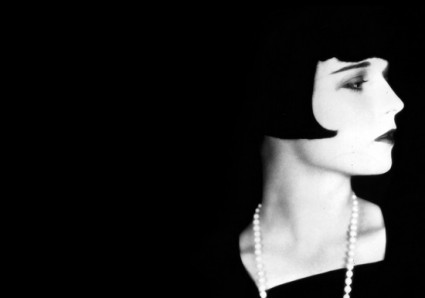
That excellent venue the Watershed in Bristol is marking its twenty-fifth anniversary with a screening of G.W. Pabst’s quintessential silent Pandora’s Box (Die Büchse der Pandora), starring Louise Brooks. The screening sees the premiere of a new orchestral score by Paul Lewis, and will be held at Colston Hall, and hosted by actor Paul McGann. The score will performed by twenty-five members of the Royal Ballet Sinfonia, and conducted by Lewis himself. The show takes place on 25 September, and is a joint collaboration between the Watershed, Bristol Silents and the Pordenone Silent Film Festival. Further details are available from the Watershed site. Print and score will then feature the following month at Pordenone.

Robin Hood and Der Rosenkavalier

News of two UK screenings coming which are worth nothing.

Robin Hood

Firstly, 7 October 2007 sees a screening of the Douglas Fairbanks classic Robin Hood (1922) at the Royal Centre, Nottingham. The score is by John Scott, who also conducts the Nottingham Philharmonic Orchestra. Here’s some of the blurb from the Royal Centre site:

If you’ve never seen a Silver Screen Silent Classic before then now’s your chance to sit back and enjoy this home-grown tale played to a new original orchestral score by the legendary John Scott. If you have then you’ll know just what a treat you are in for with this exciting evening out.

Robin Hood (1922) was the first motion picture ever to make a Hollywood premiere, and starred a swashbuckling Douglas Fairbanks in the title role. This epic adventure was based on the legendary tale of Nottingham’s greatest Medieval hero, and was the first production to present many of the elements of the legend that have become familiar to movie audiences in later versions. One of the most expensive movies of the 1920s, an entire 12th century village of Nottingham was constructed. Telling the classic story of Robin and his band of Outlaws, Fairbanks is an acrobatic champion of the oppressed, setting things right through swashbuckling feats and makes life miserable for Prince John and his cohorts, Sir Guy Gisbourne and the Sheriff of Nottingham and good ultimately triumphs over evil.

For over 30 years John Scott has established himself as one of the finest composers for film having scored over 60 films winning three Emmy Awards and numerous industry recognitions of his work. His major film credits include Greystoke, The Legend of Tarzan, Charlton Heston’s Antony and Cleopatra, The Deceivers with Pierce Brosnan, King Kong 2,The Long Duel with Yul Brynner, Shoot To Kill with Sidney Poitier and the Jacques Cousteau Re-Discovery Of The World TV series.

Der Rosenkavalier

Next, a little further away, but already being advertised and something of a hot ticket, there’s Der Rosenkavalier (1926), at the Royal Philharmonic Hall, Liverpool, with Richard Strauss’ music, performed by the Royal Liverpool Philharmonic, conducted by Frank Stroebel. The screening takes place 14 June 2008. The film, directed by Robert Weine is something quite unusual among silent films, as the blurb explains:

However well you know Richard Strauss’s opera Der Rosenkavalier, or even if you don’t know it at all, this will surprise and delight you. It’s not a film of the opera but music with pictures, an independent silent cinematic version made in 1926 by the pioneering director Robert Wiene (best-known for the ground-breaking The Cabinet of Dr Caligari). The scenario of Der Rosenkavalier (The Knight of the Rose) was written by Hofmannsthal, the opera’s librettist, and includes new scenes and flashbacks, with a major role for the Marschallin’s husband, unseen in the opera. The music, played by a live orchestra, was arranged by Strauss with additional material, some newly composed. Masterminded by Frank Strobel, artistic director of European Film Philharmonic Berlin and a specialist in arranging and conducting music for silent films, this newly restored print with reconstructed final reel comes to Liverpool for the British premiere of this entertaining and fascinating rediscovery, a unique event in the history of film and opera.

More details from the Royal Liverpool Philharmonic site.

A Throw of Dice

Among the many events marking the sixtieth anniversary of the independence of India and Pakistan, there is a screening of Franz Osten’s 1929 Anglo-Indo-German film, A Throw of Dice, on 30 August, at 21.00pm, in Trafalgar Square. Live music will come from the London Symphony Orchestra, playing a new score by Nitin Sawhney.

It certainly sounds like an event to catch, even if the assertion on the India Now website that Franz Osten is “considered by many as one of the most talented directors of all time” will come as a surprise to most. It’s a proficiently told tale from the age of the Maharajahs, the print having come from the BFI National Archive, who approached Sawhney to provide the score. It’s also billed as that curious phenomenon of our times, “a digital restoration”. Osten, a German, made three silent films in India, on historical themes, with funding from the German Emelka studios, The Light of Asia (1926), Shiraz (1928) and A Throw of Dice (1929). They are all beautiful to look at, and stand up well without being particularly astonishing.

There are several other screenings of the film and score lined up, more details of which you can find on the Throw of Dice website. The later screenings are: Oct 26th Sage Gateshead, Oct 27th Bridgewater Hall – Manchester, and Oct 28th Symphony Hall – Birmingham, all with the Northern Sinfonia. A bold initiative, well planned by somebody – go and see it if you can.

Carl Davis and the Chaplin Mutuals

The Cadogan Hall in London is presenting all twelve of Charlie Chaplin’s Mutual films over four programmes, with scores composed and conducted by Carl Davis and performed live by the Royal Philharmonic Orchestra. The screenings are taking place 15-18 August, and will be introduced by Paul Ross, Richard Briers, David Robinson (Chaplin’s biographer), and Michael Chaplin (Chaplin’s son). The Cadogan Hall site has an excellently designed Chaplin section, with photographs and clips, well worth visiting. And it has all the booking information, of course.

Programmes
Wednesday 15 August, 7.30pm
Easy Street, One A.M., The Immigrant (introduced by Paul Ross)

Thursday 16 August, 7.30pm
Behind the Screen, The Fireman, The Rink (introduced by Richard Briers)

Friday 17 August, 7.30pm
The Pawn Shop, The Vagabond, The Cure (introduced by David Robinson)

Saturday 18 August, 7.30pm
The Count, The Floor Walker, The Adventurer (introduced by Michael Chaplin, with question and answer session with Carl Davis)

Sentiment and Sensation

boutdezan.jpg

The Museum of Modern Art in New York has an exhibition of posters for silent films, Sensation and Sentiment: Cinema Posters 1912–14. It runs May 23–August 27, 2007. The posters come from the renowned collection of Dutch film distributor Jean Desmet (1875–­1956), and advertise American, British, Danish, French, and Italian films dating from 1912 to 1914. The exhibition also has rare photographs documenting the earliest sites of film exhibition in the United States. The exhibition is accompanied by a related film series in July and August. The wonderful poster above for Bout-de-Zan et le crime au telephone (1914) is all that’s illustrated on the website, alas.

(Bout-de-Zan is the little boy in the picture. He was played by René Poyen (1908-1968), who portrayed the character, a child always distinctively dressed as an adult, in a string of short comedies made by Louis Feuillade for Gaumont)

William S. Hart: Star of the West

William S. Hart

There’s a film season started at the Museum of the Moving Image, New York, on the films of the great star of the silent Western, William S. Hart, whose chilly vision of the West has been compared in recent times to that of Sam Peckinpah and Clint Eastwood. The season runs 21 April-6 May, and features Hell’s Hinges (1916), The Taking of Luke McVane (1915), The Captive God (1916), ‘Bad Buck’ of Santa Ynez (1915), The Bargain (1914, a new Library of Congress restoration), The Return of Draw Egan (1916), The Narrow Trail (1917), Branding Broadway (1918), Wagon Tracks (1919), The Toll Gate (1920), The Testing Block (1920), The Whistle (1921) and his masterpiece Tumbleweeds (1925), preceded by Hart’s spoken introduction to the 1939 re-issue.