Musical accompaniment of moving pictures

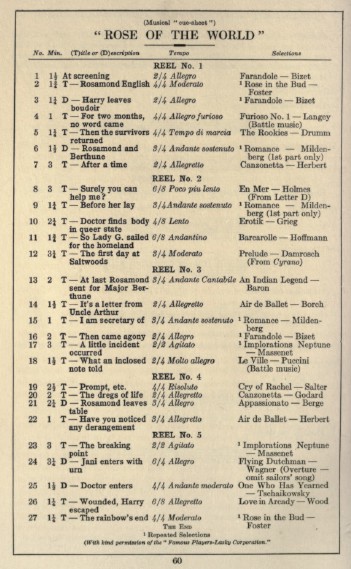
Rose of the World cue sheet

The latest addition to the Bioscope Library is Edith Lang and George West’s Musical Accompaniment of Moving Pictures (1920). This is a guide for pianists and organists in the silent era, with plenty of musical detail (‘Musical Characterisation’, ‘Transition and Modulation’, ‘Improvisation’) and practical advice (“The player will do well, first of all, to ‘size up’ his audience”), with repertoire suggestions. It is also wide-ranging in the kinds of films it advises on – not only feature films, but animation, slapstick comedies, newsreels, travelogues and even educational films. There is particular discussion, with music cue sheet (illustrated), of the Maurice Tourneur five-reel film Rose of the World (1918). The book gives special attention to the theatrical organ. It’s available from the Internet Archive in PDF (27MB), DjVu (2.6MB) and TXT (139KB) formats.

William Haggar – Fairground Film-maker

William Haggar

http://www.amazon.co.uk

Tomorrow sees the publication of William Haggar: Fairground Film-maker (Accent Press), by Peter Yorke. Yorke is the great-grandson of William Haggar, fairground entertainment and pioneer of Welsh cinema, whose energetic dramas such as A Desperate Poaching Affray (1903) and The Life of Charles Peace (1905) were hugely popular in their time and are treasured by early film historians now. Yorke’s biography draws on oral reminiscences, unpublished family memoirs and contemporary press reports to tell the rags-to-riches story of a travelling theatrical who became one of Britain’s select band of pioneer film-makers. The Bioscope understands that the mispelling of Haggar’s name on the book cover being publicised on Amazon has been corrected since…

The Projection Box Essay Awards

Early film and pre-cinema publishers The Projection Box have announced a new award for essays on projected and moving images to 1915. The aims of this award are to encourage new research and new thinking into any historical, artistic or technical aspect of projected and moving images up to 1915; and to promote engaging, accessible, and imaginative work. The first prize of £250 is for an essay of between 5,000 and 8,000 words (including notes).

The deadline for entries is 18 January 2008. The winning essay will also be published in an issue of Early Popular Visual Culture (Routledge). At the discretion of the judges, two runners-up will each receive books and CD-Roms of their choice (published by The Projection Box), to the value of £100.

The award is open to all. Although the judges welcome international submissions, all essays must be in English. Each applicant may submit up to two essays. Work must be the author’s own, and must not have been previously published. There is no time limit on when the work was originally written. Co-authored essays can be accepted. Authors are encouraged to provide appropriate accompanying illustrations, as the winning essay will be published in Early Popular Visual Culture, an illustrated journal. Permissions will need to be sought by the author before publication of the winning entry. Notes and references must be included. Read the guidelines for the required method for referencing your text.

For further information, visit www.pbawards.co.uk.

Hopwood’s Living Pictures

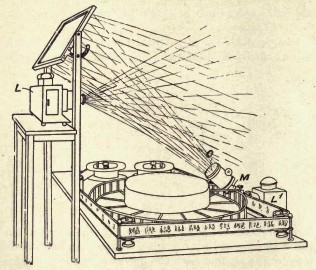
Praxinoscope

Another addition to the Bioscope Library. Henry Hopwood (1866-1919) was Custodian in the Library of the Patent Office in Chancery Lane, London. His Living Pictures is a comprehensive history and handbook on the technology of the new science of motion pictures, published first in 1899 and then in a revised edition by his colleague R.B. Foster in 1915. It is a thorough, knowledgable account of the subject, based around patent applications, but expressed in an engaging and sometimes philosophical style which makes it a pleasure to read today. It still used as a standard reference source.The 1915 revision is available for downloading from the Intenet Archive in DjVu (16MB), PDF (45MB) and TXT (570KB) formats.

The Persistence of Vision

The Eye

http://www.amazon.co.uk

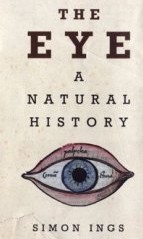
I’m currently reading The Eye: A Natural History (2007) by Simon Ings. It’s the story of the eye, of how we see, what we think we see, and how the eye fits into human history and the history of evolution.

This might not seem hugely relevant to the study of silent cinema, but it is. The study of motion pictures needs to take in the practialities (biological as well as psychological) of visual reception, and the study of early cinema is especially relevant because it embraces that extraordinary shift in perception when we were first offered seemingly wholly realistic images in motion as means both to be entertained and to learn about our world. It’s about the apprehension of truth and reality, and a basic grounding in optics wouldn’t go amiss.

The one thing most people know about film and optics is “the persistence of vision”: the visual trick by which we are supposed to be able to “see” motion pictures. This wholly fallacious explanation for why we can see films has been accepted as gospel for decades, and can be found in any number of film text books, yet it is quite wrong. There is certainly a phenomenon which is the persistence of vision, but it does not explain how cinema gives its impression of motion, or continuity. As Ings succinctly puts it:

…’persistence of vision’… is simply the eye’s inability to tell a steady light from one that flickers faster than fifty times a second…

Optical toys such as the Phenakistiscope and the Zoetrope exploited this propensity of the eye to be fooled by a rapid, intermittent procession of images, but the persistence of vision would in fact prevent our seeing motion on film, were it not for other forces at work: fusion, and something called the phi phenomenon, which also explain how we are able to see real movement. Again, as Ings explains it:

Humans are foragers; we take a more than usual interest in what things are. But even our eyes are tuned, first and foremost, to motion. In 1875 the Viennese physiologist Sigmund Exner showed that two brief, stationary flashes, provided they are not too far away from each other, are seen as a single object in motion. This habit of fusing stationary dots into moving objects makes a great deal of sense in nature, where prey and predators disappear and reppear constantly, as they move through grass, run behind trees, and peer around rocks. But the power of the phenomenon (called the phi phenomenon) will perhaps best be demonstrated the moment you set this book down and turn on the television. Every film and television programme ever made depends on phi. Both display images quickly enough for our eyes to read them as a single moving image.

It is not because one image persists and then is replaced by another, but because we cannot see that there is a space between those images that explains why we see ‘motion pictures’. And we can appreciate movies because, evolutionarily speaking, we’re all hunters or hunted.

Sigmund Exner I’ve not come across in any history of our understanding of how we see films, but he sounds to have been a remarkable person. As well as a major figure in our understanding of optics, he was the founding father of the world’s first sound archive, the Phonogrammarchiv in Vienna, founded in 1899 and still going strong.

Not all film histories have got it wrong over the persistence of vision. There are sensible accounts in Jacques Aumont’s The Image, Brian Winston’s Technologies of Seeing, and Michael Chanan’s The Dream that Kicks. There’s a helpful explanation of why the persistence of vision notion is a fallacy, written by Stephen Herbert, on the excellent Grand Illusions site.

Ings’ book is a first-rate work of popular science, made all the more readable by someone who is a novelist as well as a scientist. It also has good stuff on how we see colour, which has relevance for early films as well, but I haven’t got to that chapter yet. A further post will follow when I have…

Brilliance

Brilliance

http://www.amazon.co.uk

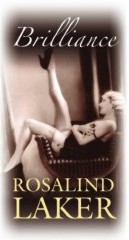
Romantic fiction and early cinema seldom mix, but they’re about to now. Romantic novelist Rosalind Laker has written Brilliance, published this month, which is set in 1890s Paris, and features both a magic lanternist hero and the Lumière brothers. Here’s the blurb from Amazon to tempt you:

This story is set in Paris, 1894. In a moment of impulse that she will never regret, Lisette Decourt flees her home and family on the eve of marriage to a man who has betrayed her. She attaches herself to a travelling ‘lanternist’, Daniel Shaw, whose ‘Magic Lantern’ show is a phenomenally popular precursor of silent movies. Lisette is fascinated by Daniel’s art and – though adamant that she will never fall in love again – irresistibly attracted to the magnetic Englishman. Though Fate intervenes to separate them, Lisette cannot forget Daniel. She builds a new life for herself as an independent, self-sufficient career woman, yet she remains fascinated by the vibrant new film-making industry whose French proponents are the famous Lumiere Brothers. When a chance encounter reunites Lisette with Daniel, by now a successful film-maker himself, he realizes that she has the magic, elusive quality that will make her a star…

Teenagers

Teenage

http://www.amazon.co.uk

Sometimes some of the most interesting writing on early cinema isn’t found under the heading ‘cinema’. A case in point is Jon Savage’s new book, Teenage: The Creation of Youth 1875-1945. It’s a history of the invention of teenagers before there were teenagers, as it were. Most social histories explore the phenomenon post-1945 – Savage looks at how we got to that point by looking at the growing power and influence of adolescents, partiularly American, from the late Victorian period, not least through the pleasures that they pursued. So he has a lot to say about the cinema of the teens and 1920s (making good use of Kevin Brownlow’s Behind the Mask of Innocence), for which the audience was, we must remember, significanly young (up to 50% of the early cinema audience were children or adolescents, according to some estimates). He places the cinema as a particular pleasure of the teenaged within his larger thesis about America as a young society, giving early cinema a social context beyond the boundaries used found in a film studies book. Or at least that’s what I gleaned from half an hour’s read in Waterstone’s…

There’s an interesting review by Libby Purves in The Times which highlights the cinema aspects of the book. Jon Savage is of course the author of the definite book on punk, England’s Dreaming.

A good read or two

Having expressed disappointment at the Silent Cinema book by Brian Robb, what should the person new to silents read as an introduction to the subject? There’s not much among new publications (please somebody let me know if you have opinions otherwise), but I’ve come up with a top ten that I would recommend.

1. Karl Brown, Adventures with D.W. Griffith (1973)

Out of print, but easy to find second hand, this a memoir by the assistant cameraman to Billy Bitzer, who was D.W. Griffith’s cinematographer. It is an eye-witness account of the making of Birth of a Nation and Intolerance, written with immense charm, wit and memorable observation. There is no other book like it for conjuring up the excitement and creativity of early filmmaking. It’s a terrific read, funny and informative, making you wish that you had been there too.

2. Ivan Butler, Silent Magic: Rediscovering the Silent Film Era (1987)

Another book from someone who was there. Ivan Butler saw his first film in 1915 and went on to become a film historian. This is a marvellously evocative account of the films he saw in the silent era, year-by-year, with sharp observations not only on the notable films and stars of the period but also many names and titles now forgotten. You get a real sense of what it was like to be a regular filmgoer in the 1920s (in Britain). It’s out of print, but well worth tracking down.

3. Edward Wagenknecht, The Movies in the Age of Innocence (1962)

A classic survey of the silent screen from the early one-reelers to the 1920s, concentrating on American silent cinema. It is literate and enthusiastic in equal measure, mixing personal recollection with wise observation. And it’s still in print.

4. David Robinson, Chaplin (1985)

Charlie Chaplin’s own Autobiography is a candidate for this list, but my vote goes for this exhaustive, amazing biography, 792 pages and yet you may want to read it all at single setting. It makes best use of unprecentend access to the Chaplin archives, and it is just such an amazing, Twentieth Century story.

5. Brian Coe, The History of Movie Photography (1981)

If you have to have one book on motion picture technology (and it’s worth having one), this is it. It doesn’t just cover the silent era, but for that period alone (and the ‘pre-cinema’ of the nineteenth century and before) it is the best, clearest and most helpfully illustrated publication yet produced. All good film archivists swear by it. Of course it’s out of print, but not hard to find.

6. George Pearson, Flashback: The Autobiography of a British Film Maker (1957)

Pearson was a schoolteacher, aged thirty-seven, when in 1912 he gave up his steady career to become a film director and writer with the Pathe company in Britain. This is a touching, thoughtful and often inspiring memoir from someone who toiled during the difficult years of British filmmaking. His hopes for film as an art and as a source of instruction are inspiring, even if his personal achievements were relatively humble. It’s also just a very readable and observant account of the British film industry over three decades.

7. Charles Musser, Before the Nickelodeon: Edwin S. Porter and the Edison Manufacturing Company (1992)

OK, this scholarly and very detailed work isn’t every beginners idea of where to begin, but if your interest is in the scholarly excitement generated by early cinema, and how the field of film before 1914 can be a source of ideas, debate and theory, this is the book for you. It uses the carer of Edwin S. Porter (director of The Great Train Robbery) as a way into a deep understanding of how the motion picture industry emerged, ably situated within a broader socio-cultural framework. It has inspired many other such studies, but hasn’t really been beaten yet.

8. Kevin Brownlow, The War The West and The Wilderness (1978)

Most would put Brownlow’s famous The Parade’s Gone By in such a list, but this is my favourite of his books, which shows us that there was much more to the silent cinema than the conventional fiction feature film. This is about the pioneers who went out and filmed wars and revolutions, went exploring with the camera, and recorded the wild West in the first years of cinema. It’s particularly good on the actuality filming of the First World War, and films of polar exploration. It’s a book about discovery which has discoveries itself on every page. There’s such enthusiasm and admiration on every page. It’s out of print of course, and copies tend to be a bit costly – but, go on, treat yourself.

9. Walter Kerr, The Silent Clowns (1975)

Another classic. No book conjures up better the skill and immense fun of the great silent comedians. It has definitive observations on Chaplin, Keaton, Lloyd, Laurel and Hardy, Langdon and a host of other, it is richly illustrated, and it has wise things to say on what we laugh at and why.

10. Garth Jowett, Film: The Democratic Art (1976)

This is a social history of American film. There have been far too few such histories, as though film existed solely on the screen, without any wider social significance. This book does what any sensible history of such a phenomenon should do: it looks at the social, political, cultural and economic forces which drove cinema, with the focus on audiences and institutions. It goes beyond the silent cinema period, but if you want to see how film in the silent era interacted with society (and you should), this is a very good place to start.
Reading Robb

I’ve now got my copy of Brian J. Robb’s Silent Cinema (see earlier post) and indeed it is quite poor. It’s sloppily edited, has numerous errors, spells names wrongly (Adolph Zuker, Brit Acres, D.W. Griffiths etc), and unashamedly regurgitates every dubious myth about silent film you can think of. It’s also very oddly structured – chapters on the origins and developing art of film, then a chapter on Georges Méliès, then straight into sections on directors, stars and clowns, followed by scandals, a quick round up of international silents, then potted descriptions of some classic titles, and on to the coming of sound.

I wouldn’t recommend it to anybody, except for the DVD that accompanies it. This is a generous 193 mins compilation put together by Sunrise Silents. The quality of the clips is poor, the accompanying music is cheap, and there’s nothing to tell you what the film clips are unless to refer to a back page of the book. But the sheer range of clips is very impressive, so here’s a listing (the dates aren’t given on book or DVD, so The Bioscope comes to the rescue):

  • Johnny Hines – Conductor 1492 (1924)
  • Mary Pickford – Little Annie Rooney (1925)
  • Harold Lloyd – I’m On My Way (1919)
  • Pola Negri – Hotel Imperial (1926)
  • Rudolph Valentino – Son of the Sheik (1926)
  • The Gish sisters – Orphans of the Storm (1921)
  • Douglas Fairbanks – Wild and Woolly (1917)
  • Greta Garbo – Joyless Street (1925)
  • Laura La Plante – The Cat and the Canary (1927)
  • Buster Keaton – Cops (1922)
  • Norma Talmadge – The Social Secretary (1916)
  • Rin Tin Tin – The Night Cry (1926)
  • Raymond Griffith – The Night Club (1925)
  • Colleen Moore – A Roman Scandal (1919)
  • Lon Chaney – The Phantom of the Opera (1925)
  • Louise Brooks – It’s the Old Army Game (1926)
  • Charles Chaplin – The Star Boarder (1914)
  • Clara Bow – My Lady of Whims (1925)
  • William S. Hart – The Ruse (1915)
  • Pearl White – The Perils of Pauline (1914)
  • Lige Conley – Air Pockets (1924)
  • John Barrymore – The Beloved Rogue (1927)
  • Theda Bara – The Unchastened Woman (1925)
  • Our Gang – The Big Show (1923)
  • Mabel Normand – The Extra Girl (1923)
  • Alla Nazimova – Salome (1923)
  • Gloria Swanson – Teddy at the Throttle (1917)

All are American except Joyless Street (German), and, no, I’d never heard of Johnny Hines or Lige Conley either…

Picture Perfect – Landscape Place and Travel in the British Silent Film

Picture Perfect

http://www.amazon.co.uk

In 2003 the British Silent Cinema Festival explored the theme of landscape, location and travel in the British silent film. The idea originated from an oft-levelled criticism of British cinema, that it was overly studio-bound, dependant on theatrical traditions and therefore felt stagey, cramped and confined. Over 100 films later, festival attendees could conclusively nix this judgement and revel in the delightful outdoorsiness of our film heritage. Our landscape is still in many ways the biggest selling point of British Cinema today, this book surveys the origins of the use of the British location, both actual and fantasy, in film.

Picture Perfect: Landscape, Place and Travel in British Cinema Before 1930, edited by Bryony Dixon and Laraine Porter, and published by University of Exeter Press, is now available.