Early Popular Visual Culture

Early Popular Visual Culture

A bit of a plug for a journal with which I am involved. There are few scholarly journals out there which concern themselves with early film, which makes Early Popular Visual Culture all the more precious.

It was originally published in 2001 as Living Pictures: The Journal of the Popular and Projected Image before 1914. It reinvented itself as EPVC in 2005, with Routledge as publishers. It is dedicated to publishing research on all forms of popular visual culture before 1930. It takes as its particular brief to

… examine the use and exploitation of popular cultural forms such as (but not limited to) cinema, photography, magic lanterns and music hall within the fields of entertainment, education, science, advertising and the domestic environment; and is primarily concerned with the evolving social, technological and economic contexts which such popular cultural products inhabited and defined.

… which is spreading things as broadly as you could wish. So it’s not just silent movies, but akin popular projected forms, and the world they inhabited, which is demonstrated in the range of essays in the most recent issue (vol. 5 issue 1, April 2007):

  • Joe Kember, ‘The Functions of Showmanship in Freak Show and Early Film’
  • Paul Myron Hillier, ‘Men and Horses in Motion: Thomas Eakins and Motion Photography
  • Gerry Turvey, ‘Ideological Contradictions: The Film Topicals of the British and Colonial Kinemaograph Company’
  • John Hewitt, ‘Designing the Poster in England, 1890-1914’
  • Eric Faden, ‘Movables, Movies, Mobility: Nineteenth-century Looking and Reading’
  • plus an archive feature, introduced by Vanessa Toulmin, ‘Magic Ephemera’ and book reviews.

All that, and it looks great. Get your local library to take our a subscription today!

All you need to know about the cinematograph

Pathe Cinematograph

The latest publication on the shelves of The Bioscope Library is Bernard C. Jones, The Cinematograph Book, published in 1915.

This is one of the classic guides to the practicalities of motion pictures in the silent era. It aimed at clarity with usefulness, and achieved it. The chapters cover the history of the ‘invention’ of motion pictures, the operation of a camera and projection equipment, developing and printing films, cinema screens, what to do in case of fire, cleaning and preparing films, producing trick films, and making films for the home. It also has a special section on natural colour cinematograph pictures, focussing on Kinemacolor. Finally there is a guide to the relevant acts and regulations (as they related to the UK). It’s all you needed to know. Once again, it comes from the Internet Archive.

Sessue Hayakawa

Sessue Hayakawa

http://www.amazon.co.uk

There’s a new book out on one of the most intriguing of silent film stars, Sessue Hayakawa. Daisuke Miyao’s Sessue Hayakawa: Silent Cinema and Transnational Stardom (Duke University Press) tells the history of the Japanese actor who rose to fame in Hollywood in the silent era, ultimately gaining lasting fame for his role as the camp commander in The Bridge on the River Kwai.

Hayakawa was born in Japan in 1889, where he became a stage actor. He moved to the USA aged 19, then went back to Japan to form an acting troupe which toured America in 1913. Film producer Thomas Ince gave him a contract. He was an immediate success in titles such as Typhoon (1914) and Cecil B. De Mille’s subtly sadistic The Cheat (1915). His wife Tsuru Aoki often co-starred alongside him. He left America in 1922, eventually settling in France, making occasional films. He died in 1973, having received an Oscar nomination for Kwai.

Miyao’s book focusses on the Japanese racial identity in American film, and how Hayakawa’s great appeal (he had a strong female following) was a mixture of the vogue for the refinements of ‘Japonisme’ and crude fears of a ‘yellow peril’. It’s an important history.

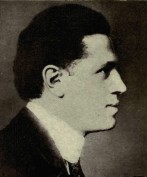
Diverting Time

The Egyptian Hall

Courtesy of Maney Publishing, publishers of The London Journal, I am able to publish a PDF of my new essay, ‘Diverting Time: London’s Cinemas and their Audiences, 1906-1914’. Between 1906 and 1914, there were over 1,000 venues exhibiting film in London. They attracted a vast new, largely working class, audience, drawn to an entertainment which was cheap, conveniently located, placed no social obligations on those wishing to attend, and which was open at a time that suited them. The essay examines the rapid growth of the first cinemas in London and the impact that they had on audiences, particularly in terms of the value they offered, not simply economically but in terms of time spent.

The essay gets its title from Montagu Pyke, cinema chain owner, occasional rogue, and author of a fascinating pamphlet on the potential of cinema, Focussing the Universe (1910), in which he writes:

The Cinematograph provides innocent amusement, evokes wholesome laughter, tends to take people out of themselves, if only for a moment, and to forget those wearisome worries which frequently appal so many people faced with the continual struggle for existence. It forms in fact – I like the word – a diversion. It is in some respects what old Izaak Walton claimed angling to be: An employment for idle time which is then not idly spent, a rest to the mind, a cheerer of the spirits, a diverter of sadness, a calmer of unquiet thoughts, a moderator of passions, a procurer of contentedness.

Did anyone ever write a truer set of words to describe the appeal of cinema?

The essay is just one output from a research project into the film business in London before the First World War which was hosted at Birkbeck, University of London. Another output online, to which the essay refers in details, is the London Project Database of London film businesses and cinemas to 1914. More will follow, in due course.

The Edison Motion Picture Myth

Thomas Edison W.K-L. Dickson

The latest addition to the Bioscope Library is something of a surprise, since it is a comparatively recent publication to be found on the Internet Archive. It’s Gordon Hendricks’ The Edison Motion Picture Myth (1961), a notable if idiosyncratic contribution to early film history.

Gordon Hendricks was a determinedly independent film historian who was driven to investigate the history of Edison’s development of the motion picture to overturn the “morass of well-embroidered legend” which existed at that time for the beginnings of American film, especially in the biographies of Thomas Edison. Hendricks wanted also to champion his own hero, William Kennedy-Laurie Dickson, Edison’s chief technician on the motion picture project.

The book is a meticulous exploration of the history of the Edison experiments 1888-1894 which led to the Kinetoscope peepshow viewer, the Kineotgraph camera, and the world’s first successful motion picture films. Hendricks made an intensive trawl through the archives at the Edison National Historical Site, overturning myth after myth, and producing solid information which has been gratefully turned to by succeeding film historians, but it has to be said the book is not an easy read. Hendricks aranges his information in tortuous fashion, swamping the reader with bewildering detail. As Charles Musser puts it, “the caustic historiography … verged on the impenetrable”. But Hendricks achieved his aim, and Dickson’s pre-eminent role as the inventor of motion pictures is widely accepted by historians (though some challenge the focus on personalities in considering the business of ‘invention’).

If that description of the book doesn’t quite whet the appetite of the non-specialist, there are several good sources online for finding out more about Edison, Dickson, and the invention of American film.

The Who’s Who of Victorian Cinema site has biographies of Thomas Edison and W.K-L. Dickson as well as a wealth of associated information.

The Edison National Historic Site has extensive information on all parts of Edison career. The Edisonia section has information on the archives, sound clips, Kinetoscope films, a large number of photographs, and a listing of all 1,093 of Edison’s patents.

The Library of Congress’ American Memory site has a section, Inventing Entertainment, with a large number of early Edison films and sound recordings all freely available for viewing and downloading. See such classics as Dickson Greeting (1891, arguably the first film ever made, illustrated below), Edison Kinetoscopic Record of a Sneeze (1894), Corbett and Courtney Before the Kinetograph (1894) and The Execution of Mary, Queen of Scots (1895).

Dickson Greeting

The Thomas A. Edison Papers is one of the great research resources on the net. The project they are undertaking is to edit over five million documents. The online edition has 180,000 document images and a searchable database of 121,000 documents and 19,250 names. The seaching mechanism is a bit on the elaborate side, but it’s more than worth it – for example, take a look at over 300 letters written between Edison and Dickson.

And if you don’t like all this revisionist stuff, why not visit the Edison Birthplace Museum, and be reassured that Edison invented it all.

Finally, the book to read is Charles Musser’s filmography de luxe, Edison Motion Pictures, 1890-1900 (1997).

Gordon Hendricks also wrote Beginnings of the Biograph (1964) The Kinetoscope (1966) and Eadweard Muybridge (1975), all of them rich in reliable, painstakingly uncovered evidence. The Edison Motion Picture Myth is available to download from the Internet Archive (note the mispelling of ‘Edison’ in the title, by the way) in DjVu (13MB), PDF (16MB) and TXT (589KB) formats.

Motion Pictures – Not for Theaters

Motion Pictures - Not for Theaters

Now this is important. The Prelinger Archives are digitising the whole of the American journal The Educational Screen, and putting it up on the Internet Archive, volume by volume, 1922 to 1962. The journal reported on the educational film in America, and is an important source for learning about the non-theatrical film business and the rise of 16mm.

But its particular importance comes because between 1938 and 1944 The Educational Screen published Arthur Edwin Krows’ vast history of the non-theatrical film, Motion Pictures – Not for Theaters. It was published one chapter at a time, issue by issue, though it was never completed. It would probably never have found a publisher as a book, being of such length, rambling in style, and specialised in theme, but it is a fabulous store of information on filmmakers, films and film businesses working to make films that instructed, advertised, propagandised or educated, which simply cannot be found anywhere else. Sometimes the history is dubious, or too bound up with anecdote, and relevant information on people is often scattered across the chapters (the word-searchable text files supplied on the Internet Archive will be a huge help).

Caveats aside, it has a huge amount of information on the silent era, from the 1890s onwards, including such key figures as Charles Urban, Lyman Howes, Burton Holmes, Percy Smith, George Kleine, Jean Comandon, Max Fleischer, Joseph De Frene, James A. Fitzpatrick and Alexander Victor. Once again Rick Prelinger has done scholarship a marvellous service.

The Cinema: Its Present Position and Future Possibilities

The Cinema

There are so many interesting and valuable texts in the silent cinema field being added to the Internet Archive, but this latest addition to the Bioscope Library is perhaps the most exciting and important yet.

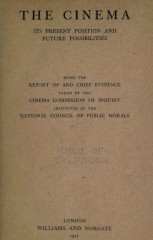
The Cinema: Its Present Position and Future Possibilities (1917) is a report and summary of evidence taken by the Cinema Commission Inquiry, instituted by the National Council of Public Morals. Essentially, it is a thorough investigation into the cinema in Britain and what its effects might be on the viewing public. As the introduction states, the National Council on Public Morals was “deeply concerned with the influence of the cinematograph, especially upon young people, with the possibilities of its development and with its adaptation to national educational purposes”. In other words, many in authority were alarmed at the popularity of cinema among those it deemed dangerously impressionable, and they wanted better to understand it, and to establish greater control over it. But they also wanted to find out what was best about it, and to replace hearsay with evidence.

The Commission was led by the Lord Bishop of Birmingham, and comprised assorted religious, educational and political figures, representatives from the film trade, T.P. O’Connor from the British Board of Film Censors, and others, including Dr Marie Stopes representing the Incorporated Society of Authors, Playwrights and Composers. The Commision sat from January to July 1917. Its terms of reference were:

  • To institute an inquiry into the physical, social, educational, and moral influences of the cinema, with special reference to young people; and into
  • The present position and future development of the cinematograph, with special reference to its social and educational value and possibilities;
  • To investigate the nature and extent of the complaints which have been made against cinematograph exhibitions;
  • To report to the National Council the evidence taken, together with its findings and recommendations, which the Council will publish.

The detailed report that was published is an unmatched treasure trove not only of opinions, fears, hopes and prejudices regarding the cinema and its audience, but of evidence relating to the production and exhibition of films in Britain at this time. Those supplying evidence included Cecil Hepworth, J. Brooke Wilkinson, A.E. Newbould, Gavazzi King and F.R. Goodwin, all key figures from the film industry, teachers, policemen, magistrates, social workers, and children.

The report is of importance in three areas in particular. First, for what it reveals of attitudes – positive as negative – towards the cinema from society’s moral guardians, for which there is much fascinating verbatim evidence, in the questions they ask as well as in the answers received. There are many questions about the supposed corrupting influence of cinema, and some heartening replies, such as this from J.W. Bunn, a headmaster from Islington:

A considerable number of people look upon the attendance of children at cinematograph entertainments with dislike if not with horror, and are apparently inclined to accuse the picture shows of being the main cause of juvenile misdemeanours. I do not agree with this view, and am firmly convinced that there is great exaggeration committed by this class. In my opinion these people are always to be found on the side of opposition of popular and cheap amusements for the working classes. The picture show is undoubtedly very popular with the women and children of the working class, but then it is still new enough to be a novelty, and it must be remembered that no other form of entertainment has ever offered to the poor the same value in variety and comfort for a very small outlay.

Secondly, there is invaluable statistical evidence provided by the film trade, including numbers of cinemas nationally, seats occupied, prices, investment in the cinema industry and the amount of film in distribution. Much of this data is unique to the report.

Lastly, there is the evidence from the school children about their cinema-going habits. Probably uniquely for this period in British film, we have the words of the audience members themselves. Here’s a revealing exchange between the Chairman and four boys from Bethnal Green (two aged eleven, two thirteen):

Q. What do you like best at the cinema ?
A. All about thieves.
Q. The next best?
A. Charlie Chaplin.
Q. And you?
A. Mysteries; and then Charlie Chaplin.
Q. And you?
A. Mysteries, and Charlie Chaplin.
Q. What do you mean by mysteries?
A. Where stolen goods are hidden away in vaults so that the police can’t get them.
Q. And you?
A. Cowboys; and then Charlie Chaplin second.
Q. When you have seen these pieces showing thieving and people catching the thief, has it ever made you wish to go and do the same thing?
A. Yes.
Q. Do you think the fellow who steals, then, a fine man?
A. No.
Q. But you would like to do it yourself?
A. Yes.
Q. Do you like the adventure or what?
A. I like the adventure.
Q. You have no desire, then, to steal in order to get things for yourself, but you like the dashing about and getting up drain-pipes and that sort of thing?
A. Yes.
Q. And you?
A. No, I don’t like that, I should not like to do that.
Q. Do you like pictures where you see flowers growing?
A. No.
Q. Do you like ships coming in and bringing things from distant lands?
(One boy replied ” No,” and the other three ” Yes.”)
Q. You like to have a consistent programme of detective stories and Charlie Chaplin, and you don’t want any more?
A. Yes.
Q. Do you sit amongst the girls?
A. Sometimes.
Q. What do you pay?
A. Id. and 2d.
Q. Do you ever have to sit on the ground?
A. No, we always have a seat.
Q. Have you ever seen the boys behave roughly to the girls?
A. Yes.
Q. What do they do?
A. Aim orange peel at them.
Q. Do they pull the girls about?
A. Yes, their hair.
Q. And do the girls pull back again?
A. No; they seem to enjoy it.

The Report was generally favourable towards the film industry, which was delighted to receive such vindication of its work. The Report recommended the implementation of a system of official censorship, superseding that of local authorities, but this was not implemented.

It’s a marvellous document, and I strongly recommend it to anyone interested in early British film or the social history of film. It’s available for download from the Internet Archive in DjVu (28MB), PDF (69MB), black-and-white PDF (21MB), and TXT (1.3MB) formats (the latter essential for word searching).

In the Red Velvet Seat

Red Velvet Seat

http://www.amazon.co.uk

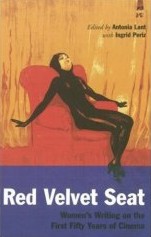
Following on from yesterday’s post on women silent filmmakers in Britain, today I came across Red Velvet Seat: Women’s Writings on the First Fifty Years Of Cinema, edited by Antonia Lant and Ingrid Periz. I really should have noted it before now. It is an excellent, huge (872 pages) compilation of contemporary texts by women on film in the first half of the twentieth century. These come from women filmmakers, actresses, social reformers, journalists, critics, sociologists, poets, and spectators, many from the silent period.

The texts are divided into sections, which demonstrate the range: Seeing or Being Seen; Touring the Audience; Why We Go to the Movies; The Spectatrix; Film Aesthetics and the Other Arts; Futurology; Captive Minds; Enlightment without Tears; Means of Control; Naming the Onject; Reviewing; The Star; Film as the National Barometer; In the Shadow of War; The Limits of Criticism; A Job for Whom?; The Actress and Adventuress; The Screenwriter; The Director; Working in the Autiorium.

Among the more familar names are Virginia Woolf, Djuna Barnes, Dorothy Richardson, C.A. Lejeune, Iris Barry, Lotte Reiniger, Betty Balfour, Sarah Bernhardt, Lillian Gish, H.D., Maya Deren, Marie Stopes, Anita Loos, Germaine Dulac, Rebecca West, Dilys Powell, Zelda Fitzgerald, Winifred Holtby and Elizabeth Bowen. What is so impressive, apart from the range of writers and themes, is the choice of some little-known yet hugely interesting rarities alongside the expected ‘classics’. How did they find the 1918 piece by Marie Stopes on the purpose on cinema in a Tokyo journal? There are two pieces by female spectators of the Corbett-Fitzsimmons boxing film of 1897. There are many riches here for anyone interested in the first decades of cinema, quite apart from the special emphasis on women’s roles in cinema and women’s view of the medium.

It’s a real treasure trove.

Stopping time

The Man Who Stopped Time

http://www.amazon.co.uk

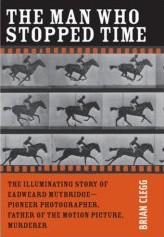
There’s a new book by Brian Clegg, The Man Who Stopped Time: The Illuminating Story of Eadweard Muybridge – Father of the Motion Picture, Pioneer of Photography, Murderer, published by National Academy Press. It’s time we had a good, popular, up-to-date account of Muybridge’s achievements, and Clegg’s book seems to fit the bill. Read the positive review by Stephen Herbert on his Muybridge site, or hear from the author himself via the Popular Science site:

And what a story it is! A passionately-driven man struggling against the odds; dire treachery and shocking betrayal; a cast of larger-than-life characters set against a backdrop of San Francisco and the Far West in its most turbulent and dangerous era; a profusion of technical and artistic advances and discoveries, one hotly following on another; the nervous intensity of two spectacular courtroom dramas (one pitting Muybridge against the richest man in the West and staring ruin in the face, the other sees him fighting for his life) … and for the opening act, a foul murder on a dark and stormy night …

It’s all true.

How We Advertised America

George Creel

George Creel, from How We Advertised America

The Prelinger Archive continues to publish public domain texts on the Internet Archive, on all kinds of subjects. Among the latest batch is George Creel’s How We Advertised America, published in 1920. George Creel was a journalist and campaigner on social issues who was put in charge of the Committee on Public Information in 1917. The CPI was America’s official propaganda outfit during the First World War, tasked with ‘selling the war’ to Americans. As such it was responsible for American official films such as Pershing’s Crusaders, America’s Answer, Under Four Flags, and the newsreel Official War Review. The Creel Committee, as the CPI was also known, recognised the importance of film as a medium to persuade the public, but it was mistrustful of the film industry, and the film industry was reluctant to be exhibiting propaganda. It had huge troubles getting its films onto American screens. Nevertheless, it produced a stream of footage from its team of Signal Corps cameramen which was issued in the form of persuasive documentaries and the regular newsreel.

After the war, Creel published the controversial How We Advertised America, which called for the use of the methods in commercial advertising to be used for official promotion of America. It’s an important source for understanding the context in which propaganda films were produced during the First World War, the first time the medium had been used extensively by national governments as a tool of mass persuasion. The book is available as a free download in PDF (65MB), DjVu (21MB), b/w PDF (20MB) and TXT (906KB) formats. See also Kevin Brownlow’s book The War The West and the Wilderness for a good acount of the work of Creel and the CPI.