Adventures in silent pictures

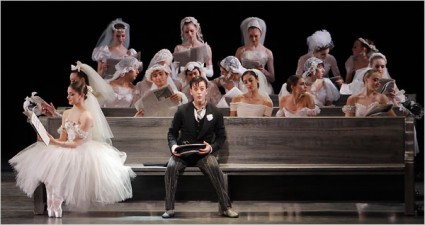
Makin’ Whoopee, part of Susan Stroman’s Double Feature, from http://www.nytimes.com

We haven’t had enough ballet here on The Bioscope. So, just opened at the New York State Theater is Broadway choreographer Susan Stroman’s “Double Feature”, performed by the New York City Ballet. The two parts of the ballet, which was first commissioned in 2004, are “The Blue Necklace” and “Makin’ Whoopee”. Both are inspired by silent movies, blending melodrama with slapstick comedy.

Silent film would seem to be a natural source of inspiration for ballet, and there are examples dotted around. Matthew Bourne’s dance company Adventures in Motion Pictures indicates some of its inspiration by its name, and Bourne has drawn on silent film for sets (Caligari helped inspired his “Cinderella”) as well as dance.

Amy Moore Morton, artistic director of the Appalachian Ballet Company, created and dances the lead in “With Chaplin”, which is none too surprisingly centred on Charlie Chaplin.

In the silent era itself ballet does not seem to have featured that often, but there are some notable exception. René Clair’s sublime Entr’acte (1924) was created as an interlude to feature between the acts of Francis Picabia’s ballet “Relâche”, performed by the Ballets Suédois with music by Erik Satie.

Also from the avant garde, Fernand Léger’s Ballet Mécanique is ballet in cinema form, even if it doesn’t feature dance as such, except the dance of objects and machines (plus a Chaplin figure). It was was created by American composer American composer George Antheil and Léger, though music and film did not come together for many years. So, in that spirit, here’s a clip from the film with music by guitarist Gary Lucas (a Bioscope favourite). Sorry about the faux scratches at the start.

Gary Lucas playing to an extract from Ballet Mécanique

Returning to Chaplin, don’t forget the dance (ballet) of the rolls from The Gold Rush (1925). And indeed you could argue for any number of Chaplin films for their balletic qualities.

Moving to modern silent director, Guy Maddin’s Dracula: Pages from a Virgin’s Diary (2002) is a ballet version of the Dracula story with German Expressionist decor and choreography by ballet director Mark Godden.

A modern oddity is Le Sacre du Printemps (2005), a film by Oliver Hermann which bills itself as a “‘Silent Movie’ to Stravinsky’s ballet score”. Sir Simon Rattle conducts the Berlin Philarmonic on the DVD release, and to judge from reviews it’s something of a challenging experience:

…a pair of albino men in tutus, a godlike black female figure baking tiny people like cookies in her kitchen, nuns, voodoo rituals, walls of neatly-mounted Polaroid snapshots being broken thru with an axe, or people endlessly lost in a giant green maze. Not to mention some very sexual scenes and a roomful of naked figures writhing around which disturbingly hovered between Dante’s Inferno and a Nazi death camp ‘shower’.

Hmm. Let us turn instead to Anna Pavlova, greatest of all ballerinas, who appears in three extant silent films, Lois Weber’s The Dumb Girl of Portici (1916), a feature film drama in which she acts rather than dances; Anna Pavlova (1924), which is a non-fiction film depicting her in various ballet sequences filmed in New York in 1924; plus there is a fragment of film of her dancing ‘Columbine’ on the set of Douglas Fairbanks’ The Thief of Bagdad (1924).

Lastly, it’s worth noting that many of the silent film pianists of today help earn their daily bread by playing for ballet and dance classes. Carl Davis has written for ballet as well as his renowned silent film scores, and it would be interesting to know how silent film musicians view accompanying dance or accompanying the screen, and what the interelationships might be.

Any more examples? Just let me know.

Silent music revival

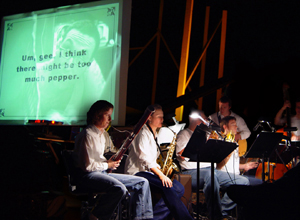
Silent Music Revival is a series of live shows taking place in Richmond, Virginia, where bands of various hues play to silents that they haven’t seen before. It describes itself thus:

An organization that is interested in the juxtaposition of music and film. At an event a classic silent short film is played while accompanied by either live music or a DJ spinning records overtop of the film. Keep in mind that neither the band nor the DJ have seen the film. This combination always makes for an interesting view.

Today jazz group Glows in the Dark played to Buster Keaton’s The Electric House. Previous screenings have included Antlers playing to Starewicz’s The Mascot (1933), the ‘hip hop stylings’ of Swordplay playing to When the Clouds Roll By (1919), Beggar on Horseback (1925) and Dream of a Rarebit Fiend (1906), and Gamelan Raga Kusuma playing to Chaplin.

Find out more at www.myspace.com/silentmusicrevival.

Blackmail with strings

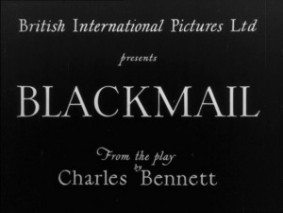
Opening title of the silent version of Blackmail, from http://www.hitchcockwiki.com

As a follow-up to yesterday’s item on the small band of British silents on DVD, here’s some heartening news. A special feature of this year’s Il Cinema Ritrovato film festival at Bologna will feature Neil Brand‘s new score for Alfred Hitchcock’s Blackmail (1929), with sixty-piece orchestra – the Opera Orchestra of Bologna, conducted by Timothy Brock. The event will take place at the Piazza Maggiore on July 1st, while the full festival (which includes silent cinema sections on Monta Bell, Comic Actresses and Suffragettes, Lev Kuleshov, Josef von Strenberg, Emilio Ghione, and films from 100 years ago) runs 28 June-5 July.

This may be the first orchestral score treatment of a British silent since the silent days. There have been small ensemble pieces (indeed, the Matrix Ensemble played Jonathan Lloyd’s score for Blackmail at the Barbican a couple of years ago), and in 2006 the documentary film The Battle of the Somme (1916) featured at the Royal Festival Hall with Laura Rossi‘s score for full orchestra, played by the Royal Philharmonia. But this – so far as I know – is the first time a British silent fiction film has been given the full works in modern times. Congratulations to Neil, bravo the Bologna festival for sponsoring it, and let’s hope it’s possible for to hear and see it elsewhere.

Neversink Valley Area Museum

The Neversink Valley Area Museum is in Cuddebackville, NY, an area know to film historians as a popular location for New York film companies in the pre-Hollywood era. In particular it was a favoured location of D.W. Griffith and the Biograph company, which filmed in Cuddebackville six times over the period 1909-1911. The local museum (which takes its name from the optimistically-named Neversink river) has a section on filmmaking in the area (Thanhouser and the Victor Film Company were other visitors). But more than that, it has established competitions for silent filmmaking today and writing scores or silent films. The rules for the silent film competition are as follows:

We will accept any film up to 18 minutes in length, it may be from any country and does not have to premiere at our festival. Films currently in distribution are not eligible.
Film makers to submit entries on DVD (all region compatible, as one judge is UK-based).
Length not to exceed 18 minutes.
No synchronized sound.
Music, if used, must be original or provide proof of licensing.
Intertitles acceptable.
DVD should be marked with Title Only.
Enclose sheet with all credits in submission packet.

And here are the rules for the original film score competition:

Entrant to compose an original score for one of these three films: King Lear, The Vagabonds and The Marvelous Marathoner, all made by Thanhouser Motion Picture Company.
Thanhouser will provide a copy of the film to interested entrants.
The winning entry (i.e. film + winner’s music) will be posted on the Thanhouser web site for viewing the winner can use the film with their music royalty free.

Prizes are to be announced later. All screenings to take place 23 August. Further details and application form on the museum’s website.

Rockin’ with Nanook

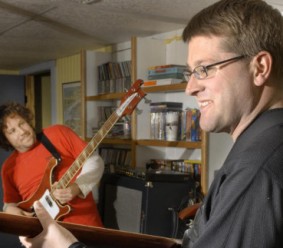
Sumner McKane, right, and bass player Josh Robbins, from http://www.mainetoday.com

This report from Maine Today on some local rock groups taking it turns to provide scores for silents rather appealed:

The members of the Sumner McKane Group composed their latest musical work while watching grainy, black-and-white footage of an Inuit man hunting seals to keep his family alive in the frozen Hudson Bay region of Canada 86 years ago.

Not exactly your typical pop-song fodder.

“There’s sort of a desperate sadness to some of it,” said McKane, guitarist for the Portland instrumental trio.

McKane and his bandmates – Josh Robbins on bass and Todd Richard on drums – have been working for three weeks on creating an original score to the classic 1922 silent documentary “Nanook of the North.”

They’ll perform the music live while the 79-minute film is shown next Wednesday and Thursday at One Longfellow Square in Portland as part of the 200-seat venue’s monthly series, “Local Scores, Silent Films.”

Each month, a different local band picks a silent film and composes a score for live accompaniment. This will be the fourth concert/film showing in the series, following Buster Keaton’s “The General,” scored by Samuel James; Fritz Lang’s “Metropolis,” scored by the Improvisational String Quartet; and the classic German vampire film “Nosferatu,” scored by the jazz group Tempera.

Tom Rota, manager of One Longfellow Square, said he contacts bands to find out if they are interested, then gives them a list of classic silent films from which to choose.

The venue presents a mix of live music, dance, film and other performances and was known as the Center for Cultural Exchange before the current owners bought the building and reopened as One Longfellow Square last July.

In a sense, the venue is recreating the theater experience of the silent film era, when live musicians, usually a pianist, performed onstage or in an orchestra pit while the movie played onscreen. By using modern scores, it’s giving the tradition a modern twist.

McKane said when he was approached about the series, he immediately thought of “Nanook of the North.” He had seen it, was fascinated by it and thought its slow pace and human themes would fit his band’s brand of instrumental music, which includes rock, country and ambient music.

“There are a lot of still shots of the landscape, which allow for some spacious music. That’s better for us than something that’s action-packed,” said McKane, 31.

Considered the first full-length anthropological documentary, the film follows a year in the life of Inuits in Arctic Canada. It was made by Robert Flaherty, who went to Hudson Bay looking for iron ore on behalf of the Canadian Northern railroad. While there, he became intensely interested in capturing Inuit life on film.

In the film, Nanook takes his family on a hunting expedition to try to get enough food to survive another winter. The family travels on dog sled, hunts with spears and sleeps in igloos that have to be made on the spot every night.

Being a documentary, it’s very different from most of the classic silent films that often get shown today with live musical accompaniment. Horror films, epics and slapstick comedies are the usual suspects for this kind of silent film/live music series.

To compose the score, McKane, Robbins and Richard have been gathering in the basement of McKane’s North Deering home. They got a copy of the film from Netflix and watched it on a laptop computer as they composed and played. When they got a piece they liked, they went back to make sure it matched up with a segment of film.

It’s a fairly slow process. At a recent rehearsal, band members estimated it took maybe four hours or more to get about 25 minutes’ worth of music for the film.

During rehearsal, the band focused on part of the movie that takes place in the heart of the Arctic winter, when the family has little food left.

While the family slowly travels over a barren, icy landscape, the band plays music that’s spacey and full of echo, with Mark Knopfler-like guitar work. When Nanook traps a small fox, the music becomes faster and joyous.

Another scene where the music mimics the mood is when the family struggles to get its dogsled through a field of ice boulders. Once the sled goes up and over the last hill and can travel freely, the band explodes into a fast, thumping, rock ’n’ roll passage.

Matching music to scenes is a challenge, as is remembering all 79 minutes of the piece in sequence.

“For us, a long song is maybe 10 minutes,” said Robbins, 33. “And it’s all structured. There’s no jamming in the middle of this.”

The Maine Today report provides a sample of the Nanook music.

Alternative music

Now this is something quite novel. Ben Model (left) is a respected silent film accompanist, probably best known for being his regular live performances at the Museum of Modern Art and for New York’s regular Silent Clowns film series. He has now come up with altscore.com, a download service providing alternative scores for silent films currently available on DVD. The scores are available as MP3 files, which (after paying through PayPal) you can download to your hard drive, then burn to CD, iPod or whatever. Put in your DVD, then start the MP3 file and following the synching instructions. Easy.

Scores currently are available for The Dragon Painter, The Forgotten Films of Roscoe “Fatty” Arbuckle, The Man from Beyond, Terror Island, Sherlock Jr., and Beyond the Rocks, with most priced at $3.95. There is a ‘freebie-per-month’ too (currently The Dragon Painter, the Sessue Hayakawa drama recently released by Milestone).

There is an ingenious bit of cheek about this whole exercise, but the more you think about it the smarter it is. I don’t know what the DVD producers think, but they are not going to lose anything by it. One or two of the original accompanists on those DVDs might feel a bit miffed. As for select group of punters, I suspect they are going to welcome the opportunity for choice. The beauty of experiencing silent films live is that you never encounter the same film twice, because the (generally) improvised score is different every time. Once you’ve bought the DVD you have just one film. Altscore introduces a small element of variety, based on an understanding that the silent film is a protean beast that, ideally, should never be the same film twice.

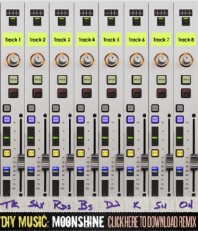
But we should not stop here. I’ve been thinking lately of creative ways in which music for silent films can be made available, and I’d like to see something done with scores that not only do you download but which you can edit and create for yourself. This could be an interesting element of a DVD release (perhaps with a schools/educational element), supplying the user with film and elements of music which is true VJ fashion they could then mix to create their own silent film accompaniment. This has already been done. Some years ago the BFI’s Education department produced Backtracks, an innovative CD-Rom with films clips with audio files for schoolchildren to experiment with blending the images with different kinds of music background (Neil Brand was involved). The BFI’s Creative Archive, which includes silent films clips, encourages you to remix and republish the downloadable films as you wish, under special licence. And recently the jazz trumpeter Dave Douglas, whose Arbuckle-inspired album Moonshine has been praised here already, is offering you the chance to download the separate tracks for the title tune of the DVD as uncompressed WAV files, along with the Arbuckle/Keaton film of that title, to remix as you see fit. I’ve downloaded the file and can play the tracks individually (it requires WinRAR to extract the files, which you can download as trial software) though I’ve not been smart enough yet to mix the results (“a child of five could do this – someone send for a child of five”). But the concept is a grand one. Let’s have more such interaction between the user and the artist – the tools are there.

Classic silent films … and a kickin’ rock concert

While planning an overview of silent film and modern music accompaniment for you, I came across Vox Lumiere, a concept so bizarre that it more than merited a post of its own.

Vox Lumiere is a music theatre company which specialises in presenting a combination of silent film and rock opera. While a silent classic plays in the background – so far their repertoire features Metropolis, The Hunchback of Notre Dame, Peter Pan, The Phantom of the Opera and a ‘greatest hits’ package’ – singers and dancers enact the drama and a five-piece rock band does what five-piece rock bands tend to do. Musically, going by their promo video above, it’s not quite my taste, but clearly some people like the concept, to judge from their press reviews, and they’ve come up with something novel which in its way articulates the modern appeal that the iconography and emotion of silents can engender.

Vox Lumiere Metropolis

Vox Lumiere’s interpretation of Metropolis, from http://www.voxlumiere.com

The Vox Lumiere website provides you with video clips, sound clips, photographs, information about the company, a calendar of events (catch them next in Shreveport, Louisiana in November), and the chance to buy T-shirts and baseball caps. So that’s everything covered really.

As said, it’s not going to be everyone’s taste, and the juxtaposition of the kind of low rent rock music you only get in rock operas with silent movies (which don’t necessarily need this sort of help to gets their effects across) is peculiar, if not alarming. But it wins points for originality, enthusiasm, and for demonstrating that silents remain an inspiration – and an inherently theatrical medium.

(The title of the post is taken from a line in their promo video, by the way)

World’s first sound recording

Phonautogram

Phonoautogram, from http://www.nytimes.com

Well, this item fails our criteria on two counts – it’s not about cinema, and it’s not silent. But it’s relevant, so here goes.

It was announced today that researchers have uncovered the world’s first sound recording, dating from 9 April 1860, an astonishing seventeen years before Thomas Edison received the patent for his Phonograph. The recording was created by something called a Phonoautograph, and the recording itself is a Phonoautogram. The Phonoautograph was designed to create a visual record of sounds. Invented by the Frenchman Édouard-Léon Scott de Martinville, the device comprised a barrel-shaped horn connected to a stylus, which etched impressions of sound waves onto sheets of paper which has been blackened with soot. There was no means of playing back the recording. It was a visual record of sound designed for analysis.

The recording is a ten-second burst of the song Au Clair de la Lune, sung by an unidentified female. You can hear it (all ten seconds of it), and discover the background to its discovery and the ingenious use of optical imaging technology by the Lawrence Berkeley National Laboratory in Berkeley, California that reconstituted the sound in a New York Times article.

Or just click here for the MP3 file.

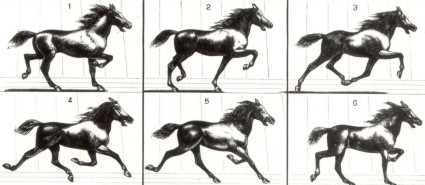
So it’s the world’s earliest known sound recording, but is it a true sound recording if it could not be played at the time? Surely the invention is only complete with the full realisation of the technology; that is, when Edison combined both sound recoding and playback, the earliest playable example of which (part of a Handel oratario) dates from 1878. And this is where the relevance bit comes in, because we face exactly the same dilemma with motion pictures. Eadweard Muybridge first photographed motion in sequence in 1878, and we can reconstitute such images to display motion. They look like movies, but at the time they never moved. Etienne-Jules Marey photographed humans and animals in sequence from 1882 onwards, soon to be followed by other chronophotographers, but his purpose was the same as Édouard-Léon Scott de Martinville – analysis. Yet we can convert these film strips (Marey used celluloid) into fleeting semblances of motion. Louis Aimé Augustin Le Prince took perfectly serviceable motion pictures (on paper) in 1888, but much as he wanted to he was not able to project them.

So we award the laurels to Edison and to Lumière for having brought together the full package. Or so I’ve always argued. Now I don’t know. It seems to me that Édouard-Léon Scott de Martinville (great name) achieved the essential business first – to capture sound. Being able to play it back was secondary – desirable, of course, but ultimately an inevitable follow-up that would just take a little bit longer to achieve (in his case, 148 years). So, on that basis, Edison and Lumière came last. They realised, but it was others who pioneered. Stand up Eadweard, the laurels are yours.

Debate, anyone?

Muybridge 1878

Muybridge’s photographs of a horse in motion, from Scientific American 19 October 1878

Georges Méliès: First Wizard of Cinema (1896-1913)

Georges Méliès

The outstanding Flicker Alley 5-disc set Georges Méliès: First Wizard of Cinema (1896-1913) is now published, and I have my copy. Naturally, it’s a sensational package. Put together by Eric Lange (Lobster Films) and David Shepard (Blackhawk Films) from the archival holdings from seventeen collections across eight countries, the elegantly-presented DVDs comprises 173 titles (including one unidentified fragment) – almost (though not quite) every extant Georges Méliès film, plus the Georges Franju 1953 film, Le Grand Méliès. The DVDs are region 0, NTSC format.

The set comes with a well-illustrated booklet, which has essays by Norman McLaren (something of a surprise – it’s a transcript of an audio recording he made for a conference he couldn’t attend) and a long piece by John Frazer on Méliès’ life and work, adapted by Shepard from a text first written by Frazer in 1979. The full list of titles is now available on the Flicker Alley site, but here’s The Bioscope’s version, with the titles in the chronological order in which they appear on the DVDs, with Star-Film catalogue number, original French title and English title.

1896
1 – Partie de cartes, une/Playing Cards
26 – Nuit terrible, une/Terrible Night, a
70 – Escamotage d’une dame chez Robert-Houdin/Vanishing Lady, the
82 – Cauchemar, le/Nightmare, A

1897
96 – Château hanté, le/Haunted Castle, The
106 – Prise de Tournavos, la/Surrender of Tournavos, The
112 – Entre Calais et Douvres/Between Calais and Dover
122-123 – Auberge ensorcelée, l’/Bewitched Inn, the
128 – Après le bal (le tub)/After the Ball

1898
147 – Visite sous-marine du Maine/Divers at Work on the Wreck of the “Maine”
151 – Panorama pris d’un train en marche/Panorama from Top of a Moving Train
153 – Magicien, le/Magician, The
155 – Illusions fantasmagoriques/Famous Box Trick, The
159 – Guillaume Tell et le clown/Adventures of William Tell, The
160-162 – Lune à un mètre, la/Astronomer’s Dream, The
167 – Homme de têtes, un/Four Troublesome Heads, The
169 – Tentation de Saint Antoine/Temptation of St Anthony, the

Entrevue de Dreyfus et de sa femme à Rennes

Entrevue de Dreyfus et de sa femme à Rennes

1899
183 – Impressionniste fin de siècle, l’/Conjurer, The
185-187 – Diable au couvent, le/Devil in a Convent, The
188 – Danse du feu/Pillar of Fire, The
196 – Portrait mystérieux, le/Mysterious Portrait, The
206 – Affaire Dreyfus, la dictée du bordereau/Dreyfus Court Martial – Arrest of Dreyfus
207 – Ile du diable, l’/Dreyfus: Devil’s Island – Within the Palisade
208 – Mise aux fers de Dreyfus/Dreyfus Put in Irons
209 – Suicide du Colonel Henry/Dreyfus: Suicide of Colonel Henry
210 – Débarquement à Quiberon/Landing of Dreyfus at Quiberon
211 – Entrevue de Dreyfus et de sa femme à Rennes/Dreyfus Meets His Wife at Rennes
212 – Attentat contre Me Labori/Dreyfus: The Attempt Against the Life of Maître Labori
213 – Bagarre entre journalistes/Dreyfus: The Fight of Reporters
214-215 – Conseil de guerre en séance à Rennes, le/Dreyfus: The Court Martial at Rennes
219-224 – Cendrillon/Cinderella
226-227 – Chevalier mystère, le/Mysterious Knight, The
234 – Tom Whisky ou l’illusionniste truqué/Addition and Subtraction

L’Homme-orchestre

L’Homme-orchestre

1900
243 – Vengeance du gâte-sauce, la/Cook’s Revenge, The
244 – Infortunes d’un explorateur, les/Misfortunes of an Explorer, The
262-263 – Homme-orchestre, l’/One-Man Band, The
264-275 – Jeanne d’Arc/Joan of Arc
281-282 – Rêve du Radjah ou la forêt enchantée, le/Rajah’s Dream, The
285-286 – Sorcier, le prince et le bon génie, le/Wizard, the Prince and the Good Fairy, The 289-291 – Livre magique/Magic Book, The
293 – Spiristisme abracadabrant/Up-to-date Spiritualism
294 – Illusioniste double et la tête vivante, l’/Triple Conjurer and the Living Head, The
298-305 – Rêve de Noël/Christmas Dream, The
309-310 – Nouvelles luttes extravagantes/Fat and Lean Wrestling Match
311 – Repas fantastique, le/Fantastical Meal, A
312-313 – Déshabillage impossible, le/Going to Bed under Difficulties
314 – Tonneau des Danaïdes, le/Eight Girls in a Barrel
317 – Savant et le chimpanzé, le/Doctor and the Monkey, The
322 – Réveil d’un homme pressé, le/How He Missed His Train
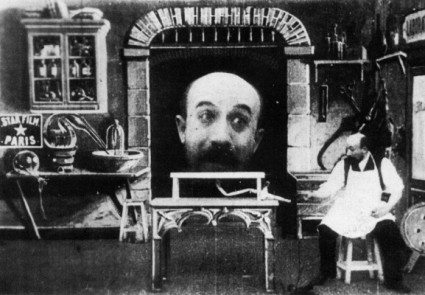
L’Homme à la tête en caoutchouc

L’Homme à la tête en caoutchouc

1901
325-326 – Maison tranquille, la/What is Home Without the Boarder?
332-333 – Chrysalide et le papillon, la/Brahmin and the Butterfly, The
335-336 – Dislocation mystérieuse/Extraordinary Illusions
345-347 – Antre des esprits, le/Magician’s Cavern, The
350-351 – Chez la sorcière/Bachelor’s Paradise, The
357-358 – Excelsior!/Excelsior! – Prince of Magicians
361-370 – Barbe-Bleue/Blue Beard
371-372 – Chapeau à surprises, le/Hat With Many Surprises, The
382-383 – Homme à la tête en caoutchouc, l’/Man With the Rubber Head, The
384-385 – Diable géant ou le miracle de la madone, le/Devil and the Statue, The
386 – Nain et géant/Dwarf and the Giant, The

Voyage dans la lune

Voyage dans la lune

1902
391 – Douche du colonel/Colonel’s Shower Bath, The
394-396 – La danseuse microscopique, la/Dancing Midget, The
399-411 – Voyage dans la lune/Trip to the Moon, A
412 – Clownesse fantôme, la/Shadow-Girl, The
413-414 – Trésors de Satan, les/Treasures of Satan, The
415-416 – Homme-mouche, l’/Human Fly, The
419 – Équilibre impossible, l’/Impossible Balancing Feat, An
426-429 – Voyage de Gulliver à Lilliput et chez les géants, le/Gulliver’s Travels Among the Lilliputians and the Giants
No number – Sacre d’Edouard VII, le/Coronation of Edward VII, The
445-448 – Guirlande merveilleuse, la/Marvellous Wreath, The

1903
451-452 – Malheur n’arrive jamais seul, un/Misfortune Never Comes Alone
453-457 – Cake-walk infernal, le/Infernal Cake-Walk, The
458-459 – Boîte à malice, la/Mysterious Box, The
462-464 – Puits fantastique, le/Enchanted Well, The
465-469 – Auberge du bon repos, l’/Inn Where No Man Rests, The
470-471 – Statue animée, la/Drawing Lesson, The
473-475 – Sorcier, le/Witch’s Revenge, The
476 – Oracle de Delphes, l’/Oracle of Delphi, The
447-478 – Portrait spirite, le/Spiritualistic Photographer
479-480 – Mélomane, le/Melomaniac, The
481-482 – Monstre, le/Monster, The
483-498 – Royaume des fées, le/Kingdom of the Fairies, The
499-500 – Chaudron infernal, le/Infernal Cauldron, The
501-502 – Revenant, le/Apparitions
503-505 – Tonnerre de Jupiter, le/Jupiter’s Thunderbolts
506-507 – Parapluie fantastique, le/Ten Ladies in an Umbrella
508-509 – Tom Tight et Dum Dum/Jack Jaggs and Dum Dum
510-511 – Bob Kick, l’enfant terrible/Bob Kick the Mischievous Kid
512-513 – Illusions funambulesques/Extraordinary Illusions
514-516 – Enchanteur Alcofribas, l’/Alcofribas, the Master Magician
517-519 – Jack et Jim/Comical Conjuring
520-524 – Lanterne magique, la/Magic Lantern, The
525-526 – Rêve du maître de ballet, le/Ballet Master’s Dream, The
527-533 – Faust aux enfers/Damnation of Faust, The
534-535 – Bourreau turc, le/Terrible Turkish Executioner, The
538-539 – Au clair de la lune ou Pierrot malheureux/Moonlight Serenade, A
540-541 – Prêté pour un rendu, un/Tit for Tat
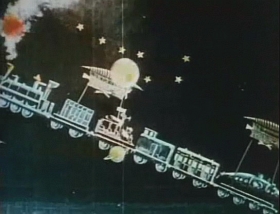
Voyage à travers l’impossible

Voyage à travers l’impossible

1904
547-549 – Coffre enchanté, le/Bewitched Trunk, The
552-553 – Roi du maquillage, le/Untamable Whiskers
554-555 – Rêve de l’horloger, le/Clockmaker’s Revenge, The
556-557 – Transmutations imperceptibles, les/Imperceptible Transmutations, The
558-559 – Miracle sous l’Inquisition, un/Miracle Under the Inquisition, A
562-574 – Damnation du Docteur Faust/Faust and Marguerite
578-580 – Thaumaturge chinois, le/Tchin-Chao, the Chinese Conjurer
581-584 – Merveilleux éventail vivant, le/Wonderful Living Fan, The
585-588 – Sorcellerie culinaire/Cook in Trouble, The
589-590 – Planche du diable, la/Devilish Prank, The
593-595 – Sirène, la/Mermaid, The
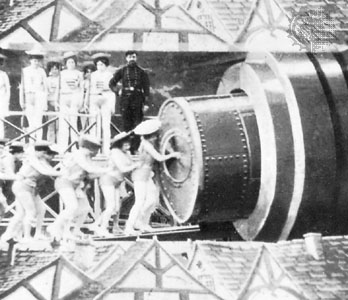
641-659 – Voyage à travers l’impossible/Impossible Voyage, The
665-667 – Cascade de feu, la/Firefall, The
678-679 – Cartes vivantes, les/Living Playing Cards, The

1905
683-685 – Diable noir, le/Black Imp, The
686-689 – Phénix ou le coffret de cristal, le/Magic Dice, The
690-692 – Menuet lilliputien, le/Lilliputian Minuet, The
705-726 – Palais des mille et une nuits, le/Palace of the Arabian Nights, The
727-731 – Compositeur toqué, le/Crazy Composer, A
738-739 – Chaise à porteurs enchantée, la/Enchanted Sedan Chair, The
740-749 – Raid Paris – Monte-Carlo en deux heures, le/Adventurous Automobile Trip, An
756-775 – Légende de Rip Van Vinckle, la/Rip’s Dream
784-785 – Tripot clandestin, le/Scheming Gamblers’ Paradise, The
789-790 – Chute de cinq étages, une/Mix-up in the Gallery, A
791-806 – Jack le ramoneur/Chimney Sweep, The
807-809 – Maestro Do-Mi-Sol-Do, le/Luny Musician, The

1906
818-820 – Cardeuse de matelas, la/Tramp and the Mattress Makers, The
821-823 – Affiches en goguette, les/Hilarious Posters, The
824-837 – Incendiaires, les/Desperate Crime, A
838-839 – “Anarchie chez Guignol, l'”/Punch and Judy
843-845 – Hôtel des voyageurs de commerce ou les suites d’une bonne cuite, l’/Roadside Inn, A
846-848 – Bulles de savon animées, les/Soap Bubbles
849-870 – Quatre cents farces du diable, les/Merry Frolics of Satan, The
874-876 – Alchimiste Parafaragaramus ou la cornue infernale, l’/Mysterious Retort, The
877-887 – Fée Carabosse ou le poignard fatal, la/Witch, The

L’Tunnel sous la Manche ou le cauchemar anglo-français

L’Tunnel sous la Manche ou le cauchemar anglo-français

1907
909-911 – Douche d’eau bouillante, la/Rogues’ Tricks
925-928 – Fromages automobiles, les/Skipping Cheeses, The
936-950 – Tunnel sous la Manche ou le cauchemar anglo-français, le/Tunnelling the English Channel
961-968 – Eclipse de soleil en pleine lune/Eclipse, or the Courtship of the Sun and Moon, The
1000-1004 – Pauvre John ou les aventures d’un buveur de whisky/Sightseeing through Whisky
1005-1009 – Colle universelle, la/Good Glue Sticks
1014-1017 – Ali Barbouyou et Ali Bouf à l’huile/Delirium in a Studio
1030-1034 – Tambourin fantastique, le/Knight of Black Art, The
1035-1039 – Cuisine de l’ogre, la/In the Bogie Man’s Cave
1044-1049 – Il y a un dieu pour les ivrognes/Good Luck of a Souse, The
1066-1068 – Torches humaines/Justinian’s Human Toches 548 A.D.

1908
1069-1072 – Génie du feu, le/Genii of the Fire, The
1073-1080 – Why that actor was late
1081-1085 – Rêve d’un fumeur d’opium, le/Dream of an Opium Fiend, The
1091-1095 – Photographie électrique à distance, la/Long Distance Wireless Photography
1096-1101 – Prophétesse de Thèbes, la/Prophetess of Thebes, The
1102-1103 – Salon de coiffure/In the Barber Shop
1132-1145 – Nouveau seigneur du village, le/New Lord of the Village, The
1146-1158 – Avare, l’/Miser, The
1159-1165 – Conseil du Pipelet ou un tour à la foire, le/Side Show Wrestlers
1176-1185 – Lully ou le violon brisé/Broken Violin, The
1227-1232 – The Woes of Roller Skates
1246-1249 – Amour et mélasse/His First Job
1250-1252 – Mésaventures d’un photographe, les/The Mischances of a Photographer
1253-1257 – Fakir de Singapour, le/Indian Sorcerer, An
1266-1268 – Tricky painter’s fate, a
1288-1293 – French interpreter policeman/French Cops Learning English
1301-1309 – Anaïc ou le balafré/Not Guilty
1310-1313 – Pour l’étoile S.V.P./Buncoed Stage Johnnie
1314-1325 – Conte de la grand-mère et rêve de l’enfant/Grandmother’s Story, A
1416-1428 – Hallucinations pharmaceutiques ou le truc du potard/Pharmaceutical Hallucinations
1429-1441 – Bonne bergère et la mauvaise princesse, la/Good Shepherdess and the Evil Princess
No number – unidentified film

1909
1495-1501 – Locataire diabolique, le/Diabolic Tenant, The
1508-1512 – Illusions fantaisistes, les/Whimsical Illusions

1911
1536-1547 – Hallucinations du Baron de Münchausen, les /Baron Munchausen’s Dream

1912
Pathé – A la conquète du pôle/Conquest of the Pole, The
Pathé – Cendrillon ou la pantoufle merveilleuse/Cinderella
Pathé – Chevalier des neiges, le/Knight of the Snow, The

1913
Pathé – Voyage de la famille Bourrichon, le/Voyage of the Bourichon Family, The

Almost needless to say, the quality of the digital transfers is excellent, sometimes startlingly so. There are fifteen examples of beautiful hand-colouring. Many musicians have provided scores, making the DVD a fascinating demonstration in itself of different approaches to the task of accompanying Georges Méliès (even if, for myself I find the American taste for organ accompaniment baffling). They are Eric Beheim, Brian Benison, Frederick Hodges, Robert Israel, Neal Kurz, the Mont Alto Motion Picture Orchestra, Alexander Rannie, Joseph Rinaudo, Rodney Sauer and Donald Sosin. Some of the films come with Georges Méliès’ original English narrations, designed to be spoken alongside the films, and here are spoken by Serge Bromberg and Fabrice Zagury (with some rather quaint mangling of the English language in places).

Georges Méliès is confirmed here as among the pre-eminent artists of the cinema, perhaps the most exuberant of all filmmakers. The films display imagination, wit, ingenuity, grace, style, fun, invention, mischief, intelligence, anarchy, innocence, vision, satire, panache, beauty and longing, the poetry of the absurd. Starting out as extensions of the tricks that made up Méliès’ magic shows, to view them in chronological order as they are here is to see the cinema itself bursting out of its stage origins into a theatre of the mind, where anything becomes possible – a true voyage à travers l’impossible, to take the title of one of his best-known films. The best of them have not really dated at all, in that they have become timeless, and presumably (hopefully) always will be so. Méliès in his lifetime suffered the agony of seeing his style of filmming turn archaic as narrative style in the Griffith manner became dominant, but we can see now that is his work that has truly lasted. The films will always stand out as showing how motion pictures, when they first did appeared, in a profound sense captured the imagination. And there is that consistency of vision that confirms Méliès as a true artist with a body of work that belongs in a gallery – or in this case a boxed set of DVDs – for everyone to appreciate.

What a great publication this is. Every good home should have one.

Update (January 2010):
For information on a sixth, supplementary disc with an additional 26 titles, see https://bioscopic.wordpress.com/2010/01/08/melies-encore.
The sound of silent film

Sound of Silent Film

Sound of Silent Film, from http://www.acmusic.org

Further evidence of the rude health of the modern silent film. The third annual Sound of Silent Film Festival, an evening of modern silent films with music scores performed live, takes place at the Chopin Theatre, 1543 W. Division, Chicago on 26 March. The five films on the bill are Native New Yorker by Steve Bilich, Elastic Stronghold by Justin Heim, Birdcatcher by Chris Hefner, The Purse Belongs to Her by B.J. Moore, and Bajalica by Hurt McDermott. The composers are Natasha Bogojevich, Demetrius Spaneas and William Susman.

There’s a trailer for the festival (QuickTime), or find out more from the Academy of Accessible Music website.