Performance, realisation and reception

The AHRC-funded Beyond Text Network “The Sounds of Early Cinema in Britain” has issued a call for papers for The Sounds of Early Cinema in Britain: Performance, Realisation and Reception. The conference takes place Thursday 7-Friday 8 April 2011, at the Institute of Musical Research and the Barbican Centre, London. The deadline for abstracts is 30 November 2010. Here’s the invitation in their words:

We invite papers from all relevant disciplines for the last in a series of events designed to establish and develop a research network concerned with the sonic dimensions of “silent” film exhibition in Britain, interpreted in the broadest possible sense. Papers concerning the performance, presentation and/or reception of these sonic practices are particularly welcome, as are presentations by composers and performers. We are especially interested in papers on British practices, but welcome proposals facilitating comparisons.

Research questions might focus on:

  • Film accompaniment manuals and photoplay collections
  • Key British cinema performers
  • Sonic and musical practices in Britain compared to elsewhere, variations in practices according to county or region, rural versus urban setting, and exhibition context
  • Aspects of cine-variety
  • How differing sonic practices shape our understanding of silent films
  • Relationships between sonic practices and developments in the narrative structure and purpose of early films (e.g. educational, ‘stories’, newsreel, etc.)
  • The practice and/or reception of live accompaniment of early cinema in Britain today (avant garde/pop/historically conscious …)

They invite abstracts of 250 words for individual papers of up to 20 minutes, which should be e-mailed, as a Word attachment, to music@sas.ac.uk with the subject line: The Sounds of Early Cinema in Britain. They will also consider shorter presentations of around 10 minutes on specific issues relating to the conference themes. These may be grouped into a panel, or sent individually. You should include your name and title, institutional affiliation (if any), email address, and postal address.

As in 2009, the conference will be running alongside the peripatetic British Silent Film Festival 2011, which takes place 7-10 April 2011 at the Barbican. Papers that include a practice element (composition, performance) are particularly welcome for that day.

Postgraduate students working in this, and/or related areas may apply for one of two scholarships (to include basic travel and accommodation, and conference fee and refreshments). Applicants should send the following information to music@sas.ac.uk, marking the subject line “PG Scholarships, The Sounds of Early Cinema in Britain: name, institution where studying, and an outline of their (related) research project.

More information about the Network, whose previous events have been advertised here, can be found http://projects.beyondtext.ac.uk/soundsearlycinema/index.php.

For questions about the conference or Network, please contact either Dr Julie Brown (Julie.Brown [at] rhul.ac.uk) or Dr Annette Davison (a.c.davison [at] ed.ac.uk)
Silent film and live performance workshop

The AHRC-funded Research Network The Sounds of Early Cinema in Britain has announced a ‘Silent Film and Live Performance’ workshop, to take place at Royal Holloway, University of London, Egham on 27 October 2010.

The workshop will feature:

  • a morning masterclass for students with silent film pianist Neil Brand (for which funding available: see below)
  • an afternoon Research Network workshop to include (1) early cinema session featuring silent film pianist Stephen Horne: exploration of some published accompaniment systems; of ‘film funning’ when accompanying with popular songs; and of ‘voices behind the screen’; (2) early narrative cinema session in which one film will be approached from a variety of perspectives, including the use of live tonal accompaniment (Neil Brand); contemporary laptop mixing; reconstruction of part of original score; reconstruction of original live prologue.
  • an evening screening of Comin’ thro’ the Rye (Cecil Hepworth, 1923), with live accompaniment by Neil Brand.

To apply to participate in the silent film accompaniment master class with Neil Brand, please state your name, university/college affiliation, address, email address, and include a 300-word statement outlining relevant experience and how participating will enhance your music studies or research. Preference will be given to instrumentalists willing to play live, but we will also consider participants who submit a recorded accompaniment. Successful applicants will be supplied with a short section of film to prepare in advance. Email to Dr. Julie Brown (Julie.Brown [at] rhul.ac.uk) by 5pm, Friday 24 September 2010.

At least two RMA Scholarships (towards travel to, and up to 2 nights’ accommodation in, Egham) are available to facilitate a student’s attendance and participation in the master class, or participation in the day as observer. To apply, please state your name, university affiliation, address, email address, estimated cost of travel and whether you will need accommodation, and include a 300-word statement outlining how participating in the day will enhance your music studies or research. If you have applied to participate in the master class, simply state clearly that you would also like to be considered for a scholarship. Email to Dr. Julie Brown (Julie.Brown [at] rhul.ac.uk) by 5pm, Friday 24 September 2010.

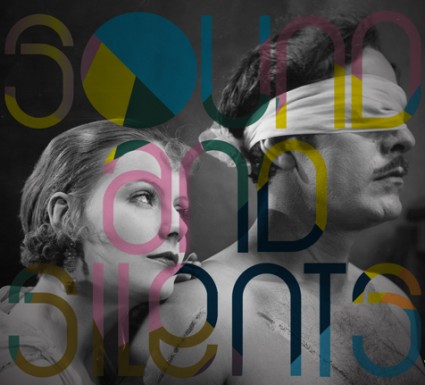
Sounds and Silents

http://www.birds-eye-view.co.uk/kingsplace

Sounds and Silents is an off-shoot of the annual Bird’s Eye View festival of women filmmakers. The strand brings together classic silent films starring iconic actresses and innovative musical accompaniment by female artists.

Its latest manifestation is Sounds and Silents at King’s Place, bringing silents to one of London’s latest art venues. Four films are to be screened 27-29 May, and here are the programme details:

The Temptress with original live score from Natalie Clein
Dir. Fred Niblo, USA 1926
Hall One, Thur May 27, 7.30pm

Narcissistic Elena (Greta Garbo) drives every man she meets to despair. One of her victims, Manuel Robledo tries to escape, but this time Elena is in love and she follows him from Paris to his native Argentina.

Natalie Clein

‘Clein plays everything with passion’ – The Times

Natalie Clein’s exceptional musicality has earned her a number of prestigious prizes including the Classical Brit Award for Young British Performer of 2005, the Ingrid zu Solms Cultur Preis at the 2003 Kronberg Academie, and the BBC Young Musician of the Year aged just 16.

My Best Girl with original live score from Elysian Quartet
Dir. Sam Taylor, USA 1927
Hall One, Fri May 28, 7.30pm

Maggie (Mary Pickford) falls in love with Joe, her new colleague in the stock room, unaware that he is the son of the department store owner working undercover to prove his business skills.

Elysian Quartet

‘Feisty boundary pushers, four supremely talented classical musicians’ – Metro

The Elysian Quartet is one of the UK’s most innovative young ensembles. They have worked with artists as diverse as virtuoso beat-boxer Killa Kela, jazz pianist Keith Tippett, and experimental electronic composer Simon Fisher-Turner.

I Don’t Want to be a Man! with original live score from Zoe Rahman / The Danger Girl with original live score from Juice
Dir. Ernst Lubitsch, Germany 1919 / Dir. Clarence G Badger, USA, 1916
Hall One, Sat May 29, 7.30pm

– Ossi’s father hires a guardian to educate his rebellious daughter. Escaping from house arrest dressed as a man, Ossi begins to investigate whether life is more liberated this way.

– When vampish Helene (Gloria Swanson) uses her charms on Bobbie, Gloria breaks up the pair by disguising herself as a man to seduce Helene.

Zoe Rahman / Juice

‘One of the finest young pianists in Europe’ – The Observer

– Zoe Rahman has firmly established herself as one of the brightest stars on the contemporary jazz scene. Zoe has recorded four critially acclaimed albums, her second ‘Melting Pot’, wasnominated for the 2006 Mercury Music Award and was voted ‘Jazz Album of the Year’ at the 2006 Parliamentary Jazz Awards.

– Juice is an experimental vocal trio specialising in vibrant, theatrical performances commissioned countless new works. They draw on world music, jazz, folk and pop and have been featured on BBC Radio 3 and Classic FM and Resonance FM.

King’s Place (“a creative hub, a dining venue, a conference and events centre, and office complex”) is at 90 YorK Way London N1, close by King’s Cross and St Pancras stations. More details, including tickets, from the Bird’s Eye View site.

The Brand Blackmail

Blackmail

Last year Neil Brand‘s orchestral score for the silent version of Alfred Hitchcock’s Blackmail was premiered (and much acclaimed) at Il Cinema Ritrovato, Bologna in July 2008. Happily there is going to be a further outing for the score, as film and music are to feature at the Barbican in London on 31 October 2010. The BBC Symphony Orchestra will be conducted by Timothy Brock, and tickets can now be booked from the Barbican site. As said before, this is probably the first full orchestral score to be written for a British silent fiction film since the 1920s (The Battle of the Somme, a documentary feature, received the orchestral treatment at the Royal Festival Hall in 2006).

For an extract from the score, photos of the Bologna screening, and extracts from reviews, see the Blackmail page on Neil’s personal site.

And there’s more. As regular readers will know, Neil is progressively building up a further reputation as a radio dramatist, and on 27 and 28 May (each at 14:15) BBC Radio 4 will be broadcasting Waves Breaking on a Shore, a two-part play about early cinema, Jewish culture, nationalism and radical politics in London’s East End, co-written by Neil and Michael Eaton. The two parts will be broadcast in the Afternoon Play slot and will be able to be heard live on the Radio 4 site and – one trusts – for a week thereafter on iPlayer (if you are in the UK).

I’ve read it and I warmly recommend it (and if it ends up mentioning Walter Gibbons’ Phono-Bio-Tableaux, then I contributed three words to it as well).

A luxurious wallowing place

Today (7th May) at Bristol’s Colston Hall there is to be a special screening of Carl Dreyer’s The Passion of Joan of Arc with live music by rock musicians Adrian Utley (of Portishead) and Will Gregory (of Goldfrapp). The music will be conducted by Charles Hazelwood, and will feature six electric guitars, eight members of the Monteverdi Choir, harp, percussion, horns and keyboards. The short documentary above, made by Rick Holbrook, features interviews with Utley, Gregory and Hazelwood, and shows the process of composition, illustrated by clips from the film. The trio previously collaborated on a score for Victor Sjöström’s He Who Gets Slapped at Bristol in 2007.

In The Times last Saturday there was an interview with Gregory and Utley about the project. Gregory came up with this very revealing comment on composing music for silent films:

It’s a luxurious wallowing place for composers. You get to be the whole soundtrack: music, dialogue, background noise and special effects.

I think that pretty much sums up the approach of the rock musicians and jazz musicians who have dabbled in silent film scores in recent years – among them John Cale, Jonathan Richman, Black Francis, The Pet Shop Boys, DJ Spooky, Tangerine Dream, Tom Verlaine, Giorgio Moroder, Bill Frisell, Gary Lucas, Dave Douglas, Joby Talbot, Fred Frith, Marc Ribot, Steven Severin, Maximo Park, and several more. The silent film is a canvas – practically a blank canvas – onto which they can wallow with abandon. This isn’t intrinsically a bad thing, because it is a form of artistic expression, and in some cases a highly successful one, but it is one where the film is subordinated to the music (still more to the star musician). Any regular silent film musician will tell you that their job is to accompany the film, interpreting it in the best possible way to enable the audience fully to appreciate what they are seeing. They don’t provide us with concerts accompanied by the film.

So we have two different ways of approaching the silent film score, and that has to be better than just having the one. Back to The Passion of Joan of Arc, and despite the Colston Hall calling it a unique event, the composers say that they hope to take film and score elsewhere, hinting at Italy and France.

The DIY silent film score

A Silent Film, one video in the series 365: No Day is Ordinary 049/365, by owlsongs (real name Wanda). It uses an Incompetech soundtrack, and I like the imaginative combination of webcam vlogging with silent film titles

If you have spent any time browsing through YouTube for silent films (especially silent pastiches), or indeed for a good many other kinds of video requiring a made-to-measure soundtrack, you are bound to have heard the music of Kevin McLeod. He runs Incompetech, a music download site with an extensive range of royalty-free music, including a section on silent film scores.

For anyone with a three-minute video requiring a generic piano acompaniment in traditional silent film style, this is the place to go. Tunes such as ‘Plucky Daisy’, ‘Work is Work’ and ‘Look Busy’ have been used countless times for YouTube videos, for mock silents, animation films, cute animals (lots of cute animals) and more. A typical piece will come with this information:

Gold Rush
Genre: Silent Film Score
Length: 0:47
Instruments: Piano
Tempo: 120

Peppy piano duet. 031 Bouncy, Driving, Humorous 2007

You can play the tune on the site or download it for free as an MP3 file. Other themes include ‘Comic Plodding’, ‘Old Timey’, ‘Friendly Day’ and ‘Hammock Fight’ provide bright, immediate piano scores between thirty seconds and two minutes, sometimes with additional instrumentation coming in as the music progresses. You get music for chases, villains, nostalgia, comic scenes, fanfares, and multi-purpose linking tunes.

Professional silent film accompianists might have a word or two to say about the formulaic nature of the sound clips, but there’s no denying that McLeod is good at conjuring up catchy accompaniments with strong hooks that find use across thousands of online videos – though it needs to be pointed out this include scores produced by McLeod across many other genres. Under Royalty Free he lists African, Blues, Classical, Contemporary, Disco, Electronica, Funk, Holiday, Horror, Jazz, Latin, Modern, Musical, Polka, Pop, Radio Drama, Reggae, Rock, Silent Film Score, Soundtrack, Stings, Unclassifiable and World. Truly something for everyone.

Of course, sites like Incompetech help reinforce the idea of silent films as being inexorably wedded to tinkly piano. Here at the Bioscope we have tried to champion different kinds of silent film scores. So we would hope that Electronica, Modern, Unclassifiable or World might supply equally serviceable soundtracks for the budding silent film producer (but possibly not Polka). Meanwhile, do take a browse – and remember that in the silent era many cinemas installed player pianos (such as the Fotoplayer, illustrated in an earlier post). The automatic score is part of the silent film tradition too.

Carl Davis meets his Waterloo

Charles Vanel as Napoleon in Karl Grune’s Waterloo (1928), from http://www.southbankcentre.co.uk

The Bioscope normally avoids covering news of single film screenings. Requests come through from time to time suggesting that there be a Bioscope service advertising silent film screenings and not just festivals. My answer each time is that I’m not able to maintain such a service to the extensive level that would be expected of it, and instead I refer people to the Silent Screenings section of Nitrateville and (for information in the USA only) to the Silents in the Court and Silent Era sites.

But here’s an exception. 22 April sees the UK premiere of Carl Davis‘ score for Waterloo (Germany 1928), directed by Karl Grune. The screening will be at the Royal Festival Hall on London’s South Bank, with the Philharmonia orchestra conducted by Davis.

Abel Gance’s epic Napoléon, for which Grune’s film was conceived as a response, does not include the Battle of Waterloo. Gance’s film (which he madly hoped would be part one of six) ends with the invasion of Italy. Grune’s film tells the story from the German point of view, focussing on Blüchner (Otto Gebühr) who comes to the aid of the Duke of Wellington (Humberstone Wright) to defeat Napoleon (Charles Vanel). Grune looked to Gance’s film not only in theme but in technique, with spectacular battle scenes crowned by split screen images, though it is (by reputation) a far more conventional historical costume drama overall. Carl Davis has likewise looked back to his famous 1980 score for Napoleon, stating that his score is intended to be a follow-up, combining music from the period with his own.

A DVD of Waterloo is promised from Edition Filmmuseum (see its forthcoming releases list), but there is no indication that the release will feature Davis’ score. Abel Gance’s Napoléon, famously restored by Kevin Brownlow, is regrettably one of the more elusive of silent films these days. For its American release, the restored film was cut and put to a score by Carmine Coppola, Francis Ford Coppola’s father, which is the only version allowed to be screened in the USA. This has hamstrung the film’s availability, not least on DVD. If you don’t mind an inferior restoration with Coppola’s frankly second-rate score, the film is available on DVD from Spain in a two-disc format. But remember that Brownlow’s restoration of the film (last screened in the UK in 2004) is over ninety minutes longer, with more accurate editing, better print quality, and colour tinting – as well as Davis’ ever-expanding score for live performances.

Information on the screening of Waterloo is available from the Philharmonia Orchestra and South Bank Centre websites. The screening starts at 7.00pm and is proceeded by a free introductory talk at 5.45pm by film historian and film music authority John Riley.

Black Francis and The Golem

Part 18 of The Golem, from http://www.youtube.com/user/blackfrancisnet

In 2008 Black Francis, frontman for alternative rock band The Pixies, performed his score (with songs) for Paul Wegener’s Der Golem (1920) at the Castro Theatre as part of the San Francisco International Film Festival. He has now released the score as a deluxe boxed set, available for sale from his website, blackfrancis.net. The boxed set features two CDs of the score as performed live at the Castro, two CDs of the score recorded in the studio, a DVD of the film with the score, a book with Francis’ music and handwritten notes, plus photographs. The whole set is limited to 500 copies, numbered and autographed by the man himself, and one suspects that they won’t last long on the shelves.

But you needn’t miss out, because at the same time Francis has made the entire film with score available on his YouTube channel, divided up into 26 sections, plus a making of video. Not all may like to see silent films acompanied by songs, but it doesn’t happen every time, and this looks (from what the Bioscope has sampled so far) to be a strongly-felt response to the film’s imagery and its romantic yearnings. It certainly is interesting to contrast it with experimental rock guitarist Gary Lucas’ take on Der Golem, available in extract form on YouTube. I think I prefer the latter, because it is led by the imagery rather than having the images decorating songs, but it all goes to show that the silent film medium is alive and kicking in all sorts of directions.

Photoplay online

Do you remember if those early days of the Web, when businesses and organisations would proudly announce that they had just launched a website? Apart from start-ups, you don’t get so many such announcements these days, particularly for well-established businesses. But some move at more casual pace than others, and so it is that Photoplay Productions – established 1990 – has just launched its first website, which also marks its twentieth anniversary.

Photoplay is the independent company, run by Kevin Brownlow and Patrick Stanbury, dedicated to film history and in particular to reviving and sustaining interest in silent film. It was formed in 1990, but as the About Us section recounts, the history goes back to 1955, when Kevin Brownlow first entered the film industry as an editor. While working on documentaries and feature films (notably editing Tony Richardson’s The Charge of the Light Brigade, 1968) and directing his own distinctive features (It Happened Here, 1964, and Winstanley, 1975) Brownlow was building on his childhood passion for silent film. His extensive interviews with people from the then sorely neglected silent era of film helped make up his classic 1968 book, The Parade’s Gone By.

The book encouraged the UK’s Thames Television to commission a television series, Hollywood – The Pioneers (1980), made by Brownlow and TV director and former ballet dancer David Gill (left, with Brownlow). The series teamed Brownlow and Gill for the first time with composer Carl Davis, whose sweeping scores came to be synonymous with the silent film revival. That revival took the form of eye-opening screenings of restored silents, shown in optimum conditions and correct running speeds with live orchestral accompaniment. The first and most spectacular of these was Abel Gance’s Napoleon, first shown at the London Film Festival in 1980. Its success led Jeremy Isaacs, then setting up the new UK television channel Channel 4, to commission a series of restorations and broadcasts under the title of Thames Silents. Those of us around at the time sat awestruck as The Wind, Ben Hur, The Crowd, The Thief of Bagdad and others were returned to the screens large and small. Thames Silents also led to three exemplary television series, Unknown Chaplin, Buster Keaton: A Hard Act to Follow and Harold Lloyd: The Third Genius.

Thames Television lost its franchise at the end of the 1980s, which meant the end of Thames Silents (Channel 4 Silents followed it for a while). The changes in the UK broadcast landscape encouraged the formation of independent production companies to chase commissions, and one of these was Photoplay Productions, formed in 1990 by Brownlow, Gill and finance expert Patrick Stanbury. The new company continued to undertake restorations and to produce television series on aspects of film history, notably D.W. Griffith: Father of Film (1993) and Cinema Europe: The Other Hollywood (1995).

David Gill died in 1997, but Brownlow and Stanbury have carried on, in the face of increasing difficulty in obtaining commissions or funding restorations for the ‘difficult’ subject of silent film. The distribution of their ‘live cinema’ titles is a major part of the business, and the website lists all of their productions, with full technical details and information on disribution services and licensing. The site also has information on Kevin Brownlow’s book publications, and its News and Upcoming Shows section lists screenings of Photoplay productions and restorations around the world. In particular, for those in the UK, there are three screenings being held at the Barbican in London to mark Photoplay’s 20th anniversary – Orphans of the Storm (7 February, above), The Chess Player (11 April) and The Iron Mask (30 May).

It’s is great to seen the new site, which makes clear all of the tremendous work undertaken by Brownlow, Gill, Stanbury and colleagues in support of the undying medium that is the silent film. A few dud links need to be sorted out (how curious it is that the link for Napoleon – rarely-screened owing to technical complications, expense and legal issues – isn’t working as yet), but this is not just a guide to the industriousness of one company but a primer on the appreciation of silent film. Congratulations, and many happy returns, to Photoplay Productions.

Silents with accordions

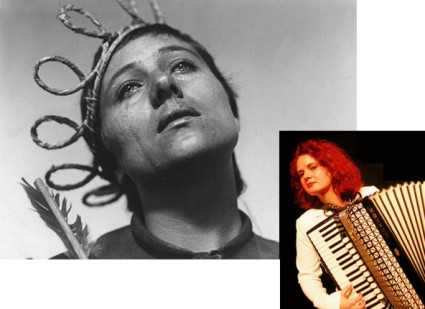
Falconetti in La passion de Jeanne d’Arc with Austrian accordionist Maria Düchler

The Bioscope is unremittingly keen to see new forms of musical accompaniment for silent films, so news of the Akkordeon Festival in Vienna is most welcome. The annual festival is pretty much what you would expect it to be – a festival of accordion music, and quite possibly something of a challenge to the senses were you to attend it in its entirety from 15 February to 23 March 2010. But the festival has assorted strands, and this year one of these is a series of matinees featuring the screening of silent films accompanied by accordionists. Clearly the choice of films has been made to demonstrate the range of the instrument and challenge preconceptions.

On 21 February Buster Keaton in Sherlock Jr. (1924) and Fatty Arbuckle and Keaton in Back Stage (1919) will be accompanied by Sascha Shevchenko on the accordion and Maciej Gloebiowski on clarinet.

On 28 February D.W. Griffith’s Broken Blossoms (1919) will be accompanied by accordionist Christian Bakanic.

On 7 March Carl Th. Dreyer’s La passion de Jeanne d’Arc is accompanied by accordionist Maria Düchler.

On 14 March there is Conrad Veidt in Robert Weine’s Orlacs Hände (1924), accompanied by Stefan Sterzinger on accordion and Franz Schaden bass.

On 21 March there’s Harold Lloyd in Safety Last (1923), with Lothar Lässer accompanying on the accordion.

More information (in German only), including ticket details, can be found on the Akkordeon Festival website. All the silent film screenings take place at the Filmcasino, Margaretenstrasse 78, A-1050, Vienna, Austria.