More on Fflics

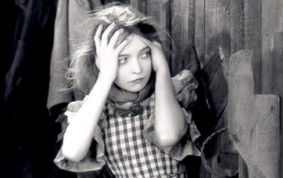
Jerry the Troublesome Tyke

Jerry the Troublesome Tyke, from http://www.fflics.co.uk

There’s more information now available on the Fflics Festival of Welsh and Welsh-related silent and sound film, to be held in Aberystwyth, 25-28 October. Here’s the programme:

Thursday 25 October
19.00 Opening Night Gala Celebration –
19.30 How Green Was My Valley (1941) 118 mins

Friday 26 October
10.00 The Proud Valley (1940) 77 mins
10.00 Arthur Cheetham Shorts
12.00 The Silent Village (1943) 36 mins
12.00 William Haggar Shorts
14.00 Jerry the Troublesome Tyke
14.00 The Corn is Green (US, 1946) 118 mins
15.30 The Citadel (1938) 110 mins
17.45 Blue Scar (1949) 90 mins
18.00 Valley of Song (1953) 74 mins
20.00 Dead of Night (1945) 102 mins
20.00 Fame is The Spur (1947) 116 mins

Saturday 27 October
10.00 A Run For Your Money (1949) 85 mins
10.00 Mitchell and Kenyon Shorts and Representations of Welshness – Discussion
11.30 Y Chwarelwr (The Quarryman) (1935) and Yr Etifeddiaeth (The Heritage) (1947-9)
13.45 Noson Lawen and Letter from Wales
14.30 The Shop at Sly Corner (1947)
15.00 The Rat (1925) 74 mins
16.45 The Stars Look Down (1939) 94 mins
17.15 Call of the Blood (France, 1920)
19.30 Next of Kin (1942) 102 mins
19.00 The Life Story of David Lloyd George (1918)

Sunday 28 October
10.00 The Last Days of Dolwyn (1949) 95 mins
11.00 David (1951) 37 mins
13.30 The Life and Death of Colonel Blimp (1943) 163 mins

Some corking stuff there. On the silent account, there’s Ivor Novello in Call of the Blood (a French production) and The Rat, the long-lost biopic The Life Story of David Lloyd George (1918), the 1920s Sid Griffiths cartoon series Jerry the Troublesome Tyke, and early shorts by the Welsh film pioneers Arthur Cheetham and William Haggar. Plus the ubiquitous Mitchell and Kenyon and their films of Wales in the 1900s.

And, in the proper spirit of these things, here’s some of that information in Welsh:

Fel rhan o ddathliadau blwyddyn canmlwyddiant Llyfrgell Genedlaethol Cymru, bydd gwyl ffilmiau Fflics yn dangos etifeddiaeth ryfeddol ffilm yng Nghymru.

Bydd yr wyl yn cynnig cymysgedd ddifyr o ffilmiau mud a sain. Ymysg yr uchafbwyntiau bydd Noson Gala Agoriadol gyda dangosiad o brint adferedig o’r ffilm eiconig How Green was my Valley (1941), yn ogystal a dwy ffilm o’r 1920au a fydd yn amlygu dawn Ivor Novello o Gaerdydd, un sêr mwyaf y cyfnod.

Mae uchafbwyntiau eraill yr wyl yn cynnwys Dathliad Gala o’r ffilm The Life Story of David Lloyd George (1918), a fu ar goll am nifer mawr o flynyddoedd ond sydd erbyn hyn yn destun dathlu cenedlaethol. Darperir cyfeiliant piano byw gan Neil Brand, sy’n arbenigo ar gyfeilio i ffilmiau mud.

Bydd Fflics yn canolbwyntio’n benodol ar sinema sydd â chyswllt Cymreig o gyfnod ffilmiau nitrad (1890au hyd 1953). Mae’r cyfnod yma’n cynnwys gwaith arloesol William Haggar, clasuron o Stiwdio Ealing, a hefyd yn dathlu ffimiau glofaol y 1940au a’r 1950au, megis Proud Valley gyda Paul Robeson.

Bydd Fflics yn dirwyn i ben ddydd Sul, 28 Hydref, gyda’r ffilm ryfel feistrolgar The Life and Death of Colonel Blimp, â pherfformiad bythgofiadwy gan Roger Livesey yn chwarae’r brif ran.

As ever, there’s more information on the conference website (in both languages).

Kansas Silent Film Festival

Kansas Silent Film Festival

Summer is not yet o’er, and yet there is already news of the silent film festivals coming up for 2008. The Kansas Silent Film Festival, for instance, takes place 22-23 February 2008, at Washburn University, Topeka, and a provisional programme has been announced:

Fri. Feb. 22, 2008, starts at 7 p.m.

A Harem Knight (20 min.) (1926) with Ben Turpin
Only Me (15 min.) (1929) with Lupino Lane
The Kid Brother (84 min.) (1927) with Harold Lloyd
—music by the Mont Alto Motion Picture Orchestra

Sat. Feb. 23, 2008, starts at 10 a.m.

Jack the Kisser (10 min.) (1913) a film by Porter/Edison
Bad Boy (20 min.) (1925) with Charley Chase
Clash of the Wolves (78 min.) (1925) with Rin Tin Tin
—music by Greg Foreman, organ
Coney Island (20 min.) (1917) with Buster Keaton/Roscoe “Fatty” Arbuckle
Leap Year (56 min.) (1921) with Roscoe “Fatty” Arbuckle
—music by the Mont Alto Motion Picture Orchestra
The Mothering Heart (20 min.) (1912) directed by D.W. Griffith, with Blanche Sweet
Dancing Mothers (66 min.) (1926) with Clara Bow
—music by Marvin Faulwell, organ
The Bond (5 min.) (1918) with Charlie Chaplin
The Sinking of the Lusitania (10 min.)(1918) by Winsor McKay
The Big Parade (140 min.) (1925) with John Gilbert/Renée Adorée
—music by Marvin Faulwell, organ, & Bob Keckeisen, percussion

There will be a short break within the final feature film to include a tribute in memory of the 90th Anniversary of the end of WWI

More information, and updates, on the festival website. The festival is free and open to the public.

And there’s Cinecon too

The Patent Leather Kid

The Patent Leather Kid (1927)

There are so many festivals coming up, it hard to keep track of them all. I should have told you about Cinecon before now. This major event in the silent/early souns film calendar takes place in Hollywood 30 August-3 September. As the festival blurb says:

Cinecon is a five day celebration of the movies, screening nearly thirty rare silent and early sound feature films and as many short subjects from the nation’s leading film archives and Hollywood studio vaults, and is dedicated to showcasing unusual films that are rarely given public screenings. Celebrity guests will attend a screening of one of their films and participate in question and answer sessions following the film. You can buy great movie memorabilia in our six fabulous dealers’ rooms and the Cinecon Career Achievement Award celebrity banquet takes place on Sunday evening.

Silent films featuring at this year’s Cinecon include Colleen Moore in Her Wild Oat (1927), William S. Hart in Branding Broadway (1918), Richard Barthelmess in The Patent Leather Kid (1927), Henry King in The Devil’s Bait (1915), and Man, Woman and Wife (1929), a rare Universal late silent with added Movietone score.

Mykkäelokuvafestivaalit

More from Scandanavia. Mykkäelokuvafestivaalit, or the Forssa Silent Film Festival, takes place in Forssa, Finland, over 31 August-1 September. The silent film festival is now in its eighth year, and this year focusses on the French silent film. Featured screenings include Abel Gance’s Au Secours! (1924) and La Dixième Symphonie (1918), Jean Renoir’s Le Tournoi dans la Cité (1928), Erich Von Stroheim’s Greed (1924), and Chaplin’s The Pawnshop (1916) and The Immigrant (1917). Finnish films featured are Teuvo Puro’s Vaihdokas (1927) and Jaakko Korhonen’s Aatamin Puvussa ja vähän Eevankin (1931), the first Finnish sound film. And a ‘surprise’ archive film is also promised, a nine-part Western serial. The festival site is mostly in Finnish, but has a summary page in English.

Silent film days in Tromsø

Amundsen film

Roald Amundsen’s Polar Expeditions, from http://www.tiff.no

Silent film days in Tromsø is part of the Tromsø International Film Festival, held in Tromsø, Norway, and takes place 6-9 September. The festival is to be held in the Verdensteatret cinema, originally built for the exhibition of silent films in 1916. The festival site is in English as well as Norwegian, and here’s the programme:

Thursday September 6th
08:00 pm Opening – LA PASSION DE JEANNE D’ARC. Music composed and performed by Matti Bye (SE)

Friday September 7th
03:00 pm Polarfilm; ROALD AMUNDSEN’S POLAR EXPEDITIONS. Music composed and performed by Ben Model (US)

06:00 pm MADAME DE THEBES. Music composed and performed by Matti Bye (SE)

09:00 pm A TRIP TO MARS. Music composed and performed by Gaute Barlindhaug (NO)

Saturday September 8th
12:00 pm SHORT FILM PROGRAM. Music composed and performed by Ben Model
02:00 pm FROSTY CELLULOID. Music composed and performed by Ben Model
06:00 pm EXPRESS 300 MILES. Music composed and performed by Günter Buchwald
09:00 pm THE 11th YEAR. Music composed and performed by Cleaning Women

Sunday September 9th
03:00 pm SHORT FILM PROGRAM. Music composed and performed by Ben Model
08:00 pm THE PEOPLE OF THE TUNDRA. Music composed and performed by Geir Lysne

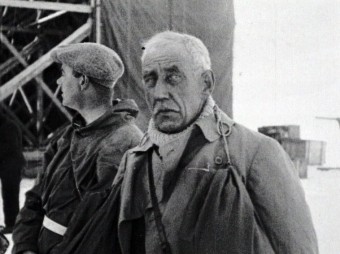
Really interesting to see the Roald Amundsen films there. Many will know of Herbert Ponting’s famous films of Caption Scott’s doomed expedition to the South Pole; fewer know that Amundsen took along a camera as well and that the film survives – indeed, the festival programmes notes says that a complete original negative film from the expedition has been recently been discovered. Norwegian photographer Morten Skallerud is working on a digital restoration of the material, and will be talking about his work at the festival.

A TRIP TO MARS is the renowned Danish science fiction film HIMMELSKIBET (1918). More information from the festival website.

Neil Brand at Edinburgh

You can catch the indefatigable Neil Brand – pianist, composer, writer, actor, passionate advocate of the silent film – at the Edinburgh Festival this month, in two separate fringe shows.

Firstly, there’s The Silent Pianist Speaks, where Neil reveals the secrets of the profession of silent film pianist, acompanied by film clips. The show is running at the Pleasance Dome, Edinburgh daily until Monday August 27th.

If that wasn’t enough, there’s a staging of Neil’s original radio play, Joanna, performed the Invisible Theatre company, at the Jazz Bar. The blurb reads: “One grand piano. One secret. Joanna tells her tale of being encased in wood for a century, revealing more than just a few notes …”. There are tickets still available for the 17th, 18th and 19th.

Both shows have enthusiatic online reviews from audiences.

The Other Weimar

Sacile Film Fair

Too hot to think, let alone write much at the moment, but here’s some further news about the Pordenone Silent Film Festival.

The main film season is to be The Other Weimar (L’altra Weimer), a season of less familiar German silents, curated by Hans-Michael Bock of CineGraph, Hamburg. This is the line-up of directors and titles (a provisional list):

Ludwig Berger (1892-1969)
EIN GLAS WASSER (1922/23) or EIN WALZERTRAUM (1925)

Hans Behrendt (1889-?1942)
DIE HOSE (1927)

Ewald Andre Dupont (1881-1956)
DER DEMÜTIGE UND DIE TÄNZERIN (1925)
DAS ALTE GESETZ (1923)

Richard Eichberg (1888-1963)
DER FÜRST VON PAPPEHEIM (1927)
RUTSCHBAHN. SCHICKSALSKAMPFE EINES SECHZEHNJÄHRIGEN (1928)

Henrik Galeen (1888-1949)
DER MÄDCHENHIRT (1919)

Gerhard Lamprecht (1897-1974)
DIE BUDDENBROOKS (1923)

Max Mack (1884-1973)
DER KAMPF DER TERTIA (1928)

Joe May (1880-1954)
DER FARMER AUS TEXAS (1925)

Richard Oswald (1880-1963)
LUMPEN UND SEIDE (1925)

Harry Piel (1892-1963)
RIVALEN (1923)

Arthur Robison (1883-1935)
LOOPING THE LOOP (1928)

Reinhold Schünzel (1888-1954)
DER HIMMEL AUF ERDEN (1927)

Hams Steinhoff (1882-1945)
DER HERR DES TODES (1926)

Erich Waschneck (1887-1970)
DIE CARMEN VON S.PAULI (1928)

A little better-known is the closing gala film on 13 October, G.W. Pabst’s Pandora’s Box (Die Büchse der Pandora). The other special event films over the week are Orphans of the Storm (David W. Griffith, 1921), Entr’acte (René Clair, 1924), Paris qui dort (René Clair, 1923-1925) and Chicago (Frank Urson, 1927). Other strands in the festival include René Clair, the Griffith Project, Sponsored Films, The Corrick Collections, The Bible Lands in 1897, Jean Darling and Our Gang, and the National Film Preservation Foundation’s Treasures III.

Just to recap, the festival takes places in Pordenone, after some years spent at nearby Sacile, and runs 6-13 October. An outline programme is available on the festival site. Regular attendees should by now have received their e-mail giving registrations details (30 euros), plus travel and accommodation information. More information on registration etc is available from the site. The Film Fair, selling books, journals, collectables, DVDs and videos, is back once more in the church of San Francesco. The picture above, from the Pordenone site, shows Fay Wray visiting the Film Fair in 1999 (when it was at Sacile). Festival director David Robinson stands just behind her.

Strade del Cinema

Fred Frith

It’s a new one on me, but the Strade del Cinema festival is running 6-15 August, at Aosta, Italy. It’s a festival of music and silent film, with extra bits. This year they have a Laurel and Hardy strand, with assorted of their classic silent shorts with intriguing music accompaniment (Two Tars gets to be accompanied by cello, electric bass, electronics and a Japanese koto; You’re Darn Tootin’ is accompanied by a ‘digital performer’). There’s a screening of Pastrone’s Il Fuoco (1916) with live score by avant garde guitarists Marc Ribot and the great Fred Frith, one of my heroes. And there’s Jean Epstein’s La Belle Nivernaise (1923), with vocal accompaniment by Les Grandes Voix Bulgares, which ought to be quite something. There’s also a dramatic piece on Rudolph Valentino, L’Amante de Mondo.

Just time to pop over there, if you’re quick…

Films from 1907 at Il Cinema Ritrovato

Bologna

The Bioscope has its reporters everywhere (well, sort of), and Frank Kessler has very kindly provided a report on the films from 1907 strand which featured at this year’s Il Cinema Ritrovato festival at Bologna. Here’s Frank’s report:

For the fifth time now, the Bologna Cinema Ritrovato festival has dedicated part of its program to films that are a hundred years old. Starting in 2003 to celebrate so to speak the centenary of Edwin S. Porter‘s The Great Train Robbery, this section of the program has offered many interesting insights into early film history, and also led to numerous fascinating discoveries. Due to the increasing lengths of the films to be shown, the 1907 programs occupied a larger proportion of the festival screenings than the ones projected in the previous years.

Mariann Lewinsky, who is responsible for the “100 Years Ago”-section, always tries to go off the beaten tracks, both in her selection and her programming strategies. Thus every time she chooses different angles to present also her personal view on a year of early filmmaking. Obviously, there are always practical factors to be considered, such as the availability of films, the quality of the prints etc. So, as Mariann Lewinsky explained, the fact that the 1907 retrospective was made up of mainly European films was due to such pragmatic reasons. (The 1905 program, by the way, was a very complicated one to put together as 1905 used to be – and possibly still is – the default date attributed by many archives to non-identified early films.)

All in all there were nine 1907 screenings, divided into two groups: the first one consisted of five programs dedicated to Bologna 1907 (films shown in Bologna from June 30th to July 7th, 1907, that is during the period of the festival itself, a hundred years ago), Pathé 1907, Italy 1907, Great Britain 1907 (productions by Hepworth, Urban and Mitchell & Kenyon) as well as films from the Abbé Joye Collection; the second one was organised thematically around topics such as ‘drama’, ‘actuality’, ‘at the seaside’, ‘au music-hall’, ‘colours – costume’ etc, as well as a series of films with Max Linder.

These rich and diverse programs allowed many discoveries. A favourite of mine was the 1907 Pathé film Le petit Jules Verne by Gaston Velle which, to my knowledge, is a unique case of combining explicitly the adventurous and scientific-technical universe of the well-known French author with the magical world of the féerie genre, embedding the latter in a Little Nemo-like dream sequence.

For more on Il Cinema Ritrovato do have a look at David Bordwell’s and Kristin Thompson’s blog.

Further details of the 1907 films show can be found on the Bologna festival site.

Lillian Gish Film Festival

Lillian Gish

Doubtless making up a little for having missed out on hosting The Simpson Movie premiere, Springfield, Ohio plays host to The Lillian Gish Film Festival over 5-8 September. Films to be featured include Broken Blossoms, The Wind (with the Springfield Symphony Orchestra), The Night of the Hunter and The Whales of August. There are lectures, a Gish Wine Tasting (!) with Roundtable discussion, and a Gish Sisters Walking Tour. The Gish family came from Springfield: the father, James Leigh Gish, ran a confectionery business there, though they moved away soon after Lillian was born (1896), to Dayton, where Dorothy was born (1898). And then, of course, they experienced a peripatetic life as child stage performers.

More details from the festival site.