The original Neil Brand

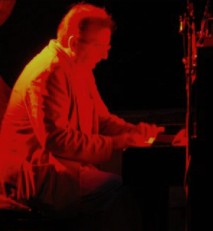
Neil Brand is a silent film pianist. That much is known by most enthusiasts for silent film in the UK, and by a good many around the world as well. It may not always be realised that Neil is also a writer, composer, actor and scholar, one whose prodigious energies and superabundant talent make him not far short of a national treasure. Hmm, why that note of qualification? – he is a national treasure. And now, as if accompanying silents live and on DVD, writing radio scripts and musical comedies, acting on film and TV, writing books and educating students were not enough, now he has turned online archivist with his latest venture, The Originals.

The Originals is a new section of Neil’s personal site which brings together original materials relating to the performance of music to film in the silent era. For some while now Neil has been collecting articles, scores, interviews, memoirs and eye-witness accounts which document the experience of seeing or performing to films in the 1910s and 1920s. He has now started to put some of this material online.

http://originals.neilbrand.com

The site is in three sections: Interviews, Archive and Memories. Interviews features a small collection (so far) of interviews and articles which give the point of view of musicians who were employed in cinemas during the silent era. These include a transcription of a 1988 interview with the 94–year-old Ella Mallett, former silent movie musician (carried out as part of the BECTU History Project which records interviews with veterans of the British film and television industries); an extract from Maurice Lindsay’s memoir of Glasgow life, As I Remember; an extract from New Zealander Henry Shirley’s memoir Just a Bloody Piano Player; and a highly evocative piece from novelist Ursula Bloom about her experiences as a teenage silent film pianist in St Albans (contributed by yours truly).

Archive is the section that is going to attract the most interest. This offers PDF copies of various original documents relating to silent film music, including extracts from original music that would have been performed with various films. The jewel here is selected pages from the score for The Flag Lieutenant, compiled by Albert Cazabon, and the only surviving full score for a British silent fiction film in existence. You’ll also find music for the Douglas Fairbanks picture The Black Pirate, an eyebrow-raisingly dismissive article on the profession of silent film pianist, cue sheets for Hell’s Heroes and The Hound of the Baskervilles, and more.

The third section, Memories, presents extracts from the 1927-1930 diaries of Gwen Berry, who played ‘cello in the orchestra pit of the Grand Cinema, Alum Rock Road, Saltley. The extracts, from 1929, show Gwen’s apprehension at the arrival of the “terrible talkie pictures” which were going to throw so many musicians such as her out of work. The diary is presented in a elegant turn-the-pages digital form, which does require that you install a plug-in for DNL ebook software.

All in all, The Originals is an excellent idea, and one that The Bioscope hopes will grow and grow, not least if those interested are able to send relevant materials to Neil so that they might be shared by all.

Meanwhile, here’s a handy survey of other things NeilBrandian…

Bravo, Neil.

Méliès encore!

Undoubtedly one of most significant DVD releases in recent years in the early and silent cinema field was Flicker Alley’s Georges Méliès: First Wizard of Cinema (1896-1913). Issued in 2008, this 5-DVD set features 173 titles made by the premier filmmaking genius of the early cinema period. It brought together material from collections around the world in as near comprehensive a form as possible, turning what had previously would have taken half a lifetime for just a handful of dedicated researchers to see into something available to all. The set contained revelations for everyone, whether early cinema expert or those stumbling upon these visionary films of magic for the first. The Bioscope produced a review with full listing of all of the titles, including Star-Film catalogue number (the name of Méliès’ film company), the original French title and English title on the discs.

The set was extensive, but it was not complete. More Méliès films were known to be out there, and now Flicker Alley has just announced Georges Méliès Encore, a single disc follow-up which adds a further 26 titles produced by the Frenchman between 1896-1911, plus two titles by his Spanish contemporary Segundo de Chomón done in the Méliès style which have long been is taken for his work. That latter offering sounds a bit odd (let’s instead see a comprehensive DVD dedicated to the supremely artistic work of de Chomón alone one day, please), but the chance to take things that much closer to the complete extant archive is a cause for rejoicing.

The production description available on Amazon.com gives these English titles:

The Haunted Castle from 1896 relies on shot-substitution, the filmmaker’s first trick discovery; it is a work in 21 shots at a time when everyone else in the world was making only single-shot films! An Hallucinated Alchemist is a beautifully-colored trick film from 1897, which survives in perfect condition. Among other surprises, the set includes military re-enactments (The Last Cartridges, Sea Fighting in Greece), dream films (The Inventor Crazybrains and His Wonderful Airship, Under the Seas), dramatic narratives (The Wandering Jew and The Christmas Angel, both with original narrations), slapstick comedies (How Bridget’s Lover Escaped, The King and the Jester, The Cook’s Secret), and, of course, a substantial group of the lovely trick films on which rest Méliès modern reputation.

Flicker Alley has now (updated information, 27 January) provided a full title listing on its website, from which the Bioscope has produced this listing (which corrects some slips):

1896
15 – Défense d’afficher / Post no Bills
78-80 – Le manoir du diable / The Haunted Castle

1897
95 – L’hallucination de l’alchimiste / An Hallucinated Alchemist [Note: this is a misidentification – see comments]
100 – Sur les Toits / On the Roofs
105 – Les Dernières cartouches [Flicker Alley call this Bombardement d’une maison] / The Last Cartridges
110 – Combat naval en Grèce / Sea Fighting in Greece

1901
359 – L’omnibus des toqués ou Blancs et Noirs / Off to Bloomingdale Asylum

1902
392-393 – l’oeuf du sorcier / The Prolific Egg
397 – Éruption volcanique à la Martinique / Eruption of Mount Pele
430-443 – Les aventures de Robinson Crusoé (fragment) / Robinson Crusoe

1903
472 – La flamme merveilleuse / Mystical Flame, The
545 – Un peu de feu s.v.p. (fragment) / Every Man His Own Cigar Lighter

1904
662-664 – Le juif errant / The Wandering Jew
669-677 – Détresse et charité / The Christmas Angel

1905
550-551 – Les apparitions fugitives / Fugitive Apparitions
662-664 – Le juif errant / Wandering Jew, The
669-677 – Détresse et charité / Christmas Angel, The
693-695 – Le baquet de Mesmer / A Mesmerian Experiment
750-752 – L’île de Calypso / The Mysterious Island
786-788 – Le dirigeable fantastique ou le cauchemar d’un inventeur / The Inventor Crazybrains and His Wonderful Airship

1906
888-905 – Robert Macaire et Bertrand, les rois des cambrioleurs / Robert Macaire and Bertrand

1907
912-924 – Deux cent milles sous les mers ou le cauchemar du pêcheur / Under the seas
929-933 – Le mariage de Victorine / How Bridget’s Lover Escaped
1010-1013 – Satan en prison /
1040-1043 – François 1er et Triboulet / The King and the Jester

1909
1476-1485 – Hydrothérapie fantastique / The Doctor’s Secret
1530-1533 – Le papillon fantastique (fragment) / The spider and the butterfly

The three Pathé titles are
Le vitrail diabolique / The Diabolical Church Window (1911)
Les roses magiques / Magic Roses (1906)
Excursion dans la lune / Excursion to the Moon (1908)

So, where (and what is) The Cook’s Secret?

Georges Méliès Encore is released on 16 February 2010, price $19.95.

A sixth part of the world

Happy new year one and all, happy new decade too, and to kick things off well for 2010 there’s news of the latest silent DVD release from the always excellent Edition Filmmuseum, Dziga Vertov’s A Sixth Part of the World (Sestaja cast’ mira) and The Eleventh Year (Odinnadcatyj), with new scores by Michael Nyman.

As your scribe is currently suffering from a sprained wrist (one icy pavement too many), and writing is a bit of a trial, I hope you’ll forgive me if I mostly just give you Edition Filmmuseum’s own words on the release:

Edition Filmmuseum 53

The poetic travelogue A Sixth Part of the World and the “visual symphony” The Eleventh Year mark the beginning of Dziga Vertov’s most creative period, which peaked in the canonical film Man with the Movie Camera. This 2-disc set presents the two rare masterpieces in a new transfer and with new soundtracks by British composer Michael Nyman. The bonus features offer materials on the methods of the filmmaker, as well as an introduction to the Vienna research project on Vertov, “Digital Formalism.”

The Films

Sestaja čast’ mira (A Sixth Part of the World) Soviet Union 1926 Directed by: Dziga Vertov Assistant and editor: Elizaveta Svilova Director of Photography: Michail Kaufman – Produced by: Goskino, Moscow – Premiere: October 19, 1926 (Berlin)

Odinnadcatyj (The Eleventh Year) Soviet Union 1928 Directed by: Dziga Vertov Assistant and editor: Elizaveta Svilova Director of Photography: Michail Kaufman – Produced by: VUFKU, Kiev – Premiere: March 21, 1928 (Kiev)

Im Schatten der Maschine. Ein Montagefilm (In the Shadow of the Machine. A Compilation Film) Germany 1928 Directed by: Albrecht Viktor Blum, Leo Lania – Produced by: Filmkartell “Weltfilm”, Berlin – Premiere: November 9, 1928 (Berlin)

Vertov in Blum. Eine Untersuchung (Vertov in Blum. An Investigation) Austria 2009 Written and directed by: Adelheid Heftberger, Michael Loebenstein, Georg Wasner – Produced by: Österreichisches Filmmuseum, Vienna – First release

DVD features (2-disc DVD)

DVD 1

* Sestaja čast’ mira 1926, 73′
* Music by Michael Nyman
* 32page bilingual booklet with essays by Barbara Wurm, Thomas Tode, Adelheid Heftberger, Aleksandr Derjabin, Michael Loebenstein, Alexander Horwath

DVD 2

* Odinnadcatyj 1928, 53′
* Music by Michael Nyman
* Im Schatten der Maschine. Ein Montagefilm 1928, 22′
* Vertov in Blum. Eine Untersuchung 2009, 14′
* ROM section with additional documents and interactive applications about Vertov’s “Phrases” in Odinnadcatyj, the film’s intertitles, the “Blum Affair” and the projekt “Digital Formalism”.

Edited by: Österreichisches Filmmuseum, Vienna
DVD authoring: Ralph Schermbach
DVD supervision: Michael Loebenstein, Adelheid Heftberger, Georg Wasner

First edition: December 2009

Further silents are promised by Edition Filmmuseum soon. Shortly to be released will be Svend Gade’s Hamlet (1920), with Asta Nielsen as the Dane, and Boris ‘Miss Mend’ Barnet’s Devushka s korobkoy & Dom na Trubnoy (1927/28), while these titles are in preparation:

Frankfurt im Film 1900-1945
Karl Valentin und das Kino 1912-1930
Der Hund von Baskerville Rudolf Meinert, 1914
Sein eigner Mörder Max Mack, 1914
Von morgens bis Mitternacht Karl Heinz Martin, 1920
Sappho Dimitri Buchowetzki, 1921
Max Davidson Comedies Leo McCarey, 1927-1928
Abwege Georg Wilhelm Pabst, 1928
Das Mädchen Sumiko Shigeyoshi Suzuki, 1929
Waterloo Karl Grune, 1929
Der lebende Leichnam Fedor Ozep, 1929

Alla ricerca di Chaplin e Keaton

http://www.cinetecadibologna.it

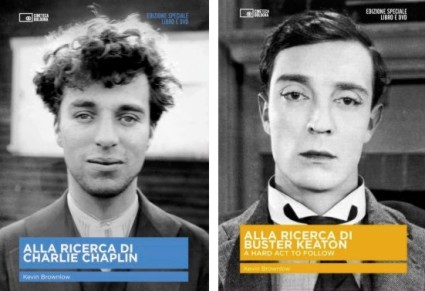
The Cineteca di Bologna has just issued two handsomely-produced book and DVD sets, All ricera di Charlie Chaplin – Unknown Chaplin (The Search for Charlie Chaplin) and Alla ricera di Buster Keaton – A Hard Act to Follow.

The two sets bring together the classic documentary series together with accompanying texts written by Brownlow. The three-part television series Unknown Chaplin was produced by Brownlow and David Gill in 1983, and showcased the previously-unseen collection of Chaplin out-takes that so richly illuminated his working methods. The text, originally written by Brownlow in 1983, was published for the first time by the Cineteca in 2005 in a dual-language edition with DVD. This re-issue has the Italian text only (163 pages), while the DVD is the English-language series (with Italian subtitles). It includes the extras How Unknown Chaplin was Made (on the making of the TV series), The Making of The Count (historian Frank Scheide examines the process of making the Mutual film) and Chaplin meets Harry Lauder (1918). These are available on the UK and American DVD releases.

Frank Scheide viewing The Count

Buster Keaton – A Hard Act to Follow is a three-part television series made by Brownlow and Gill in 1987. It documents the story of Keaton’s working life, with close examination of his working method through the films (though without the revelation of a hidden archive of film this time round). The accompanying book (250 pages) has been written for this publication, which makes it particularly important, but again, the text is in Italian only (there are hopes of an English publication eventually). The DVD is of the English-language television series, but the release has Brownlow’s approval, as opposed to the UK version which lacks many explanatory titles. There are no extras.

The sets are available for 15.00 € each or 27.00 € for the two, from the Cineteca di Bologna site.

Silents on Blu-Ray

One of the interesting trends to follow for 2010 in our field will be the appearance of silents on Blu-Ray. Following the curiosity of a 1923 short, The Story of Petroleum, turning up as an extra on the Blu-Ray release of There Will Be Blood as the first silent to be released in high definition, there are currently these silents available or announced.

Buster Keaton’s The General (1927) has been issued in the USA on Region 1 by Kino Video. Mastered in HD at 1080p from a 35mm print struck from the original negative, the release comes with three music scores to choose from – Carl Davis’ 1987 Thames Silents orchestral score (in DTS-HD Master Audio 5.1 or uncompressed 2.0 stereo), a 1995 score arranged and directed by Robert Israel, and a theatre organ score by Lee Erwin. Extras include a video tour of the real General, presented in association with The Southern Museum; a tour of the filming locations, presented by John Bengtson, author of Silent Echoes; behind-the-scenes home movie footage; filmed introductions by Gloria Swanson and Orson Welles; and ‘The Buster Express’ a montage of train gags from throughout Keaton’s career. The release has received high praise, and there’s an illuminating interview with Kino’s Bret Wood on the challenges of coverting a silent to Blu-Ray on the DoBlu review site. Remastering films of such vintage for high definition is no easy task:

Preparing silent films for Blu-ray is proving to be a daunting challenge. Even when we are able to locate the best surviving film elements of a particular title, these elements have considerably more grain and printed-in wear than one finds in a studio-preserved negative that is, say, twenty years old.

When a film is mastered in HD, the image is sharper than it has previously been, but as a consequence the film grain becomes more pronounced. When we first transferred The General, a minimal amount of digital grain reduction was applied and it is this version that was released on DVD. Upon close inspection of the Blu-ray test discs, we found that even that small amount of digital noise reduction had created visual artifacting, a slight blurring and ghosting of the image. We brought the film element back to the lab (Crawford Communications) and re-transferred it specifically for Blu-ray, without DRS or any artificial grain reduction. So the film was remastered specifically for the Blu-ray release …

… The DVNR technology of the DVD era is not subtle enough for the 1080 requirements of the Blu-ray age. In fact, when I look back at some silent films that were released on DVD, heavily treated with digital noise reduction, I cringe. I now recognize the degree to which the film’s natural grain and sharpness have been glossed over for the sake of a smooth image. I worry that this has spoiled the consumer, who will now expect every film to look this way when the actual film never looked that way to begin with!

So the big question that is yet to be answered is whether or not Blu-ray users will be satisfied with an HD copy of a film that is not pristine, but looks like an 80-year-old film actually looks.

In Britain, meanwhile, first off the blocks with a region 2 Blu-Ray release has been Eureka, who have given us Sunrise (1927). The release features1080p HD transfers of two versions of the F.W. Murnau classi: the previously released Movietone version (i.e. with original synchronised music score), and an alternate silent version of the film recently discovered in the Czech Republic (with optional English subtitles). The generous array of extra includes an alternate Olympic Chamber Orchestra score in stereo (the Movietone score is mono, of course); a full-length audio commentary by ASC cinematographer John Bailey on the Movietone version; outtakes with John Bailey commentary; Murnau’s 4 Devils: Traces of a Lost Film — Janet Bergstrom’s updated 40-minute documentary about the lost Murnau film; original theatrical trailer; original ‘photoplay’ script by Carl Mayer with Murnau’s handwritten annotations (150 pages in PDF format); and a 20-page illustrated booklet with film restoration and DVD/Blu-ray transfer information, along with a comparison between the two versions.

Silents can also up in the extras, and Warner Home Video’s Blu-ray release The Wizard of Oz (70th Anniversary Ultimate Collector’s Edition) (i.e. the 1939 film) includes in its extras The Wonderful Wizard of Oz (1910), The Magic Cloak of Oz (1914), The Patchwork Girl of Oz (1914) and The Wizard of Oz (1925), though all four are in standard definitions, not HD.

Is there a business for the video companies in releasing silents on Blu-Ray, particularly given some of the challenges outlined by Bret Wood? The mass audience will want cleaned-up images (if it wants to see silents at all), whereas the afficionados would welcome sight of the grain. Well, some are taking up the challenge, as there are a number of titles being announced for 2010. This is what I’ve been able to trace so far:

And, just to complete the picture, there’s one modern silent also on Blu-Ray – Mel Brooks’ Silent Movie (1976), as part of The Mel Brooks Collection.

Miss Mend

The latest DVD from the marvellous Flicker Alley shines a light on a playful and unashamedly entertaining side of Soviet silent cinema that will come as a surprise to some. Miss Mend is a three-part serial from 1926 directed by Boris Barnet and Fedor Ozep. The fast-moving, exuberant adventure story emulates the style of the American serials that were so popular with Soviet cinema audiences while cheerfully satirising Soviet-American relations (the scenarist was ‘Jim Dollar’, actually a Russian woman Marietta Shaginian) with a story which takes place in part in a technologically-advanced but corrupt America. Its impact is described on the Flicker Alley site in this quotation by the late John Gillett (of fond memory for old BFI hands), whose notes its borrowings from American and German Expressionist cinema alike:

Fusing elements of Fairbanks, Feuillade and Lang with brilliant location shooting in city and countryside … The film’s prolific visual invention take in a Nosferatu-like body in a coffin, mysterious encounters in a chateau, kidnappings on a jetty, and culminates in an extended, accelerating pursuit involving cars and horses. Barnet and Ozep exploit all the serial conventions and improves on them, winding down to a charming, poetic epilogue.

The films have been mastered in high definition from original 35mm elements produced by David Shepard and Jeffery Masino, with digital restoration and editing being carried out by Eric Lange of Lobster Films, Paris. The 2-DVD set runs for four-and-a-half hours and includes a 25-minute documentary on the films’ history, a 15-minute documentary on its music, and a booklet film historians Ana Olenina and Maxim Pozdorovkin, new English title translations, and an orchestral score by Robert Israel. It is released on 15 December and is available at a special introductory sales price of $29.96.

The Wrecker

The Wrecker

Premiered tomorrow is a new digital restoration of the 1928 British silent The Wrecker, with a new score by Neil Brand. The film, based on a play by Arnold ‘The Ghost Train’ Ridley, was directed by Geza von Bolvary and stars Carlyle Blackwell, Benita Hume and Gordon Harker. It concerns a series of train wrecks which are engineered by the fiendish owner of a rival motor-coach firm (it is a very British film), and its big selling point is a spectacular train crash early on in the film which was staged for real on the Basingstoke to Alton Light Railway in Hampshire, a sequence involving a remarkable 22 cameras. The premiere takes place 7.00pm at The Watercress Line, Goods Shed, Alresford, Hampshire, but you can also purchase the film on DVD. It comes with an impressive set of extras, including a 9.5mm version of the film, numerous other films of rail crashes (if that’s your sort of thing) and an illuminating interview from the habitually illuminating Mr Brand on composing the score. Those in the UK can also see a short report on the film, with the rail crash clips, on the BBC News site, featuring film historian Bob Geoghegan.

Some of the shots of the train crash were later used in the 1936 film Seven Sinners, starring Edmund Lowe and Constance Cummings, also recently released on DVD. It isn’t silent, but it is one of the Bioscope’s favourite British films of the 1930s (a delightfully witty script courtesy of Launder and Gilliat) and comes strongly recommended. The best 1930s Hitchcock film that Hitchcock didn’t make (Albert de Courville was the man at the helm).

Albert Kahn at last on DVD

kahndvd

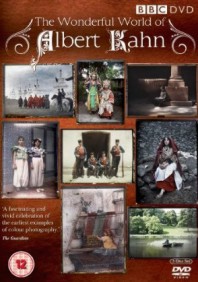
Regular visitors to this blog will know all about The Wonderful World of Albert Kahn, the BBC television series which highlighted the astonishing collection of Autochrome photographs and motion picture records of life around the world in the early years of the twentieth century, created by French millionaire philanthropist Albert Kahn. You may also know that there has been immense frustration for the many fans of the series that no DVD release has been made available, supposdly for licensing reasons, except for a colossally expensive version intended for the educational market.

Now prayers have been answered. The series has made it to DVD. The Wonderful World of Albert Kahn has been released by 2 entertain (the video distributor part-owned by BBC Worldwide). The 3-disc DVD set (PAL, region 2) is in nine episodes, running 462 mins (500 mins says the BBC shop). The series shows beautifully-composed scenes from around the world: China, Brazil, the United States, Ireland, France, Mongolia, Norway, Vietnam and much more, from the mid-1900s, through the First World War and into the 1920s. Kahn’s team of photographers chiefly took still photographs, using the complex Autochrome process (invented by the Lumière brothers) with its hauntingly beautiful results, but they produced monochrome motion picture records as well, capturing distant lands and cultures on the brink of disappearing into history, and unconstrained by the need to convert the material into form that would be acceptable to the commercial cinema.

It’s unclear to what degree the DVD represents the original BBC series, which was shown in nine one-hour parts, the first five broadcast on BBC4 on April 2007 under the title The Edwardians in Colour (subtitled The Wonderful World of Albert Kahn); the remaining four as The Twenties in Colour in November 2007. The BBC Active educational version is 9×50 mins. Amazon and the BBC Shop site say that there are ten parts, but the British Board of Film Classification registers the release as being in nine parts, and this seems more likely. Anyway, the DVD set is now available, having been released on 7 September.

If you want to find out more about Kahn and his Archives de la Planète project, visit the Searching for Albert Kahn post on this blog.

Cento annia fa / One hundred years ago

centoannifa

As regulars to the annual Cinema Ritrovato film festival in Bologna will know, a standard feature of each festival (since 2003) has become the surveys of the films of 100 years ago, curated by Mariann Lewinsky. This year, you will not be startled to learn, the series reached 1909, and this year it was complemented by the release of a DVD of 1909 films from nine archives around Europe.

The DVD, Cento annia fa: Il cinema europeo del 1909, contains twenty-two films, and comes with a bi-lingual (Italian and English) booklet. It’s Region 2, PAL, and in total runs for two hours and twenty minutes. The films are accompanied by piano music by André Desponds, and included are a number of coloured films – and one film with sound. This is the line-up of titles, which are curated in four sections:

  • The Past is a Foreign Country: The World of 1909
  • KOBENHAVN I SNE (Copenhagn in Winter) (Denmark 1909 p.c. Nordisk)
  • UN VOYAGE A TOUTE VAPEUR (A Trip on an Ocean Steamer) (France 1909 p.c. Eclair)
  • CULTURE ET INDUSTRIE DU TABAC EN MALAISIA (Tobacco Cultivation and Industry in Malaysia) (France 1909 p.c. Pathé)
  • NORTH SEA FISHERIES AND RESCUE (GB 1909 p.c. Rosie Film Company)
  • L’INDUSTRIA DELLA CARTA A ISOLA DEL LIRI (The Paper Industry at Isola del Liri) (Italy 1909 p.c. Cines)
  • MARIAGE EN AUVERGNE (Wedding in the Auvergne) (France 1909 p.c. Pathé)
  • Newsreel 1909: Aviation! Futurism! Ballet Russes!
  • DANSE DU FLAMBEAU (Fire Dance) (France 1909 p.c. Les Films du Lion)
  • BLÉRIOT TRAVERSE LA MANCHE EN 31 MINUTES (Blériot Crosses the Channel in 31 Minutes) (France 1909 p.c. Pathé)
  • IL PRIMO GIRO D’ITALIA (The First Giro d’Italia) (Italy 1909 p.c. SAFFI-Comerio)
  • ANIMATED COTTON (GB 1909 p.c. Charles Urban Trading Company)
  • Debut of the Movie Star – Comedian and Diva
  • CRETINETTI PAGA I DEBITI (How Foolshead Pays his Debts) (Italy 1909 p.c. Itala)
  • AMOREUX DE LA FEMME A BARBE (In Love with the Bearded Woman) (France 1909 p.c. Pathé)
  • LA FEMME DOIT SUIVRE SON MARI (The Woman Should Follow her Husband) (France 1909 p.c. Gaumont)
  • LA FABLE DE PSYCHÉ (The Fable of Psyche) (France 1909 p.c. Pathé) [this has now been identified as LE MARIAGE D’AMOUR (Pathé 1913)
  • Coming Attraction: Feature Length
  • LE ROMAN D’UNE BOTTINE ET D’UN ESCARPIN (Romance of a Boot and a Dancing Slipper) (France 1909 p.c. Pathé)
  • IULIUS CAESAR (Italy 1909 p.c. Itala)
  • LE MOULIN MAUDIT (The Mill) (France 1909 p.c. Pathé)
  • LE CHIEN JALOUX (The Jealous Dog) (France 1909 p.c. Gaumont)
  • Farewell, Early Cinema
  • TWO NAUGHTY BOYS (GB 1909 p.c. Clarendon Film Company)
  • LES TRIBULATIONS D’UN CHARCUTIER (A Butcher’s Tribulation) (France 1909 p.c. Lux)
  • DER GRAF VON LUXEMBURG: MÄDEL KLEIN MÄDEL FEIN (The Count of Luxembourg: Duet Juliette-Brissard) (Germany 1909) [sound-on-disc]
  • VOYAGE SUR JUPITER / UNE EXCURSION SUR JUPITER (A Trip to Jupiter) (France 1909 p.c. Pathé)

millmaudit

Le Moulin Maudit

This is an excellent primer on early cinema, quite apart from serving as a record of where cinema had got to by 1909 – and indeed as a moving picture portrait of the world in 1909. There are a number of classic titles which should be sought out by anyone with an interest in early film – André Deed as the irrepressible Cretinetti in Cretinetti paga di debiti, with its impresive use of special effects (including stop-motion photography used on humans); Alfred Machin’s deliriously doom-laden melodrama set among the Dutch windmills – as the DVD booklet temptingly puts it, “a story of greed, adultery, madness, murder and suicide, and a sinister windmill” – Le Moulin Maudit; Joseph Rosenthal’s proto-Drifters documentary North Sea Fisheries; probably unique film of the Ballet Russes, featuring Tamara Karsavina; and a welcome addition to the few Segundo de Chomón films available on DVD, Voyage sur Jupiter. A fabulous selection, warmly recommended to all.

And there’s more from Warners

patsy

Marion Davies in The Patsy (1928)

A further batch of made-to-order DVDs from Warner Bros. has been announced, which includes a number of silents. As reported before, the films are in DVD-R format, burned to order, and priced at $19.95 for DVD copies in the post, $14.95 for downloads, and they can be ordered from www.warnerarchive.com. Although officially the titles are only available in the USA, it is possible for those overseas to order them if they do so through www.tcm.com.

These are the new titles:

  • Across to Singapore (US 1928 d. William Nigh), with Ramon Novarro, Joan Crawford, Ernest Torrence
  • The Boob (US 1926 d. William Wellman), with Gertrude Olmstead, George K. Arthur, Charles Murray, Joan Crawford
  • Desert Nights (US 1929 d. William Nigh), with John Gilbert, Ernest Torrence, Mary Nolan
  • A Lady of Chance (US 1928 d. Robert Z. Leonard), with Norma Shearer, Lowell Sherman, Gwen Lee, Johnny Mack Brown
  • The Patsy (US 1928 d. King Vidor), with Marion Davies, Marie Dressler, Lawrence Gray
  • Speedway (US 1929 d. Harry Beaumont), with William Haines, Anita Page, Ernest Torrence, Karl Dane
  • West Point (US 1927 d. Edward Sedgwick), with William Haines, Joan Crawford, William Bakewell

And, for the record, these are all the silent titles previously made available:

  • Beau Brummel (US 1924 d. Harry Beaumont), with John Barrymore, Mary Astor, Carmel Myers
  • The Sea Hawk (US 1924 d. Frank Lloyd), with Milton Sills, Enid Bennett
  • The Better ‘Ole (US 1926 d. Charles Reisner), with Syd Chaplin, Harold Goodwin, Jack Ackroyd
  • The First Auto (US 1927 d. Roy Del Ruth), with Russell Simpson, Frank Campeau
  • Old San Francisco (US 1927 d. Alan Crosland), with Dolores Costello, Warner Oland
  • When a Man Loves (US 1927 d. Alan Crosland), with John Barrymore, Dolores Costello
  • The Divine Lady (US 1929 d. Frank Lloyd), with Corinne Griffith, Victor Varconi
  • Scaramouche (US 1923 d. Rex Ingram) with Ramon Novarro, Alice Terry
  • Souls for Sale (US 1923 d. Rupert Hughes) with Barbara La Marr, Eleanor Boardman
  • The Red Lily (US 1924 d. Fred Niblo) with Ramon Novarro, Enid Bennett
  • Exit Smiling (US 1926 d. Sam Taylor) with Beatrice Lillie, Jack Pickford
  • The Temptress (US 1926 d. Fred Niblo) with Greta Garbo, Antonio Moreno
  • Love (US 1927 d. Edmund Goulding) with Greta Garbo, John Gilbert
  • The Red Mill (US 1927 d. William Goodrich) with Marion Davies, Owen Moore
  • Spring Fever (US 1927 d. Edward Sedgwick) with Joan Crawford, William Haines
  • The Smart Set (US 1928 d. Jack Conway) with Alice Day, Jack Holt
  • The Trail of ‘98 (US 1928 d. Clarence Brown) with Dolores del Rio, Harry Carey
  • The Kiss (US 1929 d. Jacques Feyder) with Greta Garbo, Conrad Nagel
  • The Single Standard (US 1929 d. John S. Robertson) with Greta Garbo, Nils Asther
  • Wild Orchids (US 1929 d. Sidney Franklin) with Greta Garbo, Lewis Stone

All of the silent titles listed on the Warners site can be seen here. Each comes with a video clip which you can now embed in your own website, though not it seems in a WordPress blog, alas.