Media and imperialism

mediaimperialism.jpg

The Iamhist (International Association for Media and History) conference takes place 18-21 July, at the University of Amsterdam. The theme of the conference is Media and Imperialism: Press, Photography, Film, Radio and Television in the Era of Modern Imperialism. There are several speakers covering early cinema themes: Yvonne Zimmermann, ‘Views and Perspectives of Economic Imperialism in Swiss Corporate Films 1910-1960’; Garth Jowett, ‘The “Ungawa” Effect: Images of Tarzan in the Colonial and Post-Colonial World, 1915-2007; Martin Loiperdinger, ‘The Lantern, the Empire, Army and Navy’; Teresa Castro, ‘Imperialism and Early Cinema’s Mapping Impulse’; Simon Popple, ‘Cinema and the Boer War: Imperial Narratives for the Screen’; Guido Convents, ‘The Rich Visual Heritage of Belgian Imperialism’; James Burns, ‘Black History in the Early Cinema: the Reception of Jack Johnson and D.W. Griffith in the African Diaspora’; and yours truly speaking on the compelling topic of ‘Classifying Empire’.

Further programme details, registration and acommodation details from the conference website.

Crazy Cinématographe – Travelling Cinema in Europe

cinemasfora.jpg

An update on the Crazy Cinématographe project and the forthcoming conference, Travelling Cinema in Europe, taking place in Luxembourg, 6-8 September 2007. There is now a project/conference website, not all of which is active as yet, but there are these details of the programme:

International Conference

Travelling Cinema in Europe / Wanderkino in Europa

Luxembourg, 6 – 8 September 2007

Under the auspices of Luxembourg and Greater Region European Capital of Culture, 2007
Hosted by Cinémathèque de la Ville de Luxembourg and Trier University
Curated by Martin Loiperdinger in cooperation with KINtop

Programme of the Conference (as of 23 May 2007):

Thursday, 6 September 2007

13.00 Conference Opening
Panel 1: Travelling Cinema in Europe Before World War One
13.30 – 15.00 Vanessa Toulmin (Sheffield): “The World at Your Doorsteps”: Travelling Cinematograph Shows in the United Kingdom
Matthew Solomon (New York): Méliès and the Fairground
15.00 – 15.30 Coffee Break
15.30 – 17.00 Guido Convents (Brussels): International Travelling Cinemas in Belgium
Mustafa Ozen (Utrecht): Travelling Cinemas in Istanbul
17.30 – 18.00 Coffee Break
18.00 – 19.30 N. N.: Travelling Cinemas As Seen From the Fairground Context
Jeanpaul Goergen (Berlin) : Memories of Travelling Cinema Showmen
20.00 Dinner

Friday, 7 September 2007

Panel 1 continued
09.00 – 10.30 Joseph Garncarz (Siegen): Travelling Cinema – A European Institution
Daniel Fritsch (Berlin): The Austrian travelling showbusiness magazine Die Schwalbe
10.30-11.00 Coffee Break
Panel 2: Non-commercial Uses of Travelling Film and Picture Shows
11.00 – 13.30 Torsten Gärtner (Trier): Travelling Lantern Mission in the United Kingdom
Christian Kuchler (München): Catholic Mission through Travelling Film Shows in Bavaria
Yvonne Zimmermann (Zürich): Advertising Brands through Travelling Corporate Film Shows in Switzerland
13.30 – 15.00 Lunch Break
15.00 – 16.30 Urszula Biel (Gliwice): German and Polish Agitation through Travelling Cinemas in Upper Silesia
Thomas Tode (Hamburg): Agitprop through Travelling Cinemas on Rail in the Soviet Union
16.30 -17.00 Coffee Break
Panel 3: Travelling Cinema Today
17.00-19.00 Short Presentations of Current Activities (Cinéma Numérique in France, Movimiento – Short Films on the Road, Ciné Fleuve in the Greater Region, Crazy Cinématographe)
20.00 – Crazy Cinématographe, Schueberfouer, Luxembourg

Saturday, 8 September 2007

Panel 4: Travelling Cinema in the Greater Region
09.00 – 10.30 Uli Jung (Trier): Travelling Cinema in the Greater Region – an Overview
Paul Lesch (Luxemburg): Travelling Cinema in Luxemburg
10.30 – 11.00 Coffee Break
11.00 – 12.30 Gerhild Krebs (Saarbrücken): Hirth’s Travelling Cinema Palace in the Saar Region
Brigitte Braun (Trier): Travelling Stand-Alone Film Shows in the Greater Region
12.30 – 13.30 Lunch Break
13.30 – 15.00 Closing Discussion
15.00 End of Conference

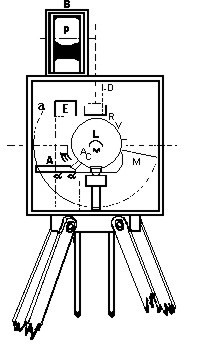
Crazy Cinématographe itself is a travelling cinema show, featuring films from the first decade of the twentieth century which is touring Luxembourg through August and September, and then Trier (Germany), Saarbrücken (Germany), Thionville (France) and Liège (Belgium). It’s described thus:

A travelling cinema in a circus tent brings new life to a traditional fairground attraction. Pedlars, musicians and barkers will sweep visitors into the festivities of ‘Crazy Cinématographe’ for zany, outlandish cinematic experiences. It’s a dive into a phantasmagorical, burlesque world with outrageous freak shows, and when night falls, a discovery of erotic fantasies.

There are two associated DVD releases, and when I find more information that’s not in German, I’ll tell you about them.

The regional dimension in early cinema

Domitor logo

The theme and dates for the 10th Domitor conference have been anounced. The Regional Dimension in Early Cinema will take place 17-21 June 2008 at Perpignan, France and Girona, Spain (they say Catalonia). The notice on the Domitor site reads like a draft, but what they are looking for is described thus:

Possible contributions could deal with production modes, studies concerning distribution and exploitation in a micro-historical context, as well as studies on the representation of regional aspects in film. However, the regional dimension should be the major theme, and not a mere pretext.

The official languages will be English, French and Catalan. There’s a rough outline of the conference, which will be in Girona for the first three days before hopping across the border to Perpignan for the rest, but no call for papers as yet.

Domitor is an international organisation dedicated to the study of early cinema, defined as cinema in all its aspects to 1915. ‘Domitor’ was the name suggested to the Lumière brothers by their father Antoine to give to their invention, before they decided that Cinématographe sounded a little classier. Hard to imagine that we all might have ended up going to see the movies at the local domitor…

Also, Domitor has a yearly graduate student writing award (see link to Word document at the bottom of their page), for any subject on cinema before 1915, with a prize of $500. Fascinatingly, you don’t have to be a member of Domitor to submit an essay, but you do need to be a member if you want to collect your prize. The deadline is 1 August 2007.

The Glow in Their Eyes

Some of the most interesting work going on in early film studies (in fact, film studies in general) at the moment is the empirical work being done on audiences. There is an international organisation, HOMER, devoted to the subject, and Cinema Context in Amsterdam (subject of an earlier post) is one only example (albeit a spectacular one) on the work that is going on internationally. This call for papers for a conference is therefore particularly interesting:

The Glow in Their Eyes

Global perspectives on film cultures, film exhibition and cinemagoing

International Conference, Brussels, 15-16 December 2007

The aim of the conference is to review the current state of research in the history of moviegoing and film exhibition and distribution. We seek to bring together scholars dealing with these subjects from all over the globe. The growing number of case studies in local film history increases the need for comparative studies of cities, regions, and nations, while the relationship between micro and macro history(ies) is becoming a major issue for the field. The analysis of patterns and networks in film culture also calls for special attention to methodology. The conference aims to bring European perspectives on cinemagoing and film exhibition into dialogue with British, American and Australian research, and with research elsewhere in the world, in Africa, South America and Asia.

The conference aims to explore and map several crucial tensions arising from the issues of exhibition and cinemagoing, including:

  • The attention given to “top down” forces of industry, commerce and ideology as against “bottom up” forces of experience, consumption and escapism;
  • Contesting concepts of public and private space in media experience;
  • Questions relating to cinema’s integration into to the metropolitan experience of modernity, compared to its role in the construction of community in less urbanised and rural areas.

In line with the ECREA film studies section philosophy (www.ecrea.eu) the conference approaches the phenomenon of cinema in a broad, socio-cultural sense: cinema as content, as cultural artefact, as commercial product, as lived experience, as cultural and economic institution, as a symbolic field of cultural production, and as media technology. On a methodological level, the conference is open to multiple approaches to the study of historical and contemporary cinema: film text, context, production, representation and reception. Cultural studies perspectives, historical approaches, political economy, textual analysis, audience research all find their place within this scope.

The conference also signals the completion of two major interuniversity research projects, one in Belgium (‘The Enlightened City. Screen culture between ideology, economics and experience. A study on the social role of film exhibition and film consumption in Flanders (1895-2004) in interaction with modernity and urbanisation’), and one in Australia (‘Regional Markets and Local Audiences: Case Studies in Australian Cinema Consumption, 1927-1980’). These research projects use a combination of oral histories, archival documentation, demographic data and media reportage and personal papers to examine the audience experiences and business practices of cinemas in Belgium and Australia.

The conference is supported by the International Cinema Audiences Research Group (ICARG), and will be the second international gathering of the Group’s work on the HOMER (History of moviegoing, exhibition and reception) Project, following the successful ‘Cinema in Context’ conference held in Amsterdam in April 2006. The conference will be preceded by an ICARG workshop.

Confirmed Keynote Speakers: Annette Kuhn (University of London); Richard Maltby (Flinders University)

Possible topics for papers are e.g.:

  • Film exhibition, cinemagoing and film experience in relation to theories of imperialism, postcolonialism, etc.
  • Long term tendencies such as the rise of cinemas in rural and urban environments, the boom of cinemagoing, the decay and subsequent closure of many (provincial and neighbourhood) cinemas and the rise of multiplexes
  • Tensions between commercial and/or ‘pillarised’ film exhibition, between urban and rural areas, and between provinces and regions
  • Institutional developments, geographical location and programming trends
  • Audience and film experiences in urban and rural contexts
  • A comparative international perspective on cinemagoing and exhibition
  • Diasporic cinemagoing practices
  • Representations in films of cinemagoing, film exhibition, film culture(s)
  • Reflections on methods: How to reconcile/combine large scale analysis vs in depth case study? How to link up national or regional databases on exhibition and cinemagoing?

A selection of papers presented on the conference will be published in an edited volume in 2008 (publisher to be confirmed). Please submit abstracts (500 words) with short bio to Gert.willems2 [at] ua.ac.be and Liesbeth.vandevijver [at] @ugent.be before 6 July 2007. Speakers will be notified of acceptance by 31 July 2007.

Website (under construction): www.cinemagoingconference.ugent.be

City in Film

A call for papers has gone out for City in Film: Architecture, Urban Space and the Moving Image, an International Interdisciplinary Conference to be held at the University of Liverpool, 26-28th March 2008. City in Film will explore the relationship between film, architecture and the urban landscape drawing on interests in film, architecture, urban studies and civic design, cultural geography, cultural studies and related fields. The extensive list of potential subjects includes: Film, Place and Urban Identity; The role of archives in architectural, filmic and curatorial practice; Perception and aesthetics in early film actualities; Historiographies of cities in film; Presence and absence: spectral cities, ghosts and spaces of dereliction; Screen-based technologies – electronic billboards, interactive facades; Design in Architecture and the Moving Image; Film influenced architectural designs, and so on. Proposals for papers (300 words maximum) should be submitted to cityinfilm@liverpool.ac.uk by 1 September 2007.

City in Film is a two-year research project at the University of Liverpool, which is examining the relationship between the city’s urban landscape and architecture and the moving image, and aims to create an online database of Liverpool films for cinema goers, producers and researchers.

Minds, Bodies, Machines

This interdisciplinary conference is convened by Birkbeck’s Centre for Nineteenth-Century Studies, University of London, in partnership with the Department of English, University of Melbourne, and software developers Constraint Technologies International (CTI). It takes place 6-7 July 2007 at Birkbeck College, Malet Street, Bloomsbury.

The two-day conference will explore the relationship between minds, bodies and machines in the long nineteenth century. Its aim is “to explore the continuities and discontinuities in the imagining of the human/machine interface in the nineteenth and twenty-first centuries.” Topics include: the virtual and the real; technologies of the sublime; evolution and machines; techniques of communication; technologies of travel; medical technology; miniaturisation; self-reproduction; and spiritualism. So, not strictly about motion pictures, but much more needs to be done to introduce film into Victorian studies (after all, the Victorians invented it).

More information from the conference website.

Chaplin in Kyoto

2007 sees the thirtieth anniversary of Charlie Chaplin’s death, and there are a number of events, publications and resources planned throughout the year. One such event is the 2nd Kyoto Chaplin Conference, held by the Chaplin Society of Japan. The Society’s site is rather confusingly advertising the conference as being in March 2006, but as the end date for the Call for Papers was 15 February 2007, presumably this is an error. The theme of the conference is Chaplin and War. The Kyoto Silent Film Festival takes place 24 March-1 April 2007 and includes a restored version of Shoulder Arms accompanied by the Kyoto Symphony Orchestra, along with films about war by other artists, including King Vidor’s The Big Parade (restored version) and Japanese war documentaries. The programme will include a newly discovered fragment of film of the young Chaplin’s comic inspiration, the Spanish clown Marceline. The principal retrospectives are dedicated to D.W. Griffith, Sessue Hayakawa, and Japanese silent film comedians.

Other Chaplin events lined up around the world include a photographic exhibition, Chaplin in Pictures, which is touring Europe; and the completion by the Cineteca Bologna of its digitisation of the Charlie Chaplin Archive, which will go online in Summer 2007.

More information on Chaplin events can be found at www.charliechaplin.com.

Cinematicity update

The programme for the ‘Cinematicity’ 1895: Before and After conference is now available. The British Comparative Literature Association and the Centre for Film Studies, University of Essex are organising a conference on 24-25 March 2007. The themes of the conference are the history of pre- and early film, the previsions of cinema as both technology and cultural form, and early cinema’s influence on twentieth-century art, literature and culture. The conference is to be held at the University of Essex, Colchester, and the keynote speakers are Ian Christie, Tom Gunning and Marina Warner.

Among the interesting-looking papers on offer are:

  • Joss Marsh (Indiana): “Dickensian ‘Dissolving Views’: The Magic Lantern, Visual Story Telling, and the Victorian Technological Imagination”
  • Kristian Moen (East Anglia): “‘Never Has One Seen Reality Enveloped in Such a Phantasmagoria’: Watching Spectacular Transformations, 1849-1889”
  • Miriam Hess (Princeton): “Modern Painting and Emergent Cinema: Binaries and Seams”
  • Nico Baumbach (Duke): “Nature Caught in the Act: Beyond Baby’s Meal”
  • Paul St. George (London Metropolitan): “Chronophotography and Contemporary Cultural Practice”
  • Deac Rossell (Goldsmith’s): “Pure Invention? Thomas Alva Edison and the Kinetoscope”
  • Joe Kember (Exeter): “Institutionalised Risk and Early Film”
  • Ian W. Macdonald (Leeds): “Style and the Silent Screenwriter: The Rediscovered Scripts of Eliot Stannard”
  • Andrew Shail (Oxford): “H.G. Wells, ‘Cinematicity’ and the First Sight of the Cinematograph”
  • Keith Williams (Dundee): “‘Cinematicity’ and Optical Speculation in Early H.G. Wells”

Update: There’s a report on the conference by Paul Elliott in the June 2007 edition of the Scope online journal of film studies.

Virginia Woolf and suffragettes

The 17th Annual Virginia Woolf conference is being held at Miami University of Oxford, Ohio, 7-10 June 2007. It includes a Virginia Woolf film festival, and a screening of the film Suffragettes in the Silent Cinema, misleadingly described as “featuring satiric clips of nickelodeon melodramas created by early twentieth-century women’s suffrage activists”, the film was compiled by cultural historian Kay Sloan in 2003. What is actually features are films that were made in the silent era which satirised the suffragettes, rather than films made by them, though the film does include clips from the film What 80 Million Women Want (1913), which was made in sympathy with the suffragette cause. Virginia Woolf, incidentally, is one of the most notable of twentieth-century figures never to have been filmed (so far as is known), though she herself wrote interestingly on film in her essay ‘The Cinema‘ (1926).