Rats, ruffians and radicals

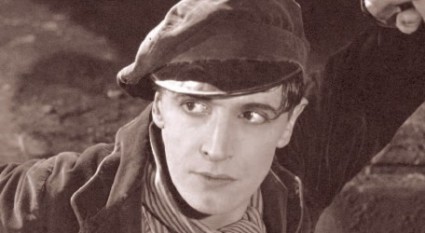
Ivor Novello

Ivor Novello in The Rat (1925), from http://www.britishsilentcinema.com

The 11th British Silent Cinema Festival will take place 3-6 April 2008 at the Broadway, Nottingham. The festival goes under the eye-catching title of Rats, Ruffians and Radicals: The globalisation of crime and the British silent film, and builds further on last year’s theme of crime by looking at international influences. A call for presentations has just been issued, and here it is:

In the second part of our examination of crime in the British silent film the 2008 British Silent Cinema Festival will branch out into the international arena of criminal influences. From the classic figure of the British detective, epitomised by Sherlock Holmes, to the prevalence of British actors as arch villains in US films, or the use of our cities as sites of criminal activity – British film and crime fiction have been widely exported, adapted and used by European and American cinemas. We will also be screening comparative crime films from the major film producing countries as context for British productions.

We particularly invite contributions on the classic, mythological and popular villains such as Sherlock Homes and Fu Manchu and the development of the detective as protagonist. Themes could include political crime, espionage, the White Slave Trade and drug trafficking, international anarchism and terrorist activity, crimes of passion, crimes of the street, domestic crime and criminal typologies. We will examine the film record for evidence of the import and export of crime through the migration of people from the late 19th Century onwards and the increasing globalisation of criminality.

Proposals are sought for 20-minute presentations on areas relevant to the main theme or any new research in the field of British silent film. All presentations should be illustrated and presenters are encouraged to contact Bryony Dixon at the BFI National Archive, to arrange viewing and selection of material at bryony.dixon [at] bfi.org.uk.

Deadline for submissions: January 31st 2008 to: laraine [at] broadway.org.uk

The British Silent Cinema Festival exists to promote the exhibition and study of British Cinema before 1930. It features screenings with live music, illustrated presentations, talks, debates, educational seminars and social events. Anyone is welcome to attend and to make a proposal for a contribution.

For more information or to be placed on our email or postal list please contact

Laraine Porter 00 44 (0) 115 952 6600, Broadway, 14-18 Broad St, Nottingham, UK, NG1 3AL,
laraine [at] broadway.org.uk.

The Festival is programmed and organised by Laraine Porter at Broadway, Nottingham and Bryony Dixon at the BFI National Archive.

Border Crossings: Rethinking Early Cinema

And another conference coming up. Border Crossings: Rethinking Early Cinema is taking place 9 February 2008 at the Film Studies department, University of California, Berkeley. There isn’t a conference web page that I can find, but here’s the details of the call for papers – deadline 1 October:

This conference attempts to map cultural travel in silent film. We invite papers on topics which address the mobile nature of silent film. Panels will draw attention to cinematic forms or practices fueled by different forms of international exchange. To this end, papers that approach the specific co-ordinates of silent film – its new forms of visual address, display, and narrative form from a comparative perspective will be given preference.

The attempt will be to track the exportation and intake of a single moving image technology, the cinema, across nations. We seek to open up a critical space to observe the particular ways in which cinema, conceived as a “traveling technology”, understands pleasure, self, world, nation and collectivity. The conference asks but is not limited to the following questions: how did popular silent film proliferate? Which legal systems encouraged the spread of silent cinema? How might the relationship between nation and silent film be characterized? Is “nation” more easily imagined in sound cinema? Which cultural forms, stars, or cinematic genres traveled easily, and which not?

Pleae send a 500 word abstract and a brief vita to rethinking.early.cinema_at_gmail.com. The deadline for sending proposals is Oct 1, 2007.

Conference Organizers:
Anupama Kapse and Laura Horak
Film Studies, University of California, Berkeley
7408 Dwinelle Hall #2670
University of California
Berkeley, CA 94720-2670

Lots of deep questions that you probably hadn’t ever thought of asking.

Women and the Silent Screen V

The year wanes, darkness falls earlier, 2008 diaries are in the shops, and academics are looking to a new year and coming up with conferences. And so we have first news of the Fifth International Women and the Silent Screen Conference, to be held at Stockholm University, Sweden, 11–13 June 2008. Previously held at Utrecht, Santa Cruz, Montreal and Guadalajara, the conference promises a combination of archival screenings, keynote addresses and scholarly panels, on the theme of women and cinema during the first four decades of film history; that is, women as directors, screenwriters, producers, actors and filmgoers.

There’s a call for papers, which asks for abstracts of 200–300 words, together with a paper title and a two-line biographical statement, to be submitted by 15 December 2007, to wss@mail.film.su.se. More details (in English as well as Swedish) on the conference website.

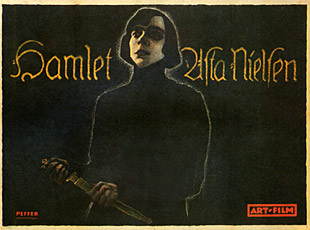
Asta Nielsen’s Hamlet

Hamlet

Asta Nielsen

Just back from the British Shakespeare Association conference, where I was able to tell them about the International Database of Shakespeare on Film, Television and Radio project that I’m supervising. This is an attempt at a ‘complete’ database of all Shakespeare-related titles ever produced in those three media, and so it will of course included all silent Shakespeare films. The ‘interim’ version of the database currently available doesn’t include any silents as yet, and you’ll have to wait for the proper release of the database in summer 2008 to see the full resource in all its glory.

The conference saw the first British presentation (on DVD) of the new restoration of the 1921 German Hamlet, starring Asta Nielsen. A tinted distribution print was discovered recently and has been restored by the Deutsche Filminstitut, using supplementary footage from the French distribution version in the Centre National de la Cinématographie. The film has long been available in black-and-white, but this the first time since the film’s original release that it has been possible to see it in its original colours, the processing work having been done by those acknowledged experts in silent film colour restoration, Haghefilm. The restoration then received its premiere at the Berlin Film Festival.

Hamlet was made for Nielsen’s eponymous production company, directed by Sven Gade and Heinz Schall. It is the best-known of silent Shakespeare films, if not quite (to my mind) the best of those that survive. The extraordinary aspect of the film is, of course, that Hamlet is played by a woman. For this they found academic justification, basing their interpretation on the scholarly endeavours of one Edward P. Vining, whose 1881 book The Mystery of Hamlet posited that the oddities of Hamlet’s behaviour might be explained by the fact that he was a woman in disguise. There had been (and continues to be) a tradition of female Hamlets, including Sarah Bernhardt, a glimpse of whose interpretation was filmed in 1900 (with accompanying sound effects).

Vining’s odd thesis helped legitimise Nielsen’s decision to play the part on film, but it is her luminous, intense performance that justifies it. She is extraordinary in the film, seeking to convey Hamlet’s agonising through diva-like dumbshow alone. The film has its dull patches, plus some unfortunate moments guaranteed to bring out the giggles in a modern audience, since a key aspect of the revisionist plot is that Hamlet is in love with Horatio (cue hoots of laughter when the astonished Horatio discovers, by manual examination, that the dying Hamlet is a woman). Shakespeareans may also be intrigued to find that Claudius dies in a fire, while it is Gertrude who administers the poison which she then drinks by accident – so all of those lying dead at the end of the film are women. The direction seldom rises above the routine, but there is a keen sense of palace life going on while the central figures progressively, and madly, destroy one another. It also gives no sense of a forced conversion from stage to screen – this is a wholly, and successfully reimagined work.

The best thing about the new restoration is its score by Michael Riessler. This blends conventional musical instrumentation with ‘archaic natural sounds’ and electronica. I found it extraordinarily haunting, and sympathetic to the film’s style and performances. The colour is colourful.

I don’t know when the restoration may get further UK screenings, but in the meanwhile, why not take a look at Tony Howard’s newly-published Women as Hamlet: Performance and Interpretation in Theatre, Film and Fiction, which tells the history of women playing Hamlet is a most entertainining and informative way. It has much to say on the film, and has Nielsen on the cover.

A new claim

Another item from the Origins of Cinema in Asia conference, which took place in New Delhi last month. Stephen Bottomore wrote a short piece for the festival news letter, with a claim for what may well be the first exhibition of film to have taken place in India. Here’s his report:

Over the past twenty years I have been researching aspects of early cinema in libraries and archives in the UK and elsewhere. In preparation for the ‘Origins of Cinema in Asia’ conference, which took place over the past two days, I had a rummage through my unsorted material, and rediscovered an especially interesting article from the Journal of the Photographic Society of India of July 1896. In this article the editor tells us that, while projected cinema shows were by then an established fact, he had seen moving pictures of a different kind in India some months earlier:

‘I had an opportunity last cold weather of viewing Edison’s kinetescope [sic] in Calcutta. It was certainly extraordinary… But the pictures were too small, and the duration of the scene too short, to altogether satisfy me. Looking down through an object glass into a breast-high box one was first conscious of a whirring sound, then a sparking light, and presently a picture about 2” square appeared […] The scene was stirring enough in all conscience, and I gathered that it took a continuous chain or band of 1,400 celluloid positives to represent it. This band ran under an illuminated screen below which was an electric lamp – and to bring out the scene required a special camera invented by Edison.’ [He describes the film that he saw: a staged incident of a rescue of people from a fire.]

Although the writer does not mention the date when he saw this film in the peepshow Kinetoscope, he does state that it was, ‘last cold weather’, which would suggest the months at the turn of 1895 to 1896. Let us recall that the first film projection took place in India on 7 July 1896 at Watson’s Hotel in Bombay – indeed, this was the first film projection in Asia we believe. So this writer’s viewing of the Kinetoscope pre-dates India’s first film projection by several months, and therefore this is apparently the first appearance of moving pictures in India, and perhaps in Asia as a whole. (Although the Kinetoscope was seen in America, Europe and Australia in 1895, in Asia, apart from India, it was only introduced from later in 1896 – in Japan and Singapore).

Perhaps my historian colleagues in India – tireless researchers such as P.K. Nair – might already know about this appearance of the Kinetoscope in India in the winter of 1895/96. All I can say is that I have never seen this ‘first’ appearance mentioned in print histories of Indian cinema. And this suggests to me that many other important facts about early cinema in this region might remain undiscovered.

There is still much terra incognita when it comes to early film history, and still much to be learned about the dissemination of films and the means to exhibit them across the globe in the 1890s. The first film entrepreneurs saw the reach of their product in global terms – we as scholars should do so too. Certainly it would seem more work needs to be done to track the worldwide spread of the Edison Kinetoscope, to understand it as an international business phenomenon, and to pursue its many paths of influence.

The Origins of Asian Cinema

Silent cinema was, of course, a worldwide phenomenon, and some good work has been done in recent years to move early film historiography away from Western Europe and America to reach each corner of the globe that the medium touched.

The Bioscope will endeavour to follow suit, so it is a pleasure to have this conference report from Stephen Bottomore on the recent Origins of Asian Cinema conference, held at Osian’s, New Delhi, 21-22 July.

The conference began with welcome remarks by Aruna Vasudev, Festival President. Nick Deocampo, Conference Convener then laid down the conference theme, discussing its concerns and introducing the panel discussants. The themes of what followed included: the arrival of motion pictures and early film conditions in Asia; early filmic practices; Western and native film
pioneers; Asian cinema’s ‘founding fathers’; early cinema’s resonance in Asia and the relevance of its history and practices to Asians; the role of archives and festivals in writing film history; and how Asians indigenised the foreign medium.

The list of participants included the following:

Session 1: WEST MEETS EAST: EARLY CINEMA AND ASIA

Charles Musser (USA); Stephen Bottomore (UK); Nick Deocampo (Philippines); Kim So-Young (South Korea); there was also a presentation on early Turkish cinema.

Session 2: BUILDING HISTORIES/CREATING IDENTITIES: ARCHIVES AND FESTIVALS

Bel Capul (Philippines); Tan Bee Thiam (Singapore); Ashley Ratnavibhushana (Sri Lanka).

Session 3: COLONIAL ORIGINS: EARLY FILM CONDITIONS IN ASIA

Peggy Chiao (Taiwan); P.K. Nair (India); Tadao Sato (Japan); Earl Jackson (Korea); Budi Irawanto (Indonesia).

Session 4. FILM AND THE PUBLIC SPHERE: THE RISE OF NATIONAL CINEMAS

Hassan Abd. Muthalib (Malaysia); Anchalee Chaiworaporn (Thailand); Ngo Phuong Lan (Vietnam); Houshang Golmakani (Iran); Zakir Hussain Raju (Bangladesh).

Perhaps the single most useful paper was Deocampo’s which offered an overview of the origins of cinema in Asia, stressing the colonial context in many countries at the time. Most other presentations, if they were of a historical nature, consisted of a general introduction to that country’s early film history. Exceptions included Bottomore on the early travelogue maker, Burton Holmes; Musser on the importance of national filmmaking in the Philippines, notably in 1912; and Chaiworaporn on the importance of royalty in the origins of Thai cinema. The session on archives and festivals included some of the most dynamic presentations, and this suggested that there is new life in film archiving in Asia and a desire to celebrate the region’s moving image history.

Particularly interesting moments for me included:

  • the description of a socially-critical article published in Korea in 1901, in which the author used cinema as an example of vibrancy, in contrast to the sloth of real people;
  • a description by the Thai monarch of a Kinetoscope film seen in one of Edison’s machines in Singapore in 1896: of a cockfight. This would be one of the first appearances of these peepshow machines in Asia (the very first was probably in Calcutta in the winter of 1895/96);
  • the chance to hear veteran scholars, P.K. Nair and Tadao Sato, give succinct summaries of their countries’ early film history.

This was the second meeting on this theme of early cinema in Asia: a previous conference was held a couple of years ago in the Philippines. It is planned to publish a volume of essays on this theme, some of which will be based on these conference presentations.

Grateful thanks to Stephen for the report, which gives evidence of vital and enthusiastic activity in the writing of Asian early film history, and I certainly look forward to seeing the volume of essays. Osian’s, by the way, is a new arts institution in Delhi, which combines auction house, film centre, art fund and a Centre for Archiving, Research & Documentation.

Still crazy

The final programme of the Travelling Cinema in Europe has been released, and can be found on the conference website or on the Conferences page of The Bioscope. The theme is travelling cinemas of the early film period and the culture of the travelling cinema in European countries. It’s being held in Luxembourg, 6-8 September, hosted by Cinémathèque Municipale de Luxembourg and Trier University, and curated by Martin Loiperdinger in co-operation with the early cinema journal KINtop.

Glowing brighter

The conference “The Glow in their Eyes.” Global perspectives on film cultures, film exhibition and cinemagoing, previously reported on, has now extended itself and moved. It will now run over three days, 14-16 December, and will be in Ghent, not Brussels. This is due to the overwhelming number of contributions they have received (the call for papers has now closed). Film exhibition is very much where it’s at in film studies these days (or, at least it’s where where it ought to be), for early film and generally. More details from what is clearly shaping up to be a major event from the conference web site. As the organisers have just said to me in an e-mail, “this might become a hot conference”. I’m sure it will.

Iamhist conference report

Amsterdam

Iamhist (International Association for Media and History) is an organisation of filmmakers, broadcasters, archivists and scholars dedicated to historical inquiry into film, radio, television, and related media. It publishes the widely-respected Historical Journal of Film, Radio and Television, and organises biennial conferences. This year’s was held in Amsterdam 18-21 July, on the theme Media and Imperialism: Press, Photography, Film, Radio and Television in the Era of Modern Imperialism. There were several papers given on silent film subjects, and the Bioscope was there with pen and notebook.

A number of the best papers were given on media outside Iamhist’s usual frame of reference. Pascal Lefèvre spoke lucidly and informatively on Imperialist images in French and Belgian children’s broadsheets of the late nineteenth/early twentieth centuries, finding arguably positive or some downright critical images that differed from the usual Western view of African peoples at this time. Andrew Francis was equally entertaining and observant in talking about the use of pro-Empire imagery in New Zealand newspaper advertising during the First World War.

On silent films themselves, James Burns spoke on the distribution (or lack of distribution) of the films of the Jack Johnson-Jim Jeffries boxing match in 1910 and D.W. Griffith’s Birth of a Nation in 1914 to black audiences in Africa and the Caribbean. The Johnson-Jeffries film (the black Johnson defeated ‘white hope’ Jeffries for the world heavyweight title) is well-known for how its images of a black victory alarmed many in America, though Burns pointed out that films of Johnson’s earlier victories over white opponents had not aroused anything like the same rabid reaction. He also pointed out that Birth of a Nation was not exhibited in Africa (until 1931), yet no evidence has yet been found to show why it was withheld. Burns’ has done excellent work on film and black African audiences (see his Flickering Shadows: Cinema and Identity in Colonial Zimbabwe), and his new research promises much, even if evidence of black audience reactions (outside the USA) remain elusive.

Simon Popple spoke on films of the Anglo-Boer War, focussing on the dramatised scenes of the conflict produced by the Mitchell and Kenyon company. M&K are now renowed for their actuality films of life in Northern England in the Edwardian era, after the successful BBC series The Lost World of Mitchell and Kenyon, but they also made dramas, recreating melodramatic scenes from the South African war to feed a public appetite for moving picture scenes of the war which had been disappointed by undramatic newsfilms of the conflict. These crudely histrionic dramas, with titles such as Shelling the Red Cross, A Sneaky Boer, and Hands Off the Flag, raise a laugh now, but presumably had them cheering in the aisles in 1900.

With the unavoidable but unfortunate practice of parallel sessions so that as many speakers as possible can be crammed in, no one could attend everything, and I missed some relevant papers, including Teresa Castro on ‘Imperialism and Early Cinema’s Mapping Impulse’ and Yvonne Zimmermann on ‘Swiss Corporate films 1910-1960’. Too few witnessed Guido Convents‘ excellent presentation on the huge production of Belgian colonial films, from the early years of the century onwards, all designed to remind the world and audiences at home that Belgian had a presence in Africa and an Imperial role to play. He also showed a heartbreaking film of the difficulties faced by the Congo film archive, which put into perspective some of the institutional troubles faced by the world’s larger film archives, described by Ray Edmondson in a plenary session. Edmondson nevertheless made an eloquent case for the ways in which some film archives have come under threat through insensitive political fashions and institutional follies. Archives seem hampered by being archives: politicians do not grasp what it is that they are about in the same way that they do with museums, a far more generously funded sector with a considerably greater public profile.

And there was more. Martin Loiperdinger showed magic lantern slides of British Empire subjects from the nineteenth century and considered their impact upon audiences. Kay Gladstone of the Imperial War Museum showed a two-hour selection of films from its amazing archive for the two world wars (and more), including a live action political ‘cartoon’ from the Anglo-Boer War, and images of Colonial troops in the First World War, though what left the audience stunned was silent, colour home movie footage of India at the time of partition in 1947, showing scenes of the misery caused that the newsreels of the time scrupulously avoided. And there was plenty on post-silent subjects, and me thrilling a small audience with a disquisition on databases and the misuse of thesauri and keywording in describing Imperial and Colonial themes. You should have been there…

These conferences are curious affairs. They are an excellent meeting place and a good way to catch up on the latest ideas, but you do also sit through some truly grim presentations – mumbled monotones, heads bowed down reading from indigestible text, oblivious to the needs of an audience. How some people can still continue to draw salaries as lecturers beats me – you do pity their poor students. And then there are the natural entertainers, who know their audience as well as their subject, and can speak wisely and clearly, in whatever time allotted. It was a well-organised event, the sun shone, the pavement cafés were inviting, and the coffee was fine. I’ll be following up some of the themes (especially silent cinema in Africa) in future posts.