Funny people these foreigners

A call for papers has been issued for ‘Funny People these Foreigners’, an international conference on international comedy, organised by the Communication, Cultural and Media Studies Research Centre, the University of Salford. After the success their conference last year, ‘What Have You Got In That Box? – Comedy and Regional National Identity’, they are inviting proposals for papers that investigate any aspect of comedy with an international perspective. Suggested topics might include:

* Breaking language barriers – successful comedy crossovers
* Les Visiteurs
* Roberto Benigni
* Asterix
* M. Hulot
* USA/UK transfers: successes and failures
* Silent Cinema
* National/International Comedy stars
* Dubbing vs subtitling debate
* British Comedy in international markets
* Comedy co-productions
* Film and TV Comedy and national identity
* Viva Los Simpsons! Universality of humour

And all points in between. Proposals (maximum 300 words) should be sent to Dr C.P. Lee (c.lee [at] salford.ac.uk) or Dr Andy Wills (a.willis [at] salford.ac.uk), by 17 March. The conference will take place 5-6 June 2008.

Slapstick 2008

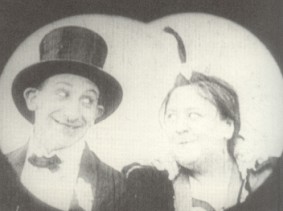
Chaplin and Linder

Charlie Chaplin and Max Linder, from http://www.slapstick.org.uk

Full details of the Slapstick 2008 silent film festival have been published, at last. The festival is taking place in Bristol, 17-20 January, and screenings take place at the Watershed, Arnolfini, Colston Hall and St George’s Bristol. Here’s the full line-up:

Thursday 17 January

Funny Ladies I: The Extra Girl (USA 1923)
14.00 at Watershed

“The plucky Mabel Normand stars as Sue, a small town girl who wants to be a star. She wins a contract with a big studio when a picture of a very pretty girl is sent to a studio instead of hers. When she arrives in Hollywood, the mistake is discovered.”

Pencil and Plasticine
18.00 at Watershed

“Animation legends Richard Williams and Peter Lord explore their mutual passion for pre-talkie animation with extracts including early Disney, Willis O’Brien and the unforgettable Jerry the Troublesome Tyke!”

Serge Bromberg presents: Retour de Flamme
20.20 at Watershed

“Since 1985, Paris-based Lobster Films have been champions of restoring archive and silent films. We are delighted to welcome Serge Bromberg, co-founder of Lobster, to Slapstick 2008 to present the first UK version of this extraordinary Retour de Flammeshow; a unique chance to experience the films he discovered and restored with his very own live piano accompaniment.”

Friday 18 January

Keystone Chaplin
9.00 at Watershed

David Robinson presents: A Film Johnnie,The Star Boarder and Kid Auto Races.

Funny Ladies II: Funny Ladies of the Silent Screen
11.00 at Watershed

Byrony Dixon and David Wyatt present a selection of silent comediennes.

Neil Innes presents: Monsieur Hulot’s Holiday (France 1953)
14.00 at Watershed

Composer-performer Neil Innes, best known for his work with Monty Python and the Bonzo Dog Doo-Dah Band, introduces Jacques Tati’s classic comedy.

Funny Ladies III: It (USA 1927)
16.00 at Arnolfini

“Clara Bow’s sizzling personality is irresistible in the role that did most to establish her as an icon.”

Special Gala Event: Paul Merton’s Silent Comedy Classics

The Gold Rush (1925)
7.30pm at Colston Hall

“Paul Merton hosts this special Slapstick Gala, featuring the world première of Timothy Brock’s reworking of Chaplin’s score for his greatest silent comedy The Gold Rush performed by the 15 piece Emerald Ensemble. With additional comedy shorts, including Laurel and Hardy classic Leave ’em Laughing and special guests Paul McGann and Christopher Chaplin.”

Saturday 19 January

Chaplin: A Fresh Look – Panel Discussion
9.00 at Watershed

“With programmes such as Kevin Brownlow’s Unknown Chaplin and Paul Merton’s Silent Clowns, TV has introduced Chaplin to a new public and re-affirmed his place in world cinema and the history of comedy. This panel discussion looks at Chaplin’s place in today’s cinema and includes newly discovered home movie footage of Chaplin. Chaired by official Chaplin biographer David Robinson with guests including: Paul Merton, Serge Bromberg and Bryony Dixon.”

Laurel and Hardy Tales with Jean Darling
11.00 at Watershed
Jean Darling, who worked with Laurel and Hardy and starred in Hal Roach’s legendary Our Gang, is interviewed by David Wyatt.

Audience with Nicholas Parsons
14.00 at Watershed

Nicholas discusses his long career in radio and TV and his passion for Keaton and Chaplin, The Arthur Haynes show and Benny Hill. Hosted by Paul Merton.

Funny Ladies IV: Exit Smiling (USA 1926)
16.00 at Arnolfini

“Beatrice Lillie plays Violet, steering a path through a trail of accidents with dotty elegance and the same dogged faith that keeps the character blind to the real feelings of Jack Pickford, the troubled bank clerk her heart is set on.” Live musical accompaniment by Neil Brand, Gunter Buchwald and Frank Bockius.

Buster Keaton: His Classic Comedy Shorts
with Tim Brooke-Taylor and Graeme Garden
20.00 at St George’s Bristol

“Former ‘Goodies’ and current I’m Sorry I Haven’t A Clue panellists Tim Brooke-Taylor and Graeme Garden choose their favourite Keaton short films, revealing the works that have influenced their lives.” With live musical accompaniment from Neil Brand (piano) and Gunter Buchwald (percussion and violin).

Sunday 20 January

Silent Comedy and The Great War
with Paul McGann and Matthew Sweet
11.00 at Watershed

Paul McGann and Matthew Sweet look at extracts from films focusing on the First World War to examine the role of silent comedy in boosting morale. The programme includes extracts from The Better Ole (1926) and a complete screening of Chaplin’s Shoulder Arms (1918).

Paul Merton’s French Silent Clowns
14.00 at Watershed

Festival host Paul Merton explores the work of great French silent comedy pioneers including Léonce Perret and ‘Father of Silent Comedy’ Max Linder.

Phill and Neil’s Slapstick Heaven
16.00 at Watershed

“Phill Jupitus and Neil Innes take us on a journey from silent comedy and beyond, discussing their influences and passions, looking along the way at extracts from The Rutles, Monty Python and the irrepressible Spike Milligan.”

Speedy (USA 1928)
Introduced by Paul Merton
20.30 at Watershed

Harold Lloyd’s last silent film, “a superb valedictory to the silent era”.

That’s a mightily impressive line-up of presenters, and they’ve managed to squeeze in a few good films too. Pleased to see Paul Merton turning his attentions to Léonce Perret and Max Linder. Perhaps he can be persuaded to resurrect Cretinetti, Bébé, Bout-de-Zan, Onésime and a few more of the ‘lost’ European slapstick stars one day…

Further details from the Slapstick site, which is a little confusing to navigate, but you’ll find the full programme under Events (sub-divided by day).

Moonshine

Moonshine

Moonshine CD cover

Dedicated Bioscope watchers will know that I like a little jazz with my silents, and that earlier this year I reported on seeing American trumpeter Dave Douglas and his Keystone band playing music inspired (obliquely) by the work of Fatty Arbuckle at the Bray Jazz festival in Ireland. Well, blow me down if they haven’t produced a CD of the music, but it’s a live recording from the Bray concert itself, so you can hear me applauding in the background.

The CD is entitled Moonshine, which is of course the title of a 1918 film that Arbuckle made with Buster Keaton, probably best known for its much-imitated gag of having a seemingly endless procession of people pour out of a car. Douglas’ music is not really intended as accompaniment to Arbuckle’s films (it certainly doesn’t work in that way), and is more an expression of ideas inspired by Arbuckle’s work. As Douglas says:

But these pieces weren’t written as soundtracks, more as reflections on great forgotten absurdities like ‘Mabel and Fatty’s Married Life’ and ‘The Rough House.’ The bounce and bubble of those characters begged for a beat – shimmering shadows on the screen hinting at hidden crevices of texture and timbre. The songs reflect the atmosphere of those innocent/zany black and white images, refracted through a 21st century jazz sensibility, interpreted by an eclectic collection of gifted musicians.

Those musicians are Douglas (trumpet), Marcus Strickland (saxophone), Adam Benjamin (keyboards), Brad Jones (double bass), Gene Lake (drums) and DJ Olive (turntables and laptop – yep, its modern jazz, folks).

The CD is released on 27 November, but it seems it is available now as MP3 downloads. There’s more information on the Greenleaf Music site.

Douglas and Keystone have released two other CDs, Keystone and Keystone: Live in Sweden.

I’m seated ten rows back on the right, by the way…

Update: Arbuckle and Keaton’s Moonshine has just been posted on YouTube, with Dave Douglas’ ‘score’. Moonshine only survives in a regrettably fragmentary state, hence the gaps in the narrative and the abruptness of several shots. See what you think…

Comedians on comedians

comedians.jpg

Paul Merton’s Silent Clowns, from http://www.bbc.co.uk/bbcfour

The television series Paul Merton’s Silent Clowns, first shown on BBC4, is being repeated on terrestrially on BBC2, with the first episode on Buster Keaton having aired this evening. Episodes on Chaplin, Laurel and Hardy, and Harold Lloyd are to follow. It was an engaging, unassuming production which simply wanted to put Keaton’s art first and foremost. It mostly took the format of one of Merton’s live shows, with Merton a lot of the time on stage giving short introductions before showing clips, Neil Brand at the piano, and audience laughing, all rounded off with the one complete film – in this case, The Goat (1921). I laughed heartily at gags I’ve seen a hundred times, and though it really only brushed the surface of Keaton’s comic gift, it must have left every viewer impressed with his art and many determined to check out more on DVD.

Merton is not the first television comedian to use his current popularity to pay homage to the silent comedians of the past. Bob Monkhouse in the 1960s presented a series, Mad Movies, which I can dimly remember, which introduced us to a wide range of silent comedians – not just the Keatons, Chaplins and Lloyds, but minor figures like Billy Bevan, Lupino Lane, Charley Chase, Larry Semon, Chester Conklin, Ben Turpin et al. I think the films all came from his personal collection. It gave us all a marvellous grounding in the names, the gags and the styles of the era (like Merton, Monkhouse explained to us how the gags and stunts worked). Then there was Michael Bentine’s Golden Silents, which was a multi-part, light-hearted history of the cinema, presented at the National Film Theatre, demonstrating as Merton does the great value of showing these films before an audience. You have to be laughing with someone really to appreciate the greatness of the silent comedians.

We were really lucky in the late 60s and early 70s – there was the intensive education in the art of silent comedy that we received from Monkhouse and Bentine, and we would be regularly treated to Robert Youngson’s compilations of comedy clips, such as The Golden Age of Comedy (1957), When Comedy was King (1960), Days of Thrills and Laughter (1961) and Laurel and Hardy’s Laughing 20s (1965). I’ve not seen them since that time, and I expected that the narrator’s interjections and the selectivity of the clips might irritate now, but at the time they helped rescue silent films from oblivion, and we watched them avidly. I can remember also that Chaplin shorts were a regular feature on early evening television – we were soon familiar with almost the entire oeuvre, and would lap up a rare new title with a collector’s fervour.

American TV also did its bit to keep the flame going for silent films in general. Jay Ward’s Fractured Flickers was first shown in 1963 and regularly syndicated thereafter. I’ve no memory of seeing it, but the approach seems to have been to take a rather satirical view of the films. Silents Please, first aired 1960, which used films from the Paul Killiam archive, was a more straightforward homage, and stood up very well when it turned up in some form or other in the UK in the 1980s in the early days of Channel 4. At least I assume it was the same series; someone might know.

Will silent comedies continue to amuse future generations? You have think that they have a good chance, indeed that it is verbal comedy that dates so badly, while there will always be something eternal about the silent art. But slapstick, however elevated a form it could be in the hands of the greatest practitioners, is not a form of comedy that is likely ever to return to the mainstream, and the clothes, the manners, the socio-cultural references, the black-and-whiteness and of course the silence will all inevitably confer too much strangeness upon this material for it ever to gain even the revival in popularity that Youngson and Monkhouse managed to conjure up. Or will artistry win out and will these films always retain a fundamental human appeal? Do we want to continue to admire them because they artistic, or because they are funny?

Paul Merton’s Silent Comedy

Paul Merton Silent Comedy

Amazon.co.uk

Well, as the Bioscope motors on past the 30,000-views figure, it’s hard to say which has been the most popular topic so far, but it’s probably either Albert Kahn or Paul Merton. Which is ironic, since Albert Kahn has been pursued for the Autochrome colour still photographs he organised rather than the films he commissioned, while Merton is anxious to take a back seat in promoting the work of the silent comedians he so admires.

The latest expression of this is his book, Silent Comedy, which has just been published. I’ve only thumbed through it in a bookshop so far, but what is immediately noticeable is what a wordy, conscientious and carefully-constructed work it is. Merton has paid his dues as a silent film buff, collecting 8mm copies from childhood, reading as well as watching all that he could, and he makes fulsome acknowledgment to Kevin Brownlow and David Gill for their television and restoration work, and to the works of Glenn Mitchell and Simon Louvish. Merton has clearly read a great deal, and the book goes into the personal histories of the silent comedy greats, as well as describing individual sequences in sharp detail. Anyone familiar with this territory will recognise much of the material, but it’s not meant for them. Merton is targetting his young audience, for whom Silent Comedy is a means of discovery, not confirmation of a well-known history. This is a subject that need discovering all over again.

This puts Merton in the awkward position of being the straight man, much as is going to be the case for his forthcoming Silent Clowns tour, where audiences may come to see Merton and his gags, but where Merton is anxious for them to see rather less of him and as much as possible of the films themselves. The book’s cover highlights the problem. Paul stands in the centre, his subjects in the background, but the book itself is organised the other way around.

Well, no matter, it’ll become a favourite Christmas present, and it’s a treasure trove of material that needs to be passed on to a new generation of enthusiasts. It’s also beautifully illustrated. It concentrates on the key names – Chaplin, Keaton, Lloyd, Laurel and Hardy – with little space given to the second tier of comics – Larry Semon, Charley Chase – and no mention at all of ‘minor’ figures like Max Davidson or any European comic except Max Linder (OK, you could argue that Chaplin and Laurel were European…). That’s a bit of a missed opportunity. But it serves a window on a lost world, which might just be that little bit less lost from now on.

Update: There’s a rather muddled (i.e. muddled in that it seems the reviewer can’t decide whether the book is good or not) but nonetheless intriguing review by James Christopher in The Times.

Pordenone diary – day three

Queue outside the Verdi

Queue outside the Teatro Verdi

It was during the Pordenone festival that Peter Greenaway announced the death of cinema. He wasn’t at the festival himself, but rather in Korea at the Pusan International Film Festival, giving a masterclass, but his words went round the world, as words will these days. Now, the unfortunate demise of cinema is commonly reported – Pordenone stalwart Paolo Cherchi Usai has written a book on the subject – and still the corpse keeps dancing around on our many and various screens, but Greenaway had an interesting specific point to make:

Cinema’s death date was in 1983, when the remote control was introduced to the living room … Bill Viola is worth ten Martin Scorseses. Scorsese is old-fashioned and is making the same films that D.W. Griffith was making early last century … Every medium has to be redeveloped, otherwise we would still be looking at cave paintings … My desire to tell you stories is very strong but it’s difficult because I am looking for cinema that is non-narrative.

Well, aside from the irony that Scorcese wrote the foreword to Cherchi Usai’s book (which admittedly is on the preservation of cinema rather than the present and future reception of cinema), is he still making films like Griffith, and what have we been doing these past few years at Pordenone sitting through the entire works of Griffith, the arch-master of narrative cinema? And why aren’t the art works of Bill Viola on show at this silent film festival?

Pordenone serves both an academic-historical and a sentimental function. It displays the films of the first thirty years or so of cinema with full archival and scholarly rigour – intelligently selected titles presented as products of national, artistic or thematic output, with credits, sources, informative writing, all backed up with the best-available prints shown in the best-possible conditions. It also caters to the nostalgic, with conventional, albeit brilliantly played and usually improvised, music rich in themes from the early twentieth century, and an abiding fondness for the stars of that era. On day three (October 8th), for instance, we were treated to a visit from Jean Darling, one-time star of the ‘Our Gang’ shorts, and the day before we spoke on the phone to Hungarian actress and singer Márta Eggerth to thank her for the film of her that we had just seen. Some acknowledgment of modern silents is made at Pordenone, such as the ingenious pastiches of the Wisconsin Bioscope, but Bill Viola would look sadly out of place. This is a festival which looks back – to the roots of cinema, and to a lost past.

And, however scholarly, this is an audience that likes its stories. Non-fiction does begrudgingly receive its due at Pordenone, but many choose the opportunity of such screenings to visit the restaurants and cafés. Narrative cinema reigns supreme, and much of the academic enquiry seems in any case rooted in the ways in which silent cinema discovered how to tell a story. It’s a fundamental need. Martin Scorcese is still making films in the way D.W. Griffith made them, because the audience still wants to identify people, their personalities, their predicaments, and what happens to them under crisis. I suspect that he would be rather flattered by Peter Greenaway’s comparison of him with D.W. Griffith. But I also suspect that Greenaway would be dismayed by Pordenone’s faith in a cinema held in amber.
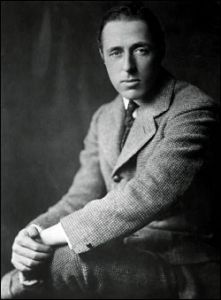
D.W. Griffith

D.W. Griffith

But enough of such speculation – what of the immediate reality of sitting through another Griffith turkey, One Exciting Night (1922)? Word went round that this unfamiliar title was even worse than Dream Street, and at 136 mins it was going to be a grim ordeal. The film is a murder mystery set in an old dark house – a theme that is all too familiar now, but was fresh then. Griffith had tried to secure the rights to The Bat, a hugely popular play about a mysterious house with money hidden in it and many suspicious characters after it. Unable to afford the rights, Griffith simply rewote the story himself (using the pseudonym Irene Sinclair). The plot concerns an inheritance, an orphan (Carol Dempster), bootleggers’ loot, and a host of characters in the obligatory multi-roomed house, one of whom is a murderer. Title cards warn us of the mysteries that are to follow and how we should not reveal the identity of the murderer to those who might want to see the film after us. However, the identity of the murderer is glaringly obvious from the start, the plot is incomprehensible, and the handling of it inept. Griffith simply could not apply the necessary techniques for the mystery genre, filming in a flat, obvious style, failing to bring any clarity to a complex, incoherent plot, and leaving the audience both bored and bewildered.

And yet, and yet… Three quarters of the way through the film changes. The plot becomes so incoherent, the rushing between rooms of the increasingly panicky characters so manic, that all narrative coherence disappears and a kind of insane magnificence takes over. It’s at this point that a hurricane is introduced into the proceedings. There’s nothing to announce it – it has just built up in the background, and suddenly the characters are all outside and at the mercy of the wild elements. The expensive hurricane sequence was added on as an afterthought (clearly hoping to recreate the excitement of the final scenes of Way Down East), and has been much criticised as an illogical irrelevance. But to me it seemed to have a mad logic to it, and the pianist John Sweeney (on top form throughout the festival) certainly responded with gusto. One Exciting Night is a bad film by any conventional standard, but the way in which it tries to hold up a narrative, gives up, then welcomes in chaos, might have found it some favour with Peter Greenaway after all. Even Carol Dempster is not that bad. What is dreadful is more eye-rolling blackface ‘comedy’ from Porter Strong, which critics at the time shamefully found among the film’s best features.

OK, so what else did we have on day three? More of Starewitch’s stop-motion animations, from his Russian period: Strekoza i Muravei (The Grasshopper and the Ant) (1911) and Veselye Stsenki iz Zhizni Zhivotnykh (Amusing Scenes from the Life of Insects) (1912); and from his French period: L’Épouvantail (1921) and Le Mariage de Babylas (1921). L’Épouvantail mixes live action (Starewitch himself as a yokel, plus his daughter Nina) with puppet animation in a very effective mixture of film trickery and slapstick, while Le Mariage de Babylas is a delightful tale of a spoiled wedding among a child’s toys, which shows Starewitch’s agreeable lack of sentimentality – he is the Roald Dahl of animators, showing meanness and mischievousness as well as wide-eyed wonder in his childhood tales.
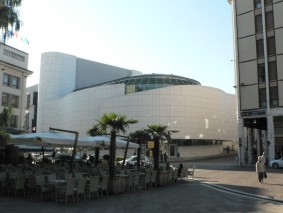
Posta

The Teatro Verdi and the Posta café, Pordenone

The main place for conversations and future plans is the Posta café, immediately across the street from the Verdi, and here I spent some time discusing with others the ongoing Women and Film History International project, co-ordinated by Jane Gaines, which is investigating women film pioneers from the silent era worldwide, in an ambitious programme of investigation and publication. The aim is not only to bring some unfamiliar names to the fore, but to challenge received ideas about the creative filmmaking process. Hopefully some major screen retrospectives will follow as well, and that we keep up this process of continually reinvestigating film history.

Georges Melies

Georges Méliès, from http://www.victorian-cinema.net

I kept ducking out of the German feature films to engage in such chats, alas, but it just isn’t possible to see everything and stay sane. I ducked out of Jean Darling and the ‘Our Gang’ shorts for reasons of taste, but it was back to the Verdi for four newly discovered Georges Méliès titles. How wonderful it is that new Méliès titles keep turning up, and that Pordenone always makes a special presentation of them. This year, the Filmoteca de Catalunya delighted us with Évocation Spirite (1899), La Pyramide de Triboulet (1899), L’Artiste et le Mannequin (1900) and especially Éruption Volcanique à la Martinique (1902), a spectactular recreation of the eruption of Mount Pelée and the destruction of St Pierre on 8 May 1902 with vivid hand-coloured explosions. It’s high time we had an up-to-date list of extant Georges Méliès films published.

I saw about fifteen minutes of the Soviet-Armenian comedy feature Shor I Shorshor (1926). Fascinating as its peasant comedy might have been, and intriguing as it was that such a picture of ‘backward’ rural lifestyles should be issued by a Soviet studio, I do object to being made witness to a comic routine which involved a live chicken being pulled apart by our two heroes. Animals overall had a hard time of it at the Giornate. I walked out.

The day for me was rounded off in happy style by René Clair’s Paris Qui Dort (1923-25), which I’d not seen before. It’s an odd film really – Paris is frozen by a mysterious ray, and only a few characters who were in a plane plus a man who lives at the top of the Eiffel Tower remain active because they were above the ray when it shot out. There is ample opportunity for satire, when the comic group discover that normal social rules no longer apply, but little is done with the concept. Instead it is the lightness of spirit which carries the film. It was surprising however to see such clunking continuity errors – several people could be seen walking around in the supposedly sleep-bound streets of Paris. Lastly we had a generally very funny Louis Feuillade comedy, Séraphin ou les Jambes Nués (1921), starring Georges Biscot. We cannot now of course make films about the social embarassment caused by someone losing his trousers, for today no one would blink an eye at Séraphin’s dilemma. Happily, we can still laugh at such films, because we understand the time and place. Imaginative sympathy – that’s what Pordenone audiences do best.

Slapstick, European-style – part 4

Slapstick Blog-a-Thon

We conclude our survey of European pre-WWI film comedy for the Slapstick Blog-a-Thon with a look at the comedy troupe, Les Pouics.

Les who? The Pouics are little known as a name now, but they were France’s version of the Keystone Cops – their predecessors, in fact, since the group was formed in 1910, two years before the Keystone company was created. They were formed by the director Jean Durand, who joined the Gaumont company in 1910 as its director of comedy films. He quickly established a troupe of comedy performers with the necessary talents to help feed the conveyer-belt system of one-reel film production, as audiences worldwide demanded their weekly dose of comedy. Les Pouics, or Les Pouites (‘bedbugs’), on occasion billed under this name, supplied a team of comedians with precise acrobatic and pantomimic skills, suitable for all occasions, and with more than a gift for chaos.

Onésime et le Dromadaire

Onésime et le dromadaire (1914)

We know the names of several of Les Pouics. Most notable at the time was Ernest Bourbon, who starred in Gaumont comedies 1912-14 as Onésime, films whose penchant for arresting absurdity (camels in living rooms) endeared him to the Surrealists. A Pouic who would work with the Surrealists directly was Gaston Modot. Just another member of the comic team when he first worked for Durand in 1910, Modot appeared in many Onésime and Calino films, before enjoying a notable acting career over many years, working for Abel Gance, René Clair, Marcel Carné (Les Enfants du Paradis), Jean Renoir (La Règle du Jeu) and Luis Buñuel in L’Age D’Or. Other Pouics included Clément Migé, already well-known as Calino, Lucien Bataille, who played the comic character Zigoto (1911-1912), Jeanne-Marie Laurent and Paulos.

Les Pouics were recruited from circus and music hall backgrounds, and specialised in organised mayhem, a wholesale onslaught upon normality. Things existed only that they might be destroyed. Some indication of their working methods can be found in a rare interview with veterans of the troupe reproduced in Georges Sadoul’s Historie Général du Cinéma (1951):

Jean Durand: The set was built on a platform, three metres high, supported by complicated arrangement of beams. On top of that we would build a salon, with sofas, piano, furniture, the whole lot. At a whistle, the stagehands would release the beams. The whole lot would collapse into the room built underneath.

Gaston Modot: Under the floor there would be a ceiling. The fellows and the furniture would crash through it. It was rather like playing water polo. Everyone marked his man. You would say: ‘I’ll take the wardrobe and you the sideboard, and you the seat with the old lady on it’.

Durand: In the salon there would usually be a very proper gentleman who had his top hat on. He would always get the piano. Of course there would be a few newspapers in the hat as protection.

Modot: And those great three-tier scafolds, like we built in Saintes-Maries-de-la-Mer. We’d say, you fall in the mortar, me in the lime and him in the bucket. A motorbike would come and hurl the scafold in the air. We would all fall wherever we had to. It was quite natural for professionals.

Ah, those were the days, when all an actor had to protect him from a falling piano was a top hat with some newspaper stuffed into it.

There was much about Les Pouics that makes one think of the comedy troupe of lasting fame, the Keystone Cops, who created chaos not quite so violent but with the same love of mishap and logical absurdity. But in the fate of the two troupes we see summed up the two histories of slapstick comedy in Europe and America. The European (specifically the French and Italian) comedy of the pre-World War One era, with its roots in the circus, music halls and café concert, delighted audiences around the world but always had an air of the Old World about it. It satirised modernity but was simultaneously at a remove from it. It employed trick effects, magic, and fantasy, a cinema of attractions. The American comic models that were to succeed them, as the war destroyed much of the European companies’ traditional business, were slicker, faster, technically far more accomplished, and imbued with an irresistible flavour of the New World.

So there is a lost world charm about the European comedies of Max, Cretinetti, Onésime, Calino, Kri Kri, Bout-de-Zan, Bébé, Rosalie, Robinet, Little Moritz and Rigadin. Much of the happy spirit, the undying charm of early cinema can be found in their spirited productions, churned out professionally week after week. So many now are lost, just as their reputations have faded, but there are more than enough surviving titles lurking in the archives that really deserve to be brought away from the sole attentions of the specialist and taken to a wider audience. We would all gain a better sense of early film history. And we’d laugh our socks off as well.

This mini-series owes much to the researches of others, especially Richard Abel, Aldo Bernardini, Ivo Blom, David Robinson, and the catalogues of the Pordenone Silent Film Festival.

Slapstick, European-style – part 3

Slapstick Blog-a-Thon

The third part of The Bioscope’s contribution to the Slapstick Blog-a-Thon continues to look at the less familiar side of silent film comedy, that which flourished in Europe (especially France and Italy) before the First World War. Today we round up our survey of the star performers of the period by name-checking some of the other comedians of the period, as a reference source, and as encouragement for anyone to find out more – certainly to see them if you can.

Little Moritz aime Rosalie

Little Moritz aime Rosalie (1911), from Richard Abel, The Ciné Goes to Town

Pacifico Aquilanti – Italian comedian who played Coco (1909-?) for the Cines company, as a response to the success of André Deed’s Cretinetti at Itala.

Lucien Bataille – Gaumont comedian, whose Zigoto character (1911-1912) spoofed the popular detective films of the period; then became Casimir for Eclair (1913-1914).

Paul Bertho – French comedian who created two comic personas for Lux: Patouillard (known as Bill in Britain and the USA), and Gavroche (1912-1914).

Roméo Bosetti – early example of a named comedy series performer, he played the character Roméo for Gaumont (1907-1908), for whom he went on to be a prolific comedy director, before being lured away by Pathé.

Ernest Bourbon – French comedian, adept at combining elegance with acrobatics, who starred in the popular Onésime series (1912-1914) for Gaumont, occasionally being partnered with Calino.

Sarah Duhamel – a former child performer of wide girth who enjoyed much success as Rosalie (1911-1912) for Pathé, in which she was often partnered with Little Moritz. She subsequently played as Pétronille for Eclair (1913-1914).

Marcel Fabre – Spanish clown who worked in France for Eclair and Pathé before moving to Italy with the Ambrosio company and creating the Robinet character (1911-1914), in which he was regularly partnered by Nilde Baracchi as Robinette. His character was known as Tweedledum in Britain and the USA.

Tommy Footit – son of a famous nineteenth-century clown, George Footit (English, but found fame in France), who starred as Tommy for Eclair in 1911.

Raymond Frau – French comedian who established the comic character Kri Kri for the Italian company Cines (known as Bloomer in Britain). In 1916 he returned to France and created the Dandy character for Eclair.

Lea Giunchi – Italian comedienne who played comic foil to Tontolini (played by her brother-in-law, Ferdinando Guillaume) and Kri Kri, but also starred in the Lea series (1911-1914) for Cines. Her son, Eraldo Guillaume, was a child comedian for Cines, Cinessino.

Ferdinando Guillaume – Italian comedian from a circus family who appeared as Tontolini (Jenkins in Britain and USA) for Cines 1909-1911, then as Polidor for Pasquali. Directed many of his films. In later life appeared in a number of Fellini films.

Ernst Lubitsch – one of the great directorial talents in cinema history, Lubitsch began his film career as an actor and made comedies in the character of Meyer (1913-1914)

Clément Migé – French comedian who starred in an early Gaumont comic series, as Calino (1909-1913), a series which demonstrated notable comic invention and delight in chaos. For a short period a rival Calino series was produced by Pathé.

Léonce Perret – a performer and then an important director for Gaumont, he made some sophisticated comic films using the character name Léonce (1912-1914). His comic foil partner was often Suzanne Grandais. He moved to the USA as a director in 1917, returning to France in 1921 to continue a successful career than lasted until his death in 1935.

Moritz Schwartz – diminutive German comedian who played Little Moritz for Pathé (1911-1912), a highly popular series in its time. He was partnered romantically with Sarah Duhamel’s Rosalie for a number of films.

Alma Taylor and Chrissie White – English stars of the Hepworth company’s series of Tilly films (1910-1915), playing gleefully anarchic teenagers (Unity More played Tilly in the first film in the series), as well as many other shorts (dramatic and comic) before both went on to continued success as adults in British feature films.

Ernesto Vaser – Italian performer promoted as the Ambrosio company’s answer to Cretinetti, under the name Fricot (1909-1912?).

And there were so many others, including some female comedians whose character role we know (Cunégonde, Léontine) but not the performers’ names, alas. Countries other than France and Italy produced similar comic series, but these two countries dominated the field – nationally and internationally – up to the First World War. A new kind of comedy was already emerging in America, and would dominate the field in the post-war era.

To find out more, the best place is Richard Abel (ed.), Encyclopedia of Early Cinema (2005), from where much of the information above was taken, especially the entry Comic Series written by David Robinson. Robinson also wrote two classic articles for Sight and Sound, ‘The Italian Comedy’ (Spring 1986) and ‘Rise and Fall of the Clowns’ (Summer 1987), which are wonderfully evocative. An excellent source of detailed information on the French comedians, focussing on extant prints, is Richard Abel’s The Ciné Goes to Town: French Cinema 1896-1914 (1994).

Online, there’s a good article by film historian Ivo Blom on the Italian comedians, ‘All the Same or Strategies of Difference. Early Italian Comedy in International Perspective’. And this section from the 2002 Pordenone Silent Film Festival catalogue, for a season of ‘Funny Women’, has information on Sarah Duhamel, Lea Giunchi, Alma Taylor, Chrissie White, and Suzanne Grandais.

Maybe a little more tomorrow…

Slapstick, European-style – part 2

slapstick_blogathon_luke3.jpg

The Bioscope is taking part in the Slapstick Blog-a-Thon, a four-day festival of blogging on the subject of slapstick. The Bioscope’s contribution is to cover the story of the European comedians of the early cinema period whose work is less familiar to most now, but who enjoyed huge popularity in their day.

Today we look at a particular phenomenon of the period, child comedians. Here are three of the most popular of the period, all appearing in French films.

Bébé apache

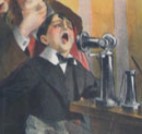
Clemént Mary (1905-1974) was the the most celebrated of the European child stars of the silent period. At the age of five he was employed by the French Gaumont studios to star in a series of comedies under the name of Bébé. Bébé was a cheeky, resourceful character who was invariably far smarter than the adult world around him. Indeed, the common gag in the Bébé films was to place the child in adult situations, evidenced in such titles as Bébé apache (1910), Bébé millionaire (1911) and Bébé candidat au mariage (1911). In the first of those, Bébé’s ability to capture the mannerisms of the Parisian apache, and to play these convincingly and with deft coming timing amid an adult cast is extraordinary. He also played occasional non-Bébé roles. In 1912, Louis Feuillade at Gaumont introduced a new child character into the films, Bout-de-Zan (see below), and won a court case against Mary’s father who had protested at the competition. The father won the right to keep using the Bébé name however, and they moved to Eclectic Films to continue the series until 1916. In adulthood, he changed his name to René Dary and enjoyed a successful career in film and television into the 1970s.

There’s information on Louis Feuillade, Bébé and Bout-de-Zan in the Pordenone catalogue for 2000

See some of his credits (only a small selection of the Bébé films is given) on the IMDB, under René Dary

Bout-de-Zan

René-Georges Poyen (1908-1968) was taken on by Gaumont in 1908 as a co-star and planned replacement for Bébé, and was given the character name of Bout-de-Zan. Greater comic emphasis was placed on Bout-de-Zan being an ‘adult’ figure, as he dressed like an adult, aped adult mannerisms, and was generally an earthier character than Bébé. He would also often giving knowing looks to the camera, making the audience complicit in his trickery. Bout-de-Zan films stand up as well today as those of Bébé, displaying a cleverness and an apparent delight in peformance which helps override concern one might have at the exploitation of such young children, making films week after week. Poyen also appeared in the Louis Feuillade serials Les Vampires (1915) and Judex (1916). The last Bout-de-Zan film was made in 1916, but Poyen carried on making films into the 1920s.

The Image Entertainment DVD of Les Vampires includes a 1916 Bout-de-Zan short, Bout-de-Zan et l’embusqué

Willy Sanders

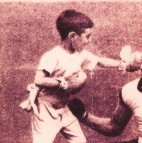
Willy Sanders (or Saunders) (1905-?) was a British music hall prodigy who first appeared on film aged four as a boxer, flooring an adult opponent, in The Man to Beat Jack Johnson (1910). His popularity was sufficient that he was brought over to France to star in the Little Willy series for Eclair, with seventy or so titles being produced 1911-16. Little Willy never had the same appeal as some of the great French child performers, but the series was reliable knockabout fare of the time, with such titles as Willy professeur de skating (1911), Willy diplomate (1913) and Petit Willy soigne la neurasthénie de son oncle (1911). Willy returned to boxing in 1913 for Willy contre le bombardier Wells, where our hero defeats ‘Bombardier’ Billy Wells, the great British boxing hero of the time. He seems not to have had a film career beyond 1916.

Read about Willy in Andrew Horrall’s Popular Culture in London c.1890-1918, which features him on the front cover

Read about The Man to Beat Jack Johnson on Screenonline

There will be more on the Europeans tomorrow…

Slapstick, European-style – part 1

slapstick_blogathon_luke2.jpg

Today, and for the next three days it is the Slapstick Blog-a-Thon, a bloggers’ festival of slapstick organised by Film of the Year. Numerous blogs are taking part, and Bioscopists are warmly encouraged to follow up the other blogs, add comments and so forth.

The Bioscope’s main contribution to the Blog-a-Thon is a survey of the great European comedians of the early cinema, whose names are sadly known only to the few these days, but whose fame once easily matched that of the Keystone stable and other American comics.

Here’s part one…

André Deed

André Deed (1879-1935) was a French music hall comedian whose film career started with Georges Méliès in 1901, but took off when he joined Pathé Frères in 1906. He established a comic character, Boireau, appearing under that name in numerous shorts, and enjoyed a growing screen reputation throughout Europe. The success of the character inspired numerous imitators at other studios, and essentially created the star comedy genre. His film career blossomed further when he joined Itala in 1908 and established a new character, Cretinetti (known as Foolshead in Britain and Gribouille in France). Cretinetti was an engaging mixture of dim-wittedness and sharp-wittedness, readily stumbling into chaotic situations but triumphantly working his way out of them. He went back to Pathé in 1911 and resumed the character of Boireau. He made hundreds of comic shorts in his career, whose anarchic quality seems to ally them with Dada and Surrealism. He made some further Cretinetti films in Italy from 1915, before his career faded away in the 1920s.

Read this essay on early film, Cretinetti and the Modernists

There’s a new book on Deed, Jean A. Gili’s André Deed – Boireau, Cretinetti, Gribouille, Toribio, Foolshead, Lehman… (Le Mani-Cineteca di Bologna, 2005), in Italian

Max Linder

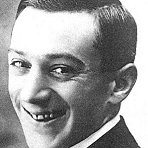
Max Linder (1883-1925) was arguably the greatest of all European silent film comedians, and in retrospect the most tragic. He was born Gabriel-Maximilien Leuvielle but took the stage name Max Linder, and began working in Pathé films, initially in minor roles, from 1905. Gradually he built up the character of Max, a sophisticated, elegant figure with top hat and cane, something akin to the flâneur of literary imagination, who could get caught up in foolery without ever losing his dignity. Max was a natural romantic, though his attempts to win the girl were frequently held up the booby-traps of everyday life. In contrast to the popular European comedians of the day, his style was more subtle, less pantomimic, and his comedy had a touch of grace about it that won his international admirers, none more so than Chaplin. His period of fame started around 1910 and he made hundreds of Max films up to 1914, becoming one of the most popular stars of the screen of that time. The war brought an end to his fame, and though he had a brief period in the USA at the Essanay studios in 1916, he was not a success, and his career gradually petered out. He made a few feature films (such as The Three-Must-Get-Theres in 1922), but he suffered badly from depression, and in 1925 he and his wife committed joint suicide.

There’s a DVD, Laugh with Max Linder, available from Image Entertainment

Find out more about Max Linder on Wikipedia

Pimple

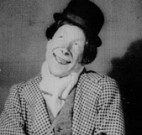
Fred Evans (1889-1951) was second only in popularity to Chaplin in Britain at the height of his career. He was the nephew of a well-known music hall comedian, Will Evans, and trod the boards himself before entering films in 1910 for Cricks and Martin, with the character Charley Smiler. The films were crudely-constructed affairs, but two years later Evans came up with the character of Pimple, a white-faced clown, perpetually accident-prone. Hundreds and hundreds of Pimple films were made, most of them routine knockabouts, but he also developed a taste of parodies, and in films like Pimple’s Battle of Waterloo (1913) he displays a proto-Pythonesque humour of the absurd while sending up the British epic film The Battle of Waterloo. In many of them he collaborated with his brother Joe. His comedy is sometimes held up by a weakness for punning intertitles, and few of his surviving films raise much a laugh nowadays, but at his best his comic inventiveness does indeed point the way to Python, The Young Ones, The Fast Show and a long British tradition of the gleefully absurd. He continued to make many films through the war years, and ended his film career as an extra in the 1930s.

Find out more about Pimple on Screenonline

There’s an excellent essay on Fred and Joe Evans by Michael Hammond in the book Pimple, Pranks & Pratfalls: British Film Comedy Before 1920 (2000)

Rigadin

Charles Prince (1872-1933) appeared in Pathé films as Rigadin, whose character was generally that of a bashful lover. He already enjoyed some fame as a theatre performer before joining Pathé in 1908, and he went on to appear in over 200 Rigadin films up to 1920, writing the senarios for many of them. In Britain and America he was known as Whiffles. Rigadin’s most interesting films were those that took on contemporay themes, such as Rigadin Peintre Cubiste (1912), where he mocked modern art by appearing as an angular figure, and Rigadin aux Balkans (1912) where he plays a war cameraman who gleefully fakes scenes for the camera in France rather than travel to the Balkan War. He ended his film career playing small roles throughout the 1920s and 30s.

More European comedians tomorrow… and don’t forget to read all the other Slapstick Blog-a-Thon posts.

(Acknowledgments to the Encyclopedia of Early Cinema for some facts and figures).