When the Barbican put on Molly

Molly Picon

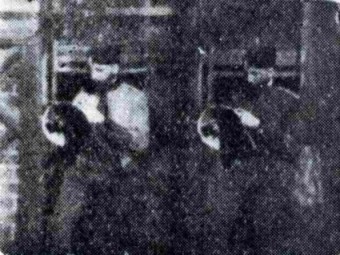
Molly Picon in East and West (Ost und west), from Barbican Film

The home for silent film in London is now the Barbican centre, whose Silent Film and Live Music continues to demonstrate imaginative programming in the titles selected and the music chosen to accompany them.

Apart from highlighting the current series, I wanted to draw particular attention to the film showing on Sunday February 17, Ost und West (East and West) (Austria 1923). This features Molly Picon, the great star of Yiddish stage and screen, and gives me the opportunity of reproducing the splendid still above. The diminutive, round-eyed Molly Picon (1898-1992) was a New York Yiddish theatre star, on the stage from the age of six, and massively popular among Jewish and on-Jewish audiences in the 1920s. She made made a handful of films in the 1920s and 30s, before returning to the screen more regularly in the 1970s (she’s most familiar to general audiences for playing the matchmaker in Fiddler on the Roof). Ost und West is the earliest of her films that survives. I’ve not see the film (yet), so here’s the Barbican’s blurb for it:

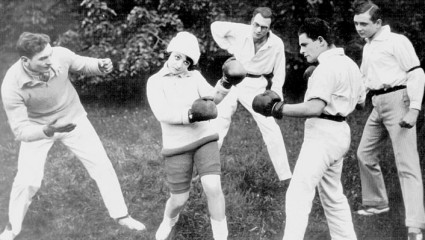
Featuring Molly Picon, one of the great stars of Yiddish cinema, it tells the story of streetwise New York flapper Mollie, who travels to her cousin’s wedding in a traditional Polish shtetl. Contrasting sophisticated city values against those of simple village life, the film contains classic scenes of the irrepressible Picon lifting weights, boxing and teaching young villagers to shimmy, and eventually meeting her match in a young yeshiva scholar.

The music comes from Lemez Lovas of Oi Va Voi and guest musicians Moshikop and Rohan Kriwaczek, taking in “traditional klezmer to contemporary electronica, from liturgical melancholy to party pop kitsch and from vaudeville to breakbeat.” Directed by Sidney M. Goldin and Ivan Abramson, the film is screening at 16.00 and runs for 85mins.

Bridge of Light

http://www.amazon.co.uk

For anyone interested in the history of Yiddish film, the essential source is J. Hoberman’s Bridge of Light: Yiddish Film Between Two Wars (1991), which apart from its commendable written content, is just one of the most beautifully-produced books on film history that I know. Check out also Sylvia Plaskin, When Joseph Met Molly: A Reader on Yiddish Film (1999) (Joseph being the Polish director Joseph Green), Judith N. Goldberg, Laughter Through Tears: The Yiddish Cinema (1983), or Eric A. Goldman, Visions, Images and Dreams: Yiddish Film Past and Present (1984).

Other titles being screened in the Barbican series are:

9 MarchOn Our Selection (Australia 1920) – homely, landmark Australian comedy-drama about the pioneering Rudd family. With piano accompaniment by Neil Brand.

3 AprilChang: A Drama of the Wilderness (USA 1927) – King Kong creators Merian C. Cooper and Ernest B Shoedsack’s classic dramatised documentary set in the jungles of Thailand (and producing background footage that went on to pad out a number of Tarzan movies). With live accompaniment by Italian group Yo Yo Mundi.

20 AprilThe St Kilda Tapes – a collection of silent films from the Scottish Screen Archive, including the topical St. Kilda – Britain’s Loneliest Isle (1923-28), Da Makkin O’ A Keshie (1932), and A New Way to a New World (1936), all set to music by acoustic guitarist David Allison.

4 MayNanook of the North (USA 1922) – the so-called first documentary film (if you’ve got a couple of hours I’ll give you chapter and verse on how wrong all the text books are), directed by poet of cinema Robert Flaherty. Music from the Shrine Synchrosystem, featuring Max Reinhardt, DJ Rita Ray, world music kora master Tunde Jegede and Ben Mandelson on guitars, which ought to steer us away from the siren temptations of too much authenticity (like Flaherty?).

17 MayThe Wind (USA 1928) – one of the cast-iron classics of silent cinema, Victor Sjöström’s visual masterpiece stars Lillian Gish living a hard life in dust-bowl Texas, and is guaranteed to convert even the stoniest-hearted sceptic into acclaming silent cinema. With the Carl Davis symphonic score (sadly, not with actual orchestra).

1 JuneThe Passion of Joan of Arc (Denmark 1928) – somehow not convinced even by The Wind? Carl Theodore Dreyer’s astonishing, overpowering work, with Falconetti as Joan, will do the trick. With music by In the Nursery.

15 JuneStella Dallas (USA 1925) – classic weepie from Henry King, starring Ronald Colman, Douglas Fairbanks Jr. and Belle Bennett. Remade with Barbara Stanwyck in 1937, but this is the version to see. With piano accompaniment by Stephen Horne.
Through Savage Europe

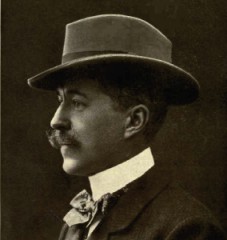
Harry de Windt

Harry de Windt

Just added to the Bioscope Library is Through Savage Europe: Being the narrative of a journey (undertaken as special correspondent of the “Westminster Gazette”), throughout the Balkan States and European Russia. This is an account of a journey through the states of Bosnia, Herzegovina, Montenegro, Servia (as the book has it), Bulgaria, Rumania and Russia in 1907. This was the area that was soon to experience conflict through the Balkan Wars of 1912-13, then to be the powder keg that helped start off the First World War.

Of interest to us is that the author, journalist and adventurer Harry de Windt, took a motion picture cameraman with him. This was John Mackenzie of the Charles Urban Trading Company, to whom De Windt refers throughout:

My sole companion was Mr. Mackenzie, of the Urban Bioscope Company, a canny Scotsman from Aberdeen, possessed of a keen sense of humour and of two qualities indispensable to a “bioscope” artist – assurance and activity. Nothing daunted my friend when he had once resolved to secure a “living” picture, and I trembled more than once for his safety in the vicinity of royal residences or military ground. For the bioscope was a novelty in the Balkans and might well have been mistaken for an infernal machine!

Relatively little is said of Mackenzie’s actual work (he left before de Windt went on to Russia), but the interest is in his very presence, in the tie-up with a British newspaper (the Westminster Gazette), and in the Balkans as a topic of sufficient interest to audiences at home to justify the expense of organising such a venture. Here is the motion picture medium as a news and documentary force, bound up with the other news media, reporting on a remote locality of pressing interest to British audiences (Urban had sent out a cameraman to the same area in 1903 to film a Macedonian uprising against the Turks) who could read it up in the papers and then, suitably briefed, see it all with interested eyes on the motion picture screen.

For the record, this a list of the films taken by Mackenzie (sadly, none is known to survive today):

Roumania: Its Citizens and its Soldiers (22 scenes, 420 feet)
Herzegovina, Bosnia and Dalmatia (22 scenes, 710 feet)
Montenegro and the Albania Alps (14 scenes, 350 feet)
Life and Scenes in Servia (17 scenes, 435 feet)
Bulgaria and its Citizens (18 scenes, 800 feet)
Bulgarian Infantry (18 scenes, 410 feet)
Bulgarian Cavalry and Artillery (17 scenes, 415 feet)

Mackenzie would go on to become a leading Kinemacolor cameraman, shooting many of the earlier productions demonstrating the colour process.

Through Savage Europe is available from the Internet Archive in DjVu (14MB), PDF (38MB), b/w PDF (17MB) and TXT (439KB) formats.

CineFiles

CineFiles

CineFiles is the film document image database of the Pacific Film Archives, Berkeley, California. The database comprises reviews, press kits, programme notes, newspaper articles and other documents from the Archive’s library collection. The documents cover world cinema, past and present. Over 25,000 films are represented, and their target figure is 200,000 documents, with more being added daily.

You can search by document (under title, author, date or publisher, or for documents about specific films, people, or subjects) or filmographic data (under title, subject, genre, director, year, country, or studio). There doesn’t seem to be any easy way of isolating silent films (typing in ‘silent’ into the subject field only brings up three titles), so you will have to search by title, director or specific year for the best results.

The collection is particularly strong on Russian and Soviet cinema, so, as an example, the record for Protazanov’s Pikovaia dama (The queen of spades) (1916), erroneously given as a Soviet Union production (in 1916 the country was still Russia), provides the researcher with the following:

Title: Pikovaia dama (The queen of spades)
Director: Protazanov, Iakov Aleksandrovich
Country of Prod.: Soviet Union
Year: 1916
Language: Russian
Production Co.:
Genre: Adaptation, Horror
Subject: Gamblers — Drama, Ghosts — Drama

Related Documents:

1. Silent witnesses — excerpt – Tsivian, Yuri – British Film Institute – 1989 – 3 pages – – book excerpt

View full description of this document
View page images: Pg. 1, Pg. 2, Pg. 3

2. Costumes and classics – – National Film Theatre (London, England) – 1990 Feb 04 – 1 page – – program note

View full description of this document
View page images: Pg. 1

3. Pikovaya dama (the queen of spades) – Borger, Lenny – Variety – 1990 Mar 21 – 1 page – – review

View full description of this document
View page images: Pg. 1

4. Queen of spades – – Mary Pickford Theater (Library of Congress, Washington, D.C.) – 1992 Apr – 1 page – – program note

View full description of this document

5. The queen of spades – – Pacific Film Archive – – 2 pages – – program note

View full description of this document
View page images: Pg. 1, Pg. 2

6. The queen of spades – Svolkein, N. – – – 4 pages – – intertitles

View full description of this document
View page images:
Pg. 1, Pg. 2, Pg. 3, Pg. 4

7. The queen of spades – Svolkein, N. – – – 1 page – – intertitles

View full description of this document
View page images: Pg. 1

8. The queen of spades – Bolotnikov, Vladimir – – – 4 pages – – intertitles

View full description of this document
View page images:
Pg. 1, Pg. 2, Pg. 3

9. Mosjoukine — excerpt – – – – 3 pages – – book excerpt

View full description of this document
View page images: Pg. 1, Pg. 2, Pg. 3

The page image references are links to GIF or JPEG images of book extracts, programme notes etc. The document search option has some very useful means to narrow a search, including type of document (advertisement, bibliography, book excerpt, correspondence, obituary etc.), and further options are provided to search by documents with box office information, production costs, illustrations etc. Some of the documents are surprisingly long, though it is a little frustrating that the pages are provided as separate image files rather than brought together, for example in PDF format.

There doesn’t seem to be much in the way of older original documents (e.g. posters, press materials, lobby cards for silent films) but the database offers a very handy guide to the critical literature (copyright clearance has been obtained for all the page images they publish). It’s plainly set out and simple to use. Go explore.

It’s only nine months away…

Sparrows

Sparrows, from http://www.cinetecadelfriuli.org/gcm

Let’s not wish away all the joys that 2008 in sure to bring, but the first news on the Pordenone Silent Film Festival (4-11 October) is out.

Among the main festival features will be

  • Aleksandr Shiryaev (Russian ballet dancer and producer of puppet dance films)
  • French comedy of the post-war silent era
  • Hollywood on the Hudson
  • Viktor Tourjansky
  • The Griffith Project, 12 (1925-1931)
  • The Corrick Collection, 2 (Australian collection of early actualities)

And the opening music event is to be a gala screening of the Mary Pickford classic Sparrows (1926), with score by Jeffrey Silverman, performed live for the first time by the Orchestra Sinfonica del Friuli Venezia Giulia, conducted by Hugh Munro Neely.

OK, October is a little time away, but a little closer is the 25 May deadline for applications to sign up to this year’s Collegium at Pordenone. This is a week-lomng programme of study into film history and film archiving with special sessions from notable expert visitors to the festivals. There are twelve places available, and applicants should preferably be under thirty years of age and pursuing education in cinema in some form. Collegians are given free hotel accommodation and breakfast during the week, but are responsible for their own travel arrangements, meals, and all other expenses. More information, including how to apply, from the festival site.

Happy birthday, Bioscope!

A cake for the Bioscope

Yes folks, it was one year ago to the day that the Bioscope first opened its eyes, put its fingers to the keyboard, and produced these words:

Welcome to The Bioscope, the place for news, information, documentation and opinion on the world of early and silent cinema.

And here we are, some 500 posts, 10,350 deleted spam messages, 61,200 visitors and somewhere over 100,000 words later, still dedicated to the cause. And for my amusement, if no one else’s, these are the top twenty posts by number of visits over the past year (excluding visits to sections such as About and Library):

1. Searching for Albert Kahn
2. Paul Merton on tour
3. The Wonderful World of Albert Kahn
4. The Twenties in Colour
5. The Invention of Hugo Cabret
6. Slapstick, European-style – part 1
7. 100 years of the Autochrome
8. Crazy Cinématographe – Travelling Cinema
9. The silent films of Alfred Hitchcock
10. Paul Merton’s Silent Comedy
11. A Tour of the Cinema Museum with Ronald Grant
12. The Great War in Colour
13. Edwardian hoodies
14. Paul Merton’s Silent Clowns
15. The Silent Worker
16. The Bioscope Festival of Lost Films
17. Lost and Found no. 2 – Dawson City
18. Times past
19. Visiting the Volta
20. Picasso, Braque and Early Film in Cubism

So thank you to Messrs. Kahn and Merton for having attracted so much custom, and thank you dear readers for all your comments and collaboration. Let’s hope for new adventures and passions in year two.

Colourful stories no. 5 – The Brighton School

Davidson-Jumeaux two-colour system

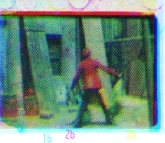
Davidson-Jumeaux two-colour system from 1904, blue-green image on the left, orange image on the right

We might note, in passing, that almost all these pioneers were living in Brighton and that they were all in their individualistic and several ways certain that they, and they alone, had inventions worth a fortune. Why did they not collaborate? Were they mutually acquainted? We shall probably never know.

So wrote Adrian Klein, author of the exceptional history and technological survey, Colour Cinematography, first published in 1936. For it is an intriguing fact that most of the pioneers of colour cinematography in what we can call the pre-Kinemacolor era were located in and around the Brighton area, 1898-1906. And in answer to Klein, yes, they were mutually acquainted, some did collaborate, and this is their story.

It was the French film historian Georges Sadoul who first coined the phrase ‘Brighton School’ in the 1940s, to describe a small group of experimenters in motion picture form, among them Esmé Collings, G.A. Smith and James Williamson, who were based in the Brighton and Hove area. The notion of a ‘school’ is a misleading one, though it has proved an enduring term in early film studies, but there was undoubtedly a grouping of like-minded filmmakers, photographers and technicians, larger in composition than Sadoul realised, and dedicated mostly not to innovations in film form to please future film historians, but in a holy grail for the new film industry, colour cinematography. The chief ‘members’ were Alfred Darling, William Norman Lascelles Davidson, Benjamin Jumeaux, Edward Grün, Otto Pfenninger, William Friese-Greene, Charles Urban and George Albert Smith.

Alfred Darling

Alfred Darling, from http://www.victorian-cinema.net

Alfred Darling (1862-1931) was not an experimenter in colour cinematography himself, but he was a technician of genius, whose presence in the area (he lived at 25 Ditchling Rise, Hove) gave huge impetus to the local cinematography industry. His engineering business supplied cinematographic equipment for the Warwick Trading Company, the major British film business of the late 1890s/early 1900s era. It was he who constructed Bioscope cameras and projectors for Warwick, and who supplied much of the equipment used by his experimenting neighbours.

Kammatograph

The Kammatograph, from http://www.victorian-cinema.net

Captain William Norman Lascelles Davidson (c.1871-c.1944), formerly of the 4th Battalion The Kings (Liverpool) Regiment, was an enthusiastic amateur inventor, pursuing the goal of both colour photography and colou cinematography. He claimed to have spent £3,000 in his quest (multiply figures from the early 1900s by 100 to have an idea of equivalent costs today). His first patent for a putative three-colour cinematography system was issued in 1898, which he followed by with a patent for a three-colour still photography method the following year. No working model emerged from either, but in 1901 he teamed up with his neighbour Dr Benjamin Jumeaux to work on the Kammatograph, a filmless device which recorded motion pictures in a spiral on a disc, invented by Leo Kamm. They experimented with two colour filters, instead of three, an inspiration that may have come from the man who probably processed their films – or else he was to take the idea from them – their near neighbour G.A. Smith. Other experiments followed in 1903 and particularly 1904, with their invention (B.P. 7,179 of 1904) which employed twin prisms creating a blue-green and orange record with the pictures side by side, exposed simultaneously (see illustration at top of this post). But the results demonstrated were criticised for poor definition and unnatural colour effects. Davidson then took on William Friese-Greene as his employee, and other demonstrations would follow in 1906, with similar lack of practical success. Davidson then fades out of the picture, still something of a mystery figure.

Davidson-Jumeaux (?) three-colour experiment

Mystery three-colour experiment (c.1903) believed to be by Davidson and Jumeaux, part of the Will Day collection, Cinémathèque française

Three-colour composite

Computerised synthesis of what the above colour record might have looked like

Dr Benjamin Jumeaux (c.1852-?) is still more of a mystery. He lived in Southwick, just outside Brighton, as did Davidson and Smith. He was born in Ceylon (Sir Lanka), of Anglo-French parentage. In the 1901 census he is described as a physician, surgeon and artist. He is named on patents alongside Davidson, but also had patents issued under his own name, demonstrating that he was not simply a financier to the experiments. Included in the Will Day collection at the Cinémathèque française is an extraordinary piece of film, 82mm wide, with three parallel black-and-white images, each registering a red, green and blue image. The Cinémathèque has identified this as Davidson-Jumeaux, apparently through evidence suplied by a perforator, but I have come across no evidence of such a film featuring in their public demonstrations.

Dr Edward F. Grün, or Grune, also lived in Southwick, and was close friends with G.A. Smith. His hobby was inventions in colour photography, and he became briefly celebrated in 1902 for his invention of a ‘fluid’ lens, with coloured fluids within the camera lens itself. Ingenious but pointless, the idea did not catch on. Grün’s would feature as a key witness in a 1913 court case between Kinemacolor and a rival colour system, Biocolour, where his muddled testimony revealed his uncertain grasp of technology as well as events. More on that story in a later post.

Otto Pfenniger

Otto Pfenninger colour photograph of Brighton beach, 1906, from Royal Photographic Society

Otto Pfenninger (1855-?) was Swiss-born, but living in Brighton by the 1890s, where he ran a photography business. He became closely associated with the other Brighton experimenters, especially Davidson and Jumeaux, whom he assisted in some form, but his prime interest was always still photography. He wrote on his experiences in a book, Byepaths of Colour Photography (1921) published under the pseudonym O. Reg, from which the rare (unique?) frames of a Davidson-Jumeaux two-colour experiment in 1904 at the top of this post derives. He devised his own three-colour still photography system, demonstrated by the photograph above of Brighton beach in July 1906.

William Friese-Greene

William Friese-Greene, from http://www.victorian-cinema.net

William Friese-Greene (1855-1921) had had a long association with Brighton through his business partnership with Esmé Collings before he moved from Essex to 203 Western Road, Brighton in 1905. Here he became the paid employee of Captain Davidson, whose experiments were conducted at 20 Middle Street, Brighton. Friese-Greene already had a patent for a three-colour cinematography system in his name from 1898, and issued another with Davidson in April 1905 (B.P. 9,465 – it employed a beam-splitting prism), which he would subsequently boast was the ‘master patent’ for colour cinematography. It was of no such thing, but the full story behind Friese-Greene’s vainglorious efforts to invent colour cinematography must receive full treatment later in this series.

Charles Urban

Charles Urban

Charles Urban (1867-1942) was not an inventor nor a resident of Brighton, but he was a major figure on the scene, and the most important person in colour cinematography in the period up to the First World War, for his championing of Kinemacolor. Urban had first become interested in colour cinematogaphy when Edward Turner and Frederick Lee (subjects of an earlier post) came to his Warwick Trading Company in 1901 looking for financial support for their three-colour system. When Warwick the company lost interest, Urban took on the financing of the project himself. Turner died in 1903, but, undeterred, Urban passed on the development work to his close associate G.A. Smith. Urban came down to Brighton every weekend (or so he claimed) as Smith’s experiments progressed, making himself an honorary ‘Brighton School’ member. Much more on his history is to follow.

George Albert Smith

George Albert Smith, from http://www.victorian-cinema.net

And then there is George Albert Smith (1864-1959), long-lived enough that he might have corrected Adrian Klein, had he a mind to. He lived in Brighton and Southwick, and had already enjoyed a colourful career as mesmerist, showman, filmmaker and film processor for the Warwick Trading Company. He had worked with Lee and Turner, he knew all about the two-colour experiments of Davidson and Jumeaux, he knew all the others, knew what they had done right and all the more importantly what they had done wrong. In particular, he had taken note of the two-colour experiments of Davidson and Jumeaux, and thought he knew how he could make such an idea work, not least by application of his superior knowledge of sensitising photographic materials.

So tune in next week, for the invention of Kinemacolor.

Recommended reading:
Luke McKernan, ‘The Brighton School and the Quest for Natural Colour’, in Vanessa Toulmin and Simon Popple (eds.), Visual Delights – two: Exhibition and Reception (Eastleigh: John Libbey, 2005)

Music for experimental film

I missed this excellent-looking DVD release from Kino when it appeared late last year, but no harm in drawing attention to it now.

Music for Experimental Film is a collection of avant garde film classics from the 1920s, with music from former Television guitarist and front man Tom Verlaine plus producer/guitarist Johnny Rip. Originally a live show, the DVD features the original films with the music accompaniment for the most played live from a selection of the concerts.

The films featured are:

L’Étoile de Mer (France 1928 12 mins Man Ray)

The Fall of the House of Usher (USA 1928 13 mins James S. Watson & Melville Webber)

The Life and Death of 9413 A Hollywood Extra (USA 928 11 mins Slavko Vorkapich and Robert Florey)

Emak-Bakia (France 1926 13 mins Man Ray)

Rhythmus 21 (Germany 1921 3 mins Hans Richter)

Brumes d’Automne (France 1929 12 mins Dimitri Kirsanoff)

Ballet Mécanique (France 1924 10 mins Fernand Léger)

To judge from the extracts Kino have provided on the YouTube promo (Emak-Bakia, Rhythmus 21 and Ballet Mécanique) the marriage of delicate post-punk guitar and the visual purity of the films (all the better for the occasional scratches and blemishes earned through age) works particularly well. An apposite and haunting combination.

The Lodger on HD

The Lodger

The opening images from The Lodger (1927), from 1000 Frames of Hitchcock

This Friday sees what I think is a first for a silent film – exhibition in HD format. The US channel MGMHD is showing Alfred Hitchcock’s The Lodger (1927) at 4.20am on February 1st. It is, I believe, derived from the BFI National Archive’s restored print, and was transferred in the UK by Granada International. I have seen a bit of it, on a non-HD screen alas, but even so the image quality looks quite stunning.

The image above of the opening frames of the film comes from 1000 Frames of Hitchcock, “an attempt to reduce each of the 52 available major Hitchcock films down to just 1000 frames”. It’s an offshoot of the remarkable HitchcockWiki, which I commend to you. 1000 Frames of Hitchcock provides the same service for The Pleasure Garden (1925), Downhill (1927), The Ring (1927), Champagne (1928), Easy Virtue (1928), The Farmer’s Wife (1928), The Manxman (1929) and Blackmail (1929, but the sound version only). And all the others, of course.

100 years of Russian cinema, sort of

Aelita

Aelita, from http://www.academia-rossica.ru

There’s a season of Russian and Soviet cinema being held at the Curzon Mayfair in London to accompany the Royal Academy’s From Russia exhibition. It bills itself as commemorating 100 years of Russian cinema. Film had of course been exhibited in Imperial Russia since 1896, and there was an active cinema business and foreign interest from the Pathé and Gaumont firms throughout the early 1900s, plus some local non-fiction film production, but Russian fiction film production did not start until 1908.

Here’s the blurb:

100 Years of Russian Cinema: 1908-1925 Archive Cinema Season

The year 2008 will see the centenary of Russian cinema. To present its rich history and progress Academia Rossica will be launching a series of screenings and events, starting with a programme of early pre- and post-Revolutionary films.

The 1908-1925 Archive Cinema Season is organised by Academia Rossica in association with the Royal Academy of Arts and the From Russia exhibition, the latter sponsored by E.ON.

Sunday 3 February
Triple bill:

Sten’ka Razin (PG)
Director: Viktor Romashkov
Starring: Evgenii Petrov-Krayevsky
Imperial Russia 1908/ 10mins
Silent
Often referred to as the first Russian film, Sten’ka Razin tells of the legendary Russian hero’s romantic adventure with a captured princess.

The Young Lady and the Hooligan (PG)
Director: Evgenii Slavisky and Vladimir Mayakovsky
Starring: Vladimir Mayakovsky, Aleksandra Rebikova
Soviet Union 1918/ 35mins
Silent
Written and directed by Vladimir Mayakovsky, an outstanding Revolutionary poet and a playwright of the early-20th century, who also stars as the enamoured hooligan.

After Death (PG)
Director: Evgenii Bauer
Starring: Vera Karalli, Vitold Polonski
Russia 1915/ 46 mins / DVD
This adapation of a romantic young photographer, whose solitary life is haunted by the memory of his dead mother, is based on Turgenev’s novel. The film reflects upon the central themes of the director’s work: love and death.

Sunday 10 February
Double bill:

Chess Fever (PG)
Director: Vsevolod Pudovkin
Starring: Boris Barnet, Jose Raul Capablanca, Vladimir Fogel
Soviet Union 1925/ 20 mins
Silent
Chess fever sweeps the nation with disastrous romantic consequences.

Strike (PG)
Director: Sergei Eisenstein
Starring: Grigorii Alexandrov, Yudif Glizer, Mikhail Gromov
Soviet Union 1924 / 73 mins
Strike epitomises the essence of the 1917 Revolution, a key avant-garde cinematic masterpiece.

Sunday 24 February
Double bill:

The Cameraman’s Revenge (PG)
Director: Wladyslaw Starewicz
Imperial Russia 1912/ 12mins
Animation
One of the earliest animation films, Starewicz’ work is also considered to be the first film to deliberate over the role of cinema (set here in the kingdom of insects).

Aelita (PG)
Director: Yakov Protazanov
Starring: Yulia Solntceva, Igor Ilinsky, Nikolai Tsereteli
Soviet Union 1924/ 77 mins
Silent
The first Soviet Sci-fi film tells the story of engineer Los, who travels to Mars leading an uprising against the dictator King, aided by Aelita, the disempowered romantic Queen.

More details from the Curzon Cinemas site or the Academia-Rossica site.

Clowning glories

Clara Bow

Clara Bow in The Wild Party, from http://www.birds-eye-view.co.uk

The Birds Eye View Film Festival returns 6–14 March 2008. This is the UK’s festival of women filmmakers, and as was the case last year it includes a silent film strand.

This year the festival features ‘Clowning Glories’, a retrospective of women in film comedy before 1930, to be held at the BFI South Bank. The titles being shown are:

  • 7 MarMy Best Girl (USA 1927 d. Sam Taylor). With Mary Pickford
  • 8 Mar Ich möchte kein Mann sein (I Don’t Want to be a Man) (Germany 1918 d. Ernst Lubitsch). With Ossi Oswalda + The Danger Girl (USA 1916 d. Clarence G. Badger). With Gloria Swanson
  • 10 Mar – The Vagabond Queen (UK 1929 d. Geza von Bolváry). With Betty Balfour
  • 11 MarShow People (USA 1928 d. King Vidor). With Marion Davies + Mabel’s Dramatic Career (USA 1913 d. Mack Sennett). With Mabel Normand
  • 12 MarThe Love Expert (USA 1920 d. David Kirkland). With Constance Talmadge, Natalie Talmadge + Blue Bottles (UK 1928 d. Ivor Montagu). With Elsa Lanchester
  • 13 MarThe Wild Party (USA 1929 d. Dorothy Arzner). With Clara Bow + A House Divided (USA 1913 d. Alice Guy)

There’s a complementary season of screwball comediennes of the 1930s, the UK premiere of Cannes hit Expired starring Samantha Morton, LFF critics’ choice Unrelated, and documentaries from Afghanistan, Pakistan, China and Nepal. Plus mobile phone filmmaking, women in video games, music vids, fashion films, and “a one off Whitechapel Gallery Late Night event starring a high profile all girl line up of live artists, VJ’s and DJ’s”. More details from the festival website.