Paul Merton’s Silent Clowns

paulmerton3.jpg

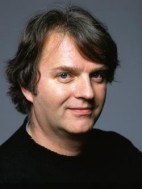
Television comedian and silent cinema champion Paul Merton will be hosting a special programme of silent film comedians, including Chaplin, Keaton, Fatty Arbuckle and Charley Chase, with music by Neil Brand, at Plymouth Pavilions on 27 November 2007 – some time off, but tickets are on sale now. Merton has written a book, Silent Comedy, which will be published in October 2007. Look out for plenty of publicity and events around that time.

Update: See later post, Paul Merton on tour, for a list of his November-December tour dates, with links to the theatres.

Reading Robb

I’ve now got my copy of Brian J. Robb’s Silent Cinema (see earlier post) and indeed it is quite poor. It’s sloppily edited, has numerous errors, spells names wrongly (Adolph Zuker, Brit Acres, D.W. Griffiths etc), and unashamedly regurgitates every dubious myth about silent film you can think of. It’s also very oddly structured – chapters on the origins and developing art of film, then a chapter on Georges Méliès, then straight into sections on directors, stars and clowns, followed by scandals, a quick round up of international silents, then potted descriptions of some classic titles, and on to the coming of sound.

I wouldn’t recommend it to anybody, except for the DVD that accompanies it. This is a generous 193 mins compilation put together by Sunrise Silents. The quality of the clips is poor, the accompanying music is cheap, and there’s nothing to tell you what the film clips are unless to refer to a back page of the book. But the sheer range of clips is very impressive, so here’s a listing (the dates aren’t given on book or DVD, so The Bioscope comes to the rescue):

  • Johnny Hines – Conductor 1492 (1924)
  • Mary Pickford – Little Annie Rooney (1925)
  • Harold Lloyd – I’m On My Way (1919)
  • Pola Negri – Hotel Imperial (1926)
  • Rudolph Valentino – Son of the Sheik (1926)
  • The Gish sisters – Orphans of the Storm (1921)
  • Douglas Fairbanks – Wild and Woolly (1917)
  • Greta Garbo – Joyless Street (1925)
  • Laura La Plante – The Cat and the Canary (1927)
  • Buster Keaton – Cops (1922)
  • Norma Talmadge – The Social Secretary (1916)
  • Rin Tin Tin – The Night Cry (1926)
  • Raymond Griffith – The Night Club (1925)
  • Colleen Moore – A Roman Scandal (1919)
  • Lon Chaney – The Phantom of the Opera (1925)
  • Louise Brooks – It’s the Old Army Game (1926)
  • Charles Chaplin – The Star Boarder (1914)
  • Clara Bow – My Lady of Whims (1925)
  • William S. Hart – The Ruse (1915)
  • Pearl White – The Perils of Pauline (1914)
  • Lige Conley – Air Pockets (1924)
  • John Barrymore – The Beloved Rogue (1927)
  • Theda Bara – The Unchastened Woman (1925)
  • Our Gang – The Big Show (1923)
  • Mabel Normand – The Extra Girl (1923)
  • Alla Nazimova – Salome (1923)
  • Gloria Swanson – Teddy at the Throttle (1917)

All are American except Joyless Street (German), and, no, I’d never heard of Johnny Hines or Lige Conley either…
Moving Pictures

Oh to be in Washington, as this exhibition sounds excellent. Moving Pictures: American Art and Early Film is running 17 February-20 May at the Phillips Collection, 1600 21st Street, NW, Washington, DC 20009. As the blurb says, “This exhibition will present American realist painting from the late 19th and early 20th centuries side-by-side with the earliest experiments in film. Approximately 100 works, including nearly 60 short films (a few minutes long) by Thomas Edison, the Lumière Brothers, and the Cinémathèque Française, along with works by American masters such as George Bellows, William Merritt Chase, Thomas Eakins, Maurice Prendergast, and John Sloan, will provide a new context for looking at the artists’ choice and presentation of subject matter. For the first time, film will be fully integrated into the history of American art.”

The connection between art and early film is a fascinating subject that needs to be explored more. The work of chronophotographers like Eadweard Muybridge, trying to capture reality through sequence photography, had a particular fascination for realist artists like Frederic Remington, whose paintings of horses must be seen in the light of Muybridge’s famous achievement of photographing a galloping horse. And then the emergence of moving pictures themselves provided an extra challenge for artists who had already had to face up to photography, provoking them into new ways of expression. The early filmmakers were the first surrealists!

Picture Perfect – Landscape Place and Travel in the British Silent Film

Picture Perfect

http://www.amazon.co.uk

In 2003 the British Silent Cinema Festival explored the theme of landscape, location and travel in the British silent film. The idea originated from an oft-levelled criticism of British cinema, that it was overly studio-bound, dependant on theatrical traditions and therefore felt stagey, cramped and confined. Over 100 films later, festival attendees could conclusively nix this judgement and revel in the delightful outdoorsiness of our film heritage. Our landscape is still in many ways the biggest selling point of British Cinema today, this book surveys the origins of the use of the British location, both actual and fantasy, in film.

Picture Perfect: Landscape, Place and Travel in British Cinema Before 1930, edited by Bryony Dixon and Laraine Porter, and published by University of Exeter Press, is now available.