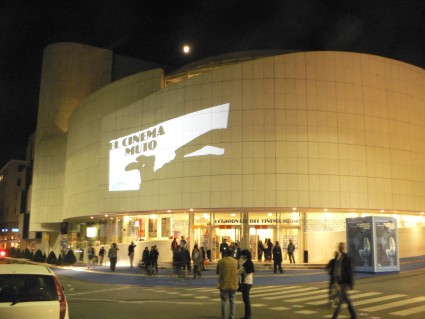
Pordenone diary 2008 – day three

The Verdi at night

There is a lot that goes on at Pordenone. While the main film shows takes place in the Verdi theatre, in three sessions (from 9.00, 14.30 and 20.30), supplementary screenings (often 16mm or video formats) take place in a side theatre, the Ridotto. This is also the venue for the weekly talks given to the Collegium, a gathering of selected students who are attached to the festival for the week and write a paper at the end of it. There are masterclasses each day, on the art of combining music with silent film. There is a book fair, which has book launches every evening. There are assorted special events and lectures, notably the Jonathan Dennis Memorial Lecture (named after a much-admired New Zealand film archivist who died too young), which this year was given by Eileen Bowser. And there are meeting of specialists groups, such as Domitor and Women and Film History International.

In between all this, it is essential to take time out and sit at one of the pavement cafes (the Posta, opposite the Verdi, for choice), with cappucino at the ready, waiting for the world to stoop by for a chat. The world invariably does. Pordenone is the ideal spot for learning about others’ projects, exchanging ideas, hatching schemes. So, hello to all those I met – including a smattering of Bioscope regulars – and look out for the fruits of projects large and small, maybe, one day. Some of these took precedence over the films shown, hence some of the gaps in the reports (which I hope those who saw the films may rectify by adding their impressions to the comments, please).

And so to Monday 6 October. Out there in something called the real world stockmarkets crashed, banks crumbled to dust, and you wondered first if there would be any airlines to fly us back, and then if that would really be such a bad thing. In our world, we had Jacques Feyder and, to these eyes, the interesting issue of servants. There were four of Feyder’s earliest films on show, all part of the ‘French touch’ strand. Des Pieds et des Mains (1915) told its romantic tale ingeniously through shots of hands and feet alone; Tetes de Femmes, Femmes de Tete (1916) had two women wittily getting the better of the errant husband of one of them; Un Conseil d’Ami (1916) echoed this by having a man puzzled by his social failure advised by a wiser, older man; and La Faute d’Orthographe (1919) told a comic tale of an ambitious officer worker let down by his inability to spell, his salvation unexpectedly coming in the form of a burglar at the office who corrected the man’s spelling on an application form while about his own business.

These were elegant, artfully-composed works, notable for emphasis on close shots, so that one saw relatively little of the broader social background, and instead concentrated on eyes, faces, and details of house interiors. And servants. I was fascinated by the compliant figures who appeared at the edge of a frame, merely to announce an arrival, pour a drink and deliver a message. This was class-bound stuff, accepted as the norm – how such a narrative should be constructed, who it should be about, how they should behave. There’s a famous line uttered by the title character in Pinero’s play The Second Mrs Tanqueray, which sums it up:

Servants are only machines made to wait upon people – and to give evidence in the divorce courts.

But I wanted to know where the servants went once they respectfully slipped out of shot. There were other worlds out there, to the edges, away from the selfish concerns of the characters on which the films chose to concentrate. I enjoy picking out these counter-narratives, the stories one can imagine running through the film that were not in the filmmakers’ conscious mind – or perhaps they were, as these early Feyder films were notable for the precision with which shots were populated and framed. In two of the films, the great Françoise Rosay – towering figure in French cinema, and of course Feyder’s wife – appeared as a figure in the background; in one a guest at a party, on another a passenger on a bus. These were films that encouraged you to look closely, films to savour.

Poster for The Sorrows of Satan, from Wikipedia

And then it was the Griffith of the day, The Sorrows of Satan (1926). As I’ve said, the late Griffiths were films I’d managed to avoid up til now, and I came to them with prejudices gleaned from the standard film histories. Re-reading some writings subsequently, I can see that these films have always had their champions, but the general audience reaction at Pordenone was one of genuine surprise that the films were so good. To my mind, the best of them was The Sorrows of Satan.

The omens were not good. A tale of young love thwarted by the appearance of Satan himself, taken from the novel of the ludicrously moralistic Victorian novelist Marie Corelli, filmed by a man whose lapses into Victorianism show him at his worst. The startling opening shot of angels and devils at war above a giant heavenly staircase may have confirmed the worst fears of some, or else alerted us to a sense that here was a film with the courage of its convictions and the skill to display them. The two lovers are played by Ricardo Cortez, as an aspiring writer living in a garret, and Carol Dempster (on fine, mannerism-free form – her final screen role), another aspiring writer living next door. The relationship between the two is built up gradually, with a fine sense of pace and telling detail (as was evidenced in the best parts of Sally of the Sawdust). Then Cortez rages against his fate, specifically against God, and suddenly Adolphe Menjou has appeared at his side. This was one of the best appearances in a film that I can remember. We know he’s the Devil, but he’s also Menjou at his mostly Gallically elegant, fresh from A Woman of Paris, looking just so pleased with everything and in total control of all about him.

He leads Cortez away from Dempster and into a debauched social life (excellent change in visual scale), culminating in marriage to ultra-vamp Lya de Putti, which anyone could have told him was going to end in tears. Again and again there were striking camera set-ups (clearly inspired by German cinema), with telling composition and atmospheric, apposite lighting. It was all terribly moralistic, of course, but entirely justified within the parameters it had established. Mercifully we weren’t shown Menjou turning into his Satan self – it was far more effective to show just the winged shadow and the horror on Cortez’s face. In the end, when Satan has been shaken off, the lovers are reunited, but there is no other reward. Neither becomes the great writer each aspired to be – forgiveness is all. I thought this was a great film.

Frank Scheide speaking to the Collegium

I made a tactical error in bypassing Gloria (1921), a commemorative record of ceremonies held to mark the death of 650,000 Italian troops in the First World War, which reports suggest was extrordinary. Instead I went to one of the Collegium sessions, on theatre and film. There were interesting short addresses given by David Mayer, Phil Carli and especially Frank Scheide, on the relationship between vaudeville/variety and film, but I wasn’t entirely sure what the Collegium (students attached to the festival for the week) were expected to get out of it all. Speaking to some past and present Collegium members, it seems that culmulatively the concept works, as they learn from each other, and of course experience the Giornate in all of its richness over the week.

The Corrick Collection is a collection of short films collected by an Australian family of touring entertainers from early in the last century. The first part of the collection was presented last year; in part one of the remainder, we saw a selection of real gems – an unidentified record of the coronation of Edward VII in 1902; Pathé’s 1903 tableaux-like Marie-Antoinette, featuring a gruesome scene where she is taunted in prison by a severed head on the end of a pole; a 1908 Pathé travel film of life in Sudan; and a dazzling trick film with cut-out figure made by British magician-turned-filmmaker Walter Booth, The Hand of the Artist.

This was followed by a hour-long documentary on the work of the festival’s great discovery, Alexander Shiryaev, but we’ll cover him in full in the report on Day Seven.

Tactical error no. 2 was missing The Kiss of Mary Pickford (1926), the delightful Soviet comedy inspired by the visit of Fairbanks and Pickford to the USSR, though I did see it once years ago. For many that I spoke to it was one of the highlights of the festival.
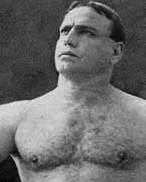
In the evening, we went on holiday. Maciste in Vacanza (1921) was one of a great number of films made in Italy following the huge success of Cabiria which were vehicle for the strongman from that film, Maciste, played by Bartolomeo Pagano. Here were saw Pagano more or less as himself, a strongman film-star beset by fans wherever he goes, who needs urgently to go on vacation to recover his strength. So he does, in a little car which he rather disturbingly refers to as his wife, though he is still pestered at every turn (‘Maciste, please move my cottage nearer the town’ asks an elderly countrywoman). While the film was in this self-referential mood it was great fun. Then it got caught up in a mystery plot set in a castle with too many intertitles and rather lost its momentum, but overall it was a happy piece of fun.

The film was shown, along with other Italian silents at the festival, in tribute to the late film historian and Pordenone stalwart, Vittorio Martinelli. So we also saw a sonorised nature film on the life of the cricket, from nature film specialist Roberto Omegna, and a travelogue of Sicily. And so ended Day Three for me, missing the late night French film Paris en Cinq Jours for a discussion on film archives and their collaborative future in the UK.

Keep your eyes peeled for Day Four, where we will see the evils of war, the first films ever made, a Japanese actor playing a Hindu living in Scotland, and why Keystone represents the spirit of America.

Pordenone diary 2008 – day one
Pordenone diary 2008 – day two
Pordenone diary 2008 – day four
Pordenone diary 2008 – day five
Pordenone diary 2008 – day six
Pordenone diary 2008 – day seven

The Film Programme

A break in the Pordenone reports to let you know that this Friday (October 17), BBC Radio 4’s The Film Programme will be dedicated to silent film, with Neil Brand on the piano, and the discussion including a consideration of Bill Morrison’s found footage work Decasia and the archiving of early film.

As usual, the programme will be available online for a week after the broadcast through the Listen Again service.

Pordenone diary 2008 – day two

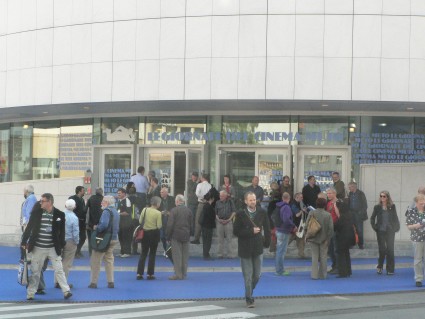
Outside the Teatro Comunale Giuseppe Verdi

Before launching into what we saw on Sunday 5 October at the Giornate del Cinema Muto, a word of praise for one particular innovation. Pordenone shows prints from around the world, which arrive in a multiplicity of languages featured on the intertitles. For years we have benefitted from the skills of translators viewing the prints as we did and providing instant translations through headphones. This year the headphones were gone. In their place we had computer-generated subtitles immediately below the screen. If the film was in English, the subtitles appeared in Italian, and vice versa; if it was in any other language, we got subtitles in both Italian and English. The amount of preparatory work must have been prodigious, but the result was a hugely improved viewing experience. Warm thanks are due to all those who made this possible, and everyone’s hearts went out to whoever had translated all of the 160 minutes of the Norwegian film Laila in English, only to discover that the print came with English titles…

This innovation went hand-in-hand with a welcome emphasis on bilingual presentation generally. In Giornates past it has felt as though English speakers were taking over, which must have been greatly trying for the Italians in the audience. Now most (if not all) spoken introductions were translated from one language or the other. One or two speakers need to know when to take a break to give the poor translator a chance to recap, while one speaker was perhaps unnerved by the translator and stopped speaking in mid-sentence, leaving the translator with an impossible task. But we’re getting there.

The day started for me (earlier risers had caught the French film Triplepatte) with two mindboggling Baby Peggy shorts, Such is Life (1924) and Carmen Junior (1923). Child star Baby Peggy (played by Diana Serra Carey, ninety years old next month) is beyond rational criticism. These bizarre films give every appearance of having been made up as they went along. A surreal sequence in Such is Life where an unexplained living snowman melted through a street grill was memorable, but had no logical connection with anything around it (the story was based on ‘The Little Match Girl’, though feisty Peggy wasn’t about to do pathos).

Ever since 1997 the Giornate has been working its way chronologically through the works of D.W. Griffith. This year we reached the end of the journey. The films of Griffith’s last working years are generally dismissed as the embarrassing efforts of an out-of-date man in his creative dotage – at least, those such as me who hadn’t actually seen them believed this. I wasn’t alone in such assumptions, and the astonished (well, pleasantly surprised) rediscovery of Griffith’s late films was one of the major points of the festival. We started with Sally of the Sawdust (1925). This is a comedy-drama of a circus performer (Carol Dempster), whose mother was thrown out by her parents when she married a man from the circus and who has fallen under the care of entertainer Eustace McGargle (W.C. Fields). What surprised about Sally of the Sawdust was its general competence. That sounds like a dreadful thing to say about the man who established the art of directing films, but by this period in his career one had sensed that he was wilfully opposed to the ways in which studio-dominated cinema was evolving. But for the most part Sawdust is pleasingly competent. It ticks along nicely. Fields is outstanding – in complete command of the screen from his very first shot. We even get to see him juggle. Dempster is, inevitably, annoying and she puts on all her girlish mannerisms (it’s an oddity of the film that she seems far too old for such faux-teenage mannersims, though she was only twenty-three when the film was made). Yet even she surprised in a house party scene where is dresses up glamorously and gives a hint of a quite different, and alluring presence, which she might more profitably have returned to. There was also a touching scene where she dances in the way her mother used to for the woman she does not realise is her grandmother. Unfortunately, Griffith’s control fails him towards the end of the film, with his taste for old glories taking over as we have two prolonged chases, one with Dempster, one with Fields, which are poorly executed and fail to intertwine as they should have done, ending with a casual resolution of the plot that lets the audience down. But there were signs of promise, and better was to come.

Included in the catch-all ‘Rediscoveries’ strand were four Max Linder films. Of these Max Toréador (1913) was remarkable for its prolonged scenes filmed in a bullring in Barcelona with Max himself in the middle with the other toreadors genuinely taking part in the bullfighting. It was no surprise to learn that different prints exist with scenes cut according to local sensibilities – the film did not shy from showing the ‘sport’ in all its bloody cruelty. Rather more enjoyable was The Three-Must-Get-Theres (1922), a goofy parody of Douglas Fairbanks in The Three Musketeers. The try-a-bit-of-everything humour was variable, but the film gleefully sent up the Fairbanks self-satisfaction and panache, laced with a string of anachronistic gags (motorbikes instead of horses, that sort of thing). Max remains one of the geniuses of the silent cinema, a poetic blending of opposites – graceful air with a penchant for pratfalls; debonair confidence with always just a touch of panic in his eyes.

One of the festivals themes was filmmaking in New York, tied in with Richard Koszarski’s new book, Hollywood on Hudson. The films chosen were an odd mish-mash, none odder nor mish-mashier than His Nibs (1920-21), directed by Gregory La Cava. Starring obscure comedian Chic Sale (whose gentle comic style suggests he might be worth investigating further, if more films exist), the film was made out of what was going to be a conventional drama, The Smart Aleck. At some point someone realised that the film wasn’t working, and decided to build another film around it. So we get a film about a cinema show, with Sale playing multiple parts, including a crusty projectionist. The audience settles down to watch the film-within-a-film, now called He Fooled ‘Em All (starring Sale and Colleen Moore), with commentary from the projectionist in the intertitles to prevent the audience from reading out the titles. The projectionist also tells us that he cut out a train journey from the film, because those scenes all look the same, plus some mushy stuff at the end. So some good laughs at the expense of cinema, and an intriguing portrait of a small town film show, but a minor oddity overall.

The highlight of the day – indeed one of the highlights of the week – was quite unexpected. On 28 December 1908 the Messina Straits off Sicily was at the epicentre of a huge earthquake. It was probably the biggest earthquake in Europe ever experienced; around 200,000 died in the region, with Messina itself having its population reduced to just a few hundred. We saw how film responded to this tragedy, through three actualities and two fiction films. The first actuality, from an unknown producer, had the greatest effect – aided by Stephen Horne’s eerie music (starting with solo flute before turning to piano). Each shot framed people within the ruins of the city to haunting effect. There was a profound sense of a shock, a dawning realisation of what had just happened. A Pathé news report showed us more, while a Cines film showed us the town being rebuilt in 1910. An Ambrosio drama, L’Orfanella di Messina (1909) depicted a couple who had lost their daughter to illness adopting an orphan girl from Messina, simple yet deeply touching. Finally, and oddly, there was a Coco comedy in which the comedian imagined himself caught up in the earthquake, with collapsing walls and floors in his bedroom. In this simple package of films, we saw how film was used to report on and to help people come to terms with what the country had been through. The sequence moved us all.

The Orchestra della Scuola Media Centro Storico di Pordenone, a school orchestra, was given the chance to show its mettle, accompanying Buster Keaton’s One Week (whose inventiveness greatness put the middling efforts of other comedies seen during the day into context) and three cartoons. Heavy on the recorders and percussion, but good accompaniment for all that, with spot-on sound effects. And further evidence of the growing bonds between community and festival.

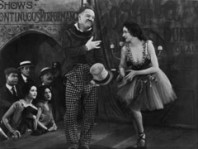
The Golf Specialist, from criterioncollection.blogspot.com

The evening’s screening kicked off with a sound film: W.C. Fields in The Golf Specialist (1930). The Fields theme was a bit of an opportunisitc one, probably chosen because some of his silents turned up in the Griffith and New York strands. The film is a classic, of course, and it was good to have it as a point to which his silent films were pointing. It’s a variety sketch in which Fields chaotically fails to demonstrate his golf skills, which tangling with children, animals and sticky paper with progressive absurdity. Delicious cynicism is on view, though there could be more of Fields’ sardonic view of the world and a little less of the golfing calamities.

After a modern Romanian silent short on climate change, whose logic eluded me, we had The Show Off (1926), directed by Mal St Clair. Part of the New York strand (it was filmed at Paramount’s Astoria studios), it starred the ever unappealing Ford Sterling (the Keystone star that Chaplin famously supplanted) in a relatively straight role. This had some cultural-historical fascination in its picture of office life and suburban aspiration, with Sterling playing all too accurately a vain and selfish social failure. Somehow he becomes aware of the unhappiness of other people about him and implausibly saves the day. Had Fields been given the part, we might have had a film of note. As it was we had a minor work of academic interest, its most diverting feature being Louise Brooks as the girlfriend of Sterling’s brother-in-law, looking for all the world as though she had glided in from a different planet.

Look out for Day Three, where we will encounter hands, feet, Satan, puppets and a strongman on his holidays.

Pordenone diary 2008 – day one
Pordenone diary 2008 – day three
Pordenone diary 2008 – day four
Pordenone diary 2008 – day five
Pordenone diary 2008 – day six
Pordenone diary 2008 – day seven
Pordenone diary 2008 – day one

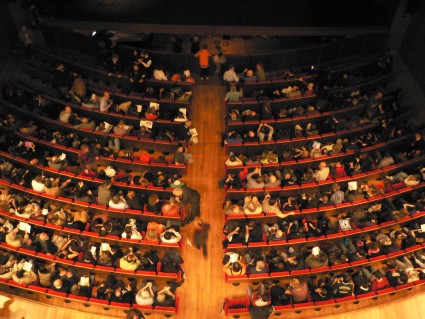
Bird’s-eye view of the stalls in the Verdi, main venue of the Giornate del Cinema Muto

Pordenone is the home of silent film. Every year, for eight days in October, an audience of film fans, nostalgists, historians, academics and archivists gather in a small Italian town an hour’s train journey north east of Venice to watch the films of ninety or more years ago. The reason that they do so, and the reason why the Giornate del Cinema Muto is such a success, is the breadth of the programme and the breadth of that audience. Here you will see every kind of silent film – some good, some bad, but never one without interest – amid an audience that knows and loves what it is watching. Scholarship and sentiment go hand in hand at Pordenone.

The location helps too. The Giornate was established at Pordenone because of the efforts of a dedicated band of able enthusiasts from the nearly Cineteca del Friuli, but the pavement cafes and restaurants of this prosperous but unassuming town have played their part, still more the warm and gentle sunshine that generally greets us at this time of year. While the grey clouds of autumn gather elsewhere, and the word tumbles into financial meltdown, where better to take time out from such cares? But were it to offer only escapism, the Giornate would never have lasted twenty-seven years. Here masterpieces are acclaimed, restorations are unveiled, scholarly endeavours are hatched or reported on, deals are done, alliances made, special events are hosted, and everyone leaves with the sense of having played their part in the process of investigation and rediscovery which keeps the world of silent film so very much alive.

Promotion for the festival amid the paving stones of Pordenone

This year, the Giornate enjoyed its second year back at its Pordenone base, after a long sojourn in nearby Sacile while the Verdi theatre was being reconstructed. Last year, though it was good to be back home, there was a sense of things not yet quite in place, of Pordenone itself not being quite ready for us. There was a noticeable difference this year. From the civic welcomes on the opening night, to the promotional ’tiles’ dotted among the paving stones throughout the centre of the town, there was a palpable sense of warm welcome. Every other shop had a poster for the festival in its window, and in the Verdi itself one sensed a greater understanding of what this festival was all about. One hopes that the Giornate is good for Pordenone – it is heavily dependent on local funding, after all – and in general there was a sense that all want to build still further on its success. Continual development of its mission has been a cornerstone of the Giornate’s success.

So, what was on offer in 2008? It was a typically mixed programme, broken up into themes, with a number deriving from newly-published books. The themes included filmmaking in New York, French comedy, Mary Pickford, W.K.L. Dickson, early cinema, Italian silents, First World War actualities, D.W. Griffith, W.C. Fields, and the private films of ballet dancer Alexander Shiryaev. It was a festival with just a few outstanding individual titles – a Norwegian epic, a travelogue of London from 1904, a John Gilbert swashbuckler, news reports of an earthquake, hand-drawn and puppet animation films from Russia – but so much of continual interest that there was never a time to break away and go for the traditional day’s trip to Venice. There was always something that you had to see, though with two screens and numerous associated events it was not possible to catch everything. I estimate that, if one includes short films included in compilations, that there were at least 312 films on view, and over seven of the eight days I saw 211 of them. This diary will report as much as I can. I thought of arranging it thematically, but a day-by-day account is probably best (certainly easiest).

Sparrows, from http://www.siffblog.com

And so I arrived on Saturday 4 October, landing at Treviso, and arriving mid-afternoon in time to register, picking up my sturdy Pordenone bag, 216-page catalogue (meticulously edited by Cathy Surowiec), handy daily schedule guide, and a mountain of weighty books given to festival ‘donors’. With all this administration, the first few films in the afternoon were missed, and I kicked off my Giornate with the gala evening screening of Sparrows. Following the civic welcomes and effervescent address from festival director David Robinson, we had an unusual start with Katie Melua’s pop video, Mary Pickford (previously discussed on the Bioscope). It’s a work which looks all the more adroitly constructed when seen on the big screen, albeit from a DVD copy, through the rhymes are no less excruciating (“Douglas Fairbanks, he wore a moustache / Must have had much cash / too”). Then a magical paper film animation of birds in flight c.1905 from Shirayev, followed by an exuberant dance from the man himself – but there’ll be much more on the discovery of the festival in the report on Day Seven.

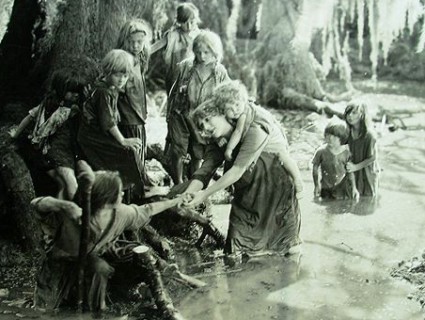
Sparrows (1926) is one of the classics, but I’d not seen it before. It was a new restoration from the Library of Congress, presented with live accompaniment by the Orchestra Sinfonica del Friuli Venezia Giuli, conducted by Hugh Munro Neely, with a score by Jeffrey Silverman. It was a fine piece of music, well attuned to the ebbs and flows of the film, and immaculately played. But the film itself was a disappointment. The general verdict in the histories is that this was Pickford’s last great film; according to some judges, her finest work. The festival catalogue had no hesitation is calling it her masterpiece, and shook its head sorrowfully at some of the contemporary critical comments it received, such as Mordaunt Hall in the New York Times, who said there was “an abundance of exaggerated suspense and a number of puerile ideas”. Well, I’m with Mordaunt. The premise itself is promising, indeed daring. ‘Baby farms’, where orphan and abandoned children were raised for sale to adoptive parents were apparently a 1920s racket, so the film was plucking its story from the headlines. The setting chosen is gothic-horrific – a sinister, otherwordly Southern swamp, in the middle of which Pickford (aged thirty-three, playing seventeen) protects a gaggle of cute ragamuffins from the evil machinations of the evil Grimes (Gustav von Seyfferitz, with limp, because limping is what evil people tend to do), his evil son, evil dog, and browbeaten but undoubtedly just as evil wife. Make no mistake about it, we’re steeped in evil here.

The film throws us in media res, with no explanation of why the children are incarcerated, and no reason given for the cruelty on display. This fundamental lack of root ideas haunts Winifred Dunn’s scenario, whose general weakness impairs the whole film. Heavy reliance on cute (including the alarmingly pudgy Mary Louise Miller as abducted baby Doris, whose middle-class parents bring about the rescue of all the children), cartoon nastiness and the artificial thrills of the chase through the swamp all starve the film of reason. It’s a desperate film that has to introduce marauding alligators. Of course there are felicities. The cinematography – Karl Struss and Charles Rosher (with Hal Mohr), gearing themselves up for Sunrise – captures the eerie tone required, and Harry Oliver’s swampy sets are memorable, though model work lets down the illusion from time to time. As for Pickford, it’s a matter of taste. The festival catalogue called her performance “a virtual primer in the art of silent screen acting”. To these jaded eyes, it was caricature, one film too far in trying to preserve the idea of ‘Little Mary’.

Better was to follow on the Sunday. Which you’ll learn all about in the report on Day Two.

Pordenone diary 2008 – day two
Pordenone diary 2008 – day three
Pordenone diary 2008 – day four
Pordenone diary 2008 – day five
Pordenone diary 2008 – day six
Pordenone diary 2008 – day seven
The sounds of early cinema in Britain

A conference has been announced by the AHRC-funded ‘Beyond Text’ Network, “The Sounds of Early Cinema in Britain” (the AHRC is the UK’s funding council for research into the arts and humanities; ‘Beyond Text’ is an AHRC programme looking at areas of research beyond the printed word):

The AHRC-Funded Beyond Text Network “The Sounds of Early Cinema in Britain” is delighted to announce the dates of the first event:

The Sounds of Early Cinema in Britain: Textual, Material and Technological Sources

Institute of Musical Research and the Barbican, London, UK
Sunday 7th to Tuesday 9th June 2009

The first decades of film exhibition in the UK were characterized by flux and experimentation. Musical and sonic practices were often improvisatory, but always contingent upon the resources available, their stage of technological development, and the exhibition venue itself, which might have been a music hall, fairground, theatre, or purpose-built venue. Elements of performativity and contingency continued well into the sound era; live musical performance long remained a key part of film exhibition in many cinemas.

This conference is the first of four events organised to enable, encourage, and consolidate inter-/cross-/trans-disciplinary research and practical activity in this field. We invite interested parties from all related disciplines to participate. We anticipate that such parties may include early cinema and film researchers, curators and archivists, musicologists, sociologists, historians and theorists of popular culture. As a network event, we are able to offer a substantial number of grants to subsidise travel and accommodation costs for event participants, and will offer two postgraduate student scholarships (UK) to enable attendance. We will send out a call for papers shortly.

As the conference title suggests, the focus of the event is “sources”:

  • What sonic and musical practices existed alongside the exhibition of early film in Britain?
  • What sources are available to assist our understanding of these practices?
  • What are their problems?
  • How may we excavate them?
  • What challenges does Britain face in the preservation of the existing historical legacy of these practices, instruments, equipment, and spaces, and what should take priority?
  • Were distinctive musical practices pursued in Britain, compared to other countries?

Preference will be given to papers with a British focus, though we may be able to accommodate papers that explore the same issues in other national contexts.

Features:

  • Key-note speakers
  • Screenings of silent films with live accompaniment

About the Network:

Through 2009 and 2010, the project will hold two conferences and two workshops as a means of consolidating research and practical activity on sound’s and music’s roles as practiced in the exhibition of early and ‘silent’ cinema in Britain. The second conference will focus more strongly on questions of performance and reception. The two workshops will focus on sound practices in the “silent” era, and on live accompaniment, however conceived (whether improvised and/or historically-informed and/or contemporary).

Principal investigator: Dr Julie Brown (RHUL, UK)
Co-investigator: Dr Annette Davison (Edinburgh, UK)

No conference web address as yet, but beyond the academic-speak (why was the profoundly ugly word ‘performativity’ ever allowed?) this sounds to be a worthwhile event which is certain to attract a good range of interested parties. I’ll publish the call for papers just as soon as it is made.

The passion of Joan of Arc

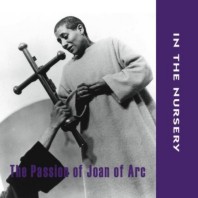
In the Nursery is a Sheffield-based group which has made a speciality of soundtracks to silent films, including The Cabinet of Caligari, Asphalt, Man with a Movie Camera, Hindle Wakes, A Page of Madness and the Mitchell & Kenyon compilation Electric Edwardians. Its latest production is Carl Th. Dreyer’s The Passion of Joan of Arc, which they have been touring since April. A CD of the soundtrack has just been released, which, we are ressued, “reflects the film’s dramatic highs and lows – from the emotional close-up photography of the trial through to the fevered final scenes surrounding Joan’s death”. More information on the In the Nursery site, which has ample information on recordings and shows, with an MP3 download section.

There’s no such thing as a bad home movie

Frame still of Mavis and Margaret Passmore (holding a piece of 35mm film), from the Passmore family films, c.1903, held by the BFI National Archive

So says John Waters, and while we’ve probably all sat through some relative’s earnest document of their holiday abroad and wished that some of the panning shots of scenery could have been a little shorter, he has a point. Home movies aren’t to be judged by the usual film rules. They are made for an interior purpose; every frame speaks to a select family audience which alone can decode the film’s particular references. And yet, as time passes, and such films turn up in archives, they then speak in a different way to us all, as we see the manners, the customs, the backgrounds, the clothing, the choice of subjects, that make these films such rich social historical documents. Moreover, in other people’s home lives, we see our own. In all these respects, there can be no such thing as a bad home movie.

Image from a Kinora portrait record of the polar explorer Ernest Shackleton and his son Edward, c. 1912, from http://www.jates.co.uk

Home movies are as old as cinema. They were produced throughout what was the silent era in commercial cinema, and continued to be shot silent for several decades thereafter. Some have argued for the scenes of their family life filmed by the Lumière brothers in 1895-96 to be the first home movies, but these were studied compositions for commercial consumption. However, cameras and projectors were soon aimed at the amateur market – indeed, in those first years of cinema some believed that the real money would be made by targeting the home. After all, the Kodak camera had shown where the business lay for still photography. Probably the first motion picture device for amateur use was the Birtac, a camera-printer-projector utilising 17.5mm film, introduced by Birt Acres (hence the name) in 1898. The Biokam, developed by Alfred Darling and Alfred Wrench followed in 1899. Gaumont in France came up with the Chrono de Poche, using 15mm film, in 1900. The Lumières themselves were behind the Kinora, a hand-held, flick-card viewer for which you could either have films made of your family as a ‘portrait’ in a studio, or film them yourself with camera using paper negatives (it was patented in 1896 but the first Kinora camera for amateur use appeared in 1907).

See a QuickTime movie of a Kinora in action, from the Royal Collection

Other such systems followed, employing narrow gauges which were cheaper and easier to handle. Initially the film used was flammable nitrate, but in 1912 there came the Edison Home Kinetoscope using 22mm safety film, and in the same year the Pathéscope, or Pathé Kok, using 28mm safety film. However, these were mostly for showing commercial films in the home, and it was 9.5mm film (introduced 1922) that was the format taken up most avidly by amateurs seeking to shoot their own films, though 16mm (introduced 1923) was used by the wealthy, and some of the first home movies in archives are those shot by the well-to-do upper middle class in the 1920s. A rival to 9.5mm that would soon overtake it in popularity was 8mm, introduced in 1932, and Super 8 appeared in 1965.

Thomas Edison with his Home Kinetoscope, introduced 1912, from Adventures in Cybersound

35mm was rarely used for home movies, such was the expense (and the fire hazard), but some examples exist, including what I think must be the earliest surviving home movies, those of the Passmore family of Streatham, filmed 1902-1908 and held in the BFI National Archive. They are a delight (they were shown at the Pordenone silent film festival in 1995). Home movies have grown in importance for film archives, or rather film archives have grown up which value such productions highly because of the way they record people and place. The smaller, or regional film archives around the world, are preserving a picture of our private selves which is likely to be rather more highly valued by future generations than the progressively quaint commercial entertainment films that still dominate moving image archiving philosophy generally.

All of which leads us to Home Movie Day. This is an international event, now in its sixth year, and for 2008 it falls on 18 October. Home Movie Day celebrates amateur film and amateur filmmaking through a wide number of events held locally at venues across the world. The events provide ordinary people with the opportunity to see home movies, show their home movies to others, to discover about home movie heritage, and to learn how best to care for such films. This year there are events taking place in Argentina, Australia, Canada, Germany, Italy, Japan, Mexico, the Netherlands, Slovenia, the United Kingdom, and at many points across the USA. The Home Movie Day site provides information on all the events and the home movie day ethos. In the UK, there will be events in Manchester and London. This is the blurb for the London event:

On Saturday October 18, archivists and film lovers around the world will take time out of the vaults to help the public learn about, enjoy, and rescue films forgotten with the advent of home video. Home Movie Day shows how home movies on 8mm, Super8 and 16mm film offer a unique view of decades past, and are an essential part of personal, community, and cultural history.

Home Movie Day returns to London this year at the Curzon Soho cinema bar. It’s a free event and open to everyone. There will be a Film Clinic, offering free film examinations by volunteer film archivists from the British Film Institute, Wellcome Library and BBC, who will check the film for any damage and deterioration, and offer advice about how to store film in the home.

After examination, the films can be passed to one of the projectionists, who will be continuously screening home movies throughout the day.

You don’t need to bring a film to attend and enjoy the event; everyone has a chance to win prizes generously donated by the BFI and Wellcome Collectionjust by viewing any of the films on the day. Prizes include BFI DVDs and tickets to the IMAX.

The archivists can also offer advice about preserving films in film archives around the UK and transferring films to other formats such as DVD so they’remore easily watchable in the home.

Don’t throw your films away; bring them to Home Movie Day!

The London event takes place at 12-5pm at the Curzon Soho, 99 Shaftesbury Avenue, London W1D 5DY. For more information, contact Lucy Smee, at Dearoldsmee [at] gmail.com. The Manchester event takes place at the North West Film Archive.

The history of amateur film remains underwritten, though work has been done of late to remedy this. You could start with by Karen L. Ishizuka and Patricia R. Zimmermann’s Mining the Home Movie: Excavations in Histories and Memories (2007), or seek out Zimmermann’s earlier Reel Families: A Social History of Amateur Film (1995). There’s also Alan Kattelle’s Home Movies, A History of the American Industry, 1897-1979 (2000).

For the cameras and projectors designed for amateur use in the ‘silent’ era, the best source is Brian Coe’s The History of Movie Photography (1981), while the Kinora is covered by Barry Anthony in The Kinora – motion pictures for the home, 1896-1914 (1996). For images and information on narrow gauge film formats from the early period, visit the excellent (if increasingly out of date so far as its name is concerned) One Hundred Years of Film Sizes.

To find out about the work of regional film archives in the UK, visit the Film Archive Forum website. Film Forever is a good online guide to the preservation of films at home. Our history is in your hands.

Bioscope centenary

I cannot let September 2008 pass without noting a modest centenary, which is that of the original Bioscope. On 18 September 1908 The Bioscope, the British film trade journal was first published, having its roots in two earlier magazines, The Amusement World and The Novelty News. It continued as a weekly until 4 May 1932. For most of that period it was published by Ganes Ltd, and edited by John Cabourn. It took its name from what was then a common term for the new venues for exhibiting motion pictures (i.e. cinemas), but which was also known as a type of film projector and a term for fairground film shows. It was a redolent and versatile term, describing both its subject it the widest terms and its own view on the world.

The Bioscope reported on British and world film production and exhibition, reporting the latest news and studio gossip, reviewing films, reporting on technology, interviewing leading figures in the industry, and keeping a sharp eye on the business side of film. For the film historian, it is one of the key primary sources for the study of silent film – certainly in Britain, and with much of great value for film from other nations as well. It was a major source for Rachael Low’s The History of the British Film series, and has been cited in countless studies since, not least on account of the British Film Institute’s library having a complete run.

In recognition of this Bioscope’s honourable forebear, I am going to start up a new series, at least once a month reproducing texts from The Bioscope of 100 years ago. Whether this Bioscope will last another twenty-four years seems unlikely (how long will blogs last?), but we’ll trace how The Bioscope reported on the rise of the cinema business from 1908 for as long as it does.

Bioscope Newsreel no. 7

Bardelys on TV
Bardelys the Magnificent (1926), the recently-discovered King Vidor feature starring John Gilbert, will get its television premiere on France 3 on 12 October, as part of the Cinéma de Minuit strand. The film will also be appearing the same week on the big screen for the first time in eight decades at the Pordenone Silent Film Festival. Read more.

Conference call
The 30th Annual Meeting of the Southwest/Texas Popular and American Culture Association takes place 24-28 February 2009 at Hyatt Regency, Albuquerque, New Mexico. The meeting covers many aspects of cinema, and the Area Chair for Silent Film is seeking papers and presentations on any aspect of Silent Film. Suggested topics include D.W. Griffith’s art, Garbo, Modern Silent Films and Filmmakers, Bronco Billy and the Rise of the Western, Studios and companies during the silent age, The birth of Talkies, Al Jolson, Lillian Gish, Silent Documentaries, Silent Horror films, Hitchcock’s silent movies, Edison, Birth of Science Fiction and the Fantasy Film, Edwin Porter. Abstracts and titles should be sent by 15 November to Rob Weiner (Rweiner5 [at] sbcglobal.net). Read more.

Quasimodo rocks
Vox Lumiere, the enterprising troupe that puts on rock musical versions of silent film classics, is bringing its intepretation of Lon Chaney’s The Hunchback of Notre Dame to DPTV-Detroit Public TV in the USA. The production is scheduled to air in December as part of the PBS National Pledge Drive. Read more.

Memories of Lloyd
The Ghent Film Festival, which runs 7-18 October, is including a retrospective of Harold Lloyd comedies, under its ‘Memory of Film’ section. The films featured are Movie Crazy, Safety Last, Speedy, and the sound film Welcome Danger. Read more.

‘Til next time!