Paul Merton’s Silent Clowns

paulmerton3.jpg

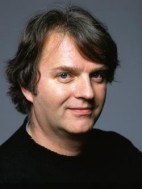
Television comedian and silent cinema champion Paul Merton will be hosting a special programme of silent film comedians, including Chaplin, Keaton, Fatty Arbuckle and Charley Chase, with music by Neil Brand, at Plymouth Pavilions on 27 November 2007 – some time off, but tickets are on sale now. Merton has written a book, Silent Comedy, which will be published in October 2007. Look out for plenty of publicity and events around that time.

Update: See later post, Paul Merton on tour, for a list of his November-December tour dates, with links to the theatres.

Reading Robb

I’ve now got my copy of Brian J. Robb’s Silent Cinema (see earlier post) and indeed it is quite poor. It’s sloppily edited, has numerous errors, spells names wrongly (Adolph Zuker, Brit Acres, D.W. Griffiths etc), and unashamedly regurgitates every dubious myth about silent film you can think of. It’s also very oddly structured – chapters on the origins and developing art of film, then a chapter on Georges Méliès, then straight into sections on directors, stars and clowns, followed by scandals, a quick round up of international silents, then potted descriptions of some classic titles, and on to the coming of sound.

I wouldn’t recommend it to anybody, except for the DVD that accompanies it. This is a generous 193 mins compilation put together by Sunrise Silents. The quality of the clips is poor, the accompanying music is cheap, and there’s nothing to tell you what the film clips are unless to refer to a back page of the book. But the sheer range of clips is very impressive, so here’s a listing (the dates aren’t given on book or DVD, so The Bioscope comes to the rescue):

  • Johnny Hines – Conductor 1492 (1924)
  • Mary Pickford – Little Annie Rooney (1925)
  • Harold Lloyd – I’m On My Way (1919)
  • Pola Negri – Hotel Imperial (1926)
  • Rudolph Valentino – Son of the Sheik (1926)
  • The Gish sisters – Orphans of the Storm (1921)
  • Douglas Fairbanks – Wild and Woolly (1917)
  • Greta Garbo – Joyless Street (1925)
  • Laura La Plante – The Cat and the Canary (1927)
  • Buster Keaton – Cops (1922)
  • Norma Talmadge – The Social Secretary (1916)
  • Rin Tin Tin – The Night Cry (1926)
  • Raymond Griffith – The Night Club (1925)
  • Colleen Moore – A Roman Scandal (1919)
  • Lon Chaney – The Phantom of the Opera (1925)
  • Louise Brooks – It’s the Old Army Game (1926)
  • Charles Chaplin – The Star Boarder (1914)
  • Clara Bow – My Lady of Whims (1925)
  • William S. Hart – The Ruse (1915)
  • Pearl White – The Perils of Pauline (1914)
  • Lige Conley – Air Pockets (1924)
  • John Barrymore – The Beloved Rogue (1927)
  • Theda Bara – The Unchastened Woman (1925)
  • Our Gang – The Big Show (1923)
  • Mabel Normand – The Extra Girl (1923)
  • Alla Nazimova – Salome (1923)
  • Gloria Swanson – Teddy at the Throttle (1917)

All are American except Joyless Street (German), and, no, I’d never heard of Johnny Hines or Lige Conley either…

Moving Pictures

Oh to be in Washington, as this exhibition sounds excellent. Moving Pictures: American Art and Early Film is running 17 February-20 May at the Phillips Collection, 1600 21st Street, NW, Washington, DC 20009. As the blurb says, “This exhibition will present American realist painting from the late 19th and early 20th centuries side-by-side with the earliest experiments in film. Approximately 100 works, including nearly 60 short films (a few minutes long) by Thomas Edison, the Lumière Brothers, and the Cinémathèque Française, along with works by American masters such as George Bellows, William Merritt Chase, Thomas Eakins, Maurice Prendergast, and John Sloan, will provide a new context for looking at the artists’ choice and presentation of subject matter. For the first time, film will be fully integrated into the history of American art.”

The connection between art and early film is a fascinating subject that needs to be explored more. The work of chronophotographers like Eadweard Muybridge, trying to capture reality through sequence photography, had a particular fascination for realist artists like Frederic Remington, whose paintings of horses must be seen in the light of Muybridge’s famous achievement of photographing a galloping horse. And then the emergence of moving pictures themselves provided an extra challenge for artists who had already had to face up to photography, provoking them into new ways of expression. The early filmmakers were the first surrealists!

Picture Perfect – Landscape Place and Travel in the British Silent Film

Picture Perfect

http://www.amazon.co.uk

In 2003 the British Silent Cinema Festival explored the theme of landscape, location and travel in the British silent film. The idea originated from an oft-levelled criticism of British cinema, that it was overly studio-bound, dependant on theatrical traditions and therefore felt stagey, cramped and confined. Over 100 films later, festival attendees could conclusively nix this judgement and revel in the delightful outdoorsiness of our film heritage. Our landscape is still in many ways the biggest selling point of British Cinema today, this book surveys the origins of the use of the British location, both actual and fantasy, in film.

Picture Perfect: Landscape, Place and Travel in British Cinema Before 1930, edited by Bryony Dixon and Laraine Porter, and published by University of Exeter Press, is now available.

Silent Cinema

Silent Cinema

http://www.amazon.co.uk

Silent Cinema by Brian J. Robb is a new publication on the subject for the general reader that seems to have come out of nowhere. The author has previously written books on Johnny Depp, Keanu Reeves and Brad Pitt, while for for Kamera Books this is their first book. The blurb promises: “Through a study of the earliest origins of cinema to the stars, comedians and directors who became popular from the late-Victorian ear [sic] to the end of the 1920s, and including a look at the earliest Hollywood scandals of the time, ‘Silent Cinema’ will be a handy guide to the art of cinema’s silent years in Hollywood and across the globe.” It also comes with a DVD including extracts from Son of the Sheik, Phantom of the Opera, The Perils of Pauline, Salome and Orphans of the Storm. And it’s only £5.95 on Amazon.co.uk at the moment. Must be worth a punt.

Festival in Amsterdam

Here’s some blurb on the upcoming biennial film festival in Amsterdam next month:

“From 11 until 15 April, the Filmmuseum in Amsterdam will be holding its third Filmmuseum Biennial. During this biennial film festival, the Filmmuseum will be showing silent films together with live performances of new soundtracks. Special finds from the historical film collection will also be presented. Visitors will be able to enjoy gems from film history in some forty screenings, many complete with musical accompaniment by, for example, classical ensembles, contemporary composers and DJs.

Restorers have been working behind the scenes of the Filmmuseum to safeguard films from the early period of cinema (1895-1928) and restore them to their former glory. The museum has gained international recognition with its much-discussed restorations and presentations of silent films from its collection (Beyond the Rocks, Menschen am Sonntag), complete with new soundtracks which are often performed live.

EVENING SCREENINGS ACCOMPANIED BY LIVE MUSIC
A set of five highlights resulting from the restoration efforts of both the Filmmuseum and the festival’s guest, the Österreichisches Filmmuseum, can be seen during the Filmmuseum Biennial. Under the slogan, a ‘feast for the eye and ear’, musicians and composers were invited to compose new scores. Singer, musician and composer Fay Lovsky will perform her own ‘soundscape’ during the showing of the opening film The Floor Below (C.G. Badger, 1918), a unique find from the Filmmuseum’s collection. In a performance in the Paradiso venue, a DJ will translate the energy of Dziga Vertov’s images in The Eleventh Year (Odinnadtsatii, 1928) in compelling electronic beats, bleeps en riddims. Composer and musician Corrie van Binsbergen gives Jacques Feyder’s L’Atlantide (1921) a new dimension with a mix of jazz, ‘grooves’ and ethnic music. Moreover, the Filmmuseum invited Rainer Hensel, the composer who used to create the soundtracks for Theo van Gogh’s films, to make a new score for Such Men are Dangerous (Kenneth Hawks 1930) and the Biennial curator Martin de Ruiter has written a new score for the Austrian classic, Der Mandarin (Fritz Freisler 1918), which will be performed by film and theatre orchestra Max Tak.”

Further information on the silent films and their musical accompaniment is here.

How to Run a Picture Theatre – part 4

Back to the 1910 [correction – probably 1912] publication How to Run a Picture Theatre (see previous posts). Having attended to the location, exterior and lobby, it’s time to consider the auditorium itself. As before, the emphasis is on convincing the potential cinema owner of moving on from the slack, short-termist practices of the past and make the venue the sort of attractive proposition likely to attract a loyal clientele.

The Auditorium. The good impression created by the outside appearance and the entrance lobby is of no avail if it is not sustained by the auditorium.

The prosperity of the picture theatre depends upon its attracting a regular patronage. The evanescent visitor is of but little use to the exhibitor, except as a walking advertisement spreading the fame of the show and thus attracting other patrons …

For floor covering, it is becoming increasingly universal to use a good carpeting instead of linoleum. There is something in the feel of a velvet pile that sub-consciously suggests and conveys the impression of luxury …

Cinemas had been established on the principle of attracting a passing trade, but as it became clear that film was no flash-in-the-pan then new strategies were called for. Cinemas were becoming a long-term investment. Cinema owners also needed to take far more notice of fire precautions and cleanliness. Disinfectants were not only used on the building but on its customers as well. It was common for attendants to pass up and down spraying people with sweet-smelling disinfectant. Cinemas were not known as flea-pits for nothing, but is remarkable that there seems to be no evidence of audiences protesting at such patronising treatment.

Precautions from Fire and Disinfection. … every well-equipped building should contain a plenitude of automatic sprinklers, hand grenades and the like. It should also be well provided with fire hydrants, and it is well to give the staff a periodical turn out in order …

In a theatre well equipped with fire appliances the audience experiences an added degree of safety and the likelihood of panic is reduced to a minimum …

The interior of the theatre should also be well disinfected not only after each performance, but during the time the pictures are being shown. There is a multiplicity of sprayers and deodorising compounds on the market, most of which are of great service not only in warding off disease but in keeping the atmosphere pure and sweetly scented…

As deodorisers, Pinozal, Ozone, Empire Essence are probably the most effective.

Next, raking. Early shop-shows inevitably had a level floor. To enable everyone to be able to see the film, an inclined floor was essential.

The Rake. The floor must be inclined from screen to rear, a good rake being one in ten. Steps should always be avoided, as when the hall is in semi-darkness, accidents are likely to happen, with consequent actions at law, besides which, in an emergency, steps militate against a speedy emptying of the house.

And then there was the screen. Numerous types were available on the market. Intriguingly, the recommendation here is for a coated plaster screen. The reference to ‘daylight’ means those cinemas which were experimenting with an auditorium lighted during the performance, as some had expressed concern over audiences being left in the dark. It did not catch on.

The Screen. There are many kinds of screen, patent and otherwise, daylight and mirror, but the best is generally said to be one of plaster built into the wall and coated with preparation.

Interestingly it is recommended that seats not be too comfortable lest people stay too long. Most cinemas operated on a continuous show policy where people could come in when they liked and stay as long as they like, with the assumption that they wouldn’t stay forever to see the same programme shown over and over again. A surprise recommendation is for somewhere for people to place their hats, not least so that they could have hands free to hold the cup of tea that many cinemas provided.

Seating. Tip-ups for seating cannot be beaten, and care should be taken to see that they are comfortable, but remember that you do not wish your audience to remain the entire evening unless you are giving a one house a night show …

It is well to have a centre, as well as two side aisles where floor area permits. The sides can be used for entrance and the centre for exit. Give as much space as possible between the rows of seats, from 2ft. 6in. to 3ft. is a fair distance …

It is a good idea to have hat racks under the seats, as these not only conduce to the comfort of those who are considerate enough to remove their hats, but leave the hands free to hold the cup of afternoon tea, or the program, or what not.

Lastly, attention is given to the decor, and ventilation. Early cinemas, filled with smoke, could be unpleasantly fuggy. But fresh air was clearly something of an alien concept for some cinema owners.

Decoration and Upholstery. … most of the architects, builders, decorators and exhibitors are making a grave mistake, in having the interior walls and ornaments of light colours. Such colours will suit an opera house, but not a moving picture theatre. Sombre colours will undoubtedly bring out better effects from the screen …

A good plan is to have the panels in a rich red colour with the border of still a darker shade, and have all the plastic ornaments painted imitation walnut or mahogany …

Ventilation and Heating. There are still a great many showmen who, incredible as it may seem in this enlightened day, still have no artificial means of ventilating their theatres, or what is just as bad, depend entirely upon the electric fan revolving on a shelf or bracket, and simply churning up the air in the room, without renewing it.

Ventilation means change of air … Ventilation is good for everybody …

All healthy persons accustomed to living in fresh air, having to sit for three or four hours in an over-heated atmosphere, invariably experience the sensations, first of drowsiness, followed by headache, then a period of lassitude, and almost entire prostration …

The advent of a ventilating genius who could succeed in revolutionizing our present method of ventilation would be welcomed by all right livers and true thinkers. Certainly the ventilation of some of our picture theatres, music halls, and public buildings is anything but satisfactory …

The British Westinghouse Electric and Manufacturing Company, Ltd. stands in the forefront amongst firms manufacturing ventilating apparatus …
British Silent Cinema programme

The British Silent Cinema Festival programme has now been published. Among the new features are the Inaugural Rachael Low Lecture (named after the leading historian of British cinema) given by Professor Sir Christopher Frayling; a special presentation by Charlie Chaplin authority Frank Scheide, ‘Chaplin, Costers and London Street Life’; and Andrew Higson on ‘Crime and Deviancy in the Picture House’. The festival runs Thursday-Sunday 26-29 April.

Researching patents

Hale’s Tours patent diagram

Among the many remarkable research resources available online for those interested in the technical aspects of early and silent cinema, some of the most important are patent records. There are three major sites:

Google Patents

Still in Beta mode, this enables you to search across 7 million US patents, from the 1790s up to last year. The records come from the United States Patgent and Trademark Office (see below), and the information is all in the public domain. You can search for patent number, inventor, assigneee, classification or date. It helps to know something about the patent process to get the best results, and don’t search for a product name – these rarely feature in patent descriptions. Search results provide the patent number etc, plus a copy of the patent document itself – Abstract, Drawing, Description and Claims.

US Patent and Trademark Office (USPTO)

The patent data and images on Google Patents all derive from the USPTO Patent Full-Text and Image Database. This is an alternative search option, better suited for professionals and research experts. As with Google, it only lists US patents.

esp@cenet

For European patents, including British, you have to go to the Europe Patent Office’s esp@cenet service. From the main site you choose your country of interest: Britain is http://gb.espacenet.com. The search options are more or less the same as above, but care should be taken over searching by patent number, for which you need to add a country code and year.

Here are two examples to try out:

George Hale’s 1905 design for a a film show is a mocked-up railway carriage which rocked to and fro, marketed as Hale’s Tours (US patent 800100) [illustrated above]

George Albert Smith’s 1906 patent for a motion picture colour system, later to be called Kinemacolor (Patent no. 26671, or GB190626671)

British Silent Cinema Festival

The British Silent Cinema Festival hasn’t published its full programme as yet, but there is a guide to screenings and presentations which gives a good overview. The theme of the festival is Underworld: Crime and Deviancy in the British Silent Film, and it is being held at the Broadway, Nottingham, 26-29 April. The festival, co-organised by the Broadway and the BFI, is in its tenth year (time has flown…), and as usual it will feature a mixture of screenings, papers and special presentations in the informal manner which the festival has established so successfully for itself. Anyway, here’s the blurb:

Underworld: crime and deviancy in the British Silent Film

26 – 29 April 2007

Where did the crime film originate? Joseph von Sternberg’s silent masterpiece Underworld (1927) [illustrated] is often cited as the first gangster film and the prototype for the genre, spawning the crime thrillers of the 30s, film noir of the 40s and the more recent mob films like The Godfather and Goodfellas. But what came before that landmark film? This year’s British silent film festival examines the antecedents of the crime film; unearthing rare glimpses of master criminals and serial killers, legendary detectives and international terrorists. Looking at adaptations from some of the best-known crime writers, Conan Doyle, Sax Rohmer, Edgar Wallace, we uncover crimes of passion, politically motivated crime, and crimes concealing Society’s dark secrets. Drawing on the extensive collections of the BFI National Archive, we will also look at both true crime, featuring Nottingham-born villain Charlie Peace and John Lee ‘the Man They Couldn’t Hang’ and crimes of the imagination, from the first ever crime film to Hitchcock’s Ripperesque tale of the London fog, The Lodger.

Screenings and presentations:

  • True Crime on Film: a history of real-life crime films from the earliest days including Mitchell and Kenyon’s The Arrest of Goudie and The Life story of Charles Peace.
  • Crime in silent fiction film: a history of crime stories including the recently discovered first ever crime film Arrest of a Pickpocket (1895) to Hitchcock’s classic The Lodger (1926).
  • Special live cinema event in the atmospheric surroundings of the medieval St Peter’s Church – Hitchcock’s serial killer mystery, The Lodger.
  • British star, Clive Brook in Joseph Von Sternberg’s rarely screened masterpiece Underworld (1927).
  • The First Born (1928) actor/director Miles Mander stars in this society shocker with co-star Madeleine Carroll (39 Steps).
  • Edgar Wallace’s tale of international terrorism The Four Just Men (George Ridgewell, 1921) with introduction by Wallace expert Jeremy Jago.
  • Classic crime series The Mystery of Dr Fu Manchu and The Adventures of Sherlock Holmes and Fred Paul’s macabre Grand Guignol stories.
  • Rarely screened fragments of Britain’s only surviving silent serial, Ultus: The Man from the Dead.
  • Secrets and lies in Victorian England cause criminal deeds in a 1920 adaptation of Charles Dickens’ Bleak House.
  • Bulldog Drummond’s Third Round (1925) directed by Sidney Morgan and starring Jack Buchanan in the title role.
  • Ellie Norwood, one of the great interpreters of our most famous detective Sherlock Holmes on film and a screening of Holmes feature The Sign of Four (1923).
  • Early films of the Salvation Army to mark William Booth’s origins in Nottingham and his connection to Broadway.
  • The International Women Pioneer Film Makers’ Project – presentations and discussion around this international research programme.

Excellent stuff. One film in particular to pick out is Miles Mander’s The First Born (1928), a genuine undiscovered classic, mature in theme and sophisticated in style, which hasn’t had the public profile is deserves largely because the surviving print is marginally incomplete. That, and the fact that it doesn’t turn up in any of the film histories. Shame on them, and well done to the festival’s organisers for having unearthed it.

Booking information from the festival website.