Stephen Bottomore’s The Origins of the War Film

On Thursday 24th May, at 16.15, Stephen Bottomore defends his PhD dissertation Filming, Faking and Propaganda: The Origins of the War Film 1897-1902 at Utrecht University. The thesis deals with the challenges early filmmakers had to face when trying to represent military action at a time when warfare itself changed drastically: no more the heroic charges and clearly defined battlefields. And very soon, officials took measures to regulate and censor reporting. Stephen Bottomore discusses the Greco-Turkish War (1897), the battle of Omdurman (1898), the Spanish-American War (1898), the Philippine War (1899-1902), the Boer War (1899-1902) and the Boxer Uprising (1900). With regard to factual filmmaking, the thesis describes the ongoing professionalisation of war reporting, where one encounters adventurous amateurs, embedded journalists, freelance photographers and finally trained and experienced cameramen sent abroad by production companies. Another aspect of war-related imagery that is discussed extensively are “representations”, or fakes, ranging from rather blunt attempts to sell staged pictures as “the real thing” to emphatically stylized allegorical scenes. It is amazing to see how in such a short period new kinds of representational strategies, ways of filmmaking, and forms of exhibition emerged. Stephen Bottomore presents an extraordinary wealth of documents, this is most certainly the most thorough exploration of the subject to date.

On Friday 25th May, a workshop will be organised by the Onderzoeksinstituut voor Geschiedenis en Cultuur (OGC) and the Department of Media and Cultural Studies, Utrecht University: Controlling Early Cinema in Times of War, speakers being Stephen Bottomore (UU), Karel Dibbets (UvA), Nicholas Hiley (University of Kent, Canterbury) and Sabine Lenk (Filmmuseum Düsseldorf).
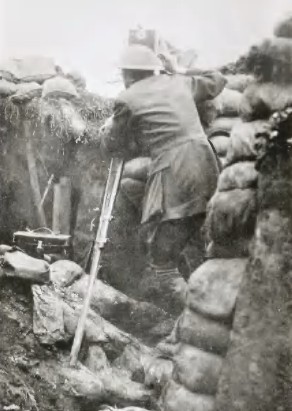
How We Advertised America

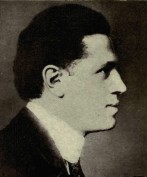
George Creel

George Creel, from How We Advertised America

The Prelinger Archive continues to publish public domain texts on the Internet Archive, on all kinds of subjects. Among the latest batch is George Creel’s How We Advertised America, published in 1920. George Creel was a journalist and campaigner on social issues who was put in charge of the Committee on Public Information in 1917. The CPI was America’s official propaganda outfit during the First World War, tasked with ‘selling the war’ to Americans. As such it was responsible for American official films such as Pershing’s Crusaders, America’s Answer, Under Four Flags, and the newsreel Official War Review. The Creel Committee, as the CPI was also known, recognised the importance of film as a medium to persuade the public, but it was mistrustful of the film industry, and the film industry was reluctant to be exhibiting propaganda. It had huge troubles getting its films onto American screens. Nevertheless, it produced a stream of footage from its team of Signal Corps cameramen which was issued in the form of persuasive documentaries and the regular newsreel.

After the war, Creel published the controversial How We Advertised America, which called for the use of the methods in commercial advertising to be used for official promotion of America. It’s an important source for understanding the context in which propaganda films were produced during the First World War, the first time the medium had been used extensively by national governments as a tool of mass persuasion. The book is available as a free download in PDF (65MB), DjVu (21MB), b/w PDF (20MB) and TXT (906KB) formats. See also Kevin Brownlow’s book The War The West and the Wilderness for a good acount of the work of Creel and the CPI.

O living pictures of the dead

Having posted that item on Geoffrey Malins’ book How I Filmed the War on his experiences of filming The Battle of the Somme, I thought it would be good to share with you this poem by that sturdy defender of Empire, Sir Henry Newbolt, which is his response to seeing the film. The title of the poem is The War Films, and it was written in 1917. Not everyone who saw the actuality films from the Western Front may have reacted it quite so religiose fashion, but it does indicate how profoundly moved many were by the sight, how the films triggered a profound sense of the great sacrifice being made by the troops. And it does have two particularly haunting opening lines:

O living pictures of the dead,
O songs without a sound,
O fellowship whose phantom tread
Hallows a phantom ground —
How in a gleam have these revealed
The faith we had not found.

We have sought God in a cloudy Heaven,
We have passed by God on earth:
His seven sins and his sorrows seven,
His wayworn mood and mirth,
Like a ragged cloak have hid from us
The secret of his birth.

Brother of men, when now I see
The lads go forth in line,
Thou knowest my heart is hungry in me
As for thy bread and wine;
Thou knowest my heart is bowed in me
To take their death for mine.

More poems may follow in future posts, but meanwhile I strongly recommend Philip French and Ken Wlaschin’s Faber Book of Movie Verse (1993), which has many poems about silent cinema stars and cinema-going, both contemporary and written in retrospect.

How I Filmed the War

Geoffrey Malins

The latest addition to the Bioscope Library is Geoffrey Malins’ How I Filmed the War: a record of the extraordinary experiences of the man who filmed the great Somme battles etc. (1920). Malins was one of two British Official cameramen who filmed the Battle of the Somme in the summer of 1916 (the other was J.B. McDowell). The film that they shot was considered so outstanding that it was compiled into a feature length documentary (earlier Official war films had been much shorter), entitled The Battle of The Somme. It was first shown in London in October 1916 and was unquestionably a sensation. It is estimated that half the British population saw its unprecedented scenes of life for British troops on the Western front, with scenes of battle, troops going over the top, and the wounded. Malins’ book is vainglorious but rich in detail, a unique document of the making of what Nicholas Hiley has called the most socially significant British film of the twentieth century.

It’s available for free download from the Internet Archive, in PDF (24MB), DjVu (6MB) or TXT (532KB) formats. The film itself has been recently digitally restored by the Imperial War Museum, with remarkable effect, and a DVD release with new score is promised.

‘Tiger’ Sarll

Tiger Sarll

Strolling about the second-hand bookshops, on a beautiful warm Spring day, I chanced upon Adventurer Extraordinary: The Tiger Sarll Story (1961), by Godfrey Lias. His is a tall story well worth telling, if not always believing. Thomas Henry William Bang-fee Sarll (Bang-fee came courtesy of the Chinese minister to London, a family friend) was born in 1882, and originally trained as a doctor. In 1899 he enlisted with the South African Light Horse in the Anglo-Boer War, where he was wonded and lost the sight in his left eye. He next became a big game hunter in Africa (a curious choice for someone who was a life-long vegetarian), then joined the Royal Canadian Dragoons. He returned to London, where he became an actor, including films. He next dabbled in journalism, travelling to Morocco in 1907, and after further world travel (including Argentina and the Mexican revolution) became a cameraman for the British newsreels Warwick Bioscope Chronicle, Pathe’s Animated Gazette and Williamson’s Animated News. He seems not to have been very good as a cameraman (having just the one eye may not have helped), but nevertheless was sent off by Pathe to film the Balkan War in 1912. Reports suggest that his expedition cost £600 without obtaining any good footage, though the BFI database lists one film taken by him at this time of a Turkish retreat (the date of 1915 is an error). He was sacked by Pathe, but clearly had a persuasive gift as he was taken on by Williamson, for whom he filmed the 1913 Derby, then on the outbreak of the First World War he was taken on by Transatlantic and filmed scenes in Belgium, though his footage was never used.

Sarll was the archetypal English eccentric, dressing in spats and monocle, and dominating everyone with his 6′ 4″ height and powerful personality. After the war he returned to Morocco to report on the rebellion against the Spanish, then went Mexico to capture pythons and alligators for zoos. On his return, he started up a circus act, handling snakes and alligators. He was a fire-fighter during World War, and ended his extraordinary career as security officer at a nuclear power station. His biography was published after an appearance on the TV programme This is Your Life, where he notably failed to recognise some of his grown-up offspring (“You’re not one of mine, are you? Which one are you?”).

There’s more about him in his biography on the British Universities Newsreel Database. The picture above is from The Bioscope (5 December 1912) and shows him with his Pathé camera stationed with the Turkish army at Chorlu. [Update: The site is now called News on Screen and the link has been changed to http://bufvc.ac.uk/newsonscreen/search/staff/detail.php?id=33189]

American Memory

Among the very best resources on the web is the Library of Congress’ American Memory site. The purpose of American memory is to provide “free and open access through the Internet to written and spoken words, sound recordings, still and moving images, prints, maps, and sheet music that document the American experience”. Its Motion Pictures section is a marvellous example of this, offering users access to a wide range of predominantly early cinema subjects, all available for viewing and downloading, in MPEG, QuickTime and RealMedia formats.

Each collection is usefully contextualised and indexed, and there are impeccable cataloguing records. The collections with silent film material (both fiction and non-fiction, but chiefly the latter) are:

Needless to say, this is all non-copyright material, one of the consequences of which being that eBay is full of DVDs of early film materials which are simply repackaged downloads from this site.