Motion pictures

Execution of Czolgosz

Execution of Czolgosz with Panorama of Auburn Prison (1901)

This gentle, business-like image comes from one of the most discussed and notorious of early films, Edison’s Execution of Czolgosz with Panorama of Auburn Prison (1901). Leon F. Czolgosz was the assassin of President William McKinley, and Edwin S. Porter and James White journeyed to Auburn Prison in upstate New York, reportedly with the hope of filming Czolgosz’s actual execution in the electric chair. Happily they were rebuffed, but they filmed the outside of the prison on the day of the execution, then back at the studio the Edison team dramatised the scene that had taken place inside, and cut the films together.

Should you wish to, you can see the film on the Library of Congress’ American Memory site, which supplies this original catalogue description:

A detailed reproduction of the execution of the assassin of President McKinley faithfully carried out from the description of an eye witness. The picture is in three scenes. First: Panoramic view of Auburn Prison taken the morning of the electrocution. The picture then dissolves into the corridor of murderer’s row. The keepers are seen taking Czolgosz from his cell to the death chamber, and shows State Electrician, Wardens and Doctors making final test of the chair. Czolgosz is then brought in by the guard and is quickly strapped into the chair. The current is turned on at a signal from the Warden, and the assassin heaves heavily as though the straps would break. He drops prone after the current is turned off. The doctors examine the body and report to the Warden that he is dead, and he in turn officially announces the death to the witness. Class B 200 ft. $24.00

So much that is complex, problematic, mysterious, engrossing and unique about the motion picture is bound up in this short film; in its production, reception and subsequent critical understanding. What exactly does it signify? What is the relationship between the actuality footage and the dramatised? How ‘real’ is it? How do we understand the figure of Czolgosz from what is presented to us? Why did audiences want to see the film, and what exactly did they see in it? It is these mysteries, and in particular the presence of the human body in motion, trailing all kinds of ‘anxieties and preoccupations’ with it, that forms the subject of a new book on early cinema, Jonathan Auerbach’s Body Shots: Early Cinema’s Incarnations, which places the Czolgosz film on its front cover.
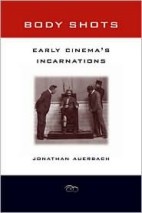
Body Shots

It’s an inelegant title, but a compelling work – quite the best book on early film that I’ve read in ages. Its argument is not one you can summarise easily. Auerbach’s interest is in the earliest years of film before narrative took hold, when the signification of these figures in motion is not straightforward. He does not put forward an all-encompassing theory, but rather raises questions and demonstrates the complexity of an audience’s understanding of the figure in motion. In doing so, he rather lays into the dominant theory in this field, the ‘cinema of attractions’, promoted by Tom Gunning and André Gaudreault in the mid-1980s, and cited religiously by countless students and scholars of early cinema ever since. The theory (to use Auerbach’s words) “posits early films and filmmaking as a mode of showing that privileged immediate shock and sensation over narrative continuity and integration”. So, variety acts, exotic scenes, hand-painted colour, magic tricks – spectacle over story.

I doubt that Gunning himself would say that his should be a theory to explain all film before 1906, but it has become an orthodoxy, as Auerbach states, and he’ll have none of it. For him it is too cosy a solution, too tidy an explanation of what should be perplexing, uncertain territory. He finds the evidence provided by specific films, in their specific contexts, and it is close readings of just a handful of actuality (or pseudo-actuality) films that makes the book such an engrossing read.

Perhaps the book’s tour de force is the chapter on McKinley at Home – Canton, O (1896). This brief film shows the Republican candidate for the presidency, William McKinley, walking across his garden and receiving a telegram, before walking with a companion of out frame. Auerbach tell us the history of McKinley’s campaign (he made a virtue of staying at home), the film’s production (McKinley’s brother was on the board of the American Mutoscope and Biograph Company which made the film), its promotion, interpretations of the film at the time (the message he was receiving could be interpreted how you wished), the participatory nature of its reception (audiences reacting vocally to what they saw on the screen), and the film’s enthusiastic reception by a press largely dedicated to the Republican cause. Four years later, he would be assassinated, and the chapter concludes with a more speculative reading of Execution of Czolgosz.

Auerbach demonstrates the range of strategies and meanings that can underlie such a simple seeming actuality as McKinley at Home. Of course, not all films of the 1890s may yield such a rich contextual history, but it is the potential for such contexts that matters – that, and the relationship between film and audience, each operating in their own particular sphere. None of the profusion of ideas that Auerbach brings to his interpretation of McKinley at Home, Execution of Czolgosz, early Edison and Lumière actualities, The May Irwin Kiss, The Big Swallow, Personal or The Life of an American Fireman seems forced or inappropriate. The themes he takes on include the visualisation of sound, the emergence of the chase movie as proto-narrative, and finally a Barthesian meditation on death and early film, when such bodies cease to move.

The great appeal of early cinema is its receptivity to ideas, its status as a period when no one can be certain of what is going on, just as Auerbach says about the early actualities themselves:

… volition and animation are often at odds rather than coterminous, a fact that gives these early moving images a peculiar kind of affect, suggesting neither filmmakers nor viewers nor bodies on-screen quite knew what to make of or do with themselves. Hence their interest for me.

It seems a new generation of theorists is coming to the field (Auerbach’s background is in literary studies) and dragging early cinema forward or back into the many worlds to which it belongs. Body Shots is not an easy read, but then neither is it a difficult one. It makes films that you may not have seen nevertheless visible, and makes you want to look again with sharper eyes at those you do know. I may not have explained it terribly well, but I do recommend it.

The horse in animation

Gallop!

http://www.amazon.co.uk

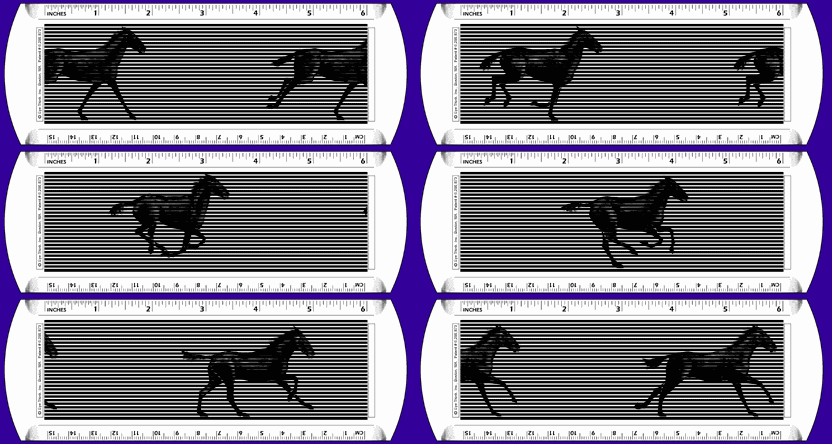
Here’s something intriguing, if somewhat on the fringes of our subject. Rufus Butler Seder’s Gallop! is a very young children’s book, just published, which employs a patented technology, Scanimation. This shows animal figures as a kind of barcode-like strip. The animals move when you open a new page by pulling a scrambled underlying image which lies beneath an acetate strip marked with horizontal bars. Essentially, like silhouetted animations of Muybridge sequence photographs, we see a horse gallop, a chicken walk, a dog run, a cat leap.

The similarity to Muybridge’s work is very noticeable. Seder is described as being “an inventor, artist, and filmmaker fascinated by antique optical toys” and a description of the process points out that it

uses a technology based on the same principles as kinetoscopes, zoetropes, and other nineteenth century antiques that employed an optical illusion using the persistence of memory to create the flow of motion.

(Some confusion over technologies there, but I like the Dali-inspired term persistence of memory over the standard persistence of vision)

It’s not really possible to put over exactly how it looks, so I recommend checking out the children’s section of your local bookshop for the full effect, but Seder’s Eye Think Inc. site displays something of the effect, as in this animated GIF:

Scanimation

http://www.eyethinkinc.com/rulers/horse.html

It’s an intriguing invention, though one suspects that adults are going to be more diverted by the effect than children. Maybe it might register more if it could only generate the effect in colour. But for us it’s a useful illustration of the interconnectness of things: the fascination with optical illusions that led to the optical toys of the nineteenth century which in turn led to motion pictures, and woven into this thread the vision of Muybridge, who sought not simply to make things to move but to capture the motion of real life. And there’s the not unrelated history of the pop-up book (to which Gallop! is to some degree related), three-D, and the wonder of seeing things break out of the confines of a two-dimensional world.

It’s all animation, or animated pictures as the cinema pioneers had it – simply bringing things to life.

Projection Box Essay Awards

The winners have been announced for the inaugural Projection Box Essay Awards 2007-2008 for research into the projected and moving image to 1915.

The judges awarded the first prize of £250 and publication in Early Popular Visual Culture, to Dr. John Plunkett for his essay ‘Selling Stereoscopy 1890-1914: penny arcades, automatic machines and American salesmen.’

“ A thorough and well sustained argument … convincing and very well written … highly original.”
“ A clear and impressive piece of work.”

Second and third prizes of Projection Box books worth £100 went to: Professor Erkki Huhtamo, for ‘Penetrating the Perestrephic: an unwritten chapter in the history of the panorama’

“A fascinating piece of re-constructive archaeology.”
“The range of sources is remarkable …”

and to Christian Hayes for ‘Phantom Carriages: reconstructing Hale’s Tours and the virtual travel experience’.

“… has a good balance between the historical facts and the theorising. A good read.”

The titles of the other entries received and judged were (in no particular order):

  • ‘Early Days of Cinematograph Projection’
  • ‘Hidden History: exploring the lost world of early cinema’
  • ‘From Dioramic Views to a Dissolving Partnership: Banks and Grieves and the “sensation of the age”‘
  • ‘The Outside-in Machine: the Kinetoscope, its films and the Kinetoscope experience in London’
  • ‘Returning to Fear: new discoveries in E.G. Robertson’s Fantasmagoria’
  • ‘Tillie’s Punctured Celluloid’
  • ‘Between Narrative and Expressive Value: notes on deep staging in early cinema’

The aims of the Award for 2008-2009 are to encourage new research and new thinking into any historical, artistic or technical aspect of popular optical media up to 1900; and to promote engaging, accessible, and imaginative work. The deadline for entries of between 5,000 and 8,000 words is 24 January 2009. All details including rules and application form can be found at www.pbawards.co.uk.

Colour, colour and more colour

A call for papers has been issued for a special issue of the Journal of British Cinema and Television on colour in British cinema and television. Organised by the University of Bristol’s ongoing AHRC-funded project on the history of colour cinematography in Britain, the call asks for proposals of 400-750 words to be sent to the editors Simon Brown and Sarah Street by 1 April 2008. Each article (subject to your proposal being accepted, of course) should be no more than 8,000 words and no less than 5,000 words. They are interested in any area that relates to colour and British cinema and television from any period, but are particularly interested in articles on the following themes:

  • Particular colour processes that were used in Britain
  • Early colour television
  • Colour and home movies
  • Colour in feature films
  • Colour and British animation and/or documentary and/or avant-garde
  • Issues of colour restoration
  • The use of colour in contemporary television series such as The British Empire in Colour
  • An interview with someone who has worked with colour or who has particular views on the use of colour in film and/or television (this should not exceed 5,000 words)
  • Textual analyses of the use of colour
  • Colour and theory
  • Colour and audiences

Omnivorous stuff. Details on house style, length and other issues can be found on the Edinburgh University Press website, and the contact details of the editors are simon.brown [at] kingston.ac.uk and sarah.street [at] bris.ac.uk.

Seconds out

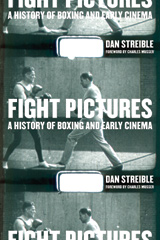
Fight Pictures

http://www.ucpress.edu

The mere mechanical construction of a film projector has been overestimated … it was boxing that created cinema.

So someone once wrote (actually it was me), and even if the statement was done for effect, there’s some truth to it. Cinema was created for a purpose, which was to make money by amusing an audience, and many of the first viewers of motion pictures wanted to see boxing. The Edison peepshow Kinetoscope (first exhibited commercially in 1894) recorded several bouts, albeit specially staged for the camera; the first projected film to be shown commercially was the Lathams‘ Young Griffo v Battling Charles Barnett (first exhibited in New York on 20 May 1895); and films first extended for over an hour when Enoch Rector‘s Veriscope Company filmed the world heavyweight championship of 1897 between Jim Corbett and Bob Fitzsimmons with three camera in parallel, the 63mm film stock being specially designed to frame the full view of the boxing ring – boxing in a very real sense creating cinema.

The history of boxing and early cinema is now to be given its first thorough history with the publication of Dan Streible’s long awaited Fight Pictures: A History of Boxing and Early Cinema. Published by the University of California Press next month, the book covers the rich period where the new medium of cinema collided, or colluded, with the ignoble art, as the the former built up its mass appeal and the latter sought to drag itself out of a state of illegality into legimatised entertainment. It’s a story of technical innovation, exploitation, criminality, fakery, brutality, star power, racial tension, and the rise of mass appeal sport and the media in the early twentieth century.

This history has been researched by Streible for many years now, and it seemed for too long that the book would never come out. It ought to be a crossover seller, appealing both to the early film studies community and the sports history afficionados, to go by his previous writings on the subject.

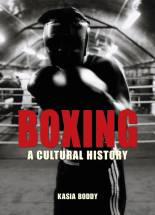
Boxing

But that’s not all. Because in May the enterprising Reaktion Books publishes Kasia Boddy’s Boxing: A Cultural History. I know nothing of the provenance of this work, but it sounds tempting enough from the blurb:

Throughout this history, potters, sculptors, painters, poets, novelists, cartoonists, song-writers, photographers and film-makers have been there to record and make sense of it all. In her encyclopaedic investigation of the shifting social, political and cultural resonances of this most visceral of sports, Kasia Boddy throws new light on an elemental struggle for dominance whose weapons are nothing more than fists. From Daniel Mendoza to Mike Tyson, boxers have embodied and enacted our anxieties about race, ethnicity, gender and sexuality. Looking afresh at everything from neo-classical sculpture to hip-hop lyrics, Boddy explores the way in which the history of boxing has intersected with the history of mass media, and sheds new light on the work of such diverse figures as Henry Fielding and Spike Lee, Charlie Chaplin and Philip Roth, James Joyce and Mae West, Bertolt Brecht and Charles Dickens. This all-encompassing study tells us just how and why boxing has mattered so much to so many.

It probably isn’t going to go into the practical details of how many arc lights the American Mutoscope and Biograph Company employed to photograph indoor fights in 1900, but it does sound like it will give us an eclectic and entertaining cultural history, outlining boxing’s special resonance and appeal, and placing film’s role within that history.

I’ve never been to a boxing match. I can’t watch televised bouts of today. But the history, the characters, the themes of boxing in the past are just so compelling, and – to be honest – the distancing effect of seeing brutal fights only in black-and-white and silently helps sanitise the subject.

To finsh off, here’s an example of how YouTube can serve as an archive bringing life to films you might never expect to see again. Dan Streible himself brought this to the attention of a film archiving list I subscribe to: the Selig Polyscope Company’s 1900 film McGovern-Gans Fight Pictures. It features the lightweights Terry McGovern and Joe Gans, the first native-born black American to win a world title (in 1900). This bout wasn’t for the world title, and it became controversial (and still is, judging from the comments accompanying the film) for Gans reportedly admitting to taking a dive. See what you think.

The film comes from a 1930s or 40s short produced by Forrest Brown, no longer existing in its original 1900 form, so far as is known. Amazing to be able to see such things still, and there’s many more such early fight pictures on YouTube, generally taken from sports shorts made decades later – see, for example, Joe Gans v Kid Herman in 1907 – though many more are lifted from programmes by ESPN, which has the world’s largest collection of archive boxing films, mostly gathered by Jim Jacobs and Bill Cayton of Big Fights Inc., who when they weren’t amassing an amazing collection of fight films were managing the young Mike Tyson. Tyson has probably seen more archive films of boxing matches than anyone. He’s going to love Streible’s book, I’m sure.

19th Century UK periodicals

Here at the Bioscope, when highlighting digitised resources, we tend to go for those that are freely available to all. However, it is worth pointing out some of those which are restricted to subscribers, institutions or educational users, either because you the reader may fall into such categories, or they may be resources that you can find (or request that they be subscribed to) at your local library.

Which leads us to 19th Century UK Periodicals. This new resource describes itself as “a major new multi-part series which covers the events, lives, values and themes that shaped the 19th century world.” It’s being published in stages, and Series 1, on New Readerships, provides access to close to 100 periodicals, mainly based on the collections of the British Library and the National Library of Scotland. Five series are planned, across 600 journals, the others being Empire, Culture, Working Life and Knowledge.

New Readerships is dedicated to the changes and influences in political and rural life, children’s literature and leisure, and includes such varied journals as The Northern Star, The Satirist, British Women’s Temperance Journal, The Boy’s Own Paper, Country Gentlemen, Pick-Me-Up, Little Wide Awake, Fun, Ladies Fashionable Repository, Bailey’s Monthly Magazine of Sport, and Punch.

And there is plenty there for the early film researcher. Using our trustworthy test search term of Kinetoscope, we get 115 hits, starting with The Sporting Times facetiously noting the appearance of “Mr Edison’s latest little toy” in its edition of 20 October 1894, through to The Turf, on 13 October 1900, noting that the racehorse Kinetoscope would be running at the two mile Handicap Hurlde Race at Sandown on Saturday. I’m sure there’s an interesting paper to be written on the undistinguished racing career of Kinetoscope, whose naming after a contemporary technology anticipates Sanyo Music Centre and others of that ilk by several decades.

Other terms such as Cinematograph (215 hits), American Biograph (175 hits), Mutoscope (31 hits), Animatograph (11 hits) or Bioscope (6 hits) bring up results that are fascinating not only for the incidental bits of concrete information they provide (particularly through advertisements), but also for they way they demonstrate how the idea of the medium swiftly became pervasive. You knew about the moving pictures through your light reading, before you might have had any chance to see them.

As an example of what can be find, he’s an intriguing little insight into perceptions and expectations of the medium. The Country Gentleman (27 January 1900, p. 103) is commenting on films at the time of the Anglo-Boer War:

Though several of our variety theatres announce exhibitions of war pictures, they are in reality nothing of the sort, but merely cinematograph pictures of the combatants preparing for the fight, or places of special interest at the present time, such as Pretoria, Kimberley, Mafeking, etc. Sightseers who believe they are going to witness an actual battle have hitherto been disappointed. But in the future this is likely to be altered, for the Warwick Trading Company, through their assistants at the front, have just received a consignment of films representing actual battles, skirmishes, etc., and these photographs are now being rapidly developed. Within a few days, therefore, all of us will doubtless have an opportunity of seeing what an actual battle looks like, and gain some idea of the horrors of warfare.

Fascinating to see that desire for the horrors of warfare to be served up as entertainment in the variety theatres, and the use of term ‘sightseers’ to describe proto-cinemagoers.

You can find out more about 19th Century UK Periodicals from the publishers, Gale. It’s not freely available, and do note these sorts of resources are aimed at (and priced at) institutions, not individuals. So go seek out your local institution.

The Handbook of Kinematography

William Friese-Greene

William Friese-Greene, from The Handbook of Kinematography

Just in at The Bioscope Library is one of the standard technical manuals of the period, and boon to many a film historian ever since, Colin Bennett’s The Handbook of Kinematography. Bennett was a cameraman, inventor (he devised a colour cinematograph process, Cinechrome, in 1914) and regular contributor on technical subjects to the Kinematograph and Lantern Weekly. This handbook, published by the Kinematograph Weekly in 1911, is a thorough and handsomely illustrated account of early motion picture technology and the practicalities of producing and exhibiting films.

It is easiest to give an idea of the range of the book by listing the chapters:

Part 1:
1. Photographic Principle
2. Kinematograph Camera
3. Choice of a Camera Kit
4. In the Field. Scenic Work
5. Topicals
6. The Dark Room
7. Development
8. Positive Making or Printing
9. Tinting, Toning and Titling Positives
10. The After-Treatment of Negatives and Positives
11. Drying
12. Trick Kinematography
13. Rehearsed Effects

Part 2:
1. The Elements of Projection
2. Persistence of Vision
3. Apparatus used in Projection
4. The Illuminant. Electricity
5. Limelight and Minor Illuminants
6. In the Operating Box

Part 3:
1. Acting before the Kinematograph (by Henry Morrell)
2. Playing to Pictures (by A.E. Taylor)
3. The Still Slide
4. The Kinematograph Camera Abroad
5. Scientific and Technical Kinematography
6. Self-Preservation in the Trade
7. Management of a Picture Theatre
8. The Law and the Kinematograph

All you needed to know, really. Some of Bennett’s understanding of film history is askew (particularly his patriotic championing of William Friese-Greene’s nebulous achievements), but for the motion picture technologies of the day his knowledge is prodigious, leavened with a lot of practical commonsense, and the illustrations alone (along with some contemporary advertisements) are a rich source of information. The book is available from our old friends the Internet Archive, in DjVu (16MB), PDF (44MB), b/w PDF (19MB) and TXT (689KB) formats.

The spice of life

One of the frustrating things for the online early film researcher has been the lack of film reviews available from the film trade press, as opposed to those in newspapers, whose digitised availability has been covered here several times. One exception in the Pacific Film Archive’s Cinefiles database, mentioned recently. Another is the venerable American film journal Variety, a selection of whose archive reviews are being put online.

It’s only a selection, so one hopes that it will continue to grow, but what’s there already is choice stuff, not least because they’ve selected some of the more familiar titles from the silent era. Seaching is either by word or by year, with a calendar of hyperlinks to individual years (some of them divided up into quarters). So, for the earliest year of the archive, 1914, you can find reviews on The Battle of the Sexes, The Escape, Home Sweet Home, Judith of Bethulia, Tess of the Storm Country and Tillie’s Punctured Romance. While for 1923 you get Anna Christie, Safety Last, The Christian, The Covered Wagon, Fury, Hollywood, The Hunchback of Notre Dame, Our Hospitality, Peg O’ My Heart, Ruggles of Red Gap, Scaramouche, The Ten Comandments, The Three Ages, The Wandering Jew and A Woman of Paris. Quite a year.

As a sample (from 1923) of what you’ll find, here’s that rarity for the time, Variety saying something positive about a British film:

The Wandering Jew

Stoll. Director Maurice Elvey; Screenplay Alicia Ramsey

Matheson Lang
Hutin Britton
Malvina Longfellow
Isobel Elsom
Florence Sanders
Shayle Gardner

With this Stoll picture Matheson Lang established a right to be regarded as a screen star. Throughout his impersonation of the Jew, condemned to wander through the ages, arrogant, proud, though broken-hearted, ever within reach of happiness, but always overtaken by disaster just as he is about to grasp his heart’s desire, is masterly.

The story follows the Temple Thurston play fairly close. In the opening scenes we see the Jew, Matathias, and his lover, Judith, his reviling of the Saviour on His way to Calvary and the dreadful outlawry which sent him into the world a wanderer. Thirteen hundred years pass and he is among the Crusaders; again a lovely woman loves him, but again fate stands between him and happiness, and so the story goes down the years until at last the Inquisition gives him the peace and eternal rest which before have always been denied him.

Spectacularly, the production is very fine and the subject is treated with great reverence by Maurice Elvey.

Conversely, here’s Variety in 1928 somewhat at variance with posterity, dismissing a film now widely considered to be one of the outstanding masterworks of the silent cinema:

The Wind

M-G-M. Director Victor Seastrom; Screenplay Frances Marion, John Colton; Camera John Arnold; Editor Conrad A. Nervig; Art Director Cedric Gibbons, Edward Withers

Lillian Gish
Lars Hanson
Montagu Love
Dorothy Cumming
Edward Earle
William Orlamond

Some stories are just naturally poison for screen purposes and Dorothy Scarborough’s novel here shows itself a conspicuous example. Everything a high pressure, lavishly equipped studio, expert director and reputable star could contribute was showered on this production. Everything about the picture breathes quality. Yet it flops dismally.

Tragedy on the high winds, on the desolate desert prairies, unrelieved by that sparkling touch of life that spells human interest, is what this picture has to offer. It may be a true picturization of life on the prairie but it still remains lifeless: and unentertaining.

The story opens with an unknown girl, Letty (Lillian Gish), from Virginia, train-bound for her cousin’s ranch, which she describes as beautiful to the stranger, Roddy (Montagu Love), who has made her acquaintance informally.

Roaring, blinding wind and sandstorms immediately frighten the girl. She remains in a semi-conscious state of fright throughout, excepting at the close of the picture.

At Beverly’s (Edward Earle) ranch the girl becomes too popular with Cora’s (Dorothy Cummings) children and is forced to leave. The girl then accepts a proposal from Lige (Lars Hanson), whom she had laughed at the night before. During a round-up of wild horses, brought down by a fierce northern gale, Roddy forces his way into Lige’s home and stays there for the night with Letty.

All in all, a very welcome selection of classic reviews (which goes on up to the present day), which hopefully may be expanded in due course.

Through Savage Europe

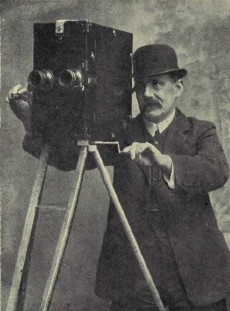
Harry de Windt

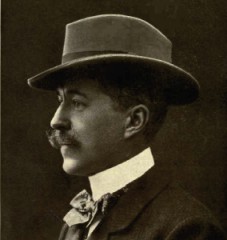
Harry de Windt

Just added to the Bioscope Library is Through Savage Europe: Being the narrative of a journey (undertaken as special correspondent of the “Westminster Gazette”), throughout the Balkan States and European Russia. This is an account of a journey through the states of Bosnia, Herzegovina, Montenegro, Servia (as the book has it), Bulgaria, Rumania and Russia in 1907. This was the area that was soon to experience conflict through the Balkan Wars of 1912-13, then to be the powder keg that helped start off the First World War.

Of interest to us is that the author, journalist and adventurer Harry de Windt, took a motion picture cameraman with him. This was John Mackenzie of the Charles Urban Trading Company, to whom De Windt refers throughout:

My sole companion was Mr. Mackenzie, of the Urban Bioscope Company, a canny Scotsman from Aberdeen, possessed of a keen sense of humour and of two qualities indispensable to a “bioscope” artist – assurance and activity. Nothing daunted my friend when he had once resolved to secure a “living” picture, and I trembled more than once for his safety in the vicinity of royal residences or military ground. For the bioscope was a novelty in the Balkans and might well have been mistaken for an infernal machine!

Relatively little is said of Mackenzie’s actual work (he left before de Windt went on to Russia), but the interest is in his very presence, in the tie-up with a British newspaper (the Westminster Gazette), and in the Balkans as a topic of sufficient interest to audiences at home to justify the expense of organising such a venture. Here is the motion picture medium as a news and documentary force, bound up with the other news media, reporting on a remote locality of pressing interest to British audiences (Urban had sent out a cameraman to the same area in 1903 to film a Macedonian uprising against the Turks) who could read it up in the papers and then, suitably briefed, see it all with interested eyes on the motion picture screen.

For the record, this a list of the films taken by Mackenzie (sadly, none is known to survive today):

Roumania: Its Citizens and its Soldiers (22 scenes, 420 feet)
Herzegovina, Bosnia and Dalmatia (22 scenes, 710 feet)
Montenegro and the Albania Alps (14 scenes, 350 feet)
Life and Scenes in Servia (17 scenes, 435 feet)
Bulgaria and its Citizens (18 scenes, 800 feet)
Bulgarian Infantry (18 scenes, 410 feet)
Bulgarian Cavalry and Artillery (17 scenes, 415 feet)

Mackenzie would go on to become a leading Kinemacolor cameraman, shooting many of the earlier productions demonstrating the colour process.

Through Savage Europe is available from the Internet Archive in DjVu (14MB), PDF (38MB), b/w PDF (17MB) and TXT (439KB) formats.

Laterna Magica – Magic Lantern

Porcelain figures

Porcelain figures of 18th/19th century magic lanternists, from http://www.fuesslin.de

A major new book on the magic lantern has just been published. Laterna Magica – Magic Lantern (vol. 1), by Deac Rossell, is the first in a two-part history which, as the publisher’s blurb indicates, looks at the subject not simply as a precursor of the cinema but as a phenomenon with a rich cultural history of its own:

This first volume covers the 17th and 18th centuries, plus the travelling lanternists – often Savoyards – who brought projected entertainment across Europe through the turn of the Nineteenth century. “Laterna Magica / Magic Lantern” is an attempt to bring together into a single narrative parts of lantern history that have previously been treated separately. It follows the central theme of the projected image in depth while simultaneously recognising the diverse and multifaceted offshoots produced by magic lantern culture.

We often think of the magic lantern today as the “precursor” of the movies and modern digital media; this it undoubtedly was. But at the same time, the magic lantern in its day was not a precursor of anything, but was a sophisticated instrument through which news, entertainment, and visual delight was projected for families, informal groups, and, ultimately, public audiences at fixed shows who enjoyed the elaborate and extraordinary visual rhetoric produced by highly skilled showmen.

The book is published by Füsslin Verlag in a bilingual (German/English) edition (the publisher’s website is bilingual too), and looks set to become a standard work. It also has 113 illustrations, most of them in colour. Deac Rossell is one of the world’s leading historians of the popular optical media of the nineteenth century and before, as well as having been at one time head of the National Film Theatre in London.

Buy one, and have your friends look upon you in awe at your erudition and taste…