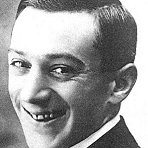
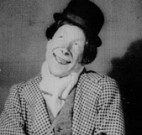
The protean Neil Brand

Neil Brand

http://www.neilbrand.com

Those passing through central London early this evening would have heard the unexpected tones of a piano being played in the middle of Trafalgar Square. There, in the chill October air, beneath Nelson’s Column was a huge screen, and beside it beneath a canopy, elegantly accoutred in black tie and pounding said piano for all he was worth, the one and only Neil Brand. He was accompanying screenings of Blue Bottles (1928), a comedy made by Ivor Montagu, starring Elsa Lanchester, and based on an idea by H.G. Wells (allegedly he wrote just the single line: “Elsa blows a whistle”, and the rest of the action just followed), and the silent version of Hitchcock’s Blackmail (1929). Crowds sat on the steps, stood beside the fountains, stopped by on their way home to look this curiousness, or just walked on by, oblivious or bewildered. It was a rather magical experience.

Neil was on top form, naturally, and Neil watchers should be aware that he is going to be seen or heard in the next few days displaying his talents as musician, writer and actor. His tour with Paul Merton for their Silent Clowns show is taking silent comedy films around the UK, from 10 November to 9 December. In a few weeks’ time, his new radio play, Seeing it Through, on the covert First World War British propaganda outfit (whose outputs included film), Wellington House, will be broadcast on BBC Radio 3. More on that nearer the time. And tomorrow, he appears at the Canterbury Festival as Mark Twain, Rudyard Kipling, Kier Hardie, Edward Burne-Jones and several others in Queen Victoria’s Diamond Jubilee, a multi-faceted entertainment written and presented by yours truly.

Pordenone diary – day four

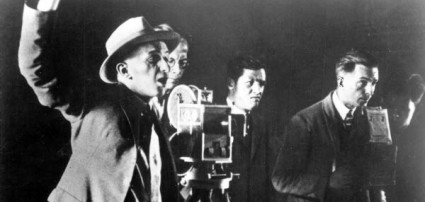
E.A. Dupont filming Das Alte Gesetz

E.A. Dupont directing Das Alte Gesetz, from http://www.juedischesmuseum.de

Every Pordenone Silent Film Festival has the one outstanding title, a feature generally previously neglected or unknown, whose exhibition here revives its reputation and gets everyone talking. This year the palm d’or undoubtedly went to E.A. Dupont’s Das Alte Gesetz (1923). Ewald André Dupont has had a revival in reputation of late, owing to the visibility of his late British silents Moulin Rouge (1928) and especially Piccadilly (1929), and in the reference books he always gets a warm mention for Varieté (1925), one of the cast-iron classic silents, and a shake of the head in sorrow for the sharp dip in his career that occured with the arrival of sound.

Das Alte Gesetz has been more listed in filmographies than seen, but it is close to a masterpiece. Set in the mid-nineteenth century, it tells the tale of a young Jew, Baruch (Ernst Deutsch), who breaks away from his Orthodox village background and stern rabbi father to become an actor in Vienna. So it is reminiscent of The Jazz Singer in theme, but it is the technique and style that distinguish the film. Dupont knows how place people within the frame, how they move within that space, how to capture the tensions between people, how to film intensity. With the help of superb sets by Alfred Junge, he deftly contrasts the humble, ritualised Jewish life with the elegant, no less ritualised Viennese society, personnified by Henny Porten poignantly playing an archduchess attracted to Baruch. The portrait of theatrical life, from ramshackle touring theatre with its wobbly sets to the formalities of the Burgtheater are beautifully drawn, and Deutsch (excellent) ably persuades us of an adolescent enthusiasm for performance which gradually reveals real dramatic talent. It is the resolution of his new world with his past that forms the core of the film, and his stern father’s painful acceptance of his son’s new life is memorably drawn by Avrom Morewsky. Most touching is the scene where he apprehensively picks up a book of Shakespeare’s plays (we see Baruch in Romeo and Juliet and Hamlet), which he tries to open back-to-front (i.e. as though a Jewish religous text) before reading it and discovering that the truths that his son understands are not so far from those that govern his life. The film looks superb (photography by Theodor Sparkuhl) and ought eventually to find a DVD release. It certainly merits screenings at other festivals.

Annie Bos

Annie Bos, from http://www.stadstheater.nl

Das Alte Gesetz was heady stuff for 9.00am. It was followed by four titles featuring the great star of Dutch silent cinema, Annie Bos. No, I hadn’t heard of her either. She was popular through the teens in Holland, graduating from slight social comedies to melodramatic diva roles in imitation of the Italian actresses Lyda Borelli and Francesca Bertini. She started out in comedies about two naive Dutch girls, Mijntje and Trijntje. In Twee Zeeuwsche Meisjes in Zaanvoort (1913) we see a somewhat plump Annie as one of the duo who go to the seaside and… well, that’s about it, they go to the seaside, and they improvise some comedy, and passers-by in the background stare on in amusement. Boerenidylle (c.1914) is similarly unencumbered by narrative. Annie is courted by her farmhand boyfriend, nothing dramatic happens at all, and the scenery is beautiful. Full-on drama comes with the delirious De Wraak van het Visschersmeisje (The Revenge of the Fisherman’s Girl) (1914). Exploiting the availability of an exotic dancer who employed snakes in her act, this impressively ludicruous mini-drama has two characters savaged by a quite sizeable python, which brightened up the audience no end. The feature-length Toen ‘t Licht Verdween (1918) showed a slimmed-down Annie in full diva mode, as a woman whose growing blindness causes her the loss of her composer husband, while a hunchback organist who truly loves her tries to save her, only for her life to end in suicide.

We should turn to René Clair for some light relief, but alas in the 1920s he was still finding his way as a filmmaker, and Le Fantôme du Moulin Rouge (1925) was disappointingly conventional and ponderous. It tried to introduce fantasy elements – the hero is able to float disembodied through Paris, viewing events but unable to affect them – but it was uncertain whether to adopt a light or serious tone. Starewitch also seemed a little off-form with Liliya (1915), a curious attempt to illustrate the invasion of Belgium in 1914 with insects, and Dans les Griffes de l’Araignée (1920), a rather confusing drama involving spiders.

Wifi at Pordenone

To round off the day, here’s a telling scene taken in the early morning, before the festival office had been opened, but with the wifi service switched on. From right to left, Dennis Doros of Milestone Films, Thomas Christensen, curator at the Danish Film Archive, and Minnie Hu, a student at the University of Washington and journalist for the Seattle China Times.

Pordenone diary – day two

You could always go to the Pordenone Silent Film Festival, not see any films at all, and still have a marvellous and rewarding time. Some, it would appear, do just that. The weather is gorgeous, the restaurants inviting, every street is strewn with the chairs of pavement cafés, and much negotiating over the higher and lower politics of film archives goes on. It is the place where alliances are made, projects are hatched, and deals are done.

The Bioscope, however, rose with the lark (should they have such in Italy) on day two and headed for the Verdi. At Pordenone, screenings start at 9.00am in the main cinema and run til around 1.00pm, then resume 2.30pm, stop again around 6.00pm, then after supper it’s back for the final long haul from 8.30pm to midnight or so. There’s a second, smaller theatre, used for repeat showings and video screenings, the Ridotto. Had you seen everything at the Verdi on the Sunday, you would have seen seventeen titles. Many come with intertitles other than English, so earphone translation is provided. I have a stubborn belief that if a film is well-made enough, not knowing the language of the titles is not a problem – the pictures alone will suffice. This doesn’t entirely work, but I shunned the headphones, and just about got by.

First up was a selection of American shorts on social interest themes from the forthcoming Treasures from the American Film Archives III DVD. Regrettably, I missed The Black Hand (1906), the first Mafia-themed film and The Cost of Carelessness (1913), an educational film with a scene of children watching an educational film (OK, not everyone’s idea of a thrill, but I’d have been intrigued to see it). So, we kicked off with The Hazards of Helen: Episode 13 – The Escape on the Fast Frieght (1915). Not an obvious choice for a selection of films on social themes, but it was argued that Helen’s (Helen Holmes) position as a railroad telegraph operator assumed by her co-workers to be too feeble to do anything made an interesting social comment on the many women office workers of the time. Because, of course, Helen heroically fought villains across the top of the carriages of a speeding train, before returning to her job where no one was any the wiser about her. It’s not always realised that many of the early serials were not cliff-hangers, but rounded off the story neatly at the end of each episode, before resuming much the same narrative with the succeeding episode. Bud’s Recruit (1918) was a two-reel recruiting drama, where a group of neighbourhood kids form themselves into a ramshackle troop, led by all-American Bud, but it is his effete, bespectacled elder brother who by accident ends up joining the army – and of course discovering that it has made him into a true man. So a bit resistible in theme, but well-made – the director was King Vidor. Lastly in this set there was Labor’s Reward (1925), the one surviving reel of five from a dramatised history of unionism produced by the American Federation of Labor. It put particular emphasis on the exploitation of women workers, and begged audiences to buy only from shops which advertised union-made products. Quite fascinating, and a highly-polished production too.

The Cameraman's Revenge

The Cameraman’s Revenge, from Wikipedia

Pause for breath, then down go the lights for the first of the Ladislaw Starewitch strand. The reason for this seemes to have been a fine touring exhibition of artefacts and photographs of Starewitch’s work which was on display, but the films themselves were a mish-mash of old restorations. We saw Mest’ Kinematograficheskogo Operatora (The Cameraman’s Revenge) (1911), Prekrasaia Lukanida (The Beautiful Lucanid) (1910) and Rozhdestvo Obitatelei (The Insects’ Christmas) (1911), all products of Starewitch’s mindboggling idea to make stop-frame animation films using models of grasshoppers, stag beetles and such like. The Insects’ Christmas was a special delight, Santa Claus climbing down off a Christmas Tree to wake some insects out of hibernation and to treat them to their own festivities.

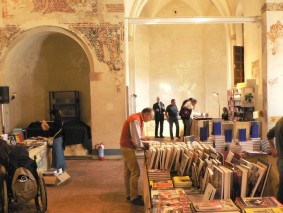
Pordenone Film Fair

Pordenone Film Fair

I missed the German film Rivalen (1923) as I had to go to my own crucial pavement café negotiation (the fruits of which you’ll have to wait until January 2009 to see), then to the Pordenone book fair, a fascinating mix of sturdy academic volumes on improbable themes in a multiplicity of languages, and posters, photographs and tattered memorablia for the cinema of the childhood of many of the older festival goers – but such is Pordenone.

The afternoon kicked off with Entr’acte (1924), first off in the René Clair retrospective, with musical accompaniment of Erik Satie’s score by two pianists, Barbara Rizzi and Antonio Nimis. What more is there to say about one of the great jeu d’esprit of avant garde cinema, originally a filmed interlude shown between the two acts of the Dadaist Francis Picabia’s notorious ballet Relâche? The central action is a funeral procession, with the mourners initially lollopping along behind in mock-serious manner, before having to speed up to a manic rush as the hearse (pulled by a camel, naturally) gets faster and faster. A promo-reel for the festival was projected on the outside of the Verdi at night, which included this magical sequence, like so:
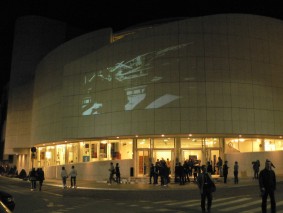
Teatro Verdi at night

Teatro Verdi at night, showing promotional video with scene from L’Entr’acte

Another strand was The Other Weimar. This initially puzzling title introduced the German cinema of the 1920s that we seldom see. Thanks to the studies of Kracauer and Eisner, much of the studies of German cinema at this time has focussed on Expressionism and the fevered productions whose themes seemed to anticipate the nightmares of Nazism. This strand showed the work of the directors who did not get round to making Caligari or Metropolis – those who tended to make the films that people actually went to see.

Wege Zu Kraft und Schönheit (The Way to Strength and Beauty) (1924-25) was a surprise inclusion, being a health, dance and sports documentary, albeit a popular one at the time – probably on account of its liberal displays of nudity. It was an example of the Ufa studio’s documentaries, or Kulturfilme, and most entertainingly had the festival-goers squirming in their seats as its theme of the need for us to get up off our backsides and start walking seemed all too relevant. Though it was a bit long and repetitive, it was made with mocking wit and some style, with plenty to fascinate fans of dance (including Mary Wigman and Tamara Karsavina) and sport (Babe Ruth, Helen Wills, Charley Paddock). And the keen-eyed would have spotted Leni Riefenstahl in her first film, no doubt picking up ideas for Olympia twelve years away, as a maid in a Roman bath sequence.

I cannot now remember what crucial meeting it can have been that led me to miss Fatty Arbuckle in The Cook (1918) and Max Davidson in the immortal Pass the Gravy (1928), but I hope it was really important.

In the evening, Jean Vigo’s A Propos de Nice (1930). We had been promised Michael Nyman playing his own piano score, but he was unwell, and was replaced by one of the Pordenone regulars, John Sweeney – who was magnificent. The films at Pordenone are accompanied by a small team of pianists, generally hidden from view beneath the stage, with a monitor showing them the action and headphones translating the titles. This year we had Neil Brand, Gabriel Thibaudeau, Günther Buchwald, John Sweeney, Stephen Horne, Donald Sosin, Phil Carli and Antonio Coppola. High praise to them all. A Propos de Nice is surprisingly amateurish in places (they didn’t know much about focus), but its cumulative vision of the human madness on display in Nice confirmed its greatness.

To mark the fiftieth anniversary of the Hungarian Film Archive, the evening’s feature film was Csak Egy Kislány Van a Világon (Only One Girl in the World) (1930), the first Hungarian sound film, though most of it was silent with sonorised score. This was the tale of two war veterans who love the same woman. She falls for the livelier, he falls for another woman when he travels to the city, his friend brings them together again, culminating in a sentimental rendition of the title song. It was a simple yet curiously appealing piece with the quality of a folk tale and a structure in movements that seemed to cry out for its expression as a nineteenth-century symphony. The heroine was played by the 18-year-old Márta Eggerth, now aged ninety-five, who remakably was not able to be at the screening because she is still working (as a teacher of singing). But David Robinson, the festival director, called her on the phone afterwards, and we were treated to the extraordinary experience of listening to this lively woman who sounded as spirited and lively as she had been in 1930, while she experienced the oddness of having her telephone conversation warmly applauded by an invisible audience.

And so to bed.

RIP Marcel Marceau

Marcel Marceau

Marcel Marceau

So farewell then to Marcel Marceau, the world-renowned French mime artist, who has died aged 84. His inspiration was the great comedians of the silent era, and his several films and many television appearances in a way carried on the art of silent film comedy, even if the art of Chaplin, Keaton, Lloyd and co was about rather more than simple mime. They did not engage with an invisible, imagined world; they faced a very visible reality head on. Their pantomime helped them speak to all, but it was the way they reflected social experience that gave them their true popularity.

Slapstick, European-style – part 4

Slapstick Blog-a-Thon

We conclude our survey of European pre-WWI film comedy for the Slapstick Blog-a-Thon with a look at the comedy troupe, Les Pouics.

Les who? The Pouics are little known as a name now, but they were France’s version of the Keystone Cops – their predecessors, in fact, since the group was formed in 1910, two years before the Keystone company was created. They were formed by the director Jean Durand, who joined the Gaumont company in 1910 as its director of comedy films. He quickly established a troupe of comedy performers with the necessary talents to help feed the conveyer-belt system of one-reel film production, as audiences worldwide demanded their weekly dose of comedy. Les Pouics, or Les Pouites (‘bedbugs’), on occasion billed under this name, supplied a team of comedians with precise acrobatic and pantomimic skills, suitable for all occasions, and with more than a gift for chaos.

Onésime et le Dromadaire

Onésime et le dromadaire (1914)

We know the names of several of Les Pouics. Most notable at the time was Ernest Bourbon, who starred in Gaumont comedies 1912-14 as Onésime, films whose penchant for arresting absurdity (camels in living rooms) endeared him to the Surrealists. A Pouic who would work with the Surrealists directly was Gaston Modot. Just another member of the comic team when he first worked for Durand in 1910, Modot appeared in many Onésime and Calino films, before enjoying a notable acting career over many years, working for Abel Gance, René Clair, Marcel Carné (Les Enfants du Paradis), Jean Renoir (La Règle du Jeu) and Luis Buñuel in L’Age D’Or. Other Pouics included Clément Migé, already well-known as Calino, Lucien Bataille, who played the comic character Zigoto (1911-1912), Jeanne-Marie Laurent and Paulos.

Les Pouics were recruited from circus and music hall backgrounds, and specialised in organised mayhem, a wholesale onslaught upon normality. Things existed only that they might be destroyed. Some indication of their working methods can be found in a rare interview with veterans of the troupe reproduced in Georges Sadoul’s Historie Général du Cinéma (1951):

Jean Durand: The set was built on a platform, three metres high, supported by complicated arrangement of beams. On top of that we would build a salon, with sofas, piano, furniture, the whole lot. At a whistle, the stagehands would release the beams. The whole lot would collapse into the room built underneath.

Gaston Modot: Under the floor there would be a ceiling. The fellows and the furniture would crash through it. It was rather like playing water polo. Everyone marked his man. You would say: ‘I’ll take the wardrobe and you the sideboard, and you the seat with the old lady on it’.

Durand: In the salon there would usually be a very proper gentleman who had his top hat on. He would always get the piano. Of course there would be a few newspapers in the hat as protection.

Modot: And those great three-tier scafolds, like we built in Saintes-Maries-de-la-Mer. We’d say, you fall in the mortar, me in the lime and him in the bucket. A motorbike would come and hurl the scafold in the air. We would all fall wherever we had to. It was quite natural for professionals.

Ah, those were the days, when all an actor had to protect him from a falling piano was a top hat with some newspaper stuffed into it.

There was much about Les Pouics that makes one think of the comedy troupe of lasting fame, the Keystone Cops, who created chaos not quite so violent but with the same love of mishap and logical absurdity. But in the fate of the two troupes we see summed up the two histories of slapstick comedy in Europe and America. The European (specifically the French and Italian) comedy of the pre-World War One era, with its roots in the circus, music halls and café concert, delighted audiences around the world but always had an air of the Old World about it. It satirised modernity but was simultaneously at a remove from it. It employed trick effects, magic, and fantasy, a cinema of attractions. The American comic models that were to succeed them, as the war destroyed much of the European companies’ traditional business, were slicker, faster, technically far more accomplished, and imbued with an irresistible flavour of the New World.

So there is a lost world charm about the European comedies of Max, Cretinetti, Onésime, Calino, Kri Kri, Bout-de-Zan, Bébé, Rosalie, Robinet, Little Moritz and Rigadin. Much of the happy spirit, the undying charm of early cinema can be found in their spirited productions, churned out professionally week after week. So many now are lost, just as their reputations have faded, but there are more than enough surviving titles lurking in the archives that really deserve to be brought away from the sole attentions of the specialist and taken to a wider audience. We would all gain a better sense of early film history. And we’d laugh our socks off as well.

This mini-series owes much to the researches of others, especially Richard Abel, Aldo Bernardini, Ivo Blom, David Robinson, and the catalogues of the Pordenone Silent Film Festival.

Slapstick, European-style – part 3

Slapstick Blog-a-Thon

The third part of The Bioscope’s contribution to the Slapstick Blog-a-Thon continues to look at the less familiar side of silent film comedy, that which flourished in Europe (especially France and Italy) before the First World War. Today we round up our survey of the star performers of the period by name-checking some of the other comedians of the period, as a reference source, and as encouragement for anyone to find out more – certainly to see them if you can.

Little Moritz aime Rosalie

Little Moritz aime Rosalie (1911), from Richard Abel, The Ciné Goes to Town

Pacifico Aquilanti – Italian comedian who played Coco (1909-?) for the Cines company, as a response to the success of André Deed’s Cretinetti at Itala.

Lucien Bataille – Gaumont comedian, whose Zigoto character (1911-1912) spoofed the popular detective films of the period; then became Casimir for Eclair (1913-1914).

Paul Bertho – French comedian who created two comic personas for Lux: Patouillard (known as Bill in Britain and the USA), and Gavroche (1912-1914).

Roméo Bosetti – early example of a named comedy series performer, he played the character Roméo for Gaumont (1907-1908), for whom he went on to be a prolific comedy director, before being lured away by Pathé.

Ernest Bourbon – French comedian, adept at combining elegance with acrobatics, who starred in the popular Onésime series (1912-1914) for Gaumont, occasionally being partnered with Calino.

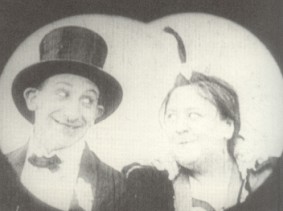
Sarah Duhamel – a former child performer of wide girth who enjoyed much success as Rosalie (1911-1912) for Pathé, in which she was often partnered with Little Moritz. She subsequently played as Pétronille for Eclair (1913-1914).

Marcel Fabre – Spanish clown who worked in France for Eclair and Pathé before moving to Italy with the Ambrosio company and creating the Robinet character (1911-1914), in which he was regularly partnered by Nilde Baracchi as Robinette. His character was known as Tweedledum in Britain and the USA.

Tommy Footit – son of a famous nineteenth-century clown, George Footit (English, but found fame in France), who starred as Tommy for Eclair in 1911.

Raymond Frau – French comedian who established the comic character Kri Kri for the Italian company Cines (known as Bloomer in Britain). In 1916 he returned to France and created the Dandy character for Eclair.

Lea Giunchi – Italian comedienne who played comic foil to Tontolini (played by her brother-in-law, Ferdinando Guillaume) and Kri Kri, but also starred in the Lea series (1911-1914) for Cines. Her son, Eraldo Guillaume, was a child comedian for Cines, Cinessino.

Ferdinando Guillaume – Italian comedian from a circus family who appeared as Tontolini (Jenkins in Britain and USA) for Cines 1909-1911, then as Polidor for Pasquali. Directed many of his films. In later life appeared in a number of Fellini films.

Ernst Lubitsch – one of the great directorial talents in cinema history, Lubitsch began his film career as an actor and made comedies in the character of Meyer (1913-1914)

Clément Migé – French comedian who starred in an early Gaumont comic series, as Calino (1909-1913), a series which demonstrated notable comic invention and delight in chaos. For a short period a rival Calino series was produced by Pathé.

Léonce Perret – a performer and then an important director for Gaumont, he made some sophisticated comic films using the character name Léonce (1912-1914). His comic foil partner was often Suzanne Grandais. He moved to the USA as a director in 1917, returning to France in 1921 to continue a successful career than lasted until his death in 1935.

Moritz Schwartz – diminutive German comedian who played Little Moritz for Pathé (1911-1912), a highly popular series in its time. He was partnered romantically with Sarah Duhamel’s Rosalie for a number of films.

Alma Taylor and Chrissie White – English stars of the Hepworth company’s series of Tilly films (1910-1915), playing gleefully anarchic teenagers (Unity More played Tilly in the first film in the series), as well as many other shorts (dramatic and comic) before both went on to continued success as adults in British feature films.

Ernesto Vaser – Italian performer promoted as the Ambrosio company’s answer to Cretinetti, under the name Fricot (1909-1912?).

And there were so many others, including some female comedians whose character role we know (Cunégonde, Léontine) but not the performers’ names, alas. Countries other than France and Italy produced similar comic series, but these two countries dominated the field – nationally and internationally – up to the First World War. A new kind of comedy was already emerging in America, and would dominate the field in the post-war era.

To find out more, the best place is Richard Abel (ed.), Encyclopedia of Early Cinema (2005), from where much of the information above was taken, especially the entry Comic Series written by David Robinson. Robinson also wrote two classic articles for Sight and Sound, ‘The Italian Comedy’ (Spring 1986) and ‘Rise and Fall of the Clowns’ (Summer 1987), which are wonderfully evocative. An excellent source of detailed information on the French comedians, focussing on extant prints, is Richard Abel’s The Ciné Goes to Town: French Cinema 1896-1914 (1994).

Online, there’s a good article by film historian Ivo Blom on the Italian comedians, ‘All the Same or Strategies of Difference. Early Italian Comedy in International Perspective’. And this section from the 2002 Pordenone Silent Film Festival catalogue, for a season of ‘Funny Women’, has information on Sarah Duhamel, Lea Giunchi, Alma Taylor, Chrissie White, and Suzanne Grandais.

Maybe a little more tomorrow…

Slapstick, European-style – part 2

slapstick_blogathon_luke3.jpg

The Bioscope is taking part in the Slapstick Blog-a-Thon, a four-day festival of blogging on the subject of slapstick. The Bioscope’s contribution is to cover the story of the European comedians of the early cinema period whose work is less familiar to most now, but who enjoyed huge popularity in their day.

Today we look at a particular phenomenon of the period, child comedians. Here are three of the most popular of the period, all appearing in French films.

Bébé apache

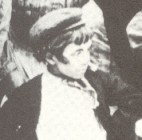
Clemént Mary (1905-1974) was the the most celebrated of the European child stars of the silent period. At the age of five he was employed by the French Gaumont studios to star in a series of comedies under the name of Bébé. Bébé was a cheeky, resourceful character who was invariably far smarter than the adult world around him. Indeed, the common gag in the Bébé films was to place the child in adult situations, evidenced in such titles as Bébé apache (1910), Bébé millionaire (1911) and Bébé candidat au mariage (1911). In the first of those, Bébé’s ability to capture the mannerisms of the Parisian apache, and to play these convincingly and with deft coming timing amid an adult cast is extraordinary. He also played occasional non-Bébé roles. In 1912, Louis Feuillade at Gaumont introduced a new child character into the films, Bout-de-Zan (see below), and won a court case against Mary’s father who had protested at the competition. The father won the right to keep using the Bébé name however, and they moved to Eclectic Films to continue the series until 1916. In adulthood, he changed his name to René Dary and enjoyed a successful career in film and television into the 1970s.

There’s information on Louis Feuillade, Bébé and Bout-de-Zan in the Pordenone catalogue for 2000

See some of his credits (only a small selection of the Bébé films is given) on the IMDB, under René Dary

Bout-de-Zan

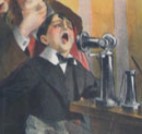
René-Georges Poyen (1908-1968) was taken on by Gaumont in 1908 as a co-star and planned replacement for Bébé, and was given the character name of Bout-de-Zan. Greater comic emphasis was placed on Bout-de-Zan being an ‘adult’ figure, as he dressed like an adult, aped adult mannerisms, and was generally an earthier character than Bébé. He would also often giving knowing looks to the camera, making the audience complicit in his trickery. Bout-de-Zan films stand up as well today as those of Bébé, displaying a cleverness and an apparent delight in peformance which helps override concern one might have at the exploitation of such young children, making films week after week. Poyen also appeared in the Louis Feuillade serials Les Vampires (1915) and Judex (1916). The last Bout-de-Zan film was made in 1916, but Poyen carried on making films into the 1920s.

The Image Entertainment DVD of Les Vampires includes a 1916 Bout-de-Zan short, Bout-de-Zan et l’embusqué

Willy Sanders

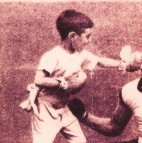
Willy Sanders (or Saunders) (1905-?) was a British music hall prodigy who first appeared on film aged four as a boxer, flooring an adult opponent, in The Man to Beat Jack Johnson (1910). His popularity was sufficient that he was brought over to France to star in the Little Willy series for Eclair, with seventy or so titles being produced 1911-16. Little Willy never had the same appeal as some of the great French child performers, but the series was reliable knockabout fare of the time, with such titles as Willy professeur de skating (1911), Willy diplomate (1913) and Petit Willy soigne la neurasthénie de son oncle (1911). Willy returned to boxing in 1913 for Willy contre le bombardier Wells, where our hero defeats ‘Bombardier’ Billy Wells, the great British boxing hero of the time. He seems not to have had a film career beyond 1916.

Read about Willy in Andrew Horrall’s Popular Culture in London c.1890-1918, which features him on the front cover

Read about The Man to Beat Jack Johnson on Screenonline

There will be more on the Europeans tomorrow…

Slapstick, European-style – part 1

slapstick_blogathon_luke2.jpg

Today, and for the next three days it is the Slapstick Blog-a-Thon, a bloggers’ festival of slapstick organised by Film of the Year. Numerous blogs are taking part, and Bioscopists are warmly encouraged to follow up the other blogs, add comments and so forth.

The Bioscope’s main contribution to the Blog-a-Thon is a survey of the great European comedians of the early cinema, whose names are sadly known only to the few these days, but whose fame once easily matched that of the Keystone stable and other American comics.

Here’s part one…

André Deed

André Deed (1879-1935) was a French music hall comedian whose film career started with Georges Méliès in 1901, but took off when he joined Pathé Frères in 1906. He established a comic character, Boireau, appearing under that name in numerous shorts, and enjoyed a growing screen reputation throughout Europe. The success of the character inspired numerous imitators at other studios, and essentially created the star comedy genre. His film career blossomed further when he joined Itala in 1908 and established a new character, Cretinetti (known as Foolshead in Britain and Gribouille in France). Cretinetti was an engaging mixture of dim-wittedness and sharp-wittedness, readily stumbling into chaotic situations but triumphantly working his way out of them. He went back to Pathé in 1911 and resumed the character of Boireau. He made hundreds of comic shorts in his career, whose anarchic quality seems to ally them with Dada and Surrealism. He made some further Cretinetti films in Italy from 1915, before his career faded away in the 1920s.

Read this essay on early film, Cretinetti and the Modernists

There’s a new book on Deed, Jean A. Gili’s André Deed – Boireau, Cretinetti, Gribouille, Toribio, Foolshead, Lehman… (Le Mani-Cineteca di Bologna, 2005), in Italian

Max Linder

Max Linder (1883-1925) was arguably the greatest of all European silent film comedians, and in retrospect the most tragic. He was born Gabriel-Maximilien Leuvielle but took the stage name Max Linder, and began working in Pathé films, initially in minor roles, from 1905. Gradually he built up the character of Max, a sophisticated, elegant figure with top hat and cane, something akin to the flâneur of literary imagination, who could get caught up in foolery without ever losing his dignity. Max was a natural romantic, though his attempts to win the girl were frequently held up the booby-traps of everyday life. In contrast to the popular European comedians of the day, his style was more subtle, less pantomimic, and his comedy had a touch of grace about it that won his international admirers, none more so than Chaplin. His period of fame started around 1910 and he made hundreds of Max films up to 1914, becoming one of the most popular stars of the screen of that time. The war brought an end to his fame, and though he had a brief period in the USA at the Essanay studios in 1916, he was not a success, and his career gradually petered out. He made a few feature films (such as The Three-Must-Get-Theres in 1922), but he suffered badly from depression, and in 1925 he and his wife committed joint suicide.

There’s a DVD, Laugh with Max Linder, available from Image Entertainment

Find out more about Max Linder on Wikipedia

Pimple

Fred Evans (1889-1951) was second only in popularity to Chaplin in Britain at the height of his career. He was the nephew of a well-known music hall comedian, Will Evans, and trod the boards himself before entering films in 1910 for Cricks and Martin, with the character Charley Smiler. The films were crudely-constructed affairs, but two years later Evans came up with the character of Pimple, a white-faced clown, perpetually accident-prone. Hundreds and hundreds of Pimple films were made, most of them routine knockabouts, but he also developed a taste of parodies, and in films like Pimple’s Battle of Waterloo (1913) he displays a proto-Pythonesque humour of the absurd while sending up the British epic film The Battle of Waterloo. In many of them he collaborated with his brother Joe. His comedy is sometimes held up by a weakness for punning intertitles, and few of his surviving films raise much a laugh nowadays, but at his best his comic inventiveness does indeed point the way to Python, The Young Ones, The Fast Show and a long British tradition of the gleefully absurd. He continued to make many films through the war years, and ended his film career as an extra in the 1930s.

Find out more about Pimple on Screenonline

There’s an excellent essay on Fred and Joe Evans by Michael Hammond in the book Pimple, Pranks & Pratfalls: British Film Comedy Before 1920 (2000)

Rigadin

Charles Prince (1872-1933) appeared in Pathé films as Rigadin, whose character was generally that of a bashful lover. He already enjoyed some fame as a theatre performer before joining Pathé in 1908, and he went on to appear in over 200 Rigadin films up to 1920, writing the senarios for many of them. In Britain and America he was known as Whiffles. Rigadin’s most interesting films were those that took on contemporay themes, such as Rigadin Peintre Cubiste (1912), where he mocked modern art by appearing as an angular figure, and Rigadin aux Balkans (1912) where he plays a war cameraman who gleefully fakes scenes for the camera in France rather than travel to the Balkan War. He ended his film career playing small roles throughout the 1920s and 30s.

More European comedians tomorrow… and don’t forget to read all the other Slapstick Blog-a-Thon posts.

(Acknowledgments to the Encyclopedia of Early Cinema for some facts and figures).

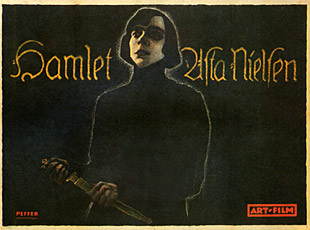
Asta Nielsen’s Hamlet

Hamlet

Asta Nielsen

Just back from the British Shakespeare Association conference, where I was able to tell them about the International Database of Shakespeare on Film, Television and Radio project that I’m supervising. This is an attempt at a ‘complete’ database of all Shakespeare-related titles ever produced in those three media, and so it will of course included all silent Shakespeare films. The ‘interim’ version of the database currently available doesn’t include any silents as yet, and you’ll have to wait for the proper release of the database in summer 2008 to see the full resource in all its glory.

The conference saw the first British presentation (on DVD) of the new restoration of the 1921 German Hamlet, starring Asta Nielsen. A tinted distribution print was discovered recently and has been restored by the Deutsche Filminstitut, using supplementary footage from the French distribution version in the Centre National de la Cinématographie. The film has long been available in black-and-white, but this the first time since the film’s original release that it has been possible to see it in its original colours, the processing work having been done by those acknowledged experts in silent film colour restoration, Haghefilm. The restoration then received its premiere at the Berlin Film Festival.

Hamlet was made for Nielsen’s eponymous production company, directed by Sven Gade and Heinz Schall. It is the best-known of silent Shakespeare films, if not quite (to my mind) the best of those that survive. The extraordinary aspect of the film is, of course, that Hamlet is played by a woman. For this they found academic justification, basing their interpretation on the scholarly endeavours of one Edward P. Vining, whose 1881 book The Mystery of Hamlet posited that the oddities of Hamlet’s behaviour might be explained by the fact that he was a woman in disguise. There had been (and continues to be) a tradition of female Hamlets, including Sarah Bernhardt, a glimpse of whose interpretation was filmed in 1900 (with accompanying sound effects).

Vining’s odd thesis helped legitimise Nielsen’s decision to play the part on film, but it is her luminous, intense performance that justifies it. She is extraordinary in the film, seeking to convey Hamlet’s agonising through diva-like dumbshow alone. The film has its dull patches, plus some unfortunate moments guaranteed to bring out the giggles in a modern audience, since a key aspect of the revisionist plot is that Hamlet is in love with Horatio (cue hoots of laughter when the astonished Horatio discovers, by manual examination, that the dying Hamlet is a woman). Shakespeareans may also be intrigued to find that Claudius dies in a fire, while it is Gertrude who administers the poison which she then drinks by accident – so all of those lying dead at the end of the film are women. The direction seldom rises above the routine, but there is a keen sense of palace life going on while the central figures progressively, and madly, destroy one another. It also gives no sense of a forced conversion from stage to screen – this is a wholly, and successfully reimagined work.

The best thing about the new restoration is its score by Michael Riessler. This blends conventional musical instrumentation with ‘archaic natural sounds’ and electronica. I found it extraordinarily haunting, and sympathetic to the film’s style and performances. The colour is colourful.

I don’t know when the restoration may get further UK screenings, but in the meanwhile, why not take a look at Tony Howard’s newly-published Women as Hamlet: Performance and Interpretation in Theatre, Film and Fiction, which tells the history of women playing Hamlet is a most entertainining and informative way. It has much to say on the film, and has Nielsen on the cover.

Interview with Carl Davis

In anticipation of the screenings of the Chaplin Mutuals at the Cadogan Hall next week (as reported earlier), there’s a short interview with composer Carl Davis on the BBC News Online site:

“There’s a unity about the whole thing, some of it is very autobiographical. I wondered if I could put together a story if I wasn’t locked into doing them in the order in which he made them.”

The result is that the films will not be performed in chronological order but in an order “suggestive of Chaplin’s own life, like a miniature biography”.

Now that is intriguing. For those who want to test out Davis’ thesis, the order in which the films will be shown is: Easy Street, One A.M., The Immigrant, Behind the Screen, The Fireman, The Rink, The Pawn Shop, The Vagabond, The Cure, The Count, The Floor Walker, and The Adventurer.

Read the rest of the interview here.