Award for Kevin Brownlow

The San Francisco International Film Festival is to present Kevin Brownlow with the Mel Novikoff Award. The award, named after the pioneering San Francisco film exhibitor (1922–1987), is bestowed annually on an individual or institution whose work has enhanced the filmgoing public’s knowledge and appreciation of world cinema. The award will be presented to Brownlow on Saturday 28 April at the Castro Theatre, together with a screening of his restoration of The Man in the Iron Mask (1929 d. Allan Dwan), starring Douglas Fairbanks.

The festival website has a fine tribute to Brownlow, ‘The Silent Spokesman’, giving an overview of his achievements in the promotion of the art of silent film, written by Dennis Doros of Milestone Films.

Eadweard Muybridge chronology

zoop3.gif

Stephen Herbert has published an online chronology of the life and work of Eadweard Muybridge (1830-1904), whose sequence photography in the 1870s and 1880s led the way to motion pictures as we understand them. The chronology covers events in his life, and his whereabouts; Muybridge’s published photographs, books, articles, and letters; Muybridge’s unpublished correspondence; correspondence (by others) that mentions Muybridge, where this is useful; books, articles, newspaper reports, advertisements, published during Muybridge’s lifetime, that refer to his life or work. The chronology is still being developed, corrected and expanded. Muybridge’s full achievement is still being avidly researched, and new discoveries are still being made. This is an important new resource from one of the leading Muybridge authorities, who is also promising a Muybridge ‘blog’ in the near future.

Further information:

The Written Word

Today I was looking over an article I located from the Illustrated London News dated August 19, 1922. The title of the piece is “The Birth of the Cinematograph: From Still to Moving Pictures”. This particular article was written by Will Day. Day was an enthusiastic collector of many things, among them some of the early apparatus of pre-cinema and moving pictures. The article is a very interesting document in that it relates much of the pre-cinema history as opposed to traditional moving images. It also has me reflecting on another group of individuals in motion picture history. People such as Day, Merritt Crawford, Earl Thiesen and countless others spent an inordinate amount of time and energy in the attempt to document moving image history. When you think about it, if not for these men, much sole source data such as first person interviews and correspondence might not exist. In many cases actual footage, and equipment is no longer available, so this turns out to be our only method of providing a sense of the history of the Industry. I have found it fascinating in the course of my own research; be it by design or by accident to locate and find written histories left by many more people who played a part in the development of the film industry.

Paul Merton’s Silent Clowns

paulmerton3.jpg

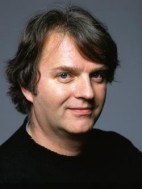
Television comedian and silent cinema champion Paul Merton will be hosting a special programme of silent film comedians, including Chaplin, Keaton, Fatty Arbuckle and Charley Chase, with music by Neil Brand, at Plymouth Pavilions on 27 November 2007 – some time off, but tickets are on sale now. Merton has written a book, Silent Comedy, which will be published in October 2007. Look out for plenty of publicity and events around that time.

Update: See later post, Paul Merton on tour, for a list of his November-December tour dates, with links to the theatres.

Unknown Behind the Lens

Having recently spent a day digging through the historic motion picture records of the U.S. Department of Agriculture at the National Archives, I was constantly coming across the name of George R. Goergens. Mr. Goergens began his career as a still photographer and then transitioned into the position of motion picture cameraman when the Moton Picture Division began in 1914. I have found over 80 titles in existence that he lensed from 1914 through 1936. He shot every type of film: industrial, training, and educational films for the Department of Agriculture Federal Extension Service. With titles such as Cotton Manufacturing (1919), Last Days of the Prairie Dog (1920), Dynamite-Concentrated Power (1926), Highways of Peru (1930), his experience in the area of non-fiction film was unparalleled. He was severely injured at least twice in his career, once while filming an explosion at a grain elevator, and once in a biplane crash about the time of WWI. He was not only an accomplished cameraman, but he also held a patent for a high speed motion picture camera. He produced some animation sequences as well as developed time lapse work to show plant and germ growth. He retired in the mid 1940s, and passed away in 1952. George Goergens is another of the pioneering cameramen who while time has long since forgotten, shows us the film industry was developed in many ways, by many people, some famous, some not, but all left their mark.

Virginia Woolf and suffragettes

The 17th Annual Virginia Woolf conference is being held at Miami University of Oxford, Ohio, 7-10 June 2007. It includes a Virginia Woolf film festival, and a screening of the film Suffragettes in the Silent Cinema, misleadingly described as “featuring satiric clips of nickelodeon melodramas created by early twentieth-century women’s suffrage activists”, the film was compiled by cultural historian Kay Sloan in 2003. What is actually features are films that were made in the silent era which satirised the suffragettes, rather than films made by them, though the film does include clips from the film What 80 Million Women Want (1913), which was made in sympathy with the suffragette cause. Virginia Woolf, incidentally, is one of the most notable of twentieth-century figures never to have been filmed (so far as is known), though she herself wrote interestingly on film in her essay ‘The Cinema‘ (1926).

James Joyce and the Volta

The latest issue of the James Joyce Quarterly (vols. 42/43. 1.4) has a feature section on Joyce on film, which includes an essay by Philip Sicker, “Evenings at the Volta: Cinematic Afterimages in Joyce”. James Joyce was the manager of the Volta Cinematograph, Dublin’s (and Ireland’s) first cinema, over December 1909-January 1910, and remained associated with the business for a couple of months thereafter. There has been growing academic interest in the films ‘programmed’ by Joyce for the Volta, though it is a matter of debate just how much Joyce was aware of the films he was programming, or particularly concerned about them. Sicker provides the closest analysis yet of the kinds of films shown at the Volta during its period under Joyce’s charge, including discussion of extant prints and an exploration of the degree to which traces of these can arguably be traced in Joyce’s own work. A filmography of all titles shown at the Volta December 1909-April 1910, including extant prints, researched by Luke McKernan, was published in Film and Film Culture vol. 3 (2004). It is not easy to find, and any researcher interested in the filmography and the article on the background to the Volta that went with it should get in touch.

Ancestors on board

An important new resource has been released by the UK’s National Archives and findmypast.com. Ancestors on Board is a record of everyone who sailed out of a British port (including all Ireland to 1921) on long-distance voyages from 1890 to 1960, taken from the records of the Board of Trade. The first tranche of data released covers 1890-1899, and there is obviously material there of interest to those interested in the movement of the first filmmakers. For example, it is possible to trace the trans-Atlantic travels of film businessmen, and cameramen setting out to film the Anglo-Boer War in 1899. The name search is free, but there is a charge for viewing images of the ships’ lists or transcripts (it can be a bit pricey unless the person you are searching for had a distinctive surname).

The growing number of online family history resources offer great opportunities for the film historian seeking out data on individuals. Other importance sources include FreeBMD (UK births, marriages and deaths, largely complete for 1837-1900, all freely available) , Ancestry.com (the world’s leading geneaology source, a paid for service but with free trial periods available), FamilyHistory.com (another form of Ancestry.com, with emphasis on American states), FamilySearch.com (The Church of Jesus Christ of Latter-Day Saints’ vast geneaological database, to be used with caution), and Ellis Island Records (a free service with records of all those arriving at New York’s Ellis Island 1892-1924).

Birt Acres on CD

It is perhaps inevitable, given the different trajectories of the twin pioneers of British film, Birt Acres and Robert Paul, that while the latter gets the deluxe DVD treatment from the BFI (see previous post) with book to follow, his one-time partner and later bitter rival Acres has his biography published on CD from a small publisher for the interest of the select few. While Paul became a rich and successful man, noted in all film histories, Acres’ name remains little known, his work unfamiliar even to specialists in the field. Frontiersman to Film-maker: The Biography of Film Pioneer Birt Acres, FRPS, FRMetS 1854-1918, published by The Projection Box, is worth checking out by anyone interested in the earliest years of filmmaking, and in seeing how family history can be used to humanise people from this remote period of film history. The biography is written by Alan Birt Acres, his grandson, and tells the story of the man who was the first person to take and project a 35mm film in the UK. Not all of it stands up to rigorous historical enquiry, but it conjures up a credible picture of the man, is beautifully illustrated, and offers plenty of leads for those keen to research further the still mysterious roots of filmmaking in the 1890s.

Robert Paul on DVD

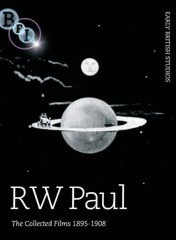
RW Paul

RW Paul DVD cover, from http://www.bfi.org.uk

The British Film Institute has published a DVD of practically all of the surviving films made by Robert William Paul, one of the leading pioneers of British cinema. R. W. Paul: The Collected Films 1895-1908 contains sixty-two films, including comedies, dramas, trick films, actualities from the Anglo-Boer War, Paul’s notorious film of the disastrous launch of HMS Albion in 1898 (notorious because Paul carried on filming after people had been knocked into the water, some fatally, though his boat picked up survivors), travel films from Spain, Portugal, Egypt and Sweden, and news footage of the 1896 Derby and Queen Victoria’s Diamond Jubilee through London on 22 June 1897. The DVD runs for 147 mins, with piano accompaniment by Stephen Horne, and a commentary and booklet by Ian Christie, whose book on Paul comes out later this year.