The colonial gaze

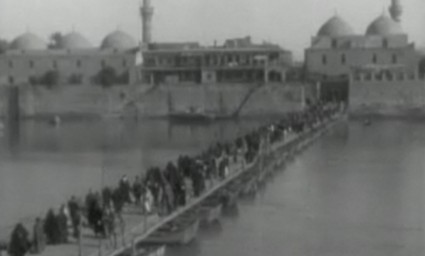
Baghdad (1928), made by British Instructional Films, from http://colonialfilm.org.uk

Colonial Film: Moving Images of the British Empire is a newly-published website supplying information on films about the British colonies. How quaint that sounds. But for a large part of the twentieth-century (and therefore for a large part of the time that there have been motion picture films) the British Empire and its aftermath was assiduously documented on film, dramatised on film, and film traffic between the colonies was much debated and legislated over.

The result is a substantial archive of film about the Empire that is no more which has become a rich source for socio-politcal historians as well as film historians with an interest beyond the familiar. It was to serve such an audience that the Colonial Film project was established, funded by the Arts and Humanities Research Council and organised by Birkbeck College and University College London in partnership with three film archives: the BFI National Archive, the Imperial War Museum, and the British Empire and Commonwealth Museum.

The chief result of this three-year project is the website, at the heart of which is a database of some 6,000 colonial films, taken from the records of the three archives. A lot of these records are available elsewhere i.e. on the databases of the BFI and the IWM, but there is obviously some convenience in bringing them together under this particular subject. The project researchers have added a great deal of background information for some the films, beyond the shotlists that the archives previously produced (some of them typed by these very fingers, a number of moons ago), including ‘context’ and ‘analysis’ sections, which put the films in a modern perspective. The project has also digitised and made available online some 150 titles.

The Stoll Film Company’s Nionga (1925)

The films catalogued range in date from Arrivée d’un train à Melbourne (1896) to RAF Gibraltar Flight Safety Commercials (2005). Our interest, as always, is in the silent film material, and of those 6,000 around 750 are from the silent era, and 32 are available to view online. The films described included actualities, newsreels, drama-documentaries, travelogues, industrial films and fiction films, all evidence of the abiding interest the Empire had for British filmmakers and (to a degree) British audiences.

What I want to highlight here are the films that are available to view, because they are fine collection in themselves. The site comes with some impressive searching tools, including an interactive map of the world for searching by country, and searching by theme (“Empire and Administration, Empire and Development, Empire and Education, Empire and Health, Empire and Independence …”), production company, genre and event. The advanced search option lets you select by date range and narrow searches down to films you can view, so select 1896-1929 and tick the box that says “show only works with videos” and there you are.

Among the treasures to view are three silent feature films, examples of the remarkable (and curiously British) mini-genre of dramas set in far-flung lands (usually Africa) featuring native performers. There is Palaver: A Romance of Northern Nigeria (1928), made by Geoffrey Barkas for British Instructional Films (“Filmed amongst the Sura and Angas people of the Bauchi Plateau in Northern Nigeria, where the rivalry between a British District Officer and a tin miner leads to war”); the Stoll Film Company’s Nionga (1925) (“Nionga, a chieftain’s daughter, is induced by a vindictive witch-doctor to persuade her betrothed lover, Kasari, to plot the destruction of a neighbouring tribe”), for which the filmmaker is not known; and Stampede (1930), made by the adventurers Majour Court Treatt and his wife Stella, filmed in the Sudan (“The film tells the story of Boru, adopted into the ‘Habbania’ tribe after his mother is killed by a lion, who grows up with the Sheikh’s son, Nikitu”).

One watches these curious mixtures of travelogue, ethnography and melodrama with both fascination and bemusement, the latter because to is hard to see how they were ever viewed as commercial propositions. The films attempt to be liberating in how they tell stories of African life with African performers, but the colonialist attitude is revealed in patronising titles, the portrayal of Africans as impressionable and child-like, and the choice presented of good (because paternalist) and bad (because they lead Africans astray) whites in Palaver. Nionga has an all-African cast and so offers the opportunity for a fresh point of view, but titles promising a drama of “a crude life of simple people” and “a glimpse into the minds of Savages” demonstrate that the film is constructed entirely from a Western White point of view. Stampede (which has a music track and commentary) was made by travel filmmakers who added a fictionalised element because it was the only way for them to produce a commercial film. In the end one watches these films not for the dramas imposed upon the performers but for the incidental details of African life that the dramas cannot entirely obscure.
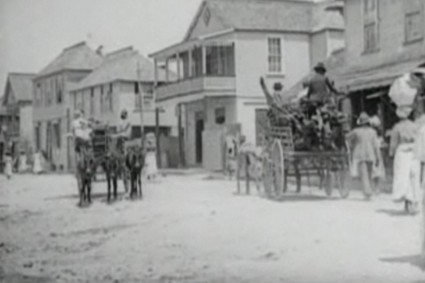
Montego Bay to Williamsfield, Jamaica (1913)

There are other short fiction films: the resoundingly gung-ho How a British Bulldog Saved the Union Jack (1906) and Edison’s drama of the Indian ‘Mutiny’, The Relief of Lucknow (1912). Among the non-fiction films and such gems as the Charles Urban Trading COmpany’s A Trip through British North Borneo (1907); British Instructional Film’s engrossing West Africa Calling (1927); another BIF travelogue of particular interest today, Baghdad (1928); Gaumont’s spectacular record of the 1911 Delhi Durbar ceremonies marking the coronation of King George V; and another Charles Urban production, the Kineto company’s Montego Bay to Williamsfield, Jamaica (1913), a subject apparently filmed in both Kinemacolor and monochrome (alas, only the monochrome survives).

This is an impressive resource, though some are going to find it frustrating to be faced with so many catalogue descriptions that aren’t accompanied by the films themselves. Other might find the contextualisation are little heavy on the political correctness, anxious that we should only interpret these films in the correct way. Ultimately most are not going to be interested in the lessons – either those imparted by the original colonialist filmmakers, or those deduced by modern commentators from a post-colonial point of view. It’s what we are allowed to see of the people, the landscapes, the industries, the townscapes that lingers in the mind. The camera came to observe and report back, but what endures are the individuality and dignity of its subjects and the difference of their cultural milieu. The camera ultimately serves them.

Go explore.
X-ray fiends

http://www.youtube.com/user/BFIfilms

The latest film to go up on the BFI’s YouTube site is G.A. Smith’s The X-rays (UK 1897). I’ve a modest personal interest in this one, because I identified it and catalogued it when I was working at the BFI’s archive, a dozen or so years ago. It came to us as part of a collection of unidentified 1890s/1900s films which arrived the wake of the celebrated Henville collection of 1890s film which caused quite a stir at the time of the centenary of cinema in 1995/96. Amazingly there were a further three or four small collections of unidentified films of a similar vintage which came our way following all the Henville fuss, and The X-rays was among them.

In truth it was one of the easier early films to identify. Having a man carrying a large camera with the word ‘X-rays’ written on the side was a handy clue, and then the two lovers in the film were readily identifiable from other British films of the period – they were Tom Green and Laura Bayley, the latter the actress wife of the Hove filmmaker, George Albert Smith. A quick check in John Barnes’ The Beginnings of Cinema in England (a multi-volume history of 1890s film in Britain) and hey presto – The X-rays, aka The X-ray Fiend, directed by G.A. Smith for GAS Films and marketed by the Warwick Trading Company in 1898. Easy.

The film was one of those you really hoped would turn up eventually, because it would fit so neatly with the interests of early film scholars. It was one of those films you could practically imagine the filmmaker obligingly producing because he somehow knew it would excite the interests for academics 100 years hence. There is the early special effect caused by the cut from the lovers to their appearance as skeletons, the self-referential use of a camera operator, the narrative generated by visual invention, the intimation of the camera (and viewer) as voyeur, and the important alliance between the cinematograph and Röntgen rays.

Röntgen rays? Well, that’s what they were called for a while, because it was German scientist Wilhelm Röntgen (or Roentgen) who discovered them. He won the first Nobel Prize for Physics (in 1901) for his discovery of the electromagnetic rays which could penetrate solid objects. The discovery naturally had a huge effect on medical practice, and created great popular interest. The rays were quite quickly dubbed X-rays rather than Röntgen rays, and that popular interest was taken up by showmen. X-rays became an attraction at fairs and other public shows, and there were a number of showmen who exhibited motion pictures and X-rays as complementary entertainments. There are records of such showmen in America, Britain, across mainland Europe, in Australia, and in Japan, all operating in the mid-to-late 1890s.

Some of them suffered grievously because of it. British showman William Paley emigrated to the USA and exhibited X-rays 1896-97 until he had to give up because of the adverse affect on his health and turned to film shows instead. Another British showman Jasper Redfern combined the cinematograph with X-rays and was eventually to die of radiation-induced cancer (though this was more likely because of his later medical work researching into X-rays and cancer treatment). Other showmen played it say but simply exhibiting lantern slides showing X-ray images, which was safer and a lot cheaper. Other people associated with film experimented with X-rays or used them professionally – Thomas Edison (whose chief X-ray exerimenter Clarence Dally died of radiation poisoning), Auguste Lumière (a medical experimenter when not running his film and photography business) and James Williamson (a high street chemist by profession).

Dr John Macintyre’s 1897 X-ray film of a frog’s leg, plus later footage (c.1909) showing X-ray pictures of a human heart beat and the movement of the stomach after a bismuth meal

And then there were X-ray medical experimenters who used film. In April 1897 Dr John Macintyre of Glasgow combined the two invention to create X-ray cinematography. He demonstrated the motion of a frog’s limbs, showing his film first to an audience of fellow scientists to the Glasgow Philosophical Society and then again on the Society’s Ladies’ Night, thus interestingly crossing the line between science and entertainment. Macintyre’s film survives, as is available to view at the Scottish Screen Archive’s site and on the National Library of Scotland’s YouTube site.

Other scientists of the period experimented with X-ray cinematography as well, among them the Frenchmen Jean-Charles Roux and Victor Balthazard, who filmed the stomachs of animals, also in 1897. Between 1903-06 another French medical research Joachim Carvallo improved on these processes with a specially adapted camera using 60mm (supplied by Lumière) electrically automated to shoot at different speeds, and later experimenters in the 1900s/10s worked on increasing the size of the object that could be investigated by the rays, among them P.H. Eijkman, F.M. Groedel and the great Jean Comandon, who introduced the indirect filming of X-rays, by filming a screen onto which the rays had been projected. X-rays as a screen entertainment quickly died away, but in the field of science they became the subject of the first medical films and an important milestone in the history of medical imaging.

There’s an interesting literature on X-rays and early film. See in particular Richard Crangle’s ‘Saturday Night at the X-rays – The Moving Picture and the “New Photography” in Britain, 1896’ in John Fullerton (ed.), Celebrating 1895: The Centenary of Cinema, and Lisa Cartwright’s thought-provoking study of the relationship between the moving image (especially early film) and physiology, Screening the Body: Tracing Medicine’s Visual Culture, which discusses Macintyre’s work. On X-ray cinematographers and other scientists working with film in the early cinema period, see Virgilio Tosi, Cinema before Cinema: The Origins of Scientific Cinematography.

All of which is yet another lesson never to see early film as a phenomenon that existed of itself, by itself. Film was always tied up with something else – in this case medical science – as it tried to find its place in the world by reflecting the world. It’s what makes early film so interesting.

The art of the benshi

Here’s an interview from the Japanese Times with Midori Sawato, best-known of the small band of voice artists who keep alive the art of the benshi. There are around ten modern benshi in Japan, who continue the tradition of adding live narration to silent films, which was the standard manner in which silent films were exhibited in Japan up to the late 1930s, when – at its peak – there were some 7,000 such benshi in employment. The benshi would be positioned alongside the screen and take on the multiple roles, accompanied by live music, and putting their particular personality onto the film entertainment. Sawato gives around 100 such shows per year.

Sawato has been featured here before, as she is main voice artist featured on Digital Meme’s Talking Silents series of Japanese silents with benshi narration, reported on here. In the interview (which takes a couple of minutes before she gets to silent films) she describes how she was working in publishing in 1972 when she went to a silent film narrated by master benshi Shunsui Matsuda, one of a number of celebrated benshi still active. She became so engrossed by the art that she became his apprentice, making her debut with Chaplin’s The Rink. One of the interesting aspects of the interview is the realisation that benshi narrate for non-Japanese silents as well as Japanese – which is of course how it was during the silent era.

The interview covers how she learned the art (mostly by listening), how she conveys different characters, and her thoughts about the importance of silent film as a means to preserve history and culture. There’s also the oblique admission that she continues to perform to the films despite relatively small audiences, believing that it is good work to be doing whether the audience be large or small. It’s a noble activity.

The video serves as my means to introduce The Bioscope on YouTube. I’ve set up a channel, or playlist, on YouTube which lists almost all of the videos featured on The Bioscope since its inception in February 2007. I say almost all, because some videos have been taken down since then, and some have come from other sites (such as Vimeo). But it’s most of them, and I think they make interesting browsing. I’ll continue to add each new video to the channel as they are featured on the blog. The Bioscope on YouTube is now a link on the right-hand column of this site, alongside our other satellite sites, The Bioscope on Flickr (images featured on or associated with the blog), The Bioscope Bibliography of Silent Cinema (selected from the British Library catalogue, still ongoing), The Bioscope on Twitter (a feed from blog posts only), and Urbanora’s Modern Silents (another YouTube playlist, with some overlaps with the new channel).

Silent animation online

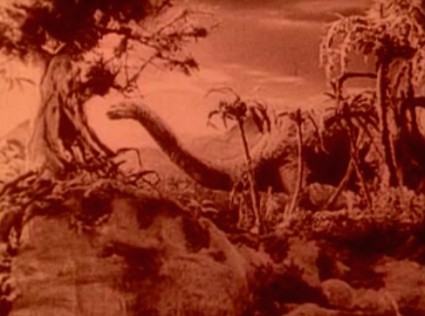
A trailer for The Lost World, from http://animation.library.ucla.edu

Acknowledgments to the Nitrateville discussion forum for news of this latest discovery. The UCLA Film and Television Archive has produced Silent Animation, a section of its website which offers eleven animation films from the silent era for viewing online or download. The films cover all kinds of silent animation productions, including lightning sketches (a ‘lightning’ artist filmed drawing a caricature), hand-drawn animation, stop-frame animation, cut-out animation, animated letters, and films which integrate live action with animation.

These are the eleven film on offer:

A Pool Plunge (1920)
Burr’s Novelty Review
Animator, J.J. McManus

Animated Hair Cartoon (1925)
Red Seal Pictures

Bob’s Electric Theatre (1906)
Pathé frères
Director, Gaston Velle (animation by Segundo de Chomón)

How Jones Lost His Roll (1905)
Edison
Director, Edwin S. Porter

Indoor Sports (1920)
International Film Service
Animator, Paul D. Robinson

Joys and Glooms (1921)
International News Corp.
Animator, John C. Terry

The Enchanted Drawing (1900)
Edison
With, J. Stuart Blackton

The Lost World – Promotional Film (1925)
First National

The Lost World – Trailer (1925)
First National

The Wandering Toy (1928)
Lyman H. Howe Films Co., Inc
Director, Robert E. Gillaum
Animator, Archie N. Griffith

Theatre De Hula Hula (19–)

Each film can be viewed silent, with piano score, with a music score or with a commentary from the film’s preservationist. The download options for each are MPEG-2 (at 8Mbps) or MPEG4 (at 1.1Mbps). You can also view notes by preservationist Jere Guldin and historian Jerry Beck, which are available in longer form as downloadable PDFs. There are also sections giving background information on the UCLA project to preserve and make accessible its silent animation holdings, on the music (commissioned from Michael D. Mortilla), a study guide (which lists many other silent animation films held by the UCLA archive), and an historical overview of animation in the silent era written by Mark Langer, which situates the animation film within the histories of pre-cinema motion picture devices, newspaper cartoons, and early film. As Langer observes, all films at this time were, to a degree, seen as animation films:

Animation’s silent era was a period of discovery and experimentation in which animation was not yet regarded as a separate subset of the cinema at large. Indeed, in the first years of film’s existence as a medium, movies commonly were referred to as “animated films,” based on the principle that all motion pictures were still objects (be they photographs or drawings) magically brought to life through the cinematographic apparatus. What were to be the separate forms of live-action and animated cinema both drew on those pre-existing mass media and entertainments.

It’s a helpful account of the roots of animation film and of the world in which early film in general was situated. All in all this is a most impressive resource, thoughtfully presented with educational and research use in mind. The help notes state that the films are all presumed to be in the public domain; the silent versions are published with a Creative Commons licence “to encourage free and unlimited repurpose for educational use or remix”. All music on the site is copyright Michael D. Mortilla. All written text is published with a Creative Commons Attribution-Noncommercial-Share Alike 3.0 United States Licence.

Lucky us. Go explore.

Video Jukebox no. 1 – The Battle of the Century

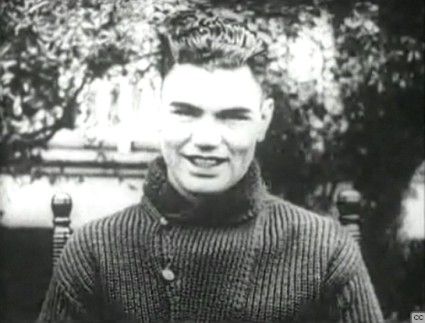
Jack Dempsey centre, Georges Carpentier right, from The Battle of the Century, http://www.europafilmtreasures.eu

Here comes a new series here at Bioscope Towers (though there are number of old series in dire needing of being kept up, I’m aware). There’s not enough done here on single films, beyond the occasional mention of DVD releases, so we’re going to institute Video Jukebox, which will be an occasional series that takes a silent film available online and gives some of the background history – particularly if the site which hosts the film doesn’t tell you that much.

I’m going to start off with The Battle of the Century (1921). I was surprised to see this as an addition to European Film Treasures, as I wouldn’t have suspected that the BFI (which holds the film) would have singled it out as a choice item from its archive – not least because it is not a European film. Nevertheless it is strongly European in theme, Europe v America in fact, and it is certainly a film well worth seeing and with a story behind that is equally worth telling.

It’s 1921, and the jazz age is upon us. It is an age of celebrity fashioned by the newsreel cameras, where to be in the public eye means that you must maintain a constant virtual screen life. The stars to be found in the cinema are not just actors but politicians, royalty, aviators, explorers, artists, socialites and especially sports stars. The barrier between the arena and the cinema was broken down as leading sports events were filmed (with their funding often dependent upon the sale of film rights) and sports stars were pushed into becoming film stars by trying out their acting skills on the screen – generally with painful results.

Jack Dempsey, from The Battle of the Century

Jack Dempsey was one of the stars of the age, in the boxing ring, and on the screen. He wasn’t much of an actor – he appeared in several silents including the serial Daredevil Jack (1920), Fight and Win (1924) and Manhattan Madness (1925) – but his screen presence when fighting, sparring, training or just grinning for the ever-present newsreels was utterly compelling. The pinnacle of Dempsey’s career, fistically and cinematically, was his bout with Georges Carpentier, the French world light heavyweight champion, who also enjoyed a modestly successful film career with The Wonder Man (1920) and A Gipsy Cavalier (1922).

The fight was a masterpiece of hype from legendary promoter Tex Rickard, and saw boxing’s first $1,000,000 gate. The fight, held at Boyle’s Thirty Acres, Jersey City on 2 July 1921, was in no way an even match. Jack Dempsey was a far heavier (by 25lbs) and far more powerful fighter. But Rickard cleverly built up a good-versus-evil angle, with Dempsey having been widely accused of draft-dodging, while Carpentier was a war hero, having been awarded the Croix de Guerre. Dempsey’s thick-set, brooding look contrasting with Carpentier’s elegant demeanour helped accentuate these matters, but there was a contrary undercurrent in that Dempsey was the all-American figure while Carpentier was Old World and maybe just a bit too fancy. Either way, it was a contest where no one was going to be allowed to be neutral in their opinions.

Rickard targeted a new female audience for boxing by building up Carpentier’s appeal and improving facilities at the venue. He was rewarded with a crowd of 80,183 and an overall gross of $1,789,238, twice the amount of any previous fight. Rickard knew that money attracts money, so he made sure that everyone was aware of the huge sums being paid to the boxers: $300,000 plus 25% of the movie rights to Dempsey; $200,000 plus 25% of the movie rights to Carpentier.

Georges Carpentier, from The Battle of the Century

The movie rights were an essential feature of these calculations (despite an official ban on interstate commerce in fight films). The film was produced by Fred C. Quimby (who had first signed up Dempsey for Daredevil Jack), with the filming itself overseen by George McLeod Baynes. Entitled The Battle of the Century (Rickard’s own billing for the fight), the film employs all the tricks of the cinema to create one of the very best sporting movies of the silent era. It builds up the fight, far more fluidly than earlier fight films, with scenes of both fighters in training, the special stadium under construction, the crowd arriving, the press at the ready, fingers on the ticker tape machines, dissolves, close-ups and astute camera angles all tensely and rhymically edited until the point where the fighters enter the ring.

The film at this point loses some of its rhythm by inevitably following the action in real time, and by doing so initially with limited, static coverage from a single camera position perched precariously on the top of a tall stand. The fighting is intense but it is sometimes hard to tell the two fighters apart. But as the fight progresses through its four rounds the film picks up once again, close-ups increase, the camera pans with the action and as Dempsey moves in for the kill we watch transfixed as Carpentier is felled, leaps up instantly, is brought down again, and stays down.

Despite the interstate ban, the film was widely shown. Dan Streible, in the essential Fight Films, describes how Quimby organised distribution to twenty different states by employing anonymous couriers who delivered unmarked packages to hired attorneys, “who knowingly received the contraband, then either sold prints with state distribution or exhibition rights or left reels for theater managers to screen”. When even President Warren Harding and Vice-President Calvin Coolidge attending a screening of the film at a private party, then this was a film where public will was always going to override the law, come what may. Quimby made plenty of money, picked up a federal conviction along the way, then went on to join MGM and to pick up a string of Academy Awards as head of its animation unit, featuring in particular a certain battling cat and mouse.

The Battle of the Century is available in its full 34-minute glory from European Film Treasures, complete with a piano score by Antonio Coppola. For more information on the fight, read Randy Roberts’ racy and superbly-written Jack Dempsey: The Manassa Mauler.

(Some of this text comes from an essay I wrote for Griffithiana in 1998 entitled ‘Sport and the Silent Screen’)

Alice – random but cool

Alice in Wonderland (1903) from http://www.youtube.com/user/bfifilms

It has been fascinating to watch what has been happening to the BFI’s latest online video release of Alice in Wonderland (1903). Restored and issued a few days ago to coincide with the release in the UK of Tim Burton’s new Alice in Wonderland feature film, made for Disney, the film has enjoyed a remarkable reception. Since 25 February it has attracted 123,564 hits on YouTube and has been embedded on numerous other websites (now including this one). Blogs have commented on it, websites have reviewed it. The link has been passed on goodness knows how many time via Twitter, and again and again the reaction from all kinds of people has been positive about the film. The line that keeps on being repeated is that the film is superior to Burton’s bloated effort, but there is more enough evidence of genuine appreciation for what could be achieved in 1903. Here are some sample tweets:

jolie_jolie In anticipation for the Alice in Wonderland movie, here’s the very first film, from 1903 – over 100 years ago! http://tinyurl.com/ydc4kp2

sillyjilly81024 RT @ohnotheydidnt Random but cool: silent Alice in Wonderland from 1903: Just in time for Tim Burton’s new, some… http://bit.ly/bUOhYZ

alisongang RT @neatorama Alice in Wonderland – 1903 version – Neatorama http://bit.ly/aJQe0x

RadioNikki The VERY FIRST Alice in Wonderland film from 1903 !! http://wmee.com/AirStaff/NicholeRoberts.aspx

katejcrowley The first Alice in Wonderland movie ever made. We’ve come a long way! Pretty cool though. From 1903: http://bit.ly/bvhaJL via @addthis

I read this as meaning that the general audience of 2010 is more than capable of appreciating the creative strengths of early cinema. There is delight at its invention alongside amusement at its quaintness. There is genuine appreciation of its proto-special effects with an understanding of how they fit into an ongoing history of film fantasy.

How different from the ways such films were disseminated and received only a few years ago. Alice in Wonderland has been in the BFI National Archive for years, and the common ways in which we were able to present such films to an audience were at very occasional screenings at the National Film Theatre as part of early cinema programmes (attended by a couple of dozen people if you were lucky) or at festivals and exchange screenings with other film archives and institutes. Sometimes we just viewed the films by ourselves and bemoaned the fact that so few people could see them, or might ever want to see them. Only we understood their true value – or so we believed. VHS and DVD came along to help spread the message, but it was always a tough proposition to sell a compilation of early films. What one seldom had the opportunity to do was to show such films individually.

Now look where we are. Alice may well have garned more views in the first week than it received on its original release in 1903 (does anyone know how many people got see an individual film in 1903? I’ve no idea). Moreover it is being seen by such a wide range of people. It has been taken out of its specialist field into general appreciation. This is what YouTube does, and what other film archives need to take note of. It establishes a common platform that is so much better for these films than the specialist ones that we have created for them in retrospectives, festivals and niche DVD releases. When these films are shown to the afficionados or those deemed to know best how to appreciate them, we learn little about them that is new. They are constrained by their select surroundings. Make them available among the skateboarding cats, comic skits, rants and ravings, music videos and TV clips that make up YouTube’s mad mix (all of them short films, just like early cinema) and they are given new life through new audiences. The reactions will be wild at times, there will be plenty of misinterpretation or ignorance of ‘proper’ film history, but the positives far outweigh the petty negatives. The positives are that the film is available to all, that it will be placed in contexts that we as curators or custodians might never think of, that it is exchangeable and shareable as information, that it belongs to today as much as yesterday. And since I started writng this post two hours ago, the number of views has risen by nearly 5,000 to 128,285. While I’ve been rambling, others have been watching, and sharing.

For the record, Alice in Wonderland was produced in Britain by Cecil Hepworth (left), whose studies were in Walton-on-Thames outside London. Denis Gifford, in his British Film Catalogue, credits the direction to Hepworth and his regular director at this period, Percy Stow. Mabel (May) Clark, who had joined Hepworth as a film cutter, plays Alice; Hepworth himself plays a frog, his wife Margaret plays the White Rabbit and the Queen of Hearts, while future director of Irish films Norman Whitten plays the Mad Hatter and a fish, while cinematographer Geoffrey Faithfull and his brother Stanley are two of the playing cards. The film was originally 800 feet or twelve minutes in length (though it was divided up into sixteen scenes which could be bought separately). Eight minutes survive today, in a somewhat ragged state. It was the longest British film yet made.

Alice was made with close attention to Tenniel’s original drawings, though it was bold enough to include its own additions to the narrative, giving Alice a magic fan (Tim Burton adds the Jabberwock to his version of the tale, which seems a somewhat greater liberty to take). Its special effects, achieved using optical printing and some ingenious use of scenery, allow us to see Alice grow large and small with impressive effectiveness. But perhaps the most delightful element is the procession of playing cards (filmed at the Mount Felix estate at Walton), which seems to have involved the participation of a local school. The narrative makes no sense when viewed with cold logic, but then neither does Lewis Carroll’s original. In short it is random – but cool. Now go tell someone about it.

Black Francis and The Golem

Part 18 of The Golem, from http://www.youtube.com/user/blackfrancisnet

In 2008 Black Francis, frontman for alternative rock band The Pixies, performed his score (with songs) for Paul Wegener’s Der Golem (1920) at the Castro Theatre as part of the San Francisco International Film Festival. He has now released the score as a deluxe boxed set, available for sale from his website, blackfrancis.net. The boxed set features two CDs of the score as performed live at the Castro, two CDs of the score recorded in the studio, a DVD of the film with the score, a book with Francis’ music and handwritten notes, plus photographs. The whole set is limited to 500 copies, numbered and autographed by the man himself, and one suspects that they won’t last long on the shelves.

But you needn’t miss out, because at the same time Francis has made the entire film with score available on his YouTube channel, divided up into 26 sections, plus a making of video. Not all may like to see silent films acompanied by songs, but it doesn’t happen every time, and this looks (from what the Bioscope has sampled so far) to be a strongly-felt response to the film’s imagery and its romantic yearnings. It certainly is interesting to contrast it with experimental rock guitarist Gary Lucas’ take on Der Golem, available in extract form on YouTube. I think I prefer the latter, because it is led by the imagery rather than having the images decorating songs, but it all goes to show that the silent film medium is alive and kicking in all sorts of directions.

The Three Must-Get-Theres, and other pleasures

Max Linder in The Three Must-Get-Theres (1922), from http://www.europafilmtreasures.eu

Welcome news arrives from silent film musician and composer Maud Nelissen. Europa Film Treasures, the free online library of European films put together by Lobster Films, has published the uproarious Max Linder film The Three Must-Get-Theres (1922), with a fine new score by Maud and her band The Sprockets. The film is a cheerful parody of Douglas Fairbanks’ The Three Musketeers (1921), sending up the Fairbanks persona while having with more than a little of the spirit of Alexandre Dumas itself, in between the anachronistic gags and slapstick knockabout. It looks good, and sounds terrific.

We’ve already reported on Europa Film Treasures, an extraordinary collection of fiction and non-fiction titles from across Europe (plus some from the USA), dating from 1898 to 1999, and from archives such as Deutsche Kinemathek, GosFilmoFond, Filmarchiv Austria, the Imperial War Museum Film and Video Archive, and Lobster Films itself. To quote from the earlier report, the films include

early actualities by Danish cinematographer Peter Elfelt, pornography from Austria, Biblical lands film from 1906, dance films, a Russian fish processing factory documentary, comedies (including Max Linder), trick films, science fiction (Walter Booth’s The Airship Destroyer from 1909, listed here under a German title, Der Luftkrieg der Zukunft), Spanish newsfilm, Russian Yiddish drama, one of John Ford’s first Westerns Bucking Broadway (1917) – the only non-European title on view, the extraordinary Der Magische Gürtel (1917) – tracking the trail of destruction wreaked by a German U-Boat, French public health films, abstract animation from Viking Eggling, Soviet puppet animation, and more, much more.

That was a year and a half ago, when there were fifty or so titles, with the promise of 500 eventually. More titles have been added since then – around forty – among which are Twee Zeeuwse Meisjses in Zandvoort (1913), a plotless comedy about two young Dutchwomen visiting the seaside, starring Annie Bos; Rijks-veeartsenijkundige hoogeschool (1918), a visit to the Royal Veterinary School of Utrecht in the Netherlands; Hesanut Builds a Skyscraper (1914), an American animation film about the building of a skyscraper; and Chamber of Forgetfulness (1912), an American drama of jealousy and photography directed by Étienne Arnaud for Eclair, starring Alec B. Francis and Barbara Tennant.

You can keep up with the additions by following the Europa Film Treasures blog, which records each new film as it goes up. Fresh material is promised, including titles by Georges Méliès. Additional features are being added to the site, including documentary resources, including an introduction the history of colour in cinema and an essay on film conservation. A debate section covers issues such as the digital projection of heritage films. The site continues to have its oddities, not least a quaint use of the English language (the site in in English, French, Italian, Spanish and German) that reads in place like they used translation software. You can either view this as having an amusing charm, or you can be disappointed that an excellent site funded out of the European MEDIA programme could not be just that little bit better in its presentation (another quibble is films given under the language title of the print rather than their original title).

Anyway, as always, go explore.

In the studio

The Ambrosio studio during the film of Cenerentola (1913), from http://www.youtube.com/user/inpenombra

There’s always some particularly fascinating about seeing films of films in production from the silent era. The business-like way a team has to go about creating fantasy, the sheer number of people who made up that team, the famous mingling with the functional. So here are some of the clips of silent films in production which you can find online. Above we have the Ambrosio studio, Turin, in 1913, with the director Eleuterio Rodolfi and actors Fernanda Negri Pouget, Mary Cleo Tarlarini and Ubaldo Stefani, during the filming of Cenerentola (Cinderella). The provenance is unclear, but the video comes from the Inpenombra YouTube channel, offshoot of the excellent In Penombra website, which features a number of clips of early Italian films.

londonlove

Manning Haynes directing London Love at the Gaumont studios in 1926, from http://www.itnsource.com

Next up, the this Gaumont Graphic newsreel (which I can’t embed but which you can find on the ITN Source site) shows the filming of the 1926 British film London Love, directed by Manning Haynes at the Gaumont studios, Lime Grove, and starring Fay Compton, John Stuart and Fay Compton. The intriguing story behind this one is the newsreel was made on the occasion of a BBC radio broadcast about the film (the known as The Whirlpool), so we see not only film production but radio production too (including dance band). With thanks to Eve from bringing this one to my attention.

annaboleyn

Henny Porten and Emil Jannings during the filming of Anna Boleyn, from http://www.britishpathe.com

Newsreel websites are a handy source for films of film production, though examples from the silent era are rare. From the British Pathe site, this fleeting clip (originally from the German newsreel Messter-Woche) shows Emil Jannings (Henry VIII) and Henny Porten (Anna) incongrously arriving on set in full costume by car for the filming of Anna Boleyn (1920). A second brief clip shows Ernst Lubitsch directing the film from a platform.

Urbanora’s modern silents

I’ve been undertaking a reorganisation of my YouTube acount. I’ve not uploaded any videos of my own as yet, but I gather together favourites, and I’ve started to organise these into groups, or playlists – curating YouTube, if you will. One of these playlists is on the modern silent film, and you may have already noticed on the right-hand column that listd among ‘other Bioscope sites’ is now Urbanora’s modern silents. This brings together all the examples of modern silent films that I’ve mentioned or featured on the Bioscope (where they are available on YouTube, that is), including mashups and the like which take original silents and play with them by cutting them to modern music, and so on. You can still follow what the Bioscope has said about the genre of the modern silent by clicking on the category Modern Silents, but the YouTube playlist gathers all the clips together in one place. I hope it’s useful – and do suggest new examples. I’ll be adding to it on a regular basis from now on.

There are some videos there that I’ve not yet written about. One that’s new is the engaging Fine Dining, made by Dean Mermell, descibed as “A homeless waif stumbles upon a parallel hobo universe, an exagerated world that mirrors our own, with surrealistic accuracy” and shot on 35mm in colour with hand-cranked camera. For other examples of Dean Mermell’s creative and stylishly visual silent films, see the engaging romantic fantasy Modern Life (“a contemporary silent film that tells the story of a young couple whose now is slipping away, and some peculiar things that happen each night while they sleep”) and the playfully Expressionist Violin (“The town sweeper has a secret life, a new talent, and a very strange lover”), or visit his Storyfarm site, where he has the Storyfarm Silent Theatre.