Bioscope Newsreel no. 7

Bardelys on TV
Bardelys the Magnificent (1926), the recently-discovered King Vidor feature starring John Gilbert, will get its television premiere on France 3 on 12 October, as part of the Cinéma de Minuit strand. The film will also be appearing the same week on the big screen for the first time in eight decades at the Pordenone Silent Film Festival. Read more.

Conference call
The 30th Annual Meeting of the Southwest/Texas Popular and American Culture Association takes place 24-28 February 2009 at Hyatt Regency, Albuquerque, New Mexico. The meeting covers many aspects of cinema, and the Area Chair for Silent Film is seeking papers and presentations on any aspect of Silent Film. Suggested topics include D.W. Griffith’s art, Garbo, Modern Silent Films and Filmmakers, Bronco Billy and the Rise of the Western, Studios and companies during the silent age, The birth of Talkies, Al Jolson, Lillian Gish, Silent Documentaries, Silent Horror films, Hitchcock’s silent movies, Edison, Birth of Science Fiction and the Fantasy Film, Edwin Porter. Abstracts and titles should be sent by 15 November to Rob Weiner (Rweiner5 [at] sbcglobal.net). Read more.

Quasimodo rocks
Vox Lumiere, the enterprising troupe that puts on rock musical versions of silent film classics, is bringing its intepretation of Lon Chaney’s The Hunchback of Notre Dame to DPTV-Detroit Public TV in the USA. The production is scheduled to air in December as part of the PBS National Pledge Drive. Read more.

Memories of Lloyd
The Ghent Film Festival, which runs 7-18 October, is including a retrospective of Harold Lloyd comedies, under its ‘Memory of Film’ section. The films featured are Movie Crazy, Safety Last, Speedy, and the sound film Welcome Danger. Read more.

‘Til next time!

Mashing it with the fab four

Let us continue with our examination of those creative meetings of silent films with modern music. Today’s selection takes us that much closer to the borderline of copyright tolerance, and it’s a surprise to find Beatles music still so prevalent on YouTube. So, upholding the spirit of validity in creative re-invention, and before they all get taken down by the strong, protecting arm of Apple Corps, here’s a selection of silent montages imaginatively put to the music of the Beatles (or vice versa). Because the Beatles turn out to have inspired the masher-uppers in a number of imaginative ways.

We start with a relatively conventional fan video, but one very pleasingly done. YouTuber zuebee (who has a taste for adding pop songs to classic film clips) here gives us tribute to Clara Bow by matching clips from It to the Beatles”Honey Pie’: “Oh honey pie my position is tragic / Come and show me the magic / Of your Hollywood song”. It’s an obvious choice of song really, and the lapse into the use of stills is not to my taste, but words, music and image are skilfully blended, and it captures the spirit of the It girl.

So, you have decided to create a mash-up of scenes from Metropolis and the Beatles – which song will you choose? Quite possibly you may not have thought of ‘Birthday’, but Rob Karg did, and the result is a joyous confection, though it’s a shame the image quality is so very poor. It’s a crazy mix that turns the film into a wild celebration for the sake of celebrating wildly.

Metropolis seems to be a popular choice for Beatles fans with a silent film fixation. Try sampling it with ‘I’ve just seen a face’, or this quite peculiar use of ‘Lady Madonna’ with the video creator’s own, intertitled agenda.

Not every silent chosen for such treatment is a familiar one. KeyAliceSun has taken Hans Richter’s 1928 avant garde work Vormittagsspuk and found the ideal accompaniment for it in ‘Happiness is a warm gun’. The song was presumably first chosen because of the film’s central gun imagery, but the song’s fragmented structure and radical style suit the film’s playful experimentation. Lennon would have approved.

KeyAliceSun has also given us The Great Dictator meets ‘Because’. OK, it’s not a silent film, but it is Chaplin and the sequence is shown without dialogue and is purely silent in spirit. It’s the scene where Hynkel plays with the globe (“Because the world is round it turns me on”), and the song matches the scene’s dreamy atmosphere perfectly, so that they seem made for each other.

There are other such examples to discover. ‘I’ve just seen a face’ turns up again, sweetly put to Buster Keaton and Margaret Leahy in The Three Ages, Harold Lloyd’s boy-next-door persona fits well with ‘Act naturally’, while Chaplin eating his boots is put to the somewhat obvious choice of ‘Old Brown Shoe’. And so on.

Back to serious stuff eventually, I promise.

Bioscope Newsreel no. 6

Silents at the LFF
The London Film Festival takes place 15-30 October, and a number of silents are included in the ‘Treasures from the Archives’ strand: Fedor Ozep’s The Living Corpse (1928-29), Douglas Fairbanks in A Modern Musketeer (1917) paired with Max Davidson in the immortal Pass the Gravy (1928), and William Desmond Taylor’s The Soul of Youth (1920). Read more.

London Loves
Part of the London Film Festival is London Loves, a repeat of last year’s hugely successful open-air screenings of silents and archive films in Trafalgar Square. On 23 October Maurice Elvey’s High Treason (1929), paired with Gaston Quiribet’s The Fugitive Futurist (1925), each provide a science fiction vision of London, with live piano accompaniment by Neil Brand. On 24 October, London Loves… is a collection of silent and sound archive films on London, from travelogues to home movies. Read more.

New DVDs from Kino
Kino International has announced two major forthcoming silent DVDs. A ‘restored deluxe edition’ of The Last Laugh is released on 30 September; and a two-disc deluxe release, The General: The Ulimate Edition, in a high-definition video transfer, with a choice of three music scores. It’s released on 11 November 2008. Read more.

Big Bang at the ICA
On 28 September the Institute of Contemporary Arts in London is holding a one-day interactive music workshop and performance with silent films, organised by Big Bang Lab (an initiative formed by composer Sergio López Figueroa). Budding silent musicians are invited to bring along their acoustic instruments (or voices) to a workshop putting music to two contemporary silent works, followed by a programme of silents including Un Chien Andalou. Read more (PDF file).

‘Til next time!

A propos de Pordenone

http://www.michaelnyman.com

As some may know, the composer Michael Nyman was scheduled to appear at last year’s Pordenone silent film festival, playing a piano accompaniment to Jean Vigo’s A Propos de Nice. As those who were there will know, he wasn’t able to attend and we got John Sweeney (who was excellent) playing to the film instead. But it’s just been announced that Nyman will be coming to this year’s festival, to accompany the same film, thus fulfilling a promise, which is very noble.

Nyman (best known to the film world for his Peter Greenaway and Michael Winterbottom scores and Jane Campion’s The Piano) has demonstrated a taste for accompanying silents before now. He has presented A Propos de Nice alongside Paul Strand’s experimental work Manhatta as a part of his show ‘The Piano Sings’, and of course he scored Dziga Vertov’s Man with a Movie Camera for the BFI DVD release.

For the full Pordenone programme (so far) click here, or for the Bioscope’s account of it (sans Nyman), click here.

Mashing it up once again

Third in what looks increasingly like a series of posts on the creative coming together of silent films and music tracks on YouTube takes us to the wilder edge of things. We’re still following the placing of sequences or montages of silent films with pre-existing music, but playing around with the concept rather more.

To start with, here we have Radiohead meets Buster Keaton, courtesy of YouTuber hoverground. It’s a collection clips (mostly very familiar) put to music, but now we have extracts from several songs, interspersed with pauses for a train passing, wind blowing, bridge collapsing etc. It gives us multiple interpretations of Keaton’s art, while the great stoneface shows himself yet again to be an Everyman figure whose eternal crises can be replayed to ideal effect in almost any form. Not so sure about the use of stills at the end, but a memorable tribute for all that.

Now for something rich and strange – strange at any rate. Here we have a clip from Dimitri Buchowetzki’s 1922 Othello, with Emil Jannings as the Moor and Ica von Lenkeffy as Desdemona. Accompanying it we have loops of music from an unnamed ‘garage band’, plus sounds from The Texas Chainsaw Massacre – whether the original or the remake it does not say, and I am not expert enough to judge. The result is peculiar, to say the least, particularly when the chickens start clucking. Its creator, Joe Boyce Burgess, called the video Me vs You, and he has created a number of bizarre juxtapositions of film and alien sound.

Experimental films of the silent era are a favourite subject for adding music tracks. Here Walter Ruttman’s Opus I, II, III and IV are set to music by electronica outfit Digitonal, courtesy of totaldistortion. The marriage (inevitably?) works perfectly, and you can find Ruttman’s works similarly set to the experimental music (of one kind or another) of John Zorn and The Chemical Brothers.

This, however, starts to take us into the field of applying original soundtracks to silents on YouTube, and that will be the subject of another post or two, as inevitably it’s a rich seam to be mined (albeit with a large amount of dross along the way). As before, I’m keen to learn of other examples you may have come across. In particular, I’ve yet to find an example where two different silent films have been mashed up (Eric Campbell ends up chasing Buster Keaton, the Ku Klux Klan from Birth of a Nation end up galloping along the Circus Maximus in Ben Hur, that sort of thing). Anyone come across such a creation?

Mashing up some more

Well, it was fun picking out those YouTube clips where silents had been creatively mashed up with modern music tracks, so here are three more examples. These aren’t the same as silents to which modern composers (or would-be composers) have added new tracks – that’s an interesting subject for another time. Instead these are examples of re-edits or montages to modern music tracks which illuminate or heighten the films in interesting ways. To impose some sort of thematic reasoning to all this, the three videos below all derive from classic German 1920s silents.

Louise Brooks is one of the most popular search terms used on this blog, but such researchers have been going away disappointed. Well, no more, because here’s a dynamic and assured mix of scenes from Pandora’s Box (1929), skilfully edited by Adam Armand to the tune of The Killers’ ‘Mr Brightside’. It doesn’t tell us anything more about the film or the image of Brooks than we already know, but what else might the film have to say? The video expresses the quintessence of the iconography of Pabst’s film with a song that resonates with sexual torment and urgency. It may vulgarise Pabst’s artistry by reducing it to MTV-style editing, but it also expresses Brooks’ modernity and lasting appeal.

Paul Wegener’s Der Golem (1920), the classic proto-horror film telling of the creation of a clay creature, the Golem, brought to life to protect the Jews of 16th-century Prague, is accompanied by the death metal music of Fantomas, a band who sound like they know a silent film or two. In this case the band wrote a song inspired either by the legend or the film itself, and a fan (‘Monster Island Media‘) decided to do the decent think and match song to clips – which is why lyrics and imagery go together so well. Not exactly most people’s musical cup of tea, but it undoubtedly places the film within a modern, if crude, sensibility. What pop video director could ever have conjured up so convincing a vision of medieval magic?

Others have had the same idea: see here for a more frantically-edited homage.

After all that sex and musical violence, here’s some a little more surprising, and graceful. Scenes from The Cabinet of Dr Caligari (1920) are accompanied by Françoise Hardy singing ‘La Terre’, seemingly for no other reason than the chanson is a pretty one and it brings out the mystery of Robert Weine’s film. Note how well it fits in with Conrad Veidt’s Cesare slowly opening his eyes, and how delicately it accompanies the way the characters move.

The clip’s creator, Clay, has treated other silents to new scores, including Christus (1914), The Abyss (1910), Alice in Wonderland (1915) and Evgenii Bauer’s After Death (1915).

More examples to follow, as the mood takes me.

Mashing things up

I’m completely against ripping silent films from DVDs and posting them for free online – it’s not just illegal but mean and thoughtless. But taking silent content and doing something with it to create a new work is more of a borderline case. It may all depend what legal system you exist under, but creativity is more of a justification for appropriation.

YouTube and its ilk are full of silent film clips, montages or sequences of stills where fans have added favourite music tracks over the top. The results are usually indifferent, if not glutinous, but just occasionally you get examples done with great skill. Such creative works don’t just make great juxtapositions of film and music, but can illuminate the films in refreshing ways. There are numerous examples, but here are three personal favourites to demonstrate what I mean.

Here were have scenes of black and ‘black’ characters from D.W. Griffith’s The Birth of a Nation set to Public Enemy’s ‘Burn, Hollywood, Burn’. No ambiguity here, or excuses from the defence about the film’s importance to the history of film form. The film is exposed for all its grotesque racism, all the more loathsome for the way the film still has its place in the pantheon. The music and rap lyrics hammer it. The film becomes the perfect vehicle for rage. It’s sharply edited, and the opening and closing titles are a nice touch. Its creator goes under the YouTube name of jewofmalta.

It takes a certain amount of creative inspiration to think of bringing together Buster Keaton and The Pixies. Here the creator (weepingprophet) complained of only ever coming across Keaton clips “set to contemporary music” and wanted to see a tribute to his favourite comedian set to music that made more sense to him. Choosing The Pixies’ ‘Down to the Well’ is a surprise, but how well it works. The montage itself, skilfully put together, is a collection of all the most familiar Keaton gags. With the music you get two different kinds of Americana brought together in strange harmony.

This is inspired. Charlie Chaplin (a favourite subject for the masher-uppers) does his dance of the bread rolls from The Gold Rush to the theme tune from the Spiderman TV series. It starts off feeling silly, then becomes just right. Chaplin as superhero. It comes over as cunningly synchronised, though the brain does a lot to help matters, as placing any film to a piece of music makes us instinctively look out for points of contact between the two. The video was created by Bob Loblaw.

I’ll publish more such examples from time to time, and do let me know if you have any favourites.

Barbican jazz

15 November is a date to look out for at the Barbican in London. There are two concerts combining jazz with film. At 16:00, and billed as ‘the perfect Jazz festival event for families’, the Millennial Territory Orchestra, led by Steve Bernstein, play new scores to three Laurel and Hardy silents: Sugar Daddies, Double Whoopee and Wrong Again.

Then at 20:00 American jazz guitarist Bill Frisell, with Tony Scherr (bass) and Kenny Wollesen (drums) play Frisell’s scores to Buster Keaton’s High Sign and One Week, as well accompanying animations by ‘maverick cartoonist’ Jim Woodring and The Mesmerist by avant garde artist Bill Morrison (best known for the found silent footage film Decasia). The Bioscope admits to being a huge Bill Frisell fan, but has always had a problem with his Keaton scores, which seem uncomfortably disconnected to the action of the films – scores which pick up a wistful Americana which is a Frisell hallmark, but which are expressions of an idea of the film rather than credible accompaniments to the films themselves. But we’ve not had a chance actually to see the films matched to the scores, so there may be hope for revelation in live performance. More details on both concerts from the Barbican Jazz site.

Frisell has produced two CDs of his Keaton scores: Go West, and The High Sign/One Week.

Strade del Cinema 2008

The programme for Strade del Cinema, the festival of silent film and live music held annually at Aosta, Italy, has been published. This year’s festival takes place 10-17 August. The major strand is the Young European Musicians Contest, which gives the opportunity to young musicians to accompany silent films in competition, with the winner to be awarded 1500 Euros to score a silent film from the National Museum of Cinema of Turin. Another feature is the SilentARTmovies Contest, which is inviting contributions from artists in a variety of media on the theme of ‘passion in silent movies’.

Here’s the main programme:

AUGUST 10
ROMAN THEATRE – 9.30 PM

Opening event in collaboration with AOSTACLASSICA
50th anniversary of I soliti ignoti, by Mario Monicelli, Italy 1958
with Stefano Della Casa and the SFOM orchestra

AUGUST 11
ROMAN THEATRE – 9.30 PM

YOUNG EUROPEAN MUSICIANS CONTEST

Retrospettiva Buster Keaton 2

Haunted House, music by Federico Ferrandina
USA, febbraio 1921, Distribuzione: Metro Pictures,, Produttore: Joseph
M.Schenck, Regia e soggetto: Buster Keaton e Eddie Cline, Fotografia, Elgin
Lessley; Cast: Buster Keaton, Joe Roberts, Virginia Fox, Eddie Cline.

Blacksmith, music by Eri Kozaki
USA, 21 luglio 1922, Distribuzione: First National, Produttore: Joseph M.
Schenck, Regia e soggetto: Buster Keaton e Mal St. Clair, Fotografia, Elgin
Lessley; Cast: Buster Keaton, Joe Roberts, Virginia Fox.

AUGUST 12
ROMAN THEATRE – 9.30 PM

YOUNG EUROPEAN MUSICIANS CONTEST

Retrospettiva Buster Keaton 2

The high Sign, music by Rumur Hang
USA, aprile 1921, Distribuzione: Metro Pictures, Produttore: Joseph M.Schenck,
Regia e soggetto: Buster Keaton e Eddie Cline, Fotografia, Elgin Lessley;
Cast: Buster Keaton, Bartine Burkett Zane, Al St John.

Convict 13, music by Untel
USA, aprile 1920, Distribuzione: Metro Pictures, Produttore: Joseph M.Schenck,
Regia e soggetto: Buster Keaton e Eddie Cline, Fotografia, Elgin Lessley;
Cast: Buster Keaton, Sybil Seely, Joe Roberts, Joe Keaton.

AUGUST 13
ROMAN THEATRE – 9.30 PM

YOUNG EUROPEAN MUSICIANS CONTEST

Retrospettiva Buster Keaton 2

Cops, music by Mathieu Hourteillan
USA, marzo 1922, Distribuzione: First National, Produttore: Joseph M.Schenck,
Regia e soggetto: Buster Keaton e Eddie Cline, Fotografia, Elgin Lessley; Cast:
Buster Keaton, Virginia Fox, Joe Roberts, Eddie Cline.

The boat, music by Benjamin Constant
USA, novembre 1922, Distribuzione: First National, Produttore: Joseph
M.Schenck, Regia e soggetto: Buster Keaton e Eddie Cline, Fotografia, Elgin
Lessley; Cast: Buster Keaton, Sybil Seely, Eddie Cline.

AUGUST 14
ROMAN THEATRE – 9.30 PM

YOUNG EUROPEAN MUSICIANS CONTEST

Retrospettiva Buster Keaton 2

The playhouse, music by Davide Longo
USA, ottobre 1921, Distribuzione: First National, Produttore: Joseph M.Schenck,
Regia e soggetto: Buster Keaton e Eddie Cline, Fotografia, Elgin Lessley; Cast:
Buster Keaton, Joe Roberts, Virginia Fox.

The Frozen North, musicato da Phi 4
USA, agosto 1922, Distribuzione: Associated-First National, Produttore: Joseph
M.Schenck, Regia e soggetto: Buster Keaton e Eddie Cline, Fotografia, Elgin
Lessley; Cast: Buster Keaton, Joe Roberts, Virginia Fox.

AUGUST 15
ROMAN THEATRE – 9.30 PM

YOUNG EUROPEAN MUSICIANS CONTEST

Retrospettiva Buster Keaton 2

Daydreams, music by La Fabrique Illuminée
USA, novembre 1922, Distribuzione: First National, Produttore: Joseph
M.Schenck, Regia e soggetto: Buster Keaton e Eddie Cline, Fotografia, Elgin
Lessley; Cast: Buster Keaton, Joe Keaton, Joe Roberts, Eddie Cline.

One week, music by Martino Pini/Emmanuele Pella
U.S.A., 1920, diretto da Edward F. Cline e Buster Keaton; sceneggiatura di Edward F. Cline e Buster Keaton; con Buster Keaton e Sybil Seely; b/n; durata 19′.

ENGLISH PUB – 11.30 PM
The Electric House, music by Luca Bertinaria e Emmanuele Pramotton
USA, ottobre 1922, Distribuzione: Associated-First National, Produttore: Joseph
M.Schenck, Regia e soggetto: Buster Keaton e Eddie Cline, Fotografia, Elgin
Lessley; Cast: Buster Keaton, Joe Roberts, Virginia Fox.

AUGUST 16
ROMAN THEATRE – 9.30 PM – EVENTS

IN COLLABORATION WITH MUSEO NAZIONALE DEL CINEMA DI TORINO
Events: Tribute to Segundo de Chomon
Le spectre rouge
La guerra e il sogno di Momi
e due altri cortometraggi Lulù
Music by Stéphan Oliva Duo

AUGUST 17
ROMAN THEATRE – 9.30 PM – EVENTS

Events: F.W. Murnau
Nosferatu
Music by Daniele di Bonaventura

Nosferatu
USA, 1922, 80 min; Regia, F.W. Murnau; Sceneggiatura, Henrik Galeen; Fotografia, F.A. Wagner, Cast: Max Schreck (Graf Orlok), Gustav von Wangenheim (Hutter), Greta Schröder (Ellen Hutter, sein Frau)

Further details are to be found on the festival’s somewhat confusing website (there are blank pages, and – currently – films listed under the ‘Booking’ section which are films featured in last year’s festival).

The Silent Film Bookshelf

The Silent Film Bookshelf was started by David Pierce in October 1996 with the noble intention of providing a monthly curated selection of original documents on the silent era (predominantly American cinema), each on a particular theme. It ended in June 1999, much to the regret to all who had come to treasure its monthly offerings of knowledgeably selected and intelligently presented transcripts. The effort was clearly a Herculean one, and could not be sustained forever, but happily Pierce chose to keep the site active, and there it still stands nine years later, undeniably a web design relic but an exceptional reference resource. Its dedication to reproducing key documents helped inspire the Library section of this site, and it is a lesson to us all in supporting and respecting the Web as an information resource.

Below is a guide to the monthly releases (as I guess you’d call them), with short descriptions.

October 1996 – Orchestral Accompaniment in the 1920s
Informative pieces from Hugo Riesenfeld, musical director of the Rialto, Rivoli and Critierion Theaters in Manhattan, and Erno Rapee, conductor at the Capitol Theater, Manhattan.

November 1996 – Salaries of Silent Film Actors
Articles with plenty of multi-nought figures from 1915, 1916 and 1923.

December 1996 – An Atypical 1920s Theatre
The operations of the Eastman Theatre in Rochester, N.Y.

January 1997 – “Blazing the Trail” – The Autobiography of Gene Gauntier
The eight-part autobiography (still awaiting part eight) of the Kalem actress, serialised over 1928/1929 in the Women’s Home Companion.

February 1997 – On the set in 1915
Photoplay magazine proiles of D.W. Griffith, Mack Sennett and Siegmund Lubin.

March 1997 – Music in Motion Picture Theaters
Three articles on the progress of musical accompaniment to motion pictures, 1917-1929.

April 1997 – The Top Grossing Silent Films
Fascinating articles in Photoplay and Variety on production finance and the biggest money-makers of the silent era.

May 1997 – Geraldine Farrar
The opera singer who became one of the least likely of silent film stars, including an extract from her autobiography.

June 1997 – Federal Trade Commission Suit Against Famous Players-Lasky
Abuses of monopoly power among the Hollywood studios.

July 1997 – Cecil B. DeMille Filmmaker
Three articles from the 1920s and two more analytical articles from the 1990s.

August 1997 – Unusual Locations and Production Experiences
Selection of pieces on filmmaking in distant locations, from Robert Flaherty, Tom Terriss, Frederick Burlingham, James Cruze, Bert Van Tuyle, Fred Leroy Granville, H.A. Snow and Henry MacRae.

September 1997 – D.W. Griffith – Father of Film
Rich selection of texts from across Griffith’s career on the experience of working with the great director, from Gene Gauntier, his life Linda Arvidson, Mae Marsh, Lillian Gish and others.

October 1997 – Roxy – Showman of the Silent Era
S.L. Rothapfel, premiere theatre manager of the 1920s.

November 1997 – Wall Street Discovers the Movies
The Wall Street Journal looks with starry eyes at the movie business in 1924.

December 1997 – Sunrise: Artistic Success, Commercial Flop?
Several articles documenting the marketing of a prestige picture, in this case F.W. Murnau’s Sunrise.

January 1998 – What the Picture Did For Me
Trade publication advice to exhibitors on what films of the 1928-1929 season were likely to go down best with audiences.

February 1998 – Nickelodeons in New York City
The emergence of the poor man’s theatre, 1907-1911.

March 1998 – Projection Speeds in the Silent Film Era
An amazing range of articles on the vexed issue of film speeds in the silent era. There are trade paper accouncts from 1908 onwards, technical papers from the Transactions of Society of Moving Picture Engineers, a comparative piece on the situation in Britain, and overview articles from archivist James Card and, most importantly, Kevin Brownlow’s key 1980 article for Sight and Sound, ‘Silent Films: What was the right speed?’

April 1998 – Camera Speeds in the Silent Film Era
The protests of cameramen against projectionsts.

May 1998 – “Lost” Films
Robert E. Sherwood’s reviews of Hollywood, Driven and The Eternal Flame, all now lost films (the latter, says Pierce, exists but is ‘incomplete and unavailable’).

June 1998 – J.S. Zamecnik & Moving Picture Music
Sheet music for general film accompaniment in 1913, plus MIDI files.

July 1998 – Classics Revised Based on Audience Previews
Sharp-eyed reviews of preview screenings by Wilfred Beaton, editor of The Film Spectator, including accounts of the preview of Erich Von Stroheim’s The Wedding March and King Vidor’s The Crowd, each quite different to the release films we know now.

August 1998 – Robert Flaherty and Nanook of the North
Articles on the creator of the staged documentary film genre.

September 1998 – “Fade Out and Fade In” – Victor Milner, Cameraman
The memoirs of cinematographer Victor Milner.

October 1998 – no publication

November 1998 – Baring the Heart of Hollywood
Somewhat controversially, a series of articles from Henry Ford Snr.’s anti-Semitic The Dearborn Independent, looking at the Jewish presence in Hollywood. Pierce writes: ‘I have reprinted this series with some apprehension. That many of the founders of the film industry were Jews is a historical fact, and “Baring the Heart of Hollywood” is mild compared to “The International Jew.” [Another Ford series] Nonetheless, sections are offensive. As a result, I have marked excisions of several paragraphs and a few words from this account.’

December 1998 – Universal Show-at-Home Libraries
Universal Show-At-Home Movie Library, Inc. offered complete features in 16mm for rental through camera stores and non-theatrical film libraries.

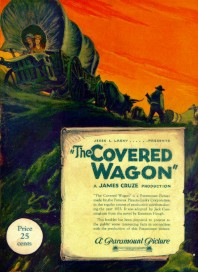
January 1999 – The Making of The Covered Wagon
Various articles on the making of James Cruze’s classic 1923 Western.

February 1999 – From Pigs to Pictures: The Story of David Horsley
The career of independent producer David Horsley, who started the first motion picture studio in Hollywood, by his brother William.

March 1999 – Confessions of a Motion Picture Press Agent
An anonymous memoir from 1915, looking in particular at the success of The Birth of a Nation.

April 1999 – Road Shows
Several articles on the practive of touring the most popular silent epics as ‘Road Shows,’ booked into legitimate theatres in large cities for extended runs with special music scores performed by large orchestras. With two Harvard Business School analyses from the practice in 1928/29.

May 1999 – Investing in the Movies
A series of articles 1915/16 in Photoplay Magazine examining the risks (and occasional rewards) of investing in the movies.

June 1999 – The Fabulous Tom Mix
A 1957 memoir in twelve chapters by his wife of the leading screen cowboy of the 1920s.

And there it ended. An astonishing bit of work all round, with the texts transcribed (they are not facsimiles) and meticulously edited. Use it as a reference source, and as an inspiration for your own investigations.