Turn up the gramophone

phonofilm

Projecting with the De Forest Phonofilm system, from The Gramophone, March 1927

It’s been a while since we’ve been able to bring you news of digitised newspapers or journals accessible online, but here’s a treat for the new year. The Gramophone, the esteemed classical music journal, has just put up in its entire archive since 1923.

It’s searchable by keyword, date range and type of item, with results refinable by decade. So searches can be narrowed to the 1920s, and there is plenty on silent cinema for us to investigate. Search results give you the item title, the first few lines, date and page number. Individual items then give you a PDF of the page (though it is necessary to register first to access these), with the option to browse further through that issue, and the OCRed text (with the occasional wobble in the character recognition). It is very easy to use,with an array of handy extras you can explore for yourselves. How it was paid for, it doesn’t say, but the service is free.

So, what will we find on silent films in The Gramophone? A surprising amount, if sometimes tangentially expressed. A good example is this piece by J.B. Hastings, from April 1925, entitled ‘The Gramophone and Film Music’, on how cue sheets were put together:

The average person will be astonished to find how much time and trouble are spent in fitting suitable music to film plays. But the big film companies have come to realise that a really good picture play can be ruined by the accompaniment of inappropriate music, and, incidentally let me whisper, they have found that even a feeble production can be made fairly, tolerable by the ingenious use of the orchestra. So, with each super film, is issued a list of ” musical suggestions,” complete with the cues and signs necessary to fit the various selections to the screen action. In many cases the actual full music score, timed to a note, is hired out with the film. Since I have had the experience of compiling a large number of such lists—I forget whether the exact number runs into millions or merely thousands—perhaps I may be permitted to indicate here how it is done.

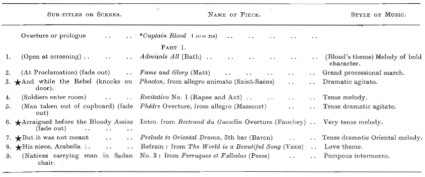
The film is projected in the cinema company’s private theatre and there I see the film with an assistant—and a stop watch. From the moment the first scene starts I am literally thinking in music. With a love scene I try to imagine just that type of sentimental melody that will exactly fit the picture, and move on in sympathy with it. A fight—then I endeavour to find an “agitato” of a tempo that will synchronise as near as possible with the speed and tensity of the film. Dramatic situations, storms, fires, sea scenes—all call for special treatment. As the film goes through, the “changes” are noted either by the sub-titles that precede them, or action on screen. In illustration of this I reproduce here a fragment of a typical “musical suggestions” sheet.

cuesheet_gramophone

The first column contains the cues, column 2 the music and composer, column 3 the style of the piece. Those cues marked with a (*) are the opening words of the sub-titles. Brackets indicate action on screen. Both types of cue indicate a change in the action or tempo. No. 9, for instance, shows a quick change from a quiet appealing melody to a pulsating allegro. It will be easily seen that a cinema orchestral leader must be on the alert the whole time. It might almost be said that he must work with one eye on the screen and the other on his music.

Many big photoplays call for a great number of “changes”—absolutely essential if the resultant entertainment is to be perfect. One of the most difficult films I have ever had to “fit” is Captain Blood, which is now showing throughout the country.

Mr. Rafael Sabatini’s story is so full of action and varying moods, and has been filmed with such faithfulness that no less than seventy changes are necessary, though this does. not mean seventy different selections. The chief “themes” in this story are (a) love; (b) dramatic; (e) sea battles and (ci) the “Captain Blood” theme itself. All these are there in various shades and emphasis.

As an introduction we start with the Captain Blood song, specially written as an overture or prologue. This is followed by Admirals All (Hubert Bath) and is used, in all, in eight different places.. For the love theme I have chosen The World is a Beautiful Song (Vane), and the principal seafighting scenes, Beethoven’s King Stephen overture from “presto,” varying this with various “incidental symphonies” specially written for film use.

Here is an extract from the music which I have fitted to the comparatively quiet first reel of Captain Blood:

cuesheet_gramophone2

Compare this with the smashing character of the music towards the end, when the terrific battle of Port Royal, Jamaica, is introduced. Here you will notice indication of “effects”.

cuesheet_gramophone3

Naturally, many cinemas cannot, for various reasons, follow the “official” musical suggestions in their entirety, especially as it is only in cases of exceptional films like Captain Blood that the complete score, correctly numbered and marked, can be hired from the film company.

No orchestra library under the sun can hope to contain every composition that may be wanted; and no musical director knows off-hand the exact nature of every composition in existence. It is here that the gramophone is so useful. When he finds himself “stuck” for a suitable number the musical director can always turn to the gramophone for guidance as to the style and tempo of any selection, the title of which seems to indicate possibilities. Moreover, many cinema orchestral leaders, to my knowledge, gain valuable hints from the reviews of records and music published in THE GRAMOPHONE.

In conclusion, I would say that the modern super-cinema, with its often excellent orchestra, together with the great study given to the musical side of films by cinema companies, is having a marked effect upon the musical taste of the British public.

What with this and broadcasting—both tending to familiarise the “Man in the Street” with all that is best in music—it is not surprising that the gramophone firms are experiencing what can most aptly be termed “a record boom.”

And, briefly, an editorial from April 1929 casts an interesting light on payment for musical accompaniment in cinemas, in this case involving the future composer of many a British film score, Malcolm Sargent:

Dr. Malcolm Sargent, at the age of thirty-three, has just refused to play the cinema organ for half an hour every day at 12s. 9d. a minute. This shows a more genuine horror of the instrument than even I could have fancied possible in these days of hard struggling for economic existence. What puzzles me, however, even more than Dr. Sargent’s devotion to art is why it should be worth while for a West End cinema theatre to pay £7,000 a year to any man, whatever his acrobatic and musical ability, to play their organ three times daily throughout the year for ten minutes at a session. I really should very much like to know the name of the cinema theatre which was prepared to offer this price, and I think Dr. Sargent owes it to his professional brethren with lower ideals than himself to reveal the name…

And there’s much more to discover, including some fascinating material on the coming of sound, as the illustration of the De Forest Phonofilm system at the top of this post indicates. Just type in ‘cinema’ or ‘film’ as a keyword, and start browsing.

Music, maestros, please

horneandhound

Stephen Horne accompanying The Hound of the Baskervilles (1921), from http://www.stephenhorne.co.uk

Stephen Horne, one of the UK’s premier silent film pianists, has just published his website, www.stephenhorne.co.uk. To mark the occasion, I thought it would be interesting to produce a round-up of silent film musicians’ websites, where you can find out what industrious lives they lead, listen to sound samples, and maybe purchase a DVD or two.

Alloy Orchestra
The three-man Alloy Orchestra (Terry Donahue, Ken Winokur, Roger Miller) are among the best-known of silent film accompanists, though their ‘aural onslaught’ of electronica and found percussion is controversial for some. Their site includes details of the films they have accompanied, touring shedule, CD and DVD store, reviews, information about the instruments they use, and video clips with their scores from Blip.tv (One Week, The Lost World, The Unknown, Manslaughter etc) so you may judge for yourselves.

Elizabeth-Jane Baldry
Elizabeth-Jane Baldry is a harpist, particularly expert in Victorian fairy harp music. She has recently branched out into accompanying silent films, and there is a section of her site devoted to her silent film work, alongside other professional information, including her own filmmaking work.
neil-with-laurel-hardy

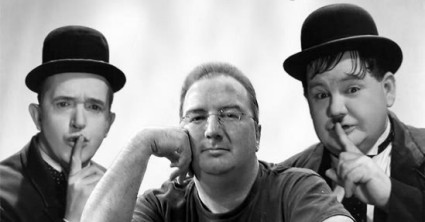
Neil Brand with friends

Neil Brand
Probably the best-known improvising silent film pianist working today, Neil Brand is also a playwright, actor, composer, scholar and eloquent advocate for the art of silent film in general. His website covers his musical and writing biographies, with news, reviews, and events calendar. There is a radio interview with Neil available (from 2000) and audio extracts from some of his scores (including Diary of a Lost Girl, The Ring and his recent orchestral score for Hitchcock’s Blackmail).

Timothy Brock
Timothy Brock is a conductor and composer specialising in concert works of early 20th-century music and silent films. His site gives details of his original silent film scores (Nosferatu, Lady Windermere’s Fan, Sherlock Jr. etc.) and restored scores (The Gold Rush, A Woman of Paris, City Lights etc.), images, news, articles and events calendar.

Robert Bruce
Composr and pianist Robert Bruce includes silent film performances in his repertoire, particularly the films of Buster Keaton. His site includes video clips of his live performances.

Günter Buchwald
Günter Buchwald is a pianist and violinist as renowned for his accompaniments alongside other silent film musicians as he is for his solo accompaniments. He often works as a duo with percussionist Frank Bockius or pianist Neil Brand, or with the Silent Movie Music Company as a trio or quartet. His site (in German) gives repertoire, reviews and events calendar.

Philip Carli
Phil Carli is a silent film accompanist, musicologist and film archivist. He has made special study of film, music and culture of the late 19th/early 20th centuries, and conducts the Flower City Society Orchestra of Rochester, New York, which is modeled on the ‘society orchestras’ that entertained guests in upper-class restaurants and resorts at the turn of the last century. His website covers this and his silent film work, including a list of broadcasts and DVD releases with his scores (including Regeneration, Sally of the Sawdust, Stella Maris etc.).

Club Foot Orchestra
Radical San Francisco ensemble which has come to specialise in silent film accompaniments. The site covers the films it has scored (Nosferatu, Pandora’s Box, The Hands of Orlac etc.) with links to CDs/DVDs where available.

Antonio Coppola
Italian pianist Coppola is a silent film accompanist of long-standing and high repuation. His site (in Italian, English and French) has a short biography and a long list of film directors (surname only) whose work he has played to.

carldavis

Carl Davis

Carl Davis
Composer and conductor Carl Davis is the best-known of all silent film musicians, for his work with Kevin Brownlow and Photoplay Productions, which did so much from the 1980s onwards to revive interest in silent films with live orchestral accompaniment, most notably his epic score for Abel Gance’s Napoleon. His site, however, does not dwell much on the past and is mostly interested in upcoming events, which continue to include silent films accompaniments with orchestra (notably Chaplin).

Devil Music Ensemble
Boston trio comprising Brendon Wood (guitars, lap steel, synthesizer), Jonah Rapino (electric violin, vibraphone, synthesizer) and Tim Nylander (drums, percussion, synthesizer). The group’s many forms of music performance include silent film accompaniments (Dr Jekyll and Mr Hyde, Nosferatu etc.), for which they provide video clips.

David Drazin
David Drazin is among the most prolific and praised of American silent film accompanists. His web page lists the main films he has accompanied, plus some information on his jazz, ballet and modern dance music work.

Arthur Dulay
Arthur Dulay (1891-1971) is perhaps the only silent film accompanist of an earlier generation to have website dedicated to him. Dulay played for silents from 1908, and late in his career as a musician in the 1950s he became resident pianist for the accompaniment of silent films at London’s National Film Theatre. The site includes sound samples of his work and a radio interview, as well as samples of his other musical work.

Costas Fotopoulos
London-based composer, arranger, silent film and jazz pianist, who regularly plays to silents at the BFI Southbank and the London Film Festival. His site has background information on the various aspects of his career, including silent filmwork, with a news section listing his silent film performances.

Gerhard Gruber
Composer and pianist Gerhard Gruber is Austria’s leading silent film pianist. His site includes testimonials, a repertoire list, links to festivals where he has played and to sound and video excerpts (including A Page of Madness). Much the same material also appears in a blog, silentfilm.wordpress.com, and on another site, www.silentmovie.eu.

hesperus

Hesperus

Jean Hasse
Hasse is an American composer based in the UK whose works includes silent film scores and accompanying silent films. The Visible Music site that she shares with other composers includes a list of the films for which she has composed scores with some short clips and some background information including her thoughts on composing for Faust.

Hesperus
Hesperus is a five-member ensemble with overlapping membership which performs a fusion of early and traditional styles from a variety of cultures. Its silent film work has included Robin Hood with English Renaissance music, The General with American Civil War music, and The Hunchback of Notre Dame with French medieval music. Its website is under construction, but there is information on its work at Class Acts on Tour.

Frederick Hodges
Pianist Frederick Hodges specialises in American songbook material from the 1920s and 1930s. His extensive silent film work incldes DVD recordings for Image Entertainment, Flicker Alley and Unknown Video, and his site has an informative page on silent film music and musical sources.

Stephen Horne
Stephen Horne has come to prominence recently, in particular for his scores for A Cottage in Dartmoor and The Battle of the Somme. His stylish site includes a short biography (he is a regular dance accompanist and has written screenplays), list of live dates, gallery and reviews. He can also boast a Facebook fan group, We’re in love with Stephen Horne.

In the Nursery
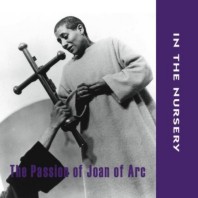
Rock band In the Nursery (ITN), headed by the twins Klive and Nigel Humberstone, have branched out into silent film scores for live performance and as DVD and CD releases. Their work includes Man with a Movie Camera, Hindle Wakes, the Electric Edwardians compilation and most recently The Passion of Joan of Arc. Their site includes discography, biography, reviews, films details, and MP3 downloads for purchase.

dennisjames

Dennis James

Dennis James
American Dennis James has accompanied silent films with piano, chamber ensemble and full symphony orchestra, but is probably best known for his theatre organ accompaniments, for which is perhaps the world’s leading exponent. His web page has a biography and list of engagements.

Jan Kopinski
British saxophonist Jan Kopinski is best-known for his radical jazz ensemble Pinski Zoo. With pianist Steve Iliffe he performs original compositions to silent films, including Earth, Berlin: Symphony of a Great City and The Seashell and the Clergyman. His site covers his various muscial outputs, with audio samples and video clips (including Earth and Nosferatu in performance).

Gary Lucas
Experimental guitarist Lucas, best known for his work with Captain Beefheart and Jeff Buckley, is perhaps the person from the rock music world most dedicated to silent films. He has played his scores for Sounds of the Surreal (three films by Clair, Leger and Starewicz) and Der Golem at numerous venues, and in 2009 produced scores for J’Accuse and The Unholy Three.

Donald Mackenzie
Mackenzie is the cinema organist at the Odeon Leicester Square, in the heart of London’s West End cinemas. He has accompanied silents at the Odeon and at venues across Britain and Europe, and includes many of the classics in his repertoire, among them The Phantom of the Opera, Dr Jekyll and Mr Hyde, The King of Kings, Carmen, The Black Pirate, Metropolis and Nosferatu. His site includes a biography and details of the Odeon’s cinema organ.

Eunice Martins
German composer and improvising pianist Eunice Martins has played at numerous silent film events. Her site includes her extensive repertoire, photographs and upcoming schedule.

Makia Matsumura
Composer, pianist and silent film accompanist who has played to silents in New York, Tokyo and Pordenone and accompanies Within the Law (1923) on the Kino DVD release. Her website has biographical information.

Minima
Minima are a British-based band which performs live accompaniments to silents and avant-garde film at cinemas, art festivals and music festivals. Their repertoire includes The Lodger, Nosferatu, Aelita and The Seashell and the Clergyman. Their website includes a performance calendar and a compilation video.

Jon Mirsalis
Jon Mirsalis is a film buff extraordinaire, a silent film pianist, and a leading bioscientist. This web page, which provides biographical details, is modestly tucked away as part of his Lon Chaney website.

Ben Model
The proud possessor of http://www.silentfilmmusic.com is the resident silent film accompanist for The Museum of Modern Art in New York. Model plays piano, theatre organ and a virtual theatre organ called the Miditzer. His site includes performance schedule, scores on DVD, and details of his orchestral scores. Model has also pioneered the idea of producing alternative scores to DVD releases of silent films as MP3 downloads, from his altscore.com site, and has a blog, Silent Film Music.
montaltoorchestra

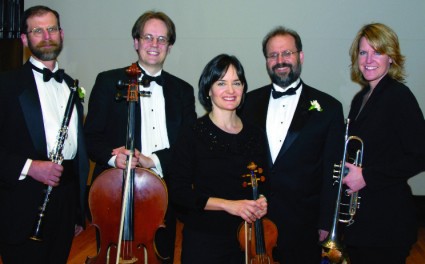
The Mont Alto Orchestra

The Mont Alto Motion Picture Orchestra
Mont Alto, led by Rodney Sauer, is an American five to seven piece chamber ensemble that recreates the small local orchestras popular in America from 1890 through to 1930. The ensemble has become well known for its many silent film scores for video and DVD releases, particularly for Film Preservation Associates and Milestone Video. Its site provides detailed information on the films for which it has provided scores (with some audio files), a schedule of its forthcoming silent film accompaniments and dances, and useful information for the general enquirer about silent film music of the period and today.

Michael Mortilla
Michael D. Mortilla is a composer, orchestrator and performer, who has produced hundreds of scores for film, television, dance, theatre, silent film, magic, mime, industrials, commercials, special events and the concert stage. The silents work has included Harry Houdini’s The Master Mystery serial and Chaplin Mutuals, and he has performed at many American silent film festivals. His site documents his many different activities.

Maud Nelissen
Dutch composer and pianist Maud Nelissen has performed for the Nederlands Filmmuseum, the Film in Concert Foundation and various festivals. She leads the six-member group The Sprockets, which has specialised in accompanying silent comedies (Chaplin, Keaton, Laurel and Hardy). Her scores for The Patsy and The Merry Widow (a combination of Léhar’s music and her own) are performed by the Orchestra da Camera Oscura, and the Asta Harmonists play her music for Asta Nielsen films. Her impressive website covers all facets of her musical career and includes silent film video clips.

Maria Newman
Daughter of the renowned Hollywood composer Alfred Newman, Maria Newman has produced scores for silents for the Mary Pickford Foundation and Turner Classic Movies. Information on her work can also be found in her entry on GarageBand.com.

panoptikon

The Panopikon Orchestra

The Panoptikon Orchestra
Panoptikon is a Swedish ensemble (trio), led by Matti Bye, that plays music for silent films, both precomposed scores and improvised music, using both traditional and modern instruments. Its site provides background information on the ensemble, a list of records and videos,with some audio samples (Joyless Street, The Phantom Carriage) and general news.

William Perry
William Perry is an American composer and television producer. His wide-ranging musical career has included many scores for silent films during twelve years as music director and composer-in-residence at the Museum of Modern Art in New York. His television series, The Silent Years (1971, 1975) starring Orson Welles and Lillian Gish, won an Emmy Award. His site gives basic biographical information.

Forrester Clifton Pyke
Forrester Pyke is a composer, teacher, church organist and silent film accompanist. He is based in Scotland and has played to silent films at the Filmhouse Edinburgh and Glasgow Film Theatre and compaosed scores for Scottish Screen Archive films. His site covers the various aspects of his music career.

Jeff Rapsis
American composer, performer and silent film accompanist. His lively Silent Film Live Music blog documents the life of the silent film pianist in an entertaining fashion.

Touve R. Ratovondrahety
Madagascan musician who has a strong profile as a silent film accompanist, hacing played at several festivals including Pordenone. His website gives some silent film events in its calendar section but is otherwise devoted to his work as pianist, organist and composer.

Judy Rosenberg
Judy Rosenberg is a silent film pianist and composer, as well as being (like others in the profession) a dance accompanist. She plays regularly to silents for the Pacific Film Archive in Berkeley, California and at the Niles Silent Film Museum in Niles, CA. Her site lists the films she has accompanied, gives upcoming screenings, and has a thoughtful statement on her art, comparing silent film and dance accompaniment.

Jordi Sabatés
Spanish jazz pianist and composer who has made a speciality of accompanying the magical films of Segundo de Chomón, as well the films of Buster Keaton and Nosferatu. His website (in Spanish) includes video clips, alongside photographs and an extensive curriculum vitae.

Silentones
German four-piece ensemble, comprising Susanne Peusquens, Matthias Jahner, Joachim Bärenz (a leading solo silent film pianist) and Christian Roderburg. Their site is in German, English and Italian, and has information on their scores for The Cabinet of Dr Caligari, The Golem, the films of Max Davidson, and others, with audio samples.

The Silent Orchestra
American duo Carlos Garza (keyboards) and Rich O’Meara (percussion) make up the Silent Orchestra who accompany silent films with both improvised and composed scores. Their site lists the films they have accompanied, including Nosferatu and Salomé which are Image Entertainment DVD releases, and there is news of past shows and reviews.

The Snark Ensemble
The Snark Ensemble is an American instrumental chamber ensemble dedicated to the creation and performance of new original scores for silent film. Its work includes DVD sets for Harry Langdon and Charley Chase. The site has video clips, complete sound files for some films, news and a catalogue of their work. Members Andrew Simpson and Maurice Saylor each have individual sites with more information on their silent work, solo and as a group.

Donald Sosin
The proud possessors of http://www.silent-film-music.com are pianist Donald Sosin and his singer/actress wife Joanna Seaton. Sosin keeps up a prodigious work rate through live performances, DVD releases and workshops, as documented on the website. Also to be found there are audio and video clips (Foolish Wives, Manhatta, King of Kings etc.) and a listing of recordings Sosin has made of his own performances which are available for purchase from Farmhouse Window Productions. Sosin also maintains a blog, Silent Film Music and other Sounding Off.

gabriel

Gabriel Thibaudeau

Gabriel Thibaudeau
Thibaudeau is composer, conductor, and pianist for the Cinémathèque québécoise, and has been composing silent film scores since 1990. He performs composed and improvised scores the world over, including at many festivals and major arts institutions. His bi-lingual (English / French) site lists the many films for which he has produced composed scores, some with audio or video clips, plus biographical information and news.

Yvo Verschoor
Dutch pianist Yvo Veerschoor plays regularly at the Filmmuseum and other venues in the Netherlands. His strikingly-designed website (mostly in Dutch, but with the key section also available in English and German) covers his career, repertoire and thoughts on silent film accompaniment, with a potted history of silent film and several QuickTime videoclips (including a television news item on Veerschoor’s work).

Vox Lumiere
Vox Lumiere combines rock music, live theatre and silent film. It brings together musicians, dancers, singers, multi-media and light shows to retells such films as The Hunchback of Notre Dame, Metropolis and The Phantom of the Opera as rock musical experiences. The multi-lingual site includes audio and video clips, image gallery, calendar and shop.

Clark Wilson
Organist Clark Wilson has played at the San Francisco Silent Film Festival, Cinequest, and plays a silent picture annually at LA’s Walt Disney Concert Hall. His site lists his many silent film scores, including Broken Blossoms, Dr Jekyll and Mr Hyde and Camille. He also runs his own pipe organ business.

For other silent film musicians, not all of whom have sites of web pages of their own (Robert Israel, Neal Kurz, Eric Beheim etc.), see the Silent Era’s page of weblinks for composers and musicians. Some, such as Britain’s John Sweeney, a Pordenone regular, and Germany’s Ekkehard Wölk at least have a Wikipedia page, while others, such as American organists Dennis Scott and Ken Double, France’s Eric LeGuen, Holland’s Hugo van Neck and Poland’s Adrian Konarksi, have websites or web pages but don’t provide any information on their silent film activities (or virtually none).

If anyone knows of any other musicians’ sites, do let me know, and I’ll add them to the record.

Metropolis at Seminci

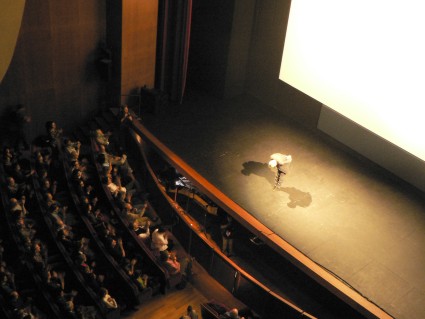
My thanks to John Riley for alerting me to these two videos. They depict the screening of Metropolis at the Seminci film festival in Valladolid, Spain, late October, when the Fritz Lang film was exhibited at the Miguel Delibes Auditorium with live orchestral accompaniment from the Orquesta Sinfónica de Castilla y León. Of itself, this might be of passing interest but nothing special. What pleases me is what these two festival-produced videos is what they capture of the atmosphere of a prestige silent screening. The first shows the audience arriving, chatting in the auditorium and taking their seats. It captures the sense of a cultural treat, the festival spirit. Brief as it is, it’s a people-watching treat.

And then the audience settles down, the orchestra takes its place, the conductor is applauded, the lights go down and the film begins. The second video captures such opening moments familiar to anyone who has attended a silent film show with orchestra, but there’s not much recorded of such events in this way, particularly the point where the film gets underway and we can see both orchestra and film on screen. It’s a brief record, but one worth sharing with you.

Mashing Edison

Let us return to our occasional mash-up series, where we look at how some creative people have taken silent footage and blended it with modern music or other found sounds. Each of the examples here demonstrates creative use of Edison films made freely available for download and personal use by the Library of Congress through American Memory and the Open Video Project. This first example, Grandpa Can Dance!, created by pixiecherries (a.k.a. Bernie Lee), is a model piece of work, as it mashes up open content from American Memory and for the music from the Internet Archive. The two films used are Foxy Grandpa and Polly in a Little Hilarity (1902) and The Boys Think They Have One Over on Foxy Grandpa but he Fools Them (1902), while the music comes from zefrank. Firstly, it is a fine piece of creative work, with the unlikely heavy beat music fitting in well with the old-time dancing to create something delightfully strange. Added to this, he provides background information as intertitles throughout, showing interest in and respect for the performers. An education, in every sense.

More of Bernie Lee’s mashup work can be found at http://wj4u.com.

Girl on Fire takes the 1898 Edison film, Turkish Dance, Ella Lola, from American Memory, filmed in the Black Maria studio. mediapetros has treated with visual effects, fire noises and indeterminate live sounds and snatches of what seem to be airport announcements, ending with a church organ and singing. The result is hypnotic and enigmatic. Ella Lola, though billed at the time as “a sensational dancer from the East”, in fact hailed from Boston.

Our third example is Love in an Elevator, which I take to be the name of the song by Aerosmith which has been laid over the Edison film Charity Ball (1897) (available from American Memory), featuring James T. Kelly and Dorothy Kent of the Waite’s Comedy Company, performing in the Black Maria studio. As in so many examples of films being placed alongside music which was not composed with it in mind, our brains seek out common points of reference, points of action matching points in the music. (Note that the film, which was probably shot at 30fps, has been transferred at too slow a speed). But the music, grim as it may be to my sensitive ears, does fit peculiarly well. And look out for that wild leap at the end. Let’s be seeing those moves at the dance halls soon.

And finally, thiscompost takes things a little further in this multi-screen presentation of a Serpentine Dance. There are two dancers shown. The first is not identifiable, though it is an Edison Kinetoscope film of a serpentine dance. The second is Annabelle, who is wearing butterfly wings, which is Annabelle Butterfly Dance (1894 or 1895 – there were multiple versions made). The film ends with the return of the first dancer. The music is a Nick Drake B-side played backwards and then forwards. Annabelle Whitford was the most filmed of the variety performers who appeared before the Edison Kinetograph in these earliest years. She was a follower of Loïe Fuller, and went on to join the Ziegfeld Follies. Here her presence (and that of the unidentified dancer) is reduced to mysterious icon, echoing the multiple presences she enjoyed on film peepshows and screens across the world as the motion picture first spread across the world.

Sounds and silents

A call for papers has now been issued for The Sounds of Early Cinema in Britain: Textual, Material and Technological Sources, a conference being held 7-9 June 2009 at the Barbican, London. The conference is being organised as part of the Sounds of Early Cinema in Britain project, which is one of a network of project organised under the Arts & Humanities Research Council‘s Beyond Text programme.

CALL FOR PAPERS

AHRC-Funded Beyond Text Network “The Sounds of Early Cinema in Britain”

The Sounds of Early Cinema in Britain: Textual, Material, Technological Sources

Sunday 7th-Tuesday 9th June 2009

Institute of Musical Research and the Barbican, London, UK

We invite papers from interested parties from all related disciplines to participate in this, the first of four events to establish and develop a research network concerned with the variety of sonic and musical practices of “silent” film exhibition in Britain, interpreted in the broadest possible sense. Explorations of “sources” – of whatever kind – are particularly welcome, as are presentations by archivists, curators, and performers.

Potential topics might include:

  • Sonic and musical practices used alongside the exhibition of early film in Britain
  • The potential sources for understanding these practices
  • Their problems. How we might excavate them
  • The challenges that Britain faces in preserving the existing historical legacy of these sonic and musical practices, instruments, equipment, and spaces
  • Relationship between these practices and those of cinema’s antecedent forms in Britain
  • Distinctive musical practices pursued in Britain, compared to other countries
  • Perspectives from other disciplines, other countries
  • Use of eye-witness memory

Preference will be given to papers with a British focus, though we may be able to accommodate papers that explore the same issues in other national contexts.

Individual Papers: Abstracts of 250 words for individual papers of up to 25-30 minutes should be e-mailed, as a Word attachment, to Mrs Valerie James at music [at] sas.ac.uk. We will also consider shorter presentations of around 15 minutes on specific issues relating to sources. Please include your name and title, institutional affiliation (if any), email address, and postal address.

Round tables: Round table organizers should provide an abstract of 700 words introducing the discussion topic for a 90 minute/2 hour presentation. All panel members must be listed (names and affiliations). The round table organizer is the chairperson and acts as moderator. Proposals should be e-mailed to Mrs Valerie James at music [at] sas.ac.uk as a Word attachment, along with your name and title, institutional affiliation (if any), email address, and postal address.

The deadline for all proposals is 9th January 2009.

Postgraduate scholarships: Postgraduate students working in this, and/or related areas may apply for one of two scholarships (to include basic travel and accommodation, and conference fee and refreshments). Applicants should send the following information to Mrs Valerie James music [at] sas.ac.uk: name, institution where studying, and an outline of their (related) research project.

Should be fun. Start excavating.

100 years ago

Back to our series of pieces from the original film journal The Bioscope, published 100 years ago to the day. Today we consider the dreadful crime of having music at a film show, and on a Sunday too…

The Camden Case

PROPRIETORS FINED FOR INCLUDING MUSIC IN PROGRAM, AND SUNDAY SHOWS BARRED

Some months ago, itwill be remembered, Mr. Robert Arthur, Mr. Walter Gibbons, and Mr. W.H. Terrell were bound over at Clerkenwell Sessions, a jury finding them guilty of having carried on a music-hall entertainment at the Camden Theatre without having a license from the London County Council.

At the Sessions on Tuesday, it was alleged that the terms of the recognisances of the parties had been broken, and notice had been served upon them to attend the court to show why they should not be forfeited.

Mr. Horace Avory said the house was closed after the conviction until Monday 14th September, when without any license being obtained from the L.C.C., the theatre was opened with an animated picture entertainment, along with music. There were also Sunday performances.

The music, counsel argued, was not incidental to or subsidiary to the entertainment, but was independent and substantial. This was shown by the fact that so soon as the selections ceased, the gallery became noisy, and quieted down again when it re-started.

Mr. Muir said his client, Mr. Robert Arthur had absolutely nothing to do with the place at all since the early days of the former proceedings.

Mr. George Elliott did not dispute the facts, but disputed that what was done was an infringement of the Act.

Mr. Barnes, solicitor for the prosecution, said the music was supplied by an electrical orchestral piano. The entertainment would have been a dull one with no music, because the intervals were very long. People joined in the choruses, and sang.

Mr. Muir asked that, as Mr. Arthur had no desire to offend, he might be allowed to go.

Mr. Wallace, K.C.: Certainly.

Mr. Walter Gibbons called on his own behalf, said he was not conscious at any time of having violated his recognisances. The public came to see the bioscope.

Mr. Wallace, K.C., items of the Sunday program as follows:-

The Pneumatic Policeman. (Laughter.)
Ali Baba and the Forty Thieves.
“The Sign of the Cross.”
The Reluctant Dog.
Yachting on the Solent.

Is that a Sunday program?

The Witness: Yes, they are all pictures which no one can object to on a Sunday.

Mr. Wallace, K.C., found that defendants (Messrs. Gibbons and Terrell) had violated their recognisances.

He fined them 40s. each, requiring an undertaking that there should be no music at week-day performances, and no performances at all on Sunday.

Mr. Wallace intimated that he did not think defendants deliberately intended to violate their obligations.

The Bioscope, 30 October 1908

Before the Cinematograph Act of 1910, there was no licensing scheme for moving picture shows in Britain, something which exercised the authorities greatly. The London County Council, which oversaw the licensing of entertainments in the capital, could licence public shows under three categories: music, music and dancing, or stage. Film shows fitted none of these per se, so had to obtain a licence for music or music and dancing if they were not to be in danger of being closed down by the L.C.C for having failed to conform to the Disorderly Houses Act of 1751. Most complied, but quite a number prefered (or had no option but) to risk it, or even in some cases put on film shows without music.

Sunday film shows were another vexed issue for the L.C.C., it being considered that entertainments of any kind on a Sunday were unwelcome, but friviolous and doubtless immoral bioscope shows especially so. Venues liked show films on Sundays, because they drew the crowds, but to keep sweet with the L.C.C. suitably ‘harmless’ programmes were concocted for Sunday shows.

The Cinematograph Act, introduced in January 1910, was established to monitor this mushrooming new public entertainment by establishing a licensing scheme specifically tailored towards it. It was the first piece of legislation in the UK which recognised the film business.

Walter Gibbons (1871-1933) had been in the film exhibition business for a decade by this point. He inherited a music hall empire and in 1910 built the London Palladium as his flagship venue. He would be knighted for his services to British variety theatre, but ended his life bankrupt.

Pordenone diary 2008 – day seven

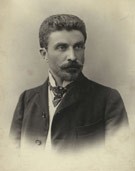
Alexander Shiryaev (1867-1941) is not a name that you will find in any film history. He was a member of the Russian Imperial Ballet at the Mariinsky Theatre, St Petersburg, a protégé of the great choreographer Marius Petipa, a character dancer of great skill (he was too small for the classic leading roles), and a gifted ballet teacher.

It was his teaching that seems to have led Shiryaev to film. Fascinated with human movement and the notation of ballet, Shiryaev began producing sequential drawings of dance steps that documented the minutiae of such movements, work that was inherently cinematic in construction. Shiryaev must have seen the connection, because in 1904 he applied to the theatre management to let him purchase a motion picture camera and film to record the dancers of the ballet. He was turned down – no films were allowed to be made of the dancers of the Imperial Ballet. Undaunted, Shiryaev purchased a camera anyway – a 17.5mm Biokam acquired in London, to be followed by an Ernemann Kino, also employing 17.5mm film. At some point he also had used of a 35mm camera.

Shiryaev took to filming as one who instinctively knew what the medium could do. He understood the camera as he understood dance. Between 1906 and 1909, Shiryaev produced an astonishing body of work – live records of dances, home movies, comedies, trick films, animations and puppet films. None of these was seen in public. They might have disappeared from history entirely, had they not first been narrowly saved from destruction in the 1960s by a friend of Shiryaev’s, Daniil Saveliev, and then discovered again in 1995 by filmmaker Victor Bocharov, who has been their custodian ever since. Bocharov produced a documentary on the collection in 2003, Zapazdavshaya Premiera (Belated Premiere), but the screenings at Pordenone were the true public premiere for the majority of these films, many of which came fresh from the specialist labs of PresTech in London.

The Shiryaev films were shown over a number of days, the programmes including A Belated Premiere and films related to his world, such as Anna Pavlova dancing. But the main programme came on Friday 10 October, and divided up his ouevre into four categories.

Dance films
These were films of Shiryaev and his dancer wife Natalia Matveeva dancing on a sunlit stage at their Ukraine home. As the only films of the Russian ballet greats at this time, they have plain historical value, but they are also a visual delight. The two dance singly or together in a selection of folk-based dances, performed with sparkling zest, and each ending delightfully with the dancer leaving the stage then returning for a bow. The most dazzling are those on 35mm, particularly Shiryaev’s party piece, ‘Fool’s Dance’ from Petipa’s Mlada.

Trick films
Shiryaev was evidently a film-goer himself, and decided to emulate some of the trick films common in the mid-1900s. All were again filmed at his summer home, in the open air. One film where a giant spider came down and settled on a sleeping man was clearly inspired by Georges Méliès’ Une nuit terrible. Another, given the title [Chairs], anticipated Norman McLaren’s Neighbours by some fifty years, with its stop-animation of humans seated on chairs and swapping positions.

Earlier in the week we had seen numerous fleeting home movies of Shiryaev and family (they are some of the earliest surviving home movies anywhere) and various staged comedies made by the family. The marvellous thing to behold was how the boundaries between home movies, comedies and then trick films blurred, all created in the same spirit of joyous performance. The family’s whole lives seemed to be some form of dance.

Paper films
For me, Shiryaev’s paper ‘films’ were his greatest achievement. Before he had a camera (or so it is assumed), he produced animations on paper (45mm wide) which have now been reconstituted on film. One such film with delicate line showed birds in flight, the observant results of which the festival catalogue rightly pointed out connected his quest for reconstituted movement with that of the chronophotographers Eadweard Muybridge and Etienne-Jules Marey. But finest I think was [Cakewalk], a trio of dancers in exquisite, gently swaying unison. Only a minute or so long, but I have never seen a finer piece of animation.

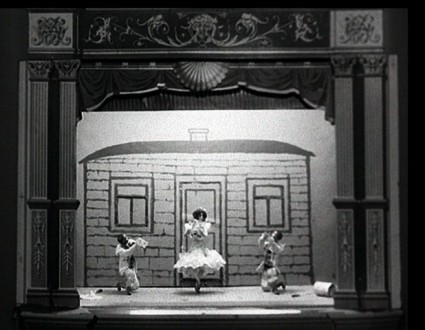
Shiryaev’s puppet animation P’ero-Khudozhniki (Artist Pierrots), from http://www.watershed.co.uk

Puppet films
For David Robinson, the festival’s director and a most enthusiastic advocate of Shiryaev’s work, the stop-frame puppet films he made were his greatest achievement. They were certainly the most astonishing. Years ahead of animation elsewhere in the world (and two or three years ahead of Starewitch), these films used puppet figures in a theatre set to recreate, in meticulous detail, actual ballet dancers. Some of the effects – such a water or paint being thrown, or balls being tossed in the air – were astonishingly accomplished, and simply the co-ordination of several puppets all dancing at the same time would have required prodigious patience and skill. One of the films indeed revealed the animator’s hands to the edge of the frame, moving manically into a mysterious blur.

The puppet films required some concentration on the part of the audience, particularly the 12-minute-long [Harlequin’s Jest], which was in five acts with long titles (supplied by Bocharov) explaining the action. What helped enormously was the music. We know that Shiryaev meant his films to be so accompanied, including the animations, but not what that music was. John Sweeney, one of the festival’s core band of pianists, took on the task of matching music (some from Petipa ballets, some his own) to the films, with Günter Buchwald joining him on violin for [Harlequin’s Jest]. The brilliant results were rightly given loud acclaim by the audience – the musical highlight of the festival.

We will certainly be hearing more about Alexander Shiryaev. The documentary A Belated Premiere gets its British premiere at the Watershed in Bristol on 19 November (nearby Aardman Animation has been involved in supporting the restoration of Shiryaev’s work), and with the restoration of the films as yet incomplete (some we saw only on DVD), it’s a certainty that there will be more on show at Pordenone.

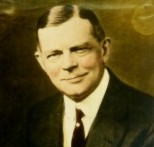
Friday was a day for superlatives. In the morning we had seen more of the Corrick collection of early films collected by a family of entertainers in 1900s Australia. Now, having written my thesis on Charles Urban (right), published a website about him, and taken my blog nom de plume from his company logo, it might be argued that I could be a little biased when it comes to praising his works, but – damn it all – Living London, made by the Charles Urban Trading Company, if it isn’t one of the greatest of all silent films, then it is undoubtedly the greatest film of 1904 [update: the film has now been identified as Urban’s The Streets of London (1906)]. The film is an eleven-minute section from an original forty-minute documentary (no other word will do) depicting London life. Moving approximately eastwards (from Westminster to the City, with a diversion along the Thames), the film shows the metropolis at its imperial zenith, vividly alive, with cameras picking out every detail, high and low (the trouble taken over camera positions was particularly noticeable) – traffic, roadworks, people dancing in the street, workers of every kind, buildings under construction, the river teeming with craft, even in one shot a row of men with sandwich boards advertising Urbanora film shows. The catalogue compared it to Vertov’s Man with a Movie Camera or Ruttmann’s Berlin: Symphony of a Great City, but this was a work of a different kind, a sort of missing link between the single-shot actualities of the early cinema period and the constructed documentary. I can think of few other films that can so thrill with a plain exposition of ‘reality’.

The Corrick collection yielded other gems. Particularly noteworthy were Bashful Mr Brown (1907), a chase comedy made by the Corrick’s themselves; Babylas vient d’hériter diune panthère (1911), pure surrealism from Alfred Machin as an inquisitive leopard is introduced into a bourgeois household; and The Miner’s Daughter (1907), an exercise in beautifully judged pathos from Britain’s James Williamson, in which the title character parts from her father when she marries an artist, and after much grief they are finally brought together by his granddaughter. And it’s a rare early film that combines a mine explosion with scenes inside the Royal Academy.

After the highs of Shiryaev we relaxed in front of Ihr Dunkler Punkt (1929), a typically professional vehicle for Germany’s favourite Briton, Lilian Harvey, who played two identical people, one an ordinary young woman about town, the other a jewel thief, whose lives and lovers get mixed up. A light but cleverly made concoction, in which I most liked the comic turn by the normally sombre Warwick Ward, another Briton who plied his trade in German films.

Michael Nyman takes his bow

I was tiring just a little of films by this stage, and chosen not to follow D.W. Griffith into the sound era with Abraham Lincoln (1930). Instead I concluded my Pordenone with the evening screenings of A Propos de Nice (1930) and Kino Pravda no. 21 (1925). A large crowd of Pordenone locals queued up for this, and the theatre was filled up to its third tier. How come? Because Michael Nyman was playing the piano, and Italians, it seems, love his music. Nyman had been due to play at the festival last year, but had to withdraw owing to illness, so did the honourable thing by turning up this year. Despite his star status, Nyman found himself in the pit the same as all the other musicians during the festival, with the result that no one saw him until he emerged for his bow at the end. A Propos de Nice came first, and Nyman’s complexly repetitive music provided the ideal match for Vigo’s cumulative montage of telling images. It was certainly quite different to anything else we heard during the week, a lesson in how we should always be encouraging different musical interpretations of silent films. Particularly striking were sequences with a single bass note pounded with a rapidity that seemed to be testing the piano’s stamina to the limit.

The Kino Pravda, a celebrated example of the series, on the death of Lenin, was less successful. The film itself, with its hectoring, fractured style, combining newsfilm with slogans and animation, probably defies most forms of musical accompaniment, and Nyman’s score churned out circular themes that didn’t much connect with the film. The score lacked the inspiration of A Propos de Nice, and the film ended a few bars before he did, so that he was being applauded while still trying to finish playing. Opinion afterwards was mixed, with some of the musicologists among the Giornate regulars in shock.

And that was it for me. I left early on the Saturday, the last day of the festival, and so missed Griffith’s final film The Struggle (1931) (touchingly paired with a re-showing of his first, The Adventures of Dollie) and the grand finale of Jacques Feyder’s Les Nouveaux Messieurs (1929). This was a fine festival. Few outstanding classics, but so much to interest, stimulate, challenge and excite the imagination. There were welcome innovations, such as the electronic subtitles, and encouraging signs of closer relations between town and festival. The Giornate del Cinema Muto never rests on its laurels, recognising the broad and knowledgable audience that it attracts, and that in a real way Pordenone is silent film today. It sets the agenda; it builds up the canon; it consistently reminds us of how various the silent film was (and continues to be – there were some examples of modern silent shorts, though none that I saw were terribly distinguished). Warm thanks to all who make the festival such a success year after year. We’re so lucky that it’s there.

‘Til next year.

Pordenone diary 2008 – day one
Pordenone diary 2008 – day two
Pordenone diary 2008 – day three
Pordenone diary 2008 – day four
Pordenone diary 2008 – day five
Pordenone diary 2008 – day six

Pordenone diary 2008 – day two

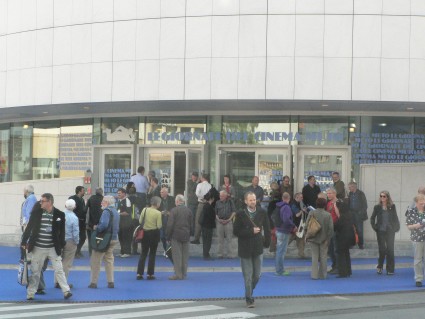
Outside the Teatro Comunale Giuseppe Verdi

Before launching into what we saw on Sunday 5 October at the Giornate del Cinema Muto, a word of praise for one particular innovation. Pordenone shows prints from around the world, which arrive in a multiplicity of languages featured on the intertitles. For years we have benefitted from the skills of translators viewing the prints as we did and providing instant translations through headphones. This year the headphones were gone. In their place we had computer-generated subtitles immediately below the screen. If the film was in English, the subtitles appeared in Italian, and vice versa; if it was in any other language, we got subtitles in both Italian and English. The amount of preparatory work must have been prodigious, but the result was a hugely improved viewing experience. Warm thanks are due to all those who made this possible, and everyone’s hearts went out to whoever had translated all of the 160 minutes of the Norwegian film Laila in English, only to discover that the print came with English titles…

This innovation went hand-in-hand with a welcome emphasis on bilingual presentation generally. In Giornates past it has felt as though English speakers were taking over, which must have been greatly trying for the Italians in the audience. Now most (if not all) spoken introductions were translated from one language or the other. One or two speakers need to know when to take a break to give the poor translator a chance to recap, while one speaker was perhaps unnerved by the translator and stopped speaking in mid-sentence, leaving the translator with an impossible task. But we’re getting there.

The day started for me (earlier risers had caught the French film Triplepatte) with two mindboggling Baby Peggy shorts, Such is Life (1924) and Carmen Junior (1923). Child star Baby Peggy (played by Diana Serra Carey, ninety years old next month) is beyond rational criticism. These bizarre films give every appearance of having been made up as they went along. A surreal sequence in Such is Life where an unexplained living snowman melted through a street grill was memorable, but had no logical connection with anything around it (the story was based on ‘The Little Match Girl’, though feisty Peggy wasn’t about to do pathos).

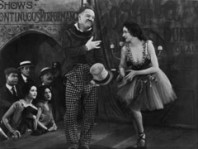
Ever since 1997 the Giornate has been working its way chronologically through the works of D.W. Griffith. This year we reached the end of the journey. The films of Griffith’s last working years are generally dismissed as the embarrassing efforts of an out-of-date man in his creative dotage – at least, those such as me who hadn’t actually seen them believed this. I wasn’t alone in such assumptions, and the astonished (well, pleasantly surprised) rediscovery of Griffith’s late films was one of the major points of the festival. We started with Sally of the Sawdust (1925). This is a comedy-drama of a circus performer (Carol Dempster), whose mother was thrown out by her parents when she married a man from the circus and who has fallen under the care of entertainer Eustace McGargle (W.C. Fields). What surprised about Sally of the Sawdust was its general competence. That sounds like a dreadful thing to say about the man who established the art of directing films, but by this period in his career one had sensed that he was wilfully opposed to the ways in which studio-dominated cinema was evolving. But for the most part Sawdust is pleasingly competent. It ticks along nicely. Fields is outstanding – in complete command of the screen from his very first shot. We even get to see him juggle. Dempster is, inevitably, annoying and she puts on all her girlish mannerisms (it’s an oddity of the film that she seems far too old for such faux-teenage mannersims, though she was only twenty-three when the film was made). Yet even she surprised in a house party scene where is dresses up glamorously and gives a hint of a quite different, and alluring presence, which she might more profitably have returned to. There was also a touching scene where she dances in the way her mother used to for the woman she does not realise is her grandmother. Unfortunately, Griffith’s control fails him towards the end of the film, with his taste for old glories taking over as we have two prolonged chases, one with Dempster, one with Fields, which are poorly executed and fail to intertwine as they should have done, ending with a casual resolution of the plot that lets the audience down. But there were signs of promise, and better was to come.

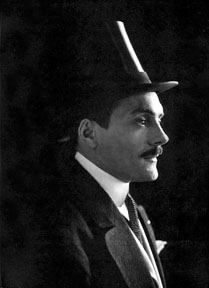
Included in the catch-all ‘Rediscoveries’ strand were four Max Linder films. Of these Max Toréador (1913) was remarkable for its prolonged scenes filmed in a bullring in Barcelona with Max himself in the middle with the other toreadors genuinely taking part in the bullfighting. It was no surprise to learn that different prints exist with scenes cut according to local sensibilities – the film did not shy from showing the ‘sport’ in all its bloody cruelty. Rather more enjoyable was The Three-Must-Get-Theres (1922), a goofy parody of Douglas Fairbanks in The Three Musketeers. The try-a-bit-of-everything humour was variable, but the film gleefully sent up the Fairbanks self-satisfaction and panache, laced with a string of anachronistic gags (motorbikes instead of horses, that sort of thing). Max remains one of the geniuses of the silent cinema, a poetic blending of opposites – graceful air with a penchant for pratfalls; debonair confidence with always just a touch of panic in his eyes.

One of the festivals themes was filmmaking in New York, tied in with Richard Koszarski’s new book, Hollywood on Hudson. The films chosen were an odd mish-mash, none odder nor mish-mashier than His Nibs (1920-21), directed by Gregory La Cava. Starring obscure comedian Chic Sale (whose gentle comic style suggests he might be worth investigating further, if more films exist), the film was made out of what was going to be a conventional drama, The Smart Aleck. At some point someone realised that the film wasn’t working, and decided to build another film around it. So we get a film about a cinema show, with Sale playing multiple parts, including a crusty projectionist. The audience settles down to watch the film-within-a-film, now called He Fooled ‘Em All (starring Sale and Colleen Moore), with commentary from the projectionist in the intertitles to prevent the audience from reading out the titles. The projectionist also tells us that he cut out a train journey from the film, because those scenes all look the same, plus some mushy stuff at the end. So some good laughs at the expense of cinema, and an intriguing portrait of a small town film show, but a minor oddity overall.

The highlight of the day – indeed one of the highlights of the week – was quite unexpected. On 28 December 1908 the Messina Straits off Sicily was at the epicentre of a huge earthquake. It was probably the biggest earthquake in Europe ever experienced; around 200,000 died in the region, with Messina itself having its population reduced to just a few hundred. We saw how film responded to this tragedy, through three actualities and two fiction films. The first actuality, from an unknown producer, had the greatest effect – aided by Stephen Horne’s eerie music (starting with solo flute before turning to piano). Each shot framed people within the ruins of the city to haunting effect. There was a profound sense of a shock, a dawning realisation of what had just happened. A Pathé news report showed us more, while a Cines film showed us the town being rebuilt in 1910. An Ambrosio drama, L’Orfanella di Messina (1909) depicted a couple who had lost their daughter to illness adopting an orphan girl from Messina, simple yet deeply touching. Finally, and oddly, there was a Coco comedy in which the comedian imagined himself caught up in the earthquake, with collapsing walls and floors in his bedroom. In this simple package of films, we saw how film was used to report on and to help people come to terms with what the country had been through. The sequence moved us all.

The Orchestra della Scuola Media Centro Storico di Pordenone, a school orchestra, was given the chance to show its mettle, accompanying Buster Keaton’s One Week (whose inventiveness greatness put the middling efforts of other comedies seen during the day into context) and three cartoons. Heavy on the recorders and percussion, but good accompaniment for all that, with spot-on sound effects. And further evidence of the growing bonds between community and festival.

The Golf Specialist, from criterioncollection.blogspot.com

The evening’s screening kicked off with a sound film: W.C. Fields in The Golf Specialist (1930). The Fields theme was a bit of an opportunisitc one, probably chosen because some of his silents turned up in the Griffith and New York strands. The film is a classic, of course, and it was good to have it as a point to which his silent films were pointing. It’s a variety sketch in which Fields chaotically fails to demonstrate his golf skills, which tangling with children, animals and sticky paper with progressive absurdity. Delicious cynicism is on view, though there could be more of Fields’ sardonic view of the world and a little less of the golfing calamities.

After a modern Romanian silent short on climate change, whose logic eluded me, we had The Show Off (1926), directed by Mal St Clair. Part of the New York strand (it was filmed at Paramount’s Astoria studios), it starred the ever unappealing Ford Sterling (the Keystone star that Chaplin famously supplanted) in a relatively straight role. This had some cultural-historical fascination in its picture of office life and suburban aspiration, with Sterling playing all too accurately a vain and selfish social failure. Somehow he becomes aware of the unhappiness of other people about him and implausibly saves the day. Had Fields been given the part, we might have had a film of note. As it was we had a minor work of academic interest, its most diverting feature being Louise Brooks as the girlfriend of Sterling’s brother-in-law, looking for all the world as though she had glided in from a different planet.

Look out for Day Three, where we will encounter hands, feet, Satan, puppets and a strongman on his holidays.

Pordenone diary 2008 – day one
Pordenone diary 2008 – day three
Pordenone diary 2008 – day four
Pordenone diary 2008 – day five
Pordenone diary 2008 – day six
Pordenone diary 2008 – day seven

The sounds of early cinema in Britain

A conference has been announced by the AHRC-funded ‘Beyond Text’ Network, “The Sounds of Early Cinema in Britain” (the AHRC is the UK’s funding council for research into the arts and humanities; ‘Beyond Text’ is an AHRC programme looking at areas of research beyond the printed word):

The AHRC-Funded Beyond Text Network “The Sounds of Early Cinema in Britain” is delighted to announce the dates of the first event:

The Sounds of Early Cinema in Britain: Textual, Material and Technological Sources

Institute of Musical Research and the Barbican, London, UK
Sunday 7th to Tuesday 9th June 2009

The first decades of film exhibition in the UK were characterized by flux and experimentation. Musical and sonic practices were often improvisatory, but always contingent upon the resources available, their stage of technological development, and the exhibition venue itself, which might have been a music hall, fairground, theatre, or purpose-built venue. Elements of performativity and contingency continued well into the sound era; live musical performance long remained a key part of film exhibition in many cinemas.

This conference is the first of four events organised to enable, encourage, and consolidate inter-/cross-/trans-disciplinary research and practical activity in this field. We invite interested parties from all related disciplines to participate. We anticipate that such parties may include early cinema and film researchers, curators and archivists, musicologists, sociologists, historians and theorists of popular culture. As a network event, we are able to offer a substantial number of grants to subsidise travel and accommodation costs for event participants, and will offer two postgraduate student scholarships (UK) to enable attendance. We will send out a call for papers shortly.

As the conference title suggests, the focus of the event is “sources”:

  • What sonic and musical practices existed alongside the exhibition of early film in Britain?
  • What sources are available to assist our understanding of these practices?
  • What are their problems?
  • How may we excavate them?
  • What challenges does Britain face in the preservation of the existing historical legacy of these practices, instruments, equipment, and spaces, and what should take priority?
  • Were distinctive musical practices pursued in Britain, compared to other countries?

Preference will be given to papers with a British focus, though we may be able to accommodate papers that explore the same issues in other national contexts.

Features:

  • Key-note speakers
  • Screenings of silent films with live accompaniment

About the Network:

Through 2009 and 2010, the project will hold two conferences and two workshops as a means of consolidating research and practical activity on sound’s and music’s roles as practiced in the exhibition of early and ‘silent’ cinema in Britain. The second conference will focus more strongly on questions of performance and reception. The two workshops will focus on sound practices in the “silent” era, and on live accompaniment, however conceived (whether improvised and/or historically-informed and/or contemporary).

Principal investigator: Dr Julie Brown (RHUL, UK)
Co-investigator: Dr Annette Davison (Edinburgh, UK)

No conference web address as yet, but beyond the academic-speak (why was the profoundly ugly word ‘performativity’ ever allowed?) this sounds to be a worthwhile event which is certain to attract a good range of interested parties. I’ll publish the call for papers just as soon as it is made.

The passion of Joan of Arc

In the Nursery is a Sheffield-based group which has made a speciality of soundtracks to silent films, including The Cabinet of Caligari, Asphalt, Man with a Movie Camera, Hindle Wakes, A Page of Madness and the Mitchell & Kenyon compilation Electric Edwardians. Its latest production is Carl Th. Dreyer’s The Passion of Joan of Arc, which they have been touring since April. A CD of the soundtrack has just been released, which, we are ressued, “reflects the film’s dramatic highs and lows – from the emotional close-up photography of the trial through to the fevered final scenes surrounding Joan’s death”. More information on the In the Nursery site, which has ample information on recordings and shows, with an MP3 download section.