Crazy Cinématographe again

Crazy Cinématographe

http://www.edition-filmmuseum.com

The Crazy Cinématographe DVD of the varied and strange kinds of film that featured in the touring fairground shows of Europe in the early years of the 20th century has already been reported on by The Bioscope. It has been doing so well that the first edition of 1,000 copies has sold out in just ten weeks. A second pressing is now available, information on the Edition Filmmuseum site (in English).

Potemkin restored

Battleship Potemkin

http://www.kino.com

Kino International have announced the release, on 23 October, of a two-DVD boxed set of Sergei Eisenstein’s Battleship Potemkin, with the original Edmund Meisel score, played by the Deutches Filmorchestra. This is from a new restoration of the film by the Deutsche Kinematek, and it’s a deluxe presentation, as the Kino blurb indicates:

Odessa – 1905. Enraged with the deplorable conditions on board the armored cruiser Potemkin, the ship’s loyal crew contemplates the unthinkable – mutiny. Seizing control of the Potemkin and raising the red flag of revolution, the sailors’ revolt becomes the rallying point for a Russian populace ground under the boot heels of the Czar’s Cossacks. When ruthless White Russian cavalry arrives to crush the rebellion on the sandstone Odessa Steps, the most famous and most quoted film sequence in cinema history is born.

For eight decades, Sergei Eisenstein’s 1925 masterpiece has remained the most influential silent film of all time. Yet each successive generation has seen BATTLESHIP POTEMKIN subjected to censorship and recutting, its unforgettable power diluted in unauthorized public domain editions from dubious sources. Until now. Kino is proud to join the Deutsche Kinematek in association with Russia’s Goskinofilm, the British Film Institute, Bundesfilm Archive Berlin, and the Munich Film Museum in presenting this all new restoration of BATTLESHIP POTEMKIN. Dozens of missing shots have been replaced, and all 146 title cards restored to Eisenstein’s specifications. Edmund Meisel’s definitive 1926 score, magnificently rendered by the 55-piece Deutches Filmorchestra in 5.1 Stereo Surround, returns Eisenstein’s masterwork to a form as close to its creator’s bold vision as has been seen since the film’s triumphant 1925 Moscow premiere.

BATTLESHIP POTEMKIN
From the Series “The Year 1905”
Russia 1925 B&W/Color 69 Min. Full-frame (1.33:1)
Directed by Sergei M. Eisenstein
Screenplay by N.F. Agadzhanova-Shutko
Head Cinematographer: Eduard Tisse
Music by Edmund Meisel (1926)
Courtesy of Ries & Erler, Berlin
Adaptation and Instrumentation by Helmut Imig
Performed by the Deutsches Filmorchestra (2005)
Restored under the direction of Enno Patalas in collaboration with Anna Bohn
Presented in association with Deutsche Kinemathek – Museum für Film und Fernsehen
supported by Bundesarchiv, Berlin; British Film Institute, London; Gosfilmofond, Moscow; Film Museum, Munich
Licensed by Transit Film
Copyright 2007 Stiftung Deutsche Kinemathek

The extras are Tracing Battleship Potemkin, a 42-minute documentary on the making and restoration of the film, the restored film either with newly-translated English intertitles or with original Russian intertitles (and optional English subtitles), the Meisel score presented in 5.1 Stereo Surround, and a photo gallery. There’s pre-ordering from September. The DVD set is, of course, Region 1.

Thanhouser on DVD

King Lear (1917)

The Thanhouser film company was founded in 1909 by American theatrical impresario Edwin Thanhouser. It had studios in New Rochelle, New York and remain in operation until 1918, when Edwin Thanhouser retired. It had a relatively modest profile at the time, with few star name under contract (Florence La Badie, James Cruze, Marguerite Snow), and it has never excited much interest among film historians. Nevertheless, it was a sturdy and distinctive operation, with a particular penchant for bold literary and dramatic adaptations. It is also distinctive because the company, or rather the Thanhouser Company Film Preservation Inc, remains in family hands, run by Edwin W. Thanhouser, grandson of the film company’s founder.

The present Edwin Thanhouser has been assiduous in helping to ensure the preservation of Thanhouser films, and has issued many Thanhouser titles on videotape and DVD. Volumes 7, 8 and 9 of the Thanhouser Presents series are being issued in September on DVD, with music by Raymond A. Brubacher. Together they present twelve titles which give good indication of the range of Thanhouser’s work.

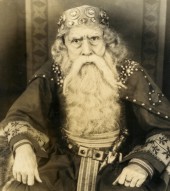
Volume 7 is Thanhouser Presents Shakespeare. Several film companies of the period produced one- and two-reeler Shakespeare films, but it took Thanhouser to film such ‘difficult’ and less familiar titles as The Winter’s Tale (1910) and Cymbeline (1913). The third title is King Lear (1917), a feature-length production (two-and-a-half reels here, abridged from the original five), generally well-thought of by the brave band of Shakespeareans who can contemplate the idea of silent Shakespeare, and starring Frederick Warde (above).

Volume 8 features literary adaptations: Charles Dickens’ Nicholas Nickelby (1912), King Rene’s Daughter (1913), Tannhäuser (1913) and The Vagabonds (1915). King Rene’s Daughter is adapted from a Danish verse play, Iolanthe, while Tannhäuser derives from Wagner. The Vagabonds is from a poem by J.T. Trowbridge – all evidence of Thanhouser’s creative ambitions.

Thanhouser fire

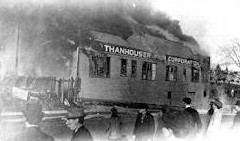
Volume 9 offers relatively more conventional fare: Daddy’s Double (1910), When the Studio Burned (1913), An Elusive Diamond (1914), The Marvelous Marathoner (1915) and The Woman in White (1917), based on Wilkie Collins and starring Florence La Badie, who died following an automobile accident not long after the film was released. When the Studio Burned is based on an actual fire which took place only the month before at the Thanhouser studio in Rochelle, with various Thanhouser players, including James Cruze and Marguerite Snow, playing themselves.

The Thanhouser website has excellent supporting information on each of the titles, as well as details of the previous six volumes in the series. It also provides a Research Center, with a history of the company, biographies of leading figures, a filmography, a database in spreadsheet form of the 186 surviving Thanhouser films and their archive locations, and a range of articles on Thanhouser films. There is also Thanhouser Films: An Encyclopedia and History, written by Q. David Bowers and available on CD-ROM. And there’s an image gallery as well. Every silent film company should be so well served.

Films on video and DVD worldwide

This is worth knowing about – the Film Search page of the BuechereiWiki site (the site’s in German but the Film Search section is available in English). The site itself appears to be a wiki for library resources.

It’s a remarkable listing of video and DVD sources worldwide, put together by Peter Delin of the Central and Regional Library, Berlin. The list covers Europe, Western Europe, Eastern Europe, Scandanavia, Asia, Africa, Latin America, Middle East, South Asia, South-East Asia, East Asia, North America, Australia and New Zealand – plus special areas, including film footage, amateur film, documentaries, experimental films, shorts, and … silents. There are some extraordinary individual resources there, particularly search engines which look across European library collections, which I’ll investigate further and report back. Meanwhile, it’s certainly a page to bookmark.

More from Mitchell and Kenyon

IrelandSports

Clearly there are people out there who cannot get enough of Sagar Mitchell and James Kenyon. Firstly there was the discovery of the lost haul of their actuality films of life in northern Edwardian Britain, an astonishing collection of 800 films in pristine condition, which were restored by the British Film Institute, with research undertaken by the National Fairground Archive. Then there came the 2005 BBC series The Lost World of Mitchell and Kenyon, which opened people’s eyes to past lives in a way probably never achieved before by a television programme. That was followed by the DVD of the series, then an accompanying book, then a second DVD Electric Edwardians, and then another book of the same title. And there have been public screenings, and countless newspaper articles.

And now there are two more DVDs, and both look amazing. Mitchell and Kenyon in Ireland, narrated by Fiona Shaw, includes twenty-six films taken by Mitchell and Kenyon 1901-1902, and covers Dublin, Wexford, Cork and Belfast. There’s an eighteen-page booklet, and a score by Neil Brand and Günter Buchwald. The second DVD, Mitchell and Kenyon Sports, is the one for me. Narrated by Adrian Chiles (clever choice), this has scenes of football, rugby, athletics, swimming and cricket. There’s film of Liverpool, Everton, Blackburn and Hull Kingston Rovers. A particular highlight is film of Lancashire bowler Arthur Mold demonstrating his action to prove that he didn’t, as was alleged, throw the ball. The camera never lies… Stephen Horne and Martin Pyne provide the musical accompaniment.

How will these sell, and what else lies in the vaults ready for release? It’s still extraordinary the excitement that has been generated by this collection of films. The ‘local topical’ film of the 1900s, in which Mitchell and Kenyon specialised, has long been well-known to film archivists. They are films with particular charm because of their artless style and the way in which the people in the films address the camera. They have always been seen as having largely regional appeal, the sort of films that few would ever see or appreciate. Then along came 800 in one go, negatives, with an underlying history connecting them with town hall showmen and fairground operators who commissioned the films and exhibited them across the country. And one musn’t forget the drive of Vanessa Toulmin, of the National Fairground Archive, in pulling all of this activity together.

Mitchell and Kenyon weren’t the only producers of local topicals at this period, but they were the most important. It has be stressed that we knew nothing of these films before they were discovered. My reaction, when I first saw a list of the films when I was working at the National Film and Television Archive, was disbelief – such a number of previously unknown films simply couldn’t exist. M&K were know for a handful of ‘fake’ newsreels of the Boer War, but none of the actualities films turned up in filmographies – they are completely absent from Denis Gifford’s British Film Catalogue, while Rachael Low’s The History of the British Film barely mentions the company. We know better now.

Will there ever be such a film discovery again?

Treasures III

Treasures III

The National Film Preservation Fund has announced the third in its Treasures series of rare silent and early sound films from American archives. The four-DVD set will be published in October by Image Entertainment. For number three in this stunning series, the theme is social issues. Here’s the press release:

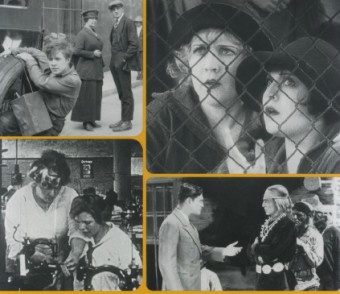
Cecil B. De Mille’s sensational reformatory exposé, The Godless Girl; Redskin in two-color Technicolor; Lois Weber’s anti-abortion drama Where Are My Children?; The Soul of Youth by William Desmond Taylor; and dozens of rare newsreels, cartoons, serials, documentaries, and charitable appeals are showcased in the National Film Preservation Foundation upcoming four-DVD box set, Treasures III: Social Issues in American Film, 1900-1934. Slated for release by Image Entertainment on October 16, Treasures III (retail price $89.99) introduces to DVD 48 films from the decades when virtually no issue was too controversial to bring to the screen.

“In film’s first decades, activists from every political stripe used movies to advance their agenda,” said Martin Scorsese, who serves on the NFPF Board of Directors. “These films are an important and fascinating glimpse of history. They changed America and still inspire today.”

Prohibition, birth control, unions, TB, atheism, the vote for women, worker safety, organized crime, loan sharking, race relations, juvenile justice, homelessness, police corruption, immigration—these issues and more are brought to life in the new 12-1/4 hour set. In addition to the four features, the line up includes the first Mafia movie, a 1913 traffic safety film, management’s version of the Triangle Shirtwaist fire, temperance and suffragette spoofs, A Call for Help from Sing Sing!, an action-packed Hazards of Helen episode, a patriotic “striptease” cartoon for war bonds, the earliest surviving union film, and a medley of prohibition newsreels kicked off by Capital Stirred by Biggest Hooch Raid.

The motion pictures are drawn from the preservation work of the nation’s foremost early film archives: George Eastman House, the Library of Congress, the Museum of Modern Art, the National Archives, and the UCLA Film & Television Archive. None of the works has been available before in high-quality video.

Treasures III is playable worldwide and has many special features for DVD audiences:

  • Newly recorded music contributed by more than 65 musicians and composers
  • Audio commentary by 20 experts
  • 200-page illustrated book with essays about the films and music
  • More than 600 interactive screens
  • 4 postcards from the films

The third in the award-winning Treasures series, the new set reunites the curatorial and technical team from the NFPF’s earlier DVD anthologies. The project is made possible through the generous support of the National Endowment for the Humanities and the National Film Preservation Board of the Library of Congress. Net proceeds will support further film preservation. A four-page brochure with the full contents list can be downloaded from the NFPF Web site: www.filmpreservation.org/T3_brochure.pdf.

Program 1: The City Reformed

The Black Hand (1906, 11 min.)
Earliest surviving Mafia film.
How They Rob Men in Chicago (1900, 25 sec.)
Police corruption Chicago-style.
The Voice of the Violin (1909, 16 min.)
A terrorist plot is foiled by the power of music.
The Usurer’s Grip (1912, 15 min.)
Melodrama arguing for consumer credit co-operatives.
From the Submerged (1912, 11 min.)
Drama about homelessness and “slumming parties”
Hope—A Red Cross Seal Story (1912, 14 min.)
A small town mobilizes to fight TB
The Cost of Carelessness (1913, 13 min.)
Traffic safety film for Brooklyn school children.
Lights and Shadows in a City of a Million (1920, 7 min.)
Charitable plea for the Detroit Community Fund.
6,000,000 American Children…Are Not in School (1922, 2 min.)
Newsreel story inspired by census data.
The Soul of Youth (1920, 80 min.), with excerpts from Saved by the Juvenile Court (1913, 4 min.)
William Desmond Taylor’s feature about an orphan reclaimed through the juvenile court of Judge Ben Lindsey with excerpts from the political campaign film Saved by the Juvenile Court (1913. 4 min.)
A Call for Help from Sing Sing! (1934, 3 min.)
Warden Lawes speaks out for wayward teens.

Program 2: New Women

The Kansas Saloon Smashers (1901, 1 min.)
Carrie Nation swings her axe.
Why Mr. Nation Wants a Divorce (1901, 2 min.)
Role-reversal temperance spoof.
Trial Marriages (1907, 12 min.)
Male fantasy inspired by a feminist’s proposal.
Manhattan Trade School for Girls (1911, 16 min.)
Profile of the celebrated progressive school for impoverished girls.
The Strong Arm Squad of the Future (ca. 1912, 1 min.)
Anti-suffragette cartoon.
A Lively Affair (ca. 1912, 7 min.)
Comedy with poker-playing women and child-rearing men.
A Suffragette in Spite of Himself (1912, 8 min.)
Boys’ prank results in an unwitting crusader.
On to Washington (1913, 80 sec.)
News coverage of the historic suffragette march.
Hazards of Helen: Episode 13 (1915, 13 min.)
Helen thwarts robbers and overcomes workplace discrimination.
Where Are My Children? (1916, 65 min.)
Provocative anti-abortion drama by Lois Weber.
The Courage of the Commonplace (1913, 13 min.)
A young farm woman dreams of a better life.
Poor Mrs. Jones! (1926, 46 min.)
Why wives should stay on the farm.
Offers Herself as Bride for $10,000 (1931, 2 min.)
Novel approach to surviving the Depression.

Program 3: Toil and Tyranny

Uncle Sam and the Bolsheviki-I.W.W. Rat (ca. 1919, 40 sec.)
Anti-union cartoon from the Ford Motor Company.
The Crime of Carelessness (1912, 14 min.)
Management’s version of the Triangle Factory fire.
Who Pays?, Episode 12 (1915, 35 min.)
A lumberyard strike brings deadly consequences.
Surviving reel from Labor’s Reward (1925, 13 min.)
The American Federation of Labor’s argument for “buying union.”
Listen to Some Words of Wisdom (1930, 2 min.)
Why personal thrift feeds the Depression.
The Godless Girl (1928, 128 min.)
Cecil B. DeMille’s sensational exposé of juvenile reformatories.

Program 4: Americans in the Making

Emigrants Landing at Ellis Island (1903, 2 min.)
Actuality footage from July 9, 1903.
An American in the Making (1913, 15 min)
U.S. Steel film promoting immigration and industrial safety.
Ramona: A Story of the White Man’s Injustice to the Indian (1910, 16 min.)
Helen Hunt Jackson’s classic about racial conflict in early California, retold by D.W. Griffith and starring Mary Pickford.
Redskin (1929, 82 min.)
Racial tolerance epic, shot in 2-color Technicolor at Acoma Pueblo and Canyon de Chelly.
The United Snakes of America (ca. 1917, 80 sec.)
World War I cartoon assailing homefront dissenters.
Uncle Sam Donates for Liberty Bonds (1918, 75 sec.)
Patriotic “striptease” cartoon.
100% American (1918, 14 min.)
Mary Pickford buys war bonds and supports the troops.
Bud’s Recruit (1918, 26 min.)
Brothers learn to serve their country in King Vidor’s earliest surviving film.
The Reawakening (1919, 10 min.)
Documentary about helping disabled veterans to build new lives.
Eight Prohibition Newsreels (1923-33, 13 min.)
From Capital Stirred by Biggest Hooch Raid to Repeal Brings Wet Flood!

The National Film Preservation Foundation, the nonprofit organization created by the U.S. Congress to help save America’s film heritage, is the charitable affiliate of the National Film Preservation Board of the Library of Congress. Since starting operations in 1997, the NFPF has helped save more than 1,100 films at archives, libraries and museums across 41 states, Puerto Rico, and the District of Columbia.

The NFPF website has details of Treasures volumes I and II, with some video clips, and a Treasures IV on the avant garde 1945-1985 will be available next year.

Crazy Cinématographe on DVD

As promised, a little more information on Crazy Cinématographe, released this month by Edition Filmmuseum. Crazy Cinématographe is a concept centred around the programmes of touring fairground film shows in the early years of the twentieth centuy. It is a touring show, the inspiration for a conference (Travelling Cinema in Europe, 6-8 September 2007, Luxembourg), and now a DVD.

It is a 2-DVD set presenting a European “cinema of attractions” 1896-1916, such attractions including piano-playing dogs, contortionists, circus acts, trick films, serpentine dances and animated toys. It’s an odd mishmash, and it’s unlikely that all the titles were shown in fairground shows (for example, Dr John Macintyre‘s X-ray films of 1897), but it’s the spirit of the thing that counts. This is the line-up of titles:

DVD 1: Europäisches Kino der Attraktionen

* Will Evans, the Musical Eccentric GB 1899, 1′
* Anarkistens Svigermoder DK 1906, 4′
* Dansa Serpentina F 1900, 1′
* Le Roi des Dollars F 1905, 2′
* L’Homme mystérieuxF 1910, 6′
* Le Réveil de Chrysis F 1897-99, 1′
* Premier Prix de violoncelle F 1907, 3′
* Agoust Family of Jugglers GB 1898, 1′
* Les Tulipes F 1907, 4′
* Dr. Macintyre’s X-Ray Film GB 1896, 1′
* Dr. Macintyre’s X-Ray Cabinet GB 1909, 1′
* Bain des dames de la cour F 1904, 1′
* 13 The Adventures of “Wee Rob Roy” No. 1 GB 1916, 4′
* Les Kiriki, acrobates japonais F 1907, 3′
* The ? Motorist GB 1906, 3′
* Photographie d’une étoile F 1906, 2′
* Les Chiens savants F 1907, 5′
* Horrible Fin d’un concierge F 1903, 2′
* A Peace of Coal GB 1910, 3′
* Miss Harry’s femme serpent F 1911, 3′
* Bain de pieds à la moutarde F 1902, 2′
* Scène pornographique F 1909, 2′
* L’Amblystôme F 1913, 7′
* Le Barbier fin de siècle F 1896, 1′
* Lèvres collées F 1906, 2′
* The Tale of the Ark GB 1909, 6′
* Fâcheuse Méprise F 1905, 1′
* Sculpteur moderne F 1908, 6′
* Acrobati comici I 1910, 5′
* Fox terriers et rats F 1902, 1′
* Saïda a enlevé Manneken-Pis B 1913, 7′
* Au revoir et merci F 1906, 2′

DVD 2: Lokalfilme aus der Großregion Luxemburg/Trier/Saarbrücken

* Das malerische Luxemburg 1912, 6′
* Übertragung der Gebeine des Hl. Willibrord 1906, 2′
* Echternacher Springprozession 1906, 5′
* Schlussprozession Octave 1911, 3′
* Kavalkade 1905, 2′
* Blumenkorso 1906 1906, 3′
* Trauerzug für Großherzog Wilhelm IV 1912, 5′
* Eidesleistung der Großherzogin Marie-Adelheid 1912, 5′
* Marie-Adelheid im Kino 1912, 1′
* Ein Besuch in der Champagnerfabrik Mercier 1907, 9′
* Autofahrt durch Trier ca. 1903, 2′
* Domausgang zu Trier 1904, 2′
* Domausgang am Ostersonntag 1909, 3′
* Fronleichnamsprozession in Trier 1909, 3′
* Bilder aus Trier 1902-1909, 5′
* Leben und Treiben auf dem Viehmarkt 1909, 2′
* Blumenkorso 1914 1914, 3′
* Straßenszenen in Saarbrücken ca. 1908, 5′

Musical acompaniment is by John Sweeney and Günter A. Buchwald, there is audio commentary in German, English, French, Luxemburgish and Trier dialect, and an eight-page booklet written by early film scholar Martin Loiperdinger. And it’s Region 0, so all DVD players can play it. The DVD is released on June 25th. Further details from the Edition Filmmuseum site.

Edition Filmmuseum

Nathan der Weise

Edition Filmmuseum is a joint project of film archives and cultural institutions in the German-speaking part of Europe. Its intention is to publish “film works of artistic, cultural and historical value in DVD editions that both utilise the possibilities of digital media and meet the quality demands of the archival profession.” Essentially this means a set of DVDs of archive film treasures, professionally presented, which would not normally get a public release. All of the DVDs come with English subtitles (and some with other languages too).

There is a ‘silent’ strand within Edition Filmmuseum, which includes these titles:

Blade af Satans Bog / Leaves Out of the Book of Satan (Denmark 1920)
Carl Dreyer’s vision of Satan walking the earth, tempting men to do evil.

Anders als die Andern / Different from the Others (Germany 1919)
One of the first gay-themed films in cinema history, directed by Richard Oswald and starring Conrad Veidt.

Blind Husbands (USA 1919)
Erich von Stroheim’s directorial debut.

Die elf Teufel (The Eleven Devils) & König der Mittelstürmer (King of the Centre Forwards) (Germany 1927)
Two football-themed feature films, both from 1927.

Ella Bergmann-Michel: Dokumentarische Filme 1931-1933
Five documentary films by artist, photographer, and filmmaker Ella Bergmann-Michel.

Friedrich Schiller – Eine Dichterjugend (The Poet as a Young Man) (Germany 1923)
Curt Goetz’s biopic of the poet Schiller’s adolescence.

Crazy Cinématographe. Europäisches Jahrmarktkino 1896-1916
Already trailed by The Bioscope, this is a compilation of early films shown across Europe in fairgrounds. A separate post will cover its remarkable contents.

Nathan der Weise (Germany 1922)
Manfred Noa’s appeal for religious tolerance, set in 12th-century Jerusalem.

Alfred Lind: The Flying Circus & The Bear Tamer (Denmark 1912)
Two dramas directed by Alfred Lind.

And there is more (see the Danish Film Classics strand), and more releases to follow.

This is a superb initiative. Edition Filmmuseum DVDs will be available at the Cinema Ritrovato in Bologna (June 30 – July 7) and at the International Silent Film Festival Bonner Sommerkino in Bonn (August 9 – August 19), and can be ordered from the website. And the website is in English as well as German.

Science is Fiction

The new BFI DVD of the surreally beautiful films of scientific filmmaker Jean Painlevé, Science is Fiction, looks marvellous just by itself, but for lovers of early scientific films (there are a handful of us) the DVD also includes Percy Smith‘s The Birth of a Flower (1910) and The Strength and Agility of Insects (1911, though this is actually the retitled The Balancing Bluebottle from 1908), with its cork-juggling flies.

Reading Robb

I’ve now got my copy of Brian J. Robb’s Silent Cinema (see earlier post) and indeed it is quite poor. It’s sloppily edited, has numerous errors, spells names wrongly (Adolph Zuker, Brit Acres, D.W. Griffiths etc), and unashamedly regurgitates every dubious myth about silent film you can think of. It’s also very oddly structured – chapters on the origins and developing art of film, then a chapter on Georges Méliès, then straight into sections on directors, stars and clowns, followed by scandals, a quick round up of international silents, then potted descriptions of some classic titles, and on to the coming of sound.

I wouldn’t recommend it to anybody, except for the DVD that accompanies it. This is a generous 193 mins compilation put together by Sunrise Silents. The quality of the clips is poor, the accompanying music is cheap, and there’s nothing to tell you what the film clips are unless to refer to a back page of the book. But the sheer range of clips is very impressive, so here’s a listing (the dates aren’t given on book or DVD, so The Bioscope comes to the rescue):

  • Johnny Hines – Conductor 1492 (1924)
  • Mary Pickford – Little Annie Rooney (1925)
  • Harold Lloyd – I’m On My Way (1919)
  • Pola Negri – Hotel Imperial (1926)
  • Rudolph Valentino – Son of the Sheik (1926)
  • The Gish sisters – Orphans of the Storm (1921)
  • Douglas Fairbanks – Wild and Woolly (1917)
  • Greta Garbo – Joyless Street (1925)
  • Laura La Plante – The Cat and the Canary (1927)
  • Buster Keaton – Cops (1922)
  • Norma Talmadge – The Social Secretary (1916)
  • Rin Tin Tin – The Night Cry (1926)
  • Raymond Griffith – The Night Club (1925)
  • Colleen Moore – A Roman Scandal (1919)
  • Lon Chaney – The Phantom of the Opera (1925)
  • Louise Brooks – It’s the Old Army Game (1926)
  • Charles Chaplin – The Star Boarder (1914)
  • Clara Bow – My Lady of Whims (1925)
  • William S. Hart – The Ruse (1915)
  • Pearl White – The Perils of Pauline (1914)
  • Lige Conley – Air Pockets (1924)
  • John Barrymore – The Beloved Rogue (1927)
  • Theda Bara – The Unchastened Woman (1925)
  • Our Gang – The Big Show (1923)
  • Mabel Normand – The Extra Girl (1923)
  • Alla Nazimova – Salome (1923)
  • Gloria Swanson – Teddy at the Throttle (1917)

All are American except Joyless Street (German), and, no, I’d never heard of Johnny Hines or Lige Conley either…