And the first silent on Blu-Ray is…

Well, we’ve been waiting with eager anticipation to discover which silent film would be the first to get the Blu-Ray treatment, with speculation upon speculation as to what, say, Criterion, might eventually be able to offer us. And now we have what I think is the first silent film to be offered commercially in High Definition, and the winner is… The Story of Petroleum.

Yes, the 25mins 1923 US Bureau of Mines and the Sinclair Oil Company documentary which was included as a surprise extra on the DVD release of Paul Thomas Anderson’s There Will Be Blood (previously reported here) has been given the HD treatment, scratches and damaged sections coming out at the viewer in all their heightened glory.

There’s a review of the disc, which gives mention to the silent short, on Audiophile Audition. There is no HD-DVD release scheduled, as Paramount have announced they will no longer be producing HD-DVD titles.

In fact, I believe the first silent to have been given any sort of HD transfer was Alfred Hitchcock’s The Lodger, produced by Granada International, which was scheduled to have a screening on the MGMHD channel before being mysteriously withdrawn at the last minute and replaced by Paul Morrissey’s The Hound of the Baskervilles (again, as reported earlier). This I have seen, but only a DVD copy, and where and in what form it will eventually appear in public I don’t know. But first out commercially, and definitely first on Blu-Ray is The Story of Petroleum. The bookies will have made a killing.

Unless anyone knows differently?

The Vortex

The Vortex, from http://www.sunrisesilents.com

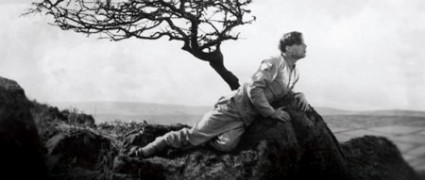
Another British silent has been issued on DVD (see the post on A Cottage in Dartmoor for a round-up of which British silents are currently available on DVD). Sunrise Silents have released The Vortex (1928), Adrian Brunel’s film, made for Gainsborough, of the Noël Coward play, starring Ivor Novello and Willette Kershaw.

Who she? Adrian Brunel, in his autobiography Nice Work, tells his usual tales of battles with the philistines that generally ran things in British films at that time (not like that now, of course), and tells this tale of working with the stage actress, who was chosen after forty others were considered for the role (including Edna Purviance, who turned them down):

Finally we chose Willette Kershaw, the American stage actress. Physically she was ideal; she was pretty, and her doll-like face appeared youthful in a way the part demanded. She was a strange creature, rather pathetic, rather lovable and not quite real. She never seemed to eat – at least, not solid foods. Her diet consisted mainly of vegetable extracts pellets.

It was her first film and a trying ordeal for her. When she had been rehearsed and all was set for taking the scene, she would swallow one of her little pills, and I would give the word go. For the first five seconds of very scene she would be detached and miles away; then she would come to, performing excellently for about twenty seconds, when she would begin to sag. Naturally, therefore, I made her scenes as short as possible, but there was that lag in her attack and very often that sagging at the end.

Brunel then goes on to write about how he saved her work in the editing, only to have the editing of the film taken away from him. Brunel is wrong is saying that it was her first film, as IMDB gives three credits for her in the 1910s. But it was her last film. The play The Vortex was highly controversial in its day, for its allusions to drug addiction and implications of homosexuality – needless to say, the film version is heavily bowderlised.

Other British silents available from Sunrise Silents are Piccadilly (1929) and She (1925).

Méliès by instalments

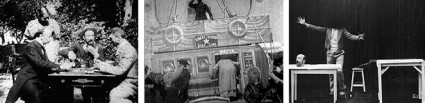
Une Partie de cartes, Entre Calais et Douvres and Un Homme de têtes, from http://filmjournal.net/melies

Parbleu! The publication of the Flicker Alley five-disc set of (most of) the works of Georges Méliès has already sparked off a lot of interest and investigation, some of it centred on identifying those titles which exist but aren’t included on the DVDs. But now we have Georges Méliès: An in-depth look at the cinema’s first creative genius. This is a new blog/research tool from Michael Brooke, part of the new Filmjournal blogging site. Brooke (a regular contributor to the BFI’s Screenonline site) has taken on the task of reviewing everyone of the 173 films on the Flicker Alley set, in chronological order. Each film is given under its English and French titles, with date, catalogue number and length; illustrated with a frame still; the action described; a detailed review follows (including comments on the DVD quality); then links (usually IMDB, Wikipedia and YouTube).

It’s well done and is going to build up into a really useful resource. The emphasis is very much on stylistic innovations, but there’s more to Méliès than magic and film form. His films were grounded in social and political realities (it’ll be interesting to see how his films of the Dreyfus affair are covered), and in ways of storytelling that reach way back before the upstart cinema. Anyway, an excellent effort so far, and an answer to the complaint on this blog that there weren’t any good Méliès sites out there. It looks like one is building up film by film before our eyes.

A Cottage on Dartmoor

A Cottage on Dartmoor

Out on 26 May is the latest silent DVD release from the BFI, Anthony Asquith’s A Cottage on Dartmoor (1929). This intense melodrama about an escapee from Dartmoor prison was Asquith’s last silent, indeed one of the last silents to be made in Britain. A notable scene in the film is the pit orchestra for a part-silent, part-talkie movie having to sit around doing nothing while the sound passage plays. The film stars Norah Baring and Uno Henning, and has gained a modest reputation of late, thanks not least to Stephen Horne’s fine piano accompaniment at many screenings. Stephen provides the music here, while the extras include Insight (1960), a study of Anthony Asquith at work featuring on set footage and interviews, and Rush Hour (1941), a comedy film directed by Asquith about Britain’s workers coping with the transport system during the Second World War.

This is the film’s first DVD release in the UK – it’s already available on Region 1 in the USA, issued by Kino, with Stephen’s score, and the extra being Matthew Sweet’s commendable documentary Silent Britain (2006).

It wasn’t so long ago when your average film afficionado would have known nothing of British silents except Alfred Hitchcock’s The Lodger, and would probably have been proud to admit the fact. Now, thanks very much to the work of the BFI, the annual British Silent Cinema Festival, and above all to the quality of the best of the films themselves, a good selection is available on DVD and overturning prejudices. Here’s a round up of what currently exists of British silents on DVD, so far as I know (this list will get added to as new DVDs appear):

  • Blackmail (1929, d. Alfred Hitchcock) [Arthaus] (silent and sound versions)
  • A Cottage on Dartmoor (1929, d. Anthony Asquith) [BFI] [Kino]
  • David Copperfield (1913, d. Thomas Bentley) [Grapevine]
  • The Early Hitchcock Collection (includes Champagne [1928], The Ring [1927], The Farmer’s Wife [1928], The Manxman) [1927]) [Optimum] [Delta]
  • Easy Virtue (1927, d. Alfred Hitchcock) [WHE]
  • Hindle Wakes (1927, d. Maurice Elvey) [Milestone]
  • Hitchcock – The British Years (includes The Pleasure Garden [1925], The Lodger [1926] and Downhill [1927]) [Network]
  • The Informer (1929, d. Arthur Robison) [Grapevine]
  • Lady Windermere’s Fan (1916, d. Fred Paul) (VHS) [BFI]
  • Livingstone (1925, d. M.A. Wetherell) [Grapevine]
  • The Lodger (1926, d. Alfred Hitchcock) [Whirlwind]
  • Moulin Rouge (1928, d. E.A. Dupont) [Grapevine]
  • The Open Road (1924-1926, d. Claude Friese-Greene)[BFI]
  • Piccadilly (1929, d. E.A. Dupont) [BFI] [Milestone] [Sunrise Silents]
  • The Return of the Rat (1929, d. Graham Cutts) [Grapevine]
  • The Ring (1927, d. Alfred Hitchcock) (VHS) [BFI]
  • She (1925, d. Leander de Cordova) [Sunrise Silents]
  • South (1919, d. Frank Hurley) [BFI] [Milestone]
  • A Throw of Dice (1929, d. Franz Osten) [BFI]
  • Trapped by the Mormons (1922, d. Harry B. Parkinson) [Grapevine]
  • The Vortex (1928, d. Adrian Brunel) [Sunrise Silents]
  • The Woman He Scorned (1929, d. Paul Czinner) [Grapevine]

Compilations

  • Dickens before Sound (compilation of UK and USA titles) [BFI]
  • Early Cinema: Primitives and Pioneers (compilation of UK, USA and French titles) [BFI]
  • Electric Edwardians: The Films of Mitchell and Kenyon [BFI] [Milestone]
  • Mitchell & Kenyon: Edwardian Sports [BFI]
  • Mitchell & Kenyon in Ireland [BFI]
  • R.W. Paul: The Collected Films, 1895-1908 [BFI]
  • Silent Shakespeare (compilation of UK, USA and Italian titles) [BFI] [Milestone]

Television programmes

  • The Lost World of Friese Greene [BFI]
  • The Lost World of Mitchell and Kenyon [BFI]
  • Silent Britain [BFI] [Kino]

OK, it’s not a vast number (I’ve been selective over the Hitchcocks – there’s a fair amount of dross out there), but look at the quality (mostly). And there’s bound to be others (do let me know what I’ve missed). And let’s ponder what’s not on DVD but ought to be: Shooting Stars, The Rat, The Informer, The Battle of the Somme, East is East, The Life Story of David Lloyd George, The Hound of the Baskervilles, The Lure of Crooning Water, The Flag Lieutenant, The First Born

Alice, Cleo, Dorothy, Lois and Ruth

http://www.kino.com

More DVD releases, though in this case it is the DVD release (22 April) of titles previously only available on videotape. Kino is issuing three DVDs of silent films made by American women directors, available singly or bundled as ‘First Ladies‘. Kino claims that “the mid-1910s was a virtual golden age for women directors, with over a dozen women working behind the camera.” ‘Golden Age’ might seem to suggest an era of unfettered opportunity and creative expression, which was hardly the case. No woman was able to get behind the camera without a tough struggle, but nevertheless there were proportionately more women directors at this period than for many decades thereafter, and enough survives for us to value a distinctive and often clearly feminist body or work.

First up is the double-feature The Ocean Waif (1916), directed by Alice Guy-Blaché and 49-17 (1917), written and directed by Ruth Ann Baldwin. Alice Guy (right) or Alice Guy-Blaché (she married cameraman/ producer Herbert Blaché) is arguably the most notable of early women filmmakers; certainly one whose career has been championed in some quarters to the point of myth. She was taken on as Léon Gaumont’s secretary in 1897, and swiftly became head of film production at Gaumont, producing hundreds of short films (including proto-sound films). She moved to America in 1907 when her husband was made head of Gaumont’s office in New York. She returned to filmmaking in 1910 for her own company, Solax, before becoming an independent filmmaker, and it was during this period that she made The Ocean Waif for William Randolph Hearst’s International Film Service. Kino describes it as “a romantic story, plenty of pathos but no brutality, a likeable hero and an innocent young woman, and a suspenseful plot with a dramatic and happy ending”. It is one of the few films of hers from this period that survives. She carried on directing with moderate success throughout the teens, but her career petered out after her divorce in 1922, after which she returned to obscurity, only to be rediscovered in old age and awarded the Legion d’Honneur by a grateful French government.

The American Ruth Ann Baldwin was a journalist turned screenwriter, film editor and director. 49-17 is a parody Western, starring Jean Hersholt. It was her only feature (she directed several two-reelers), though apparently it was a hit, and the remainder of her film credits are for scriptwriting.

Lois Weber

Baldwin worked for Universal studios, which seems to have been more encouraging of women directors than its rivals. It was home to Cleo Madison, actress turned director of the short film Eleanor’s Catch (1916), which is paired on the second DVD with Lois Weber’s feature The Hypocrites (1915). Weber (left) is the most notable of American women director of the silent era, a filmmaker as bold in technique as she was in ideas. She too started with the Gaumont company, as an actress, where for a time she worked alongside Alice Guy, and married a Gaumont manager Phillips Smalley. She turned to directing films in 1911, directing many shorts, including (with Smalley) the classic stylistic thriller Suspense (1913), before making her name with a succession of controversial and issue-led films, such as Where Are My Children? (1916) on abortion, The People vs John Doe (1916) on capital punishment as The Hand that Rocks the Cradle (1917) on birth control. The Hypocrites (1915), on religion and hypocrisy, itself caused contoversy for its use of nude woman (representing naked truth). She too worked for a time at Universal, enjoyed further success as a director into the early 1920, only to see her career crumble following the break-up of her marriage and a nervous breakdown.

The third DVD, The Red Kimona (1925) was directed by Dorothy Davenport Reid, better known as Mrs Wallace Reid (right), the wife of the wretched Wallace Reid. He was the actor whose death through drug addiction so shocked Hollywood and the nation, leading his wife to appear in the impassioned anti-drug film Human Wreckage (1923), which featured in the Bioscope Festival of Lost Films. After the success of that film she formed her own production company, and made this concerned drama (based on a true story) of a young woman lured into a life of prostitution, starring Priscilla Bonner. Its notable female credits continue, with a story by future director Dorothy Arzner and screenplay by Adela Rogers St. John. She continued to have some success as a director into the 1930s and thereafter as a screenwriter.

As said, it would be misleading to look upon 1910s America as some sort of golden period for women filmmakers, except by the modest proportion of women able to make films compared to later decades. It was still a cinema dominated by men in every field of production, and probably only Lois Weber rose to real prominence and power. Alice Guy worked regularly as a director in America throughout the 1910s, but generally for minor film companies set up by her husband. Her public profile was nothing like Webers. Dorothy Davenport made some courageous films, but she was never a leading figure, and by the mid-1920s women filmmakers were virtually unknown in America. The others were actresses or scenarists who were allowed a brief turn behind the camera.

However, if it was not Utopia, it nevertheless was a time of opportunities to be taken to create films from the woman’s point of view, and this Guy, Weber and Davenport undoubtedly did. They did not simply ape common themes and styles but purposefully chose subjects of particular interest to them as women, or simply revealed a different eye in how they placed and treate female protagonists within the narratives that they told. These films are no mere curiosities, but evidence of a different way of making films and seeing films. It’s good to see them made available again in this way.

And now La Roue

http://www.flickeralley.com

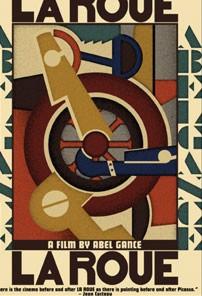
Having already pronounced Georges Méliès: First Wizard of Cinema (1896-1913) to be the finest silent DVD release of the year, it looks the upcoming new release from the same company, Flicker Alley, may occupy a close second place. In May they are releasing a 2-DVD set of Abel Gance’s bravura La Roue (1923). Here’s the blurb to explain the film’s importance to the history of cinematic expression:

Never before released in the United States, this monumental French film is one of the most extraordinary achievements in the whole history of cinema. Written and directed by Abel Gance (Napoleon, J’Accuse), three years in production, and for its time unprecedented in length and complexity of emotion, La Roue pushed the frontiers of film art beyond all previous efforts. Said Gance, “Cinema endows man with a new sense. It is the music of light. He listens with his eyes.”

Taken to its bare bones, the story deals with Sisif, a locomotive engineer who saves Norma, an infant girl, from a train wreck and raises her as his adopted daughter. Norma thinks Sisif’s son Elie is her brother, and when the two fall in love, she leaves to marry a virtual stranger. Sisif is also obsessed with her and the plot elaborates this triangular relationship. German director G.W. Pabst, an ardent admirer of La Roue, was encouraged by Gance’s example to undertake his own remarkable explorations of human psychology in such silent films as Secrets of a Soul, Pandora’s Box and Diary of a Lost Girl.

Yet La Roue is even more remarkable for its cinematic accomplishment than for its story. The film was taken almost entirely on location. Sets were built along the railroad tracks in the yard at St. Roch, near Nice, and at an elevation of 13,000 feet on Mount Blanc. Gance pioneered a dazzlingly innovative style of rapid montage that revolutionized filmmaking around the world, especially in the works of Eisenstein and his contemporaries in the Soviet Union. Almost every sequence was experimental; as his cinematographer, L-H Burel recalled, “I’d never come to the end of it if I were to list all the tests we did, all the special effects I invented, and all the innovations we launched.” Like Intolerance and Citizen Kane, La Roue became a source book of cinematic invention that reverberated in countless other classic films over the decades. It was hailed by artists and intellectuals, who recognized it as a stunning advance in modern art. Said Akira Kurosawa, “The first film that really impressed me was La Roue.”

This new restoration with a running time of nearly four and a half hours, accompanied by Robert Israel’s symphonic score, is the fullest presentation of La Roue to reach the public since 1923. It at last allows audiences today to experience the amazing, poetic vision that Abel Gance brought to the world. The DVD also includes a short film that provides a vivid documentary record of the great work in production, along with a booklet containing an outstanding essay by William M. Drew on the history and impact of La Roue, and comments by Robert Israel on the score.

Though not on sale yet, there’s a pre-release offer of $31.95 (normal price $39.95), with orders shipped on or just before 6 May.

There will be silents

The Story of Petroleum

The Story of Petroleum, from http://www.dvdtalk.com

An intriguing small news piece for you. The forthcoming DVD release (Collector’s Edition) of the Paul Thomas Anderson film There Will Be Blood, on the birth of the American oil industry, will include The Story of Petroleum among its extras.

This 25mins documentary dates from c.1923 and was produced at the behest of the US Bureau of Mines and the Sinclair Oil Company (nothing to do with Upton Sinclair, whose novel Oil! forms the basis on Anderson’s film). It shows operations of the American oil industry at the time (There Will Be Blood is set in the 1890s), and comes with a score from Radiohead’s Jonny Greenwood, who also scored the main feature film. The film was presumably remade or updated from time to time, as the BFI National Archive has copies dating from 1920 and 1928. It is a typical example of the semi-instructional semi-propagandist films produced by industrial concerns for the burgeoning non-theatrical market from the 1920s onwards.

The DVD (Collector’s Edition) of There Will Be Blood is released in the UK on 8 April.

Georges Méliès: First Wizard of Cinema (1896-1913)

Georges Méliès

The outstanding Flicker Alley 5-disc set Georges Méliès: First Wizard of Cinema (1896-1913) is now published, and I have my copy. Naturally, it’s a sensational package. Put together by Eric Lange (Lobster Films) and David Shepard (Blackhawk Films) from the archival holdings from seventeen collections across eight countries, the elegantly-presented DVDs comprises 173 titles (including one unidentified fragment) – almost (though not quite) every extant Georges Méliès film, plus the Georges Franju 1953 film, Le Grand Méliès. The DVDs are region 0, NTSC format.

The set comes with a well-illustrated booklet, which has essays by Norman McLaren (something of a surprise – it’s a transcript of an audio recording he made for a conference he couldn’t attend) and a long piece by John Frazer on Méliès’ life and work, adapted by Shepard from a text first written by Frazer in 1979. The full list of titles is now available on the Flicker Alley site, but here’s The Bioscope’s version, with the titles in the chronological order in which they appear on the DVDs, with Star-Film catalogue number, original French title and English title.

1896
1 – Partie de cartes, une/Playing Cards
26 – Nuit terrible, une/Terrible Night, a
70 – Escamotage d’une dame chez Robert-Houdin/Vanishing Lady, the
82 – Cauchemar, le/Nightmare, A

1897
96 – Château hanté, le/Haunted Castle, The
106 – Prise de Tournavos, la/Surrender of Tournavos, The
112 – Entre Calais et Douvres/Between Calais and Dover
122-123 – Auberge ensorcelée, l’/Bewitched Inn, the
128 – Après le bal (le tub)/After the Ball

1898
147 – Visite sous-marine du Maine/Divers at Work on the Wreck of the “Maine”
151 – Panorama pris d’un train en marche/Panorama from Top of a Moving Train
153 – Magicien, le/Magician, The
155 – Illusions fantasmagoriques/Famous Box Trick, The
159 – Guillaume Tell et le clown/Adventures of William Tell, The
160-162 – Lune à un mètre, la/Astronomer’s Dream, The
167 – Homme de têtes, un/Four Troublesome Heads, The
169 – Tentation de Saint Antoine/Temptation of St Anthony, the

Entrevue de Dreyfus et de sa femme à Rennes

Entrevue de Dreyfus et de sa femme à Rennes

1899
183 – Impressionniste fin de siècle, l’/Conjurer, The
185-187 – Diable au couvent, le/Devil in a Convent, The
188 – Danse du feu/Pillar of Fire, The
196 – Portrait mystérieux, le/Mysterious Portrait, The
206 – Affaire Dreyfus, la dictée du bordereau/Dreyfus Court Martial – Arrest of Dreyfus
207 – Ile du diable, l’/Dreyfus: Devil’s Island – Within the Palisade
208 – Mise aux fers de Dreyfus/Dreyfus Put in Irons
209 – Suicide du Colonel Henry/Dreyfus: Suicide of Colonel Henry
210 – Débarquement à Quiberon/Landing of Dreyfus at Quiberon
211 – Entrevue de Dreyfus et de sa femme à Rennes/Dreyfus Meets His Wife at Rennes
212 – Attentat contre Me Labori/Dreyfus: The Attempt Against the Life of Maître Labori
213 – Bagarre entre journalistes/Dreyfus: The Fight of Reporters
214-215 – Conseil de guerre en séance à Rennes, le/Dreyfus: The Court Martial at Rennes
219-224 – Cendrillon/Cinderella
226-227 – Chevalier mystère, le/Mysterious Knight, The
234 – Tom Whisky ou l’illusionniste truqué/Addition and Subtraction

L’Homme-orchestre

L’Homme-orchestre

1900
243 – Vengeance du gâte-sauce, la/Cook’s Revenge, The
244 – Infortunes d’un explorateur, les/Misfortunes of an Explorer, The
262-263 – Homme-orchestre, l’/One-Man Band, The
264-275 – Jeanne d’Arc/Joan of Arc
281-282 – Rêve du Radjah ou la forêt enchantée, le/Rajah’s Dream, The
285-286 – Sorcier, le prince et le bon génie, le/Wizard, the Prince and the Good Fairy, The 289-291 – Livre magique/Magic Book, The
293 – Spiristisme abracadabrant/Up-to-date Spiritualism
294 – Illusioniste double et la tête vivante, l’/Triple Conjurer and the Living Head, The
298-305 – Rêve de Noël/Christmas Dream, The
309-310 – Nouvelles luttes extravagantes/Fat and Lean Wrestling Match
311 – Repas fantastique, le/Fantastical Meal, A
312-313 – Déshabillage impossible, le/Going to Bed under Difficulties
314 – Tonneau des Danaïdes, le/Eight Girls in a Barrel
317 – Savant et le chimpanzé, le/Doctor and the Monkey, The
322 – Réveil d’un homme pressé, le/How He Missed His Train
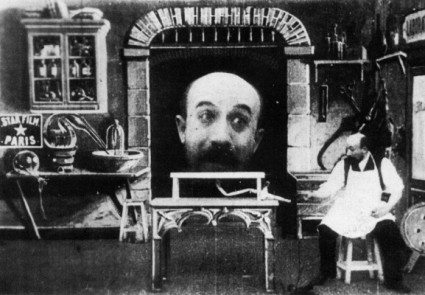
L’Homme à la tête en caoutchouc

L’Homme à la tête en caoutchouc

1901
325-326 – Maison tranquille, la/What is Home Without the Boarder?
332-333 – Chrysalide et le papillon, la/Brahmin and the Butterfly, The
335-336 – Dislocation mystérieuse/Extraordinary Illusions
345-347 – Antre des esprits, le/Magician’s Cavern, The
350-351 – Chez la sorcière/Bachelor’s Paradise, The
357-358 – Excelsior!/Excelsior! – Prince of Magicians
361-370 – Barbe-Bleue/Blue Beard
371-372 – Chapeau à surprises, le/Hat With Many Surprises, The
382-383 – Homme à la tête en caoutchouc, l’/Man With the Rubber Head, The
384-385 – Diable géant ou le miracle de la madone, le/Devil and the Statue, The
386 – Nain et géant/Dwarf and the Giant, The

Voyage dans la lune

Voyage dans la lune

1902
391 – Douche du colonel/Colonel’s Shower Bath, The
394-396 – La danseuse microscopique, la/Dancing Midget, The
399-411 – Voyage dans la lune/Trip to the Moon, A
412 – Clownesse fantôme, la/Shadow-Girl, The
413-414 – Trésors de Satan, les/Treasures of Satan, The
415-416 – Homme-mouche, l’/Human Fly, The
419 – Équilibre impossible, l’/Impossible Balancing Feat, An
426-429 – Voyage de Gulliver à Lilliput et chez les géants, le/Gulliver’s Travels Among the Lilliputians and the Giants
No number – Sacre d’Edouard VII, le/Coronation of Edward VII, The
445-448 – Guirlande merveilleuse, la/Marvellous Wreath, The

1903
451-452 – Malheur n’arrive jamais seul, un/Misfortune Never Comes Alone
453-457 – Cake-walk infernal, le/Infernal Cake-Walk, The
458-459 – Boîte à malice, la/Mysterious Box, The
462-464 – Puits fantastique, le/Enchanted Well, The
465-469 – Auberge du bon repos, l’/Inn Where No Man Rests, The
470-471 – Statue animée, la/Drawing Lesson, The
473-475 – Sorcier, le/Witch’s Revenge, The
476 – Oracle de Delphes, l’/Oracle of Delphi, The
447-478 – Portrait spirite, le/Spiritualistic Photographer
479-480 – Mélomane, le/Melomaniac, The
481-482 – Monstre, le/Monster, The
483-498 – Royaume des fées, le/Kingdom of the Fairies, The
499-500 – Chaudron infernal, le/Infernal Cauldron, The
501-502 – Revenant, le/Apparitions
503-505 – Tonnerre de Jupiter, le/Jupiter’s Thunderbolts
506-507 – Parapluie fantastique, le/Ten Ladies in an Umbrella
508-509 – Tom Tight et Dum Dum/Jack Jaggs and Dum Dum
510-511 – Bob Kick, l’enfant terrible/Bob Kick the Mischievous Kid
512-513 – Illusions funambulesques/Extraordinary Illusions
514-516 – Enchanteur Alcofribas, l’/Alcofribas, the Master Magician
517-519 – Jack et Jim/Comical Conjuring
520-524 – Lanterne magique, la/Magic Lantern, The
525-526 – Rêve du maître de ballet, le/Ballet Master’s Dream, The
527-533 – Faust aux enfers/Damnation of Faust, The
534-535 – Bourreau turc, le/Terrible Turkish Executioner, The
538-539 – Au clair de la lune ou Pierrot malheureux/Moonlight Serenade, A
540-541 – Prêté pour un rendu, un/Tit for Tat
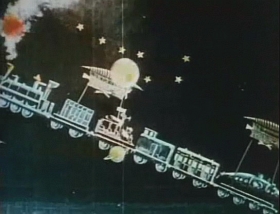
Voyage à travers l’impossible

Voyage à travers l’impossible

1904
547-549 – Coffre enchanté, le/Bewitched Trunk, The
552-553 – Roi du maquillage, le/Untamable Whiskers
554-555 – Rêve de l’horloger, le/Clockmaker’s Revenge, The
556-557 – Transmutations imperceptibles, les/Imperceptible Transmutations, The
558-559 – Miracle sous l’Inquisition, un/Miracle Under the Inquisition, A
562-574 – Damnation du Docteur Faust/Faust and Marguerite
578-580 – Thaumaturge chinois, le/Tchin-Chao, the Chinese Conjurer
581-584 – Merveilleux éventail vivant, le/Wonderful Living Fan, The
585-588 – Sorcellerie culinaire/Cook in Trouble, The
589-590 – Planche du diable, la/Devilish Prank, The
593-595 – Sirène, la/Mermaid, The
641-659 – Voyage à travers l’impossible/Impossible Voyage, The
665-667 – Cascade de feu, la/Firefall, The
678-679 – Cartes vivantes, les/Living Playing Cards, The

1905
683-685 – Diable noir, le/Black Imp, The
686-689 – Phénix ou le coffret de cristal, le/Magic Dice, The
690-692 – Menuet lilliputien, le/Lilliputian Minuet, The
705-726 – Palais des mille et une nuits, le/Palace of the Arabian Nights, The
727-731 – Compositeur toqué, le/Crazy Composer, A
738-739 – Chaise à porteurs enchantée, la/Enchanted Sedan Chair, The
740-749 – Raid Paris – Monte-Carlo en deux heures, le/Adventurous Automobile Trip, An
756-775 – Légende de Rip Van Vinckle, la/Rip’s Dream
784-785 – Tripot clandestin, le/Scheming Gamblers’ Paradise, The
789-790 – Chute de cinq étages, une/Mix-up in the Gallery, A
791-806 – Jack le ramoneur/Chimney Sweep, The
807-809 – Maestro Do-Mi-Sol-Do, le/Luny Musician, The

1906
818-820 – Cardeuse de matelas, la/Tramp and the Mattress Makers, The
821-823 – Affiches en goguette, les/Hilarious Posters, The
824-837 – Incendiaires, les/Desperate Crime, A
838-839 – “Anarchie chez Guignol, l'”/Punch and Judy
843-845 – Hôtel des voyageurs de commerce ou les suites d’une bonne cuite, l’/Roadside Inn, A
846-848 – Bulles de savon animées, les/Soap Bubbles
849-870 – Quatre cents farces du diable, les/Merry Frolics of Satan, The
874-876 – Alchimiste Parafaragaramus ou la cornue infernale, l’/Mysterious Retort, The
877-887 – Fée Carabosse ou le poignard fatal, la/Witch, The

L’Tunnel sous la Manche ou le cauchemar anglo-français

L’Tunnel sous la Manche ou le cauchemar anglo-français

1907
909-911 – Douche d’eau bouillante, la/Rogues’ Tricks
925-928 – Fromages automobiles, les/Skipping Cheeses, The
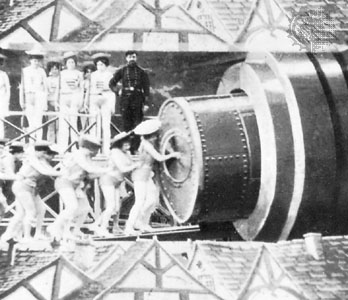
936-950 – Tunnel sous la Manche ou le cauchemar anglo-français, le/Tunnelling the English Channel
961-968 – Eclipse de soleil en pleine lune/Eclipse, or the Courtship of the Sun and Moon, The
1000-1004 – Pauvre John ou les aventures d’un buveur de whisky/Sightseeing through Whisky
1005-1009 – Colle universelle, la/Good Glue Sticks
1014-1017 – Ali Barbouyou et Ali Bouf à l’huile/Delirium in a Studio
1030-1034 – Tambourin fantastique, le/Knight of Black Art, The
1035-1039 – Cuisine de l’ogre, la/In the Bogie Man’s Cave
1044-1049 – Il y a un dieu pour les ivrognes/Good Luck of a Souse, The
1066-1068 – Torches humaines/Justinian’s Human Toches 548 A.D.

1908
1069-1072 – Génie du feu, le/Genii of the Fire, The
1073-1080 – Why that actor was late
1081-1085 – Rêve d’un fumeur d’opium, le/Dream of an Opium Fiend, The
1091-1095 – Photographie électrique à distance, la/Long Distance Wireless Photography
1096-1101 – Prophétesse de Thèbes, la/Prophetess of Thebes, The
1102-1103 – Salon de coiffure/In the Barber Shop
1132-1145 – Nouveau seigneur du village, le/New Lord of the Village, The
1146-1158 – Avare, l’/Miser, The
1159-1165 – Conseil du Pipelet ou un tour à la foire, le/Side Show Wrestlers
1176-1185 – Lully ou le violon brisé/Broken Violin, The
1227-1232 – The Woes of Roller Skates
1246-1249 – Amour et mélasse/His First Job
1250-1252 – Mésaventures d’un photographe, les/The Mischances of a Photographer
1253-1257 – Fakir de Singapour, le/Indian Sorcerer, An
1266-1268 – Tricky painter’s fate, a
1288-1293 – French interpreter policeman/French Cops Learning English
1301-1309 – Anaïc ou le balafré/Not Guilty
1310-1313 – Pour l’étoile S.V.P./Buncoed Stage Johnnie
1314-1325 – Conte de la grand-mère et rêve de l’enfant/Grandmother’s Story, A
1416-1428 – Hallucinations pharmaceutiques ou le truc du potard/Pharmaceutical Hallucinations
1429-1441 – Bonne bergère et la mauvaise princesse, la/Good Shepherdess and the Evil Princess
No number – unidentified film

1909
1495-1501 – Locataire diabolique, le/Diabolic Tenant, The
1508-1512 – Illusions fantaisistes, les/Whimsical Illusions

1911
1536-1547 – Hallucinations du Baron de Münchausen, les /Baron Munchausen’s Dream

1912
Pathé – A la conquète du pôle/Conquest of the Pole, The
Pathé – Cendrillon ou la pantoufle merveilleuse/Cinderella
Pathé – Chevalier des neiges, le/Knight of the Snow, The

1913
Pathé – Voyage de la famille Bourrichon, le/Voyage of the Bourichon Family, The

Almost needless to say, the quality of the digital transfers is excellent, sometimes startlingly so. There are fifteen examples of beautiful hand-colouring. Many musicians have provided scores, making the DVD a fascinating demonstration in itself of different approaches to the task of accompanying Georges Méliès (even if, for myself I find the American taste for organ accompaniment baffling). They are Eric Beheim, Brian Benison, Frederick Hodges, Robert Israel, Neal Kurz, the Mont Alto Motion Picture Orchestra, Alexander Rannie, Joseph Rinaudo, Rodney Sauer and Donald Sosin. Some of the films come with Georges Méliès’ original English narrations, designed to be spoken alongside the films, and here are spoken by Serge Bromberg and Fabrice Zagury (with some rather quaint mangling of the English language in places).

Georges Méliès is confirmed here as among the pre-eminent artists of the cinema, perhaps the most exuberant of all filmmakers. The films display imagination, wit, ingenuity, grace, style, fun, invention, mischief, intelligence, anarchy, innocence, vision, satire, panache, beauty and longing, the poetry of the absurd. Starting out as extensions of the tricks that made up Méliès’ magic shows, to view them in chronological order as they are here is to see the cinema itself bursting out of its stage origins into a theatre of the mind, where anything becomes possible – a true voyage à travers l’impossible, to take the title of one of his best-known films. The best of them have not really dated at all, in that they have become timeless, and presumably (hopefully) always will be so. Méliès in his lifetime suffered the agony of seeing his style of filmming turn archaic as narrative style in the Griffith manner became dominant, but we can see now that is his work that has truly lasted. The films will always stand out as showing how motion pictures, when they first did appeared, in a profound sense captured the imagination. And there is that consistency of vision that confirms Méliès as a true artist with a body of work that belongs in a gallery – or in this case a boxed set of DVDs – for everyone to appreciate.

What a great publication this is. Every good home should have one.

Update (January 2010):
For information on a sixth, supplementary disc with an additional 26 titles, see https://bioscopic.wordpress.com/2010/01/08/melies-encore.
Les Vampires

Les Vampires

Poster for Les Vampires

Well, first of all the imminent release by Artificial Eye of a three-disc DVD edition of Louis Feuillade’s classic serial Les Vampires gives me the opportunity to reproduce one of the great posters of the silent era. Has a touch of Twin Peaks about it, I’ve always thought, even if the curtains are the wrong colour.

Anyway, Les Vampires (1915/16) is, of course, one of the great crime serials (or series) made by Feuillade for Gaumont, after he had thrilled audiences and revitalised the crime genre with Fantômas (1913). The five Fantômas films, based the popular crime novels of Marcel Allain and Pierre Souvestre, were particularly thrilling for being shown from the perspective not of the detective but of the master criminal, with his genius for disguise and eluding the police. Les Vampires, a little more conventionally, is shown from the perspective of the pursuing journalist Philippe Guérande, but it does have the huge plus of arch villainess Irma Vep, played in true iconic fashion by Musidora. Irma Vep, as an intertitle sequence that always raises a cheer, is of course an anagram of vampire.

Irma Vep = Vampire

Intertitle sequence from Les Vampires giving the game away

The Vampires are a criminal gang, supposedly inspired by the real-life Bonnot gang whose exploits chilled and thrilled the French just before the First World War. Irma Vep does not lead the group, though she does assassinate the Grand Vampire, a scene Feuillade apparently concocted after the actor playing the Grand Vampire neglected to turn up on set on time. The Vampires dress head to toe in black and general steal, kidnap and assassinate, before making daring escapes across picturesque Parisian rooftops. Guérande doggedly pursues them, aided by reformed Vampire Mazamette, but each time some new nefarious figure rises to prominence within the ranks of the Vampires.

Les Vampires is, strictly speaking, halfway between a series and a serial. It is divided into ten episodes, but these were released irregularly, and it was until Judex (1917, also starring Musidora) and Feuillade truly adopted the serial form. Stylish, transgressive and wildly imaginative, Les Vampires gains a particular power from combining the surreal world of the Vampires with the ordinary streets and buildings of Paris, doubtless making it all the more imaginatively plausible to contemporary audiences.

Les Vampires

http://www.amazon.co.uk

Over three discs you get the ten episodes (between 40 and 70 minutes each), plus a selection of Feuillade’s short films: La Bous-Bous-Mie (1907), Une Dame Vraiment Bien (1908), La Legende de la Fileuse (1908), C’est pour les Orphelines (1916) and L’Orgie Romaine (1911). Music is scored by Éric le Guen. The release derives from the same Gaumont restoration which has been released on DVD in France by Gaumont themselves, though ranging over four discs, albeit with some extras not available on the Artificial Eye release.

Les Vampires is released on 24 March.

Everybody loves Sessue

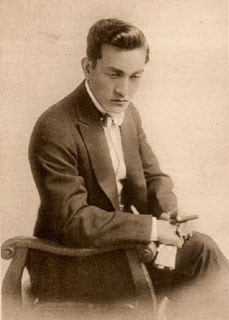
Sessue Hayakawa

Sessue Hayakawa, from The Evening Class

The silent star of the moment is Sessue Hayakawa. The Japanese-born star of American silents has been the subject of a critical study, film season and DVD releases, while an archive has announced that it has recently preserved a number of his films. This is a round-up of Hayakawamania.

The critical study is Daisuke Miyao’s Sessue Hayakawa: Silent Cinema and Transnational Stardom (Duke University Press), which has already been the subject of a post on the Bioscope. There’s an online interview with Miyao on The Evening Class blog. Miyao’s work inspired a Museum of Modern Art exhibition, Sessue Hayakawa: East and West, When the Twain Met, which ran September 5–16, 2007 – details of the films shown are on the web page.

The Dragon Painter

The Dragon Painter, from http://www.milestonefilms.com

The new DVD release is The Dragon Painter (1919), issued by Milestone. This is the blurb from their site:

Remembered mostly for his magnificent performance as the Japanese officer in The Bridge over the River Kwai, few filmgoers realize that Sessue Hayakawa was one of the great stars of the silent cinema. In many films he played a dashing, romantic lead — a rarity for Asian actors in Hollywood, even today. Hayakawa became so popular and powerful that he was able to start Haworth Pictures to control his own destiny. The Dragon Painter was the finest of the Haworth productions. Beautifully acted, gorgeously shot (with Yosemite Valley filling in for the Japanese landscape), and lovingly directed, the film is an absolute marvel.

Hayakawa plays Tatsu, an artist living as a hermit in the wilds of Japan. Thought mad by the local villagers, he believes that his princess fiancée has been captured by a dragon. His obsession leads to artistic inspiration. It isn’t until a surveyor comes across Tatsu in the mountains that his genius is discovered. The surveyor informs the famed artist Kano Indara about his discovery. Kano is desperate to find a male heir to teach his art, but when Tatsu meets Kano’s daughter (played by Hayakawa’s wife, Tsuru Aoki) and sees only his lost princess, a clash of wills brings the household to the brink of disaster.

Long considered lost, The Dragon Painter was rediscovered in a French distribution print and brought to the George Eastman House for restoration with the original tints. The film survives today as a tribute to Hayakawa’s great artistry and a shining example of Asian-American cinema.

The DVD comes with a remarkable set of extras, including the full-length feature, Thomas Ince’s The Wrath of the Gods (1914), starring Hayakawa, Tsuru Aoki and Frank Borzage; a copy of the script for The Wrath of the Gods; a 1921 short subject, Screen Snapshots (1921) with Hayakawa, Roscoe “Fatty” Arbuckle and Charles Murray; the original novel by Mary McNeil Fenollosa in PDF format; and the stills gallery includes Herbert Ponting’s exquisite images for his 1910 book In Lotus-Land Japan: Japan at the Turn of the Century (Ponting went on to be cinematopgrapher to the Scott Antarctic expedition).

You can download a presskit for the DVD from www.milestonefilms.com/presskits.php.

Other Sessue Hayakawa films available on DVD are The Cheat (1915) (from Kino in American and Bach Films in France) and The Secret Game (1917) (from Image Entertainment).

His Birthright

His Birthright, from http://www.filmmuseum.nl

Three Hayakawa films, or what remains of them, have recently been restored by the Nederlands Filmmuseum: The Man Beneath (1919), His Birthright (1918) and The Courageous Coward (1919): only The Man Beneath survives as a complete film. There is background information on the films, their restoration and Hayakawa’s career on the Filmmuseum site.

Finally, there’s information on The Cheat and Forbidden Paths (1917), shown recently at the Pacific Film Archive.