Chinese classics

daybreak.jpg

Koch Entertainment is releasing a number of DVDs of Chinese silents. This is excellent news. In 1995 the Pordenone Silent Film Festival put on a season of Chinese films from the 1920s and 1930s (silent cinema lasted for several years more than in the West) which were truly eye-opening. Here were dramas with the style, star quality and emotional power to match anything that Hollywood had produced at the peak of its silent production.

The titles announced are: Crossroads (1937) [sound]/Daybreak (1937) [silent], Street Angels (1937)/Twin Sisters (1934) , The Big Road (1934)/Queen of Sports (1934), and Romance of the Western Chamber (1927). The latter is released on 13 March; the others in May.

If you have to pick one title, go for Daybreak. This is one of the true classics of world cinema, let alone silent cinema. It’s a lush but moving melodrama in the Frank Borzage-style, poignant, lyrical, and starring the truly great Li Lili.

Details of all the DVDs (Region 1) can be found on DVD Planet. All have English titles.

Kino podcasts

And there’s more. You can see preview clips of the Kino DVD set Reel Baseball as part of their podcast delivery, at http://www.kino.com/podcast/kino_ipodcast.xml. Other silent clips or trailers available this was include The Night Before Christmas (1905), A Christmas Carol (1910), The Saga of Gösta Berling (with Greta Garbo), and Fritz Lang’s Metropolis. You can find them also on via iTunes at
http://phobos.apple.com/WebObjects/MZStore.woa/wa/viewPodcast?id=108586794.

Reel Baseball

Reel Baseball

http://www.kino.com

Coming soon from Kino Video is a real labour of love – Reel Baseball, a compilation of baseball films from the silent era. The 2-DVD set (Region 1) features mostly fiction films of baseball from 1896 to 1926. The set includes two features: The Busher (1919), featuring Charles Ray, Colleen Moore, and John Gilbert; and Headin’ Home (1920), starring baseball’s greatest, Babe Ruth. The eleven shorts include Casey at the Bat or The Fate of a “Rotten” Umpire (1899), How the Office Boy Saw the Ball Game (1906), John Bunny in Hearts and Diamonds (1914), a Felix the Cat cartoon, Felix Saves the Day (1922), and a 1922 Phonofilm sound short of the evergreen poem Casey at the Bat, recited by DeWolf Hopper. The DVD is released on 3 April, and promises to be a real gem (but what a shame all they had room for on the actuality side of things was a single minute-long Kinograms newsreel of Babe Ruth).

Early Hitchcock

Hitchcock Collection

http://www.amazon.com

Alfred Hitchcock was an exceptional silent filmmaker before he moved to sound (and one could argue he remained a pre-eminent silent filmmaker throughout his career). This Region 2 DVD set of early Hitchcock films has just been released, containing two of the ten silent features that he made (if you include the silent version of Blackmail). The nine-DVD set features the silents The Ring and The Manxman, and the sound films Blackmail, Champagne, Murder, Rich and Strange, The Skin Game and Number Seventeen. The extras include a scene from the silent version of Blackmail, an alternative ending to Murder, archive footage of actress Anny Ondra, and a 50-minute documentary Hitchcock’s Early Works.

Robert Paul on DVD

RW Paul

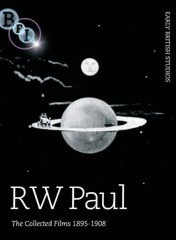
RW Paul DVD cover, from http://www.bfi.org.uk

The British Film Institute has published a DVD of practically all of the surviving films made by Robert William Paul, one of the leading pioneers of British cinema. R. W. Paul: The Collected Films 1895-1908 contains sixty-two films, including comedies, dramas, trick films, actualities from the Anglo-Boer War, Paul’s notorious film of the disastrous launch of HMS Albion in 1898 (notorious because Paul carried on filming after people had been knocked into the water, some fatally, though his boat picked up survivors), travel films from Spain, Portugal, Egypt and Sweden, and news footage of the 1896 Derby and Queen Victoria’s Diamond Jubilee through London on 22 June 1897. The DVD runs for 147 mins, with piano accompaniment by Stephen Horne, and a commentary and booklet by Ian Christie, whose book on Paul comes out later this year.