Literature and the mass-produced image

http://nyugeoconference.wordpress.com

All call for papers has been issued for a one-day conference taking place at New York University on 2 April 2010. Although Literature and the Mass-Produced Image isn’t specifically about silent film, the conference themes are each reflected by film from the silent era. Here’s the conference blurb to explain more:

New York University’s English Department will host a graduate student conference exploring the fate of literature in the age of the reproducible image. The nineteenth-century emergence of photography, a medium which Walter Benjamin referred to as “the first truly revolutionary means of reproduction,” coupled with the subsequent development of the motion picture, irrevocably shook not only the art world, but also the literary. This conference aims to uncover the affinities, negotiations, and interrelations between literary texts and visual media like photography, cinema, and the more recent medium of digital imaging and video. Investigating these issues from the perspectives of both literary and visual culture, this one-day event aims to bring together new work being produced by graduate students studying literature, cinema studies, visual culture, the history of media, and social historiography.

We will be focusing on a number of related questions including (but not limited to): How has the development of visual media affected literary aesthetics? In what sense has the vocabulary of film and photography been appropriated from and by literary culture? How do motion and pacing – elements inherent to cinema – reveal themselves in creating and staging action, plot, and character development in literary narrative?

Other possible topics include:

  • Photographic representation in literary texts
  • Literature as motion: imagery and the mind’s eye, storytelling and motion
  • Cinema, literature, fragmentation and non-linear chronology
  • Descriptions of photographs within literary works
  • The ‘urban’ and its centrality to cross-media works
  • Modernist critique/appropriation of visual culture
  • Art, the avant-garde, and experimental motion/stop-motion
  • The function of written text in a visual medium
  • Depictions of movies and movie-going in literary narrative
  • Film vs. Literature: ‘high art’ in the era of mass culture

Please send abstracts (400 words) to nyugeo.conference@gmail.com by FEBRUARY 1, 2010. Abstracts should include your name, contact information, paper title, and a short bio with your institution & department affiliation and year in graduate school. Please specify any audio-visual requirements. Panel proposals are also welcome for panels comprised of 3-4 participants; in your proposals, please include panel title and brief description (limit 500 words) as well as a list of papers with corresponding abstracts and speaker information.

Conference organizers: Yair Solan, Kathryn Bullerdick and Blevin Shelnutt.

This conference is sponsored by the New York University Department of English, with financial support provided by the NYU Graduate School of Arts and Science.

I think it is something to be proud of when one can combine academia with film fandom, and it’s worth noting that conference co-organiser Yair Solan is the person behind the estimable The World of Charley Chase website. Modern literature and silent comedy – now there’s a really healthy combination of life-skills.

For your diaries

The Jornada Brasileira de Cinema Silencioso in São Paulo, from http://www.cinemateca.gov.br/jornada

With 2010 all but upon us, naturally you’ll be thinking how you can fill the year ahead with silents-related activities, and here to assist you is a guide to the festivals and conferences that are coming up over the next twelve months. Information on these is given in greater detail in the Bioscope’s Conferences and Festivals sections, while a summary listing of all events coming up is maintained in the Calendar section.

Things kick off in January with Slapstick, the annual festival of slapstick film celebrated in Bristol, UK. This year’s event takes place 21st-24th and features Buster Keaton’s The Navigator, René Clair’s An Italian Straw Hat and Boris Barnet’s The House on Trubnaya Street, plus W.C. Fields, Harold Lloyd and Laurel and Hardy, along with appearances by present-day comic stars Michael Palin, Phill Jupitus and Neil Innes. The StummFilmMusikTage Erlangen is a festival of silent film music held in Erlangen, Germany. The 2010 festival has as its motto Tough Guys and Easy Girls and will include Louise Brooks in Diary of a Lost Girl, German gangster film classic Asphalt and Fritz Lang’s masterpieces Dr. Mabuse Part I and II as a double feature. It takes place 28th-31st.

February sees the Niles Essanay Film Silent Film Museum’s Midwinter Comedy Festival, running 12th-14th, in Niles, California. Keaton, Griffith, Langdon, Pollard, Chase, Davidson and much more. The Kansas Silent Film Festival is an event held annually in Topeka, Kansas. This year’s festival takes place 26th-27th and has as its special guest Melissa Talmadge Cox, grand-daughter of Buster Keaton and Natalie Talmadge, so Keaton (Our Hospitality) and Talmadge (Norma, in Smilin’ Through) feature, as well as William Boyd and Elinor Fair in The Yankee Clipper and various comedy shorts.

Killruddery silent film festival, from http://killrudderyarts.wordpress.com

With March there is the Karlsruher Stummfilmtage in Karlsruhe, Germany, which takes place 11th-14th and is devoted to René Clair and Jean Renoir; or you may journey to Syracuse, New York for the annual Cinefest, scheduled for 25th-28th, programme to be announced. Meanwhile on the other side of the Atlantic, the Killruddery Silent Film Festival takes place 11th-14th in Bray, Ireland. The programme has yet to be announced, but the theme is ‘Overlooked & Forgotten Cinema’ and Kevin Brownlow is the guest of honour.

April 7th-11th features the Filmmuseum Biënnale in Amsterdam, the Netherlands, a festival of music, art and film which has a strong silent film element, including a programme of films from the Museum of Modern Art in New York. April is the new month for the British Silent Film Festival. No longer held in its traditional Nottingham home in June, the peripatetic festival now finds itself taking place at the Phoenix Square Cinema, Leicester, over the 15th-18th. The theme will be the relationship between the natural world and cinema before 1930.

In May there’s the festival of silent cinema held annually at Hautes-Pyrénées, France, the Festival d’Anères. Despite rumours that the festival’s future is in some doubt, dates have been announced for the 19th-23rd, though no details of a programme as yet. Or States-side you could head for the classic film convention Cinevent, held as always in Columbus, Ohio. 2010’s convention takes place 28th-31st.

The Piazza Maggiore, Bologna, from http://www.filmfestivaltourism.com

June 13th-17th sees Beyond the Screen: Institutions, Networks and Publics of Early Cinema – 11th International DOMITOR conference. The bi-annual conference on the study of early cinema is taking place in Toronto, Canada. Silent film scholars will then have to jet off to Bologna, Italy for the Sixth International Women and Film History Conference, taking place 24th-26th. The theme of the conference is women’s involvement in the silent film industry and culture across the globe. Immediately after, and in the same city, there is Il Cinema Ritrovato, the festival of restored films (always with a strong silent element). The festival takes place 26th June-3rd July, but no details of the programme have been released as yet. The Broncho Billy Silent Film Festival will be held at Fremont, California in June, but exact dates haven’t been given as yet.

In July the BFI in London hosts a conference Colonial Film: Moving Images of the British Empire, 1895-1939 over 8th-9th (a second strand takes place in Pittsburgh in September covering 1939-1965). San Francisco hosts the San Francisco Silent Film Festival, this year over 15th-18th. The programme will be announced in late May. At the same time (15th-16th), Slapsticon, the annual festival of silent and early sound film comedy, held as ever in Arlington, Virginia, promises us Ben Turpin, Monty Banks, Mr and Mrs Sidney Drew, Billy Richie, John Bunny, Billy Bevan, Edward Everett Horton and a whole lot more. Or you could look further afield and consider the International Silent Film Festival, a festival of classic silent films held each July in Manila – no exacts dates or programme available as yet.
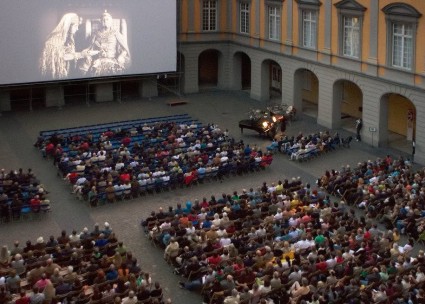
Bonner Sommerkino, from http://www.film-ist-kultur.de

August is clearly the month when the programmers are expecting us to combine holidays with silents. So, you might consider central New York’s Capitolfest, its annual summer classic and silent movie festival, taking place 13th-15th. Or why not sample Aosta in the Italian Alps for Strade del Cinema, a silent film festival with a strong emphasis on musical acompaniment (no exact dates or programme released as yet). Or be bold and head for São Paulo, Brazil to enjoy the highly-impressive (at least to judge by past programmes) Jornada Brasileira de Cinema Silencioso, a silent film festival now in its fourth year (no exact dates or programme details as yet). Or maybe Bonn in Germany will tempt you, with its Bonner Sommerkino, a festival of silent film which is yearly growing in importance (no dates or programme as yet). Or you could escape from some of the summer’s heat by sampling Finland’s Forssa Silent Film Festival, also more challengingly known as Mykkäelokuvafestivaalit, which in 2010 takes place 27th-28th.

If it’s September then it must be Cinecon, annual classic film festival held in Hollywood, which will run 2nd-6th. The charming Opitiki Silent Film Festival will be held this month in Opitiki, New Zealand. Over 23rd-26th there’s the silent and early sound film festival Cinesation in Massillon, Ohio, USA, while over the 24th-26th we have the Annual Buster Keaton Celebration, the Buster Keaton-themed festival held in Iola, Kansas. Silents of a different, modern kind feature in the Toronto Urban Film Festival, a public film festival of one-minute silent films held in Toronto, Canada. No dates as yet, but the films are ew productions entered in competition.
Pordenone audience

October is of course Pordenone month. The Giornate del Cinema Muto, or Pordenone Silent Film Festival, is generally considered the world’s leading silent film festival, takes place in Pordenone, northern Italy, and in 2010 runs 2nd-9th. We await the first details of 2010’s programme. October also sees Charlie in the Heartland: An International Charlie Chaplin Conference, which takes place 28th-30th at Ohio University Zanesville, Zanesville, Ohio,and which takes as its theme anything to do with Chaplin and his relationship with, influence on, or evocation of America. Also in October, but no dates or programme announced as yet, will be Australia's Silent Film Festival, held in Sydney.

Nothing of any particular relevance seems lined up for November (as yet), but in December there will be the 1910 Centenary Conference, hosted by the University of Glasgow. It’s not about silent cinema itself as its theme is 1910 as an arguably watershed year for the ushering in of modernism, but it includes film amongst its areas of interest, so in it goes (precise dates have yet to be announced). December will also see the San Francisco Silent Film Festival‘s ‘mini’ festival, its Winter Event.


If you know of other festivals or conferences I should be including, please us know through the comments. I’ll be adding new events (or updated information) to the Conferences and Festivals sections in any case, and will publicise individual events nearer to their start times in any case. Of course, silents turn up as special screenings in other kinds of festival, such as the London Film Festival and Telluride Film Festival, but I’ve kept this listing to those events largely dedicated to silent films themsleves. Such festivals and conferences are a labour of love and a huge challenge to put on, logistically and financially – do support them if you can.

Finally, I recommend the Stummfilm.info site (in English and German) for its handy directory of silent film festivals worldwide.

The magic lantern and Victorian culture

Joseph Boggs Beale magic lantern slide illustrating ‘The Curfew Shall not Ring Tonight’, CC http://www.flickr.com/photos/79874673@N00/151375362

Well it’s clearly the time of year when people are itching to get out of the darks and start organising things for 2010. Before long we’ll be having a catch-up post on the festivals being organised for next year, but the conferences and such like are also starting to get announced. And so, a call for papers has gone out for the 2010 Convention of the Magic Lantern Society of the United States and Canada, to take place in Bloomington, Indiana, 20-23 May 2010. Here it is:

The Magic Lantern Society of the United States and Canada invites scholars to submit papers or proposals for papers pertaining to the lantern to the conference organizers, Professor Joss Marsh and Mr. David Francis (Indiana University, Bloomington) and Mr. Dick Moore (President, AMLS). (Papers in research sessions will be held to 20 minutes in length.) Deadline 15th February 2010.

Presentations will be especially welcome that address the key theme of the Convention: The Magic Lantern and Victorian Culture.

Topics might include (but are not limited to):

  • advertising with the lantern/advertising the lantern
  • lantern-slide manufacturers and distributors
  • exhibition practices
  • individual and itinerant lanternists
  • multi-media lantern shows and lantern use
  • the lantern and nineteenth-century theatre, opera, and ballet
  • the lantern and Music Hall/Variety shows
  • local lantern shows
  • the missionary lantern
  • the Temperance lantern
  • the lantern and social change
  • urban and social lantern investigation
  • the psychology and theory of 19th century lantern spectatorship
  • the lantern and science
  • educational uses of the lantern
  • lantern-assisted virtual travel
  • the lantern and horror
  • literary reflections of the lantern
  • lantern performance of literature
  • the lantern and childhood
  • the lantern and cinema
  • lantern-inspired early films
  • lantern-slide use in movie theatres
  • animated slides and lantern representation of movement
  • the magic lantern and the long history of the ‘screen experience’
  • lantern song-slides
  • lantern humour
  • the lantern and Empire
  • lantern story-telling and lantern readings
  • the Victorian family lantern

Principal sessions of the Convention will take place at the Convention Centre, in downtown Bloomington, and on the campus of Indiana University. Presentations include a ‘Grand Optical Variety Show’ at the vintage Buskirk-Chumley (Indiana) Theater, Professor Mervyn Heard M.C., with Mr. Philip Carli at the piano.

Please address proposals to: jomarsh [at] indiana.edu; djfranci [at] indiana.edu; rmoore0438 [at] aol.com.

Well, something there for everyone, and a reminder of how close the worlds of the lantern and the early cinema were. A general post on discovering the world of the magic lantern is promised, soon.

Women and the Silent Screen VI

The sixth International Women and Film History Conference is to take place in Bologna, Italy 24-26 June 2010, immediately preceding the Il Cinema Ritrovato Film Festival. A call for papers has been issued, and here are the details, culled from the festival site:

The VI International Women and Film History Conference (Bologna, 24-26 June 2010) will pay tribute to the women’s involvement in the silent film industry and culture across the globe. The event will provide an insight into women’s contribution to the silent screen through a series of scholarly panels, keynote addresses and archival screenings. In the dynamic spirit that caracterized each of the previous Conferences held in Utrecht (1999), Santa Cruz (2001), Montréal (2004), Guadalajara (2006), and Stockholm (2008), presentations will consider a wide range of themes related to the spheres of the motion picture economy, history, criticism, narrative forms, transnational film culture, the social contexts of film production and much more, all seen through the lens of feminist theory and historiography. It will be an opportunity for scholars and young researchers to expose and discuss the new issues and ideas that are spreading at the cutting edge of Film and Women’s Studies, exploring the future directions to be possibly pursued.

Proposals are welcomed concerning not only the female directors, screenwriters, producers and actors of the era, but also the larger role of women in modern mass culture. If you are proposing a paper please fill in the on-line submission form. We will only accept proposals in English that use this form, and the deadline for submission is January 10, 2010, but earlier submission are welcomed. This form will allow you to view and change your proposal and to keep in touch with the peer-review editors up to one month before the deadline. Ideally you will be given an answer by the middle of February.

Please notice that the Conference will occur in Bologna in the week immediately preceding Il Cinema Ritrovato Film Festival (running June 26 through July 3, 2010), sponsored by Alma Mater Università di Bologna (Dipartimento di Musica e Spettacolo – La Soffitta), Women and Film History International, Regione Emilia-Romagna, Cineteca di Bologna, and the Biblioteca Italiana delle Donne. We are particularly happy to announce that the festival will host a special section on women in silent cinema, curated by Mariann Lewinsky in cooperation with WSS VI. All the participants in WSS VI will directly be registered at no fees at the festival, and will be eligible to reserve rooms at special price at hotels located in the city centre, within walking distance to the conference site.

We invite papers and panels not only on the directors, screenwriters, producers, and actors of the era, but also on the role of women in modern mass culture, broadly considered. Continuing the dynamic spirit that characterized previous conferences in Utrecht (1999), Santa Cruz (2001), Montréal (2004), Guadalajara (2006), and Stockholm (2008) the conference will provide an open and friendly atmosphere for the exchange of research and insight into women’s involvement in the first four decades of film history.

Papers and panels might consider:

* Words, wordlessness, and bodily expression
* Divas and antidivas
* Audiences, moviegoers, and fans
* Theorists, critics, and writers
* Body genres
* Serial screen narratives
* Motion picture economies and gendered divisions of labor
* Global and local exhibition practices
* The social realities of World War I
* Feminist historiography and the transnational
* The modern as period and problematic
* Synchronized sound: transition, continuity, and the question of change
* The archives: theory, practice, politics
* Feminist theory and the silent screen

Submission Deadline: January 10, 2010

Further details are available on the festival site, including details of the submission process for papers.

Shakespeare on screen

Here’s news of a conference on Shakespeare and film which includes silent Shakespeare in its call for papers – though you’ll have to hurry, as the deadline is 28 August. The conference takes place at the Ohio University Inn and Conference Center, Ohio University, Athens, Ohio, USA, 22-24 October 2009:

SHAKESPEARE ON SCREEN: 1899-2009

Keynote Speakers

* Peter Holland (University of Notre Dame)
* Linda Charnes (Indiana University)
* Douglas Lanier (University of New Hampshire)

The conference organizing committee invites abstracts (200-300 words) or papers on a range of issues in film and television productions of Shakespeare from the Silents to the Age of Branagh and Baz. Papers can focus on individual films; the work of major directors; intertextual (and visual) dialogue between Shakespeare films or between stage and film Shakespeares; television Shakespeare; spin-off films and television programs; Shakespeare in cyberspace; global Shakespeare; theories of appropriation and adaptation; editions and screenplays; funding, promotion and marketing; photography and trailers; DVD material; audience; film scores; cinematography; cultural context; film clips; and teaching strategies.

Abstracts or papers are due by June 5, 2009 (early decision) or August 28, 2009 (final deadline). All inquiries should be directed to: Samuel Crowl/Department of English/Ohio University/Athens, Ohio/45701 or via email to crowl[at]ohio.edu.

All sessions of the conference except the Thursday evening keynote lecture will be held at the Ohio University Inn located just across the Hocking River from the campus of Ohio University. Special room rates will be available for conference attendees. The Friday evening conference banquet will be included in the registration fee.

On or about December 1910, human character changed

woolf

On or about December 1910, human character changed. I am not saying that one went out, as one might into a garden, and there saw that a rose had flowered, or that a hen had laid an egg. The change was not sudden and definite like that. But a change there was, nevertheless; and, since one must be arbitrary, let us date it about the year 1910.

So wrote Virginia Woolf in her 1924 essay ‘Mr Bennett and Mrs Brown’. What a load of old elitist rhubarb, you may think, but it’s a gem of a phrase for starting up a debate, putting together a book, or organising a conference. And it’s the latter route that the Scottish Network of Modernist Studies and the British Association of Modernist Studies have taken in organising ‘The 1910 Centenary Symposium’, to be held at the University of Glasgow, December 2010, which takes Woolf’s statement as its theme. Interestingly their concerns include film, as the pre-call for papers indicates:

We are inviting scholars from any discipline to respond to any aspect of this statement by suggesting panels and papers. A formal call for papers will follow later this year. Current panel proposals under consideration include: 1910 films; Scotland 1910; Women in 1910; and 2010: Human Character in the Age of Climate Change. Other areas that have been suggested as possible include: periodization; The Post-impressionist exhibition; 1910 from 1924; the grammar of modernism; 1910 and social/political activism.

Plenary speakers will include Jean-Michel Rabaté (University of Pennsylvia) and David Peters Corbett (University of York). The conference aims to bring together scholars from a wide variety of disciplines, from the UK and beyond. Although the majority of participants are likely to be modernist scholars, we do not want to limit participation to those who regard themselves as modernist scholars, and are keen to include the kind of oppositional and interrogative stances that the tone of the quotation implicitly encourages.

Proposals for panels and papers and expressions of interest should be sent to conference organisers Bryony Randall and Matthew Creasy via email at snms[a]arts.gla.ac.uk

So, what was pivotal about film in 1910 (or December 1910 for that matter)? Assuming such a thing as a change in human character at this time (and I guess we’re talking about people in the Western World – those most able to go to cinemas, for example), how might film have reflected it, or have been changed by it? It’s not generally cited as a pivotal year in early cinema form, except that every year around that time reflects some form of a step forward given the rapid evolution of the medium. But it was the year in which – in the UK at least – cinema became all-conquering, in its way a powerful agent for social change because of the command it had on people’s free time, and the free rein it gave to the imagination of all who attended it. The rise of modernity, which is what Woolf is referring to (and a little playfully, to be fair), is profoundly relevant to film, bound up as it was with the city, mechanisation, speed, and the triumph of electricty. You may find it in film style, or you may find it in the cinema as social institution. There should be a good paper or two in there, somewhere.

Update (13 May 2010): The dates of the conference are 10-12 December 2010, and there is now a conference web page: www.gla.ac.uk/departments/snms/1910centenaryconference. The call for papers has now closed.

Conference diary

summerschool

Newman House, Dublin

I was recently on my travels, attending a couple of conferences and a summer school, and this is my report. The first half of July was remarkably crowded with moving image-related conferences and other such events in the UK (and environs). Because of the jam-packed schedule, sadly I had to say no to the Visual Delights conference at Sheffield, on the theme of Visual Empires. This had an intriguing selection of papers surveying assorted lost empires and the media they sought to bend to their needs, with an encouraging number of new speakers (new to me, that is). Perhaps someone could say something about how they found the conference.

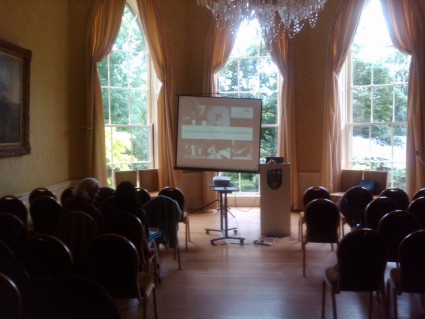
I also had to give a miss to Researching Cinema History: Perspectives and Practices, a symposium at Burlington House in London, which normally would have been right up my street, discussing as did the changes that seem to be happening to the historiography of cinema. For I was by then in Dublin, to speak to the Dublin James Joyce Summer School on Joyce and his fleeting management of the Volta cinema in Dublin in 1909 (centenary year, you see). This took place in the delightful Georgian building of Newman House, where they nervertheless managed to drum up a decent digital projector. The gathering of students looked a little bemused at times as I piled on the detail of how one went about managing (or mis-managing) a cinema in 1909, but they loved the film clips. A Cretinetti comedy (Come Cretinetti paga di debiti / An Easy Way to Pay Bills) and a scatalogical Pathé film C’est Papa qui à pris la purge, but could have been a film shown at the Volta entitled Beware of Castor Oil!, went down particularly well. The chances are now that it isn’t the film shown at the Volta, but it was certainly something like it (a man drinks his son’s castor oil medicine by mistake and gets caught short in assorted public places). In the end it was concluded that it was probably best that Joyce turned out to be such a poor cinema manager, because otherwise he’d have become a minor, prosperous businessman who never quite got round to writing that novel he’d been dreaming about, and none of them would have been there at such a summer school at all.

slyboots2

An uncredited Max Linder appearing in C’est Papa qui à pris la purge (1906)

And then it was off by plane to Birmingham followed by the epic train journey through Wales (anxiously following the first Test through text messages on the mobile phone) to get to the University of Aberystwyth for the Iamhist, or International Association for Media and History, conference, on the theme Social Fears and Moral Panics. Well, hard to go wrong with a theme like that, and there was a fine array of papers covering the multifarious ways in which the media acreates, reflects, perpetuates or addresses social fears – as well as being the subject of such fears itself. This was a particularly well-managed event, where for once I could find no complaint with any of the speakers that I heard (though surprisingly I encountered only one brave enough to try showing film clips) and all topics contributed usefully to the greater theme.

There wasn’t much on silent cinema, curiously enough, because the silent era had more than its fair share of moral panics – Fatty Arbuckle, Wallace Reid etc – indeed early cinema in general was ubiquitously viewed as a social threat of the first order. But for the record I heard papers on the ‘quality’ press and its adversion to commercial radio (Richard Rudin), the battles to preserve the Welsh language through film (Kate Woodward), how Limerick newspapers helped and hindered the fight against the 1832 cholera epidemic (Michelle Mangan), the very topical print history of influenza (Penelope Ironstone-Catterall), local reporting on the Ottoman bankruptcy crisis of 1875 (Gul Karagoz-Kizilca), the fears aroused by the arrival of the telephone (Gabriele Balbi), the image of Marconi operators given in the pages of Wireless World (David Hendy), the ‘Lady Chatterly’ trial and its press coverage (Nick Thomas), the use of fear in British government public information films (Linda Kaye, the speaker with the film clips) and the 1950s obscentity campaign against British seaside postcards (Nick Hiley).

In fact, the only silent cinema subjects I encountered were James Burns speaking on early cinema and moral panic in various parts of the British Empire, amusingly pointing out how different countries ended up worried about different things (in South Africa they feared racial mixing, in Southern Rhodesia it was sexuality, in the West Indies it was images that diminshed British prestige that concerned them, in India they worried about the threat of motorised crime); and me. I spoke on How Working Men Spend their Spare Time, a social survey conducted by George Esdras Bevans in New York in 1912, which I’ve written about on the Bioscope before now. You can find a copy of the talk on my personal website, should you be interested.

socialfears

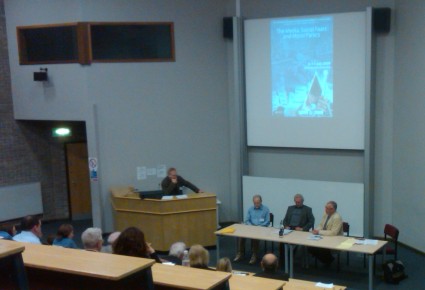
An impassioned moment from the debate on regulation and the media, with (L-R) Nick Cull (chair), Martin Barker, Julian Petley and Sir Quentin Thomas

There was a silent film screening, however. We were in the heart of Wales, with the National Screen and Sound Archive of Wales just down the road, so it was more than appropriate that we were treated to Maurice Elvey’s The Life Story of David Lloyd George (1918), previously described here in detail. The film was shown in NSSAW’s distinctively cylindrical Drwm cinema, and had Neil Brand playing the piano. A somewhat prolonged introduction over-sold the film, and it was a rather flat atmosphere that was created by an audience of worldy-wise media historians unaccustomed to adjusting their perceptions to the demands of silent film. In February when I saw the film at the British Library it was fresh and thrilling; here it seemed to drag, and its highlights seemed perfunctory. It’s the audience that makes the film, every time.

With the practice such conferences have of parallel sessions I missed many papers, while others I had to skip while putting together mine (a last-minute job, alas as usual with me). There were also plenary sessions: one on Government, Panics and Media Crisis (Virginia Berridge eloquent on AIDS, Merfyn Jones – former BBC governor – choosing his words with care but equally with feeling in recounting the fresh history of the Hutton enquiry into the Iraq war), and a thought-provoking session on Regulation and the Media, with Martin Barker on ‘disguised politics’, Julian Petley on the failure of the 1977 Williams committee which sought to change laws on obscenity, and an urbane turn from Sir Quentin Thomas of the British Board of Film Classification, who didn’t saying anything much but said it with authority.

My travels should then have taken me to Colour and the Moving Image: History, Theory, Aesthetics, Archive at Bristol, but weariness overcame me. A shame, because this looked like an agenda-setting conference, with a remarkable range of papers mostly focussing on the aesthetic side of things. The publication of the papers would be very welcome.

800m

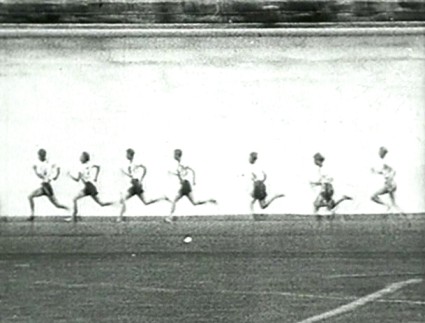
The women’s 800 metres from De Olympische Spelen, the official film of the 1928 Olympic Games (a notorious event because one competitor – according to the evidence of the film – collapsed at the end of it, leading the event to be withdrawn from the Games until 1960 because it was thought to be too strenuous for women)

Instead, a few days later, I dragged myself to Pembroke College, Cambridge, for a conference held by the Sport in Modern Europe academic network. This was a select gathering of some of the leading sports historians, and I was somewhat dazzled to be in the same room as Richard (Sport and the British) Holt, Wray (Pay up and Pay the Game) Vamplew, and Kasia (Boxing: A Cultural History) Boddy. But no matter how wise in the ways of the world sports historians are generally, they welcome a bit of guidance when it comes to film, so that was my cue to speak to them about the films of the 1924 and 1928 Olympic Games (again, as previously covered here at the Bioscope), with emphasis on the use of slow versus natural motion and whether the sports filmmakers of the silent era were more interested in athletic records or idealised athletic motion (a bit of both, really).

So there you are – a couple of weeks in the life of the roving academic, and illustration of just where film can take you because it has this marvellous facility to reflect – and illuminate – all subjects. Which is perhaps why James Joyce was drawn to it, why the workingmen of New York in 1912 preferred it far above any competing leisure attraction, and why the seemingly plain records of the Olympic Games of the 1920s grow all the more fascinating the more you try to unpick them.

Travelling time

train

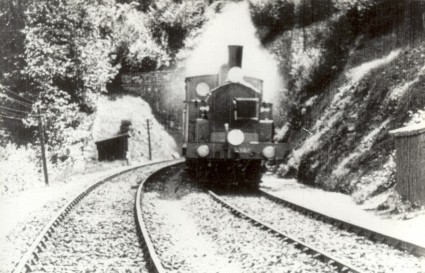
Things are likely to be a little quiet here for the next week or so as The Bioscope hits the conference trail. It’s off to Dublin for the James Joyce Summer School, then Aberystwyth for the Iamhist conference on Social Fears and Moral Panics, then to Bristol for the Colour and the Moving Image conference. A pause for breath, then off to Cambridge to speak on Olympic films for the Sport in Modern Europe academic network. I shall report along the way where I can, and certainly on my return.

Empires on show

visualdelightsiv

Visual Empires is the title of the fourth Visual Delights conference, taking place 3-5 July at the University of Sheffield, Union of Students, Western Bank, Sheffield S10 2TG.

A summary of the conference’s concerns is not easy to track down, but the original call for papers said that they were interested in Imperial cinema, regional patriotic shows, circus and empire, silent film and identity, topographical empires, expedition films, the magic lantern and the empire, patriotism on the stage, sport as national identity, music hall and imperial sentiment, photography and otherness, colonial postcards, world’s fairs and ethnographic display, panoramic and dioramic empires, advertising and empire and the Boer War. Which is more than enough to fill a conference, and there’s a impressive line-up of speakers covering conquerers and the conquered.

Below is the outline programme (the full programme with abstracts of all the papers can be downloaded in PDF format here):

Visual Delights IV – Visual Empires

Friday – Registration and Refreshments – 9.30 – 10.00 am

Opening Lecture (10.00 – 10.30am)
Welcome from Simon Popple & Vanessa Toulmin

Allison Griffiths – Nontheatrical Ethnographic Film: Playing Indian in the Museum Sponsored Expedition Film

Panel 1-10.30am- Noon

Regional Empires Chair Simon Popple

Jill Sullivan – ‘Overflowing houses’: Panoramas in Exeter and Bristol 1840-1870
John Plunkett – Gateway to Empire: Plymouth’s popular entertainments 1855-75
Joe Kember – ‘Pure, Elevating, Instructive Entertainment’: Travel lectures in Plymouth during the 1890s
Ros Leveridge – ‘A panorama of Eastern splendour and of Western might’: Screening the Delhi Durbars in South West coastal resorts

12.00 -1.00pm Lunch

Panel 2 (1.00pm – 3.00pm)

Locating Empire Chair Vanessa Toulmin

Teresa Castro – Imperialism and Early Cinema’s “Mapping Impulse.
Cosimo Chiarelli – In the (visual) heart of Borneo – Charles Hose in Sarawak
J. P. Short – Empire and the Working-Class Eye: A History of Bourgeois Anxiety
Louise Tythacott – Race on display: the ‘Melanian’, ‘Mongolian’ and ‘Caucasian’ galleries at Liverpool Museum, 1896-1929

3.00- 3.30pm – Refreshments

Panel 3 Friday Afternoon (3.30 – 5.30pm)

Imperial identities 1 Chair John Fullerton

Fulya Ertem – Facing the “Other”: A critical approach to the construction of identity narratives in the early photographic practice of the Ottoman Empire.
Roshini Kempadoo – Defining subjects: Photography and the Trinidad plantation worker (1860s – 1940s)
Michael Eaton – Golden Bough and Silver Nitrate.
Alessandro Pes – Ordinary People Celebrities-The Fascist mythizising of Italian settlers in East Africa

Screenings: 7.00pm onwards

Nico De Klerk (Nederlands Film Archive) presents Gustav Deutsch’s Welt Spiegel Kino #2
Bryony Dixon – Curator of Silent film, BFI National Archive
Films:
Savage South Africa – Savage Attack and Repulse (1899)
The Paris and St Louis Expositions (1904)
Panorama of the Paris Exhibition No. 3 (1900)
Pan American Exposition by Night (1901)
Mitchell and Kenyon 703: Panorama of Cork Exhibition Grounds (1902)
White City – Franco British Exhibition (1908)
Brussels Exhibition (1910)
Visit to Earl’s Court (1911)
Gaumont Graphic: Festival of Empire: Their Majesties Driving in Semi State to the Opening Ceremony (1911)
Lord Grenfell lays the foundation stone of the Malta Pavilion for the British Empire Exhibition in 1924 with scenes of construction (1926)
Thrills in the Making (Topical Budget 649-2) (1924)
The Excursion to Wembley of Employees of Pullars of Perth (1924)
King Opens Empire Exhibition (Topical Budget 661-1) (1924)
White City Demobbed (1920)
Fireworks at Crystal Palace (1925)

Saturday 9.30– 10.00am Registration

Panel 1 Saturday Morning (10.00 –Noon)

Ethnography and performance Chair Alison Griffiths

Jacob Smith – The Adventures of the Lion Tamer
Christina Welch – The Popular Visual Representation of North American Indian Peoples and their Lifeways at the World’s Fairs and in the Wild West Shows
Joshua Yumibe – Abyssinian Expedition and the Field of Visual Display
Theresa Scandiffio – Welcome to the Show: Field Museum-Sponsored Expedition Films (1920s-1930s)

12.00 -1.00pm Lunch

Panel 2 Saturday Afternoon (1.00- 3.00pm)

Imperial Identities 2 Chair John Plunkett

Yvonne Zimmermann – Visual Empire of the Alps
Gunnar Iversen – Inventing the Nation – Diorama in Norway 1888-1894
Andrew May & Christina Twomey – Visual subjects and colonial sympathies: Australian responses to the 1870s Indian famine
Annamaria Motrescu – Displaced Indian identities in early colonial amateur films

3.00 – 3.30pm Refreshments

3.30 – 4.00pm – ‘Lucerna’: the Magic Lantern Web Resource
Richard Crangle, Magic Lantern Society

Panel 3 Saturday Afternoon – (4.00 – 6.00 pm)

Audiences and markets Chair Joe Kember

Amy Sargeant – Lever, Lifebuoy and Ivory
John Fullerton and Elaine King – Looking back, looking forward: colonial architecture in Mexico at the turn of the twentieth century and its representation in photography and the illustrated press
Denis Condon – Receiving News from the Seat of War: Dublin Audiences Respond to Boer War Entertainments
Martin Loiperdinger – Screening the Boer War in Germany: Audience Response and Censorship

Performance: Professor Mervyn Heard’s Lantern Show 7.30 pm

Professor Heard introduces modern audiences to the weird and wonderful magic lantern entertainments once presented in public halls and private drawing rooms throughout the 19th century. Each show is different and draws on a unique collection of original 19th century mechanical moving pictures, sights, frights, moral warnings, adventures, pictorial curiosities and fascinating information. This is a specially commissioned show focusing on material related to the First World War.

Sunday

Panel 1 (9.30– 11.30am)

Cinema and the British Empire Chair Nick Hiley

Tom Rice – Presenting the Empire on Screen: The Empire Series (1925-1928)
Emma Sandon – Cinema and Empire: The Prince of Wales Tour 1925
Scott Anthony – Snowden Gamble and the films of Imperial Airways
Maurizio Cinquegrani – From Sydenham to Hyderabad: a Cinematic Map of the British Empire and its Cities

11.30 – 11. 45 am Break

11.45 – 12. 30 pm The Empire Exhibition of 1938 – The Spectator’s Perspective
Presented by Ruth Washbrook, Education and Outreach Officer, Scottish Screen Archive, National Library of Scotland
Films
Empire Exhibition Scotland 1938 (2 mins) (BW)
The King and Queen Visit the Empire Exhibition (1938) (13 mins) (BW)
Sketch Plan of the Exhibition (1938) (7 mins) (Colour)
A Visit to the Empire Exhibition (1938) (12 mins) (Colour)

12.30 – 1.30 pm Lunch

Panel 2 (1.30 – 3. 15pm)

Imperial Humour Chair Richard Crangle

Samantha Holland – The hilarious joke of miscegenation in turn-of-the-century US films and culture
Paul Maloney – St George and Ali Baba: the visual culture of pantomime in Edinburgh in 1869
Matthew L. McDowell – Newspaper cartoons and the drawing of early Scottish football, 1865-1902
Andrew Shail – ‘The Great American Kinetograph’ in Britain: Film, Fakery and The Boer War

Interval

3.30 – 5.30pm Performance: The Crazy Cinematograph and conclusion

The Crazy Cinématographe is a touring spectacle celebrating the films produced in Europe during the first decade of the twentieth century. The show celebrates the work of the European film archives by producing a prestigious and entertaining showcase for those little known wonders only known to archivists, historians and festival goers, but not to the general public.

Booking form and accommodation details are available from the National Fairground site.

Beyond the screen

theo

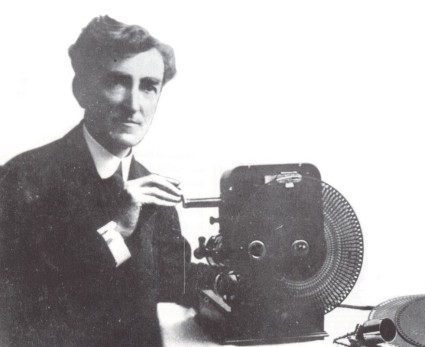
Theodore Brown, mid-1920s, demonstrating his invention of the Spirograph, designed to show ‘films’ on an acetate disc to educational audiences

A call for papers has just been issued for the next DOMITOR conference. DOMITOR (why do they capitalise it? It’s not an acronym) is the international body for early film studies, and it holds a biannual conference. The next conference will take place 13-17 June 2010 in Toronto, Ontario, Canada, and the theme is Beyond the Screen: Institutions, Networks and Publics of Early Cinema. Essentially they are looking at early cinema beyond the confines of the cinema – films with a special social purpose (usally educational or instructional in some form) which had to be taken to where the audience was, rather than the other way around.

Here’s the full call:

The vanguard of recent film scholarship has shown that institutions and social networks established a variety of sites, contexts, and ways for viewing early cinema, not always as “harmless entertainment” or as a “business, pure and simple,” as the U.S. Supreme Court defined it in 1915. The DOMITOR 2010 Conference seeks to develop this line of inquiry by demonstrating how early cinema’s cultural function and social uses were shaped by a range of institutions, both commercial and noncommercial: How was cinema used in the domains of science, technology, education, and social uplift, and how did these applications influence its development and shape the public’s perception of the medium? What decisions and powers led to the marginalisation of alternatives to the “entertainment” model championed by the Supreme Court and pursued by a maturing industry? Which organisations and groups helped preserve and archive early cinema and its culture? How were the production practices of early film companies affected by their alliance with institutions outside the confines of the film industry? DOMITOR 2010 will be a forum to present new research into extra-filmic contexts that broaden our understanding of the institutional basis for cinema during its formative years. To that end, we invite papers that explore the following areas, among others:

• Extra-theatrical venues and publics for cinema exhibition: churches, settlement houses, social organisations such as libraries and museums, commercial settings such as department stores, and other marginal sites and marginalised audiences

• Purposes of cinema beyond entertainment: using cinema for education, uplift, religion, advertising, scientific exploration, politics, and journalism

• Networks of promotion and regulation of cinema: newspapers, the trade press, fan magazines, but also censor boards, organised labour, and court rooms

• Institutional relationships between film companies and other media and social institutions: film producers’ dealings with charities, corporations, civic and political groups, and film production by such groups

• Perpetuating early cinema through preservation and appreciation: the work in subsequent decades of archives, criticism, buying and collecting, and the study of film history itself

Although we imagine the general time frame for the period covered by papers in the conference to be the late 1890s through to 1915, we do realise that cinema developed unevenly across the global stage. For that reason, papers treating cinema after 1915 in countries where early cinema practices postdate the proposed time frame will be given full consideration. Similarly, papers that examine the history and current status of early cinema’s place in the archive and museum are also welcomed.

Proposal Submission Process
Those wishing to submit a proposal should do so no later than 31 October 2009 to: domitor2010@gmail.com Proposals for pre-constituted panels of 3 or 4 participants will also be considered; such proposals should be submitted by the panel chair and consist of the collected individual paper proposals in addition to a brief rationale for the pre-constituted panel. Proposals for individual papers should be no longer than 500 words and be written in either English or French. Only a paper written in one of those two languages can be presented at the conference. Papers prepared for conference delivery should stay within a word limit of 2500 words and be able to fit within a 20-minute presentation format (including any audiovisual material used to supplement the paper). We request that all papers be submitted by 30 April 2010 to allow for simultaneous translation. While membership in DOMITOR is not required to submit a proposal, anyone presenting a paper at the conference must be a member.

There is as yet no further information on the DOMITOR site, but you can find out more there about past conferences and some of the organisation’s activities. And top marks to the conference organisers for not simply stipulating a time limit but a word limit as well. Too few to attend academic conferences seem to know how many words it takes to fill a 20-minute presentation. 2,500 is the answer (3,000 for me, but then I talk too fast).