There is a long tradition of British televison comedians honouring the silent comedians of the past. As documented on an earlier post, one strand of this began in the 1960s with Bob Monkhouse and Michael Bentine presenting silent comedy films to new audiences. Another strand that began at the same time was televison comedians producing their own silent, or near-silent comedies, among them Ronnie Barker (A Home of Your Own, Futtock’s End, The Picnic, By the Sea), Eric Sykes (The Plank, Rhubarb, It’s Your Move) and Benny Hill (The Waiters, Eddie in August). In recent times, Paul Merton has taken on the Monkhouse/Bentine mantle by inculcating a new generation attracted by his verbal humour into the purely visual humour of his heroes; while following the line set by Barker, Sykes and Hill, Rowan Atkinson has given us Mr Bean, for which we may or may not be grateful.
Now (and for the past couple of years) children in the UK are enjoying silent comedy courtesy of David Schneider, and the television series Uncle Max. This series, produced by Irish company Little Bird Pictures, started out on ITV in 2006 and then transferred to the BBC’s children’s channel, CBBC. It stars Schneider (best known as Steve Coogan’s unhappy sidekick in Knowing Me Knowing You) as the cheerfully accident-prone Uncle Max, a sort of cross between Michael Crawford in Some Mothers Do ‘Ave ‘Em and Mr Bean (without the undercurrent of malice). Episode titles such as Uncle Max Goes to the Dentist, Uncle Max Walks the Dog and Uncle Max Buys some Shoes give you a rough idea what to expect, and in presentation as well as spirit it has real echoes with the minor comedy series of the silent era. It’s obvious humour, but well enough composed for its target audience. And the nephew who endures Uncle Max’s chaotic approach to life is called Luke, something I heartily approve of.
Uncle Max episodes (10 minutes each) turn up on iPlayer when available, and there are trailers on YouTube. Curiously, for reasons of economy the whole series, while set in England, was filmed in South Africa.
Slapstick, Bristol’s silent film comedy festival, returns 22-25 January 2009. At just the time of year when we probably need it most, the Bristol festival (now in its fifth year) will be bringing together a programme of silent comedies with guest star comedians of today. The festival opens with a special gala event at Colston Hall of Buster Keaton’s Our Hospitality (1923), with live music from the Prima Visa Social Club, hosted by Paul Merton, who will introduce a supporting programme of comedy shorts including Laurel and Hardy in Liberty (1929).
Promised guests include Merton, Tim Brooke-Taylor, Graeme Garden, Neil Innes, and the Ukelele Orchestra of Great Britain playing to films from the BFI National Archive. British comedy great Eric Sykes will appear at the Bristol Old Vic on January 25th, in conversation with Phill Jupitus, to talk about his career as a writer and performer, to include a screening of his own classic ‘modern’ silent, The Plank (1967). Other venues will be the Watershed and the Arnolfini.
The remainder of the programme remains to be announced, but you are advised to book early, as this blurb from the festival says:
We are expecting unprecedented demand for these tickets and expect them to sell out quickly. A limited amount of priority tickets have been put aside for Bristol Silents Members and those people who purchase festival passes until 17th November and will be allocated on a first-come, first-served basis.
All Bristol Silents members and delegates will be able to purchase tickets at discounted rates.
We look forward to welcoming you once more to an extraordinary weekend of film, music and laughter in the heart of Bristol and would like to take this opportunity to thanks you for your ongoing support.
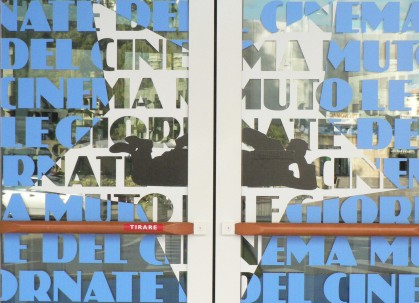
For those who may not know, the recumbent figure who supplies the Pordenone silent film festival logo is Donald O’Connor. That’s Donald O’Connor playing Buster Keaton in The Buster Keaton Story (1957). A curious choice, all things considered, but, hey, it works.
Were I a writer of any skill, I would look upon the films that we saw on Tuesday 7 October, and I would draw out unexpected themes and make thoughtful overviews. But diversity was the only theme on offer. For anyone with only general ideas of what silent films comprise, this was the day to have your eyes opened.
Ironically, if there’s one thing that the average person is able to associate with silent film, it’s slapstick, and that’s what we started with (or rather, what I started with, as I missed the Austrian film Kleider Machen Leute that began the day). Under the ‘Rediscoveries’ strand we were offered a barrage of Keystone Film Company comedies, most of them recent discoveries or restorations. For the festival, this marked the twenty-fifth anniversary of the Keystone-themed festival it ran in 1983.
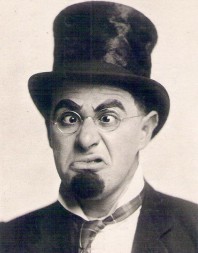
Mack Sennett, Keystone’s presiding genius, ran his studio as an assembly line, pumping out comedies by the yard, with an accomplished, hard-wearing troupe of performers able to fit themselves perfectly into the rigours of whatever routine Sennett had dreamt up for them this week. Three things were particularly noticeable about the films: the unquenchable vitality of the performers, the opportunistic taste for sketches to be devised out of some local event or eye-catching piece of scenery, and the phenomenal speed. One knows all about the knockabout thrills of American slapstick, but looking at a film like Love, Speed and Thrills (1915), the sheer number of shots, angles and different set-ups was prodigious, and seemed to run counter to the demand for getting out the films cheaply and quickly. They made such work for themselves, simply by the pursuit of comic excellence. Not that one could call all of the films strictly funny as such – not funny now, that is – and that the grotesquely gesticulating Ford Sterling (left) was ever revered as a comedian has left posterity baffled. Sterling pulled every face known to man (and a few that man has now happily forgotten) in his efforts to draw laughter out of the curious Stolen Glory (1912), where he and Fred Mace play warring Civil War veterans, filmed interrupting a genuine war veterans’ parade, apparently without any protest from the participants.
Other Keystones that caughter the eye included A Deaf Burglar (1913), which drew some easy laughs from a situation readily inferred from the title, and A Little Hero (1913), which starred a cat (named Pepper), a dog and Mabel Normand, the dog saving a caged bird from the cat’s predations in a scenario that looked for all the world as though it were borrowed from that deathless British classic, Rescued by Rover. Love, Speed and Thrills more than lived up to its title. One could only look on with astonishment at the violent indignities to which Minta Durfee was put in this frenetic chase comedy. These comedies were the inheritors of the comedy series made by European companies, but in their difference to the works of Max Linder, Cretinetti et al one sees how it was that American cinema, and the idea of America, conquered the world. Their new world dynamism is overpowering. Love, speed and thrills sold America.
And then for something completely different. There is growing interest in European women filmmakers in the silent era, and among their select number is the intriguing figure of Elvira Giallanella, director of Umanità (1919). Not much is known about Giallanella, except that she established a film company, Vera, in 1913, which made a Futurist-inspired production, Mondo baldoria (1913), then formed Liana Film, with great ambitions for extensive production, but with just the one title seeing the light of day – Umanità. This thirty-five minute work is unique. It is an anti-war allegory based on a children’s poem by Vittorio Bravetta. The child protagonists are named Tranquillino and Serenetta, which gives you a fair idea of the filmmaker’s intentions. The children wake up in the night – Tranquillino smokes a cigarette (eye-popping stuff) and has a nightmare, in which the world has been destroyed by war and he and his sister are given the task of rebuilding it. Given the nil budget, we have to rely on our imaginations quite a bit. The futility of war is revealed, for instance, by a neat line of empty boots. Peculiarly, the children are guided by a gnome (the embodiment of one of their toys), across deserted, rocky landscapes. The action wasn’t all that easy to follow, chiefly because the Italian intertitles had been bravely translated by the festival into English verse, at the expense of some logic. Intriguingly, Tranquillino, discovers the seeds of violence in him as he wishes to throw bombs, but the two children resort to prayer and are comforted by a bearded God and Jesus (one of a number of appearances during the Giornate). A film of muddled meaning and technique – who saw it at the time, and what on earth did they make of it? – but out on its own among silent film. The film it reminded me of was Richard Lester’s post-apocalyptic comedy The Bed Sitting Room, the survivors wandering about a shattered, empty world, trying to recover meaning.
Shown in the ‘Film and History’ strand, Umanità was paired with the surviving reel of the five-reeler American film If My Country Should Call (1916). This was not anti-war as such, as its avowed theme was ‘preparedness’ for an America which would shortly join the conflict, but its central, sympathetic character was a mother (played by Dorothy Phillips) whose sentiments were anti-war. It was something of a shock to read a closing intertitle which denounced her attitude as selfish. Otherwise it was a tale of enfeebled manhood (and by extension the nation), redeemed by the promise of fighting. Lon Chaney appeared as a doctor, and scenarist was Ida May Park.
Right up my street was Paul Spehr’s special presentation on the films of William Kennedy-Laurie Dickson. As Spehr’s new book says it, Dickson was The Man Who Made Movies. The Edison employee who was assigned in the early 1890s to solving the problem of creating a photographic motion picture device, Dickson not only – more than anyone else – created motion pictures (the system he devised, with 35mm perforated film, is with us still) but he was a maker of movies in the artistic sense. His films, from the earliest experiments with Edison through to his bold adventures with the British Mutoscope and Biograph Company in the late 1890s, are hauntingly beautiful. I won’t got into every film here, but just to say that Spehr presented them as part of a combined film and computer slide show, and did so with wise aplomb. It is quite something for someone who has just written a 706-page book on his subject to express its essence so simply and clearly. Of the many films he showed, I’ll note just one – Dickson’s very first, Monkeyshines no. 1, miniscule images photographed and laid around a cylinder, before they realised that copying Edison’s earlier invention, the Phonograph, wasn’t quite the way to go. From a microphoto on a cylinder to the big screen of the Verdi – and it’s on YouTube too, the human figure in motion evolving out of incoherence, the ghost in the machine:
Monkeyshines no. 1 (1889), the first American movie
My prize for the most disappointing film of the week went to A Modern Musketeer (1917). This really ought to have been a gem. A complete copy was only recently discovered, and it represents a key point in the development of Douglas Fairbanks’ persona, from his young-man-about-town persona to the swaggering figures of his 1920s historical romps. It seemed to have a cast-iron premise. Fairbanks plays a young man whose mother was addicted to the works of Alexandre Dumas just before he was born, and he is imbued with the spirit of The Three Musketeers, which he then tries to take into modern American life as a twentieth-century D’Artagnan. Fabulous concept – what could possibly go wrong? Well, after overplaying the idea wildly in an energetic opening five minutes, the film then abandons it almost entirely for a muddled, uncertainly-paced comedy-thriller set in the Grand Canyon, with an unpleasantly racist undertone in its depicition of the native American villain. Pianist Ian Mistrorigo (a Pordenone masterclass alumnus) tore along at a terrific pace, trying to make the film what it ought to have been, but the film stubbornly refused to live up to his expectations. It’s great that the film has been found and restored, but it’s unfunny, unthrilling, and frankly clueless. Oh dear.
Ed’s Co-ed, from University of Oregon
At this point I was planning to see two Sessue Hayakawa films, His Birthright (1918) and The Courageous Coward (1919), but the word had got round that Ed’s Co-ed (1929), which had been shown the day before to a minimal audience in the Ridotto, was getting a second screening because people really had to see it. Dutifully I went, and I’m very glad I did. There was a fascinating story behind it. In 1928 a University of Oregon student, Carvel Nelson, got to work on the set of F.W. Murnau’s The City Girl. Bitten with the film bug, he decided to make his own film, working with fellow students and an English professor, and raising finance locally. The Nelson and his eventual co-director James Raley made so bold as to approach Cecil B. DeMille for advice. DeMille put them in touch with his cinematographer, James McBride, who amazingly joined the production as technical director and got paid for it as well. With a 35mm Bell & Howell camera rented from Hollywood, and a cast recruited from across the university, Ed’s Co-ed went into production in February 1929 and had its premiere locally in November of that year.
Ed’s Co-ed is a strikingly accomplished film. McBride’s presence clearly aided the fluid, expressive cinematography, including a number of vivid sequences (a punt drifting on the waters through trees, a close shot of women students looking through a window enraptured by some violin playing), but he could not have claimed responsibility for the immaculately engineered script with central and sub-plots artfully interwoven, nor the highly capable performances from the entire cast. There is not a trace of amateurism about Ed’s Co-ed. The story is that of every college movie you ever saw – country boy Ed comes to college, is picked on by other students, he falls for the girl but is rejected by all after he admits to a crime to cover up for someone else who actually committed it, his talents are recognised (he plays the violin, he’s top in all his grades), he wins through at last. It’s so like ever college film made that you could be fooled by its ordinariness, but this is a college film that actually came from a college, and it is a treasure trove of period attitudes, codes, fashions and language.
The 35mm original of Ed’s Co-ed was destroyed in the 1960s when a 16mm dupe was made. We were told that the university hadn’t shown sufficient interest in the film to want to fund a restoration, which is a shame if true because though it might be a hard sell, a DVD edition could reach both silent film fans and those with an interest in American social history. However, there must be some interest from the university, because you can find the whole of Ed’s Co-ed online (87mins). It’s available in streamed and downloadable forms from the University of Oregon’s Scholar’s Bank website – no music track, but otherwise it’s a good quality encoding, and I warmly recommend it. Praise, by the way, for the accompaniment at Pordenone from Neil Brand (piano) and Günter Buchwald (violin, to match Ed’s playing), overlapping beautifully.
I missed most of the evening screenings, owing to a genial supper with a gaggle of pianists, but I returned for the last film of the day, The Man Beneath (1919). This is one of the films recently discovered and restored by the Nederlands Filmmuseum of Sessue Hayakawa, the Japanese-American star who has attracted such critical and archival interest of late. Hayakawa is fascinating not just for his star presence and position as an Asian performer in the heart of Hollywood, but for his thinking about his role and the degree to which he tried to combine positive images of himself as a representative Japanese figure with the demands of the box office, through his position as an independent producer.
The Man Beneath was made by Hayakawa’s own Haworth Pictures Corporation, and it came at a time when he felt it was right to expand his range somewhat. Hence the peculiar set-up, where we get a Japanese actor, playing a Hindu doctor, in an American film, set in Scotland. Hayakawa plays Dr Chindi Ashuter, who is in love with the Scottish Kate Erskine, and she in love with him, though she is held back by the fear of the social consequences of a mixed marriage. Her sister is married to an associate (white) of Ashuter’s, whose entrapment by a secret society and rescue by Ashuter forms the main action of the film. But it is Ashuter and Kate’s thwarted love that is the real theme. He returns to Scotland, but she sorrowfully rejects him, and he leaves sadder and wiser. Of course, a mixed marriage was never going to be shown upon the screen in 1919, so the plot had nowhere else to go, but what lingers in the mind is the intensity of the feelings, particularly as expressed in a luminous performance by Helen Jerome Eddy as Kate. Hayakawa is less of a presence, curiously enough, but one shot where he stares in anguish at his reflection in the mirror and tears at his face, drawing blood, says everything.
And so we saw farewell to Day Four, and look forward to the morrow, bringing us smouldering South American passions, Austrian troops scaling mountains, a near-lynching presented as comedy, a Mozart-free Figaro, a gold digger triumphant, and bare knuckle boxing accompanied by the harp.
Before launching into what we saw on Sunday 5 October at the Giornate del Cinema Muto, a word of praise for one particular innovation. Pordenone shows prints from around the world, which arrive in a multiplicity of languages featured on the intertitles. For years we have benefitted from the skills of translators viewing the prints as we did and providing instant translations through headphones. This year the headphones were gone. In their place we had computer-generated subtitles immediately below the screen. If the film was in English, the subtitles appeared in Italian, and vice versa; if it was in any other language, we got subtitles in both Italian and English. The amount of preparatory work must have been prodigious, but the result was a hugely improved viewing experience. Warm thanks are due to all those who made this possible, and everyone’s hearts went out to whoever had translated all of the 160 minutes of the Norwegian film Laila in English, only to discover that the print came with English titles…
This innovation went hand-in-hand with a welcome emphasis on bilingual presentation generally. In Giornates past it has felt as though English speakers were taking over, which must have been greatly trying for the Italians in the audience. Now most (if not all) spoken introductions were translated from one language or the other. One or two speakers need to know when to take a break to give the poor translator a chance to recap, while one speaker was perhaps unnerved by the translator and stopped speaking in mid-sentence, leaving the translator with an impossible task. But we’re getting there.
The day started for me (earlier risers had caught the French film Triplepatte) with two mindboggling Baby Peggy shorts, Such is Life (1924) and Carmen Junior (1923). Child star Baby Peggy (played by Diana Serra Carey, ninety years old next month) is beyond rational criticism. These bizarre films give every appearance of having been made up as they went along. A surreal sequence in Such is Life where an unexplained living snowman melted through a street grill was memorable, but had no logical connection with anything around it (the story was based on ‘The Little Match Girl’, though feisty Peggy wasn’t about to do pathos).
Ever since 1997 the Giornate has been working its way chronologically through the works of D.W. Griffith. This year we reached the end of the journey. The films of Griffith’s last working years are generally dismissed as the embarrassing efforts of an out-of-date man in his creative dotage – at least, those such as me who hadn’t actually seen them believed this. I wasn’t alone in such assumptions, and the astonished (well, pleasantly surprised) rediscovery of Griffith’s late films was one of the major points of the festival. We started with Sally of the Sawdust (1925). This is a comedy-drama of a circus performer (Carol Dempster), whose mother was thrown out by her parents when she married a man from the circus and who has fallen under the care of entertainer Eustace McGargle (W.C. Fields). What surprised about Sally of the Sawdust was its general competence. That sounds like a dreadful thing to say about the man who established the art of directing films, but by this period in his career one had sensed that he was wilfully opposed to the ways in which studio-dominated cinema was evolving. But for the most part Sawdust is pleasingly competent. It ticks along nicely. Fields is outstanding – in complete command of the screen from his very first shot. We even get to see him juggle. Dempster is, inevitably, annoying and she puts on all her girlish mannerisms (it’s an oddity of the film that she seems far too old for such faux-teenage mannersims, though she was only twenty-three when the film was made). Yet even she surprised in a house party scene where is dresses up glamorously and gives a hint of a quite different, and alluring presence, which she might more profitably have returned to. There was also a touching scene where she dances in the way her mother used to for the woman she does not realise is her grandmother. Unfortunately, Griffith’s control fails him towards the end of the film, with his taste for old glories taking over as we have two prolonged chases, one with Dempster, one with Fields, which are poorly executed and fail to intertwine as they should have done, ending with a casual resolution of the plot that lets the audience down. But there were signs of promise, and better was to come.
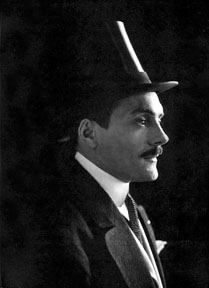
Included in the catch-all ‘Rediscoveries’ strand were four Max Linder films. Of these Max Toréador (1913) was remarkable for its prolonged scenes filmed in a bullring in Barcelona with Max himself in the middle with the other toreadors genuinely taking part in the bullfighting. It was no surprise to learn that different prints exist with scenes cut according to local sensibilities – the film did not shy from showing the ‘sport’ in all its bloody cruelty. Rather more enjoyable was The Three-Must-Get-Theres (1922), a goofy parody of Douglas Fairbanks in The Three Musketeers. The try-a-bit-of-everything humour was variable, but the film gleefully sent up the Fairbanks self-satisfaction and panache, laced with a string of anachronistic gags (motorbikes instead of horses, that sort of thing). Max remains one of the geniuses of the silent cinema, a poetic blending of opposites – graceful air with a penchant for pratfalls; debonair confidence with always just a touch of panic in his eyes.
One of the festivals themes was filmmaking in New York, tied in with Richard Koszarski’s new book, Hollywood on Hudson. The films chosen were an odd mish-mash, none odder nor mish-mashier than His Nibs (1920-21), directed by Gregory La Cava. Starring obscure comedian Chic Sale (whose gentle comic style suggests he might be worth investigating further, if more films exist), the film was made out of what was going to be a conventional drama, The Smart Aleck. At some point someone realised that the film wasn’t working, and decided to build another film around it. So we get a film about a cinema show, with Sale playing multiple parts, including a crusty projectionist. The audience settles down to watch the film-within-a-film, now called He Fooled ‘Em All (starring Sale and Colleen Moore), with commentary from the projectionist in the intertitles to prevent the audience from reading out the titles. The projectionist also tells us that he cut out a train journey from the film, because those scenes all look the same, plus some mushy stuff at the end. So some good laughs at the expense of cinema, and an intriguing portrait of a small town film show, but a minor oddity overall.
The highlight of the day – indeed one of the highlights of the week – was quite unexpected. On 28 December 1908 the Messina Straits off Sicily was at the epicentre of a huge earthquake. It was probably the biggest earthquake in Europe ever experienced; around 200,000 died in the region, with Messina itself having its population reduced to just a few hundred. We saw how film responded to this tragedy, through three actualities and two fiction films. The first actuality, from an unknown producer, had the greatest effect – aided by Stephen Horne’s eerie music (starting with solo flute before turning to piano). Each shot framed people within the ruins of the city to haunting effect. There was a profound sense of a shock, a dawning realisation of what had just happened. A Pathé news report showed us more, while a Cines film showed us the town being rebuilt in 1910. An Ambrosio drama, L’Orfanella di Messina (1909) depicted a couple who had lost their daughter to illness adopting an orphan girl from Messina, simple yet deeply touching. Finally, and oddly, there was a Coco comedy in which the comedian imagined himself caught up in the earthquake, with collapsing walls and floors in his bedroom. In this simple package of films, we saw how film was used to report on and to help people come to terms with what the country had been through. The sequence moved us all.
The Orchestra della Scuola Media Centro Storico di Pordenone, a school orchestra, was given the chance to show its mettle, accompanying Buster Keaton’s One Week (whose inventiveness greatness put the middling efforts of other comedies seen during the day into context) and three cartoons. Heavy on the recorders and percussion, but good accompaniment for all that, with spot-on sound effects. And further evidence of the growing bonds between community and festival.
The Golf Specialist, from criterioncollection.blogspot.com
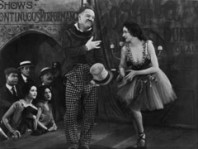
The evening’s screening kicked off with a sound film: W.C. Fields in The Golf Specialist (1930). The Fields theme was a bit of an opportunisitc one, probably chosen because some of his silents turned up in the Griffith and New York strands. The film is a classic, of course, and it was good to have it as a point to which his silent films were pointing. It’s a variety sketch in which Fields chaotically fails to demonstrate his golf skills, which tangling with children, animals and sticky paper with progressive absurdity. Delicious cynicism is on view, though there could be more of Fields’ sardonic view of the world and a little less of the golfing calamities.
After a modern Romanian silent short on climate change, whose logic eluded me, we had The Show Off (1926), directed by Mal St Clair. Part of the New York strand (it was filmed at Paramount’s Astoria studios), it starred the ever unappealing Ford Sterling (the Keystone star that Chaplin famously supplanted) in a relatively straight role. This had some cultural-historical fascination in its picture of office life and suburban aspiration, with Sterling playing all too accurately a vain and selfish social failure. Somehow he becomes aware of the unhappiness of other people about him and implausibly saves the day. Had Fields been given the part, we might have had a film of note. As it was we had a minor work of academic interest, its most diverting feature being Louise Brooks as the girlfriend of Sterling’s brother-in-law, looking for all the world as though she had glided in from a different planet.
Look out for Day Three, where we will encounter hands, feet, Satan, puppets and a strongman on his holidays.
Opening tomorrow at the BFI South Bank is the first month in a planned six-month retrospective of the work of Charlie Chaplin. The BFI National Archive, in partnership with the Cineteca di Bologna and Lobster Films, is restoring all of Chaplin’s films made for the Keystone company in 1914, as a follow-up to its earlier work on the Chaplin Mutuals. All of the surviving Keystones (Her Friend the Bandit remains lost) are being shown over August and September in nine programmes, as follows.
Here’s the blurb from the BFI site (and programme booklet):
The life of Charles Chaplin is the cinema’s greatest ‘rags-to-riches’ story. Bryony Dixon of the BFI National Archive presents a season of his early films showing how Chaplin became the world’s first movie megastar.
From the Victorian workhouse and the south London slums to the heights of Hollywood and movie stardom, the life of Charles Chaplin is cinema’s greatest ‘rags-to-riches’ story. It is less well known that the 20th Century’s greatest screen star was already a celebrity on this side of the Atlantic before he ever made a film. The fact is that we would never really have known the degree of Chaplin’s genius if he had not gone into films and if they had not survived.
The BFI National Archive, together with the Cineteca di Bologna and Lobster Films, is restoring all of Chaplin’s earliest films made for the Keystone company in 1914. These fascinating films document Chaplin’s rapid progress as a screen performer and director as well as furthering our acquaintance with a host of great comedians such as Mabel Normand, Roscoe Arbuckle, Edgar Kennedy, Ford Sterling, Al St John and Mack Sennett himself. The films – which have previously been seen only in mutilated copies – are brought back to life by painstaking restoration.
After acting in several Keystone films, Chaplin took control and directed most of his films thereafter. After 35 films for Keystone, Chaplin negotiated a better deal for himself with the Essanay Company and had a high degree of control over his comedies. He began to refine his character and further developed the ‘little tramp’ persona during his stay with the Mutual Company in 1916/17. It is during this period that many of his best-loved films were made. Chaplin described those years as the happiest of his life. In the following years Chaplin produced fewer but longer films for First National and in 1921 directed his first feature, The Kid.
This film more than any other laid the ghosts of his London childhood. Shortly after its release and after seven years of solid hard work and 72 films, Chaplin decided to go home for a visit. His reception on arrival in England was astounding.
Chaplin continues to be an important figure for us in Britain. His early films can illuminate our irretrievably lost comic traditions – they are an important part of our cultural heritage despite being made in the US. His life and works tell us about the development of screen comedy, about his adaptation of the music hall comedy of 19th century Britain to the 20th century American film, as well as recording the development of an individual artist and performer of genius.
As David Robinson, Chaplin’s biographer says, “The clothes he wears may have come from American sweat-shops; the streets in which he moves are at once no city and every city, but the origins of that hat and cane, boots and baggy pants, and shabby tenement streets, are unmistakably to be sought in his boyhood London.”
And here’s a list of the Chaplin Keystones being shown over August and September:
Programme 1: 9 & 13 August Making a Living Kid Auto Races in Venice, Cal. Mabel’s Strange Predicament Between Showers A Film Johnnie
Programme 2: 16 & 20 August Tango Tangles His Favourite Pastime Cruel, Cruel Love The Star Boarder
Programme 3: 23 & 26 August Mabel at the Wheel Twenty Minutes of Love Caught in a Cabaret Caught in the Rain
Programme 4: 28 & 30 August A Busy Day The Fatal Mallet The Knockout Mabel’s Busy Day
Programme 5: 6 & 10 September Mabel’s Married Life Laughing Gas The Property Man The Face on the Bar Room Floor
Programme 6: 11 & 13 September Recreation [fragment only] The Masquerader His New Profession The Rounders The New Janitor
Programme 7: 14 & 16 September Those Love Pangs [incomplete] Dough and Dynamite Gentlemen of Nerve His Music Career
Programme 8: 20 & 22 September His Trysting Place Getting Acquainted His Prehistoric Past
Merton on the road again
Following its hugely successful tour of the UK in 2008, Paul Merton’s Silent Clowns show, with accompanist Neil Brand, will be hitting the road again in Spring 2009. Merton and Brand will be giving eight shows at the Edinburgh fringe festival 8-16 August. Read more.
Silents in Shasta County
The Shasta County Arts Council of Redding, California, is holding its annual silent film festival, 24-25 October. Highlights include Metropolis, Blackmail and Peter Pan with actors reading out the intertitles to make the show more child-friendly. Read more.
A course in slapstick
The Museum of Modern Art, New York, is holding a course over five Wednesday, November-December on slapstick, entitled ‘Cruel and Unusual Comedy: Social Commentary in the American Slapstick Film’. The instructors are Ron Magliozzi, Steve Massa and Ben Model, who also provides the music. Read more.
Singing the silents
Published in paperback this month is Ken Wlaschin’s The Silent Cinema in Song, 1896-1929: An Illustrated History and Catalog of Songs Inspired by the Movies and Stars, with a List of Recordings. It is the history of the response of popular song to the silent cinema, with information on availability of recordings. Read more.
Too many things happening and too little time is leaving the Bioscope a little neglected of late, for which apologies. The colour series will return, and some more substantial posts, once I’ve got some other things out of the way. But in the meanwhile, let us have a cultural interlude. It has been too long since we had a poem for your delectation, so here is a particular favourite: Polish poet and Nobel Prize winner Wisława Szymborska‘s 1993 poem, ‘Slapstick’:
If there are angels,
I doubt they read
our novels
concerning thwarted hopes.
I’m afraid, alas,
they never touch the poems
that bear our grudges against the world.
The rantings and railings
of our plays
must drive them, I suspect,
to distraction.
Off-duty, between angelic –
i.e. inhuman – occupations,
they watch instead
our slapstick
from the age of silent film.
To our dirge wailers,
garment renders,
and teeth gnashers,
they prefer, I suppose,
that poor devil
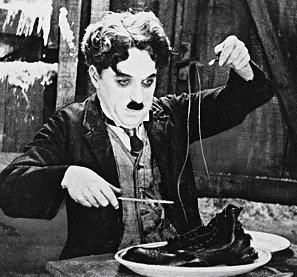
who grabs the drowning man by his toupee
or, starving, devours his own shoelaces
with gusto.
From the waist up, starch and aspirations;
below, a startled mouse
runs down his trousers.
I’m sure
that’s what they call real entertainment.
A crazy chase in circles
ends up pursuing the pursuer.
The light at the end of the tunnel
turns out to be a tiger’s eye.
A hundred disasters
mean a hundred cosmic somersaults
turned over a hundred abysses.
If there are angels,
they must, I hope,
find this convincing,
this merriment dangling from terror,
not even crying Save me Save me
since all of this takes place in silence.
I can even imagine
that they clap their wings
and tears run from their eyes
from laughter, if nothing else.
From The End and the Beginning (1993), trans. Stanisław Barańczak and Clare Cavanagh
As the shoelace-devouring Chaplin put it (at least I think it was him), ‘life is a tragedy when seen in close-up, but a comedy in long-shot’. It all depends where you are standing, and who is observing.
2 A.M. in the Subway (1905), Japanese Acrobats (1904) and The Boys Think They Have One on Foxy Grandpa, But He Fools Them (1902), from http://www.open-video.org
There are a number of online video collections out there designed for university use which feature lectures, demonstrations, educational documentaries etc. One that has been around for some time is the Open Video Project, which is hosted by Internet2 in America, and aims “to collect and make available a repository of digitized video content for the digital video, multimedia retrieval, digital library, and other research communities.” It comprises a number of collections from around the world such the University of Maryland HCIL Open House Video Reports, Digital Himalaya, NASA K-16 Science Education Programs and the HHMI Holiday Lectures on Science, but for our purposes what is interesting about the site is the Edison Video section.
This features 187 Edison production from the Library of Congress, dating from the 1890s and 1900s. Many early Edison titles are, of course, available from the LoC’s own excellent American Memory site, but the majority of the titles here are not on the better-known site. Among the varied titles only available here are A Ballroom Tragedy (1905), A Nymph of the Waves (1903), A Wake in “Hell’s Kitchen” (1903), Dog Factory (1904), Fights of Nations (1907), Gordon Sisters Boxing (1901), International contest for the heavyweight championship–Squires vs. Burns, Ocean View, Cal., July 4th, 1907 (1907), Princeton and Yale Football Game (1903), a series of films on the United States Post Office, films of the Westinghouse electrical works in 1904, and films from the St. Louis Exposition of 1904. And many more.
Basic cataloguing information is provided, though there are some peculiar errors with dates from time to time, and the presentation is rudimentary apart from some helpful synopses. There is little information available on the collection overall, so nothing to explain the significance of Edison films or why these titles – predominantly actuality – have been chosen. All are available as freely downloadable MPEG-1s, with the same frustratingly small image size as one finds on the American Memory site. But let us not be churlish – here is a wonderful selection of titles, many of them unfamiliar and indicative of the range of Edison production, including comedies, dramas, variety acts, sports films, travel films, and sponsored industrial work. Well worth exploring.
The Birds Eye View Film Festival returns 6–14 March 2008. This is the UK’s festival of women filmmakers, and as was the case last year it includes a silent film strand.
This year the festival features ‘Clowning Glories’, a retrospective of women in film comedy before 1930, to be held at the BFI South Bank. The titles being shown are:
7 Mar – My Best Girl (USA 1927 d. Sam Taylor). With Mary Pickford
8 Mar – Ich möchte kein Mann sein (I Don’t Want to be a Man) (Germany 1918 d. Ernst Lubitsch). With Ossi Oswalda + The Danger Girl (USA 1916 d. Clarence G. Badger). With Gloria Swanson
10 Mar – The Vagabond Queen (UK 1929 d. Geza von Bolváry). With Betty Balfour
11 Mar – Show People (USA 1928 d. King Vidor). With Marion Davies + Mabel’s Dramatic Career (USA 1913 d. Mack Sennett). With Mabel Normand
12 Mar – The Love Expert (USA 1920 d. David Kirkland). With Constance Talmadge, Natalie Talmadge + Blue Bottles (UK 1928 d. Ivor Montagu). With Elsa Lanchester
13 Mar – The Wild Party (USA 1929 d. Dorothy Arzner). With Clara Bow + A House Divided (USA 1913 d. Alice Guy)
There’s a complementary season of screwball comediennes of the 1930s, the UK premiere of Cannes hit Expired starring Samantha Morton, LFF critics’ choice Unrelated, and documentaries from Afghanistan, Pakistan, China and Nepal. Plus mobile phone filmmaking, women in video games, music vids, fashion films, and “a one off Whitechapel Gallery Late Night event starring a high profile all girl line up of live artists, VJ’s and DJ’s”. More details from the festival website.
A provisional list of titles for this year’s Slapsticon festival has been published. The annual festival of early film comedy takes place this year 17-20 July, Arlington, Virginia. The festival site says that the programme is still being selected, but nevertheless they are already promising (subject to change, of course) a remarkable line-up:
* Why Detectives Go Wrong (1928) — Poodles Hanneford
* Springtime Saps (1929) — Snub Pollard, Marvin Loback
* Winning Winnie (1926) — Ethelyn Gibson
* Three Stooges Rarity Show, hosted by Paul Gierucki
* Sally of the Sawdust (1925) — W.C. Fields
* Number One (1915) — Mr. and Mrs. Sidney Drew
* Pretzel and Flanagan (1914) — Lloyd Hamilton
* Taking Things Easy (1919) — Eddie Lyons and Lee Moran
* Nearly Spliced (1916) — Leon Errol
* Mishaps of Musty Suffer: Going Up (1916) — Harry Watson Jr.
* All Jazzed Up (1919) — Dan Russell, Hughey Mack
* It’s a Hard Life (1915) — Heinie and Louie (Jimmy Aubrey and Walter Kendig)
* The Bogus Booking Agents (1916) — Ham and Bud
* Sweeney’s Christmas Turkey (1913) — Hughey Mack
* Billy McGrath on Broadway (1913) — Augustus Carney
* Monkey Shines (1922) — Campbell Comedy
* The Tin Hoss (1925) — Hey Fellas
* Open Spaces (1926) — Malcolm “Big Boy” Sebastian
* A Pleasant Journey (1923) — Our Gang
* Among the Mourners (1915) — Chester Conklin, Syd Chaplin
* Are Waitresses Safe? (1917) — Ben Turpin, Charlie Murray
* Trimmed in Gold (1925) — Billy Bevan
* A Rainy Knight (1925) — Raymond Mckee, Eugenia Gilbert
* Taxi Dolls (1929) — Jack Cooper
* Doubling in the Quickies (1932) — Lloyd Hamilton, Marjorie Beebe
* Vacation Waves (1928) — Edward Everett Horton
* The Golf Bug (1923) — Monty Banks
* Golf Widows (1928) — Harrison Ford, Vernon Dent, Will Stanton
* Councel on de Fence (1934) — Harry Langdon
* See America Thirst (1930) — Harry Langdon
* Rush Orders (1921) — Snub Pollard
* Sherlock Sleuth (1924) — Arthur Stone
* Rough on Romeo (1921) — Paul Parrott
* The Rummy (1933) — Taxi Boys
* Harry Langdon Documentary (Paul Killiam) — never released Paul Killiam documentary from the late 1950’s, featuring rare clips and an interview with Vernon Dent.
* The Silent Partner (1955) — Buster Keaton, Joe E. Brown
* The Scribe (1966) — Buster Keaton’s last film
* An Aerial Joyride (1916) — Raymond Griffith
* His Foot-Hill Folly (1917) — Raymond Griffith
* Changing Husbands (1924) — Raymond Griffith and Leatrice Joy
* The Barnyard (1923) — Larry Semon
* Ladies Night in a Turkish Bath (1928) — Dorothy Mackail, Jimmy Finlayson
* Grass Skirts (1930) — Lloyd Hamilton
* Share the Wealth (1936) — Andy Clyde
* Dumb’s the Word (1937) — Edgar Kennedy, Billy Franey
* Alibi Bye Bye (1935) — Clark and McCullough
* Fiddlin’ Around (1938) — Monty Collins, Tom Kennedy
* Pistol Packin’ Nitwits (1945) — Harry Langdon, El Brendel
* Dangerous Females (1929) — Marie Dressler, Polly Moran
* Tomalio (1933) — Roscoe Arbuckle
* The Brown Derby (1926) — Johnny Hines
* His Private Life (1926) — Lupino Lane
* No Father to Guide Him (1925) — Charley Chase











 The Bioscope