Silent cinema in Tamil

I’ve just seen notice of this publication, a history of world silent cinema written in Tamil, reported on by The Hindu newspaper. It seems worth noting, for the record. Here’s the review:

ULAGA CINEMA VARALAARU — Mouna Yugam (Silent Period): Ajayan Bala; KK Books Pvt. Ltd.,

19, Srinivas Reddy Street, T. Nagar, Chennai-600017. Rs. 150.

A WELCOME publication in Tamil, most likely the first of its kind, narrating the interesting history of world cinema during the period December 1895 to October 1927 being the silent age when many purists and diehard conservatives sincerely felt that the medium would not last long. Ajayan Bala who is involved in many a capacity in cinema has narrated interestingly the fascinating true story of the founding, growth and development of silent film around the world, including India. Today there is great awareness about film history in this part of the country and this book will go a long way in filling the virtual vacuum that exists.

The book is well illustrated with thumbnail photographs, which adds to its attraction and utility.

The author is currently working on more volumes to continue his in-depth study and writing of the later exciting periods of world cinema. Economically priced, this book is a must read for Tamil readers who wish to know the fascinating tale of international cinema. The publishers also deserve to be congratulated besides the author for planning and publishing such a book.

Early anime discovered

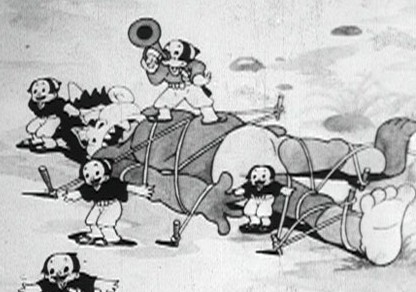
Chibisuke Monogatari

Issun-boshi: Chibisuke Monogatari (Tiny Chibisuke’s Big Adventure) (1935) © Digital Meme

The National Film Center, Toyko, has announced the discovery of two anime films from the silent era. Given the fact that less than 4% of Japanese films made before 1945 still exist, any such discovery, as brief as these titles are, is heartening news.

Anime might be thought of as a modern phenomenon, but the history of Japanese film animation stretches back to the early silent era. Soon after American and European animation films were first seen in Japan, around 1914, Japanese filmmakers were imitating them and coming up with their own distinctive native style.

The two films that have been uncovered (they were found in good condition in an Osaka antique store) are Junichi Kouichi’s Nakamura Katana (1917), a two-minute tale of a samurai tricked into buying a dull-edged sword; and Seitaro Kitayama’s Urashima Taro (1918), based on a folk tale in which a fisherman is transported to a fantastic underwater world on the back of a turtle.

There’s a little more information in a Reuter’s report, but no images or clips just yet.

If you are keen to see what silent anime looks like, the enterprising Japanese publisher Digital Meme sells a four-DVD box set, Japanese Anime Classic Collection, which features examples from 1928 onwards, some with benshi narration (the Japanese actor/presenters who explained the stories of films to audiences and who enjoyed stardom in their own right). Digital Meme retails a number of Japanese silents on DVD with benshi accompaniment as a special feature, and I’ll put together a post some time soon about these and the world of the benshi.

Oldest Korean film screened once more

Cheongchun’s Sipjaro

Cheongchun’s Sipjaro (1934), from http://www.koreatimes.co.kr

Silent films continued well into the 1930s in many Asian countries, notably China and Japan, which is why the recently-discovered oldest surviving Korean dramatic film dates from 1934, yet is a silent.

Cheongchun’s Sipjaro (Turning-point of the Youngsters or Crossroads of Youth), directed by An Jong-hwa, was given its first screening in eight decades by the Korean Film Archive, after having been given to the archive by a donor who wishes to remain anonymous. The Archive has a helpful website (in English) with a fine database of Korean films, which supplies this synopsis for the film:

It breaks Yeong-bok’s heart to leave his old mother and younger sister home to leave his hometown. He married into Bong-seon’s family and worked for seven years but when Joo Myeong-goo snatches Bong-seon away, he decides to leave town. Blaming his cursed fate for everything, he gets a job as a luggage carrier in Seoul. That is when he meets Yeong-hee who works in the vicinity. Yeong-ok also leaves home to come up to Seoul after their mother passes away but she cannot find her brother. Instead, she meets Gae-cheol, an old friend from her hometown and also a good friend of Joo Myeong-goo. Yeong-ok loses her virginity to Gae-cheol and when Yeong-bok finds out about this, he gives Gae-cheol and Myeong-goo a good beating and starts working harder for a better tomorrow.

A report in The Korean Times provides some snippets of information about early Korean film, though it’s a little misleading in places.

It tell us that the the oldest (dramatic) Korean film was Uilijeogguto (Fight for Justice), first screened on 27 October 1919, while the first feature-length drama was Weolha-ui Mangseo (The Vow Made below the Moon), directed by Yun Baek-nam and shown in 1923. Neither survives.

The Korean Film Archive says that seven native films were produced between 1910 and 1920, and sixty-one films from 1920 to 1930, of which they hold no examples at all, while between 1930 and 1940, there were seventy-three films produced, but only five are held by the Archive. It finishes off the sorry tale by telling us that around 5,500 films (presumably dramatic films) have been produced in Korea, and some 40 percent are lost.

Cheongchun’s Sipjaro beats by two years the previously oldest surviving film, Mimong (Sweet Dream) (1936), which was itself only discovered in 2005. Let’s hope for more.

Update: There’s a nice piece on the film’s restoration and the work of the Korean Film Archive in this piece from JoongAng Daily.

Everybody loves Sessue

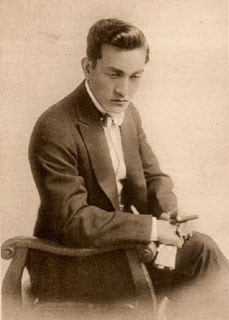
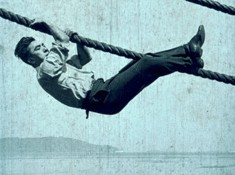
Sessue Hayakawa

Sessue Hayakawa, from The Evening Class

The silent star of the moment is Sessue Hayakawa. The Japanese-born star of American silents has been the subject of a critical study, film season and DVD releases, while an archive has announced that it has recently preserved a number of his films. This is a round-up of Hayakawamania.

The critical study is Daisuke Miyao’s Sessue Hayakawa: Silent Cinema and Transnational Stardom (Duke University Press), which has already been the subject of a post on the Bioscope. There’s an online interview with Miyao on The Evening Class blog. Miyao’s work inspired a Museum of Modern Art exhibition, Sessue Hayakawa: East and West, When the Twain Met, which ran September 5–16, 2007 – details of the films shown are on the web page.
The Dragon Painter

The Dragon Painter, from http://www.milestonefilms.com

The new DVD release is The Dragon Painter (1919), issued by Milestone. This is the blurb from their site:

Remembered mostly for his magnificent performance as the Japanese officer in The Bridge over the River Kwai, few filmgoers realize that Sessue Hayakawa was one of the great stars of the silent cinema. In many films he played a dashing, romantic lead — a rarity for Asian actors in Hollywood, even today. Hayakawa became so popular and powerful that he was able to start Haworth Pictures to control his own destiny. The Dragon Painter was the finest of the Haworth productions. Beautifully acted, gorgeously shot (with Yosemite Valley filling in for the Japanese landscape), and lovingly directed, the film is an absolute marvel.

Hayakawa plays Tatsu, an artist living as a hermit in the wilds of Japan. Thought mad by the local villagers, he believes that his princess fiancée has been captured by a dragon. His obsession leads to artistic inspiration. It isn’t until a surveyor comes across Tatsu in the mountains that his genius is discovered. The surveyor informs the famed artist Kano Indara about his discovery. Kano is desperate to find a male heir to teach his art, but when Tatsu meets Kano’s daughter (played by Hayakawa’s wife, Tsuru Aoki) and sees only his lost princess, a clash of wills brings the household to the brink of disaster.

Long considered lost, The Dragon Painter was rediscovered in a French distribution print and brought to the George Eastman House for restoration with the original tints. The film survives today as a tribute to Hayakawa’s great artistry and a shining example of Asian-American cinema.

The DVD comes with a remarkable set of extras, including the full-length feature, Thomas Ince’s The Wrath of the Gods (1914), starring Hayakawa, Tsuru Aoki and Frank Borzage; a copy of the script for The Wrath of the Gods; a 1921 short subject, Screen Snapshots (1921) with Hayakawa, Roscoe “Fatty” Arbuckle and Charles Murray; the original novel by Mary McNeil Fenollosa in PDF format; and the stills gallery includes Herbert Ponting’s exquisite images for his 1910 book In Lotus-Land Japan: Japan at the Turn of the Century (Ponting went on to be cinematopgrapher to the Scott Antarctic expedition).

You can download a presskit for the DVD from www.milestonefilms.com/presskits.php.

Other Sessue Hayakawa films available on DVD are The Cheat (1915) (from Kino in American and Bach Films in France) and The Secret Game (1917) (from Image Entertainment).

His Birthright

His Birthright, from http://www.filmmuseum.nl

Three Hayakawa films, or what remains of them, have recently been restored by the Nederlands Filmmuseum: The Man Beneath (1919), His Birthright (1918) and The Courageous Coward (1919): only The Man Beneath survives as a complete film. There is background information on the films, their restoration and Hayakawa’s career on the Filmmuseum site.

Finally, there’s information on The Cheat and Forbidden Paths (1917), shown recently at the Pacific Film Archive.
The origins of Kung Fu cinema

Ren Pengnian

Ren Pengnian, from Kung Fu Cinema

I’ve just come across Electric Shadows, a blog on the history of the Hong Kong film industry and Chinese martial arts films. The blog, written by Jean Lukitsh, started a year ago, but has just started up again from scratch by re-posting its original posts (on the Kung Fu Cinema site). These feature a series, ‘The Origins of Kung Fu Cinema’, a genre which goes back rather further than you might think. Part 1, Shanghai Dawn, takes us back to the first years of the Chinese film industry and says that Robbery on a Train, directed by Ren Pengnian in 1919, may well qualify as the first Kung Fu movie. By 1925 there were around forty to sixty small studios making martial arts films in Shanghai. Part 2, Butterfly and Oriole, continues the history, focussing on the actresses Hu Die (Butterfly Wu) and Chin Tsi-ang (Chen Zhigong). Part 3, The Oriental Female Fairbanks, has more on Ren Pengnian and his actress wife Wu Lizhu (Wu Lai-chu) and their films of the 1920s and early ’30s (Chinese films continued silent for longer than in the West).

It’s a fascinating account of the kind of popular cinema from an earlier era which seldom makes it into film histories, with links to YouTube clips of silent Kung Fu films (none of Pengnian or Wu Lizhu’s films survives, alas).

Update: The series continues, still in the silent era, with part 4, Ambush on all Sides.

Early Asian cinema and the public sphere

There’s an article by Professor Wimal Dissanayake just published on the Transcurrents site which provides a thoughtful analysis of the position of early cinema in India, Japan and China. Entitled ‘Relationship Between Early Asian Cinema And The Public Sphere‘, it looks at how the early years of cinema in each country, though it inevitably came with Western influences, was strongly directed by local needs and sensibilities. It makes this interesting argument about the purpose of film history:

When we discuss the concept of Asian cinema, it is important to bear in mind its close relationship to the writing of film history. Film history is an open-ended enterprise that admits of pluralities of interpretation. In writing film histories, we produce the historical objects we seek to study. This has great implications for the exploration of the idea of Asian cinema. Today, when we write film histories of diverse Asian cinemas – Indian, Korean, Japanese, Sri Lankan etc – we need to simultaneously occupy different spaces created by the past and history, by transnationalization, by the ever changing shapes of cultural modernities. Writing film history is also a way of charting the course, the preferred trajectory for growth for the future. Hence, in our efforts to understand and map the meaning of the concept of Asian cinema, we need to pay particular attention to the complex ways in which film histories have been produced, and are been produced today.

Of course, historians will always seek good arguments to justify their preoccupation, but he makes sound arguments for the relationship early cinema in India, Japan and China held with the ‘public sphere’ i.e. how the medium naturally/inevitably engaged with the national milieu; film in those countries bore, and still bears, what Dissanayake calls “the imprint of local desire”. It’s well worth reading, even if you are not that familiar with the silent cinema of those countries.

1st International Silent Film Festival

http://www.goethe.de

While I don’t expect it’s going to affect many Bioscope readers, I’ve just come across notice of the 1st International Silent Film Festival, currently taking place in Manila, Philippines. Organised by the Goethe-Institut Manila, Instituto Cervantes and the Japan Foundation, the festival is taking place 4-13 September, and features silent films from Germany, Japan and Spain. There are just three films showing, a little disappointingly for such a grandly-named venture: Lotte Reiniger’s The Adventures of Prince Achmed/Die Abenteuer des Prinzen Achmed (1926); the Spanish silent The Sixth Sense/El sexto sentido (1929), directed by Nemesio Sobrevilla; and the Japanese A Monster Serpent/Orochi (1925), directed by Buntaro Futagawa. There are further details on the films here.

Prakash Travelling Cinema

Part one

Prakash Travelling Cinema is a delightful short film, posted on YouTube by the filmmaker, Megha B. Lakhani. She made the 14-minute film while at the National Institute of Design, India, and it has gone on to win festival awards.

The film documents two friends who maintain a travelling bioscope show on the streets of Ahmedabad. The ramshackle outfit, which they take around on a hand-cart, comprises a genuine c.1910 Pathé projector, adapted for sound, with peep-holes all around the mobile ‘cinema’ itself (which they call their ‘lorry’), through which children watch snippets plucked from popular Bollywood titles. One of the amazing sights of the film is either of the two men hand-cranking their sound projector at exhausting speed.

Part two

Although they are not showing silent films, the whole enterprise is imbued with the spirit of the original travelling bioscope operators of India, and of course the technology hails from the silent period. The word ‘bioscope’ still persists in places in India for cinema, as it does in South Africa. However, the film wants to do more than show a quaint operation, and it is very much about friendship, conviction, Indian society, and the persistence of a human way of doing things in the face of modern media technologies.

There are an estimated 2,000 mobile cinema shows in India today, and the travelling bioscope has been made the subject of other recent films. There is Andrej Fidyk’s 1998 documentary film Battu’s Bioscope, on a modern travelling show in rural India; Vrinda Kapoor and Nitesh Bhatia’s short film Baarah Mann Ki Dhoban (2007), on modern bioscope workers whch also touches on the history of India film exhibition; and Tim Sternberg’s film Salim Baba (2007), again about a modern travelling bioscope show, this time with an adapted 1897 Bioscope. Plus there’s Tabish Khair’s acclaimed novel Filming, published this year, which moves from a travelling bioscope show in 1929 to the Bombay cinema of the 1940s as a means to examine the rise of modern India. Clearly there’s a metaphor in the air.

Prakash Travelling Cinema was made in 2006, and there’s a full set of credits here. The film is in Hindi, with English subtitles, and on YouTube, owing to its length, it comes in two parts.

A new claim

Another item from the Origins of Cinema in Asia conference, which took place in New Delhi last month. Stephen Bottomore wrote a short piece for the festival news letter, with a claim for what may well be the first exhibition of film to have taken place in India. Here’s his report:

Over the past twenty years I have been researching aspects of early cinema in libraries and archives in the UK and elsewhere. In preparation for the ‘Origins of Cinema in Asia’ conference, which took place over the past two days, I had a rummage through my unsorted material, and rediscovered an especially interesting article from the Journal of the Photographic Society of India of July 1896. In this article the editor tells us that, while projected cinema shows were by then an established fact, he had seen moving pictures of a different kind in India some months earlier:

‘I had an opportunity last cold weather of viewing Edison’s kinetescope [sic] in Calcutta. It was certainly extraordinary… But the pictures were too small, and the duration of the scene too short, to altogether satisfy me. Looking down through an object glass into a breast-high box one was first conscious of a whirring sound, then a sparking light, and presently a picture about 2” square appeared […] The scene was stirring enough in all conscience, and I gathered that it took a continuous chain or band of 1,400 celluloid positives to represent it. This band ran under an illuminated screen below which was an electric lamp – and to bring out the scene required a special camera invented by Edison.’ [He describes the film that he saw: a staged incident of a rescue of people from a fire.]

Although the writer does not mention the date when he saw this film in the peepshow Kinetoscope, he does state that it was, ‘last cold weather’, which would suggest the months at the turn of 1895 to 1896. Let us recall that the first film projection took place in India on 7 July 1896 at Watson’s Hotel in Bombay – indeed, this was the first film projection in Asia we believe. So this writer’s viewing of the Kinetoscope pre-dates India’s first film projection by several months, and therefore this is apparently the first appearance of moving pictures in India, and perhaps in Asia as a whole. (Although the Kinetoscope was seen in America, Europe and Australia in 1895, in Asia, apart from India, it was only introduced from later in 1896 – in Japan and Singapore).

Perhaps my historian colleagues in India – tireless researchers such as P.K. Nair – might already know about this appearance of the Kinetoscope in India in the winter of 1895/96. All I can say is that I have never seen this ‘first’ appearance mentioned in print histories of Indian cinema. And this suggests to me that many other important facts about early cinema in this region might remain undiscovered.

There is still much terra incognita when it comes to early film history, and still much to be learned about the dissemination of films and the means to exhibit them across the globe in the 1890s. The first film entrepreneurs saw the reach of their product in global terms – we as scholars should do so too. Certainly it would seem more work needs to be done to track the worldwide spread of the Edison Kinetoscope, to understand it as an international business phenomenon, and to pursue its many paths of influence.

The Origins of Asian Cinema

Silent cinema was, of course, a worldwide phenomenon, and some good work has been done in recent years to move early film historiography away from Western Europe and America to reach each corner of the globe that the medium touched.

The Bioscope will endeavour to follow suit, so it is a pleasure to have this conference report from Stephen Bottomore on the recent Origins of Asian Cinema conference, held at Osian’s, New Delhi, 21-22 July.

The conference began with welcome remarks by Aruna Vasudev, Festival President. Nick Deocampo, Conference Convener then laid down the conference theme, discussing its concerns and introducing the panel discussants. The themes of what followed included: the arrival of motion pictures and early film conditions in Asia; early filmic practices; Western and native film
pioneers; Asian cinema’s ‘founding fathers’; early cinema’s resonance in Asia and the relevance of its history and practices to Asians; the role of archives and festivals in writing film history; and how Asians indigenised the foreign medium.

The list of participants included the following:

Session 1: WEST MEETS EAST: EARLY CINEMA AND ASIA

Charles Musser (USA); Stephen Bottomore (UK); Nick Deocampo (Philippines); Kim So-Young (South Korea); there was also a presentation on early Turkish cinema.

Session 2: BUILDING HISTORIES/CREATING IDENTITIES: ARCHIVES AND FESTIVALS

Bel Capul (Philippines); Tan Bee Thiam (Singapore); Ashley Ratnavibhushana (Sri Lanka).

Session 3: COLONIAL ORIGINS: EARLY FILM CONDITIONS IN ASIA

Peggy Chiao (Taiwan); P.K. Nair (India); Tadao Sato (Japan); Earl Jackson (Korea); Budi Irawanto (Indonesia).

Session 4. FILM AND THE PUBLIC SPHERE: THE RISE OF NATIONAL CINEMAS

Hassan Abd. Muthalib (Malaysia); Anchalee Chaiworaporn (Thailand); Ngo Phuong Lan (Vietnam); Houshang Golmakani (Iran); Zakir Hussain Raju (Bangladesh).

Perhaps the single most useful paper was Deocampo’s which offered an overview of the origins of cinema in Asia, stressing the colonial context in many countries at the time. Most other presentations, if they were of a historical nature, consisted of a general introduction to that country’s early film history. Exceptions included Bottomore on the early travelogue maker, Burton Holmes; Musser on the importance of national filmmaking in the Philippines, notably in 1912; and Chaiworaporn on the importance of royalty in the origins of Thai cinema. The session on archives and festivals included some of the most dynamic presentations, and this suggested that there is new life in film archiving in Asia and a desire to celebrate the region’s moving image history.

Particularly interesting moments for me included:

  • the description of a socially-critical article published in Korea in 1901, in which the author used cinema as an example of vibrancy, in contrast to the sloth of real people;
  • a description by the Thai monarch of a Kinetoscope film seen in one of Edison’s machines in Singapore in 1896: of a cockfight. This would be one of the first appearances of these peepshow machines in Asia (the very first was probably in Calcutta in the winter of 1895/96);
  • the chance to hear veteran scholars, P.K. Nair and Tadao Sato, give succinct summaries of their countries’ early film history.

This was the second meeting on this theme of early cinema in Asia: a previous conference was held a couple of years ago in the Philippines. It is planned to publish a volume of essays on this theme, some of which will be based on these conference presentations.

Grateful thanks to Stephen for the report, which gives evidence of vital and enthusiastic activity in the writing of Asian early film history, and I certainly look forward to seeing the volume of essays. Osian’s, by the way, is a new arts institution in Delhi, which combines auction house, film centre, art fund and a Centre for Archiving, Research & Documentation.