‘Tiger’ Sarll

Tiger Sarll

Strolling about the second-hand bookshops, on a beautiful warm Spring day, I chanced upon Adventurer Extraordinary: The Tiger Sarll Story (1961), by Godfrey Lias. His is a tall story well worth telling, if not always believing. Thomas Henry William Bang-fee Sarll (Bang-fee came courtesy of the Chinese minister to London, a family friend) was born in 1882, and originally trained as a doctor. In 1899 he enlisted with the South African Light Horse in the Anglo-Boer War, where he was wonded and lost the sight in his left eye. He next became a big game hunter in Africa (a curious choice for someone who was a life-long vegetarian), then joined the Royal Canadian Dragoons. He returned to London, where he became an actor, including films. He next dabbled in journalism, travelling to Morocco in 1907, and after further world travel (including Argentina and the Mexican revolution) became a cameraman for the British newsreels Warwick Bioscope Chronicle, Pathe’s Animated Gazette and Williamson’s Animated News. He seems not to have been very good as a cameraman (having just the one eye may not have helped), but nevertheless was sent off by Pathe to film the Balkan War in 1912. Reports suggest that his expedition cost £600 without obtaining any good footage, though the BFI database lists one film taken by him at this time of a Turkish retreat (the date of 1915 is an error). He was sacked by Pathe, but clearly had a persuasive gift as he was taken on by Williamson, for whom he filmed the 1913 Derby, then on the outbreak of the First World War he was taken on by Transatlantic and filmed scenes in Belgium, though his footage was never used.

Sarll was the archetypal English eccentric, dressing in spats and monocle, and dominating everyone with his 6′ 4″ height and powerful personality. After the war he returned to Morocco to report on the rebellion against the Spanish, then went Mexico to capture pythons and alligators for zoos. On his return, he started up a circus act, handling snakes and alligators. He was a fire-fighter during World War, and ended his extraordinary career as security officer at a nuclear power station. His biography was published after an appearance on the TV programme This is Your Life, where he notably failed to recognise some of his grown-up offspring (“You’re not one of mine, are you? Which one are you?”).

There’s more about him in his biography on the British Universities Newsreel Database. The picture above is from The Bioscope (5 December 1912) and shows him with his Pathé camera stationed with the Turkish army at Chorlu. [Update: The site is now called News on Screen and the link has been changed to http://bufvc.ac.uk/newsonscreen/search/staff/detail.php?id=33189]

Broncho Billy Silent Film Festival

essanay.jpg

The 10th annual Broncho Billy Silent Film Festival is taking place at the Niles Essanay Silent Film Museum, Fremont, California, June 29-July 1. This year the festival celebrates 100 years of the Essanay Film Manufacturing Company. The web page for the festival still has information on the 2006 festival, but if you go to their Saturday Night Film Schedule a full list of titles and dates is given. See not only Broncho Billy Anderson, the early cinema’s favourite cowboy, but also Ben Turpin, Max Linder, Beverley Bayne, Francis X. Bushman, Rod LaRoque and Wallace Berry. There’s an evening of Broncho Billy films included, and among the musicians is the incomparable Phil Carli.

Pre-Cinema Project

hats.jpg

I just came across this section from the George Eastman House web site. GEH is one of the world’s leading media archives, and has a rich selection of images online, chiefly from its photography collections. My eye was caught by the Pre-Cinema Project, which presents a collection of magic lantern images, including photographs of lanterns, magic lantern slides, toy lantern slides, a Muybridge Zoopraxiscope disk, slip slides, and a lovely selection of slides relating to motion pictures – audience notices (such as the slide above), slides that were part of multimedia presentations, and film advertisements.

A Tour of the Cinema Museum with Ronald Grant


I’m a bit wary about adding YouTube clips to The Bioscope. My pernickety film archivist principles will prevent me from posting anything that’s been ripped off illegally from somewhere else, so I’ll try to stick to legitimately posted stuff which is of interest. So, let’s start with this wonderful tour of The Cinema Museum, the treasure trove of film memorabilia held in the former Lambeth workhouse where Chaplin’s mother was incarcerated. It isn’t open to the public alas, but this five-minute tour is a real treat, with programmes, music scores, posters, films, memorabilia, costumes, equipment, journals and stills, all crammed in so that there’s barely room to move.

A good read or two

Having expressed disappointment at the Silent Cinema book by Brian Robb, what should the person new to silents read as an introduction to the subject? There’s not much among new publications (please somebody let me know if you have opinions otherwise), but I’ve come up with a top ten that I would recommend.

1. Karl Brown, Adventures with D.W. Griffith (1973)

Out of print, but easy to find second hand, this a memoir by the assistant cameraman to Billy Bitzer, who was D.W. Griffith’s cinematographer. It is an eye-witness account of the making of Birth of a Nation and Intolerance, written with immense charm, wit and memorable observation. There is no other book like it for conjuring up the excitement and creativity of early filmmaking. It’s a terrific read, funny and informative, making you wish that you had been there too.

2. Ivan Butler, Silent Magic: Rediscovering the Silent Film Era (1987)

Another book from someone who was there. Ivan Butler saw his first film in 1915 and went on to become a film historian. This is a marvellously evocative account of the films he saw in the silent era, year-by-year, with sharp observations not only on the notable films and stars of the period but also many names and titles now forgotten. You get a real sense of what it was like to be a regular filmgoer in the 1920s (in Britain). It’s out of print, but well worth tracking down.

3. Edward Wagenknecht, The Movies in the Age of Innocence (1962)

A classic survey of the silent screen from the early one-reelers to the 1920s, concentrating on American silent cinema. It is literate and enthusiastic in equal measure, mixing personal recollection with wise observation. And it’s still in print.

4. David Robinson, Chaplin (1985)

Charlie Chaplin’s own Autobiography is a candidate for this list, but my vote goes for this exhaustive, amazing biography, 792 pages and yet you may want to read it all at single setting. It makes best use of unprecentend access to the Chaplin archives, and it is just such an amazing, Twentieth Century story.

5. Brian Coe, The History of Movie Photography (1981)

If you have to have one book on motion picture technology (and it’s worth having one), this is it. It doesn’t just cover the silent era, but for that period alone (and the ‘pre-cinema’ of the nineteenth century and before) it is the best, clearest and most helpfully illustrated publication yet produced. All good film archivists swear by it. Of course it’s out of print, but not hard to find.

6. George Pearson, Flashback: The Autobiography of a British Film Maker (1957)

Pearson was a schoolteacher, aged thirty-seven, when in 1912 he gave up his steady career to become a film director and writer with the Pathe company in Britain. This is a touching, thoughtful and often inspiring memoir from someone who toiled during the difficult years of British filmmaking. His hopes for film as an art and as a source of instruction are inspiring, even if his personal achievements were relatively humble. It’s also just a very readable and observant account of the British film industry over three decades.

7. Charles Musser, Before the Nickelodeon: Edwin S. Porter and the Edison Manufacturing Company (1992)

OK, this scholarly and very detailed work isn’t every beginners idea of where to begin, but if your interest is in the scholarly excitement generated by early cinema, and how the field of film before 1914 can be a source of ideas, debate and theory, this is the book for you. It uses the carer of Edwin S. Porter (director of The Great Train Robbery) as a way into a deep understanding of how the motion picture industry emerged, ably situated within a broader socio-cultural framework. It has inspired many other such studies, but hasn’t really been beaten yet.

8. Kevin Brownlow, The War The West and The Wilderness (1978)

Most would put Brownlow’s famous The Parade’s Gone By in such a list, but this is my favourite of his books, which shows us that there was much more to the silent cinema than the conventional fiction feature film. This is about the pioneers who went out and filmed wars and revolutions, went exploring with the camera, and recorded the wild West in the first years of cinema. It’s particularly good on the actuality filming of the First World War, and films of polar exploration. It’s a book about discovery which has discoveries itself on every page. There’s such enthusiasm and admiration on every page. It’s out of print of course, and copies tend to be a bit costly – but, go on, treat yourself.

9. Walter Kerr, The Silent Clowns (1975)

Another classic. No book conjures up better the skill and immense fun of the great silent comedians. It has definitive observations on Chaplin, Keaton, Lloyd, Laurel and Hardy, Langdon and a host of other, it is richly illustrated, and it has wise things to say on what we laugh at and why.

10. Garth Jowett, Film: The Democratic Art (1976)

This is a social history of American film. There have been far too few such histories, as though film existed solely on the screen, without any wider social significance. This book does what any sensible history of such a phenomenon should do: it looks at the social, political, cultural and economic forces which drove cinema, with the focus on audiences and institutions. It goes beyond the silent cinema period, but if you want to see how film in the silent era interacted with society (and you should), this is a very good place to start.

Paul Merton’s Silent Clowns

paulmerton3.jpg

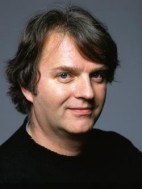
Television comedian and silent cinema champion Paul Merton will be hosting a special programme of silent film comedians, including Chaplin, Keaton, Fatty Arbuckle and Charley Chase, with music by Neil Brand, at Plymouth Pavilions on 27 November 2007 – some time off, but tickets are on sale now. Merton has written a book, Silent Comedy, which will be published in October 2007. Look out for plenty of publicity and events around that time.

Update: See later post, Paul Merton on tour, for a list of his November-December tour dates, with links to the theatres.

Reading Robb

I’ve now got my copy of Brian J. Robb’s Silent Cinema (see earlier post) and indeed it is quite poor. It’s sloppily edited, has numerous errors, spells names wrongly (Adolph Zuker, Brit Acres, D.W. Griffiths etc), and unashamedly regurgitates every dubious myth about silent film you can think of. It’s also very oddly structured – chapters on the origins and developing art of film, then a chapter on Georges Méliès, then straight into sections on directors, stars and clowns, followed by scandals, a quick round up of international silents, then potted descriptions of some classic titles, and on to the coming of sound.

I wouldn’t recommend it to anybody, except for the DVD that accompanies it. This is a generous 193 mins compilation put together by Sunrise Silents. The quality of the clips is poor, the accompanying music is cheap, and there’s nothing to tell you what the film clips are unless to refer to a back page of the book. But the sheer range of clips is very impressive, so here’s a listing (the dates aren’t given on book or DVD, so The Bioscope comes to the rescue):

  • Johnny Hines – Conductor 1492 (1924)
  • Mary Pickford – Little Annie Rooney (1925)
  • Harold Lloyd – I’m On My Way (1919)
  • Pola Negri – Hotel Imperial (1926)
  • Rudolph Valentino – Son of the Sheik (1926)
  • The Gish sisters – Orphans of the Storm (1921)
  • Douglas Fairbanks – Wild and Woolly (1917)
  • Greta Garbo – Joyless Street (1925)
  • Laura La Plante – The Cat and the Canary (1927)
  • Buster Keaton – Cops (1922)
  • Norma Talmadge – The Social Secretary (1916)
  • Rin Tin Tin – The Night Cry (1926)
  • Raymond Griffith – The Night Club (1925)
  • Colleen Moore – A Roman Scandal (1919)
  • Lon Chaney – The Phantom of the Opera (1925)
  • Louise Brooks – It’s the Old Army Game (1926)
  • Charles Chaplin – The Star Boarder (1914)
  • Clara Bow – My Lady of Whims (1925)
  • William S. Hart – The Ruse (1915)
  • Pearl White – The Perils of Pauline (1914)
  • Lige Conley – Air Pockets (1924)
  • John Barrymore – The Beloved Rogue (1927)
  • Theda Bara – The Unchastened Woman (1925)
  • Our Gang – The Big Show (1923)
  • Mabel Normand – The Extra Girl (1923)
  • Alla Nazimova – Salome (1923)
  • Gloria Swanson – Teddy at the Throttle (1917)

All are American except Joyless Street (German), and, no, I’d never heard of Johnny Hines or Lige Conley either…

Moving Pictures

Oh to be in Washington, as this exhibition sounds excellent. Moving Pictures: American Art and Early Film is running 17 February-20 May at the Phillips Collection, 1600 21st Street, NW, Washington, DC 20009. As the blurb says, “This exhibition will present American realist painting from the late 19th and early 20th centuries side-by-side with the earliest experiments in film. Approximately 100 works, including nearly 60 short films (a few minutes long) by Thomas Edison, the Lumière Brothers, and the Cinémathèque Française, along with works by American masters such as George Bellows, William Merritt Chase, Thomas Eakins, Maurice Prendergast, and John Sloan, will provide a new context for looking at the artists’ choice and presentation of subject matter. For the first time, film will be fully integrated into the history of American art.”

The connection between art and early film is a fascinating subject that needs to be explored more. The work of chronophotographers like Eadweard Muybridge, trying to capture reality through sequence photography, had a particular fascination for realist artists like Frederic Remington, whose paintings of horses must be seen in the light of Muybridge’s famous achievement of photographing a galloping horse. And then the emergence of moving pictures themselves provided an extra challenge for artists who had already had to face up to photography, provoking them into new ways of expression. The early filmmakers were the first surrealists!

Silent Cinema

Silent Cinema

http://www.amazon.co.uk

Silent Cinema by Brian J. Robb is a new publication on the subject for the general reader that seems to have come out of nowhere. The author has previously written books on Johnny Depp, Keanu Reeves and Brad Pitt, while for for Kamera Books this is their first book. The blurb promises: “Through a study of the earliest origins of cinema to the stars, comedians and directors who became popular from the late-Victorian ear [sic] to the end of the 1920s, and including a look at the earliest Hollywood scandals of the time, ‘Silent Cinema’ will be a handy guide to the art of cinema’s silent years in Hollywood and across the globe.” It also comes with a DVD including extracts from Son of the Sheik, Phantom of the Opera, The Perils of Pauline, Salome and Orphans of the Storm. And it’s only £5.95 on Amazon.co.uk at the moment. Must be worth a punt.

Festival in Amsterdam

Here’s some blurb on the upcoming biennial film festival in Amsterdam next month:

“From 11 until 15 April, the Filmmuseum in Amsterdam will be holding its third Filmmuseum Biennial. During this biennial film festival, the Filmmuseum will be showing silent films together with live performances of new soundtracks. Special finds from the historical film collection will also be presented. Visitors will be able to enjoy gems from film history in some forty screenings, many complete with musical accompaniment by, for example, classical ensembles, contemporary composers and DJs.

Restorers have been working behind the scenes of the Filmmuseum to safeguard films from the early period of cinema (1895-1928) and restore them to their former glory. The museum has gained international recognition with its much-discussed restorations and presentations of silent films from its collection (Beyond the Rocks, Menschen am Sonntag), complete with new soundtracks which are often performed live.

EVENING SCREENINGS ACCOMPANIED BY LIVE MUSIC
A set of five highlights resulting from the restoration efforts of both the Filmmuseum and the festival’s guest, the Österreichisches Filmmuseum, can be seen during the Filmmuseum Biennial. Under the slogan, a ‘feast for the eye and ear’, musicians and composers were invited to compose new scores. Singer, musician and composer Fay Lovsky will perform her own ‘soundscape’ during the showing of the opening film The Floor Below (C.G. Badger, 1918), a unique find from the Filmmuseum’s collection. In a performance in the Paradiso venue, a DJ will translate the energy of Dziga Vertov’s images in The Eleventh Year (Odinnadtsatii, 1928) in compelling electronic beats, bleeps en riddims. Composer and musician Corrie van Binsbergen gives Jacques Feyder’s L’Atlantide (1921) a new dimension with a mix of jazz, ‘grooves’ and ethnic music. Moreover, the Filmmuseum invited Rainer Hensel, the composer who used to create the soundtracks for Theo van Gogh’s films, to make a new score for Such Men are Dangerous (Kenneth Hawks 1930) and the Biennial curator Martin de Ruiter has written a new score for the Austrian classic, Der Mandarin (Fritz Freisler 1918), which will be performed by film and theatre orchestra Max Tak.”

Further information on the silent films and their musical accompaniment is here.