This is novel. The third annual Charleston Symphony Orchestra Silent Film Contest has just been announced. The concept for this project is to have amateur and professional filmmakers choose a piece from the set repertoire, and make a film based on his/her interpretation of the piece. The completed films are then sent to the Symphony where they will be judged by an independent panel. The selected films will be projected onto a movie screen above the orchestra as the soundtracks are performed live. The winner receives a $1,000 grand prize and may have his/her film presented at a future CSO event.
The concert will be held on Thursday, April 10 at the Charleston Music Hall, Charleston, SC, starting at 9PM. This year the selections are “The Last Spring” from Two Elegaic Melodies by Edvard Grieg, “March of the Sardar” from Caucasian Sketches: Suite by Mikhail Ippolitov-Ivanov, “The Alcotts” from Concert Sonata by Charles Ives, Symphony No. 25 Movement 1 by Wolfgang Amadeus Mozart, the Magic Flute Overture by Wolfgang Amadeus Mozart, The Barber of Seville: Overture by Gioacchino Rossini, and Messages, an original composition by local composer and professor at the College of Charleston, Trevor Weston. All are in the public domain and freely available (“i.e. iTunes”) except for the Weston piece, for which you have to request a Midi file from the organisers.
All entires must be on DVD, must not infringe copyrights, must be world premieres, and must “be intended for a family audience, be non-commercial in nature (e.g., no infomercials or commercials), fall within the equivalent of a G, PG or PG-13 rating as such ratings are determined for theatrical films by the Motion Picture Association of America, and not contain any sexually explicit, disparaging, libelous or other inappropriate content or any nudity”. What fun. Further details are available from the competition site.
The winners have been announced for the inaugural Projection Box Essay Awards 2007-2008 for research into the projected and moving image to 1915.
The judges awarded the first prize of £250 and publication in Early Popular Visual Culture, to Dr. John Plunkett for his essay ‘Selling Stereoscopy 1890-1914: penny arcades, automatic machines and American salesmen.’
“ A thorough and well sustained argument … convincing and very well written … highly original.”
“ A clear and impressive piece of work.”
Second and third prizes of Projection Box books worth £100 went to: Professor Erkki Huhtamo, for ‘Penetrating the Perestrephic: an unwritten chapter in the history of the panorama’
“A fascinating piece of re-constructive archaeology.”
“The range of sources is remarkable …”
and to Christian Hayes for ‘Phantom Carriages: reconstructing Hale’s Tours and the virtual travel experience’.
“… has a good balance between the historical facts and the theorising. A good read.”
The titles of the other entries received and judged were (in no particular order):
‘Early Days of Cinematograph Projection’
‘Hidden History: exploring the lost world of early cinema’
‘From Dioramic Views to a Dissolving Partnership: Banks and Grieves and the “sensation of the age”‘
‘The Outside-in Machine: the Kinetoscope, its films and the Kinetoscope experience in London’
‘Returning to Fear: new discoveries in E.G. Robertson’s Fantasmagoria’
‘Tillie’s Punctured Celluloid’
‘Between Narrative and Expressive Value: notes on deep staging in early cinema’
The aims of the Award for 2008-2009 are to encourage new research and new thinking into any historical, artistic or technical aspect of popular optical media up to 1900; and to promote engaging, accessible, and imaginative work. The deadline for entries of between 5,000 and 8,000 words is 24 January 2009. All details including rules and application form can be found at www.pbawards.co.uk.
As was reported a few months ago on The Bioscope, the Cinema Museum in south London comes to the end of its lease this month, and has no new home to move to. Its current home is a former Lambeth workhouse (the same one that once incarcerated Charlie Chaplin’s mother), but this is owned by an NHS trust and it wants to sell the dilapidated property. The Cinema Museum is privately-owned and not open to the general public. It only keeps going financially through its commercial stills business. It is an absolute treasure trove of cinema memorabilia – posters, designs, seats, uniforms, costumes, books, journals, equipment, and a sizeable film collection, as well as a million stills.
The Cinema Museum may be struggling to find a base, but it is doing very well at drumming up publicity. There have been press reports, such as this account in The Times, and yesterday there was a report on Channel 4 News, which you can see on its site (as well as the uncut original interview with owner Ronald Grant, no less).
The lease runs out on March 25, and no one knows what will happen thereafter. Anyone with a large (10,000 sq ft) space in London not doing that much who might like to provide a home for the collection should get in touch with Ronald Grant or Martin Humphries asap. It’s an irony that while the Cinema Museum faces eviction, on London’s South Bank we have the peculiar, opportunistic Movieum of London just opened, dedicatd to British cinema, sort of, though I doubt much that it devotes much space, if any, to the silent era.
If you want to see what’s held in the Cinema Museum, take a look at their wonderful promo film available on YouTube.
Update (23 March): The Cinema Museum reports that the NHS Trust which owns the building has given them a two-month reprieve (i.e. to the end of May). Meetings are taking place regarding the museum’s long-term prospects, but this will still leave them needing to find a new home in the short-term. Also their website is active again, having gone down for a short while. More news as I find it.
Those of us steeped in early film know all about the pre-history of cinema, with the optical toys, Zoetropes, Phenakistiscopes and so on of the nineteenth century and a history of screen practice going back to the seventeenth century and the emergence of the magic lantern. And many have argued that the history can go back as far as you like, some even asserting that cave paintings demonstrate a proto-cinematic imagination.
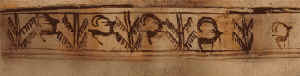
But here we have a candidate for the world’s oldest piece of animation, even the world’s oldest movie – an ‘animation’ from 2,600 B.C. In the 1970s an Italian archaeological team uncovered a pot in the 5,200-year-old Burnt City of ancient Iran. It was Iranian archaeologist Dr Mansur Sadjadi, who discovered that the five images on the pot, showing a wild goat leaping up to eat the leaves of a tree, formed a related series. Now a documentary film has been made by Mohsen Ramezani which animates the sequence.
Of course, the ancient Iranians did not invent the animated GIF, and in any case there has been some jiggery-pokery to make the animation succeed (there are more than five images to the animated sequence, the images have been cleaned up, and the background trees are unfeasibly rocksteady). So it’s an animation of an animation. Nevertheless, it’s delightful to see, and does make you think that the wish to capture life in art has always included a need to suggest motion, so that cinematic urge has always been there, in some form. It’s a fundamental human need. Now, were any other such pots made, and where are they?
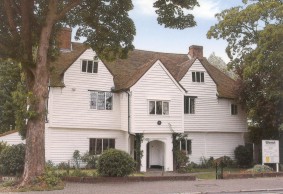
The touring exhibition, Moving Pictures Come to London, already reported on here, continues on its tours around London. Currently it can be found at the Whitehall, Cheam (which looks a delightful spot), where it runs until 30 March. Based on research carried out at Birkbeck College, the exhibition focuses on the history of moving pictures in London before World War I, looking at the filmmakers, the technology and the audiences. It’s a fine small exhibition, not least for showing how academic research can – indeed should – find a popular outlet. Each version of the exhibition has had a section reflecting the area of London where it is being put on. It’s already been to Camden, Hornsey, Hampstead and Westminster, plus a whirlwind couple of days in Leicester Square, and other venues that I think I’ve missed. Take a look if you can.
A call for papers has been issued for a special issue of the Journal of British Cinema and Television on colour in British cinema and television. Organised by the University of Bristol’s ongoing AHRC-funded project on the history of colour cinematography in Britain, the call asks for proposals of 400-750 words to be sent to the editors Simon Brown and Sarah Street by 1 April 2008. Each article (subject to your proposal being accepted, of course) should be no more than 8,000 words and no less than 5,000 words. They are interested in any area that relates to colour and British cinema and television from any period, but are particularly interested in articles on the following themes:
Particular colour processes that were used in Britain
Early colour television
Colour and home movies
Colour in feature films
Colour and British animation and/or documentary and/or avant-garde
Issues of colour restoration
The use of colour in contemporary television series such as The British Empire in Colour
An interview with someone who has worked with colour or who has particular views on the use of colour in film and/or television (this should not exceed 5,000 words)
Textual analyses of the use of colour
Colour and theory
Colour and audiences
Omnivorous stuff. Details on house style, length and other issues can be found on the Edinburgh University Press website, and the contact details of the editors are simon.brown [at] kingston.ac.uk and sarah.street [at] bris.ac.uk.
The appearance of the above film on the BFI’s YouTube site has inspired me to revive the Lost and Found strand on this blog (film collections once lost that have now been recovered), and to tell you something of the remarkable story of the Henville collection.
Cast your minds back to 1995. It was the year of the Oklahoma City bombing, Yitzhak Rabin was assassinated, the Aum Shinrikyo cult relased sarin gas on the Tokyo underground, Jacques Chirac became president of France, Eric Cantona attacked a football fan in the crowd, a new moving image format, the DVD, was announced, and in film archives and cinematheques across the globe those dedicated to film history and numerology sought various ways to mark the centenary of cinema.
It was a busy time for me, as the British Film Institute’s pet early film enthusiast, if not quite expert, with screenings, events, conferences and writing a book on Victorian cinema. And somewhere early on in that manic year, a collection of films turned up. There were some seventeen cans, single reel subjects, non-standard perforations, all readily identifiable as films from the 1890s. Films from the 1890s generally only turn up in dribs and drabs, so seventeen titles in one go was quite a coup. And the archivist who took in the films let me inspect a few (they were in a very fragile state), and one I looked at was clearly filmed at Epsom. ‘Oh no’, I said, ‘it’s another Derby’. We had other early Derby films, all looking very much the same, and it was a pain in the neck trying to tell one from another. I set it to one side…
The collection had come from one Ray Henville, a collector of vintage radios. At an auction he picked up some vintage radios and with them acquired some cans of unidentified films. Henville knew nothing of old film, but one of them featured a sailing boat, so he sent in a photograph to a yachting magazine in the hope that someone might be able to identify it. Happily the photograph was seen by Bill Barnes, film historian and twin brother of John Barnes, author of the esteemed The Beginnings of the Cinema in England series.
Bill alerted that BFI, we took them in, and I ended up trying to identify them. This was a slow process, not least on account of the fragility of the films which meant that for a long period I only had frame stills to go on. But it soon became clear that here was a remarkable collection of films from the 1890s, several of them likely to have been taken by Birt Acres, the first person to take a 35mm cinematograph film in Britain.
Birt Acres filming the 1895 Derby
What distinguished these Acres films was an indistinct frameline and a lack of sharpness to the image. These were characteristics of the Derby film, and the more I looked at it the more I felt that it could be the Derby of 1895, which would make it an extraordinary coup in the centenary year. But how to identity it for certain? There were no contemporary frame stills that I could use to compare, but the angle of the camera matched the position known to have been taken by Acres in the above photograph. Then, having checked race reports and horse racing sources, I looked at the colours of the jockeys (albeit in black-and-white), which matched the winner for 1895, and the fact that it showed a close finish between three horses, such as featured in 1895 but not any other Derby 1896-1900.
It wasn’t quite a eureka moment, and there were arguments against the identification. The film had perforations which suggested it was a later production by Acres’ great rival Robert Paul, who was effectively the producer of the 1895 Derby (it turned out to be a reprint), and once a dupe print had been painstakingly created by archivist João Oliveira and we could screen it, we discovered the film ran satisfactorily at 24 fps, when a film shot for the Kinetoscope peepshow (which was the case with the 1895 Derby) ought to have run at 40 fps. There isn’t space here to go into the complexities of this particular argument – suffice to say that one should judge things by what one finds, not what one expects to find, and that though some doubts were raised over the film’s identity I believe I was right, and the discovery recently of further Acres films from this period which similarly run at a speed seemingly too slow for the Kinetoscope tends to verify the original identification.
What is believed to be the Derby of 1895, filmed by Birt Acres
It took a while to identify all the films in the Henville collection, and in some cases original identifications were overturned, but here’s the list of films, with titles in brackets for those still unidentified (links are to their entries on the BFI database):
I remember the Yarmouth film in particular because David Cleveland, then head of the East Anglian Film Archive had asked me what the likelihood was of this, the earliest film taken his region, ever turning up. I said it was next to impossible. A few weeks later, we had a copy. Now it’s on YouTube.
But what is also of interest is what happened next. A huge fuss made was made about the collection, especially the Derby film. The BFI went to town on it. We had reams of press coverage, television news reports, even a mention on Barry Norman’s Film 95. But this in turn raised the interest of the donor, who felt that there had to be great commercial value in these films, and eventually he took back the nitrate originals, with the BFI retaining the dupe copies it had made. The films were put up for auction in Germany, where I think one or two titles were sold (including the Georges Méliès dramatisation of a scene from the Greco-Turkish War, La Prise de Tournavos, I think), and then the remainder went up for auction at Sotheby’s in 2000. As I recall, the collection was bought by a London antiquarian bookdealer apparently without any knowledge of film.
And then what? A mystery. Perhaps the films lie crumbling on that same bookseller’s shelves, or maybe they have passed on to other hands, convinced that the great excitement generated by the films’ discovery had to mean that they had a great commercial value. Of course, they did not, except what one might get for them at auction – in all other respects, there was nothing to be made from them. This is a folly which has been repeated again and again, dreaming of treasures when all one is left with is unshowable, inflammable and not even necessarily unique (at least six of the Henville films were duplicated in other collections), fascinating to the specialist but of only passing interest to the general viewer. And arguably of minimal aesthetic interest.
But the duplicate copies remain, and so the 1895 Derby is preserved for posterity, until some bright spark comes along and tells me it was the 1896 Oaks all along…
Update (2019):
In September 2019 theatre and film historian Barry Anthony uncovered an image taken from the Acres Derby film which clearly corresponds with the print held by the BFI. The image, which is heavily retouched and printed the wrong way round, with the background removed, was found in The Field, 21 September 1895, p. 510, submitted by one IMPECUNIOSUS (a horse-racing enthusiast), who writes that it shows the closing stage of that year’s Derby. In a later issue of the same journal (5 October) Acres complains that the image had been used without his permission. The Field is available on the British Newspaper Archive subscription site.
So it was the 1895 Derby all along. Here are the original image, the image flipped, and a still from the film:
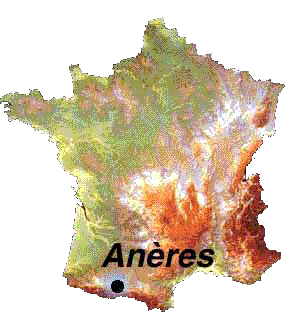
Some news of the 10th Festival d’Anères, an annual festival of silent films which takes place in the Hautes-Pyrénées, France. This year’s festival will run 7-11 May, and while the full programme has not been published as yet, the featured performers and filmmakers will include Fritz Lang, Luitz-Morat, Jean Epstein, Donald Crisp, Buster Keaton, André Antoine, Merian C. Cooper and Ernest Schoedsack, D.W. Griffith, Ernst Lubitsch, Jacques Feyder, Gennaro Righelli, Nemesio M. Sobrevila and Vsevolod Pudovkin.
The festival is new to me, but the site has useful information on past festivals, including programme details, lists of all films shown, directors featured and musicians. More news on the programme when I get it.
The project is looking at the origins of the syndication or marketing of an author’s rights across several media, so common today, which it locates in the 1920s and 1930s. The aim of the colloquium is to draw together research from different disciplines to examine the extent of cross-media cooperation between media professionals, agents, and authors and ask how the past has shaped practices of the present day.
And here’s the programme, which has plenty on the cross-relationship in Britain between popular literature and film in the silent era:
Panel 1
Prof Alexis Weedon (University of Bedfordshire)
Some observations on cross-media co-operation in Britain in the 1920s and 1930s
Dr Vincent L. Barnett (University of Bedfordshire)
Elinor Glyn. The Novelist As Hollywood Star
Dr Mary Hammond (University of Southampton)
Hitchcock and Hall Caine: the Victorian Bestseller on the Silent Screen
Panel 2
Dr Amy Sargeant (Reader in Film, University of Warwick)
Frederick Britten Austin: Boy’s Own Stories, Girls’ Romances and Interwar Politics
Nathalie Morris (University of East Anglia)
Eminent British Authors and the Stoll Film Company
Dr Caroline Copeland (Napier University)
Katherine Cecil Thurston’s Chilcote
Panel 3
Dr Simon Frost (Institute of literature, media and cultural studies, University of Southern Denmark)
A Toga Tale of Ingomar the Barbarian: in print, in drawing rooms, at fairgrounds and in Hollywood
Dr Lawrence Napper (University of Greenwich and at King’s College, London)
‘Not over-exercising our intellectual powers in the choice of subjects’: The Gainsborough scenario department, 1929-31
Panel 4
Dr Simone Murray (recorded presentation from Monash Australia)
What Are You Working On?: the shifting role of the author in an era of cross-media adaptation
Prof Juliet Gardiner
Talk: Contemporary adaptation of Atonement
No indication on the colloquium web page as to when it starts or ends, or whether those panels overlap, but it does tell you that it is priced at £30 standard; £20 members/concessions, that the venue is Senate House, University of London, Malet Street, London WC1E, and that spaces are limited so early booking is advisable.
Registration forms are on the site, and more information can be got from Jon Millington, Events Officer, Institute of English Studies, Senate House, Malet Street, London WC1E 7HU; tel +44 (0) 207 664 4859; Email jon.millington [at] sas.ac.uk.
Hot on the heels of that last post on the East Finchley Phoenix comes news of a one-day event at Birkbeck College on London’s screen history. Organised by the University of London Screen Studies Group, in association with the London Screen Studies Centre, Birkbeck College and Film Studies journal, the event on Friday 14 March brings together a range of recent work on London’s heritage of film production and particularly reception. Here’s the programme:
London Screen History
Birkbeck College, Malet Street, London WC1
9.30–18.00 Lecture Theatre B33
Ian Christie: Introduction
Michele Daniels: The Coming of Talking Films to London, 1928-29
Jude Cowan: ‘The First Film Studios at Ealing: Warwick Trading Company 1907-1909 and Barker Motion Photography 1909-1918’
Pierluigi Ercole: ‘Little Italy on the brink: London Italians and War Films, 1915-1918’
11.00-11.30 tea and coffee
Brigitte Flickinger (Heidelberg): ‘Living and leisure: Cinema-going in London in the 1910s and 1920s – a view from outside’
Luke McKernan (British Library): ‘Children’s cinemagoing in London before WW1’
13.00-14.00 Lunch
Charlotte Brunsdon (Warwick): ‘Shaping the Cinematic City: Three London Journeys’
15.00
Toby Haggith: Early London housing films
Angela English, Jenny Davison: ‘Their Past Your Future and working with London community groups’
Roland-Francois Lack: ‘Still Point of the Turning World: Piccadilly Circus in Film’
16.30-17.00 Tea and coffee
John Sedgwick (London Metropolitan): ‘The commercial significance of London’s West End cinemas’
Richard Gray (CTA): ‘London’s cinema buildings’
The programme has been published a bit late in the day, but it’s a terrific line-up (your humble scribe notwithstanding), so do come along (there’s a small charge for tea and coffee) and see if we can get the audience to outnumber the speakers, at least by a little bit.






 The Bioscope