The horse in animation

Gallop!

http://www.amazon.co.uk

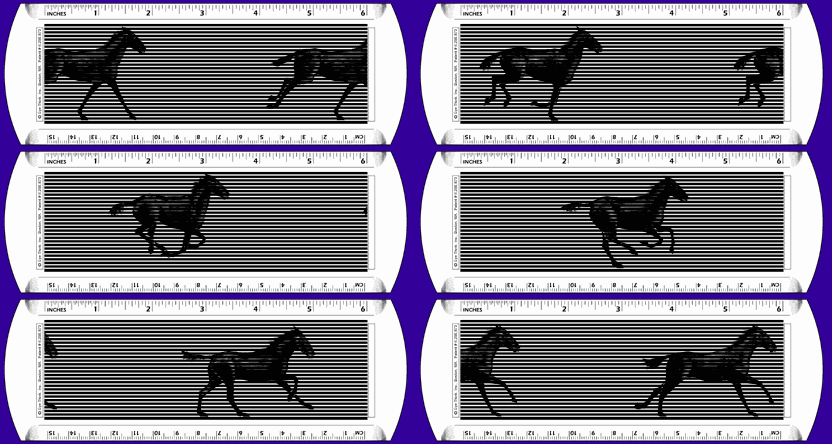
Here’s something intriguing, if somewhat on the fringes of our subject. Rufus Butler Seder’s Gallop! is a very young children’s book, just published, which employs a patented technology, Scanimation. This shows animal figures as a kind of barcode-like strip. The animals move when you open a new page by pulling a scrambled underlying image which lies beneath an acetate strip marked with horizontal bars. Essentially, like silhouetted animations of Muybridge sequence photographs, we see a horse gallop, a chicken walk, a dog run, a cat leap.

The similarity to Muybridge’s work is very noticeable. Seder is described as being “an inventor, artist, and filmmaker fascinated by antique optical toys” and a description of the process points out that it

uses a technology based on the same principles as kinetoscopes, zoetropes, and other nineteenth century antiques that employed an optical illusion using the persistence of memory to create the flow of motion.

(Some confusion over technologies there, but I like the Dali-inspired term persistence of memory over the standard persistence of vision)

It’s not really possible to put over exactly how it looks, so I recommend checking out the children’s section of your local bookshop for the full effect, but Seder’s Eye Think Inc. site displays something of the effect, as in this animated GIF:

Scanimation

http://www.eyethinkinc.com/rulers/horse.html

It’s an intriguing invention, though one suspects that adults are going to be more diverted by the effect than children. Maybe it might register more if it could only generate the effect in colour. But for us it’s a useful illustration of the interconnectness of things: the fascination with optical illusions that led to the optical toys of the nineteenth century which in turn led to motion pictures, and woven into this thread the vision of Muybridge, who sought not simply to make things to move but to capture the motion of real life. And there’s the not unrelated history of the pop-up book (to which Gallop! is to some degree related), three-D, and the wonder of seeing things break out of the confines of a two-dimensional world.

It’s all animation, or animated pictures as the cinema pioneers had it – simply bringing things to life.

Colourful stories no. 8 – Painted by hand

Annabelle

Hand-coloured print of Annabelle Butterfly Dance (1895), from Before Hollywood: Turn-of-the-Century American Film (1897)

So far our history of colour in silent cinema has focussed on Kinemacolor and its antecedents. However, as significant as the ‘natural’ colour system was technically and aspirationally for the new industry, for most filmgoers of the period their experience of colour was more likely to be one of the several ways producers found of adding colours to film artificially.

We’ll be covering each of these various methods – stencil colour, tinting and toning, dye colours, coloured celluloid – but the method that came first, a direct inheritance from magic lantern practice, was painting individual frames by hand.

The first motion pictures to be shown to the public were those exhibited on the Edison Kinetoscope peepshow. These presented too small an image to the viewer to make colouring them a sensible course of action. But as soon as films were projected on a screen, producers thought about colouring them. The first such examples were therefore films originally shot for the Kinetoscope and now re-shown on a big screen, such as Annabelle dancing her butterfly dance, illustrated above. A coloured film of a serpentine dance (another of Annabelle’s specialities) was included in the first programme of the Edison Vitascope projector at Koster & Bial’s Music Hall, New York on 23 April 1896.

Loie Fuller

Loïe Fuller, a hand-coloured Pathé film dated 1905, from http://postdance.wordpress.com

Only a handful of films were selected for colouring, however. The process was immensely time-consuming, and hence expensive. Subjects for colouring were chosen with care, and were naturally those subjects which came over as most naturally ‘colourful’ in themselves. Films of dancers were among the first such subjects in the 1890s, with the colours not only reproducing the appearance of costumes but in the case of the renowned French dancer Loïe Fuller attempting to echo the striking use of coloured light in her stage performances.

Hand-colouring meant applying colours by means of tiny brushes to one frame at a time, a space measuring just one inch by three-quarters of an inch. It was reported of Edward Henry Doubell, a noted producer of coloured lantern slides (which were a far easier three inches square), that he was able to colour two to three frames per day of the Robert Paul films that he was colouring in 1896 – and, of course, we are talking about around sixteen frames for every second of projected film. The colours used were water-based or alcohol-based dyes, which were applied to the emulsion side of the film.

La Biche au Bois

Hand-coloured Demeny-Gaumont film on 60mm, from 1896, showing dancers from La Biche au Bois stage show at the Théâtre du Châtelet, Paris, from Brian Coe, The History of Movie Photography (1981)

The great problem with hand-coloured films, apart from their expense and the time needed for their production, was accuracy of registration. The artist had to ensure consistency of colouring from frame to frame, allowing for movement, and surviving examples frequently demonstrate some haphazard application of colour as the subject moves, even while selected examples (such as La Biche au Bois above) are exquisite in their meticulous effects. The established practice came to be of teams of colourists – almost invariably women – to each of whom would be assigned a single colour for painting. The method continued into the mid-1900s, and there are dazzling examples for example in the recent Flicker Alley DVD release Georges Méliès: First Wizard of Cinema.

However, as films became longer the hand-colour method inevitably became impractical. Audiences evidently valued coloured films, and higher prices would be paid for them by exhibitors, but a mechanised means of their production had become essential, and in the mid-1900s both the Pathé and Gaumont firms developed such systems. As Britain became home of natural colour cinematography, so France developed methods for mass producing artificially coloured films for worldwide export. Which we shall move on to next time.

Recommended reading:
Brian Coe, The History of Movie Photography (1981)
Paul Read and Mark-Paul Meyer, The Restoration of Motion Picture Film (2000)

Scotland the brave

Scottish Screen Archive

Scottish Screen Archive

The Scottish Screen Archive has released some 1,000 film clips on its impressively-redesigned site. The SSA is Scotland’s national film archive, now part of the National Library of Scotland. It has an excellent record of preserving, contextualising and making accessible a national moving image heritage to a multiplicity of audiences. This latest resource comes courtesy of the Heritage Lottery Fund, and present clips from the 1890s to the 1980s, all integrated into their existing catalogue. The searching and browsing (by place, subject, biography and decade) are all exemplary, and the catalogue descriptions are spot on.

So, what is here for the silent era? Well, sixty-two clips, all of them non-fiction titles, from 1897 onwards, including many classic gems. For instance, look out for Lord and Lady Overtoun’s Visit to Mcindoe’s Show (1906), a rare early film of the outside of a fairground bioscope show; Dr Macintyre’s X-Ray Film (1896/1909), examples of the X-ray cinematography of Dr John Macintyre; several examples of Scotland’s own silent newsreel, Scottish Moving Picture News (later called British Moving Picture News); the civic record, Glasgow’s Housing Problem and its Solution (c.1919); a family holiday home movie from 1927; film of the building of the Ritz Cinema, Edinburgh in 1929; and St Kilda – Britain’s Loneliest Isle (1923/1928), a classic picture of life on the remote island while it was still inhabited by humans.

Social films, city films, newsreels, home movies, charity films, advertising films, interest films, documentaries – this is a marvellous collection, not just of Scottish life but of the multifarious forms of the non-fiction film, demonstrating for our period what an important part it plays in what should be our understanding of the silent film overall – somehing of the people, for the people. Go explore.

Georges Méliès: First Wizard of Cinema (1896-1913)

Georges Méliès

The outstanding Flicker Alley 5-disc set Georges Méliès: First Wizard of Cinema (1896-1913) is now published, and I have my copy. Naturally, it’s a sensational package. Put together by Eric Lange (Lobster Films) and David Shepard (Blackhawk Films) from the archival holdings from seventeen collections across eight countries, the elegantly-presented DVDs comprises 173 titles (including one unidentified fragment) – almost (though not quite) every extant Georges Méliès film, plus the Georges Franju 1953 film, Le Grand Méliès. The DVDs are region 0, NTSC format.

The set comes with a well-illustrated booklet, which has essays by Norman McLaren (something of a surprise – it’s a transcript of an audio recording he made for a conference he couldn’t attend) and a long piece by John Frazer on Méliès’ life and work, adapted by Shepard from a text first written by Frazer in 1979. The full list of titles is now available on the Flicker Alley site, but here’s The Bioscope’s version, with the titles in the chronological order in which they appear on the DVDs, with Star-Film catalogue number, original French title and English title.

1896
1 – Partie de cartes, une/Playing Cards
26 – Nuit terrible, une/Terrible Night, a
70 – Escamotage d’une dame chez Robert-Houdin/Vanishing Lady, the
82 – Cauchemar, le/Nightmare, A

1897
96 – Château hanté, le/Haunted Castle, The
106 – Prise de Tournavos, la/Surrender of Tournavos, The
112 – Entre Calais et Douvres/Between Calais and Dover
122-123 – Auberge ensorcelée, l’/Bewitched Inn, the
128 – Après le bal (le tub)/After the Ball

1898
147 – Visite sous-marine du Maine/Divers at Work on the Wreck of the “Maine”
151 – Panorama pris d’un train en marche/Panorama from Top of a Moving Train
153 – Magicien, le/Magician, The
155 – Illusions fantasmagoriques/Famous Box Trick, The
159 – Guillaume Tell et le clown/Adventures of William Tell, The
160-162 – Lune à un mètre, la/Astronomer’s Dream, The
167 – Homme de têtes, un/Four Troublesome Heads, The
169 – Tentation de Saint Antoine/Temptation of St Anthony, the

Entrevue de Dreyfus et de sa femme à Rennes

Entrevue de Dreyfus et de sa femme à Rennes

1899
183 – Impressionniste fin de siècle, l’/Conjurer, The
185-187 – Diable au couvent, le/Devil in a Convent, The
188 – Danse du feu/Pillar of Fire, The
196 – Portrait mystérieux, le/Mysterious Portrait, The
206 – Affaire Dreyfus, la dictée du bordereau/Dreyfus Court Martial – Arrest of Dreyfus
207 – Ile du diable, l’/Dreyfus: Devil’s Island – Within the Palisade
208 – Mise aux fers de Dreyfus/Dreyfus Put in Irons
209 – Suicide du Colonel Henry/Dreyfus: Suicide of Colonel Henry
210 – Débarquement à Quiberon/Landing of Dreyfus at Quiberon
211 – Entrevue de Dreyfus et de sa femme à Rennes/Dreyfus Meets His Wife at Rennes
212 – Attentat contre Me Labori/Dreyfus: The Attempt Against the Life of Maître Labori
213 – Bagarre entre journalistes/Dreyfus: The Fight of Reporters
214-215 – Conseil de guerre en séance à Rennes, le/Dreyfus: The Court Martial at Rennes
219-224 – Cendrillon/Cinderella
226-227 – Chevalier mystère, le/Mysterious Knight, The
234 – Tom Whisky ou l’illusionniste truqué/Addition and Subtraction

L’Homme-orchestre

L’Homme-orchestre

1900
243 – Vengeance du gâte-sauce, la/Cook’s Revenge, The
244 – Infortunes d’un explorateur, les/Misfortunes of an Explorer, The
262-263 – Homme-orchestre, l’/One-Man Band, The
264-275 – Jeanne d’Arc/Joan of Arc
281-282 – Rêve du Radjah ou la forêt enchantée, le/Rajah’s Dream, The
285-286 – Sorcier, le prince et le bon génie, le/Wizard, the Prince and the Good Fairy, The 289-291 – Livre magique/Magic Book, The
293 – Spiristisme abracadabrant/Up-to-date Spiritualism
294 – Illusioniste double et la tête vivante, l’/Triple Conjurer and the Living Head, The
298-305 – Rêve de Noël/Christmas Dream, The
309-310 – Nouvelles luttes extravagantes/Fat and Lean Wrestling Match
311 – Repas fantastique, le/Fantastical Meal, A
312-313 – Déshabillage impossible, le/Going to Bed under Difficulties
314 – Tonneau des Danaïdes, le/Eight Girls in a Barrel
317 – Savant et le chimpanzé, le/Doctor and the Monkey, The
322 – Réveil d’un homme pressé, le/How He Missed His Train
L’Homme à la tête en caoutchouc

L’Homme à la tête en caoutchouc

1901
325-326 – Maison tranquille, la/What is Home Without the Boarder?
332-333 – Chrysalide et le papillon, la/Brahmin and the Butterfly, The
335-336 – Dislocation mystérieuse/Extraordinary Illusions
345-347 – Antre des esprits, le/Magician’s Cavern, The
350-351 – Chez la sorcière/Bachelor’s Paradise, The
357-358 – Excelsior!/Excelsior! – Prince of Magicians
361-370 – Barbe-Bleue/Blue Beard
371-372 – Chapeau à surprises, le/Hat With Many Surprises, The
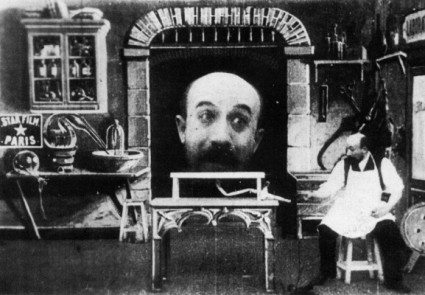
382-383 – Homme à la tête en caoutchouc, l’/Man With the Rubber Head, The
384-385 – Diable géant ou le miracle de la madone, le/Devil and the Statue, The
386 – Nain et géant/Dwarf and the Giant, The

Voyage dans la lune

Voyage dans la lune

1902
391 – Douche du colonel/Colonel’s Shower Bath, The
394-396 – La danseuse microscopique, la/Dancing Midget, The
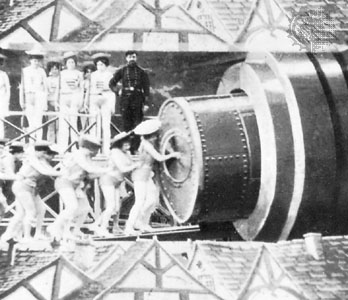
399-411 – Voyage dans la lune/Trip to the Moon, A
412 – Clownesse fantôme, la/Shadow-Girl, The
413-414 – Trésors de Satan, les/Treasures of Satan, The
415-416 – Homme-mouche, l’/Human Fly, The
419 – Équilibre impossible, l’/Impossible Balancing Feat, An
426-429 – Voyage de Gulliver à Lilliput et chez les géants, le/Gulliver’s Travels Among the Lilliputians and the Giants
No number – Sacre d’Edouard VII, le/Coronation of Edward VII, The
445-448 – Guirlande merveilleuse, la/Marvellous Wreath, The

1903
451-452 – Malheur n’arrive jamais seul, un/Misfortune Never Comes Alone
453-457 – Cake-walk infernal, le/Infernal Cake-Walk, The
458-459 – Boîte à malice, la/Mysterious Box, The
462-464 – Puits fantastique, le/Enchanted Well, The
465-469 – Auberge du bon repos, l’/Inn Where No Man Rests, The
470-471 – Statue animée, la/Drawing Lesson, The
473-475 – Sorcier, le/Witch’s Revenge, The
476 – Oracle de Delphes, l’/Oracle of Delphi, The
447-478 – Portrait spirite, le/Spiritualistic Photographer
479-480 – Mélomane, le/Melomaniac, The
481-482 – Monstre, le/Monster, The
483-498 – Royaume des fées, le/Kingdom of the Fairies, The
499-500 – Chaudron infernal, le/Infernal Cauldron, The
501-502 – Revenant, le/Apparitions
503-505 – Tonnerre de Jupiter, le/Jupiter’s Thunderbolts
506-507 – Parapluie fantastique, le/Ten Ladies in an Umbrella
508-509 – Tom Tight et Dum Dum/Jack Jaggs and Dum Dum
510-511 – Bob Kick, l’enfant terrible/Bob Kick the Mischievous Kid
512-513 – Illusions funambulesques/Extraordinary Illusions
514-516 – Enchanteur Alcofribas, l’/Alcofribas, the Master Magician
517-519 – Jack et Jim/Comical Conjuring
520-524 – Lanterne magique, la/Magic Lantern, The
525-526 – Rêve du maître de ballet, le/Ballet Master’s Dream, The
527-533 – Faust aux enfers/Damnation of Faust, The
534-535 – Bourreau turc, le/Terrible Turkish Executioner, The
538-539 – Au clair de la lune ou Pierrot malheureux/Moonlight Serenade, A
540-541 – Prêté pour un rendu, un/Tit for Tat
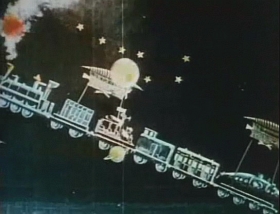
Voyage à travers l’impossible

Voyage à travers l’impossible

1904
547-549 – Coffre enchanté, le/Bewitched Trunk, The
552-553 – Roi du maquillage, le/Untamable Whiskers
554-555 – Rêve de l’horloger, le/Clockmaker’s Revenge, The
556-557 – Transmutations imperceptibles, les/Imperceptible Transmutations, The
558-559 – Miracle sous l’Inquisition, un/Miracle Under the Inquisition, A
562-574 – Damnation du Docteur Faust/Faust and Marguerite
578-580 – Thaumaturge chinois, le/Tchin-Chao, the Chinese Conjurer
581-584 – Merveilleux éventail vivant, le/Wonderful Living Fan, The
585-588 – Sorcellerie culinaire/Cook in Trouble, The
589-590 – Planche du diable, la/Devilish Prank, The
593-595 – Sirène, la/Mermaid, The
641-659 – Voyage à travers l’impossible/Impossible Voyage, The
665-667 – Cascade de feu, la/Firefall, The
678-679 – Cartes vivantes, les/Living Playing Cards, The

1905
683-685 – Diable noir, le/Black Imp, The
686-689 – Phénix ou le coffret de cristal, le/Magic Dice, The
690-692 – Menuet lilliputien, le/Lilliputian Minuet, The
705-726 – Palais des mille et une nuits, le/Palace of the Arabian Nights, The
727-731 – Compositeur toqué, le/Crazy Composer, A
738-739 – Chaise à porteurs enchantée, la/Enchanted Sedan Chair, The
740-749 – Raid Paris – Monte-Carlo en deux heures, le/Adventurous Automobile Trip, An
756-775 – Légende de Rip Van Vinckle, la/Rip’s Dream
784-785 – Tripot clandestin, le/Scheming Gamblers’ Paradise, The
789-790 – Chute de cinq étages, une/Mix-up in the Gallery, A
791-806 – Jack le ramoneur/Chimney Sweep, The
807-809 – Maestro Do-Mi-Sol-Do, le/Luny Musician, The

1906
818-820 – Cardeuse de matelas, la/Tramp and the Mattress Makers, The
821-823 – Affiches en goguette, les/Hilarious Posters, The
824-837 – Incendiaires, les/Desperate Crime, A
838-839 – “Anarchie chez Guignol, l'”/Punch and Judy
843-845 – Hôtel des voyageurs de commerce ou les suites d’une bonne cuite, l’/Roadside Inn, A
846-848 – Bulles de savon animées, les/Soap Bubbles
849-870 – Quatre cents farces du diable, les/Merry Frolics of Satan, The
874-876 – Alchimiste Parafaragaramus ou la cornue infernale, l’/Mysterious Retort, The
877-887 – Fée Carabosse ou le poignard fatal, la/Witch, The

L’Tunnel sous la Manche ou le cauchemar anglo-français

L’Tunnel sous la Manche ou le cauchemar anglo-français

1907
909-911 – Douche d’eau bouillante, la/Rogues’ Tricks
925-928 – Fromages automobiles, les/Skipping Cheeses, The
936-950 – Tunnel sous la Manche ou le cauchemar anglo-français, le/Tunnelling the English Channel
961-968 – Eclipse de soleil en pleine lune/Eclipse, or the Courtship of the Sun and Moon, The
1000-1004 – Pauvre John ou les aventures d’un buveur de whisky/Sightseeing through Whisky
1005-1009 – Colle universelle, la/Good Glue Sticks
1014-1017 – Ali Barbouyou et Ali Bouf à l’huile/Delirium in a Studio
1030-1034 – Tambourin fantastique, le/Knight of Black Art, The
1035-1039 – Cuisine de l’ogre, la/In the Bogie Man’s Cave
1044-1049 – Il y a un dieu pour les ivrognes/Good Luck of a Souse, The
1066-1068 – Torches humaines/Justinian’s Human Toches 548 A.D.

1908
1069-1072 – Génie du feu, le/Genii of the Fire, The
1073-1080 – Why that actor was late
1081-1085 – Rêve d’un fumeur d’opium, le/Dream of an Opium Fiend, The
1091-1095 – Photographie électrique à distance, la/Long Distance Wireless Photography
1096-1101 – Prophétesse de Thèbes, la/Prophetess of Thebes, The
1102-1103 – Salon de coiffure/In the Barber Shop
1132-1145 – Nouveau seigneur du village, le/New Lord of the Village, The
1146-1158 – Avare, l’/Miser, The
1159-1165 – Conseil du Pipelet ou un tour à la foire, le/Side Show Wrestlers
1176-1185 – Lully ou le violon brisé/Broken Violin, The
1227-1232 – The Woes of Roller Skates
1246-1249 – Amour et mélasse/His First Job
1250-1252 – Mésaventures d’un photographe, les/The Mischances of a Photographer
1253-1257 – Fakir de Singapour, le/Indian Sorcerer, An
1266-1268 – Tricky painter’s fate, a
1288-1293 – French interpreter policeman/French Cops Learning English
1301-1309 – Anaïc ou le balafré/Not Guilty
1310-1313 – Pour l’étoile S.V.P./Buncoed Stage Johnnie
1314-1325 – Conte de la grand-mère et rêve de l’enfant/Grandmother’s Story, A
1416-1428 – Hallucinations pharmaceutiques ou le truc du potard/Pharmaceutical Hallucinations
1429-1441 – Bonne bergère et la mauvaise princesse, la/Good Shepherdess and the Evil Princess
No number – unidentified film

1909
1495-1501 – Locataire diabolique, le/Diabolic Tenant, The
1508-1512 – Illusions fantaisistes, les/Whimsical Illusions

1911
1536-1547 – Hallucinations du Baron de Münchausen, les /Baron Munchausen’s Dream

1912
Pathé – A la conquète du pôle/Conquest of the Pole, The
Pathé – Cendrillon ou la pantoufle merveilleuse/Cinderella
Pathé – Chevalier des neiges, le/Knight of the Snow, The

1913
Pathé – Voyage de la famille Bourrichon, le/Voyage of the Bourichon Family, The

Almost needless to say, the quality of the digital transfers is excellent, sometimes startlingly so. There are fifteen examples of beautiful hand-colouring. Many musicians have provided scores, making the DVD a fascinating demonstration in itself of different approaches to the task of accompanying Georges Méliès (even if, for myself I find the American taste for organ accompaniment baffling). They are Eric Beheim, Brian Benison, Frederick Hodges, Robert Israel, Neal Kurz, the Mont Alto Motion Picture Orchestra, Alexander Rannie, Joseph Rinaudo, Rodney Sauer and Donald Sosin. Some of the films come with Georges Méliès’ original English narrations, designed to be spoken alongside the films, and here are spoken by Serge Bromberg and Fabrice Zagury (with some rather quaint mangling of the English language in places).

Georges Méliès is confirmed here as among the pre-eminent artists of the cinema, perhaps the most exuberant of all filmmakers. The films display imagination, wit, ingenuity, grace, style, fun, invention, mischief, intelligence, anarchy, innocence, vision, satire, panache, beauty and longing, the poetry of the absurd. Starting out as extensions of the tricks that made up Méliès’ magic shows, to view them in chronological order as they are here is to see the cinema itself bursting out of its stage origins into a theatre of the mind, where anything becomes possible – a true voyage à travers l’impossible, to take the title of one of his best-known films. The best of them have not really dated at all, in that they have become timeless, and presumably (hopefully) always will be so. Méliès in his lifetime suffered the agony of seeing his style of filmming turn archaic as narrative style in the Griffith manner became dominant, but we can see now that is his work that has truly lasted. The films will always stand out as showing how motion pictures, when they first did appeared, in a profound sense captured the imagination. And there is that consistency of vision that confirms Méliès as a true artist with a body of work that belongs in a gallery – or in this case a boxed set of DVDs – for everyone to appreciate.

What a great publication this is. Every good home should have one.

Update (January 2010):
For information on a sixth, supplementary disc with an additional 26 titles, see https://bioscopic.wordpress.com/2010/01/08/melies-encore.

The sound of silent film

Sound of Silent Film

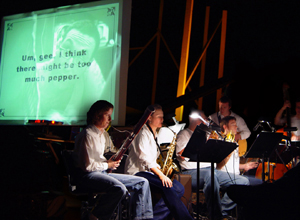
Sound of Silent Film, from http://www.acmusic.org

Further evidence of the rude health of the modern silent film. The third annual Sound of Silent Film Festival, an evening of modern silent films with music scores performed live, takes place at the Chopin Theatre, 1543 W. Division, Chicago on 26 March. The five films on the bill are Native New Yorker by Steve Bilich, Elastic Stronghold by Justin Heim, Birdcatcher by Chris Hefner, The Purse Belongs to Her by B.J. Moore, and Bajalica by Hurt McDermott. The composers are Natasha Bogojevich, Demetrius Spaneas and William Susman.

There’s a trailer for the festival (QuickTime), or find out more from the Academy of Accessible Music website.

Knee-deep in orange peel and pea-nut shells

I gave a talk the other day on children’s cinema-going before the First World War, which reminded me that it’s been a while since I had any of the testimonies of cinema-going in the silent era that I occasionally reproduce here on The Bioscope.

The extracts below come from the unpublished memoirs of Hymie Fagan, of Jewish working class origins, who was born in Stepney in 1903. His autobiography is one of a large collection of unpublished working class autobiographies which are held in the Burnett Archive of Working Class Autobiographies at Brunel University. These autobiographies were collected by John Burnett, David Vincent and David Mayall while compiling their three volume annotated bibliography, The Autobiography of the Working Class (1984-1989). The texts aren’t available online, and there’s only an index available which gives author, title, and some indication of the location and time period of their memoir. So you’d have to go there to find out more, but here’s evidence from Hymie Fagan of why it would be a worthwhile trip for the dedicated researcher. Here he’s writing about going to the cinema in London before the First World War. It is full of observant detail:

The Picture Palaces, as cinemas were then known, or the Bioscopes, were becoming very popular. I vaguely remember once going with my father to one in Shoreditch High Street, where I was given a bag of sweets, and he a packet of Woodbines to popularise the cinema still more. After his death I used to go to one in Brick Lane. Admission was one ha’penny. Only one film was shown, usually a cowboy and Indian film. We cheered the cowboys like mad and hissed and booed the Indians, for they were always the baddies.

The one-film shows were for the childrens’ matinees. When the film ended the lights went on, and the children ushered out, to enable the next show to start, but some of the boys hid under the seats, so that they could see the film again without paying. Finally the manager became aware of this, and at the end of each performance the attendant would poke under the seats with a long pole to flush out the stowaways, who were then somewhat forcibly removed.

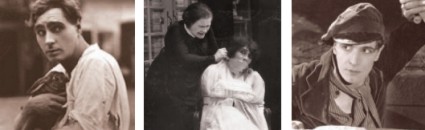
There was another, more expensive, picture palace in Commercial Street, where the gallery cost one penny and the stalls sixpence. A full programme was shown, and not only cowboy and Indian films. Such dramas as “Leah the Forsaken” all about the plight of a Jewess caught in the toils of the Spanish Inquisition. Another was “The Indiarubber Man” who could scale high walls with amazing jumps and disguise himself by changing the shape of his face. Then there were the serials. The heroine in most of these was a star named Pearl White. She was usually left tied to the rails whilst an express came thundering down towards her. I remember her in one serial named “The Perils of Pauline”, and I underwent agonies of suspense each week, until I learned how she managed to escape in the following episode.

Real picture lovers, but poor like me, went into the gallery. Others, who simply wanted to snog in the dark, went into the stalls. Looking down into it, it seemed that nearly all the seats were empty, as indeed they were, for the snoggers preferred the walls round the stalls. The floors from the gallery to the stalls were knee-deep in orange peel and pea-nut shells.

To keep Pearl White’s image before the public the P.R.O. [?] composed a song about her. It went

“My Little Pearl of the Army,
Pearl of my heart so true.
You’re the queen of the picture screen
And the pride of the whole world too.
Whilst the band plays Yankee Doodle
Rule Britannia too
There’s many a lad, who to die would be glad
For a Pearl of a girl like you”.

A later passage covers cinema-going during the First World War, and has useful evidence of the appeal of the cinema’ stars on the young:

Apart from reading and swimming, another joy was the cinema. It was becoming very popular indeed and there was a children’s matinee every Saturday afternoon. Admission was one penny and since mother had no objection because of the Sabbath, I went regularly. I used to arrive almost before anyone else, queuing up impatiently at the box-office, and as the crowd of children grew, so did the yells demanding that it opened, which at last it did, dead on two o’clock. Chaplin was always shown since he was the favourite, and I remember falling off my seat, helpless with laughter at “Champion Charlie”. Then there was Douglas Fairbanks, whose athletic exploits I tried to emulate. Once after he had escaped from his enemies by jumping down a cliff by a series of ledges, I tried to do the same thing on our pitiful crumbling cliffs, but when I jumped onto the first ledge it crumbled under me and I hobbled home on a badly sprained ankle.

There are several other such autobiographies in the Brunel collection, though in my research I looked only for those subjects who had lived in London in the 1896-1914 period. John Burnett’s books looking at nineteenth and early twentieth-century working class life through memoir evidence (Destiny Obscure, Useful Toil) are not hard to find in second-hand shops, and are well worth seeking out, even if none so far as I know touches on the cinema.

Best silent film

SZABIST

SZABIST Inter-university Film Festival awards

All praise to Syed Paiman Hussain for his film Martey Raho. I’ve no idea what it’s about, but at the Shaheed Zulfikar Ali Bhutto Institute of Science and Technology (SZABIST) Inter-university Film Festival in Pakistan, his film won the award for ‘best silent film’. Other awards went to best sound, best original score, best editing, best documentary, best cinematography, best story, best actor, best director and best film. The partipants in the awards were students from various schools and universities in Pakistan that include film-making as part of their curriculum. Hussain is a student at the Indus Valley School of Arts and Architecture. Let’s hope it’s the start of a brilliant career. There certainly can’t be too many awards for best silent film these days – we should be doing more encouraging of the art form in this way.

More information from the Pakistan Daily Times.

Kansas Board of Review Movie Index

Following the item a couple of months back on the New York State Archives’ film censorship records, let’s now turn our attention to the Kansas Board of Review Movie Index.

The index covers all films assessed by the Kansas Board of Review, 1910-1966, for which some change was demanded prior to public screening – ranging from from cutting of brief scenes to the banning of entire films. The original index, held on 3×5 index cards, lists the date, number of reels, title, film company and whether accepted, rejected or to be accepted only with specified eliminations to be made. Cards for films with such eliminations contain a detailed description of the portions to be censored, and it is these that make the online version of this index so fascinating.

The Movie Index site explains the procedure:

In its earliest existence, the board was required to “Approve such film reels, including subtitles, spoken dialogue, songs, other words or sounds, folders, posters and advertising materials which are moral and proper” and to censor films that were “cruel, obscene, indecent or immoral, or such as tend to debase and corrupt morals.” The board accomplished this daunting task by requiring that all films to be shown in the state first be passed by a board of three censors. This board had the power to remove any scenes that it felt met the aforementioned criteria. The board also could ban films in toto (as it did with D.W. Griffith’s Birth of a Nation from 1915 to 1923 for “inciting racial hatred and sectional bias”). After being reviewed and edited, the film was then tagged with a unique serial number that identified the film as having been reviewed and passed.

Although Birth of a Nation was accepted for public exhibition in Kansas, it could only be so following eliminations made, as the Index record demonstrates:

The Birth Of A Nation
Date of Review: 1923-11-27
Company Name: States Rights
Starring: Not Stated
Notes: Film was approved with elimination. Sam Silverman submitted a sound version on 3/23/31 which was examined and disapproved 11/12/31 because of tendency to debase & corrupt morals.
Contains Smoking? Not Stated
Eliminations: Reel 2: Reduce to flash mulatto woman on floor with bare shoulders. Reel 2: Eliminate scene of Stone embracing mulatto woman. Reel 4: Eliminate scene of soldier piercing body of fallen man with bayonet. Reel 5: Eliminate scene mulatto woman fondling arm of Stone. Reel 9: Eliminate closeup of negro’s face looking through trees. Reel 9: Reduce scenes of negro chasing girl. Reel 11: Reduce scenes of Lynch holding Elsie and looking sensually at her.
Box Number: 35-06-05-12

You can search by film title, company name, performer, specific elimination (the term “negro” brings up thirty-two hits) and date range – just searching on 1910-1929 alone brings up 4,638 hits. A first rate resource, compiled by volunteers it seems, to whom all praise.

So far as I know there aren’t any other American state censorship records available online, apart from New York and Kansas, but I’d be very interested to hear from anyone who can tell me otherwise.

Les Vampires

Les Vampires

Poster for Les Vampires

Well, first of all the imminent release by Artificial Eye of a three-disc DVD edition of Louis Feuillade’s classic serial Les Vampires gives me the opportunity to reproduce one of the great posters of the silent era. Has a touch of Twin Peaks about it, I’ve always thought, even if the curtains are the wrong colour.

Anyway, Les Vampires (1915/16) is, of course, one of the great crime serials (or series) made by Feuillade for Gaumont, after he had thrilled audiences and revitalised the crime genre with Fantômas (1913). The five Fantômas films, based the popular crime novels of Marcel Allain and Pierre Souvestre, were particularly thrilling for being shown from the perspective not of the detective but of the master criminal, with his genius for disguise and eluding the police. Les Vampires, a little more conventionally, is shown from the perspective of the pursuing journalist Philippe Guérande, but it does have the huge plus of arch villainess Irma Vep, played in true iconic fashion by Musidora. Irma Vep, as an intertitle sequence that always raises a cheer, is of course an anagram of vampire.

Irma Vep = Vampire

Intertitle sequence from Les Vampires giving the game away

The Vampires are a criminal gang, supposedly inspired by the real-life Bonnot gang whose exploits chilled and thrilled the French just before the First World War. Irma Vep does not lead the group, though she does assassinate the Grand Vampire, a scene Feuillade apparently concocted after the actor playing the Grand Vampire neglected to turn up on set on time. The Vampires dress head to toe in black and general steal, kidnap and assassinate, before making daring escapes across picturesque Parisian rooftops. Guérande doggedly pursues them, aided by reformed Vampire Mazamette, but each time some new nefarious figure rises to prominence within the ranks of the Vampires.

Les Vampires is, strictly speaking, halfway between a series and a serial. It is divided into ten episodes, but these were released irregularly, and it was until Judex (1917, also starring Musidora) and Feuillade truly adopted the serial form. Stylish, transgressive and wildly imaginative, Les Vampires gains a particular power from combining the surreal world of the Vampires with the ordinary streets and buildings of Paris, doubtless making it all the more imaginatively plausible to contemporary audiences.

Les Vampires

http://www.amazon.co.uk

Over three discs you get the ten episodes (between 40 and 70 minutes each), plus a selection of Feuillade’s short films: La Bous-Bous-Mie (1907), Une Dame Vraiment Bien (1908), La Legende de la Fileuse (1908), C’est pour les Orphelines (1916) and L’Orgie Romaine (1911). Music is scored by Éric le Guen. The release derives from the same Gaumont restoration which has been released on DVD in France by Gaumont themselves, though ranging over four discs, albeit with some extras not available on the Artificial Eye release.

Les Vampires is released on 24 March.

Rats, ruffians and radicals in Nottingham

British Silent Cinema

The Bargain, At the Villa Rose and The Rat

The full programme for the British Silent Cinema Festival has been published. The festival, entitled Rats, Ruffians and Radicals: The globalisation of crime and the British silent film (now there’s a theme and a half) takes place at the Broadway Cinema, Nottingham 3-6 April.

As usual, the festival will be a mixture of films, papers, symposia and special events, mostly (but not entirely) around the festival’s theme. The main outline of the programme has already been given here, but here’s a check list of the main films being shown:

Thursday, 3 April

AT THE FOOT OF THE SCAFFOLD
Dir. Warwick Buckland GB 1913, 24mins

THE BARGAIN
Dir. Henry Edwards, GB 1921, 1hr 15mins

RED PEARLS
Dir. Walter Forde, GB 1930, 1hr 15mins

AT THE VILLA ROSE
Dir. Maurice Elvey, GB 1920, 1hr 22mins

DER MANN IM KELLAR (THE MAN IN THE CELLAR)
Dir. Joe May, Germany, 1914, 44 mins

DIE CARMEN VON ST PAULI (aka THE WATER RAT)
Dir Erich Waschneck, Germany 1928, 1hr 54mins

Friday, 4 April

THE HILL PARK MYSTERY (NEDBRUDTE NERVER)
Dir. Anders Wilhelm Sandberg. Denmark, 1923, 1hr 15mins

CHICAGO
Dir. Frank Urson; USA 1927, 1hr 57mins

Saturday, 5 April

THE WHIP
Dir Maurice Tourneur, USA 1917, 1hr 10mins

PIMPLE IN THE WHIP
Dir Fred Evans/Joe Evans, GB 1917, 20mins

THE RAT
Dir. Graham Cutts, GB 1925, 1hr 18 mins

Sunday, 6 April

TRAPPED BY THE MORMONS
Dir. H.B Parkinson, USA 1922, 1hr

DANS LA NUIT
Dir. Charles Vanel, France 1929, 75 mins

The mostly crime-free special events are, on the Saturday: ‘Women and Silent Britain’, a series of presentations and screenings looking at the roles of women in the first three decades of British cinema; also on the Saturday, Luke McKernan presenting ‘The Olympic Games on Film 1900-1924’; on the Sunday, ‘Melodrama from Stage to Screen’, with emphasis on musical acompaniment (contributions from Phil Carli and Neil Brand); and most notably, on the Friday, Kevin Brownlow delivers the second Rachael Low Lecture.

And there’s more. You’ll have to read the programme for all the many papers featured during the four days, but expect to be informed, and quite possibly entranced, by presentations on subjects as diverse as crime in Finnish film of the 1920s, fan writing and self-representation in British silent films, the Biokam films of Laura Eugenia Smith, the eroticism of Anna May Wong and her representation as ‘other’, diamond smuggling in early cinema, the white slave trade and Traffic in Souls, and petty crime in Fred Karno’s music hall sketches as an influence in the early films of Charlie Chaplin.

And there are Sherlock Holmes and Fu Manchu shorts, and restorations from the Imperial War Museum, The Woman’s Portion (1918) and Everybody’s Business (1917). And lots more besides. Most of the films come from the BFI National Archive, plus some from the IWM, the Danish Film Archive, and UCLA Film and Television Archive (Chicago).

It’s always an excellently organised and amiable event, which achieves miracles on a funding shoestring, and is by now a more than well-established feature of the silent film calendar (this is its eleventh year). Full programme details, booking form, accommodation information and so forth are all available from the festival site. See you there, hopefully.